Showing posts with label Leviticus. Show all posts

Saturday, May 02, 2026

Celebrating Live on Easter 5!

Easter 5 at the Amen Jubilee
Live at The Amen Jubilee!

1 we gather at the font
2 death has no more dominion
3 glory praise
4 listening, hearing, being
5 we give thee of thine own
6 broken and shed
7 we gather at the welcome table
8 thankful praise
9 jubilee, amen!

"The land shall not be sold in perpetuity, for the land is mine;
you are but aliens and sojourners with me.
You shall grant redemption of the land of your possession."
Leviticus 25:23-24

Friday, October 10, 2025

Five Minute Friday :: Explain

Leviticus 19:34
But the stranger that dwelleth with you
shall be unto you as one born among you,
and thou shalt love him as thyself;
for ye were strangers in the land of Egypt.
I am the Lord your God. Leviticus 19:34

Five Minute Friday :: Explain Linkup

Before listing the demands of the commands, God explains why he calls us to obedience—and ongoing freedom:

"I am the Lord your God who brought you out of the land of Egypt, out of the house of slavery. Therefore! You shall have no other gods before me."

The Ten Words of the Sinai Covenant in

Exodus 20:1-17

and in

Deuteronomy 5:6-21

• Martin Luther explains each of the commandments in his Small Catechism.

• More wise instruction for every one of our days—and the explanation:

When a stranger resides with you in your land, you shall not oppress the stranger. The stranger who resides with you shall be to you as the native-born among you; you shall love the stranger as yourself, because you were strangers in the land of Egypt: I am the Lord your God. Leviticus 19:33-34

You shall not oppress a stranger, because you know the heart of a stranger; because you were strangers in the land of Egypt. Exodus 23:9

Stranger is translated into English as foreigner, immigrant, alien, sojourner, wanderer. What other words or phrases help explain that concept?

I hope God's people always will be strange, alien, outsiders to the ways of empire. In the realms of oppression. The houses of slavery. At least no more than a temporary resident in any of those places. Amen? Amen!

# # #
five minute friday explain
five minute friday button icon logo

Friday, May 16, 2025

Amen Jubilee :: Easter 5

Celebrating Live on Easter 5
Amen Jubilee Playlist
1 we gather at the font
2 death has no more dominion
3 glory praise
4 listening, hearing, being
5 we give thee of thine own
6 broken and shed
7 we gather at the welcome table
8 thankful praise
9 jubilee, amen!


"The land shall not be sold in perpetuity,
for the land is mine;
you are but aliens and sojourners with me.
You shall grant redemption of all the land
of your possession."
Leviticus 25:23-24
Amen Jubilee CD cover
celebrated live on Easter 5
at the Amen Jubilee
Urban Paradise, USA

Thursday, May 08, 2025

Five Minute Friday :: Invest

farm scene painting
• Five Minute Friday :: Invest Linkup

Because invest has an overwhelming variety of nuances, I'll mainly run with Kate's agricultural picture as today's prompt.
The Lord your God is bringing you into a good land,
a land with flowers streams and springs, valleys and hills,
a land of wheat and barley, vines and fig trees and pomegranates,
a land of olive trees and honey.
Deuteronomy 8:7-8

The land shall not be sold in perpetuity,
for the land is mine;
you are but aliens and sojourners with me.
You shall grant redemption of all the land
of your possession.
Leviticus 25:23-24
It's all about the land. The dirt, sod, earth beneath our feet forms a heaven for us to live on. It's about investment and stewardship. You may remember the first humans received land as a gift and then as a task or a charge:
The Lord God took the man and put him in the Garden of Eden
to tend and guard and care for it.
Genesis 2:15
Invest conveys a sense of a long time, something not fleeting or ephemeral. You know about investing in stocks or commodities, in an education, in a dream. Some of those involve a long stretch of time; some entail money; some are about human effort and initiative. Some investments are about all of the above. Creation care in general and farming in particular require legal tender, human grunt work and intellectual insight, and dream worthy results don't happen yesterday. Sometimes not even in a year or two. Have you heard, "We don't inherit the earth from our ancestors—we borrow it from our children?" I illustrated it as one of my designs for Earth Day 2010.

Those "children" or descendants are as long-range as Abraham's were. Way beyond grandkids and great nieces. We're talking a few centuries down the line, so they can look back and retrospectively love our investments, maybe be inspired and invest a bit or a lot themselves.

For sure God majorly invested in planet earth by creating land to last, and it's been around near-countless millennia. In Romans 8:19 the apostle Paul reminds us all creation waits for us humans to claim our divine image and start (or continue) to steward creation as lovingly as God would: "For the creation waits with eager longing for the revealing of the children of God." As our Leviticus text insists, the land belongs to God. It's only on loan to us.

• Read the entire passage: Romans 8:18-23

It's about the land so we'll have food. So we'll have shelter and bigger buildings, too. So we'll have transportation, tools, and everything that's made from wood and minerals the land provides us. It's about the land because all creation – not solely human creatures – depends on land and human caretaking of the land in order to live, thrive, and flourish.

How have you invested? What have you invested? What will you invest next? Who do you have in mind as you look into the future?

# # #
land waer sun sky
earth day 2010
five minute friday invest
five minute firday button icon logo

Thursday, January 23, 2025

Five Minute Friday :: Favor

jubilee

• Five Minute Friday :: Favor Linkup
Luke 4:14-21

Then Jesus, filled with the power of the Spirit, returned to Galilee. … He stood up to read in synagogue, and the scroll of the prophet Isaiah was given to him. He unrolled the scroll and found the place where it was written:
"The Spirit of the Lord is upon me, because he has anointed me to bring good news to the poor. He has sent me to proclaim release to the captives and recovery of sight to the blind, to let the oppressed go free, to proclaim the year of the Lord’s favor."
Then he said to them, "Today this scripture has been fulfilled in your hearing."

The year of the Lord's Favor!

Jesus was 30 years old and had been attending synagogue for a long time. He knew the texts of scripture well, so after the attendant handed him the Isaiah scroll, Jesus would have been able to pick and choose the passage he wanted to read that comes from the third section of the long book of Isaiah. But it's possible they had a set reading schedule, the way many churches follow the revised common lectionary.

Jesus combines Isaiah 61:1-2a
"The spirit of the Lord God is upon me, because the Lord has anointed me; he has sent me to bring good news to the oppressed, to bind up the brokenhearted, to proclaim liberty to the captives, and release to the prisoners; to proclaim the year of the Lord’s favor."

And Isaiah 58:6
"To loose the bonds of injustice, to undo the thongs of the yoke, to let the oppressed go free, and to break every yoke?" (Jesus leaves out words about vengeance.)

The year of the Lord's Favor!

This is Luke's version of Jesus public ministerial debut. Just as for John who opens Jesus' public ministry with a party (on the third day, because?), it's also in his Galileean hometown, a working class place full of thieves, robbers, petty criminals, and gentiles! This passage highlights Luke's themes of Holy Spirit, the marginalized, the underprivileged.

The year of the Lord's Favor!

Jesus tells his listeners right now, today, this Isaiah text has been fulfilled. Jesus mentions the year of the Lord's favor, the Jubilee 50th year – 7 years times 7 – from Leviticus 25: debts cancelled, captives released; although the land kept sabbath every seven years, during the jubilee that's not only holy to the Lord, but "holy to you" (that's us, the Lord's people), no pruning or extra harvesting. Plus, although all the land belongs to God, in the jubilee year fields will return to their original stakeholders.

And why? Leviticus 25:38 explains, "I am the Lord your God who brought you out of the land of Egypt, to give you the land of Canaan, to be your God."

During Advent we hear Mary's Magnificat, also from Luke's gospel where Jesus' mother announces great leveling and immense reversals of have-nots gaining essentials for life, with those who have-a-lot in a material sense losing some of their wealth in a massive re-distribution.

The year of the Lord's Favor!

During Advent and at other times we sing Canticle of the Turning that paraphrases Mary's words. Jesus' announcement of himself as God's justice and restoration embodied picks up on Mary's themes of distributive justice and equality. Mary would have known Hannah's song from 1 Samuel 2:1-10 so well she could riff on it.

The year of the Lord's Favor!

The year of the Lord's favor! A life that still would include usual stressors of family, work, decisions, disappointments, but it would be so much lighter because everyone would have enough money, no debts, enough good food and housing, reliable health care. Wouldn't the Lord's favor be a reason for a jubilee celebration?!

How does this gospel text call and claim us? To announce and enact the year of the Lord's favor?!

The Spirit of the Lord is upon us…

The year of the Lord's Favor! Jubilee!

# # #
five minute friday favor
five minute friday button iconlogo

Sunday, April 28, 2024

Easter 5 :: Celebrating Live!

Amen Jubilee Easter 5 Cover
celebrated live on Easter 5 at The Amen Jubilee • Urban Paradise • USA
Welcome Table • All The Time • Every Day • Come On In!
Jubilee Amen • Feasting Place
Amen Jubilee Back and playlist
recorded live at The Amen Jubilee • Urban Paradise • USA
"The land shall not be sold in perpetuity, for the land is mine;
you are but aliens and sojourners with me.
You shall grant redemption of all the land of your possession."
Leviticus 25:23-24

Friday, February 23, 2024

Five Minute Friday :: Respite

rain on window and Leviticus 26
3 If you follow my statutes and my commandments
and observe them faithfully,
4 I will send you rains in their seasons,
and the ground shall yield its crops,
and the trees of the field shall yield their fruit.
11 I will place my dwelling in your midst
12 I will be your God and your shall be my people
13 I am the Lord your God who brought you out of the land of Egypt…
Leviticus 26


Five Minute Friday :: Respite Linkup


Respite from the storm. From that noise. From whatever bothers you, any overwhelm, including the (actually satisfying) tiredness Kate wrote about. My header photo illustrates rain on a window.

Here in the desert – albeit a coastal one – waking up to rain on the window often means relief because now we have at least brief respite from ongoing drought. Rain on the window and slick roads (remember to Turn Around – Don't Drown when you're out there) signal respite and restored life for crops, for the Los Angeles River with its wildlife, aquatic animals and organisms, with its verdant, recently restored banks.

Weather peeps measure rainfall from October through September, and by grace we've recently had enough water from the sky. But with even the River that carved the Canyon in crisis, we need to continue practicing the careful stewardship God calls us to. God promises rain, yet God's promises usually carry the condition of human obedience.

It feels as if most scripture passages about rain are about water as gift because after all, water is life! However, too much water in the wrong place can flood can destroy. Hurricanes can wreck crops, economies, hopes, and futures. Earlier in the oughts I blogged several times about Katrina. Yet scripture mostly does speak about rain as respite, a refreshment from parched earth, a life-restoring gift. I started by mentioning respite "from any overwhelm" and isn't historical drought overwhelming all creation?

The opening Leviticus passage promises rain that's essential for the land to yield, for trees to bud, blossom, and fruit. God sends rain to give us respite from hunger.

I am the Lord your God who brought you out of the land of Egypt. The God of liberation is a fertility God!

# # #
sky sun flowers rocks
five minute friday respite
five minute friday icon button logo

Friday, June 03, 2022

Five Minute Friday :: Danger

Los Angeles Greenery
union station los angeles train tracks arrival departures
Five Minute Friday :: Danger Linkup

This week's prompt instantly reminded me the Chinese pictogram for crisis illustrates both danger and opportunity. Though I could take this prompt in countless directions from the global to the very individual, I'll write about my current place.

Los Angeles is the second biggest city in the country; it's probably the most diverse human settlement in the history of planet earth. Like any large twenty-first century urbanity, LA contains a literal plethora of retail opportunities and entertainment venues. I especially love how its cultural, ethnic, and linguistic diversity means more restaurants, food trucks, street carts, and cafés than any individual could sample in a year of three meals a day. Farmers Markets and Super Markets offer all the ingredients you need to create your own.

Kate's danger image includes a chain link fence. Poet Robert Frost told us "good fences make good neighbors." As much as we need to be aware and care for each other, it's important to be sensitive to and honor geographic, social, and emotional boundaries. However, as in other big cities and small places, many people feel threatened and build actual walls to keep newcomers out; some put up high social barriers to exclude (not welcome and include) almost anyone who feels or looks not like them, in their fear maybe not considering what gifts people "different from me" often can be.

Many stories in scripture are rooted in migration and displacement. They include Abram and Sarai, the Exodus, exile into Babylon, Jesus' experience as a refugee into Egypt, God's Spirited charge to the church to go everywhere, include everyone, with examples of people and groups who in some ways are quite unlike God's primal people Israel. God calls all of us to be hospitable and welcoming; after all, "You know the heart of a stranger because you were strangers in the land of Egypt." Different translations say stranger, foreigner, sojourner, resident alien. Scripture references include Exodus 22:21; Exodus 23:9; Leviticus 19:33; examples from Jesus and from the nascent church in Acts of the Apostles.

Rather than reacting as if we're in danger and putting up fences, can we consider newcomers to our neighborhood, city, or church an opportunity to be appropriately welcoming?

I'm way far past five minutes and would love to continue this topic.

# # #
FMF Danger chain link fence
FMF icon

Thursday, March 03, 2022

03 March • Perfectionism

Lenten Snapshots 2022

As I did for Lent 2020 and Lent 2021, this year I'm blogging off and on to April Fiet's Lenten Snapshots. You can find all the prompts on the First Pres Scottsbluff website. Snapshots can be photos, drawings, songs, poems, prose, lists, food—though to post food you'll need a picture. You can blog, tweet, facebook, or "other," and there's a facebook for Lenten Snapshots.


Perfectionism

To open Lent 2022, Perfect was the prompt for Ash Wednesday. With our Enlightenment heritage, contemporary Westerners often default to popular concepts and make perfect-perfectionism into a kind of behavioral, moral, and performative flawlessness. But Jesus of Nazareth's charge to his followers to be perfect [Matthew 5:48] uses the same root as teleological: to reach your goal, to become complete and fulfill God's dream for you, to "be all that you can be." That information must make many sigh with relief!

Famously for Charles Wesley, holiness, sanctification, and perfection essentially were the same. He believed humans could become perfect in this earthly life. For this Lent, for any time at all, we can claim God's command and promise (one and the same!) in Leviticus 19:2 – "You shall be holy, for I the Lord your God am holy." The chapter then summarizes the Ten Words of the Sinai Covenant that call us to justice, righteousness, and love. That's holiness! It's perfection! it's living God's dream for us and our communities!

# # #

Friday, February 25, 2022

Five Minute Friday :: Peace

five minute friday shalom
Five Minute Friday :: Peace Linkup

Ever since Abram and Sarai journeyed from Ur of the Chaldeans toward the place God would show them when they got there (no surprise they're considered our progenitors in faith!), humanity has been involved in a social experiment. Ever since then, to be human has meant to be political, to live together, not trying to do life as solitary individuals or even as that mid-twentieth century curiosity of the nuclear family.

Many people outside of the Divine influence know something about irenic peace that's absence of conflict, but God's shalom reaches further, expands infinitely into every facet of every person and institution. Shalom is peace that's fullness, integrity, sufficiency. "Shalom" means enough of everything for everyone, a world where no one lacks yet no one has true excess, either. God commanded Jubilee we learn about in Leviticus 25 as a way to restore shalom.

News of Russia's invasion of Ukraine has devastated the free world; Russia's post-USSR oligarchy has been to blame. Like everyone, regular Russian people desire and need to participate in their own destinies, to live as self-ruled people, part of which happens when we choose our own leaders in free and fair elections.

God created us social beings. After Israel left imperial Egypt, where an oppressive tyrant and his minions had attempted to work them literally to death, by grace Moses helped God liberate the people. You know what happened next! Along the way to the place of bounty and stewardship they'd find on the other side of the river, the people received Ten Words of Life with the grace-filled gospel of continued freedom embedded in each one. If they put God and neighbor first, the people would participate in their own destinies. Everything they did would converge to create the fabric of the society God created us to live in. They would live in shalom as self-ruled people!

Matthew's gospel records Jesus saying, "Blessed are the Shalom Makers, for they shall be called Citizens of Heaven." For our right here and right now, that heaven is in the land where God has led us and placed us. Amen? Amen!
# # #
five minute friday peace city scene
five minute friday button

Friday, March 19, 2021

Five Minute Friday :: Redeem

FMF Redeem Linkup

Most weeks I semi-plan to write to the FMF prompt, but more often than not time gets away and then it's another Thursday evening. But I had to write about redeem! At first I wanted to beg God to redeem the time, to buy back, please to make good on all the years I know I've lost along with opportunities I can't know about but that well might have been there if I'd been present. Almost everyone would love to redeem some time, but even more, as partners with God, can we redeem the land? Climate change and environmental degradation remain major concerns for the future of Planet Earth—so much so they're in the daily mainstream news.

Unlike some people, I still have some compact discs, a.k.a. an optical music collection, and against random advice I've read, I keep them in their jewel cases and digipaks because cover art is 98% of owning physical copies of music. About ten years ago I fantasized a CD design for the Fifth Sunday of Easter and included part of the Jubilee text from Leviticus 25 on the back. This passage isn't one of the Easter 5 scripture readings in any lectionary year, yet beyond recounting salvation history during the Easter Vigil, readings during the Great Fifty Days don't emphasize the fragility, brokenness, healing, and integrity of all creation nearly enough.

23"The land shall not be sold permanently, for the land is mine; for you are strangers and sojourners with me. 24And in all the land of your possession you shall grant redemption of the land." Leviticus 25

The same word in Hebrew is ground, earth, terrain, land, and soil (etc.) in English. The land under our feet and beneath our built environment belongs to God, who lends it to us and charges us to "grant redemption of the land," a technical phrase tied into complexities of farming, tenancy, and stewardship arrangements in the ancient near east, yet at the same time words that connect us with God's gracious call to us to live as co-redeemers.

You probably know I could write a book about this and even planned to starting back in summer 2004. Maybe you realize I could compose a yearning story about an urban storefront church named Amen Jubilee, but time's up for this week, so I'll be back anon to redeem more of my life online. …

# # #

Thursday, March 02, 2017

Three Word Wednesday: Here I Am

First Three Word Wednesday of this new month March; first Three Word Wednesday of this new liturgical season of Lent—how apt is Kristin's Here I Am prompt? Kristin references a song that's new to me, but I know another with a similar name: "I, the Lord of sea and sky, I have heard my people cry... whom will I send?" Additional lyrics from a different poet a few years ago: "I, the Lord of font and cup, covenant to lift you up—splash the water, break the bread, pour out your lives."

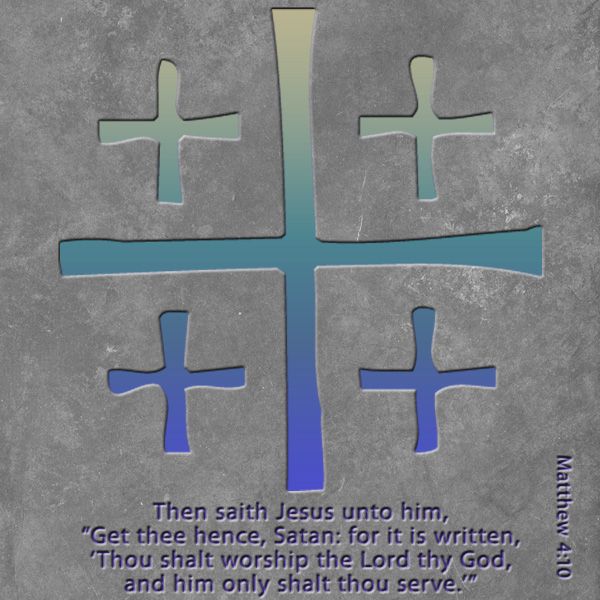
Worship the Lord Thy GodLast Sunday, churches that follow the Revised Standard Lectionary concluded the season of Epiphany with the Feast of the Transfiguration; I'm writing on Thursday, so yesterday on Ash Wednesday we opened our lives to six weeks of Lent with slower-paced songs, more thought-provoking prayers and readings, wearing a cross made from ashes and oil inscribed on our forehead. Ashes left after burning palms from the previous Palm Sunday / Lent 6 has been the tradition and the ideal, but doesn't necessarily need to be. Ashes and oil carry a multitude of meanings, but most immediately, ashes signal the mortality of our bodies created from earthbound elements that one day will return into the ground. Oil? Anointing for burial after death, but more urgently, a reminder of the oil – chrism – that in the HS anoints us at baptism into Jesus' threefold public ministry of prophet, priest, and king.

Every year on the First Sunday in (but not of, since every Lord's Day is a "little easter") Lent, we listen to, hear, and ponder Jesus' desert temptations. Steeped in scripture, Jesus refutes all three of the tempter's [devil, adversary, satan, prosecuting attorney] challenges with scripture.

A lead-in to saying the RCL scripture readings during the past few weeks have included Matthew's Sermon on the Mount for the gospel, instructions from the Pentateuch for the first reading from the Hebrew Bible. In his Sermon on the Mount, Jesus announces how people with certain attitudes and behaviors toward those in their community and others in the wider world out there have God's favor and blessings. Essentially, in the Sermon on the Mount, in Luke's Sermon on the Plain, in his entire life, death, resurrection and ascension, Jesus interpreted the commandments. Simplifying them in some ways; making the commandments even more impossible to fulfill in others. Hebrew Bible passages have been about acting with justice and righteousness toward all, about showing hospitality to any outsider who enters our space. On Epiphany 7 we harkened to God's command and promise from Leviticus 19 that opens with 1The Lord spoke to Moses, saying: 2Speak to all the congregation of the people of Israel and say to them: You shall be holy, for I the Lord your God am holy and leads into ways a holy God and holy people act always with justice, compassion, love, and generosity.

We know Jesus' resurrection as the first fruits of the New Creation happened over two thousand years ago. We realize the new creation isn't pristine in the same sense of the first creation, yet we live and sometimes feel like dying amongst evidence of broken, sinful lives, institutions, and relationships that are anything but resplendently redeemed. Do you remember how the book of Acts begins with Jesus' disciples asking if he'd restore the Kingdom to Israel now? Not sure if they imagined the return of the united kingdom or simply more functional versions of the monarchs that reigned afterwards, but on some level Jesus knew his rising from death and burial, though conclusive, was only the beginning of what needed to follow. Without saying it's not now or yet and not my current calling, Jesus told the disciples to wait where they were in Jerusalem so they could receive the power – and the freedom – of the Spirit of Life on the day of Pentecost and could continue Jesus' life work of justice, love, righteousness, healing—and resurrection.

Jesus said to the desert-haunting devil after his baptism into public ministry, The writings tell us: thou shalt (promise and commandment) worship the Lord your God and serve only the one true God. And how?

Leviticus 19 explains:
When you reap the harvest of your land, you shall not reap to the very edges of your field, or gather the gleanings...You shall not strip your vineyard bare, or gather the fallen grapes; you shall leave them for the poor and the alien: I am the Lord your God. You shall not steal; you shall not deal falsely; and you shall not lie to one another ... you shall not steal; and you shall not keep for yourself the wages of a laborer until morning ... You shall not revile the deaf or put a stumbling block before the blind; you shall fear your God: I am the Lord. You shall not render an unjust judgment ... but you shall love your neighbor as yourself: I am the Lord.
Kristin Hill Taylor's blog graphic tells us, "Here I am, to say you're my God." No. Other. Gods. The ELCA's slogan says, "God's work, our hands."

Whether we hear God ask who to send in I, the Lord of sea and sky or God's charge to "splash the water, break the bread" in I, the Lord of font and cup in the power of the Spirit of Pentecost, anointed into Jesus' threefold royal, prophetic, priesthood, our response can be, "Here I am, God. I hear your call! Send me!!"

3 word wednesday Here I Am

3 word wednesday button

Friday, February 24, 2017

Five Minute Friday: Slow

Five Minute Friday! Linkup's live all week long actually... though most peeps play in the window between Thursday and Friday evenings. This time Kate hosts us into writing about slow.

Go Slow updated for desert spirit's fire

Many of us spend too much of our days being restless, inpatient, wanting to possess objects of our desire and accomplish our often desirable goals yesterday. Would you really like to complete everything on your calendar in jig time—finishing before you even really begin? Why? Though it's true computers legitimately help speed up tasks that otherwise would take much longer. As do household appliances.

Considering slow, scripture reveals a God who is anything but quick and hasty, a God who intentionally plans and determines, for whom a single one of our 24-hour long days is not much different from a thousand years' worth of those days. Last Sunday in the lectionary we heard God speak through Moses; in Leviticus 19:1-2, 9-18, God commands and God promises, "You shall be holy, for I the Lord your God am holy" and follows with instructions for how God intends Israel to live together in covenantal community after they cross the River Jordan into the Promised Land. That happened amidst the Forty Years of Desert Wandering Event, and in fact, in the bible the number "forty" is common and prominent. Whether a happening unfolded over the course of forty days or forty years, neither of those timespans are how long it takes to shake up an instant pudding or heat up a microwave meal. Getting from one side of a country or continent to the other? Try trudging on foot or by donkey instead of flying on the socialist airline. There's something thorough, something unforgettable and memorable and savor-worthy about doing everything slowly with care. Given that God asks the people to behave with justice, truth, generosity, and love in the same manner as God routinely acts, why not also use the Slowness of God as a model for our own days, weeks, months, and years?

# # #

Illustration Note: like last FMF for weak, this week for slow I had a digitized graphic illustration already in the works. I designed the original long ago as part of a large group splashed against my living room wall; this one's much smaller, appropriate for blogging.

five minute friday button five minute friday slow

Wednesday, February 15, 2017

Three Word Wednesday: 3 {things} 2 tell

Kristin Hill Taylor introduced today's topic with, "Sometimes I sit down with a friend and have multiple things to tell her … and none of them are related. We may have to catch up, talk about the books we're reading and the music we're listening to, share new recipes, and make plans for next time. Today's post is going to be that kind of conversation as I share things I want you to know about."

Although the idea is to write to any combination of three words, I always pick up on Kristin's phrase or a very close variant for my own Three Word Wednesday. {Therefore,} here are three things I want to tell you about—let's make this Three Word Wednesday sitting down to lunch together as we update each other.

3 word wednesday 15 FebruaryCreative Market – this is far from the first shoutout I've given on this blog and on my facebook page to Creative Market, the best place ever to get an astonishing variety of design assets from creatives all over the globe. Every week CM offers six design freebies; most weeks I pick up every one of them. If we've bought – either for free or for a cash transaction – a font or photo or drawing, in every case we legally can use it for our own design projects. Typefaces aside, if we want to incorporate an asset from CM into a paying client project, sometimes we need to buy an extended license. Simple guidelines that also include not needing to credit the artist/source. Most weeks I get all the freebies, but other than the fonts, I use them very rarely. Why? For the most part the paintings and drawings are in a particular artist's especially unique style. No way would I imagine passing it off as my own, but it feels not quite right. However, I've used photographs from CM about a dozen times for blog graphics, and it's easy to credit the photographer, which I always do. So about all that, I'm just sayin' for your information. Every element I used in my graphic for this post is from Creative Market, but it feels fine because this time they're all very similar to something I easily could have designed myself.

Pentateuch – for over a year I've been leading and facilitating adult Sunday School at the church I attend. We mostly discuss one of the day's readings from the Revised Common Lectionary – this is Matthew's lectionary year (A); so far the timeline of the gospel we received from Matthew's community includes genealogy, birth, magi, Herod's threat /Joseph's dream, flight into Egypt, Bap-J, wilderness temptations, return to Galilee / calling first four disciples, sermon on the mount... Aligning with rabbi Jesus' articulating his interpretation of the commandments in the Sermon on the Mount, last week we read, heard, and discussed Deuteronomy 30:15-20; this week Leviticus 19:1-2, 9-18 will be on the bill of fare, for the only instance of Leviticus in all three lectionary years! I've been almost surprised at how those Pentateuch texts have sprung to life as I've prepared for the class, as everyone's ideas have circulated around the room.

Worship Symposium – I'm very Very VERY excited to be attending Worship at the Center 2017: Engaging Worship & Culture next Sunday evening through Tuesday noon. The denomination, "church body" (or national church how ominous that always sounds) sponsors the event. I look forward to meeting more people from around town, to learning more about one of my passions, to have another résumé line item. Politics and other concerns allowing, I'd long been preparing to serve on the committee for the next hymnal: I'd know liturgy; I'd know hymnody; I'd know theology. Partly because I moved to a different denomination, but mostly because substantial parts of my life went into a holding pattern while the New Century Hymnal (NCH) and Evangelical Lutheran Worship (ELW) were in process, hymnal committee didn't happen.

3 word wednesday button

Wednesday, July 20, 2016

Three Word Wednesday: A Special Rest

Guest Joanne Viola writes about A Special Rest on Kristin Hill Taylor's Three Word Wednesday.

three word wednesday watermelon banner

Kristin's three words aren't necessarily a prompt; the idea is to write to any three words, though I like to default to Kristin's. As a driven, achieving, 21st century urbanite, I immediately resonated with the concept of rest; how delightful that Joanne mostly wrote about rest and recreation during the season of summer! Rest has been more than characteristically difficult for me because of my fire to help change the world coupled with too many disappointments, too many plans that didn't remotely pan out even minimally as I'd expected. So I've kept on keepin' on to making and working through more plans, with my head full of awareness that human bodies, minds, and spirits require regular rest and God mandates it, but...

I've been preparing to discuss the gospel reading from the Revised Common Lectionary with my adult SS class next Sunday. it begins with:
Luke 11:1-13

1He was praying in a certain place, and after he had finished, one of his disciples said to him, "Lord, teach us to pray, as John [the baptist] taught his disciples." 2He said to them, "When you pray, say: Father, hallowed be your name. Your kingdom come. 3Give us each day our daily bread. 4And forgive us our sins, for we ourselves forgive everyone indebted to us. And do not bring us to the time of trial."
You probably know about the Jubilee Year outlined in Leviticus 25? The Lord's Prayer rings with jubilee images: may the reign of heaven come on earth. Just as prairies and gardens need to rest from being planted and producing every seven years or so, just as God commands Sabbath and we need rest every seven days, we need a time of jubilee justice, forgiveness, liberation. Forgiveness is release! Forgiveness is freedom and opportunity to start over again. As forgivers and as the forgiven, we participate in jubilee. BTW, Matthew's version of this prayer talks about debts and shortcomings; Luke mentions "sins."

Summer is a special rest that parallels the time of jubilee because summer offers enticements to let go of, to release (the technical meaning of "forgive") our usual propensity to overwork and over plan. Summer means vacations from the normal school year, vacation days away from the workplace, better weather for spending time outdoors and basking in the glories of God's creation, specially scheduled activities like concerts, picnics, parties, fiestas, county fairs and festivals. Sabbath is not a time to lounge around and be lazy, but an opportunity to quit watching the clock, to stop counting and producing, to live fully into the moment with total awareness of our surroundings.

Joanne told us she loves the four (agricultural, meteorological, astronomical) seasons of spring, summer, autumn, and winter. I also enjoy them, and the variety we get in southern California is plenty enough for my taste. Summer's warmer, longer days make me want to wear funner, brighter, lighter clothes. Prepare lighter, more flavorful, juicier, more consistently locally-sourced meals. Spend more hours re-creating out in God's creation. Make my art and design more frivolous and fanciful. Less serious! Summer brings a sense of sabbath, conveys a special restfulness by simply being the condition of summer

The Lord's Prayer rings with jubilee images: may the reign of heaven come on earth. Summertime at its best is a season of jubilee—summer is heaven on earth! The special rest of summer leads us into living simply—simply living. Simply being who God created us to be.

rest collage
three word wednesday watermelon square three word wednesday button

Tuesday, May 28, 2013

Opportunity, Montana

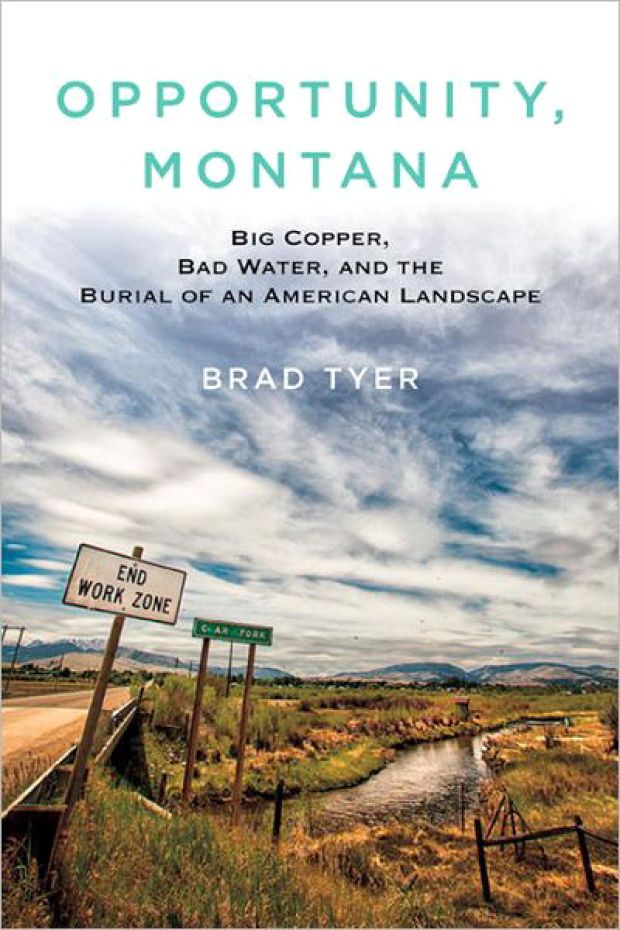
Opportunity, Montana: Big Copper, Bad Water, and the Burial of an American Landscape on Amazon

If you go to the Amazon product page, be sure to watch the video.

Opportunity book cover "Opportunity was born so that Anaconda could live, and now it's dying for Missoula's sake." [page 217]

Brad Tyer has written a revelatory, passionate, occasionally autobiographical, somewhat historical chronicle about the Clark Fork of the Columbia River, about a very small town named "Opportunity," about the human and planetary cost of extractive mining for metals, about the staggeringly high price of industrialization. Montana is one of the handful of the contiguous 48 United States I've never driven through or along the edge―never even alighted momentarily at a Montana airport on my way to another destination. However, before I read this book, I'd bought the "Big Sky" chamber of commerce image of a near-pristine, close to unspoiled Montana. This book changed my perspective and my awareness!

Had I simply not been aware of the violence Montana's mining history did to land and to people, did I not think of where so many mineral resources (copper, especially) needed for wiring Planet Earth for electrical and electronic aspects of modernization and industrialization originated? I don't know. I've seen Kennecott's enormous open pit copper mine that also yields substantial gold, silver, molybdenum, and sulfuric acid at Bingham Canyon, Utah; I've visited several Arizona mining sites; I've traversed Tennessee, Kentucky, West Virginia, and Pennsylvania, all with deeply conflicted feelings. Particularly contested feelings where earth has been turned inside outside, mountaintops sliced off, green hills stripped barren.

In the Jubilee text of the book of Leviticus we hear, "The land shall not be sold in perpetuity, for the land is mine; with me you are but aliens and tenants. Throughout the land that you hold, you shall provide for the redemption of the land." [Leviticus 25:23-24] here's Leviticus 25. I'm so sure... I am so sure .... proof texting with a snippet of scripture can be plain irresponsible, but can a violated, desecrated, and profaned land ever be redeemed, literally "bought back" and restored into healthy well-being?

"Opportunity was born so that Anaconda could live, and now it's dying for Missoula's sake." [page 217] We know all about that necessary and inevitable cycle of life – death – life – death – life... With "big copper" and "bad water" in the subtitle, this book – and this blog post – primarily are about the place of Opportunity and about the Clark Fork, a tributary of the Columbia that's a river in its own right, but, as author Tyer observes, aptly does not include "River" in its official name, since it's been treated more like a utensil than like a living part of nature. At the end of his book, Brad Tyer describes how redemption of the Clark Fork slowly and gradually is happening. Will a newly created river and riverbank have all the characteristics of its unspoiled, original state? No, but along with the surroundings it touches and influences, it will be livable for plants, wildlife, and people, and will form a prototype of what may be possible in other venues.

Reviews and publicity about this book have emphasized Tyer's interspersed accounts of his interesting but not atypical relationship with his late father, whose main life work was in municipal wastewater management, and to whom he dedicated the book. They didn't disrupt the broad scope of the book at all; in fact, I found them interesting. Who doesn't have stories about ways their parents' attitudes and behaviors have shaped their lives? My late grandfather was a Pennsylvania coal miner; more accurately, I am the granddaughter of a Pennsylvania coal miner, hence my interest in this book.

Any of Tyer's seven chapters would make an excellent serious magazine or journal article by itself: Headwater; Venus Rising; Red Harvest, Clark Fork; Opportunity, Revival; and Confluence. Opportunity, Montana is one of those rare books where almost every detail and description grabbed me. If you count mining, social or industrial history, environment, or future generations among your interests, consider reading Brad Tyer's Opportunity, Montana.

my amazon review: mining and a future for Montana

Tuesday, April 10, 2012

April synchroblog | resurrection - or not!

April synchroblog on wordpress, intro:
We want to ask, “What if the resurrection is a lie?” Asking this question will help each of us understand our faith, provide insight to why we follow Jesus, and open up ways of interacting with people who do not believe in the resurrection. April Synchroblog posts could also ask any of these related questions:

• If the resurrection did not happen, how would the world be different?
• If Jesus did not rise, would you still follow His teachings and example? Why or why not?
• If the resurrection did not occur, what religion (if any) would you be part of? Why would you choose this religion?
• Paul writes in 1 Corinthians 15 that if Jesus did not rise, our faith is in vain, and we are still in our sins. Because of what Jesus accomplished through His death and resurrection, this is undoubtedly true, but if Jesus did not rise, what other options are there regarding our sin? How would you deal with it?
• If Jesus did not rise from the dead, but the Scriptures say He did, how would this affect your view of Scripture? How would you now read and understand these passages that talk about His resurrection?

• If Jesus did not rise, how would this affect your view of Jesus? Could He still be God incarnate?

Pondering any of these questions would be interesting; this time I'll briefly respond to:

• If the resurrection did not happen, how would the world be different? and
• What religion (if any) would I be part of and why?

Intro

The gospel is physical, tangible, audible, sensory - "sensible" - in Westminster terms, yet the Spirit gives true life. Everyone has known people whose bodies have seriously weakened and whose faculties have diminished, yet who are fully alive. From history and from our own experience we know institutions originally organized to be helpful often becomes agents of death, human relationships can be deadly, war and armed conflict are death-dealing...

If the resurrection did not happen, how would the world be different?

april synchroblogThroughout the Hebrew Bible we discover "types" of The Resurrection in events of liberation and deliverance. This typology includes God's definitive prototypes of redemption from death on the passover, of freedom from slavery through the exodus. The image of Pharaoh's army drowning in the water of the Red Sea doesn't thrill me, but the enemy does need to be vanquished and banished and the Apostle Paul calls death the last enemy. Hebrew bible typology also includes realities of new birth from the surging waters of first creation, from the flood that floated Noah's ark, of Divine faithfulness in covenant-making and covenant-keeping. We hear about many unforgettable Spirit-called and Spirit-inspired humans without whom the outcome of history would have been very different--you can refer to them as "types" of Jesus Christ! The jubilee passage in Leviticus 25 mandates Yahweh's people release or redeem, buy back, all held captive by indebtedness of any kind, including servitude to others; the 50th Jubilee Year also grants the land a full year without work. Especially in the Hebrew scriptures, we encounter land as promise, as gift, and as covenant partner with humanity. In short, the Hebrew bible provides hints of resurrection, of the ultimate covenant with life.


Because of these events, even if the God of Abraham, Isaac, and Jacob, God of the prophets, had not enacted resurrection from the dead, I'd still be happy and privileged to trust and follow Yahweh. After all, the Hebrew Bible's record of Yahweh's deeds of unexpected deliverance reveals a God of power, love, mercy, and surprise like none other!

If the resurrection did not occur, what religion would I follow and why would I choose this path to help guide me?

If the resurrection hadn't happened and Yahweh weren't an option, what way of being and living might I follow? Despite knowing next to nothing about them, paganism and earth religions in general attract me because of their emphasis on the astronomical seasons, on the sacredness of creation, because of their focus on a lifestyle fully integrated with the history and gifts of this planet. I follow closely the recurring cycles of the church's liturgical year that in the Northern Hemisphere parallel nature's own seasons; the liturgical calendar has become "fully integrated" into the daily and seasonal rhythms of my own life. Alongside this practice at church and at home, I love acknowledging and observing summer and winter solstice, spring and autumn equinox and the cross-quarter festivals. Do these supply the earth or individuals with resurrection from death? Not really, since in them there's a recycling of the same or similar events (and some surprisingly unanticipated events now and then), yet they bring awareness of winter cold and somnolence not being a final word as spring ushers in fragile new life; in a recent blog I wrote how living close to the land for a while helped me learn to trust death. After a few years on planet earth we discover spring won't stay around forever, either, but literally grows and greens into summer. Just as in the long green and growing liturgical Ordinary Time/Time of the Church that also can be counted and numbered as "Sundays after Pentecost," the festival day celebrating the reign of the Spirit of Life, summer days and nights bring physical changes along with greater wisdom and maturity both in the earth and in human creatures moving into their summer years. Knowing that slowing down during the waning days of autumn will lead to apparent death when winter arrives is coupled with realizing a brand-new season of spring again will emerge from winter! Like Judaism and Christianity, nature religions are physical, tangible, audible, sensory - "sensible" - ways that appeal to and engage the whole person: body, mind, senses and spirit. Just as in the witness of the bible, in earth religions the land is promise, gift and full partner with humanity.

Thanks for this blogging opp!

Other April Synchroblog Participants:

Wednesday, March 21, 2012

gracious hospitality

Leviticus 19:34

"You shall not oppress a resident alien [sojourner, stranger]; you know the heart of an alien, for you were aliens [strangers, sojourners] in the land of Egypt." Exodus 23:9

Back in A Former City, I'd tried to get involved in at least one local church where I mistakenly assumed someone with my background and experience would be excitedly welcomed and highly valued. Of course I've long had more than a clue about human behaviors, maybe especially in settings like churches and other organizations where a lot of the daily nitty-gritty gets done by volunteers, many of whom are willing but some of whose skills and abilities would be no more than marginally employable most places. Attendees at church in question basically were mostly Caucasian, sort of youngish through middling-aged through very old with a few young kids; they were more or less middle class and it belonged to a prominent denomination of the "liberal protestant mainline."

Amidst a long series of disappointing rejections and exclusions I still could document if I wanted to bother, a congregation of another well-known liberal protestant mainline denomination happened into my life and world. They needed a pianist to lead worship on the Sundays of the month their choir would sing, so why not me? But almost all these people were immigrants from the Pacific Island archipelago nation of Tonga! This was a self-consciously "ethnic church," in ways not dissimilar to some earlier Lutheran, Reformed, and Roman Catholic parishes in this country, many of which in this year 2012 still retain traces, even dreams of their founding identities in favorite potluck dishes, hymns, and *other* cultural markers.

The denomination the Tongan church belonged to even had a special judicatory representative to help with concerns of Tongan congregations in the vicinity. Their worship in the Tongan language included standard choral anthems the choir director translated into Tongan; after worship we all enjoyed a huge meal of ethnic specialties and then returned to the chapel for a testimony meeting. Some denominations practice "fast and testimony," believing a few hours without food enhances spiritual awareness and draws a person into considering the presence and action of the Holy One in their lives, but isn't "food and testimony" more enticing? "We have the gift of music and the gift of food," a choir member informed me. They also had the gift of hospitality, inviting me, very much a "resident alien" within their culture to weddings, to parties, to holiday picnics, and barbecues.

A few years ago in my formal faith journey I explained, "Both my experiences of inclusion in the community and those of exclusion from the community – especially the community of faith, but also in many places and spaces in the world outside of and beyond the gathered People of God – have been significant to my growth in faith." The way the people and pastor of the Tongan Church received me as a gift seemed so very natural, literally "within their nature," I believe Tongans are born with an active welcoming gene. For sure I had something they needed and had asked for, but I also had even more gifts and experiences that could have become powerful components of the ministry in the church I mentioned at the start of this post. I was a gift to the Tongan Church but they were gifts to me far beyond what I had to offer them.

"You shall not oppress a resident alien [sojourner, stranger]; you know the heart of an alien, for you were aliens [strangers, sojourners] in the land of Egypt." Exodus 23:9

Akin to studying cultural anthropology in the classroom and particularly to doing field work, the Tongan people's lives as non-native resident aliens in a high desert community of the intermountain west that was culturally, geographically, socially, and gastronomically worlds away from the Pacific islands probably heightened their awareness of the need and desires of others to be welcomed and included. Their own differentness probably had caused a few experiences of exclusion, too.

One of my favorites quotes is from C.S. Lewis' Dawn Treader: ...said the Lamb, "For you the door into Aslan's country is from your own world." ... "There is a way into my country from all the worlds," said the Lamb...and he was Aslan himself...

At the Tongan church I found an unforgettable place of welcome and a memorable time of belonging, signs of "Aslan's Country," of the Reign of Heaven on earth.


Thanks to Trisha for originally hosting this post on her [now sadly not there, as she unpublished or deleted a lot of online content] Your Moments of Grace blog.

Friday, April 22, 2011

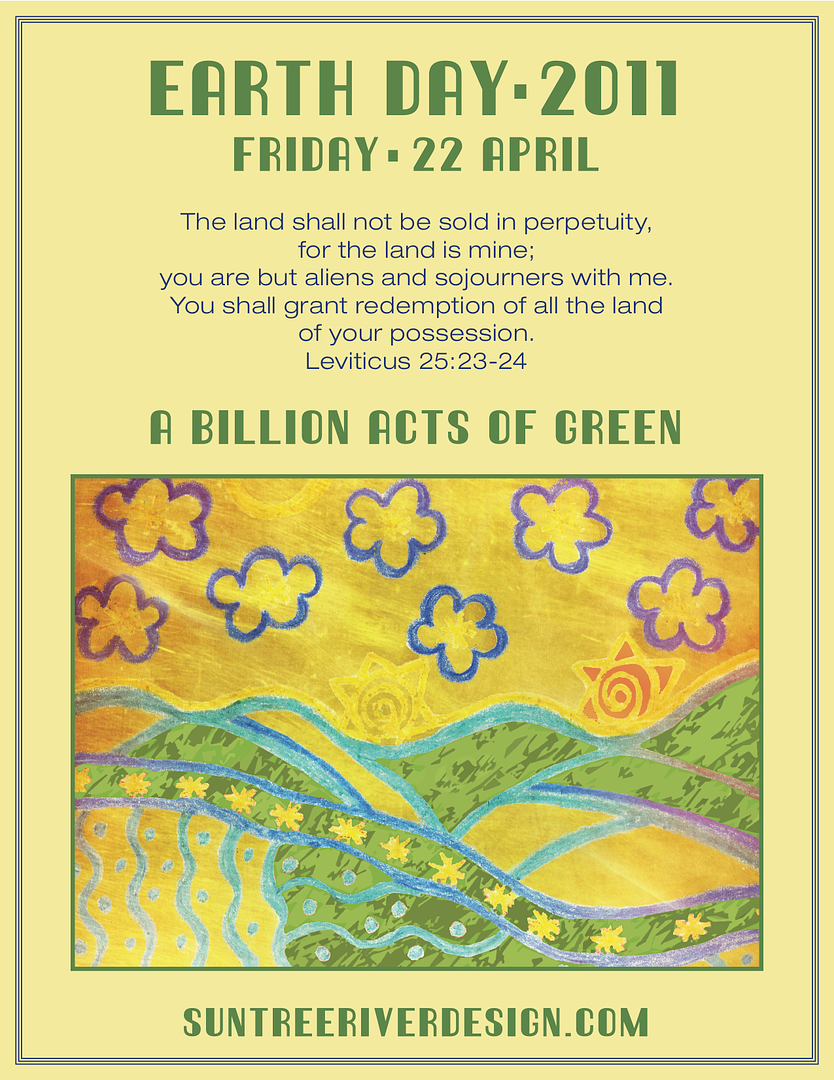
Earth Day 2011: Leviticus 25

earth day 2011 Leviticus 25:23-24

Earth Day 2011 • A Billion Acts of Green

23The land shall not be sold in perpetuity, for the land is mine;
you are but aliens and sojourners with me.
24You shall grant redemption of all the land of your possession.

Leviticus 25:23-24

Thursday, February 18, 2010

Roll of Thunder

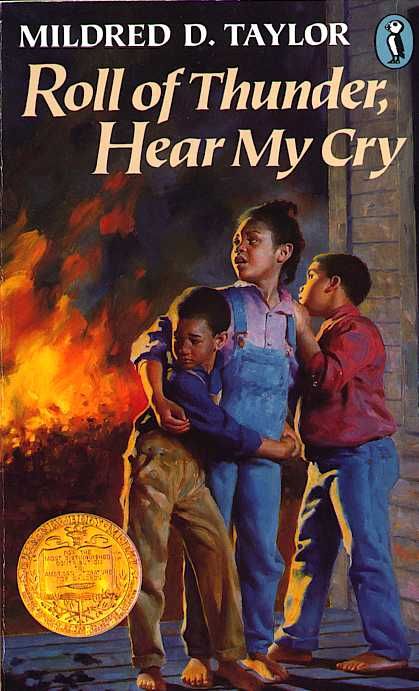
roll of thunder cover
This one's for Black History Month 2010.


Roll of Thunder, Hear My Cry, by Mildred D. Taylor has won several major publishing industry commendations and awards including the Newbery Award for 1977; I'd like to bestow my own reader award for the dozen fast-reading chapters in a book originally intended for middle- or high-school ages but that hardly talks down to a more "mature" audience and, I imagine, most of the vocabulary is basic enough for a bright 4th or 5th grader.

The story happens in post-emancipation Mississippi USA during the Great Depression of the early 1930s. The author doesn't specify an exact locale but refers to a fictional town of Strawberry as well as the real city of Jackson where, by the way, author Mildred Taylor was born and my own grandfather grew up. Spokane County in Washington State was the only one I found with a Google search, so that's one for the book, as well. And this was three decades prior to the Civil Rights movement that with legal decrees only started initiating the dawn of desegregation followed by sometimes grudging, occasionally truly triumphant integration of Black Americans and White Americans. Interestingly, until mid-20th century only Blacks and Whites qualified to become American citizens; most of the country remained racially and ethnically suspiciously divided (and still is), with what feels like endless disputes over the international border between California, Arizona, Texas and Mexico.

First-person narrator Cassie Logan is the young teen daughter of Mary, a school teacher and of David, who spends a lot of time away from home laying railroad track in neighboring Louisiana; grandmother Big Ma, Uncle Hammer and a few other elders provide some backstory and lots of historical perspective. Biblical themes of land, justice and peoplehood run throughout the book, punctuated remembering and recounting tales of Southern Slavery punctuated along the way with reflections about injustice and inequalities and hints of daring hope for a truly free future. Each successive generation is willing to settle for less and more able to trust dreams of a different reality down the road--if not now, when? Mildred Taylor has written so skillfully from Cassie's perspective you'd think she'd actually lived the events, though she tells us her own father was very much like David in the book and as a youth he basically was Cassie's brother Stacey. Christopher-John and Clayton Chester, a.k.a. "Little Man" complete the trio of Cassie's brothers. David spends a lot of time away from home laying railroad track in neighboring Louisiana

The Logan family is privileged to own 400 acres of land; in 1887 Grandpa bought 200 acres that by the year 1933 had no mortgage note to pay yet still had taxes; in 1918 he acquired 200 additional acres that during the time of the book had mortgage plus taxes. The Logans and some of their Africa-American neighbors recognize land as gift that further will provide crops that will enable them to pay taxes and the mortgage on the land that will keep them living there and will continue to yield food for their dinner table.

In some ways scripture views land, the earth, as inalienable gift, Leviticus 25:23 famously says, "The land shall not be sold in perpetuity, for the land is mine. For you are strangers [aliens] and sojourners with me." God is the creator and the original owner but wait, it all belongs to Him, anyway! In Native American culture, too, land cannot be sold. However, access to rich, healthy, well-stewarded ground is essential for our mutual survival, yet during the Jubilee Year, the 50th year, the one of 7 times 7, the land reverts to its original (human) owner/steward. "They" say land is inalienable gift, yet "they" also observe all wars are about territory and we have the concept of real estate, real property.

The Logan family related to the dominant White-controlled economy sometimes with fear-tinged submission, at times with almost play-acting "yes sir, no sir, of course, ma'am" behaviors amidst finding true refuge and safety in a solid, respectful and respecting family of parents, their offspring and the dad's mother, Big Ma. The church that has given its name and a lot of funding to Great Faith elementary school play major roles, too.

Although earlier on in the novel we find examples of death-dealing and destructive fire, closer to the conclusion of the book, fire becomes redemptive as Cassie's father David torches a portion of his own cotton crop in a prescribed burning that directs the Whites in power from possibly pursuing a handing or lynching because they need to prevents the fire from spreading to their own land; for a while the fire brings along with it the visible reality of White and Black "children of slaveholders and children of slaves" working compatibly side-by-side.

And oh, of course there's a prominent White character who is on the side of the Blacks, the lawyer Mr. Wade. And we have the Wallaces, which sounds like a code name.

My experiences growing up around grandparents heavily influenced by Southern social and cultural practices made me think a lot about what I read in Roll of Thunder. I recognized a bit of the attitudes, though tempered by recognition of mutual humanity and mutual needs. The food was familiar, too; what got called Soul Food for a while was exactly the same vittles as poor(er) White Folk typically ate. By the time my grandparents reached New England they'd owned farms and worked the land in Nebraska and North Carolina, and though they'd become urban cliff-dwellers they retained heavy respect for the land. Need I mention we often enjoyed black-eyed peas, grits, cornbread and biscuits? I attended high school in an inner-city school that imagined it at least could desegregate and maybe even integrate some day and did my second undergrad stint at a university originally formed for non-traditional students that included a lot of African-Americans and other distinctive groups. Later on as an adult I lived and served in a predominantly African-American community, where I discovered my familiarity and relative easiness with African-American cuisine and customs coupled with my relative lack of stereotyping and assumptions was a powerful asset to bring to the situation. If I had doubts about my abilities - and who doesn't at times? - my horror at the words and behaviors of some outsiders who came in for volunteer or paid work constantly assured me.

What have you been doing for Black History Month? Just wonderin...

"reads like a real-life experience" — my amazon review