Showing posts with label deepwater horizon. Show all posts

Sunday, September 19, 2010

Season of Creation 3c: Storm Sunday

19 September 2010

Today is Storm Sunday, the third for this year's Season of Creation liturgical emphasis. With Ocean Sunday, we pondered and celebrated the earth's circulatory system. Fauna Sunday was a time to consider critters of all kinds that depend on humans for their sustenance and health, just as trees, rivers, forests and prairies do—animals are a major aspect of our interdependent world! Next Sunday, the twelfth and last will be Cosmos Sunday. Paralleling the Revised Common Lectionary, the Season of Creation includes a year for Matthew, one for Mark, and then Luke.
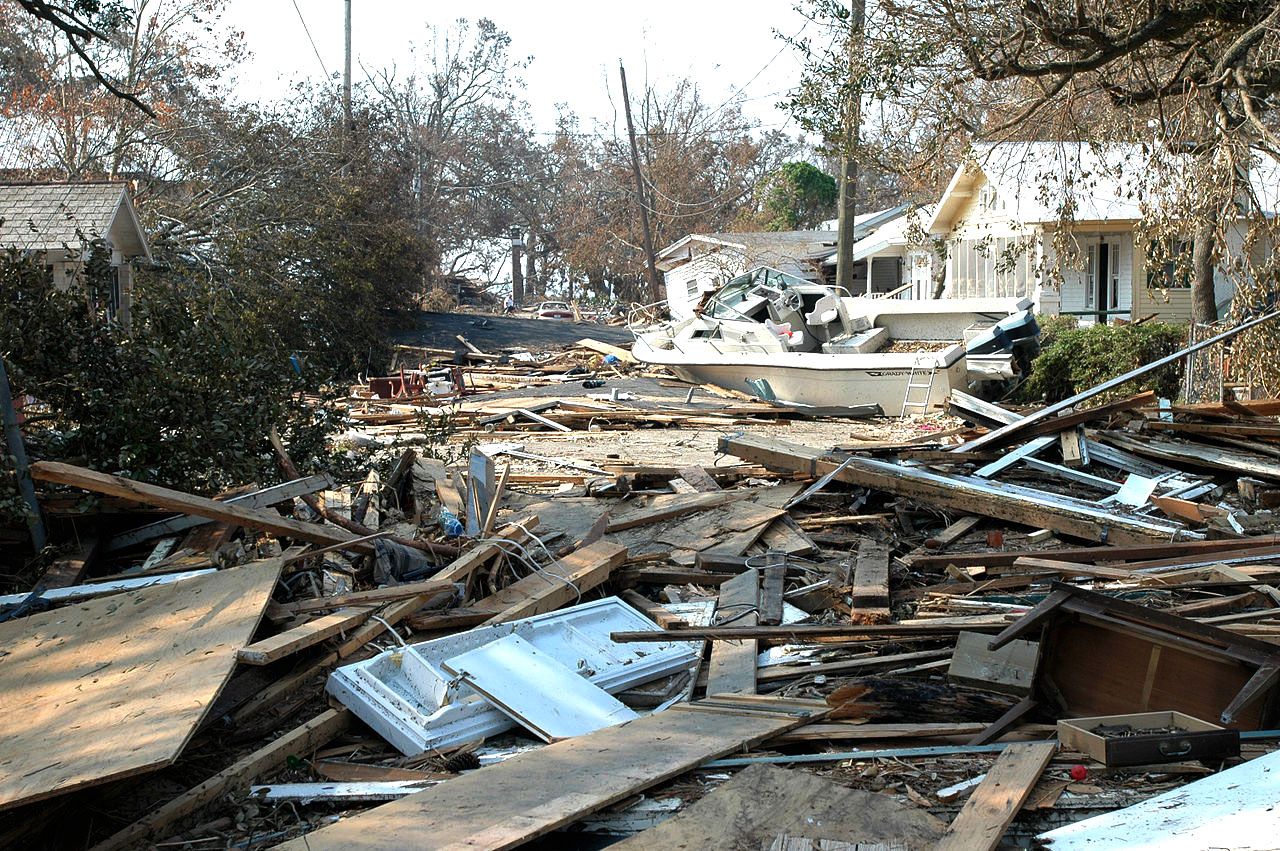
Hurricane Katrina - Biloxi, Mississippi

It feels as if especially during the five years since Katrina turned the world's eyes and hearts to the city of New Orleans and to the ineptitude of the federal government's response, every time there's a natural disaster media outlets overwhelm us with constant updates about the most recent hurricane, earthquake, oil spill, tornado or assorted "other" weather phenomena that disrupt the sometimes routine days of our lives.

In the reading from the Hebrew Bible, Job [28:21-22] inquires about wisdom, responding with words about some not readily apparent ways of being wise: “Where then does wisdom come from? And where is the place of understanding? It is hidden from the eyes of all living, and concealed from the birds of the air."

Paul's first letter to the Corinthian Church forms the second pericope or scripture selection for Storm Sunday. At first glance its relevance may seem a stretch, since Paul again is all about the cross of Calvary and again Paul recognizes the paradoxical power of weakness, vulnerability and death, along with servant wisdom found in the cross. Paul trusts the invincibility of life in the overwhelming power of resurrection. In fact, you could say that for Paul the Gospel is death and resurrection!

23we proclaim Christ crucified, a stumbling block to Jews and foolishness to Gentiles, 24but to those who are the called, both Jews and Greeks, Christ the power of God and the wisdom of God. 25For God’s foolishness is wiser than human wisdom, and God’s weakness is stronger than human strength.

Major seismic and atmospheric events can cause widespread destruction of all kinds, more often than not disproportionately impacting lives and surroundings of folks with fewer financial and other resources. It's well-known that people living in neighborhoods with more up-to-date infrastructure have better schools and get better coverage from police, fire and politicians. At 7.2 the Easter Day Sierra El Mayor geological event that shook, rattled and rolled Northern Mexico and Southern California was higher on the Richter scale than the 7.0 Haiti quake on 12 January. Alta and Baja California regions still are getting substantial aftershocks, but they warrant no more than a "did you feel that one?" while Haiti remains in chaotic disrepair and there probably never will be an accurate death count or reckoning of total costs. According to today's famous passage from Luke, the disciples "...were afraid and amazed, and said to one another, 'Who then is this, that he commands even the winds and the water, and they obey him?'

"Who is this? Even the winds and the waves obey him." Hebrew and Christian worldviews emerged from God's self-revelation within religious contexts in which people believed that far away, distant, unapproachable gods caused natural disasters and disturbances out of their anger and displeasure with humans, along with more-or-less predictably cycles and recycles of the same events. The experience of God's nascent people Israel and later those of the early Church – I'd hope our experience as 21st century Christians, too – with the God who is Creator and Lord of the waves and the winds (the desert, the savanna and the outback, and Lord of history, too...) was distinctly different! This was not a remote deity requiring sacrifice and placation, but a God so in love with creation that in Jesus of Nazareth God chose to live as a human creature. Not only has the endless recurrence of the very same thing stopped in its tracks, this God promises and provides a hope, a future and the reality of resurrection from the dead.

Job asks about wisdom; the apostle Paul tells us about God's wisdom. When the very young John Calvin pondered compiling a systematic theology, he wondered whether to begin with Divinity or with Humanity but finally decided it made no difference, since the outcome of either would be identical. Back in the days of Jesus the Nazarene it was not unusual to be talking with someone who was half mortal, half divine—the offspring of a human and a god. In Jesus Christ we find something more: a Savior, a Lord both completely mortal and completely divine; in Christ Jesus we discover that the fullness of humanity and the fullness of divinity are one and the same! Baptized into his death and resurrection and walking with Jesus in trust, we participate in his humanity and claim his divinity. Martin Franzmann's poetry sings, "Thy strong Word bespeaks us righteous, bright with Thine Own Holiness."

A blizzard or flood, tsunami or environmental accident originating oceans and continents away from where we live or a block away from home will affect all of us wherever we are. Because of our intertwined lives, last January's earthquake in Haiti wounded and broke all of us. Each of us can be counted among Deepwater Horizon's victims and survivors.

Will major meteorological events keep on happening? Without a doubt they will. "Who is this? Even the winds and the waves obey him."

Who are we, the people of God? We live baptized into Jesus Christ, so do the oceans and the breakers obey us? God calls us to be co-creators and faithful stewards of all creation, to live as agents of justice, renewal, restoration and mercy for all, in those ways and probably many others, also, to be the presence of Jesus Christ...

Sunday, June 06, 2010

last days: deepwater horizon take 2

Deepwater horizon, blog take one: oil and water

oil spill day 48: Sunday, 06 June 2010. 31 May completed the biblical number of 40 days…

nature conservancy


The photographs of oil-soaked waterfowl are unbearable to view; they reinforce that without any doubt Obama's presidency will be marked by, possibly solely remembered by, an epic environmental disaster over which he had no control. No one can unwind time, though conventional wisdom and common sense says some of us might be able to consider and examine what has gone wrong, learn from it and use the knowledge to help make a different future that's not an endless recycling of the same behaviors and outcomes. A couple years back someone in a bible study I'd been attending and sometimes facilitated suggested "end times" as a possible study topic. People who hold onto the worldview of conservative evangelicalism typically look forward to the end of this physical earth as we know it. Those final days especially will feature The Rapture in which they confidently expect to be included as in, "in case of rapture this car will be unmanned" / "In case of rapture, can I have your vehicle?" / "In case of rapture, I'm not sure reading this bumper sticker is a top priority for you." Truth to tell, in so-called liberal mainline denominations not only is "end times" in that sense not a viable theological topic, it's not a plausible or possible one. In terms of responsible interpretation of scripture, to consider the faithful in Christ caught up into the air and floating away as the earth is undergoing the most catastrophic event imaginable mocks and negates the gospel call to journey alongside all people and all creation, to be the presence of Jesus Christ in the world, just as it turns upside down scripture's call to love and cherish the earth just as the Creator God cherishes and cares for all creation.

For some millennial (premillennial, amillennial, postmillennial, Darby, Ryrie, Scofield…) dispensationalist basics, check out this site; it explains dispensationalism more concisely than I could or care to:
…a system of Bible teaching or hermeneutics which holds: 1. That the revelation of truth from Adam to Christ was progressive and that none of the Old Testament writers or prophets had or knew all of the truth of God. 2. That through the various ages or periods of time, God revealed special portions of truth to humanity and placed humanity under a particular test regarding this revelation.
But there is an important theological topic of eschatology, or the word about the redemptive consummation of creation's original purpose. Christianity proclaims the birth, life, death, resurrection and ascension of Jesus Christ completed the work of salvation for all creation, yet typically we assert that we actually live in the proleptic or anticipatory realization of the eschaton, rather than in its fulfillment. Throughout its witness, scripture calls humanity to help initiate justice and redemption for all creation and an ultimate vision of the messianic feast to which the entire earth is invited, welcomed, gathered together healthy and restored, living in mutual dependence and covenant. Without water, that dream cannot be realized.

For sure many prophets we know from the Hebrew Bible wrote and preached about a Day of the Lord, which variously was a time of deep darkness, doom and despair, a occasion for immediate repentance followed by redemption or a time of hope. Apocalyptic writing full of metaphor, code, mystery and hidden (apocalypse literally means uncovering, therefore a "revealing") symbolism tends to emerge and flourish in times of political unrest, turmoil and uncertainty; besides the the book of Revelation in the NT, parts of Daniel, Zechariah, Ezekiel, 1st Isaiah, the "Little Apocalypse" of Mark 13, some of the writings of Paul of Tarsus, 2 Peter (probably I've missed some) all include hidden symbolism, dreams, visions, and often dualism.

In my previous blog about the Deepwater Horizon incident I wrote, "Through its witness, scripture brings humanity a call to help initiate justice and redemption for all creation and an ultimate vision of the eschatological feast in which the entire earth is healthy and restored, living in mutual dependence and covenant. Without water, that dream cannot be realized."

Noel Paul Stookey and Peter Yarrow (remember them? from Peter, Paul and Mary) wrote and recorded "Very Last Day"; The Hollies had a version, too. In some ways it's a slice of vernacular apocalyptic, though it contains a huge burden of scriptural, ethical and practical reality.
Chorus:
Everybody gonna pray on the very last day
When they hear that bell a-ring the world away
Everybody gonna pray to the heavens on the judgment day.

Well the law is given and the law is known,
A tale is told and the seed is sown,
From dust we came into dust we'll go,
You the know the Lord once told us so.
Each brother takes his hand,
Heed the meaning of the Lord's command
Get ready, brother, for that day.

published by Neworld Media Music Publishers and Silver Dawn Music
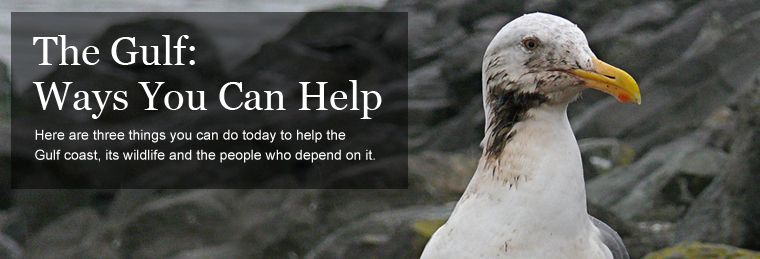
"The law is given (to us) and the law is known (by us) … Heed the meaning of the Lord's command…" God's covenantal decree is nothing like the arbitrary social code self-righteous pharisee types invented and continue to invent in order to separate out people they didn't like with impossible demands and elevate themselves; it is a graciously given way of life that brings sustenance and more life along with it to those who observe it. Over these past eight years I've blogged a fair amount about the Ten Words or Commandments of the Sinai Covenant and the Great Commandment (love God, neighbor and self) and won't repeat what I've previously said, at least not right at this moment. No one knows how much more devastation creation can bear. But there is something we can do, even the majority of us who do not have the kind of money that talks (a high level of financial articulation). Check out the Nature Conservancy link in The Gulf: Ways You Can Help image at the top of this blog and may peace, justice, and righteousness return to the earth of God's creation the earth God calls – and enables us in the Spirit – to help preserve, sustain and re-create!

Thursday, May 20, 2010

oil and water: deepwater horizon

"Water is life," they insist. Digital, print and electronic news media have been filled with more and more devastating reports about the "Deepwater Horizon incident" oil spill that occurred in the Gulf of Mexico on 20 April. BP, the petroleum mega-giant whose equipment failure (malfunction?) caused the disaster has been filling their website with more and more unconvincing explanations and defenses.

In my recent blog, Where Can Red-Winged Blackbirds Live?, I observed
Despite current interest in ecological theology emphasizing the redemption and integrity of all creation – not solely human creatures – a lot of teaching and preaching in the Church still focuses on humanity, which in some ways may not be all that "off," given that so much of the rest of creation is in need of restoration, revitalization and resurrection from death primarily because of human sin and failure to steward creation (which naturally results in failure to take proper care of human needs).
Water, the primordial substance of the world, existed before anything else in creation; in Genesis 1 we read:
1In the beginning when God created the heavens and the earth, 2the earth was a formless void and darkness covered the face of the deep, while a wind from God swept over the face of the waters.
From the New Century Hymnal, a version of the
Thanksgiving and Blessing over the Baptismal Water:

We thank you, God, for the gift of creation called forth by your saving Word.

Before the world had shape and form, your Spirit moved over the waters.
Out of the waters of the deep, you formed the firmament and brought forth earth to sustain life.

In the time of Noah,
you washed the earth with the waters of the flood,
and your ark of salvation bore a new beginning.

In the time of Moses, Aaron, and Miriam,
your people Israel passed through the Red Sea waters
from slavery to freedom and crossed the flowing Jordan
to enter the promised land.

In the fullness of time, you sent Jesus Christ,
who was nurtured in the water of Mary's womb.
Jesus was baptized by John in the water of the Jordan,
became living water to a woman at the Samaritan well,
washed the feet of the disciples,
and sent them forth to baptize all nations by water and the Holy Spirit.

Bless by your Holy Spirit, gracious God, this water.
By your Holy Spirit save those who confess the name of Jesus Christ
that sin may have no power over them.
Create new life in those baptized this day
that they may rise in Christ.
Glory to you, eternal God,
the one who was, and is, and shall always be,
world without end. Amen!
Scripture and Church have made water and the creative word central signs of new birth in baptism and signs of the reign of heaven on earth. Studying the witness and examples in scripture, during the imperial reign of King Solomon, depletion of creation and misuse of natural resources had become the habit and the rule because of human imaginings they were the center of everything and so concomitant desires of the rich and famous for a high-end, unsustainable deluxe lifestyle could be met; that era brought the earliest biblical creation account from the writer we now refer to as the Yahwist: Genesis 2:4-25. In some ways the easy conversational intimacy between human and Creator does reflect the reality of Divine care and concern for all, but the text also exposes human arrogance and a not unusual human trait of attempting to contain, control and domesticate the elusive wildness of the God of the Bible. Remember how Israel's plea for a temple and a king partly was an attempt to become "like other nations" rather than a faithful desire to live in risk and dependence on one another as Yahweh's peculiar people? Toward the end of Solomon's rule, Jeremiah the prophet implores, "O land, land, land, hear the word of the Lord!" (Jeremiah 22:29)

After the fall of Solomon's empire, in the creation account placed first in the biblical canon, the exilic (or possibly post-exilic, since dating is a bit confounded) Priestly Pentateuch source, Genesis 1:1 - 2:3 recognized creation as orderly, the Creator God as one who acts not randomly but systematically and does not place humanity at the center or the apex of the rest of creation, but rather gives human creatures a place within the order and a call to steward, maintain, treasure and support the rest of creation. Yes, one well may argue that part of the purpose of the Priestly scribe was to grant legitimacy to an organized ecclesiastical hierarchy and given that written and orally transmitted texts are cultural artifacts likely that was a factor, but not incidentally the text carries along with it an integrated, sustainable worldview and practice rather than one subject to disintegration. Through its witness, scripture brings humanity a call to help initiate justice and redemption for all creation and an ultimate vision of the eschatological feast in which the entire earth is healthy and restored, living in mutual dependence and covenant. Without water, that dream cannot be realized.

"You choose to be made at one with the earth," sings the activist hymn written by Fred Kaan. The God outside space and outside time, God who created everything from nothing, chose decayable human flesh formed from nature's stuff, the elements of the earth, as the mode of his most decisive self-revelation. God chose to live within the bounded limits of space and time, and still chooses to do so, indwelling all creation – including streams, rivers and oceans (of course!) – with the breath of life and evidence of enduring love. On my Red-Winged Blackbirds blog I asked, "Where can God find a home?"

Back in the olden days, BP was British Petroleum, a name that evokes memories of a worldwide empire of colonies, protectorates, and other entities on which the sun never set, all administered by or somehow connected to the United Kingdom. From scriptures and other sources we recognize word and speech as both source and immanence, with lively power to initiate, suggest, birth, relate and transform. In many cultures, a person's name formally expresses the essence of the person, and it is not a stretch to suggest language carries similar power for us 21st century dwellers.

Those "theys" who remind us water is life also insist oil and water do not mix, cannot form a chemical alliance. The olive tree, giver of one of my favorite fruits, has long culinary, religious, political and liturgical histories and typically lives for a very long time. The forehead of a person being baptized is signed with a cross traced with chrism made from olive oil; just like prophets, priests and kings of Israel, they are "Christed" or chrismated, anointed. The olive tree frequently is considered the Tree of Life referred to in Revelation 22:"1 Then the angel showed me the river of the water of life, bright as crystal, flowing from the throne of God and of the Lamb 2through the middle of the street of the city. On either side of the river is the tree of life with its twelve kinds of fruit, producing its fruit each month; and the leaves of the tree are for the healing of the nations."

The tree depends on the river and the nations, the "people," the ethnos – the plain ole folk – depend on the tree that depends on the river...that depends on human care, covenant and faithfulness.

Deuteronomy 8
6Therefore keep the commandments of the Lord your God, by walking in his ways and by fearing him. 7For the Lord your God is bringing you into a good land, a land with flowing streams, with springs and underground waters welling up in valleys and hills, 8a land of wheat and barley, of vines and fig trees and pomegranates, a land of olive trees and honey, 9a land where you may eat bread without scarcity, where you will lack nothing, a land whose stones are iron and from whose hills you may mine copper. 10You shall eat your fill and bless the Lord your God for the good land that he has given you. 11Take care that you do not forget the Lord your God, by failing to keep his commandments, his ordinances, and his statutes, which I am commanding you today.
After the deluge, Noah released a dove, "And the dove came in to him in the evening; and, lo, in her mouth was an olive leaf plucked off: so Noah knew that the waters were abated from off the earth." Genesis 8:11

But also, with its purported 613 kernels, symbolizing the 613 commandments found in the Hebrew Bible, pomegranate is considered the tree of life: to be saved, whole, redeemed, shalom-full "keep the Commandments," keep covenant with all creation, that we all may live. Did I not blog, "so much of the rest of creation is in need of restoration, revitalization and resurrection from death primarily because of human sin and failure to steward creation (which naturally results in failure to take proper care of human needs)." Okay, BP, listen up!

As Lin C commented on facebook, "The ocean is the Earth's circulatory system. Kill that and we kill the earth." The whole concept of human supremacy and invincibility has been killing the earth for too long. I'm not a scientist, but from what I understand, light is life and this planet *should* survive as long as earth's Sun Star shines and is not extinguished (by human stupidity and greed). On her blog, Yearning for God, Jan linked to some beautiful, hope-filled water blessings. Where can the earth find a home and not be a stranger to itself?

my second blog about the gulf coast oil spill—last days: deepwater horizon take 2