Here's a short continuation of Products and Packaging in the guise of another containers, borders, wrappings and enclosures essay; I'm still emphasizing church but won't take time to focus on anything specific.
Spaces, places: boundaries of spaces get named as particular places. The Great Church or Cathedral shelters Square and Marketplace, a prime locale for news, information and announcements and a trustworthy general gathering space. Quadrangles surrounding churches became the very first financial districts, original Central Business Districts—you know all about the CBD! Around the Grote Kerk's perimeter people still buy, sell, trade and barter hand-crafted goods as well as manufactured ones and garden-grown produce, with these days' offerings including local stuff plus imported goods and bads.
In casual speech even those of us who are theologically articulate refer to a church building as "the church." One can see church steeples from a distant and far land: "One if by land; two if by sea!" ...although there are very few of those steeples here in the Southwest. Nevertheless, church buildings of all dimensions in towns and cities of every size remain landmarks and tourist destinations, sometimes targets for inopportune activities, such as negative graffiti and arson.
Frequently a church building's interior becomes the space describing life's most significant events for both traditionally churched and not so church-wise: blessings and baptisms; quinciñeras, nuptials; funerals, memorials and farewells. In some older European churches, people are buried underneath the church! University chancellors used to teach in the chancel of the church or cathedral, acquiring that privileged location in response to their academic position, receiving their title from the place called "chancel."
Let's bring time into this blog, too, because it serves a similar bounding function! In his his 1990 Brazilian Rhythm of the Saints, Paul Simon sang "Born at the Right Time":
Down among the reeds and rushes A baby boy was found
His eyes as clear as centuries His silky hair was brown
Never been lonely Never been lied to
Never had to scuffle in fear Nothing denied to
Born at the instant The church bells chime
And the whole world whispering Born at the right time . . .
But among the reeds and rushes A baby girl was found
Her eyes as clear as centuries Her silky hair was brown
Never been lonely Never been lied to
Never had to scuffle in fear Nothing denied to
Born at the instant The church bells chime
And the whole world whispering Born at the right time . . .
Announcing linear time, church bells ring out hours, half hours and quarter hours; at least as often, particularly in more rural areas in this country and abroad, church bells announce births, deaths and impending disasters. I heard about a town in rural Pennsylvania where every family had its own melodic bell pattern! Very cool, in my opinion.
We chronicle wind events, cardiac events, this current nation-wide ultra-hot weather event, terrorist events (too close for comfort?), Christ Event, all of these being measurable in longitude, latitude and calendar time. Human creatures need those parameters! We celebrate the God of Abraham, Isaac and Jacob, Yahweh of the Exodus, God of the Prophets, God and Father of Jesus Christ as One who supremely self-reveals in measured history, who became incarnate and still is incarnate in creaturely history.
Nearly everyone knows Robert Frost's "Good fences make good neighbors"; a little while ago the gates of this condo complex disappeared for needed repairs and since then several bicycles have been stolen and there have been a few incidents of less than welcome intruders, so it's possible reliable gates keep mischief at bay. That's all for this topic at this particular time; may the spacious place known as home welcome you at whatever time you need it to be there for you!

Tuesday, July 25, 2006

Thursday, July 20, 2006
Products and Packaging
Late October 2007 update: on the PCUSA blog, Stushie recently wrote about picking blackberries.
My original title, since I needed to call is something: Ecclesiology Containers Conveyers Packaging Freedom
Since around Christmas-time I have used up lots of time hankering after blackberries, checking the stores to find out if this week maybe they're on sale at a good price and getting a dozen packages whenever the blackberry acquisition fee has been right. I need to clarify I'm writing about edible consumables and not electronics—but you know that!
Interestingly, blackberries belong to the rose – Rosaceae – family, with thorns on their stems just like both wild and cultivated roses, and producing highly desirable results, just like roses. As they grow, the fruit-bearing older growth of blackberries makes brambles or briar thickets that sometimes seem impenetrable to humans, but serve as great refuge and shelter for some wildlife species. One easily could say the thorns, the brambles and those briars are a stipulation of enjoying the product: succulent berries. In other words, briarpatches are necessary conditions of having blackberry consequences! Yum! Although I enjoy other berries, especially straw and blue, so far as I'm concerned, blackberries wear the Berry Kingdom's crown.
My intro paragraph referenced CCA, and with bounded, boundless, contained, and uncontained I'm thinking sacraments and authority, too. One of the classical descriptions about sacraments cites them as evidence of the capacity, capability – capax – of the finite to contain the infinite. Contain. This is fire season in Southern California, reminding us a contained fire is not an extinguished one, but nonetheless, containment often leads to a beneficial outcome.
Just this past week a friend gave me my own copy of Brian McLaren's A Generous Orthodoxy: Why I am a missional, evangelical, post/protestant, liberal/conservative, mystical/poetic, biblical, charismatic/contemplative,...emergent, unfinished... by Brian McLaren,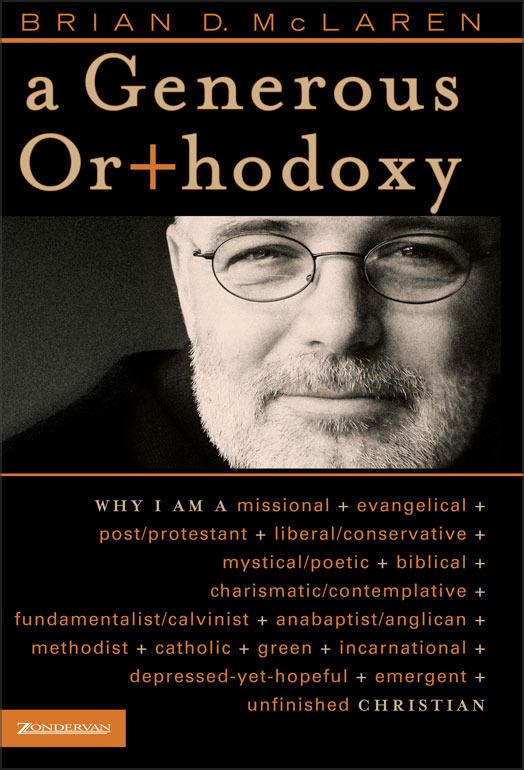 which has been on my Amazon wish list since I first heard about it. Without a doubt I'll be blogging about the book, but a few days ago I read at least one thing applicable to this blog I started a few weeks ago. Nothing I shouldn't have thought of, given this blog topic, but it was the word permeable. I'm writing about containers, containment, vessels, thorns, briars, roses, fruit and a long list of acquisitive concepts. Here in Alta California we live constantly aware of the permeability of the borders, the legal boundaries and sometimes the cultural ones between this territory and Baja California, but I want to compare the containers, boundaries and borders of ecclesiastical life with boxes, jars and envelopes where the content doesn't leak or scatter beyond the bounds, but the container exudes heat, or cold, or some kind of aura one can see or smell, maybe even taste. Compare ecclesiastical committees, judicatories and the formal "offices" (job descriptions plus associated buildings, floors and rooms) of denominational officers with briarpatches! At a later time I'll say more again about brokenness, shards, tatters and splinters, ruins and rubble: bread and lives, pottery, vessels, buildings, cities and civilizations, broken yet blessed and distributed ultimately to enable living as a result of that once un-wholeness.
Church buildings, and in many cases we find church complexes (double meaning intended) of not only a building with worship space or sanctuary but what we call a campus, with "country" as a possible connotation. Those buildings in some sense contain and in-clude the Church, the body of Christ, which is called to freely function as a living organism. In teaching and writing, often I refer to the Jerusalem Temple with its containerized deity, so remote from the free, elusive and infinitely faithful to creation Yahweh of the Exodus; frequently I talk about the Jerusalem Temple, so distant from God's self-revelation in Jesus of Nazareth. Jesus Christ shows us the Divine not in formal structures and intricate liturgical rites, but in fully real presence alongside creation and in total response to creation's needs. Roman Catholic ecclesiology tends to focus on more visible, touchable external structures – probably a too vulgar way of saying something from a Traditio Protestantica (Martin Marty's phrase—in any case I got it from him) perspective that doesn't state the reality more than marginally, while Protestant ecclesiology is more about invisible, intrinsic ones.
Containers, etc.: as I observed in conversation a few weeks ago, the UCC, PC(USA) and the ELCA are splintering seriously because "a human institution cannot contain that much diversity!" Of course the flip, the B side is "a human institution can contain only so much diversity." By definition, any institution has limits. However, logically, if something cannot be accessed, in some sense claimed and contained, it's not worth much to us. How about "God-moments" some people talk about? Are there times we can recognize God's presence while we're thick in the experience or situation, or is that acknowledgment possible only in retrospect?
Containers: printed bibles; internet scripture; paper and ink on our more recent ecumenical accords; I'm particularly thinking of the so dear to my heart A Formula of Agreement and of course, the Joint Declaration on Justification by Faith. Containers, packaging: the famous quote from Luther describing the Bible as the cradle in which the Word of God is laid. Luther railed against the way people try to domesticate, to contain God—again, recall the tamed and domesticated God (should be small "g" maybe) of the Jerusalem Temple and the Temple system's outcome in imperial religion? The Religion of Empire--perhaps similar to Dubya's far-flung, carefully-controlled empire. Remember the prophetic voices subsequent to The Temple's establishment: how about us, right here and right now? Do our words and do our actions help dis-establish imperial religion or do we make excuses to further entrench and ensconce it?
Regarding church buildings and their boundedness, a few days ago I told someone despite my feeling tremendously betrayed by the Protestant Mainline (caps?), still I cannot stay long away from the church; "The church is where I find the sacraments," I observed. Someone else mentioned Darrell Guder's in effect saying "God does not limit Godself to the means of grace." But speaking of boundaries, my semi-rejoinder to that needs to be, "Nonetheless, God does bind Godself to the means of grace." Think about it! Bounded freedom has become a familiar theological and psychological idea.
Another observation about Generous Orthodoxy: the author states he doesn't have the kind of formal theological education and credentials we in the mainline churches insist on; until he left in 2006 to pursue writing, McLaren pastored at the nondenominational Cedar Ridge Community Church, and a quote from Karl Barth banners the church's site. McLaren grew up in what he approximately describes as a twig on a branch on a limb of a church in a very conservative church tradition. Despite having been an English major and a professor of English, doubtless by now he's read a whole lot of theology, but he has not laden the first part of the book with heavy God-speak and the accompanying vocabulary we who have attended high-end and other seminaries regularly use to spice our speech.
Brian McLaren's intellectual abilities are what we hope for in our (possessive intended) churches that have a well-articulated, formal and long process for eventually attaining and obtaining (possession again) what we call ordination to Ministry of Word and Sacrament. One of the questions of any candidate for seminary and eventual ordination by a described, delimited ecclesiastical body (presbytery, diocese, conference, synod) remains "Does this person have the intellectual gifts?" Sacraments: by what and whose authority does the presider recount the history of God's faithfulness and invoke the presence of the Holy Spirit upon the gifts of bread and cup? Authority? By what authority are Brian McLaren and the other staff at Cedar Ridge Community Church declared ecclesiastical leaders? Checking them out, I noticed all of them have excellent academic qualifications but no formal theological ones. We talk about authorized ministry, whether commissioned, licensed or ordained; we also insist on a formal call or appointment process. "We" as opposed to "they"? "Us" and "them?" In the mainline Roman Catholic and Protestant and in the more conservative churches, we claim the Holy Spirit as ultimate authority, despite the human(oid?) appearance of those assorted Committees on Ministry and local church Call Committees.
To be continued.
My original title, since I needed to call is something: Ecclesiology Containers Conveyers Packaging Freedom
Paraphrased from an internet search:From 1950 to 1975, the now late Container Corporation of America ran an advertising campaign, "Great Ideas of Western Man," in periodical publications such as Time and Fortune. Bauhaus artist Herbert Bayer, who at the time was CCA's Art Director, commissioned eminent illustrators and designers to illustrate quotes from a many-centuries-long continuum of philosophers, writers, scientists, politicians, cultural and religious luminaries. But this is on desert spirit's fire, so clearly it's going to be theology!
Since around Christmas-time I have used up lots of time hankering after blackberries, checking the stores to find out if this week maybe they're on sale at a good price and getting a dozen packages whenever the blackberry acquisition fee has been right. I need to clarify I'm writing about edible consumables and not electronics—but you know that!
Interestingly, blackberries belong to the rose – Rosaceae – family, with thorns on their stems just like both wild and cultivated roses, and producing highly desirable results, just like roses. As they grow, the fruit-bearing older growth of blackberries makes brambles or briar thickets that sometimes seem impenetrable to humans, but serve as great refuge and shelter for some wildlife species. One easily could say the thorns, the brambles and those briars are a stipulation of enjoying the product: succulent berries. In other words, briarpatches are necessary conditions of having blackberry consequences! Yum! Although I enjoy other berries, especially straw and blue, so far as I'm concerned, blackberries wear the Berry Kingdom's crown.
My intro paragraph referenced CCA, and with bounded, boundless, contained, and uncontained I'm thinking sacraments and authority, too. One of the classical descriptions about sacraments cites them as evidence of the capacity, capability – capax – of the finite to contain the infinite. Contain. This is fire season in Southern California, reminding us a contained fire is not an extinguished one, but nonetheless, containment often leads to a beneficial outcome.
Just this past week a friend gave me my own copy of Brian McLaren's A Generous Orthodoxy: Why I am a missional, evangelical, post/protestant, liberal/conservative, mystical/poetic, biblical, charismatic/contemplative,...emergent, unfinished... by Brian McLaren,
which has been on my Amazon wish list since I first heard about it. Without a doubt I'll be blogging about the book, but a few days ago I read at least one thing applicable to this blog I started a few weeks ago. Nothing I shouldn't have thought of, given this blog topic, but it was the word permeable. I'm writing about containers, containment, vessels, thorns, briars, roses, fruit and a long list of acquisitive concepts. Here in Alta California we live constantly aware of the permeability of the borders, the legal boundaries and sometimes the cultural ones between this territory and Baja California, but I want to compare the containers, boundaries and borders of ecclesiastical life with boxes, jars and envelopes where the content doesn't leak or scatter beyond the bounds, but the container exudes heat, or cold, or some kind of aura one can see or smell, maybe even taste. Compare ecclesiastical committees, judicatories and the formal "offices" (job descriptions plus associated buildings, floors and rooms) of denominational officers with briarpatches! At a later time I'll say more again about brokenness, shards, tatters and splinters, ruins and rubble: bread and lives, pottery, vessels, buildings, cities and civilizations, broken yet blessed and distributed ultimately to enable living as a result of that once un-wholeness. Church buildings, and in many cases we find church complexes (double meaning intended) of not only a building with worship space or sanctuary but what we call a campus, with "country" as a possible connotation. Those buildings in some sense contain and in-clude the Church, the body of Christ, which is called to freely function as a living organism. In teaching and writing, often I refer to the Jerusalem Temple with its containerized deity, so remote from the free, elusive and infinitely faithful to creation Yahweh of the Exodus; frequently I talk about the Jerusalem Temple, so distant from God's self-revelation in Jesus of Nazareth. Jesus Christ shows us the Divine not in formal structures and intricate liturgical rites, but in fully real presence alongside creation and in total response to creation's needs. Roman Catholic ecclesiology tends to focus on more visible, touchable external structures – probably a too vulgar way of saying something from a Traditio Protestantica (Martin Marty's phrase—in any case I got it from him) perspective that doesn't state the reality more than marginally, while Protestant ecclesiology is more about invisible, intrinsic ones.
Containers, etc.: as I observed in conversation a few weeks ago, the UCC, PC(USA) and the ELCA are splintering seriously because "a human institution cannot contain that much diversity!" Of course the flip, the B side is "a human institution can contain only so much diversity." By definition, any institution has limits. However, logically, if something cannot be accessed, in some sense claimed and contained, it's not worth much to us. How about "God-moments" some people talk about? Are there times we can recognize God's presence while we're thick in the experience or situation, or is that acknowledgment possible only in retrospect?
Containers: printed bibles; internet scripture; paper and ink on our more recent ecumenical accords; I'm particularly thinking of the so dear to my heart A Formula of Agreement and of course, the Joint Declaration on Justification by Faith. Containers, packaging: the famous quote from Luther describing the Bible as the cradle in which the Word of God is laid. Luther railed against the way people try to domesticate, to contain God—again, recall the tamed and domesticated God (should be small "g" maybe) of the Jerusalem Temple and the Temple system's outcome in imperial religion? The Religion of Empire--perhaps similar to Dubya's far-flung, carefully-controlled empire. Remember the prophetic voices subsequent to The Temple's establishment: how about us, right here and right now? Do our words and do our actions help dis-establish imperial religion or do we make excuses to further entrench and ensconce it?
Regarding church buildings and their boundedness, a few days ago I told someone despite my feeling tremendously betrayed by the Protestant Mainline (caps?), still I cannot stay long away from the church; "The church is where I find the sacraments," I observed. Someone else mentioned Darrell Guder's in effect saying "God does not limit Godself to the means of grace." But speaking of boundaries, my semi-rejoinder to that needs to be, "Nonetheless, God does bind Godself to the means of grace." Think about it! Bounded freedom has become a familiar theological and psychological idea.
Another observation about Generous Orthodoxy: the author states he doesn't have the kind of formal theological education and credentials we in the mainline churches insist on; until he left in 2006 to pursue writing, McLaren pastored at the nondenominational Cedar Ridge Community Church, and a quote from Karl Barth banners the church's site. McLaren grew up in what he approximately describes as a twig on a branch on a limb of a church in a very conservative church tradition. Despite having been an English major and a professor of English, doubtless by now he's read a whole lot of theology, but he has not laden the first part of the book with heavy God-speak and the accompanying vocabulary we who have attended high-end and other seminaries regularly use to spice our speech.
Brian McLaren's intellectual abilities are what we hope for in our (possessive intended) churches that have a well-articulated, formal and long process for eventually attaining and obtaining (possession again) what we call ordination to Ministry of Word and Sacrament. One of the questions of any candidate for seminary and eventual ordination by a described, delimited ecclesiastical body (presbytery, diocese, conference, synod) remains "Does this person have the intellectual gifts?" Sacraments: by what and whose authority does the presider recount the history of God's faithfulness and invoke the presence of the Holy Spirit upon the gifts of bread and cup? Authority? By what authority are Brian McLaren and the other staff at Cedar Ridge Community Church declared ecclesiastical leaders? Checking them out, I noticed all of them have excellent academic qualifications but no formal theological ones. We talk about authorized ministry, whether commissioned, licensed or ordained; we also insist on a formal call or appointment process. "We" as opposed to "they"? "Us" and "them?" In the mainline Roman Catholic and Protestant and in the more conservative churches, we claim the Holy Spirit as ultimate authority, despite the human(oid?) appearance of those assorted Committees on Ministry and local church Call Committees.
Here's a relatively recent hymn:Christian marriage is a covenant; Jewish marriage is a contract. We Christians emphasize the covenantal nature of our interrelationships with one another and especially our relationship with the God of the covenants, The One those New Englanders of yore insisted never dealt with, interacted with humanity, with creation in any way other than covenantally. Do we in the churches need to look carefully at the contractual sides of our lives together?
God Marked a Line and Told the Sea
- God marked a line and told the sea its surging tides and waves were free
To travel up the sloping strand but not to overtake the land.
- God set one limit in the glade where tempting, fruited branches swayed.
And that first limit stands behind the limits that the law defined.
- The line, the limit, and the law are patterns meant to help us draw
A bound between what life requires and all the things our heart desires.
- But discontent with finite powers, we reach to take what is not ours
And then defend our claim by force and swerve from life's intended course.
- We are not free when we're confined to every wish that sweeps the mind.
But free when freely we accept the sacred bounds that must be kept.
By Thomas Troeger, 1986; © 1989 Oxford University Press, Inc.
To be continued.
Saturday, July 15, 2006
Red Blog!
Something just for fun:
***Your Blog Should Be Red***
Your blog is full of intensity and passion.
You are very opinionated - and people love or hate you for it.
You have the potential to be both a famous and infamous blogger.
What color is your blog?
***Your Blog Should Be Red***
Your blog is full of intensity and passion.
You are very opinionated - and people love or hate you for it.
You have the potential to be both a famous and infamous blogger.
What color is your blog?
Thursday, June 22, 2006
Denominations.
Grace to you and peace, from God the Father and our Lord and Savior Jesus Christ!
This year is the PCUSA's 217th General Assembly. Although this is not a General Synod year for the UCC nor does the ELCA's Churchwide Assembly convene this year, during 2005 both those church bodies discussed and passed controversial resolutions, resulting in too many local churches and pastors breaking away from their now former denominations.
Just about every day for the past couple weeks, during the local early morning news I've watched headlines scroll across the bottom of the TV screen and yes, not only has the Episcopal Church's election of a woman as Presiding Bishop at this year's General Convention been sensational enough to make waves in the secular Mainstream Media (equivalent of Mainline Church, which is what all these denominations are considered—whether or not they actively consider themselves such, but I definitely would), news from the PC(USA)'s GA has been regarded worthy to be featured in the news headline loop.
These calamitous (you know my passion for words and how I love taking almost everything to its limits, but in using that word I have not over-spoke) goings-on in all these denominations (remember, denomination is an American invention) is particularly haunting given the Reformation heritage claimed by the PC(USA), ELCA and UCC—less directly Canterbury's kin make a related assertion. But back to the Reformation, its ethos and especially its spirit! After all, during the 1600s the Spirit of God and of the Christ overwhelmed the Western World; although wherever and whenever we be Church or churches, despite our primary loyalty being (no brainer?) to Jesus Christ, the written, recorded Word's ultimate interpreter, in order to live as daughters and sons of the Reformation we need to continue reforming, which totally must include new scriptural insights.
Remember the paraphrase of John Robinson's words to the pilgrims embarking (from Leiden? I'll correct that later if necessary) ? "The Lord has yet more light and truth to spring forth from His Word." Even the Roman branch of the Church recites the phrase Ecclesia semper reformanda! We Churches of the Reformation? How about us? I recall hearing Martin Marty preach on Reformation Sunday evening many years ago; throughout his talk he repeated the phrase, "We Churches of the Reformation." It impresses me that so much of the controversy centers and revolves around interpretation of scripture. Not remotely is that observation unique to me, but possibly to sound a little arrogant, over the centuries we've learned certain exegetical and expository methodologies that we in the protestant and Roman Catholic mainline assume lead to responsible (read: "faithful") outcomes.
Much of this debate not only is about reading the Bible as other than a product of the historical period and ethnic culture from which it sprung, but sexuality sensationalized keeps taking over! The earlier preoccupation with gender and gender roles may have diminished some – but then again maybe not – though still many people do not realize or won't admit every one of us functions on a gender continuum.
Possibly more than anything else, for me denominations are the way to be connected vertically and horizontally with the Church in all the ages. Are the dissenters (in all the denoms) saying they don't want to remain connected? In the ELCA, some of those who most have insisted upon staying and continuing conversation have been the Seminex guys (yes, all guys) who during the (late? I wasn't there, though for a while I dated a Seminex grad and knew a couple of others from ministerium) 1970s helped birth the AELC—Association of Evangelical Lutheran Churches—specifically as a uniting church structured eventually to dissolve.
I wonder if Martin Luther is watching the recent and current goings-on in American Protestantism?! I wonder if Pastor Martin grieves the shuttings-out and exclusions?! How about reviving the tradition of historic condemnation and maybe even anathemas (just kidding – I do not believe that would be remotely helpful)? My heart aches with this burden not only because I'm a Christian in the Reformation Tradition but more than that, because continued conversation truly does build bridges and obliterate unessential differences. Oh, I know about myself: overdeveloped skills in reconciliation, accommodation and peacemaking, but how else can one live? Is Martin Luther himself an example of Christian faithfulness? Of faithfulness to Jesus Christ who showed us how to walk in trust, often in outrageous ways?
This year is the PCUSA's 217th General Assembly. Although this is not a General Synod year for the UCC nor does the ELCA's Churchwide Assembly convene this year, during 2005 both those church bodies discussed and passed controversial resolutions, resulting in too many local churches and pastors breaking away from their now former denominations.
Just about every day for the past couple weeks, during the local early morning news I've watched headlines scroll across the bottom of the TV screen and yes, not only has the Episcopal Church's election of a woman as Presiding Bishop at this year's General Convention been sensational enough to make waves in the secular Mainstream Media (equivalent of Mainline Church, which is what all these denominations are considered—whether or not they actively consider themselves such, but I definitely would), news from the PC(USA)'s GA has been regarded worthy to be featured in the news headline loop.
These calamitous (you know my passion for words and how I love taking almost everything to its limits, but in using that word I have not over-spoke) goings-on in all these denominations (remember, denomination is an American invention) is particularly haunting given the Reformation heritage claimed by the PC(USA), ELCA and UCC—less directly Canterbury's kin make a related assertion. But back to the Reformation, its ethos and especially its spirit! After all, during the 1600s the Spirit of God and of the Christ overwhelmed the Western World; although wherever and whenever we be Church or churches, despite our primary loyalty being (no brainer?) to Jesus Christ, the written, recorded Word's ultimate interpreter, in order to live as daughters and sons of the Reformation we need to continue reforming, which totally must include new scriptural insights.
Remember the paraphrase of John Robinson's words to the pilgrims embarking (from Leiden? I'll correct that later if necessary) ? "The Lord has yet more light and truth to spring forth from His Word." Even the Roman branch of the Church recites the phrase Ecclesia semper reformanda! We Churches of the Reformation? How about us? I recall hearing Martin Marty preach on Reformation Sunday evening many years ago; throughout his talk he repeated the phrase, "We Churches of the Reformation." It impresses me that so much of the controversy centers and revolves around interpretation of scripture. Not remotely is that observation unique to me, but possibly to sound a little arrogant, over the centuries we've learned certain exegetical and expository methodologies that we in the protestant and Roman Catholic mainline assume lead to responsible (read: "faithful") outcomes.
Much of this debate not only is about reading the Bible as other than a product of the historical period and ethnic culture from which it sprung, but sexuality sensationalized keeps taking over! The earlier preoccupation with gender and gender roles may have diminished some – but then again maybe not – though still many people do not realize or won't admit every one of us functions on a gender continuum.
Possibly more than anything else, for me denominations are the way to be connected vertically and horizontally with the Church in all the ages. Are the dissenters (in all the denoms) saying they don't want to remain connected? In the ELCA, some of those who most have insisted upon staying and continuing conversation have been the Seminex guys (yes, all guys) who during the (late? I wasn't there, though for a while I dated a Seminex grad and knew a couple of others from ministerium) 1970s helped birth the AELC—Association of Evangelical Lutheran Churches—specifically as a uniting church structured eventually to dissolve.
I wonder if Martin Luther is watching the recent and current goings-on in American Protestantism?! I wonder if Pastor Martin grieves the shuttings-out and exclusions?! How about reviving the tradition of historic condemnation and maybe even anathemas (just kidding – I do not believe that would be remotely helpful)? My heart aches with this burden not only because I'm a Christian in the Reformation Tradition but more than that, because continued conversation truly does build bridges and obliterate unessential differences. Oh, I know about myself: overdeveloped skills in reconciliation, accommodation and peacemaking, but how else can one live? Is Martin Luther himself an example of Christian faithfulness? Of faithfulness to Jesus Christ who showed us how to walk in trust, often in outrageous ways?
Sunday, June 18, 2006
Word Claim
In bible order rather than according to purported chronology, here are some of my current favorite scripture passages, mostly NASB, because I just got a outstanding deal on a parallel NASB/Message Bible! I'm cross-posting this, and at another time I'll make a separate Isaiah list.
- And afterward Moses and Aaron came and said to Pharaoh, "Thus says the LORD, the God of Israel, 'Let My people go that they may celebrate a feast to Me in the wilderness.'" Exodus 5:1
- Into the land, into the land, into the land, into the land... Deuteronomy
- Then the whole people assembled at Shiloh and set up the tent of meeting there; the land lay subdued before them. Joshua 18:1
- Whom have I in heaven but Thee? And there is nothing on earth I desire beside Thee. My flesh and my heart faileth, but God is the strength of my heart and my portion forevermore. Psalm 73:25-26
- O land, land, land, hear the word of the LORD! Jeremiah 22:29
- I will open your graves. Ezekiel 37:12
- When He had reclined at the table with them, He took the bread and blessed it, and breaking it, He began giving it to them. Then their eyes were opened and they recognized Him; and He vanished from their sight. Luke 24:30-31
- Now on the first day of the week Mary Magdalene came early to the tomb, while it was still dark, and saw the stone already taken away from the tomb. John 20:1
- For I received from the Lord that which I also delivered to you, that the Lord Jesus in the night in which He was betrayed took bread; and when He had given thanks, He broke it and said, "This is My body, which is for you; do this in remembrance of Me." In the same way He took the cup also after supper, saying, "This cup is the new covenant in My blood; do this, as often as you drink it, in remembrance of Me." For as often as you eat this bread and drink the cup, you proclaim the Lord's death until He comes. 1 Corinthians 11:23-26
- Therefore if anyone is in Christ, he is a new creature; the old things passed away; behold, new things have come. Now all these things are from God, who reconciled us to Himself through Christ and gave us the ministry of reconciliation, namely, that God was in Christ reconciling the world to Himself, not counting their trespasses against them, and He has committed to us the word of reconciliation. Therefore, we are ambassadors for Christ, as though God were making an appeal through us; we beg you on behalf of Christ, be reconciled to God. He made Him who knew no sin to be sin on our behalf, so that we might become the righteousness of God in Him. 2 Corinthians 5:17-21
- For He rescued us from the domain of darkness, and transferred us to the kingdom of His beloved Son, in whom we have redemption, the forgiveness of sins. He is the image of the invisible God, the firstborn of all creation. For by Him all things were created, both in the heavens and on earth, visible and invisible, whether thrones or dominions or rulers or authorities—all things have been created through Him and for Him. He is before all things, and in Him all things hold together. Colossians 1:13-17
- Thou hast taken Thy great power and hast begun to reign. Revelation 15:18
Sunday, May 28, 2006
Pentecost Present
Yes, I do realize today is Sunday after Ascension Thursday—Exaudi, from the beginning of the introit in the Latin liturgy. Nevertheless, for the past 2,000+ years the Church and the World have been living in the Reign of the Spirit, and in preparation for next Sunday, I wanted to blog about it.
[More than] Probable Pentecost!
Alleluia! The Spirit of Life fills the world;
Alleluia, Alleluia!!!
0 for 6 in a 7 – game series and asking, "was there any sound before first creation's primal Word?"
Abandonment. Then. Silence. Then
hankering after noisy anger or raucous discordance or
any sign of life aligning to life
Longing to balance days in the tension of misunderstandings and channel time into revelation's common wealth
precariously drawn out of chaos by speech
Silence cannot hold history's weight
Wordlessness cannot shape hope
Speechlessness cannot imagine creation formed from chaos
But this is Pentecost, right now and for always
and the Spirit of Resurrection fills the world;
Alleluia, Alleluia!!!
[More than] Probable Pentecost!
Alleluia! The Spirit of Life fills the world;
Alleluia, Alleluia!!!
0 for 6 in a 7 – game series and asking, "was there any sound before first creation's primal Word?"
Abandonment. Then. Silence. Then
hankering after noisy anger or raucous discordance or
any sign of life aligning to life
Longing to balance days in the tension of misunderstandings and channel time into revelation's common wealth
precariously drawn out of chaos by speech
Silence cannot hold history's weight
Wordlessness cannot shape hope
Speechlessness cannot imagine creation formed from chaos
But this is Pentecost, right now and for always
and the Spirit of Resurrection fills the world;
Alleluia, Alleluia!!!
Saturday, April 22, 2006
Earth Day 2006
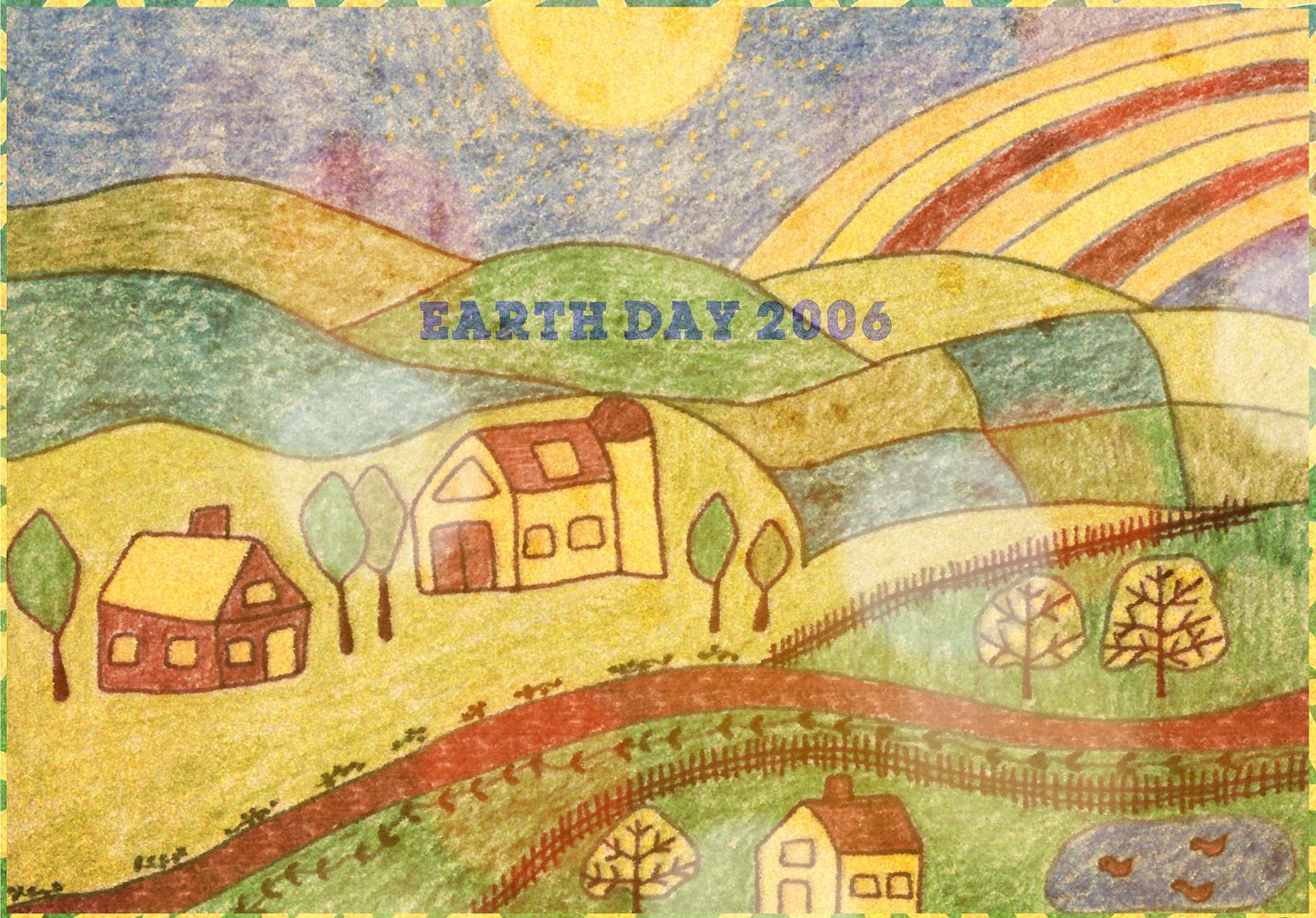
Plant, weed, water nurture mulch
Pull up out of the ground
Castaway off
Look around and see
Where once-time weeds root for life
(Green and) Growing Season
also known as Ordinary Time
so growing is regular, usual and conventional?
Joshua 18:1I need to quote Walter Brueggemann again; he essentially says, "Of course the trees clap their hands! No more clear-cutting! Why wouldn't the seas (and everything in them) roar? No more pollution!"
Then the whole congregation of the children of Israel assembled together at Shiloh, and set up the tent of meeting there; the land lay subdued before them.
But why are you called a Christian?
"Because by faith I share in Christ's anointing, and I am anointed to reign with Christ over all creation for all eternity." [somewhere in the Heidelberg Catechism]
Gather a harvest from the seeds that were sown—that we may be fed with the Bread of Life.
Doesn't the ultimate Earth Day happen every time we celebrate the Eucharist—maybe especially in an ecumenical setting? When the presider collects the ground's fruitful yield plus the sum of the labor of farmers, vintners, day laborers, truckers, grocers, bakers, sellers, weavers and potters, carpenters and contractors, too. We offer back to God the fruits of the New Creation and then God feeds us the Bread of Life! In the Christ Event, all creation has been reconciled to heaven; the Risen and Ascended One indwells all creation, and is Lord of all—this is a foretaste of the Feast to Come!
Let us Talents and Tongues Employ
Let us talents and tongues employ,
reaching out with a shout of joy:
bread is broken, the wine is poured,
Christ is spoken and seen and heard.
Jesus lives again, earth can breathe again,
pass the Word around: loaves abound!
Christ is able to make us one,
at his table he sets the tone,
teaching people to live to bless,
love in word and in deed express.
Jesus lives again, earth can breathe again,
pass the Word around: loaves abound!
Jesus calls us in, sends us out
bearing fruit in a world of doubt,
gives us love to tell, bread to share:
God, Immanuel, everywhere!
Jesus lives again, earth can breathe again,
pass the Word around: loaves abound!
© Fred Kaan 1975

Friday, April 14, 2006
Reproaches/Improperia
O my people, what have I done to you? How have I grieved you?
I freed you from slavery; I engulfed your enemies.
But you handed me over; you jeered at me.
O my people, what have I done to you? How have I grieved you?
I moved before you in the pillar of cloud.
But you lead me to Pilate.
O my people, what have I done to you? How have I grieved you?
I watched over you in the desert and fed you with my manna.
But you struck me and scourged me.
O my people, what have I done to you? How have I grieved you?
From the rock I gave you living waters of salvation.
But you gave me gall to drink; you quenched my thirst with sour wine.
O my people, what have I done to you? How have I grieved you?
I struck down kings for you.
But you struck me with a reed.
O my people, what have I done to you? How have I grieved you?
I put the scepter into your hand; I made you a royal people.
But you crowned me with thorns.
O my people, what have I done to you? How have I grieved you?
I made you great by my boundless power.
But you hanged me on the gallows of the cross.
O my people, what have I done to you? How have I grieved you?
I freed you from slavery; I engulfed your enemies.
But you handed me over; you jeered at me.
O my people, what have I done to you? How have I grieved you?
I moved before you in the pillar of cloud.
But you lead me to Pilate.
O my people, what have I done to you? How have I grieved you?
I watched over you in the desert and fed you with my manna.
But you struck me and scourged me.
O my people, what have I done to you? How have I grieved you?
From the rock I gave you living waters of salvation.
But you gave me gall to drink; you quenched my thirst with sour wine.
O my people, what have I done to you? How have I grieved you?
I struck down kings for you.
But you struck me with a reed.
O my people, what have I done to you? How have I grieved you?
I put the scepter into your hand; I made you a royal people.
But you crowned me with thorns.
O my people, what have I done to you? How have I grieved you?
I made you great by my boundless power.
But you hanged me on the gallows of the cross.
O my people, what have I done to you? How have I grieved you?
Thursday, April 13, 2006
Yahweh, Exodus, Amos; Maundy Thursday 2006
Lining out Yahweh's universalism in chapter 7 - "Exodus in the Plural" - of Texts That Linger, Words That Explode, Walter Brueggemann cites Amos 9:7.
God's initiative... remember, Moses' people had no knowledge of the Genesis narratives about Abraham, Isaac, Jacob and their God, so they could not help but be clueless about Yahwism; in addition, raised as a Prince of Egypt, Moses had no knowledge of and therefore no way of proclaiming any other small-g god or gods to his charges. In plain language (English, this time), Yahweh is the God who answers prayer no matter what, not solely particular kinds of prayers of particular persons.
As the ultimate first responder, God always Self-reveals first; despite the people of his creation imagining they could ascend to heaven, God always descends to bring them up to heaven. In response to any cry of enslavement, addiction, desperation and pain, God declares any oppressed person, individual or people "My people!" In simple (economic again!) terms, God possesses, owns, owes, "oughts" obligates Godself to broken creation, actually to all creation, shattered or whole... God places Godself in a position of indebtedness and then more than repays those debts, (financial!) obligations.
A thread of the literally vital necessity of forgiveness (debt repayment) runs through many biblical texts, as we learn about our obligation to forgive each other and about God's all-merciful forgiving nature and attitude toward us. The Tanakh lays out the complex sacrificial requirements for appeasing heaven to gain forgiveness—or, in biblical terms, not for us to gain forgiveness but for heaven to grant it! Throughout the bible's witness, debt and sin essentially are synonymous.
Yahweh's name is Liberator; this Yahweh's activity is liberation. In the New Covenant scriptures we meet Jesus/Joshua named Savior. I love quoting WB—"this baby name Save!" Jesus of Nazareth, who excludes no one from his Welcome Table. After all, the feast could not be truly eschatological without all creation present, could it?! Leading to...
Maundy Thursday, April 13, 2006
This week every day at noon, some of us have been gathering around Word and Sacrament. The journey to the cross has felt real—starting Monday, with the palms from last Sunday's triumphal entry beginning to rot and stink, through each day's increasingly solemn music and preaching. Then finally, this evening we celebrated what for me is the year's liturgical highlight. Back in inner-city Boston, we'd sometimes sing:
I'm gonna sit at the welcome table
I'm gonna sit at the welcome table, one of these days
I'm gonna eat at the welcome table, one of these days!
I'm gonna eat at the welcome table,
I'm gonna feast on milk and honey,
I'm gonna feast on milk and honey, one of these days!
I'm going to eat at the welcome table
Oh, yes, we did! And we will again!
Graham Kendrick, Knowing You:
"Are you not like the people of Ethiopia to Me,Universalism, as contrasted with possible (possible? More like frequent!) particularism in the situations of both Israel and the Church. Exegeting 9:7 and Amos' entire enterprise, rather than a unique God (Yahweh) of a unique people (Israel), Brueggemann suggests the God Self-revealed as Yahweh to the people who became Israel had, has and will have parallel histories with other, foreign(!) peoples. Amos specifically mentions African and Middle-Eastern people, who can serve as symbols for other non-synagogue, non-church populations. After all, because this ever-living God without physical or any other particular genealogy creates humanity in his own image, necessarily he will relate to and liberate not just a single ethnically distinct group, but many diverse others, too. Because Yahweh-Elohim longingly, passionately reaches out (to run with another dimension of the familiar spatial imagery: down!?) to encounter individuals into personhood and community, why would Yahweh not self-reveal with a name meaningful to and expressible by non-Semitic speakers?
O children of Israel?" says the LORD.
"Did I not bring up Israel from the land of Egypt,
The Philistines from Caphtor,
And the Syrians from Kir?" [NKJV]
9:7 "Are ye not as children of the Ethiopians unto me, O children of Israel? saith the LORD. Have not I brought up Israel out of the land of Egypt? and the Philistines from Caphtor, and the Syrians from Kir?" [KJV]
9:7 Are ye not as the children of the Ethiopians unto Me, O children of Israel? saith HaShem. Have not I brought up Israel out of the land of Egypt, and the Philistines from Caphtor, and Aram from Kir? [JPS Tanakh]
God's initiative... remember, Moses' people had no knowledge of the Genesis narratives about Abraham, Isaac, Jacob and their God, so they could not help but be clueless about Yahwism; in addition, raised as a Prince of Egypt, Moses had no knowledge of and therefore no way of proclaiming any other small-g god or gods to his charges. In plain language (English, this time), Yahweh is the God who answers prayer no matter what, not solely particular kinds of prayers of particular persons.
As the ultimate first responder, God always Self-reveals first; despite the people of his creation imagining they could ascend to heaven, God always descends to bring them up to heaven. In response to any cry of enslavement, addiction, desperation and pain, God declares any oppressed person, individual or people "My people!" In simple (economic again!) terms, God possesses, owns, owes, "oughts" obligates Godself to broken creation, actually to all creation, shattered or whole... God places Godself in a position of indebtedness and then more than repays those debts, (financial!) obligations.
A thread of the literally vital necessity of forgiveness (debt repayment) runs through many biblical texts, as we learn about our obligation to forgive each other and about God's all-merciful forgiving nature and attitude toward us. The Tanakh lays out the complex sacrificial requirements for appeasing heaven to gain forgiveness—or, in biblical terms, not for us to gain forgiveness but for heaven to grant it! Throughout the bible's witness, debt and sin essentially are synonymous.
Yahweh's name is Liberator; this Yahweh's activity is liberation. In the New Covenant scriptures we meet Jesus/Joshua named Savior. I love quoting WB—"this baby name Save!" Jesus of Nazareth, who excludes no one from his Welcome Table. After all, the feast could not be truly eschatological without all creation present, could it?! Leading to...
Maundy Thursday, April 13, 2006
This week every day at noon, some of us have been gathering around Word and Sacrament. The journey to the cross has felt real—starting Monday, with the palms from last Sunday's triumphal entry beginning to rot and stink, through each day's increasingly solemn music and preaching. Then finally, this evening we celebrated what for me is the year's liturgical highlight. Back in inner-city Boston, we'd sometimes sing:
I'm gonna sit at the welcome table
I'm gonna sit at the welcome table, one of these days
I'm gonna eat at the welcome table, one of these days!
I'm gonna eat at the welcome table,
I'm gonna feast on milk and honey,
I'm gonna feast on milk and honey, one of these days!
I'm going to eat at the welcome table
Oh, yes, we did! And we will again!
Graham Kendrick, Knowing You:
"To be found my Lord, in a death like yours—so to live with you and never die..."From the Magi's story in the Birth trilogy of The Magnificent Defeat by Frederick Buechner:
"And now, friends, I will ask you a terrible question, and, God knows, I ask it of myself as well.
"Is the truth beyond all truths—beyond the stars—just this: That to live without Him is the real death; that to die with Him is the only Life?"
Sunday, April 09, 2006
Emerging Church
Emerging Church, emerging churches
Due to my lack of knowledge and even basic information about the subject, this will be a short blog about the Emerging Church Movement, together with a few slightly connected ideas and observations from my experience.
First question: from what, when or where is the Church, are these churches emerging, or springing forth? Already we're familiar with a structure, entity or (best definition) organic reality known as church, so the more-or-less known church could be the what. From when? A logical response could be the new church is being born from a when of incubation or gestation, usually quantifiable in linear time if not always in a where of geographical longitude and latitude. However, what, when and where all take their place within history's eventfulness, so having started this blog by attempting to seem smart, on to the real topic.
A lot of what I've noticed happening tangential to my immediate world but especially just a little further down the pike convinces me that we [the churches] need to begin imagining new liturgical models, which still will focus on Word and Sacrament in a fully participatory manner—full participation as audacious counterpoint to the entertainment worship that's becoming prevalent in the more politically and socially conservative fundamentalist world and even sneaking in to mainline Protestantism and Roman Catholicism.
Some congregations deliberately quest to become like those other churches across the street, down the boulevard, or in geographically near, but more visibly - at times ostentatiously so - affluent areas. Although I hesitate to write "evangelical," that was the Reformer's word for Protestantism in general and evangelical remains the word for "Protestant" in non-English speaking countries. Nonetheless, my readers know what I'm trying to say! To quote Krister Stendahl, "I hope we all are evangelical!" And I trust we all speak and walk the Gospel Good News, evangelion!
Mennonite, Moravian, Brethren
January's Faith, Order, Witness guest, whose house church is loosely Mennonite-affiliated, told our group the members of the community hadn't resonated with or been able to relate to more conventional churches at least for some time—if ever. When our mainline group asked, But is it sacramental??? He replied yes: we celebrate eucharist every week and we study the Word—rather, the Word studies us! He didn't mention baptism, though I'm aware Mennonites are Anabaptists and as such, officially have a low, essentially functional (sign of grace) rather than sacramental (mighty act of God and means of grace) view of baptism, despite affirming its necessity in obedience.
Our January visitor explained that his church first receives people into membership, then teaches them, and as a gradual process they assume appropriate Christian behaviors and lifestyle. In the formal Faith Journey I compiled a couple years ago, I referred to "performing the scriptures," and that particular house church tries doing exactly that, so as individuals and as community they'll become transformed into the shape of the biblical narrative as the Word re-shapes and re-forms them. But how do you line out the history of the people of God journeying in trust from slavery into servanthood? From bondage into personhood? From individualism into covenantal community? Could it happen, can it be done, by walking that walk oneself, the arduous, sometimes surprisingly joy-filled trek from pseudo-dependence upon self to total dependence upon God and community, so it becomes our (your, my) testimony to tell? That could be an exciting and a contagious way to live!
For both children and adults, the old model for full church membership was catechesis first and then full membership; however, the non-Anabaptist (Roman and Anglo Catholic, as well as we who formally identity with the Reformation's "Right Wing" ok, Lutheran and Reformed...) churches long have assumed baptized infants and youngsters as members. On Sundays and festival days the early church allowed catechumens to remain at worship only through the liturgy of the Word—the eucharistic portion was exclusively for the baptized. These days I'm giving that some thought!
Culturally Congruent=Counter-Culturally Incongruent
A dozen or more years ago "you are what you eat" was a buzz-phrase. During those same yesteryears, writing about a meeting of the local Lutheran-Episcopal Dialogue (styled LED), rather than getting arcanely theological since I wrote the paper for intro cultural anthro or anthro of religion, I observed one of the ways to be yuppie was to eat quiche and salad accompanied by box wine, though as I recall, the AELC congregation hosting the event was German in origin and probably served good wine during the repast (I'm relatively undiscriminating and quite unknowledgeable regarding spirits), especially since Angelica of Franciscan California mission origin was their usual sacramental wine.
At least the food part of the event was congruent with the current culture, though the worship and discussion sections weren't! I also stated that in every culture, food has immense symbolic meaning, and particular foods become identified with and readily recognized as belonging to certain lifestyles, and thus are capable of symbolizing those lifestyles. Early on people learn to decode what a specific configuration of food means as class, as ethnic, or as personal symbol.
In each of our lives, food is an essential part of the creation and sustenance of the self-image each one of us determines both consciously and unconsciously, and that consciously and unconsciously gets read, then received or rejected by others; whether high or low, ethnic or vernacular, cuisine is major ingredient in the interaction between individual self-definition and society's definition of that person. And a causative factor in class mobility: change your diet, change your life. Here's my invitation for you to translate this entire paragraph into Christianese?
Korean Presbyterian – assume both words are adjectives rather than nouns
The blazing success of evangelization in Korea by the Presbyterian branch of the Church is well-known, but I heard about a Korean Christian telling an American Presbyterian it was wonderful Presbyterians brought the flower of the gospel to Korea, but they definitely did not need the flowerpot!
About an hour ago I heard Bruce Hornsby and the Range singing When the sun goes down on the Water Town,...or, in my case, when the sun goes down on Watertown, Massachusetts, where I lived during my last semester in seminary. When the created sun goes down on anytown, without a doubt it rises the next morning on that same town unless it's rainy and overcast, but it rises everywhere else, too, sometimes at the same chronological hour, sometimes at different hours, but every sunsets and sunrises happens on history in motion—on a venue of God's creation and redemption.
Being Christian
 One more time:
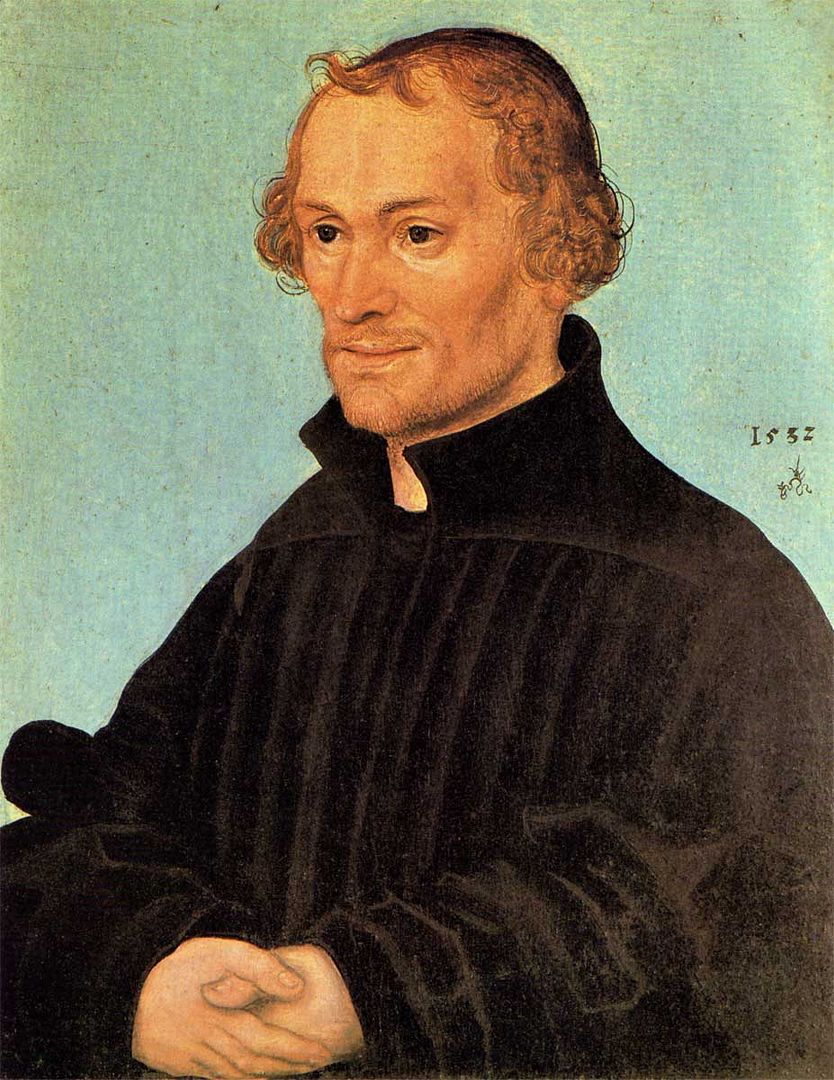
•"The Church is the congregation of saints, in which the Gospel is rightly taught and the Sacraments are rightly administered. And to the true unity of the Church it is enough to agree concerning the doctrine of the Gospel and the administration of the Sacraments. Nor is it necessary that human traditions, that is, rites or ceremonies, instituted by men, should be everywhere alike. As Paul says: One faith, one Baptism, one God and Father of all, etc. Eph. 4, 5. 6." Philipp Melanchthon, Augsburg Confession, Article 7.
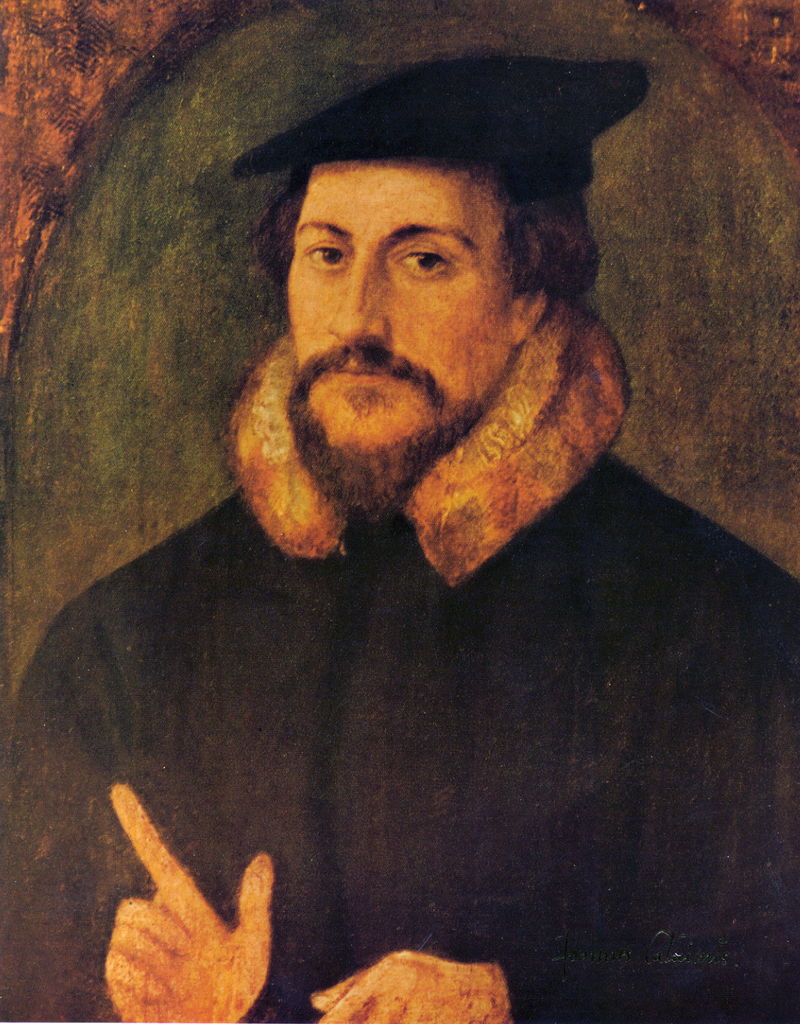 •"Wherever we see the Word of God purely preached and heard, and the sacraments administered according to Christ's institution, there, it is not to be doubted, a church of God exists." John Calvin, Institutes of the Christian Religion, Vol. 4, chapter 1, section 9.
Luther's Seven marks of the Church
Word, Baptism, Eucharist, Office of the Keys [confession and absolution], Office of Ministry, Worship, suffering and persecution [cross].
In plain words, works are not the primary marks of the church; the primary mark of the church is the presence of Jesus Christ, being in Christ, faithfulness in Word and Sacrament. Regarding approaches to liturgy and homiletics, Nor is it necessary that human traditions, that is, rites or ceremonies, instituted by men, should be everywhere alike. As post-modern creatures yet descendants of the industrial, post-industrial, technological and cyber-revolutions, we need to trust that works are neither the major mark of any Christian person nor of the church; but as gifts of the Spirit, to the same extent as faith is a spiritual gift, works happen in strange places and in surprising ways as historical events measurable in time and space. Living in trust as human beings rather than human doings—not doing human but rather being human!
Being American
For a couple of centuries during, taking upon oneself a vital piece of American culture meant to be mainline protestant. Parents would make sure their kids went to Sunday School; often people who'd drifted away or left church would return to church because they wanted their offspring to have a moral education. So true that for ages Americanism almost equaled Protestantism, but as immigrants moved up the alleged social ladder and became financially articulate, they became hyphenated into Italian- Irish- Polish-American, so Roman Catholic Christianity gradually became a way of being American.
One of the hallmarks of the Reformation Church was biblically well-read and theologically well-educated laity—hardly the theologically and biblically close-to-illiterate folks trying to sit comfortably in the pews these days, but maybe they're trying to keep up with the assumption they grew up with that part of being American means church attendance? Word: this afternoon I noticed a song called "Springtime Jesus" in a Sunday worship bulletin. Where in the Bible can I find Springtime Jesus? Sacrament: little perceived hunger for the bread of life and the cup of salvation; too many instances of the blasphemy of rebaptism at the request of parents or significant others.
Being American 2
I mentioned "new liturgical models," so how about looking out from the church and in at secular society's new "liturgical models"? Cities of all sizes in this country and in Europe have been rediscovering neighborhood as a social setting, with the multitude of creatively revived downtown shopping centers designed to facilitate face-to-face and group interaction. Here in San Diego the Gaslamp Quarter immediately comes to mind, as does the Padre's Petco Park, whose(?) presence has been generating new and revitalized housing, with soothsaying that by 2030 I don't recall how many people will work and live downtown. Urban revivals and rebuildings have happened as reactions to decay, displacement and demolition.
Referring once more to our FOW guest's house church, the kind of coming together he describes is what people seek and are finding in the cities these days: casual, routine, social interactions that build trust and grow persons as well as communities. Ironically, I write all of this from the notoriously anomic and anonymous section of Clairemont: a few blocks down the street from here some of the 9/11 terrorists could be so invisible not a single person wondered about their comings and goings or thought anything clandestine was happening right next door. This being the section of town it is, most likely no one thought at all. My condo complex feels anonymous, too, but I'm well aware (poignantly so?) I wisely (really!) grabbed this property as soon as it was available, despite hankering after City Heights and North Park. Time to quit this reflection.
Due to my lack of knowledge and even basic information about the subject, this will be a short blog about the Emerging Church Movement, together with a few slightly connected ideas and observations from my experience.
First question: from what, when or where is the Church, are these churches emerging, or springing forth? Already we're familiar with a structure, entity or (best definition) organic reality known as church, so the more-or-less known church could be the what. From when? A logical response could be the new church is being born from a when of incubation or gestation, usually quantifiable in linear time if not always in a where of geographical longitude and latitude. However, what, when and where all take their place within history's eventfulness, so having started this blog by attempting to seem smart, on to the real topic.
A lot of what I've noticed happening tangential to my immediate world but especially just a little further down the pike convinces me that we [the churches] need to begin imagining new liturgical models, which still will focus on Word and Sacrament in a fully participatory manner—full participation as audacious counterpoint to the entertainment worship that's becoming prevalent in the more politically and socially conservative fundamentalist world and even sneaking in to mainline Protestantism and Roman Catholicism.
Some congregations deliberately quest to become like those other churches across the street, down the boulevard, or in geographically near, but more visibly - at times ostentatiously so - affluent areas. Although I hesitate to write "evangelical," that was the Reformer's word for Protestantism in general and evangelical remains the word for "Protestant" in non-English speaking countries. Nonetheless, my readers know what I'm trying to say! To quote Krister Stendahl, "I hope we all are evangelical!" And I trust we all speak and walk the Gospel Good News, evangelion!
Mennonite, Moravian, Brethren
January's Faith, Order, Witness guest, whose house church is loosely Mennonite-affiliated, told our group the members of the community hadn't resonated with or been able to relate to more conventional churches at least for some time—if ever. When our mainline group asked, But is it sacramental??? He replied yes: we celebrate eucharist every week and we study the Word—rather, the Word studies us! He didn't mention baptism, though I'm aware Mennonites are Anabaptists and as such, officially have a low, essentially functional (sign of grace) rather than sacramental (mighty act of God and means of grace) view of baptism, despite affirming its necessity in obedience.
Our January visitor explained that his church first receives people into membership, then teaches them, and as a gradual process they assume appropriate Christian behaviors and lifestyle. In the formal Faith Journey I compiled a couple years ago, I referred to "performing the scriptures," and that particular house church tries doing exactly that, so as individuals and as community they'll become transformed into the shape of the biblical narrative as the Word re-shapes and re-forms them. But how do you line out the history of the people of God journeying in trust from slavery into servanthood? From bondage into personhood? From individualism into covenantal community? Could it happen, can it be done, by walking that walk oneself, the arduous, sometimes surprisingly joy-filled trek from pseudo-dependence upon self to total dependence upon God and community, so it becomes our (your, my) testimony to tell? That could be an exciting and a contagious way to live!
For both children and adults, the old model for full church membership was catechesis first and then full membership; however, the non-Anabaptist (Roman and Anglo Catholic, as well as we who formally identity with the Reformation's "Right Wing" ok, Lutheran and Reformed...) churches long have assumed baptized infants and youngsters as members. On Sundays and festival days the early church allowed catechumens to remain at worship only through the liturgy of the Word—the eucharistic portion was exclusively for the baptized. These days I'm giving that some thought!
Culturally Congruent=Counter-Culturally Incongruent
A dozen or more years ago "you are what you eat" was a buzz-phrase. During those same yesteryears, writing about a meeting of the local Lutheran-Episcopal Dialogue (styled LED), rather than getting arcanely theological since I wrote the paper for intro cultural anthro or anthro of religion, I observed one of the ways to be yuppie was to eat quiche and salad accompanied by box wine, though as I recall, the AELC congregation hosting the event was German in origin and probably served good wine during the repast (I'm relatively undiscriminating and quite unknowledgeable regarding spirits), especially since Angelica of Franciscan California mission origin was their usual sacramental wine.
At least the food part of the event was congruent with the current culture, though the worship and discussion sections weren't! I also stated that in every culture, food has immense symbolic meaning, and particular foods become identified with and readily recognized as belonging to certain lifestyles, and thus are capable of symbolizing those lifestyles. Early on people learn to decode what a specific configuration of food means as class, as ethnic, or as personal symbol.
In each of our lives, food is an essential part of the creation and sustenance of the self-image each one of us determines both consciously and unconsciously, and that consciously and unconsciously gets read, then received or rejected by others; whether high or low, ethnic or vernacular, cuisine is major ingredient in the interaction between individual self-definition and society's definition of that person. And a causative factor in class mobility: change your diet, change your life. Here's my invitation for you to translate this entire paragraph into Christianese?
Korean Presbyterian – assume both words are adjectives rather than nouns
The blazing success of evangelization in Korea by the Presbyterian branch of the Church is well-known, but I heard about a Korean Christian telling an American Presbyterian it was wonderful Presbyterians brought the flower of the gospel to Korea, but they definitely did not need the flowerpot!
About an hour ago I heard Bruce Hornsby and the Range singing When the sun goes down on the Water Town,...or, in my case, when the sun goes down on Watertown, Massachusetts, where I lived during my last semester in seminary. When the created sun goes down on anytown, without a doubt it rises the next morning on that same town unless it's rainy and overcast, but it rises everywhere else, too, sometimes at the same chronological hour, sometimes at different hours, but every sunsets and sunrises happens on history in motion—on a venue of God's creation and redemption.
Being Christian
One more time:•"The Church is the congregation of saints, in which the Gospel is rightly taught and the Sacraments are rightly administered. And to the true unity of the Church it is enough to agree concerning the doctrine of the Gospel and the administration of the Sacraments. Nor is it necessary that human traditions, that is, rites or ceremonies, instituted by men, should be everywhere alike. As Paul says: One faith, one Baptism, one God and Father of all, etc. Eph. 4, 5. 6." Philipp Melanchthon, Augsburg Confession, Article 7.
•"Wherever we see the Word of God purely preached and heard, and the sacraments administered according to Christ's institution, there, it is not to be doubted, a church of God exists." John Calvin, Institutes of the Christian Religion, Vol. 4, chapter 1, section 9.Luther's Seven marks of the Church
Word, Baptism, Eucharist, Office of the Keys [confession and absolution], Office of Ministry, Worship, suffering and persecution [cross].
In plain words, works are not the primary marks of the church; the primary mark of the church is the presence of Jesus Christ, being in Christ, faithfulness in Word and Sacrament. Regarding approaches to liturgy and homiletics, Nor is it necessary that human traditions, that is, rites or ceremonies, instituted by men, should be everywhere alike. As post-modern creatures yet descendants of the industrial, post-industrial, technological and cyber-revolutions, we need to trust that works are neither the major mark of any Christian person nor of the church; but as gifts of the Spirit, to the same extent as faith is a spiritual gift, works happen in strange places and in surprising ways as historical events measurable in time and space. Living in trust as human beings rather than human doings—not doing human but rather being human!
Being American
For a couple of centuries during, taking upon oneself a vital piece of American culture meant to be mainline protestant. Parents would make sure their kids went to Sunday School; often people who'd drifted away or left church would return to church because they wanted their offspring to have a moral education. So true that for ages Americanism almost equaled Protestantism, but as immigrants moved up the alleged social ladder and became financially articulate, they became hyphenated into Italian- Irish- Polish-American, so Roman Catholic Christianity gradually became a way of being American.
One of the hallmarks of the Reformation Church was biblically well-read and theologically well-educated laity—hardly the theologically and biblically close-to-illiterate folks trying to sit comfortably in the pews these days, but maybe they're trying to keep up with the assumption they grew up with that part of being American means church attendance? Word: this afternoon I noticed a song called "Springtime Jesus" in a Sunday worship bulletin. Where in the Bible can I find Springtime Jesus? Sacrament: little perceived hunger for the bread of life and the cup of salvation; too many instances of the blasphemy of rebaptism at the request of parents or significant others.
Being American 2
I mentioned "new liturgical models," so how about looking out from the church and in at secular society's new "liturgical models"? Cities of all sizes in this country and in Europe have been rediscovering neighborhood as a social setting, with the multitude of creatively revived downtown shopping centers designed to facilitate face-to-face and group interaction. Here in San Diego the Gaslamp Quarter immediately comes to mind, as does the Padre's Petco Park, whose(?) presence has been generating new and revitalized housing, with soothsaying that by 2030 I don't recall how many people will work and live downtown. Urban revivals and rebuildings have happened as reactions to decay, displacement and demolition.
Referring once more to our FOW guest's house church, the kind of coming together he describes is what people seek and are finding in the cities these days: casual, routine, social interactions that build trust and grow persons as well as communities. Ironically, I write all of this from the notoriously anomic and anonymous section of Clairemont: a few blocks down the street from here some of the 9/11 terrorists could be so invisible not a single person wondered about their comings and goings or thought anything clandestine was happening right next door. This being the section of town it is, most likely no one thought at all. My condo complex feels anonymous, too, but I'm well aware (poignantly so?) I wisely (really!) grabbed this property as soon as it was available, despite hankering after City Heights and North Park. Time to quit this reflection.
Friday, April 07, 2006
...the world celebrates...
...the world celebrates the love of God in the world celebrates...
I had to post this! Many moons ago I did graphics of it for our church newsletter and for a poster in the social hall; though I don't recall whether or not it's original, it sounds like something I'd still say today.
I had to post this! Many moons ago I did graphics of it for our church newsletter and for a poster in the social hall; though I don't recall whether or not it's original, it sounds like something I'd still say today.
Saturday, March 18, 2006
Remembering and Belonging
It must be Lent! A few days ago this year's edition of the Church Prayer Rug (exactly the same as last year's and the year before last's) arrived in the snail mail. My remarks during Lent 2005 still stand but I need to say more. For the past week I've been reading Walter Brueggemann's Texts That Linger, Words That Explode: Listening to Prophetic Voices. I've read enough of what he's written to consider myself both moderately Brueggemann-ized and close to Brueggemann-ian, but in this blog, which includes permutations of my own ideas influenced by and/or combined with WB's, I won't refer to any particular books, passages or chapters, since it'd be difficult to separate out one of his books from another and almost impossible to differentiate my ideas from his.
Baptism
The scandal of baptism! I've blogged so very much about the sacraments, though possibly(?) more about baptism than about the Eucharist, and as months and years hasten by, I've arrived at an increasingly sacramental worldview, but still I'll go on record with the protestant "two only" formally liturgical aka dominical sacraments. Baptized, we no longer belong to ourselves or to a simply nuclear biological family of origin, but rather God and the church claim us in covenant...baptized, we live reborn into the water of Jesus' birth and we are alive in the fire of his death—the transforming, rebirthing power of the cross. Baptized, we no longer live under the reign of death, its idols and its artifacts, but we thrive in, with and under the sovereignty of Life. Baptized, we live together as an alternative community countering the individualisms of covetousness, greed, commoditization, consumption, superfluity, satiation, and (ultimately) despair. How do you like my Pauline list?! :) ;) Living baptized, we need to remember the story of God's people, our story, and our mutually covenanted identity, leading us to the joyful responsibility of...
Remembering
Remember, remember: tell the story, relate the history, recount the narrative. WB points out that proclaiming and teaching Heilsgeschichte memories is not mainly for the outsiders but primarily for us insiders, who easily, quickly and guiltlessly forget the liberating desert experiences that forged and continues shaping our identity, which, after all, is living in the freedom and responsibility of covenantal community, gathered in the shadow of the cross around Word and Sacrament. He also suggests that most likely during the deuteronomic period of Assyrian dominance Israel first began celebrating the Passover liturgy with its sacramental reenactment of deliverance from Egypt...and he mentions Deuteronomy's intensely covenantal theology. These days the powers-that-be also are violently (and sometimes deviously) brutalizing ones that we cannot avoid coming in contact with. How, then, will we respond? Will we remember who we are?
Obedience
Brueggemann always is huge on obedience! In at least one of his books I've read, he describes the Church as the assembly that observes the Commandments, the Sabbath and the Tithe. Again I'll mention his reminding us Luther begins his Small Catechism, traditional preparation for First Communion, with the Ten Commandments—Sinai Covenant, specifically. After all, says WB, it is the God of the Commandments with whom we commune! And he observes that Holy Communion is "pre-Eucharist," though our receiving Communion is but one facet of the Eucharistic liturgy...
Sabbath: not only an aspect of our in-God-created-ness, but Sabbath-keeping reminds us we are human beings and not human doings.
The Tithe: who owns us? To what Lord do we answer? Of whose property and assets are we stewards? It's about caring for the gifts we have, about sharing and using them in service to others—Church Prayer Rug and its ethos notwithstanding, the way of the prophets and the way of Jesus of Nazareth is not exactly about petitioning heaven and getting a windfall in investment capital, real estate or social position! Yahweh of Shalom sufficiency is the God of Jubilee Justice, Lord of commonwealth, not a deity of superfluous particular wealth. Jesus' God is the One who gifts with extravagant mercy and boundless love and whose Spirit draws us together in Pentecostal fire. Now really, does that sound like the tawdry emptiness of the Church Prayer Rug god's casino-style payoffs?
Recently
Reverting to the here and the now, a phenomenon (an abomination, an anathema such as the Church Prayer Rug) explicates the fact that overall, at this time in history, the church does not have the well-educated laity that was such a Reformation hallmark. Last Saturday evening I participated in another session(!) of Presbyterian Bingo (notice I'm not linking to the church that sponsored it?!)...a friend in attendance, who also is theologically inclined, told me Martin Luther loved games and since we were playing for prizes rather than trying to spring souls from timeless torment, the activity qualified as big "P" Protestant. That's the church where the youth held sidewalk sales during Sundays in Advent a few years ago! Sales on Sundays!?
Cornel West
To paraphrase Cornel West, "We are people of hope. Why do we party on Friday night? Why do we go to church on Sunday?" People of hope! A living hope set on the Living One Whose final Word always is resurrection. Those Friday night parties? Payday in the inner city, sustenance for living beyond subsistence existence once again, but not just for a single solitary person—for everyone! How do we party? With dance, song, talk, by laughing, celebrating together with savory food, the fruit of earth's harvest. Together, because everyone has gotten a slice of the wages, a piece of the common-wealth: an irresistible foretaste of the feast to come. Many of us observe Sundays as our Sabbath and worship day. We worship together, because we hold God's promises in common and, after all, every Sunday is anamnesis of Resurrection, of Easter, realization of the fullness of salvation and also a foretaste of the promised feast to come. This isn't a proprietary "personal Jesus" an individual might imagine they could own—it's the crucified and risen Christ Jesus who is our Lord, who has bought us and owns us, and to whom we owe allegiance, responsiveness and our very lives.
Remembering and belonging? When you remember, you will know you do belong!
Baptism
The scandal of baptism! I've blogged so very much about the sacraments, though possibly(?) more about baptism than about the Eucharist, and as months and years hasten by, I've arrived at an increasingly sacramental worldview, but still I'll go on record with the protestant "two only" formally liturgical aka dominical sacraments. Baptized, we no longer belong to ourselves or to a simply nuclear biological family of origin, but rather God and the church claim us in covenant...baptized, we live reborn into the water of Jesus' birth and we are alive in the fire of his death—the transforming, rebirthing power of the cross. Baptized, we no longer live under the reign of death, its idols and its artifacts, but we thrive in, with and under the sovereignty of Life. Baptized, we live together as an alternative community countering the individualisms of covetousness, greed, commoditization, consumption, superfluity, satiation, and (ultimately) despair. How do you like my Pauline list?! :) ;) Living baptized, we need to remember the story of God's people, our story, and our mutually covenanted identity, leading us to the joyful responsibility of...
Remembering
Remember, remember: tell the story, relate the history, recount the narrative. WB points out that proclaiming and teaching Heilsgeschichte memories is not mainly for the outsiders but primarily for us insiders, who easily, quickly and guiltlessly forget the liberating desert experiences that forged and continues shaping our identity, which, after all, is living in the freedom and responsibility of covenantal community, gathered in the shadow of the cross around Word and Sacrament. He also suggests that most likely during the deuteronomic period of Assyrian dominance Israel first began celebrating the Passover liturgy with its sacramental reenactment of deliverance from Egypt...and he mentions Deuteronomy's intensely covenantal theology. These days the powers-that-be also are violently (and sometimes deviously) brutalizing ones that we cannot avoid coming in contact with. How, then, will we respond? Will we remember who we are?
Obedience
Brueggemann always is huge on obedience! In at least one of his books I've read, he describes the Church as the assembly that observes the Commandments, the Sabbath and the Tithe. Again I'll mention his reminding us Luther begins his Small Catechism, traditional preparation for First Communion, with the Ten Commandments—Sinai Covenant, specifically. After all, says WB, it is the God of the Commandments with whom we commune! And he observes that Holy Communion is "pre-Eucharist," though our receiving Communion is but one facet of the Eucharistic liturgy...
Sabbath: not only an aspect of our in-God-created-ness, but Sabbath-keeping reminds us we are human beings and not human doings.
The Tithe: who owns us? To what Lord do we answer? Of whose property and assets are we stewards? It's about caring for the gifts we have, about sharing and using them in service to others—Church Prayer Rug and its ethos notwithstanding, the way of the prophets and the way of Jesus of Nazareth is not exactly about petitioning heaven and getting a windfall in investment capital, real estate or social position! Yahweh of Shalom sufficiency is the God of Jubilee Justice, Lord of commonwealth, not a deity of superfluous particular wealth. Jesus' God is the One who gifts with extravagant mercy and boundless love and whose Spirit draws us together in Pentecostal fire. Now really, does that sound like the tawdry emptiness of the Church Prayer Rug god's casino-style payoffs?
Recently
Reverting to the here and the now, a phenomenon (an abomination, an anathema such as the Church Prayer Rug) explicates the fact that overall, at this time in history, the church does not have the well-educated laity that was such a Reformation hallmark. Last Saturday evening I participated in another session(!) of Presbyterian Bingo (notice I'm not linking to the church that sponsored it?!)...a friend in attendance, who also is theologically inclined, told me Martin Luther loved games and since we were playing for prizes rather than trying to spring souls from timeless torment, the activity qualified as big "P" Protestant. That's the church where the youth held sidewalk sales during Sundays in Advent a few years ago! Sales on Sundays!?
Cornel West
To paraphrase Cornel West, "We are people of hope. Why do we party on Friday night? Why do we go to church on Sunday?" People of hope! A living hope set on the Living One Whose final Word always is resurrection. Those Friday night parties? Payday in the inner city, sustenance for living beyond subsistence existence once again, but not just for a single solitary person—for everyone! How do we party? With dance, song, talk, by laughing, celebrating together with savory food, the fruit of earth's harvest. Together, because everyone has gotten a slice of the wages, a piece of the common-wealth: an irresistible foretaste of the feast to come. Many of us observe Sundays as our Sabbath and worship day. We worship together, because we hold God's promises in common and, after all, every Sunday is anamnesis of Resurrection, of Easter, realization of the fullness of salvation and also a foretaste of the promised feast to come. This isn't a proprietary "personal Jesus" an individual might imagine they could own—it's the crucified and risen Christ Jesus who is our Lord, who has bought us and owns us, and to whom we owe allegiance, responsiveness and our very lives.
Remembering and belonging? When you remember, you will know you do belong!
Friday, March 17, 2006
The Desert, the Cross and Easter
Screen capture: Desert Sonoran Easter, ground zero
Pascal daybreak: Lepus sits tamed at Orion hunter's feet
evoking the kairos past when
Noah's God hung his weapon bow
high in the sky, surrendering disarmed
Divine capitulation to creation
for earth to claim covenant
Desert dawn's eastered hues quietly course throughout creation
equal desert's constant colors
Friday's cross seemed desolate
but from mortality's tree
on Sunday's morn bursts forth the Tree of Life:
earth all-living breathes again!
© Leah Chang
Check out this related blog from Good Friday, 2005.
Pascal daybreak: Lepus sits tamed at Orion hunter's feet
evoking the kairos past when
Noah's God hung his weapon bow
high in the sky, surrendering disarmed
Divine capitulation to creation
for earth to claim covenant
Desert dawn's eastered hues quietly course throughout creation
equal desert's constant colors
Friday's cross seemed desolate
but from mortality's tree
on Sunday's morn bursts forth the Tree of Life:
earth all-living breathes again!
© Leah Chang
Check out this related blog from Good Friday, 2005.
Wednesday, March 15, 2006
Lent 2B Considerations: Abraham and Us
Texts: Genesis 17:1-7; Romans 4:13, 16
Opening and closing prayers are based on Marty Haugen’s Gather Us In.
God of Heaven and Earth,
Here in this place, new light is streaming; now is the darkness vanished away.
See in this place our fears and our dreamings, brought here to you in the light of this day.
Here in this room the new light is shining; now is the Kingdom and now is the day!
Gather us in and hold us forever; gather us in and make us your own
Gather us in, all peoples together—fire of love in our flesh and our bone! Amen!
Abraham and Us
When Abram was 99 years old, God appeared to him and God called Abram by his name. But why did God start a conversation with Abram? The passage we just heard tells us: to make a covenant, a binding agreement, to form an endless, everlasting relationship.
Throughout the witness of the Bible, time and time again, God reaches out and speaks to the people of his creation—God still speaks to us today! Of course, God knows each of our names, too…
Maybe you noticed in this account God is the person who acts first, speaks first, and begins the encounter into relationship? Not only does God call Abram by name; God comes to Abram right where he is, in common, familiar surroundings, in the same way God meets us right where we are, in everyday places—like right here today, for example!
Okay. So God met Abram in Abram’s here-and-now. But what else was happening?
Abram was extremely unhappy with his situation; IOW, he wanted and needed a lot that he didn’t have, and no way whatsoever was Abram – or any human – in a position to make that happen. Besides Abram and his wife having the sorrow as a couple of not having the children they desired, being childless in that era placed them in a position of cultural dis-grace: unenviable, to say the least, exactly the way every one of us finds ourselves in a situation (or sometimes multiples ones all at the same time) no one would desire or choose.
Yes. Abram wanted someone to carry on his family…and his name! But in addressing Abram God not only proposes his side of a covenant; God has a request of Abram, asking him, “Walk in my presence!”
Reading through scripture, we keep meeting God as Maker of covenants with creation, initiator of gracious agreements, partnerships with creation! Later on in the world’s history and in our own lives, we meet Abram’s God – and Jesus Christ’s God – as the One who rolls death backwards into new life! This God, whose final word always is resurrection, tells Abram, “Walk in my presence!!!” Live your days and your nights beside me, simply be in the same place as the God whose Word calls new life our of death.
We could admit Abram – now given a new name, another identity of Abraham – wasn’t yet physically in the grave, but in finite, human terms, his physical existence could evaporate at any moment and he had no human hope of receiving his heart’s desire. What else did God ask Abraham? To be wholehearted! Some versions say, “be blameless.” For his heart, his desire and his will to line up with God’s heart, will and desire–surely impossible in solitary human terms, but since he’d be walking with the Lord of Life, it definitely could and would happen, and by God’s action alone. That’s known as grace!
God promises Abraham not just one or two or a few offspring, but a throng, a noisy assembly of people as his descendants! And that’s where we come into Abram’s/Abraham’s story, the story of the people of God. Children of Abraham! That’s us! Let’s hear what the apostles Paul says about us in chapter 4 of his letter to the church at Rome:
Not because of anything Abraham did or would do: not through any rule or law or rule of law, but simply through trusting God’s promise enough to say “Yes” to him and to begin walking and living God’s way.
Fast forward: Abraham to Jesus to Paul to San Diego 2006. We know that in the cross of Jesus Christ, God has made the ultimate, the last covenant of grace with all creation, with each one of us. In Jesus Christ, God draws all of us into his life so we can walk with him in trust. By trusting God in Christ, we not only live as Abraham’s children, but also as sons and daughters of the Living God, who now gives us a new name, Christian!
God charged Abraham, “Walk with me and be blameless.” In Jesus Christ, God sees us as holy, complete, wholehearted and without blame: In God’s world, ultimately death, disappointment, grief, betrayal and loss are rolled backwards into new life, renewed hope and abounding joy.
In Jesus Christ, Abraham’s story becomes our story. God calls each of us by name, invites us into his gracious presence, makes an unbreakable, eternal covenantal agreement between each of us and him and…the exceedingly, exceedingly large assembly of Abraham’s descendants known as the Church of Jesus Christ. God charges each of us to trust his Word of promise enough to walk with him, to live in the way Jesus shows, one step at a time, all the rest of our days. God promises to remain with us and God’s greatest joy is for us, Abraham’s daughters and sons, to be in his presence.
Let’s close in prayer:
God, you always meet us,
Not in some heaven, light years away, but here you shall call your sons and your daughters, call us to you to be light of this day.
Gather us in and hold us forever; gather us in, all peoples together.
Call to us now, and we shall awaken, walking with you at the sound of our name
In the name of Jesus Christ, crucified and risen for the life of the world,
Amen!
Opening and closing prayers are based on Marty Haugen’s Gather Us In.
God of Heaven and Earth,
Here in this place, new light is streaming; now is the darkness vanished away.
See in this place our fears and our dreamings, brought here to you in the light of this day.
Here in this room the new light is shining; now is the Kingdom and now is the day!
Gather us in and hold us forever; gather us in and make us your own
Gather us in, all peoples together—fire of love in our flesh and our bone! Amen!
Genesis 17:1-7
Now when Avram was ninety years and nine years old, Yahweh was seen by Avram and said to him: I am God Almighty, El Shaddai, the real God of the Mountains! Walk in my presence! And be wholehearted! I give my covenant between me and you, I will make you exceedingly, exceedingly many.
Avram fell upon his face. God spoke with him, saying:
As for me, here, my covenant is with you, so that you will become the father of a throng of nations. No longer shall your name be called Avram, rather shall your name be Avraham, for I will make you father of a throng of Nations!
I will cause you to bear fruit exceedingly, exceedingly, I will make nations of you, (yes,) Kings will go out from you! I establish my covenant between me and you and your descendants after you, throughout all generations, as a covenant for the ages, to be God to you and to your descendants after you.
Translation from The Five Books of Moses: Genesis, Exodus, Leviticus, Numbers, Deuteronomy, Everett Fox (The Schocken Bible, Volume 1)
Abraham and Us
When Abram was 99 years old, God appeared to him and God called Abram by his name. But why did God start a conversation with Abram? The passage we just heard tells us: to make a covenant, a binding agreement, to form an endless, everlasting relationship.
Throughout the witness of the Bible, time and time again, God reaches out and speaks to the people of his creation—God still speaks to us today! Of course, God knows each of our names, too…
Maybe you noticed in this account God is the person who acts first, speaks first, and begins the encounter into relationship? Not only does God call Abram by name; God comes to Abram right where he is, in common, familiar surroundings, in the same way God meets us right where we are, in everyday places—like right here today, for example!
Okay. So God met Abram in Abram’s here-and-now. But what else was happening?
Abram was extremely unhappy with his situation; IOW, he wanted and needed a lot that he didn’t have, and no way whatsoever was Abram – or any human – in a position to make that happen. Besides Abram and his wife having the sorrow as a couple of not having the children they desired, being childless in that era placed them in a position of cultural dis-grace: unenviable, to say the least, exactly the way every one of us finds ourselves in a situation (or sometimes multiples ones all at the same time) no one would desire or choose.
Yes. Abram wanted someone to carry on his family…and his name! But in addressing Abram God not only proposes his side of a covenant; God has a request of Abram, asking him, “Walk in my presence!”
Reading through scripture, we keep meeting God as Maker of covenants with creation, initiator of gracious agreements, partnerships with creation! Later on in the world’s history and in our own lives, we meet Abram’s God – and Jesus Christ’s God – as the One who rolls death backwards into new life! This God, whose final word always is resurrection, tells Abram, “Walk in my presence!!!” Live your days and your nights beside me, simply be in the same place as the God whose Word calls new life our of death.
We could admit Abram – now given a new name, another identity of Abraham – wasn’t yet physically in the grave, but in finite, human terms, his physical existence could evaporate at any moment and he had no human hope of receiving his heart’s desire. What else did God ask Abraham? To be wholehearted! Some versions say, “be blameless.” For his heart, his desire and his will to line up with God’s heart, will and desire–surely impossible in solitary human terms, but since he’d be walking with the Lord of Life, it definitely could and would happen, and by God’s action alone. That’s known as grace!
God promises Abraham not just one or two or a few offspring, but a throng, a noisy assembly of people as his descendants! And that’s where we come into Abram’s/Abraham’s story, the story of the people of God. Children of Abraham! That’s us! Let’s hear what the apostles Paul says about us in chapter 4 of his letter to the church at Rome:
Romans 4
13 God did not give that famous promise of inheriting the world to Abraham and his descendants because of something Abraham did or would do, but because God decided to put everything together for him;; Abraham entered into that covenant when he trusted God. 16 ...the fulfillment of God’s promises, God’s covenant, entirely depends on trusting God and taking what God does into our lives as pure gracious gift.Remember, Abraham, is the father of us all – not our racial father – that’s reading the story backwards! He is our faith father, our ancestor in trust.
Not because of anything Abraham did or would do: not through any rule or law or rule of law, but simply through trusting God’s promise enough to say “Yes” to him and to begin walking and living God’s way.
Fast forward: Abraham to Jesus to Paul to San Diego 2006. We know that in the cross of Jesus Christ, God has made the ultimate, the last covenant of grace with all creation, with each one of us. In Jesus Christ, God draws all of us into his life so we can walk with him in trust. By trusting God in Christ, we not only live as Abraham’s children, but also as sons and daughters of the Living God, who now gives us a new name, Christian!
God charged Abraham, “Walk with me and be blameless.” In Jesus Christ, God sees us as holy, complete, wholehearted and without blame: In God’s world, ultimately death, disappointment, grief, betrayal and loss are rolled backwards into new life, renewed hope and abounding joy.
In Jesus Christ, Abraham’s story becomes our story. God calls each of us by name, invites us into his gracious presence, makes an unbreakable, eternal covenantal agreement between each of us and him and…the exceedingly, exceedingly large assembly of Abraham’s descendants known as the Church of Jesus Christ. God charges each of us to trust his Word of promise enough to walk with him, to live in the way Jesus shows, one step at a time, all the rest of our days. God promises to remain with us and God’s greatest joy is for us, Abraham’s daughters and sons, to be in his presence.
Let’s close in prayer:
God, you always meet us,
Not in some heaven, light years away, but here you shall call your sons and your daughters, call us to you to be light of this day.
Gather us in and hold us forever; gather us in, all peoples together.
Call to us now, and we shall awaken, walking with you at the sound of our name
In the name of Jesus Christ, crucified and risen for the life of the world,
Amen!
Subscribe to:
Posts (Atom)