Sunday, December 04, 2005

California: Anomie - Anchors - Attachments

Edited some for desert spirit's fire! from my original on currently inactive blogspot this far by faith.

From The Road to Daybreak by Henri J. M. Nouwen:
[California] is a land to which people go to be free from tradition, constraints, and an oppressive history. But the price for this freedom is high: individualism, competition, rootlessness, and frequently loneliness and a sense of being lost. {page 198}

Freedom from tradition and constraints, but at a price... rootlessness:again I'll cite myself—I've posted this or something comparable several places, so I won't link to it:
Feeling rootless is part of the nature and reality of living the gospel; exactly like the Israelites of the Exodus, in Jesus Christ we live in the precariousness of nomadic, unsettled existence, daily undergoing baptism's departure from that old life and entrance into the new, each day recalling and reliving the perilous and risk-filled underwater moment in that watery font of death that at the same time is sustaining womb of new life, the fragile instant we need totally to trust the baptizer, who represents God, the One Who really baptizes.

California Counties mapThe early church baptized in the flowing water of a river: just as every life moment is different, you can't step into the same river more than once! Living baptized means balanced on the threshold between our old lives of slavery to sin and self and our new lives of Eastered freedom for others, and living baptized means some times we also fleetingly experience the fullness of gospeled community. Many times I've pointed out for Israel the River Jordan had been the barrier separating them from the Promised Land and then became the boundary and border of their Promise Landed lives. Likewise, for us, baptism keeps defining us as different from those outside the community of the church at the same time baptism is an event that counts us into the covenanted people of God of all generations. Paul / Saul addresses his letter to the Corinthian Church "...together with all those who in every place call on the name of our Lord Jesus Christ, both their Lord and ours! Wherever we go we can find an assembly of Christians who call Jesus Lord, so we always can continue journeying together.

As I assess my history once more, I realize what little support it takes for me to feel alive again; I enjoyed Thanksgiving 2005 dinner and the afternoon with friends; I felt whole and well at their house and back at my own place afterwards. However, by Friday, the day after, doubts, lonesomeness and devastation came back ultra-big-time. Nouwen mentions loneliness and lostness, which still is exactly where I remain. My desire to find something, anything, to wipe out most of the memories is back, too. But returning to this blog's title: California: Anomie, Anchors and Attachments.

I've said just a tad about California, Land o'Gold, so on to a-nomen, not-of-the-law anomie. You may remember studying Sociology with its trilogy of morose-looking practitioners: Émile Durkheim; Max Weber, and Karl Marx? In addition to what I learned about him in sociology classes, not surprisingly my economics curriculum included a semester-long course on Marx. But regarding anomie and anomic, currently I'm living Clairemont, the section of San Diego that at one time (maybe through the 1950s?) was a leading New Town, and the near-anonymity this part of the city now bestows on its residents is one of Clairemont's interesting aspects. As an example, some of the 9/11 terrorists lived in an apartment building not far from my residence and carried on their planning under their immediate neighbors' non-watchful eyes—that's very "Clairemont." When I lived and served in Dorchester, Massachusetts, one time I was on the subway from downtown, a stranger looked intently at me and commented on the Dorchester 3-decker houses t-shirt I was wearing: "I wouldn't advertise it!" Just maybe Living in Clairemont isn't much more something to broadcast than Living in Dorchester was? Still is?

Too often I think of but rarely speak about my sense of desolation in unaccountably losing the work and the relationships that literally defined me and absolutely helped anchor my life. The usual theo-speak insists Jesus Christ, our solid rock that never sinks, anchors us, whatever the storm. But better theology – particularly New Testament theology – insists the Church is the body of the Risen Christ and the local assembly of saints is a huge part of the evidence Jesus lives! My way-too-infrequent experiences of belonging have been too fragile and far too fleeting for comfort. Okay, so it's not about comfort, but how can a person function at all without a minimal level of being comfortably at home? In other words, no longer lost?

I wonder what to make of this concluding paragraph to my original post? How does it fit in with the rest of what I've written?

The God of Christianity—God of Abraham, Isaac and Jacob, God of the Hebrew prophets, God and Father of Jesus Christ, self-reveals as a God of passionate attachments—to creation, and particularly to the people of his creation. God creates us in the Image of the Divine, and calls us to live up to the amazing image of fully alive people who jump into life with all four feet!


Wednesday, November 23, 2005

Thanksgiving, 2005, San Diego, California.

These years have given me bitter deprivation and some sweet recompense...a few years back, as I was preparing to leave Salt Lake City, the participants in the Tuesday morning Bible study I sometimes facilitated gave me a gift from one of the local Christian stores; I keep it on the windowsill in my bedroom so I can regularly remember that group, admire the design and make note of the text! It's a 6" x 5" plaque decorated with flowery flourishes and features a version of Philippians 4:6, with bold text as I've formatted:
Don't worry about anything – instead, pray about everything. Tell God your needs and don't forget to thank Him for His answers.
Philippians' legendary author frequently is called the Theologian of Grace, and I'm recalling the times Paul wrote about again, again and once more again finally getting the "aha" of grace and the obligatory response in thankful living and sacrificial giving. From centuries later, Martin Luther also has been called a Theologian of Grace—no one remotely matches the way Paul and Martin present and juxtapose the infinite demands and the infinite freedom of both law and grace! For this eve of the American Thanksgiving for Harvest Festival, here's Luther, from his 1529 Small Catechism:
Give us today our daily bread.

To be sure, God provides daily bread, even to the wicked, without our prayer, but we pray in this petition that God may make us aware of his gifts and enable us to receive our daily bread with thanksgiving.
Luther then asks,
What is meant by daily bread?

Everything required to satisfy our bodily needs, such as food and clothing, house and home, fields and flocks, money and property; a pious spouse and good children, trustworthy servants, godly and faithful rulers, good government; seasonable weather, peace and health, order and honor; true friends, faithful neighbors, and the like.
And another, far more recent explanation of the fourth petition of the Lord's Prayer—from the Study Catechism 1998 of the Presbyterian Church (U.S.A.):
Question 130. What is meant by the fourth petition, "Give us today our daily bread"?

We ask God to provide for all our needs, for we know that God, who cares for us in every area of our life, has promised us temporal as well as spiritual blessings. God commands us to pray each day for all that we need and no more, so that we will learn to rely completely on God. We pray that we will use what we are given wisely, remembering especially the poor and the needy. Along with every living creature we look to God, the source of all generosity, to bless us and nourish us, according to the divine good pleasure.
Dag Hammarskjöld, from Markings:

For all that has been, thanks. For all that will be, yes.

Amen and Amen!!!

Monday, November 14, 2005

God's Politics: Jim Wallis

This coming Wednesday at our Faith, Order and Witness meeting, it will be my turn to moderate our discussion—parts III and IV of God's Politics: Why the Right Gets It Wrong and the Left Doesn't Get It [HarperSanFrancisco, January 1, 2005 | ISBN: 0060558288] by activist evangelical preacher and Sojourners sage Jim Wallis. To keep our discussion on track, I've made chapter-by-chapter notes to take with me, but for now I want to say a little about my perception of the book thus far. Some of this might interest some of my readers. Here's a beginning, then.

General Observations

God's Politics cover Although Jim Wallis is a pastor, technically this is not an actual theology book. However, throughout what I've read so far, over and over again Wallis underscores the central biblical themes of justice, equality and human worth. He's well aware of the biblical texts (of course!) and of the incessant, insidious temptations of imperial religion, which at one and the same time seeks to turn God into a flunky at humanity's beck and call while ultimately seeking to transform humans into gods. Whether initiated and sustained in ecclesiastical quarters or by governmental action and decree, imperial religion is imperial religion, needs to be prophetically exposed and revealed for the agent of death it is and at the same time, the people – "the nations" – need life-affirming and life-generating alternatives shown to them. As Jim Wallis reminds us on page 145: The confrontation with evil is a role reserved for God, using imperfect people, churches and nations as God wills. ...to confuse the roles of God and the church with those of the American nation, as George Bush seems to do repeatedly, is a serious theological error that some might say borders of idolatry or blasphemy.

Since I've only been keeping up with the assigned reading, admittedly I haven't finished reading the book, but so far Wallis is outstanding at analysis and at reframing in broader terms the details he lays out, but he's done little about putting the pieces back together again and showing us the foretaste of the apocalyptic vision of a restored humanity - and creation - so necessary to keep us going and for us to know exactly where we're going! At times I'm almost too acutely aware of my background in the theological traditions of the Reformation and their more contemporary updated expressions, but still I miss a consistent and persistent call to live as persons in the shadow of the cross and the light of the empty tomb, which is another way of saying I miss the eschatological vision of a redeemed creation. Nevertheless, on page 153 he finally gets to our lives under the cross...after his assurance on page 151: "...Jesus is Lord. We live in the promise that empires do not last, that the Word of God will ultimately survive the Pax Americana as it did the Pax Romana." On page 167, he quotes Stanley Hauerwas: the world didn't change on September 11, but in 33 A.D. My point exactly! And, the world also changed 33 years earlier, when the tiny defenseless baby in Bethlehem's manger began showing us what divine strength really was like!

Wednesday, November 09, 2005

Pentecost 25A: Proclamation

here's a version of last Sunday's sermon—"a version" because I ended up ditching my script and notes, but the essence of what I said is there (here?)
Matthew 25:1 13
1 "The Reign of Heaven will be like ten bridesmaids who took their lamps and went out to meet the bridegroom. 2 Five of them were silly but the others were wise. 3 The silly ones took their lamps but did not take any oil to light their lamps. 4 However, the wise ones took their lamps and they also carried some oil for the lamps along with them. 5 The bridegroom was taking a long time to arrive, and all ten of the bridesmaids became drowsy and fell asleep.
6 "At midnight the announcement came: 'The bridegroom is here! Come on out to meet him!'
7 "Then all ten of the young girls woke up and trimmed their lamps,8 and the silly ones said to the wise, 'Give us some of your oil because our lamps are going out.'
9 "'No,' the wise ones replied, 'there's not enough for us and for you, as well. You need to go into the marketplace and buy some oil for yourselves.'
10 "But as they went on their way to buy the oil, the bridegroom arrived, and the five wise young bridesmaids who already had oil for their lamps went in to the wedding celebration with him and the door was shut.
11 "Later the other five, the silly young bridesmaids, also arrived and called to the bridegroom, 'Sir! Sir!' they said. 'Open the door to the celebration for us!'
12 "But the groom answered, 'I tell you the truth, I don't know you.'
13 "'Therefore, keep looking out for the Reign of Heaven and be prepared for it, because you do not know the day or the hour of the Lord Jesus' arrival right here in our very midst."

Be Wise, Be Ready
Let's pray together:

All living creatures with the same breathe you sustain
And to your Spirit's well nobody comes in vain.
Give that we understand the language of your call,
Uphold us by your hand; write your name on us all! [C. Michael De Vries, alt.]
Amen!
The story or parable we just heard from Matthew's gospel tells about a bridegroom and a wedding celebration: in the culture of Jesus' world, the about to be married groom would travel from his own house to the home of his intended to conclude the wedding contract. After that, both bride and groom would go back to his house to celebrate the wedding feast; instead of going away on a honeymoon, the wedding couple would hold sort of an open house for their friends and relatives. Just as in this parable, the bridesmaids would wait outside the groom's house. At night they did not allow anyone out in the streets without light, and they didn't have street lights, so you needed to have both lamps and oil to light those lamps with you at all times. No wedding invitations specified a starting time or necessarily a particular day—the groom could arrive whenever, even at midnight or in the middle of the night. Once the wedding festivities began, they locked the door to the groom's house, and no one else could enter the party. In other words, it was not possible to be too early, but it was possible to be too late and miss the opportunity for getting in to the feast and the dancing.

A parable is an allegory—closely related to a metaphor. Many interpreters suggest this passage from Matthew's gospel refers to the marriage, the union in love, between God and the people of God's creation. The parable tells us to prepare and be ready for the "Reign of Heaven" or Rule of God, which, just like the wedding banquet, would arrive at an unspecified time. Throughout history God has given commandments to help people live in ways that begin leading the world into the heavenly reign or rule of God Himself. From the gospel according to Mark, chapter 12:

Mark 12

28 One of the teachers of the law came and…asked Jesus, "Which is the most important of all God's commandments?"
29 Jesus answered, "The most important one is: 'Hear, O Israel, the Lord our God, the Lord is one. 30 Love the Lord your God with all your heart and with all your soul and with all your mind and with all your strength.' 31 The second is: 'Love your neighbor as yourself.' There is no commandment greater than these."

It is impossible for me, for any of you, for anyone completely to keep all of the commandments perfectly all of the time. Jesus Christ came into the world showing us how to live; in his death on Good Friday's cross of Calvary and God's raising him to new life on Easter Sunday dawn, Jesus took the offense of sin and its consequences for us, so we have the gift of forgiveness and new beginnings whenever we break the commandments—even that most essential one to love God, self and one another. The cross of Jesus Christ carries the Great News of the Gospel.

The parable we just heard is almost completely about what we are supposed to do in order to be ready for the Reign of God. But regarding the idea of preparing and waiting for the Reign of God to begin…that's just it: the Lord Jesus Christ already has come, and the grace filled Kingdom of God is here! God is here, making new life out of all the deathliness in this world and in each of our lives. But we need to be prepared, awake and alert, because Jesus Christ, the bridegroom comes not just once, but over and over again, opening wide the door to the Reign of Heaven and inviting all of us into its presence. However, the good news of the gospel goes further than warning us to be ready and prepared; it also tells us there is nothing you and I or anyone can do to get ready for the Lord's coming! In chapter 2 of his letter to the Galatians, the apostle Paul makes clear it is not something I have to do, you need to do, or we have to do, that will cause the love and justice filled Reign of God to begin flowing in our lives and world, because it is by the grace of God we live in the power of the new life granted us in Christ's dying and rising again. As the apostle Paul expresses it:

Galatians 2:16b,20a

16b So we, too, have trusted Christ Jesus, so that we may be made right before God by trust in Christ and not by keeping the law, because by observing the law no one can be righteous. 20a Because of this, I no longer live, but Christ lives in me.

In Jesus Christ, God's loving justice and righteousness flows from the cross as a cascading stream of reviving water washing us clean from any shortcomings, misgivings or transgressions. Christ Jesus' life is with us, in this community, right here and right now. Jesus Christ, the church's bridegroom, comes into this world and into our lives not just once, but over and over again, with a wide open invitation into his feast of hospitality. When we know God's righteousness in Jesus Christ as a free gift from God and we live in the reality of forgiveness and new beginnings, then we can live each day in love and justice for others, and in love for ourselves, as well! Then we can hear Matthew's parable telling us to be ready with a new ending: when the bridegroom, Christ Jesus comes to us, he brings with him enough oil for everyone, making us ready to be lights in one another's lives and lights in our own city.

Yes, God's Reign is something God establishes right here in our midst, but the Reign of Heaven also is something God charges us to help bring to life, by loving God, neighbor and self, by responding wherever we see anyone in need. As we read about Jesus' life in the Gospels, we observe the Reign of God in love and justice in action. When we are in Christ, alive with loving justice and righteousness, we help bring our community and world closer to the Reign of Heaven.

God is right here in our midst with us! Let us be wise and ready, looking around us and among us to see signs of the Reign of God.

To God alone be glory, forever and ever!

Amen!

Tuesday, November 08, 2005

The Joint Declaration on the Doctrine of Justification

joint declaration on the doctrine of justification by faith
Close to a year ago, in December 2004, I began this post and planned to write more (which I've done, but as notes for discussion rather than formal presentation); now 10-months-and-counting later, my intended ideas remain in an outline and I've been thinking and writing about other things, but the Joint Declaration is so important and I am so into being an ecumenist, I needed to post something about it here. Here's the gist of my original post:

Next month—January 2005—at Faith, Order and Witness, again we'll discuss the Joint Declaration; I had made a few notes about some points in the text of the Joint Declaration and about the Annex, and at some point I'd wanted to compile them into at least somewhat coherent form so they could go on this site and possibly I could distribute them...

...at that long-past January meeting, but I got so involved with my usual endeavors of reading theology and writing theology my ideas never made it further than our live discussion at the meeting. Nonetheless, I've included parts of the text we discussed, and here's an overview, resources, and links to the complete document in four languages: The Joint Declaration on the Doctrine of Justification from the World Communion of Reformed Churches.


Preamble

1. The doctrine of justification was of central importance for the Lutheran Reformation of the sixteenth century. It was held to be the "first and chief article"1 [footnote 1 The Smalcald Articles, II,1; Book of Concord, 292.] and at the same time the "ruler and judge over all other Christian doctrines."2 [footnote: 2 "Rector et judex super omnia genera doctrinarum," Weimar Edition of Luther's Works (WA), 39, I, 205.] The doctrine of justification was particularly asserted and defended in its Reformation shape and special valuation over against the Roman Catholic Church and theology of that time, which in turn asserted and defended a doctrine of justification of a different character. From the Reformation perspective, justification was the crux of all the disputes. ...

2. For the Lutheran tradition, the doctrine of justification has retained its special status. Consequently it has also from the beginning occupied an important place in the official Lutheran-Roman Catholic dialogue.

5. The present Joint Declaration has this intention: namely, to show that on the basis of their dialogue the subscribing Lutheran churches and the Roman Catholic Church9 [footnote: 9 The word, "church" is used in this Declaration to reflect the self-understandings of the participating churches, without intending to resolve all the ecclesiological issues related to this term.] are now able to articulate a common understanding of our justification by God's grace through faith in Christ. It does not cover all that either church teaches about justification; it does encompass a consensus on basic truths of the doctrine of justification and shows that the remaining differences in its explication are no longer the occasion for doctrinal condemnations.

1. Biblical Message of Justification

9. In the New Testament diverse treatments of "righteousness" and "justification" are found in the writings of Matthew (5:10; 6:33; 21:32), John (16:8-11), Hebrews (5:3; 10:37f), and James (2:14-26).10 In Paul's letters also, the gift of salvation is described in various ways, among others: "for freedom Christ has set us free" (Gal 5:1-13; cf. Rom 6:7), "reconciled to God" (2 Cor 5:18-21; cf. Rom 5:11), "peace with God" (Rom 5:1), "new creation" (2 Cor 5:17), "alive to God in Christ Jesus" (Rom 6:11,23), or "sanctified in Christ Jesus" (cf. 1 Cor 1:2; 1:30; 2 Cor 1:1). Chief among these is the "justification" of sinful human beings by God's grace through faith (Rom 3:23-25), which came into particular prominence in the Reformation period.

11. Justification is the forgiveness of sins (cf. Rom 3:23-25; Acts 13:39; Lk 18:14), liberation from the dominating power of sin and death (Rom 5:12-21) and from the curse of the law (Gal 3:10-14). It is acceptance into communion with God: already now, but then fully in God's coming kingdom (Rom 5:1f). It unites with Christ and with his death and resurrection (Rom 6:5). It occurs in the reception of the Holy Spirit in baptism and incorporation into the one body (Rom 8:1f, 9f; I Cor 12:12f). All this is from God alone, for Christ's sake, by grace, through faith in "the gospel of God's Son" (Rom 1:1-3).

13. Opposing interpretations and applications of the biblical message of justification were in the sixteenth century a principal cause of the division of the Western church and led as well to doctrinal condemnations. A common understanding of justification is therefore fundamental and indispensable to overcoming that division. ...

3. The Common Understanding of Justification

14. The Lutheran churches and the Roman Catholic Church have together listened to the good news proclaimed in Holy Scripture. This common listening, together with the theological conversations of recent years, has led to a shared understanding of justification. ...

15. In faith we together hold the conviction that justification is the work of the triune God. The Father sent his Son into the world to save sinners. The foundation and presupposition of justification is the incarnation, death, and resurrection of Christ. Justification thus means that Christ himself is our righteousness, in which we share through the Holy Spirit in accord with the will of the Father. Together we confess: By grace alone, in faith in Christ's saving work and not because of any merit on our part, we are accepted by God and receive the Holy Spirit, who renews our hearts while equipping and calling us to good works.11

18. Therefore the doctrine of justification, which takes up this message and explicates it, is more than just one part of Christian doctrine. It stands in an essential relation to all truths of faith, which are to be seen as internally related to each other. It is an indispensable criterion which constantly serves to orient all the teaching and practice of our churches to Christ. When Lutherans emphasize the unique significance of this criterion, they do not deny the interrelation and significance of all truths of faith.

4.5 Law and Gospel

31. We confess together that persons are justified by faith in the gospel "apart from works prescribed by the law" (Rom 3:28). Christ has fulfilled the law and by his death and resurrection has overcome it as a way to salvation. We also confess that God's commandments retain their validity for the justified and that Christ has by his teaching and example expressed God's will which is a standard for the conduct of the justified also.

32. Lutherans state that the distinction and right ordering of law and gospel is essential for the understanding of justification. In its theological use, the law is demand and accusation. Throughout their lives, all persons, Christians also, in that they are sinners, stand under this accusation which uncovers their sin so that, in faith in the gospel, they will turn unreservedly to the mercy of God in Christ, which alone justifies them.

4.6 Assurance of Salvation

34. We confess together that the faithful can rely on the mercy and promises of God. In spite of their own weakness and the manifold threats to their faith, on the strength of Christ's death and resurrection they can build on the effective promise of God's grace in Word and Sacrament and so be sure of this grace.

35. This was emphasized in a particular way by the Reformers: in the midst of temptation, believers should not look to themselves but look solely to Christ and trust only him. In trust in God's promise they are assured of their salvation, but are never secure looking at themselves.

36. Catholics can share the concern of the Reformers to ground faith in the objective reality of Christ's promise, to look away from one's own experience, and to trust in Christ's forgiving word alone (cf. Mt 16:19; 18:18). With the Second Vatican Council, Catholics state: to have faith is to entrust oneself totally to God19, who liberates us from the darkness of sin and death and awakens us to eternal life20. ...

4.7 The Good Works of the Justified

38. According to Catholic understanding, good works, made possible by grace and the working of the Holy Spirit, contribute to growth in grace, so that the righteousness that comes from God is preserved and communion with Christ is deepened. When Catholics affirm the "meritorious" character of good works, they wish to say that, according to the biblical witness, a reward in heaven is promised to these works. Their intention is to emphasize the responsibility of persons for their actions, not to contest the character of those works as gifts, or far less to deny that justification always remains the unmerited gift of grace.

39. The concept of a preservation of grace and a growth in grace and faith is also held by Lutherans. They do emphasize that righteousness as acceptance by God and sharing in the righteousness of Christ is always complete. ...


From The Joint Declaration on the Doctrine of Justification Annex

... 2. Together we confess: "By grace alone, in faith in Christ's saving work and not because of any merit on our part, we are accepted by God and receive the Holy Spirit, who renews our hearts while equipping and calling us to good works"(JD 15). ...

D. Grace as fellowship of the justified with God in faith, hope and love is always received from the salvific and creative work of God (cf. JD 27). But it is nevertheless the responsibility of the justified not to waste this grace but to live in it. The exhortation to do good works is the exhortation to practice the faith (cf. BSLK 197,45). "The good works of the justified should be done in order to confirm their call, that is, lest they fall from their call by sinning again" (Apol. XX,13, BSLK 316,18-24; with reference to 2 Pet. 1:10. Cf. also FC SD IV,33; BSLK 948,9-23). In this sense Lutherans and Catholics can understand together what is said about "the preservation of grace" in JD 38 and 39. Certainly, whatever in the justified precedes or follows the free gift of faith is neither the basis of justification nor merits it" (JD 25).

E. By justification we are unconditionally brought into communion with God. This includes the promise of eternal life; "If we have been united with him in a death like his, we will certainly be united with him in a resurrection like his" (Rom 6:5, cf. Jn 3:36, Rom 8:17). In the final judgment, the justified will be judged also on their works (cf. Mt 16:27; 25:31-46; Rom 2:16; 14:12; 1 Cor 3:8; 2 Cor 5:10 etc.). We face a judgment in which God's gracious sentence will approve anything in our life and action that corresponds to his will. ...Any reward is a reward of grace, on which we have no claim.

3. The doctrine of justification is measure or touchstone for the Christian faith. No teaching may contradict this criterion. In this sense, the doctrine of justification "...is an indispensable criterion which constantly serves to orient all the teaching and practice of our churches to Christ." (JD l8)

Sunday, October 30, 2005

Hedging Risks: Reformation Day, 2005

Updated on Saturday 09 August 2014... none of the links that were live in 2005 currently work. They. Have. Died.

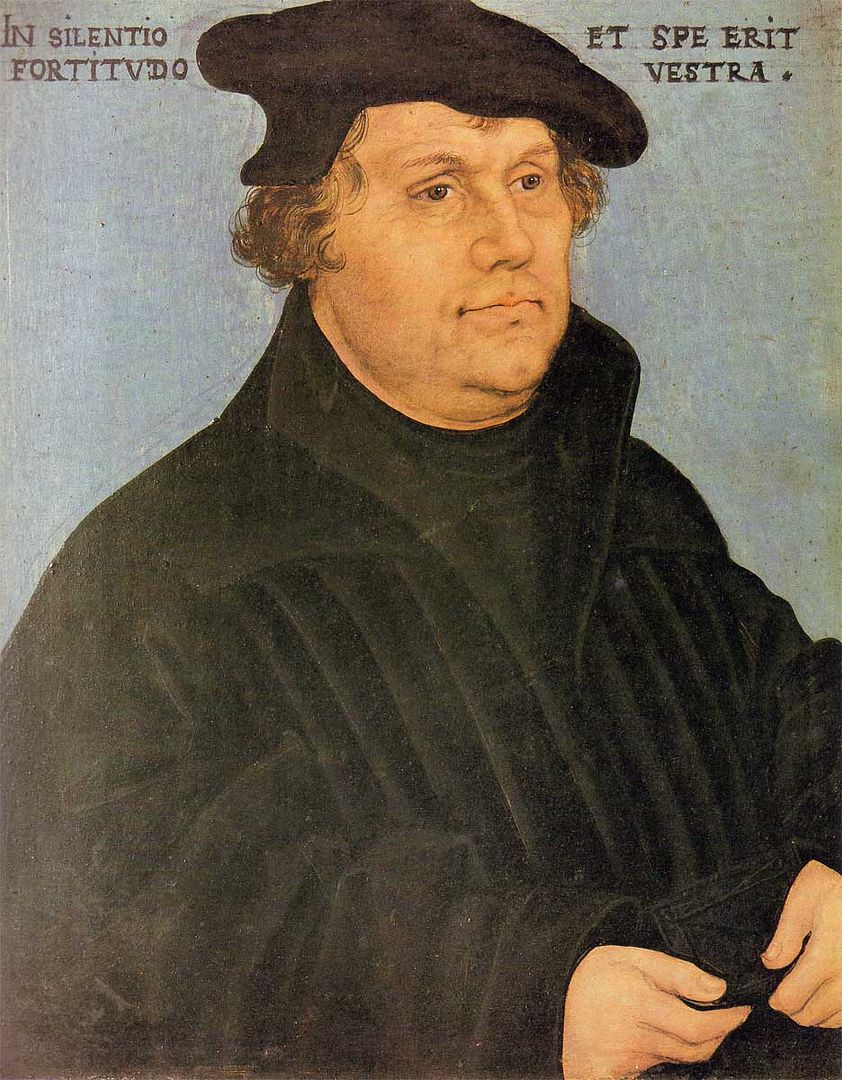
Martin LutherLate October, approaching Hallowe'en and All Hallows' Day: duller days and not bright nights. The Revised Common Lectionary's in yet another installment of Ordinary Time, though Reformation and Reign of Christ - both extraordinary festivals - are just around the corner. In fact, although October 31 is the date of the real Commemoration of Luther's Wittenberg Door Escapade, whenever the 31st is not on Sunday, the Churches of the Reformation celebrate Reformation on the Sunday before the 31st—that's today! This year, 2005, marks the 488th year of Protestantism, though...well, like every other branch and expression of Christianity, it really started a couple thousand years ago and the Church didn't beeline straight from Paul to Luther the way some people believe it did.

I began this as something altogether different from the way it turned out, so some time in the future I'll write more about my original topic. Today being Reformation, I'll say a little about Luther.

Hedging Risks, really!

Hedges, borders, boundaries, and berms: since I've mentioned Reformation, did Martin Luther hedge his life? Or did he bet his life on the Risen Christ? Knowing what we do about Luther, albeit some of it necessarily the inevitable legend that develops and surrounds such a incredibly gigantic figure, we know he literally risked his life because he knew how completely he could trust the Risen and Ascended One. Like his 20th-century namesake, Martin Luther King, Jr. and like his ultra-mentor in faith, Paul of Tarsus, Pastor Martin did his time in prison, and for a time a price hovered over his head.

This afternoon I tried a few web addresses: "martin luther dot com" and "martin luther dot org" (no return on either of those), so then I got European with "martin luther dot nl" and finally, "martin luther dot de" — that one resulted in a handsome page for the Luther Memorial Foundation. And an English version of the site, also no longer active.

The Dutch Maarten Luther Page also bit the dust.

Pastor Martin's Kleine Catechismus in Luther's original German no longer resolves in 2014.

That's all for now—Happy All Hallows' Eve and Blessed All Saints' Day!

Saturday, October 29, 2005

Theology to Live By

Recently I observed,
Despite the biblical "bloom where you're planted" (build houses and live in them; plant gardens and eat their produce; seek the welfare of the city where I've sent you: in its welfare you will find your well-being, healing, recompense, etc.—if your environment thrives, you will thrive—I'll blog that soon), being good theology, I need to discover and uncover another *where*!!!!! Yep, that's an exilic text, and in many ways we're not living as people of God unless we're living with a sense of exile yet living to the fullest and richest extent possible wherever we are right here and now, but there's also the imperative of responding to God's call to our next *where*!
Once soon has become right now, so here's my blog on the text: it's not much more than a list, and I've linked to four blogs from this far by faith, my testimony blog, so it looks as if I'm trying to take some of my own counsel. Likely it's obvious that again I need to get some stuff out of my head and into the 'net! First though, my readers may have noticed the daily Bible verse on this site, courtesy of a deft piece of code from Augsburg Fortress. I've been writing down some of the most striking verses; for Monday, October 17, 2005, the Bible Verse of the Day was Isaiah 45:4,

"I call you by your name." (NRSV) The NIV reads, I summon you by name!

When I sought out (summoned?) some synonyms for "summon," among others I got call together, assemble and convene. Call together, assemble, convene. Exactly what God does to the Church and the churches! Sometimes we refer to eighth-day worship as the "Sunday Assembly" and we speak of our judicatories convening.

Also from Isaiah 45:15, "Truly you are a God Who hides Himself, O God and Savior of Israel."

Truly a God Who hides Himself—not a God of apparently spectacular manifestations, but a God Who paradoxically shows Himself by not showing Himself, maybe better described as God revealing Himself in hidden ways, i.e., not manifest with the dazzles and pyrotechnics people generally would expect of a Divinity Who is Sovereign over all of creation!

In my current (ummm...currently somewhat hidden, since I'm not planning to make it publicly =manifest= any time in the near future) version of my faith journey, I mention my many attempts to really belong at a long series of protestant mainline churches. For me, belonging means not simply being included in the head count, not just begrudgingly being allowed to do something or other occasionally, but being invited to participate and having my volunteer offers met with the local equivalent of enthusiasm. With my vast(!) and extensive(?) experiences in life and churches I do realize the typical mainline denizen isn't often particularly Pentecostal histrionic in their everyday emotional expressions! A couple years ago in a theology discussion I pointed out, "The Bible's not a metaphysical witness." Okay, meaning it's an historical, material and earthly one. Though created by the Spirit of God, the gospel and the church are substantial and tangible—according to the Bible's witness, at least they're supposed to be! You're supposed to be able to feel, touch, hear, embrace and see the churches and the gospel in action, doing God's things in the name of Jesus Christ...the Church is supposed to be the proleptic realization of the eschaton! I'll translate that into the more everyday exhibition of the Kingdom of Heaven—to the world.

Reading and actually knowing the Bible and having some familiarity with life, we discover God's presence frequently is concealed, and we know God most typically can be found in surprising places and situations, at least surprising in conventional religious terms. Precarious and shaky as those Salt Lake City years were, I got some support and some social opportunities from settings that sought me out and that I wouldn't have thought of, specifically a Tongan United Methodist Church and the local Latter-day Saint ward, where I went to most of the monthly Friday evening parties and attended Relief Society homemaking—these days called "enrichment," to sound more contemporary. At no point would I have denied the goodness and righteousness of either of those settings, but they never would've been where I first would've looked. In addition, in the social and intellectual discussions at my social and political activist activities I came across a lot of welcoming discussions and lots of welcome tables, too.

Verse of the Day for Tuesday, October 25, 2005—Leviticus 19:2, "You shall be holy, for I the LORD your God am holy." About being holy and becoming holier, I just blogged, Thursday Blues.

During mid-August on this far by faith, in my Genesis 12 blog, I wrote (mainly) about God calling Abram/Abraham to go to a place "I will show you!" Is that where I am now? Start walking and start looking?

On the day before my Genesis 12 notes, I posted the lyrics to Let the River Run, which includes:
Oh, my heart is aching.
We're coming to the edge, running on the water,
coming through the fog, your sons and daughters.
Let the river run, let all the dreamers wake the nation.
Come, the New Jerusalem.
I already used the word countercultural! in the last dsf blog before this one:
A few days ago a conversation reminded me of that essential word, countercultural! A people shaped not by consumerism, nor by greed; not by any type of trendiness, or by addiction; not by superfluity of finances or possessions...

...a community formed in the shape of Yahweh's own heart, an assembly convened and possessed by the One Who is Lord of All—Pantocratur...where the resurrection people of God in Christ Jesus always abide. Let's call that community "Christians, the Wilderness People!" Amen? Amen!!!
And I want to keep the countercultural concept going in this blog, especially since it's Theology to Live By! How do we, how can we "build houses and live in them; plant gardens and eat their produce; seek the welfare of the city where I've sent you" yet live as Christians, Wilderness People?

Here's Friday, October 21's verse of the day, 1 Thessalonians 1:2-3

We always give thanks to God for all of you and mention you in our prayers, constantly remembering before our God and Father your work of faith and labor of love and steadfastness of hope in our Lord Jesus Christ.
Incidentally, if anyone ever disputed Paul's authorship of 1 Thessalonians, that verse alone blows their argument way out of the water!

Theologian Paul Santmire cites the position of an inner-city single parent who has done absolutely everything completely right from a human perspective but still gotten close to nowhere. His comment: "These people don't want a sweat lodge; they want the Eucharist!" They're not interested in a comparatively inert artifact of a local tradition nearly as much as they hunger after the life-giving bread of heaven and cup of salvation. This blog is called, "Theology to Live By," and without any doubt the sacraments need to be part of our Living Theology, and a large part of how the rest of society thrives in our presence, which, after all, equates with the Presence of the Crucified, Risen and Ascended One, as we live out our baptismal call as Speakers of the Word, Emissaries of the Divine and Stewards of Creation.

Sunday, October 23, 2005

Words to anyone Wise

Cryptic title, but I had to name it something in order to save my file and in the meantime I haven't thought of anything else, so I've kept the original. Here's another post I began mainly for myself, then it spun into something more all-purpose.

One more time I'm celebrating the fact the Chinese pictogram for crisis points to potential peril and possible providence. As discouraging as much of almost everything has been and as frequently as I focus on the failures, I cannot help but acknowledge certain things have gone almost amazingly well. Mainly theology! Not that I'd intended to become theological beyond the base truth everyone, everywhere is a theologian of sorts, but I'll admit God has compensated for a little of the loss by encouraging my involvement in more formal, more academic theology. I'm also excited to be part of the new genre of Blog Theology! Not at all sure anyone officially has termed it such, but with the internet's ubiquity and the incalculable count of online blogs and related editorializing, undeniably it's happening.

I'd imagined my life had a few guarantees(!), though with fallout dust from too many events, non-events and disappointments pretty much settled and those other imaginary assurances totally proven null and void, one, only a single and way outside of the ordinary guarantee remains: God's constant unmediated presence, relentlessly yoked with evidence thereof. I've talked and taught about the other gods of the Ancient Near East requiring sacrifices, entreaties and rituals, while still remaining far away from the sacrificers and entreaters; bear in mind—even the gods of the Egyptians could do the signs and the wonders! Yahweh's most show-stopping feature was not pyrotechnics but rather constant, unmediated presence and unrelenting provision for creation's need. Privately I've talked about learning the heart of God, though so far I haven't risked a public blog about it...maybe this one will qualify as an Initial Public Offering on that theme!

Early this morning fog, a.k.a. ground clouds, and to sound biblical, a.k.a. thick mist, covered this corner of Paradise. From the familiar narratives we know Yahweh, Lord-God of the nascent people Israel, journeyed before them with sensory substantiation: cloud by day, fire by night. In the exodus desert, Yahweh shaped and transformed the one-time slaves into persons of trusting freedom; in responsive relational reciprocity the people themselves participated in their own identity-formation into a community in the shape of Yahweh's own heart. What is Yahweh's own heart?

After God's own heart implies the heart of a Holy and Wholly Other-than-us, willing to live as a stranger, an outcast, a resident alien, in order to be with and live among all the people and all of creation all of the time. From the beginning, the God of Adam and Noah, God of the covenants, ventured wherever the people went, meeting them, revealing His presence to them wherever they were. God never has been a deity predictably present when people were praying or otherwise being typically religious, but God always has been Lord of the Ordinary, God of the Sacredness of everyday life, His unmediated presence defining any time and any place where God and the people of God encountered each other as "Holy."

A while ago I heard a New Mexico-based preacher talk about "Yahweh, the Wilderness Guy." I've written about God "pitching a tent" and living among the people during those exodus desert wanderings; I've told about God pitching a tent by becoming incarnate in Jesus of Nazareth, and I've talked about our becoming tent-toting tent-pitchers who some times - but not every time! - live on the edge of conventional culture and reputable society, ministering as the Spirit moves, always carrying our temporary shelters with us so we can set them up and stay for a while as long as that corner (or periphery!) of the world needs us. Those scratch-for-life times are among God's specialties, and God calls us, his people to make them part of their expertise, as well. In these New Covenanted days of 2005, to help us live in the image of our Wilderness God, we still have physical, sensible evidence of God-with-us and God-among-us, first, in the pair of signs the Reformers insisted was enough for the existence of the Church, the risen Body of Christ—Word and Sacrament.

  • "The Church is the congregation of saints, in which the Gospel is rightly taught and the Sacraments are rightly administered." Philipp Melanchthon, Augsburg Confession, from Article 7
  • "Wherever we see the Word of God purely preached and heard, and the sacraments administered according to Christ’s institution, there, it is not to be doubted, a church of God exists." John Calvin, Institutes of the Christian Religion, Vol. 4, chapter 1, section 9.

Baptism and eucharist are mighty acts of God, but particularly in the Reformation tradition, now and again we fail to emphasize the necessity of human cooperation for the sacraments' existence! Just like the Israelite community born in the exodus wilderness as a result of Yahweh's gracious initiative paired with the people's response, the community of the Church first birthed on Crucifixion Friday and Resurrection Sunday continually becomes re-formed by Word and Sacrament.

Exactly like the exodus desert gang, we partner with God in our own revival and renewal by responding to the Holy Spirit's invitation. God also offers the church - and offers the world outside the technical boundaries of the church - evidence of His gracious abiding presence in the community distinctively formed by God's action in the earthy, seemingly finite vehicles of Word and Sacrament, a people shaped into the shape of God's own heart. For a second time born—in baptism's waters of life, sustained with the bread of new birth and the cup of salvation, fed with the Living Word, in the most ordinary times and commonplace locales God's people walk alongside each other and the rest of creation, often one step ahead, clearing the way to make the journey safe, wherever anyone anywhere has need!

In these New Covenanted days of 2005 we still have physical, sensible evidence of God-with-us and God-among-us, in the reasonably objective symbols of Scriptures and Sacraments, and still astoundingly in the resurrection community of the Church and the churches, which is an extremely subjective sign, chosen by grace and for grace. This sounds scary, because as our highly esteemed colleague in ministry Martin Luther insists, although baptized forgiven and free into Jesus Christ's death and resurrection, those same people in that identical Eastered community are simultaneous both sinners and saints: in an aging bumper sticker's parlance, "not perfect but forgiven."

But the church is not exclusively or even primarily a human institution, not a club we choose to join or not, but it's the Holy Spirit's creation! Maybe you've heard (or possibly you have the CD) of Daryle Singletary's version of "Amen Kind of Love," written by Trey Bruce and Wayne Tester? It's one of the abundance of supposedly secular love songs full of theological significance! Here's a text clip:
We are moved by the spirit, we are here to testify
We found an Amen kind of love
The kind that makes you fall down on your knees and reach for the sky above
The kind that your soul can never get enough
We've found an Amen, Amen, Amen kind of love
  • Holy and ever-living One, I need a sign of Your Presence—please show me a sign of Your Presence!
    • There it is: right there!
  • What, where, when and how?
    • What?
    • Word
    • Sacraments
    • All creation—rocks, rivers, forests, hills; streams, animals, canyons, prairies; cities, suns and stars—where the Risen and Ascended One always abides
    • The baptized, Holy and ever-alive community
  • Where? Right here!
  • When? Right now!
  • How? Not by power, not by might, but by My Spirit!
A few days ago a conversation reminded me of that essential word, countercultural! A people shaped not by consumerism, nor by greed; not by any type of trendiness, or by addiction; not by superfluity of finances or possessions... ...a community formed in the shape of Yahweh's own heart, an assembly convened and possessed by the One Who is Lord of All—Pantocratur...where the resurrection people of God in Christ Jesus always abide. Let's call that community "Christians, the Wilderness People!" Amen? Amen!

Friday, September 30, 2005

BEaCh HoUsE bLoG

Friday in September day 30 thousand-five
Very Dry Day bringing shoreline dreams alive
Santa Ana winds racing somewhat north of here again
Natural Energies, with Beach House taunts arcane
Get your shovels ready and turn up the heat!
Bring along a Vintage willow Cottage Shabby Chic

vanilla ice cream   orange sherbet 2   chocolate chip

Couple it with several pairs of Country Bear ice cream Sets
DoUble FaultS, seashore, sunshine over Shiloh gets
Claim NEW 3 NEW claim 5, let's
Listening Garden Rooms four Nautical transform
Black Church's Cadence song preaching up a storm...!

Turn on the AC 'cuz it's gonna be a blizzard?
Only rhyme I know for that is rainbow-painted lizard
Blogging more for Desert Fire, theology, remember?
this list-blog growing longer just by citing one from earlier...
Wondering where I got my quotes, here's twenty-ninth of June
Posted on that day's time not quite yet afternoon
2 Peter day dawns
this far by faith's Theology Rap
Coupled with Transfiguration Dawning Day on tap
Streams in the deserts restoring us to life
Impelled by the Spirit reclaiming our strife
Cityside America safari from the past
Tennessee Walkers strolling totally grassed
Cannabis sativa? I believe so not
Simply something different from our usually plot

wellesley park porch

Bread sent from heaven and fruit of the vine
Community's nurturing right down the line
Shenandoah prairieland's burritos really fine
Charge into the world make another new try
Instead of just settling reaching for the sky
Challenging this planet to listen now and hear
Everything I offer it experience held dear

with his spirit he sought us

I'm giving my sorrow and all of my pain
To God the Almighty, Lover not vain
Expecting just mercy and grace in the rain
Falling from heaven embracing the earth
God's glory incarnate declaring our worth
Holy Spirit's Seasons moving forth to Reformation!
Church's Pentecostal witness blazing with elation!

Somewhat strained my verses are whatever though they thrive
Off again tomorrow's morning hope will raise us back alive
The End for Now, Amen. Amen. And amen again!

Thursday, September 29, 2005

Mainline churches USA and ethnic congregations, part two

Second Part

American Protestants and their Homeland Identities


For starters, check out this recipe for Shipwreck, for a "hot dish" definitely reminiscent of very Middle America.

American Protestants, Homeland Identities just might begin with the Puritans – purifiers of – and Pilgrims – separatists from – the established Anglican Church, with each group having a different take on their Anglican origins in terms of liturgy, polity, and theology. I'll risk saying a little more about my topic from Part One:

Beginning in the American colonies and continuing through and beyond the technical birth of the United State of America, each of today's church bodies started out as a church of, by, and for immigrants, configured (theologically, liturgically, socially, and culturally) at least to some extent like the churches the people had left behind in their countries of origin. With so many aspects of their lives become so strange, those immigrants to what for them was an outland needed their churches and their food to have the same familiarness as the ones they'd left behind. For all of us, religion and food come laden with profound cultural meanings way beyond our essential spirituality and basic nutrition, meanings which truly point to any and/or all of our national, ethnic, and individual identities (inherited or adopted), to the very roots that ground us. Remember "you are what you eat" from a couple decades ago? You and I do become what we eat; I'll expand that into "you are what you worship," since every god creates and keeps recreating you in its own image—an ongoing activity not at all unique to the God of Abraham, Isaac, and Jacob, God of the prophets, God of Jesus Christ!

In part one I wrote about: continental European non-English speaking Lutheran and Reformed plus Italian Roman Catholics; very English-speaking (but with different accents and dialects) Anglicans, Presbyterians, and Congregationalists; I also mentioned more newly-arrived Asian and Hispanic, African, and Caribbean Christians—they've come to this country arrayed as Protestant and Catholic, but not exactly the same varieties of those Great Christian traditions we've become accustomed to! In addition to different and differing style of worship and evangelism, those newer churches of immigrants bring with them their unique dietary and feasting habits and customs.

Regarding inherited or adopted identities referred to supra, a personal aside: I'm looking to winning really big again at Presbyterian(!) bingo, though I'm not sure when the next inning will be. Having lived in, served in, and gone to school in Irish Catholic Boston, where bingo at church is absolutely huge, I'm not sure I'd ever imagined such a thing as "Presbyterian Bingo!" However, for a long time now, the Reformed Church has been my home, and if they're going for bingo with material objects for prizes, I can adopt that as an occasional habit?!

I want to get something onto this blog and as interested as I am in this subject, I have a bunch of other things I need to work on, so I'm posting it this evening, way, way unfinished, but anticipating a probable eventual Mainline churches USA and ethnic congregations, part three.

Saturday, September 10, 2005

Katrina again

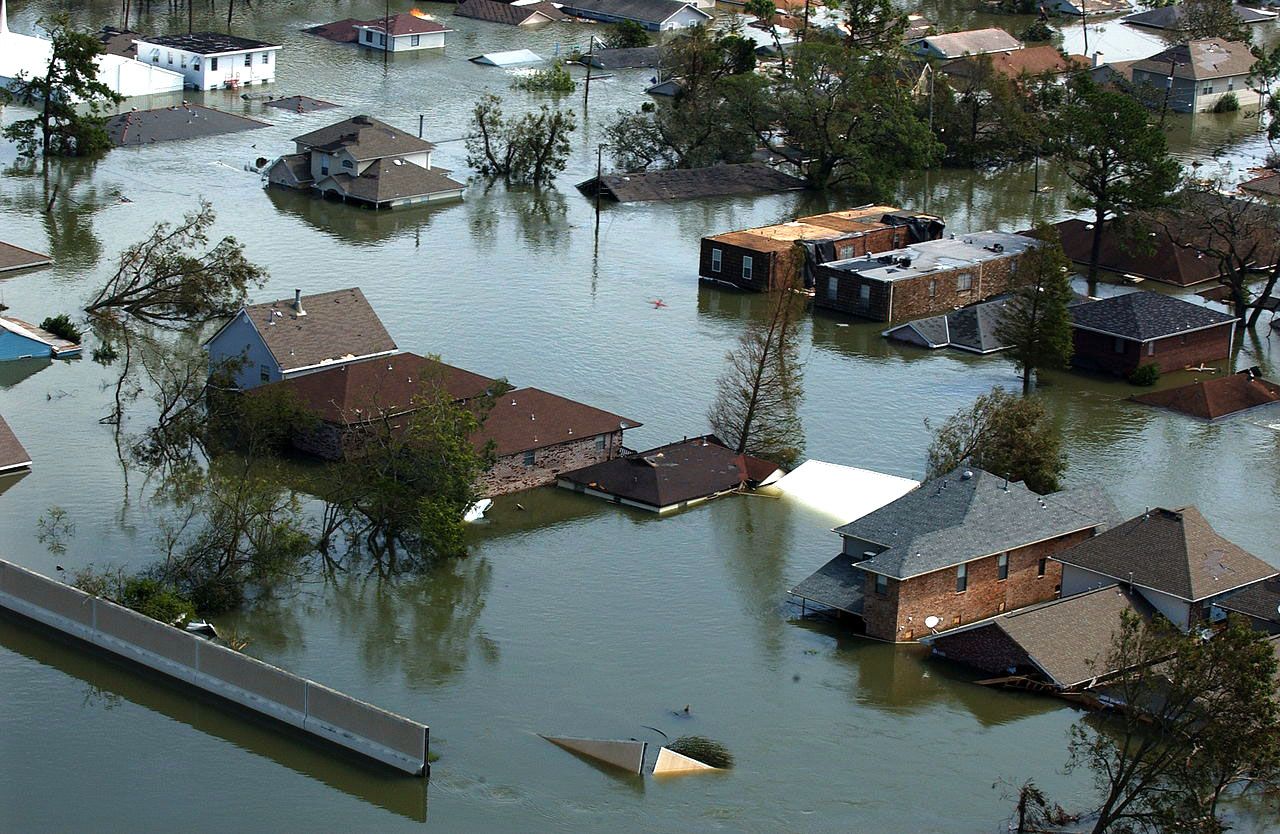
hurricane katrina biloxi mississippi
Last Saturday I posted Boundless Community intertwined with some thoughts on Katrina; here are some reflections about a couple of the RCL texts from last Sunday—a sabbath-day majorly in Katrina's wake:
Matthew 18:15-20

15 "And if your brother sins against you, go and reprove him, just between the two of you. If he hears you, you have gained your brother. 16 But if he will not hear, take with you one or two more, that 'by the mouth of two or three witnesses every word may be established.' [Deuteronomy 19:15] 17 And if he refuses to hear them, tell it to the church. But if he refuses to hear even the church, let him be to you like a gentile and a tax collector.

18 "Truly I say to you, whatever you bind on earth will have been bound in heaven, and whatever you abolish on earth will have been abolished in heaven.

19 "Again truly I say to you, if two of you agree on earth concerning anything that they ask, it will be done for them by my Father in heaven. 20 For where two or three are gathered together in my name, I am there in the midst of them."

Romans 13:8-14

8 Owe no one anything else except to love one another, for anyone who loves another has fulfilled the law. 9 For the commandments, "You shall not commit adultery," "You shall not murder," "You shall not steal," "You shall not covet," [Exodus 20:13-15, 17; Deuteronomy 5:17-19, 21] and if there is any other commandment, are all summed up in this word, "You shall love your neighbor as yourself." [Leviticus 19:18] 10 Love does no evil to a neighbor; therefore love fulfills the law.

14 But put on the Lord Jesus Christ, and give no thoughts to gratifying the aimless desires of your flesh.
Put on the Lord Jesus Christ! From Paul himself we know our baptismal clothing is Jesus' death and Christ's resurrection, leading to the demise of our false, unconnected selves and subsequent living in the reconciled community that in Christ Jesus is born, lives, breathes and keeps on dying and rising for the life of others—both in our own nearby communities (church, neighborhood, family, school, workplace) and those others geographically distant and/or culturally faraway from wherever we are, others we've never met and possibly never will meet.

Paul insists we owe, we "ought" the love of Christ to every one another; the extravagantly unbounded love for us God demonstrated in Christ Jesus obliges us to return that love to every person we encounter and to all creation. Within the church community and in our imagined more-private interactions, love becomes the energetic power flowing through our community and keeping us joined together in the Spirit—maybe especially in times of discord and disagreement.

Paul compares love for others to a debt - an ought that we owe them - and summarizes all the commandments into one single directive: Love does no harm to a neighbor; therefore love is the fulfillment of the law. To understand the obligatory nature of a debt and the ensuing fallout when we don't attend to repaying that obligation, a person does not need to have reached anything resembling chronological maturity. In the Bible's economy and worldview, sin and debt essentially are synonymous.

Via Matthew, God calls upon us (the church, yep, we are the church!) carefully to care for one another radically and graciously, even vis-à-vis—especially in the face of—sin, offense or disagreement; Matthew tells us, the church, to begin by privately addressing the person with whom they are in conflict, next to seek impartial mediators [probably members of the church's governing board] to help resolve the situation, and then, it sounds as if the entire congregation needs to intervene.

Matthew quotes Jesus' pledge that his gracious, loving presence will be the power reconciling and uniting the two, the three - or the many - gathered together. The Matthean text disparagingly mentions "gentiles and tax collectors," but that reference probably did not come from Jesus of Nazareth; most likely it's Matthew the former tax-collector's gloss regarding interactions and conflicts within his own local church. By the way, Matthew is the only gospel-writer who uses the term "church," or ecclesia!

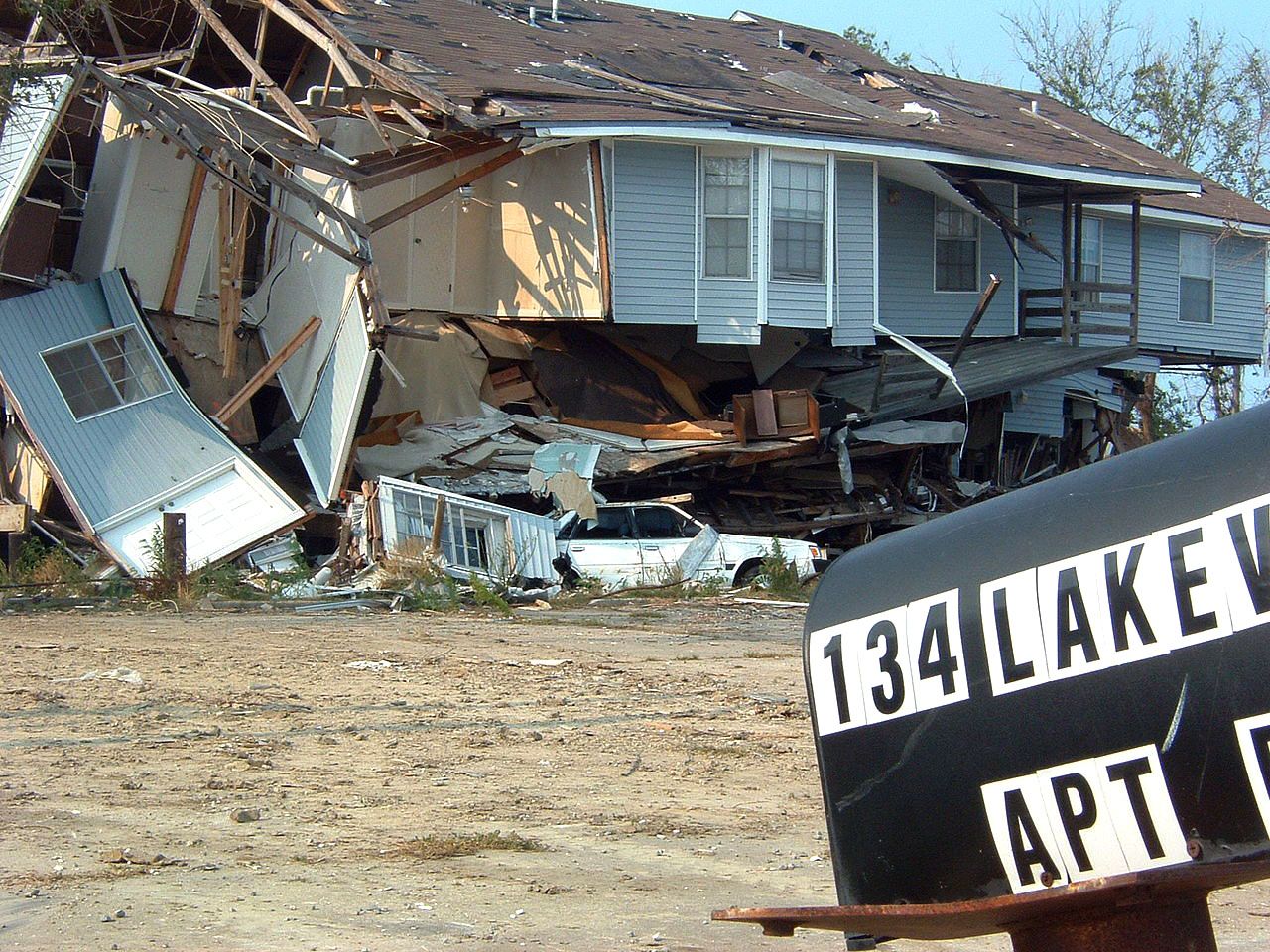
Both of these passages are about maintaining the fragile-appearing web of connectivity among church members, and I'd definitely carry it through to the entire world (right now in particular I'm thinking of New Orleans, Mississippi, Alabama and the entire Gulf Coast region), since our Father-God, Christ Jesus the Son and our brother, in the dynamic power of the Holy Spirit connect, reconcile and enable our interresponsibility for one another and for all creation. But for us - particularly in the churches of the Reformation, who tend to live as intellectual people of the Enlightenment, too often acting and thinking as "individuals" more than we do as members of community - what about the inevitable strain between perceived individual rights and necessary local and global community solidarity?

The dialogue partners in The Gospel in Solentiname, my favorite gospel commentary, propose regarding this text,
  • "The publicans or tax collectors were the ones who collaborated with the Roman occupation, and the religious Jews considered them excluded from the Jewish community just like the pagans. But here Jesus isn't concerned with religious questions. He's saying that if somebody does evil and doesn't reform he ought to be excommunicated from the community. The unjust person (and not the person of another religion), that's the one that ought to be considered by us as 'pagan' or 'publican.'"

  • "Which is like saying the oppressor or the collaborator of the oppressor. ...He has removed himself from the community. He's outside, but we have to fight to get him back in."

  • "For Christ the ones who don't believe in God are the ones who don't love their neighbor, the ones who don't want to live in harmony with their companions."

  • ..."You mustn't accuse anyone to the police judge in San Carlos. It's the community that must judge."

I tell you the truth; what you tie in this world will be tied also in heaven, and what you untie in this world will be untied in heaven."

  • "This means that everything the community decides will be ratified by God. ...all of us here are in agreement, God's also in agreement with us. ... You could almost say they're like the three Divine Persons. And the three Divine Persons are like a single true God. And the three persons who are in agreement would be three who are united with God." ...

    "The people's verdict is the verdict of God, says Christ."

    "...And Christ is there with them even though they don't realize it."

Because wherever two or three are gathered in my name, there am I in the midst of them.
  • "...in the language of the Bible 'name' doesn't mean the name of a person but the person himself, or also what we now call the character of a person. When Christ speaks of gathering in his name he doesn't mean that they're going to be mentioning his name but that they'll be gathered in his spirit, in agreement with his teachings and his message. That community will have such great power because he will be in the midst of them."

  • from The Gospel in Solentiname, volume 3, pages 152-158
Back to Katrina for a moment: within our own local churches, sometimes the air is so thick with irresolution and conflict, newcomers and visitors actually can feel the tension, so they drop out very quickly. The last section in the post I linked to at the beginning of this one includes:
God mightily acts to overcome the division between our old, solitary, disconnected existence and our new lives in the fullness of community. Baptism obliterates the boundaries and the unimportant distinctions between us and God and between us and every other facet of creation, human and not.

...because of our irrevocably entwined lives, Katrina's wounded and broken are all of us, and the responsibility of every one of us, but especially those of us who live in Jesus Christ as The Church, who every day live aware we are the Kingdom of Heaven on earth. God calls us, and in the Spirit God empowers us, to be a crucified and resurrected presence among all people and all creation. As the Church and the churches, may we be, live and act as God calls us and the Spirit enables us: to be his presence, to live in trust and to act in compassion!
Long, long ago, I read, reread and then read over again, I and Thou by Martin Buber. I don't know if the words are from that book, or maybe they were on a poster I once owned or noticed in a gallery, but the quote is from Buber:

Love is the responsibility of an I for a thou.

Speaking of posters, maybe some of my readers know about the Benedictine Conception Abbey's Printery House? At once point in time I owned a bunch of them, but most poignantly a couple remain stuck in my memory: the first, with a quote from Harvey Cox, "Not to decide is to decide"—that one hung on the wall in my kitchen in Boston's North End, and when a mini-flood trickled down the wall from the kitchen above mine, it kind of like soaked the poster, which I decided wasn't in sufficiently optimal condition to take with me to my next sojourn in time and space. I have no clue what happened to the other, which featured a train whirring through the night on its way to wherever; that one read, "Life is a journey, not a destination." So much for asides!

Continuing about Katrina: I cannot say more than endlessly to reiterate that all of us form a single created and redeemed community and to wonder at the non-humanness of the Federal government's leadership and also wonder if part of it is not sheer ignorance? When I heard folks locally and on TV ask why the literally left-behind in the city - transformed from site of civilization into situation of devastation - by Katrina's wrath did not heed counsel to get out of town, I had to believe the people who asked that question were by no means uncompassionate or generally ignorant but they did not realize that too many Americans cannot jump into their SUV or related trophy vehicle, gas up and flee from the path of whatever physical or metaphorical storm that's about to hurtle into their territory because they lack the financial, psychological or whatever resources to do so.

Love is the responsibility of an I for a thou.

This blog began about last Sunday's lectionary texts...how can it be possible for any of us to bear and live out our responsibilities for each- and one-another? For all of us to live in community, thriving as citizens of a planet increasingly interconnected but also more and more fragmented in close to every imaginable way, we all must learn to perceive others' situations and needs as they really are. Is it possible for any of us to move beyond stereotypes and assumptions? You shall love your neighbor as yourself.

Saturday, September 03, 2005

Boundless Community... Katrina

Hurricane Katrina, Slidell, LA

Boundless Community intertwined with some thoughts on Katrina

Introduction

A few weeks ago I reposted my old blogs with titles so the recent posts code I added to the template actually would work throughout the blog, and in the process of doing so I came across one of many of my felicitous phrases: boundless community! As I do so often, I was writing about baptism when I wrote boundless community. As I do so routinely, I grabbed onto some words and began writing about them.

One of my excuses to myself for not finishing this earlier was the unusually hot and sultry weather here in paradise San Diego, and again we're having a lot of humidity, making the weather feel like Summers in the City I experienced living in Boston... in the course of not developing "Boundless Community" into publishable form I wrote some others for this far by faith, my testimony blog and I've left a couple things here on Desert Spirit's Fire, but since today is Saturday, September 3, it's more than high time I finished what I began on Sunday evening, July 24.

But first, I want to mention that this weblog, Desert Spirit's Fire, is aging! Here's my kick-off, Welcome from way back three summers and more than three dozen moons ago, July 16, 2002. Since then I've done close to a ton of customizing to the template (it fits the content well, so I probably won't switch to another one any time soon) in order to align it with most of the niceties most present-day blog templates come with by default.

Paradoxical Presence: Sacraments and Church

As closely as it relates to this blog I won't repost it here, but for more of what I've written about the Boundless baptismal/eucharistic Community, check this out from April 7, 2004: Sovereignty, Eucharist and Ascendancy. Okay, I will cite a bit of what I wrote, though it's extreme theological shorthand (almost to the point of crudeness!) with a hint of Luther and a scrap of Zwingli:
...the person presiding at eucharist holds the totality, entirety and completeness of the redeemed and restored cosmos in her or his hands in the person of the risen, ascended One Who also is now descended, once again "incarnate," among and within the gathered and transformed Eucharistic community...
However, it seems well-nigh providential that I returned to this blog for maybe the dozenth time since beginning it, because when today I consider Boundless Community, I cannot help but agonize over the devastating toll hurricane Katrina has been taking in the excruciating suffering of all God's sentient beings - 2-legged, 4-legged and multi-legged - as well as the cost to the terrain and the waterways (far beyond the technical confines of Lake Pontchartrain and the Mighty Mississipp) and to the total infrastructure. Katrina has been a substantial jolt out of the surreality in which we amble and drift far too much of the time, and if repair, rebuilding, revitalization and the life-giving essential of the renewal of hope gets left to merely human devices and human power, possibly the damage and destruction will be beyond repair?

This past Wednesday evening I posted some Katrina-related scripture: "Who is this? Even the winds and the sea obey him!" from Mark 4, followed by the Pantocratur ascription from Revelation 11:17, and concluding with Revelation 21's New Heaven, New Earth, New Jerusalem-City of God, proclaiming to all:
"Now God pitches his tent and lives among all humanity, and God will travel alongside all the people wherever they may go. They will be God's people, and God himself will dwell with them and be their God. And God will wipe their tears from their eyes. No more will they know death or grief or sorrow or pain, because the old order of things has gone away."
I pulled the passages out of my head (well, out of my experiences and theology) and left them without even minimal commentary or exegesis, because when I ponder the responsibility God gives us, the Church and the churches--the responsibility of being his presence, specifically the Presence of the crucified and risen Christ in the world, the exhibition of the Kingdom of Heaven to the world, it is scary awe-full and also reassuring, because God believes in us that much, God trusts that in the power of the Holy Spirit we can be his ambassadors and envoys, his healing, hope-restoring, life-renewing, transforming, mysterious, humanly illogical Eastered power!

Recognizing the Risen One

Boundless Community: didn't Paul insist we discern the body, recognizing and acknowledging the Risen Christ's hidden presence in the church and in the world—discerning the body particularly as we prepare to partake of the eschatological feast of the eucharist? ...although we need that admonition absolutely everywhere, all the time. The Body of the Risen Christ, also known as The Church and the churches supremely are a single body, one common community, eternally linked vertically and horizontally; admitting and living with those dimensions can make a person very uncomfortable.

Boundaries of any kind are time-limited and space-demarked human constructions, but because God knows and understands our human condition and its accompanying propensities so thoroughly, in Jesus of Nazareth God became one of us and lived a fully human life, in order to wipe out all of the barriers between earth and heaven, because in God's Sovereignty no such limitations can exist. Since Jesus Christ' birth, life, death, resurrection and ascension obliterated them forever by reconciling us to one another and to God, why do we still live and act as if this were the old order of the reign of death rather than the new order of the dominion of life?

Once more I need to recall the beginning of the First Lesson from Advent 1 in lectionary year B: Isaiah 64:1 O that you would tear open the heavens and come down, so that the mountains would quake at your presence...That's about a permanent breaking, a truly irreparable ripping apart and keeping apart forever of the obstacles and obstructions between heaven and earth. ...I've blogged on that text at least twice in this site, and since this coming-up Advent 2005 we'll begin RCL year B again, I'll probably theologize about it again.

In God's Sovereignty there are no limitations of time or space, of person, culture or creed, no distinctions of young, old, class or race, education or ethnicity. Today, Paul of Tarsus still tells us to discern the body, and Martin Luther's theology of the ubiquity of the Risen and Ascended Christ insists the Risen Christ is everywhere, not solely in the formally configured and institutionally recognized and authorized entity known as church.

Newness of Life

We teach and proclaim resurrection (is our central kerygma God's Self-revelation in Jesus of Nazareth or, indeed, is resurrection our primary hermeneutic?), but too much of the time we exist between death and life in a kind of no-person's land that's neither God's nor the devil's realm: we stay stuck in the three days and three nights in the Belly of the Great Fish, also known as three days and three nights in the Heart of the Earth. Nonetheless, with its nurturing, nutrient-rich, cushioning, fluid environment the Great Fish's Gut becomes a womb-like ambiance of safety and preparation for (re)-birth; the Earth's Heart reminds us of our origins in dust coupled with assurance of our ultimate return not to the dust but to a new re-borning to the fullness of resurrection.

Whether Belly of the Great Fish or Heart of the Earth, it's still about baptism, endlessly about baptism, meaning wherever we are and however we are (primarily to remind myself, it's fact, not feeling), it's about community and about our unbreakable connectedness to one another and to all creation, past, present and future. God mightily acts to overcome the division between our old, solitary, disconnected existence and our new lives in the fullness of community. Baptism obliterates the boundaries and the unimportant distinctions between us and God and between us and every other facet of creation, human and not.

Katrina the Hurricane's destruction affects each of us individually and each of our communities, whether church, neighborhood, city or any other group; because of our irrevocably entwined lives, Katrina's wounded and broken are all of us, and the responsibility of every one of us, but especially those of us who live in Jesus Christ as The Church, who every day live aware we are the Kingdom of Heaven on earth. God calls us, and in the Spirit God empowers us, to be a crucified and resurrected presence among all people and all creation. As the Church and the churches, may we be, live and act as God calls us and the Spirit enables us: to be his presence, to live in trust and to act in compassion!

Wednesday, August 31, 2005

Katrina | 31 August 2005

Hurricane Katrina, 30 August 2005

Mark 4

35 On that same day when evening came, Jesus said to his disciples, "Let us go over to the other side." 36 And leaving the crowd behind, they took Jesus along in the boat, just as he was—there were some other boats, as well. 37 A tremendous storm came up, and the waves broke against the boat, almost overwhelming it. 38 Jesus was in the stern, asleep on a cushion. The disciples woke him and said to him, "Teacher, don't you care if we drown?"

39 Jesus got up, admonished the wind and spoke to the sea: "Quiet! Be still!" Then the wind died down and there was a tremendous calm.

40 Jesus asked his disciples, "Why all the fear? Do you still have no faith?"

41 They were tremendously fearful and asked each other, "Who is this? Even the wind and the sea obey him!"

Revelation 11

15 And the seventh angel sounded his trumpet, and there were tremendous voices in heaven, saying:

"The kingdom of the world has become the kingdom of our Lord and of his Christ, and he will reign forever and ever." 16 And the twenty-four elders, seated on their thrones before God, fell on their faces and worshiped God, 17 saying:
"We give thanks to you, Lord God All-Powerful,
the One who is and who was,
because you have taken your tremendous power
and have begun to reign."

Revelation 21

1 And I saw a new heaven and a new earth, for the first heaven and the first earth had passed away, and no longer was there any sea. 2 And I saw the holy city, New Jerusalem, descending out of heaven from God, dressed as a bride adorned for her husband. 3 And I heard a tremendous voice from the throne saying,
"Now God pitches his tent and lives among all humanity, and God will travel alongside all the people wherever they may go. They will be God's people, and God himself will dwell with them and be their God. 4 And God will wipe their tears from their eyes. No more will they know death or grief or sorrow or pain, because the old order of things has gone away."
5 He who was seated on the throne said, "Behold! I now make all things new!" Then he said, "Write this down, for these words are faithful and true."

6 He said to me: "It is done. I am the Alpha and the Omega, the Source and the Destination. To anyone who thirsts I will give – without any cost – abundant cascades of the waters of life."

22 I saw no temple in the city, because the Lord God All-Powerful and the Lamb are its temple. 23 And the city has no need of the light of the sun or the moon, for the glory of God gives light to the city, and the Lamb is the city's lamp. 24 All the peoples everywhere will walk by its light, and the rulers of the earth will bring their glory into the holy city.

Sunday, August 28, 2005

Mainline churches USA and ethnic congregations, part one

First Part

In part because I like the increasingly popular and always discrete lower-case convention and partly because I'm intending to blog more about the small-c churches than about the big-C Church, my title reads churches rather than Church. In addition, I'm writing more about ethnic congregations affiliated with an English-speaking local church, and, by default with its associated church body (also known as denomination, though sometimes regrettably referred to as "national church") than quasi-independent ones, whether part of a denomination or ostensibly unaffiliated.

Two Congregations, One Church

This past week I team-taught the middle-school class at Vacation Bible School or Escuela Bíblica de Verano in North Park, one of San Diego's highly ethnic communities and a relatively old section of town. As I set out for my first session, I changed my cell phone language to Español; besides that, my name has become Lía.

During the week I learned if anyone asked "what kind of church is this?" I needed to forgot all the so-familiar to us insiders alphabet acronym designations and even generic ones like, "Lutheran, Presbyterian, Reformed, Roman Catholic," and go for a plain ole' Protestant! Their style is very Latino/a Evangelico/a, and Latin American Christians mainly make distinctions between Catholic and Protestant.

In conversation with people at that church during Lent 2005, I heard a couple references to "the Hispanic church"; true I'm a theologian and only barely into ecclesiology but extremely into words, but those references interested me, since technically their campus houses two congregations but one church—a single legal corporation in the state of California's virtual eyes and a single entity under the denomination's purview, in this case the increasingly diverse but very mainline ELCA.

Ethnic Christianity in Outward Mainline (dis)Guise

What I'm writing today is preliminary and not particularly profound, but in this year 2005, all the mainline Church bodies in this country have a substantial number of members whose first language wasn't English and whose native style of worship is different from the usual mostly-White, mostly-working-class or middle-class mainline worship. Every single one of those denoms began as an immigrant church—whether non-English speaking Lutheran and Reformed or very English-speaking Anglicans, Presbyterians, and Congregationalists; now American Protestantism is coming close to full-circle and needs to welcome and receive the multiplicitous gifts and enriching influences the Asian and Hispanic, African and Caribbean Christian traditions bring to it. Besides all of those protestant churches, the Roman Catholic Church in this country originally began with almost-exclusively immigrant and truly ethnic local churches (always worshiping in Latin); Midwestern and Northeastern cities were filled with natives from Poland, Germany, Ireland, and Italy, though having its political center in the Vatican rather than in an American city in itself places the RCC in a different position and not within the categories I'm blogging about today. In other words, despite diocesan or arch-diocesan offices and staff in every major city, the Holy See in Vatican City is the central denominational headquarters, and claims world-wide jurisdiction.

In Salt Lake City I was sometime (sometimes? not sure about the proper construction) pianist for the Tongan To ae Ofa United Methodist Church. The church's actual web page – a free one from the denom – wouldn't load, so I'm not posting it here. However, I am writing a little about my experiences with them. First of all, it was far more an ethnic church than it was a Methodist one! As one of the choir sopranos observed, "We have the gift of music and the gift of food," and after Sunday worship, we'd almost always have an amazing feast of ethnic specialties, and then it was back into the church sanctuary for testimonies. Celebrating the Lord's Supper only a scant four times a year put it way outside of today's typical mainline practice; in addition, for those occasions they'd import a communion table and no baptismal font was in sight: it was very much a Word, word community, while I am so long accustomed to the sacraments and their symbols being as prominent as the Word—in fact, to the sacraments being considered visible Word. Besides, what I learned to call "my" congregation didn't practice glossolalia, though at least one of the other area Tongan UMCs did—they'd had disputes and splits regarding the more demonstratively eschatological gifts of the Spirit. (BTW, many of my readers probably know that the Pentecostal movement and churches sprung from Methodism, which originally was a movement in Anglicanism and then developed into a form and style of Christianity with its own distinctives while retaining episcopal polity.) When the Tongan rep from the judicatory was in town, we worshiped and sang with the other Tongan churches, some of which practiced tongues, but I never heard anyone from To ae Ofa criticize them. By the way, when I began there, the church was John Wesley Tongan UMC; the woman who at that time was bishop visited and bestowed our new name, leaving out the Tongan designation. To ae Ofa is Chesed in Tongan.

Check out some of these fabulous links from the General Board of Global Ministries of the United Methodist Church.

Multi-ethnic, Multi-racial, Multi-economic, Multi-almost everything

Sometimes I imagine my ideal involvement (participation, contribution) would be with a church like Pasadena Presbyterian, with several worship services in several languages, lots of social, educational, and religious activities; diversity galore but not one single cohesive community. It's like a jumbo-size version of the church I served in inner-city Boston!

part two coming soon.