Wednesday, March 20, 2024

Salads for Every Season

Salads for Every Season

Salads for Every Season: 25 Recipes from Earthbound Farm on Amazon

I was delighted to get this short ebook for free, though it's totally worth the current $1.99 price (reduced from $2.99). I love salads, so maybe I'm a tad prejudiced?! In terms of size, shorter often is better than longer when it comes to choosing a recipe. Author Myra Goodman of Earthbound Farm reminds us salads "redefine fast food," and gives us a dozen reasons for going organic.

Useful guides and instructions include: "A Field Guide to Salad Greens" with descriptions and pictures; a chart of how much to buy and how much to allow per person for side salad or main-course salad; how to grow sprouts, roast sunflower seeds, toast nuts and seeds in oven, microwave, stovetop; how to blanch fruits and veggies; how to seed and peel a tomato...

You easily could scroll through the varieties of flavors, colors, textures, and tangs in Salad for Every Season to find something that fits the ingredients on hand, or you could vary any basic recipe to your own taste. A reader recommendation? I'd especially like to try some of the vinaigrette variations. Besides Salads and Salad Dressing divided into Spring and Summer / Fall and Winter sections, beautiful full-color photographs are worthy of a book you'll love to have on your bookshelf and hold in your hands.

nice variety! my Amazon review

Twice in a Lifetime

Twice In a Lifetime by Marta Perry on Powell's.

twice in a lifetime book cover
Twice in a Lifetime weaves together history, inspiration, love, mystery, southern family, possibilities…

I picked up Twice in a Lifetime because of the wonderful painting on the cover, and then noticed its setting in South Carolina and in a beach community. I knew I'd enjoy the scenery even if the story didn't move me, but as it turned out, I loved the characters and their individual stories.

There's the beachfront house on one of Charleston's barrier islands, Georgia Lee's employment in Atlanta, Georgia, a tenderly close grandmother and granddaughter, and my own imaginings that life in the American South still is quieter and simpler than elsewhere.

The characters attend church and participate in vacation bible school, but Twice in a Lifetime isn't majorly in-your-face religious—it's simply simple Christianity as an integral part of everyday life. The romance that easily happened between Georgia Lee and single dad Matt (who without a doubt was far from the on-the-take northern lawyer family and reader both imagined him to be at first glance) had just enough suspense to be intriguing.

Marta Perry's prose is clean and well-edited. Although this is first in a series about the Bodine family, I'm happy to consider it a standalone narrative, as I'm not sure I want to be disappointed if the Bodine family future doesn't turn out as I'd like it to. In short? The degree of southernness totally was to my liking, and Twice in a Lifetime definitely merits a future re-reading.

my amazon review: southern, likable, and re-readable

Boomerangs

boomerangs sign
"You'll always come back for more."

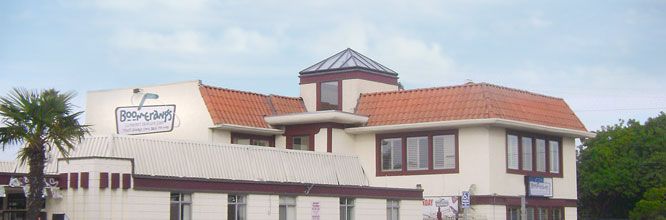
I'll definitely go back for more to Boomerangs, San Diego, CA, where bright southwestern-hued paint and streams of natural light surrounded us from the moment we entered the building; as we enjoyed lunch, succulent burgers and accompaniments tantalized us. The website insists, "Boomerangs is the place for you. We make all of our burgers with 100% Angus beef with the freshest ingredients and our handmade sides are a must try!"

To create your own burger, you get to add any three toppings and mixers, one cheese and one homemade side to a basic 1/3, 1/2, or 3/4 pound Angus burger. Besides beef, there are additional non-vegetarian plus portabello mushroom or boomerangs locationveggie burger options. The website displays most of the menu items we got to choose from in the restaurant. Prices are modest for such fresh excellence; due to its quality and the fact it didn't shrink much during cooking the 1/3 pound burger was so substantial I'd have been happy to be able choose a smaller, quarter-pounder, especially since the sides added more substance.

Paintings by San Diego-based artist Mark Smith arrayed themselves on the walls; Jose, our server explained the art was for sale but Boomerangs had the privilege of borrowing them for a spontaneous exhibit until they were sold.

If you're not too far from the San Diego area beaches it's worth a trip to Clairemont for lunch at Boomerangs. The restaurant is open every day of the week, so you can't miss. Other features include daily happy hour from 4 to 7 and brunch on Sundays from 10 to 2 with "free-flowing champagne and mimosas," fresh fruit and salads, hot entrees, omelets and desserts.

Most likely you'll always go back for more!

Mister Fish and Chips

restaurant review

...not exactly a developed site, but here it is....

Mr. Fish and Chips
Their ads in the semi-slick coupon clippers we get in the mail intrigued me, so it was time to try the real thing. As the name of the eating place suggests and the bill-of-fare attests, Mr. Fish and Chips, situated away from the shoreline a few miles inland (but all of Paradise is coastal community) in a strip mall on an adjacent mesa, specializes in fried seafood (pacific cod(?), scallops, shrimp and clam strips), clam chowder and batter-fried accompaniments. They serve a limited selection of beer and wine, but I didn't notice any desserts, nor is there a menu you can take with you. However, you can phone in an order that will be ready to pick up when you get there.

Evidently the family-run quick food restaurant has been in that general location almost forever, since 1975, with the current spot the result of a recent move. Mr. Fish and Chips features brightly clean ambiance, six tables that seat 4 (or 6 in a scramble), a counter toward the back where you order from the menu board so they can call your number in 5 minutes or so when your tray is ready and a constant flow of customers for eating-in and taking-out. What good deals, maybe partly because it's cash-only!

The only selection costing more than $10.00 is a family meal for a little under $20.00. For about $7.00 my neighbor and I each got a big piece of fish, either zucchini, onion rings or potatoes, fresh side salad of iceberg, red tomato wedges and chunky cucumber slices with choice of dressings. The basic price included 12-ounce cup of soda (no refills) or iced tea (with refills); you could order any item à la carte. They served the meal in paper-lined plastic baskets with disposable plastic utensils; limited staff and space likely make dish-washing impractical. The batter was light, puffy, crunchy, appetizingly golden and took up almost as much space as the food it covered. Though it didn't have a lot of its own flavor, it also didn't taste greasy or "off" in the least.

At the start of the meal I really dived into the food, but by the end all the batter and fried stuff felt overwhelming, most likely because I've been eating simpler and healthier and almost never anything more than quickly sautéed or lightly pan-fried. Will I go back to Mr. Fish and Chips for another lunch? Probably, but it will become more of an every-few weeks event than a weekly occasion.

Welcome to the City!

On a couple of my other blogs I've posted some old material; the following paragraphs are from a short-lived site on the MSN pages I hosted during summer 2000 and so fun to remember and think about. I'm blogging the introduction here, and then posts on the three topics we actually developed, in topical order rather than jumbled according to date. In what used to be my almost usual social-scientist identity (whatever happened? It got outpaced by the theologian, I guess), I initiated the subjects we discussed.

Welcome to The City!

Welcome to The City! Whether you've always been a city person, whether you live in a suburb or rural area and wouldn't have it any other way, whether you come to the city mainly for fun – to see the sights, hear the sounds, shop the stores, enjoy the restaurants, have an out-of-the-ordinary experience – you'd probably like to join our virtual city! We'd love to have you, and you probably have lots and lots of ideas and opinions to contribute. Welcome!


Atlanta Georgia skyline
The City and Distributive Justice

From: Leah (Original Message) Sent: 8/23/2000 12:27 PM

Who gets what, why, when, how and where in terms of goods and services long has been and continues to remain the central focus of life in the city for many people. This has always been so in any geopolitical area with a distinct income disparity between different groups and different individuals. Globally, of course, but also in the "First World."

In the United States we see it in striking terms, striking because there exists such splendid wealth back-to-back with such indescribable poverty. "Why" probably is the first question. Individual income combined with the inefficient and short reach of governmental and private not-for-profit agencies first come to mind as primary factors. But there are people living in the inner city with adequate incomes who have known only a culture of poverty and who therefore choose either consciously or unconsciously to continue that lifestyle.

From: Aisha in response to Message 1 Sent: 8/29/2000 11:14 PM

America's foundation is built on the many backs that we step on or stab to get to where we are today. It's definitely survival to the fittest. This is not a democratic country. There is no such thing. Democracy would only be successful if everyone wanted the same thing for everyone else...Pure equality. That will never be. Because there's always someone that wants you to kiss their ass.

On the other spectrum, there are so many spineless jellyfish out there that are willing to do it. Fighting for beliefs or rights has become about as faddish as bell-bottoms. The rich will be the "haves" while the poor will be the "have nots." When the "have nots" finally get tired of pressing their noses against the windows of the "haves" lives, that's when the division will stop. Knowledge is power. If everyone could empower themselves and their children with the will that you can be successful no matter where you're from, then we can ALL receive equal justice.


Boston Massachusetts financial district
The Arts in Inner City Boston

From: Leah (Original Message) Sent: 8/26/2000 1:38 PM

Living in Boston this summer, I've experienced an incredibly rich diversity in what might be called the "popular arts." The music takes two basic forms: live and impromptu (Gospel, soul, hip-hop, steel drums, rap, and probably some forms I don't recognize) and recorded CDs. Some of the CDs blast forth from houses, cars, or boomboxes on foot, some of them are simply background to whatever activity is in progress, for all ages, any age. And the CDs are quite likely to contain what's generally called "objectionable lyrics," as well as evoking very definitely objectionable images.

I'll comment just briefly on the visual arts. To me, they're far more exciting than the music. Colorful, representational paintings on the sides of buildings, on trash cans, on sidewalks. And of course, the large paintings the local daycamps and preschools turn out—some of them are very well done!

In contrast to the Inner City Arts are the Downtown Arts. Some more sophisticated, professional versions of what we have here in the inner city, but downtown one also can find classical concerts, free and not, as well as museums, most of which charge an admission price way out of the range of most of the people around where I live. However, there are a few cost-free times at some of the museums, but unfortunately it's still a hefty price to get into the special exhibits.


Cleveland Ohio
Metro Area Population

From: Leah (Original Message) Sent: 8/19/2000 6:46 AM

I'm concerned that the high price of good housing in most cities will be sending people out of the Metro/Central City area to less expensive, but also less desirable and attractive neighborhood and housing. Part of my concern includes the very real possibility of more affluent people and families moving into the vacated housing, rehabbing it, and increasing the value not only of their own housing, but also of the housing stock in the surrounding neighborhoods.

From: Aisha in response to Message 1 Sent: 8/20/2000 8:57 PM

I live in Georgia. Suburban "sprawl" has affected every area of our state. No community is really safe. Even though there is more money being brought into the less desirable communities, the prices have been skyrocketing. Whoever has the gold holds the key...

From: Leah in response to Aisha

You said it perfectly: "Whoever has the gold, holds the key..." Community organizing is the only answer that has any chance at all. People may think it's behind the times, but if bunches of people would get out there, they'd find it works!

From: Torrie in response to Message 1 Sent: 8/25/2000 4:30 AM

It seems that here, in Ohio, the cost of housing is less expensive within the city. There are a few exceptions—German Village, Victorian Village, Italian Village. The cost of housing in the suburbs is skyrocketing—along with increased property taxes. Property taxes alone consume 30% of my monthly mortgage.

New Mood Downtown

downtown Chicago
Downtown Chicago with Legal Reuse Rights

A really really old one, spunoff some from our very first assignment when I decided to begin a second bachelor's degree. The course was introductory sociology; we got to go to the university library and choose an article from journals the professor had on reserve. Of course I had to choose something very urban: Society, v. 16 no. 6 pp. 4,6-7, September-October 1979


New Mood Downtown: internet link
• Wolf Von Eckardt, New Mood Downtown
• Society: v. 16 no. 6 pages 4, 6-7 September-October 1979

This article is concentrated and conclusive regarding positive aspects of the current migration back into the cities as a place to live. Von Eckardt shows a tremendous amount of enthusiasm for city living. Reflecting on contemporary trends, he cites everything now [1979 for the article's date] happening in a most positive light, taking negatives exclusively from the 30 to 40 years preceding the back-to-city-living trend. Although the article is only three pages long and therefore limited in scope and depth, the author seems almost obsessively intent on proving his point and extending his own enthusiasm to the reader.

The essential thesis appears to be that use – or misuse – of architectural space is the prime humanizing or dehumanizing factor. Beginning with the fact of the physical return of people from suburbia to cities, and ending with the observation that it is people who are beginning to make their environment livable and workable, the writer lists a series of factors that contribute to the neglect and decay of the city:

  • residential exodus/flight to suburbs
  • suburban shopping centers
  • freeways
  • exit of industry
  • poorer people remaining in the city
  • suburbs receiving a lot of tax money
  • "urban renewal" attacking the apparent, visible problem of substandard housing rather than the real problem of limited employment skills and opportunities

Von Eckardt sees the extensive implementation of housing modeled after Le Corbusier's Ville Radieuse as the worst mistake, observing that the concept of stark concrete slabs surrounded by air and light in reality was unable to provide the casual, routine social interaction needed for development of a healthy community. Again, in negative terms, he indicates that unique architectural style not so much reinforced and perpetuated whatever sense of alienation already may have been present, but was a major contributory factor in its emergence, as the style allowed for no functional neighborhoods.

Among positive forces now at work – presented both as a response or reaction to Corbu's style of architecture and as an awareness that possibly we were in danger of losing the "good old" things about the city – the author mentions particularly the rediscovery of the neighborhood as a social setting and the multitude of creatively revived downtown shopping centers. His only reservation seems to be the suggestion of a need to find a solution for the problem of gentrification of lower-class housing and the subsequent displacement of people already living there.

The limitations of a short article better serve the purpose of either a general, broad overview or of a concise unilateral view as presented in this article than that of a thorough presentation of multiple aspects of a situation. Although Von Eckardt's bias comes through forcefully, he also succeeds well in portraying the renewed cities as most attractive and as definitely the place to live.

Because of the relative terseness of Von Eckardt's exposition of the urban revival phenomenon, and because he documents it will with specific examples of decay, demolition, revival and rebuilding, the article is both informative and convincing. Written in easily readable non-technical language, it incorporates virtually all of the observations I've read in popular literature over the past two or three years.

Though never stated overtly, overlaying the focus on architecture as the apparent major factor in the city's crisis/rebirth is an implied awareness that life happens and can be lived only in community. The architectural accidentals that at first seem to be Von Eckardt's central concern thereby can be seen as enabling and facilitating community.

© Leah Chang

Culture Bound :: Shaker Heights

Larchmere District Ohio
Part Cleveland, part Shaker Heights,
the Larchmere District has community, commerce,
and plenty of urban grit.

Culture, identity, home, belonging, etc.

As those cultural anthropologists insist, each of us inhabits a range of cultures; more than a single culture encumbers each of us. We see, hear and feel; we remember, dream and hope through the senses our cultures have given to us and we've inadvertently received; and to some extent, our cultural identities constrain and limit us.

Wednesday evening, August 18, 2004, I watched The Reunion, on our local ABC affiliate, KGTV Channel 10. The subject struck me extremely: present-day interviews and retrospective reminiscences of the experience of some Shaker Heights, Ohio residents who'd been part of an intentional racial integration project beginning with their kindergarten class and continuing through high school in the Shaker Heights public schools.

Those were the identical years I spent experiencing blockbusting, white flight and redlining in Boston; those same years some of the neighborhoods around me blazed with anger and rage at the same time Watts, Detroit, Atlanta and too, too many U.S. inner cities became furious conflagrations and locales of supercharged and globally publicized citizen/police interactions.

But that's almost a digression, since lately I've been thinking I need to go home, and although there's no way I can return (or would return) to Big Tree Place or any of those other physical dwellings, no way could I return to First Mariner's Church—especially since it disbanded a while ago. However, I can return to my *home* culture, the culture that's my Muttersprach, my cultura franca – to invent an idiom – and I need occasionally to do so! Besides, in the same way you never step into the same river more than once, because both of you and the river have changed, the home you return to cannot be the home you left, so even if I had a physical option to go back there, I still wouldn't be able to relive something that's no longer there, a location that even in terms of my heart's identity I've rationalized, streamlined, and simplified.

# # #

Saturday, March 16, 2024

Partners

Partners cover

Partners
on amazon, with eight chapters, each in two parts: Part One: Neighborhood Revitalization through Partnership; Part Two: Whittier Neighborhood, a Minneapolis Case Study.

More than ten years after its publication in 1982, at one of the annual Salt Lake City Neighborhood Conferences I received a copy of this soft-cover, 11.7"x9.1"x0.8" explorative report on revitalization of the Whittier section of Minneapolis. It's printed on heavy, coated paper, and it's packed with narrative, with Black and White and color photographs, diagrams, charts, and general inspirations. I'm reading myself and my current situation into some words about the USA from the Prologue that could apply to many individuals:

"This book is about the end of an era and the beginning of a new possibility. The era it leaves behind was 'on the road,' mobile, going anywhere, celebrating space. The possibility it welcomes is 'coming home,' rooting, creating a stake, celebrating place."

Partners inside pages
"Neighborhood is about place. It declares that one special place is the foundation for life's living. America 'on the move' was hard on places, whether prairies or forests or older cities. This is the story of a new generation that came home and found a way to recover a place that had been misused by old-fashioned Americans. It is about a beginning, a possibility, a way people act when place really matters." [iv]
partners inside  pages
Partners back cover


In the wake of famously misguided attempts by government and by private investors to remedy real problems of inner city decay, neighborhood decline, and infrastructure deterioration, Dayton-Hudson (now Target Corporation) partnered with residents, businesses, local government and other entities to help the actual people of Whittier revitalize and reclaim the community for themselves by creating a home, a place to be, during the 1970s.

Partners is a fascinating study about people power, grass roots action, and the resurgence of hope and life. Three decades later, this book is hardly dated at all, and still would be useful and instructive for any urban studies, American studies, sociology, or cultural anthropology course.

Partners inside pages

my amazon review: creating home

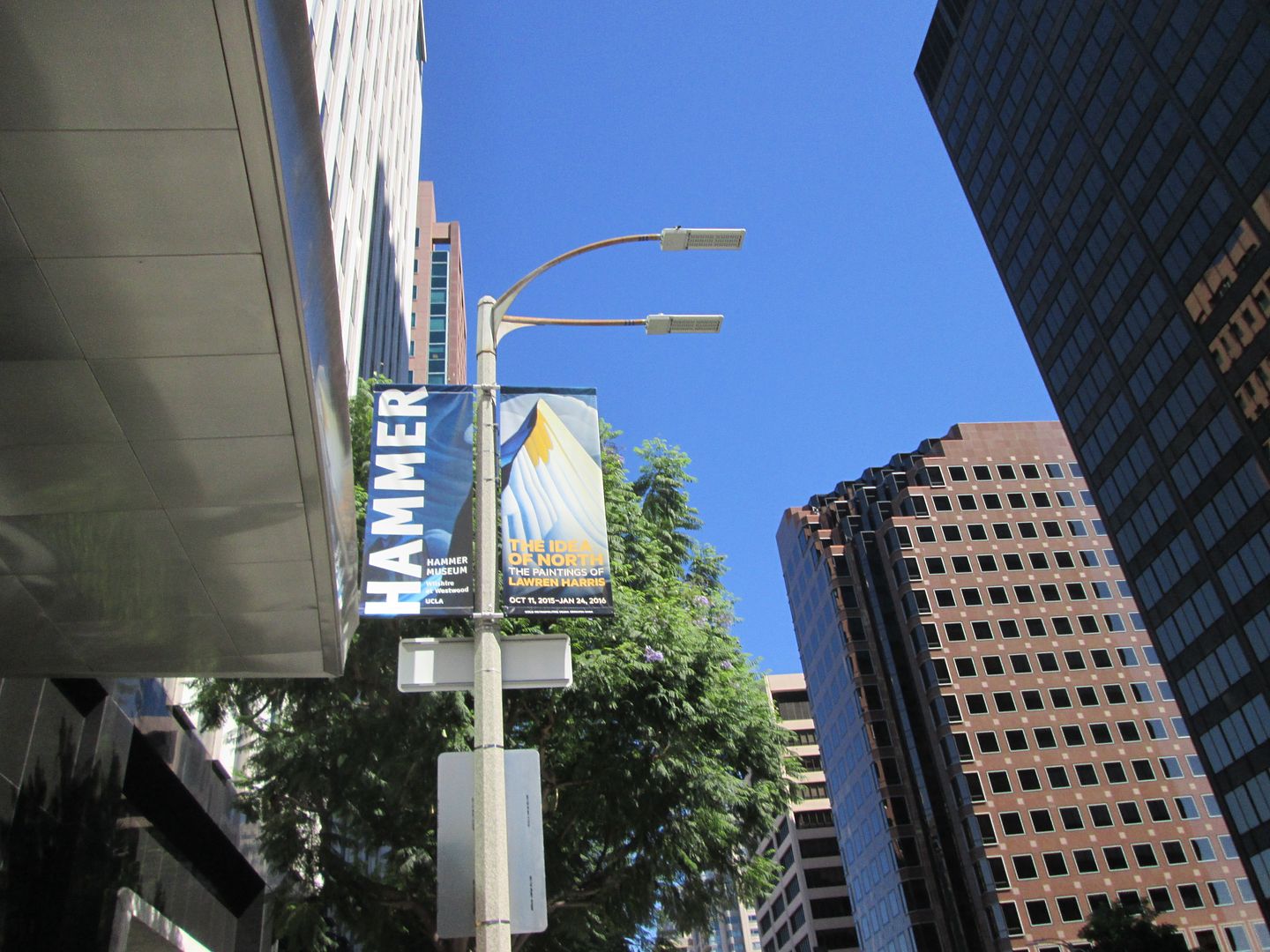
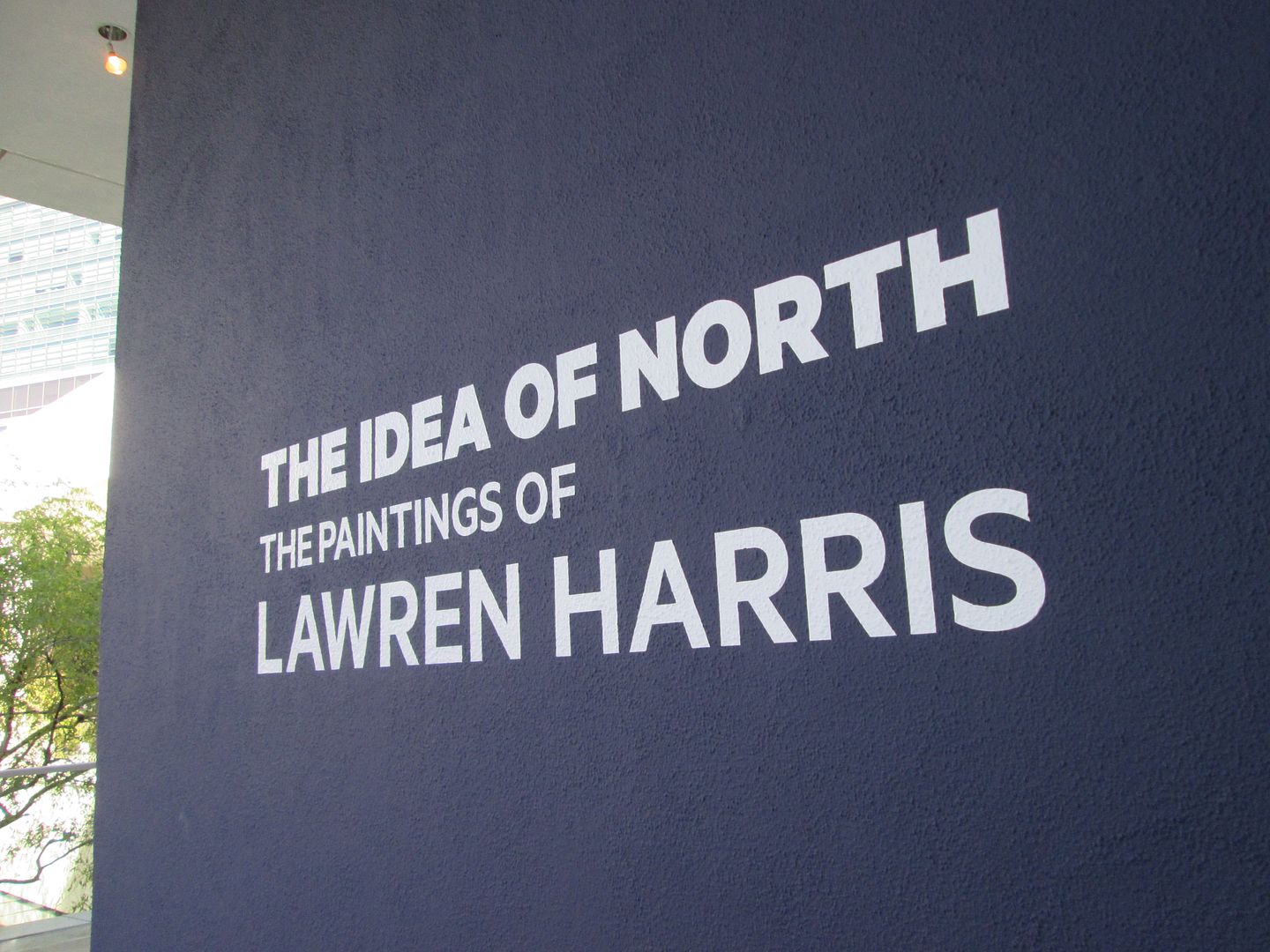
The Idea of North

the idea of north at the hammer museum the idea of north at the hammer museum
the idea of north at the hammer museum
the idea of north at the hammer museum the idea of north at the hammer museum

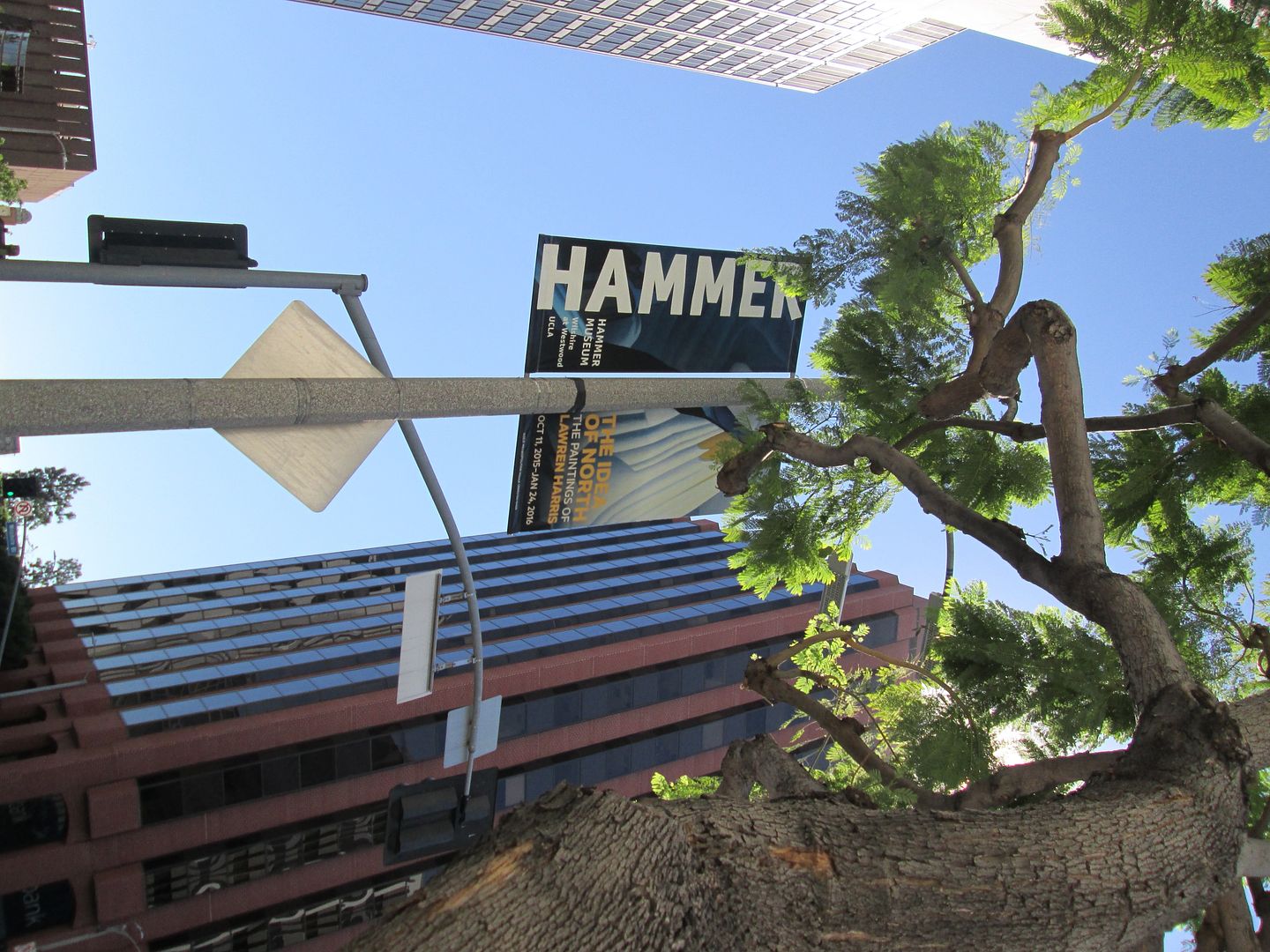
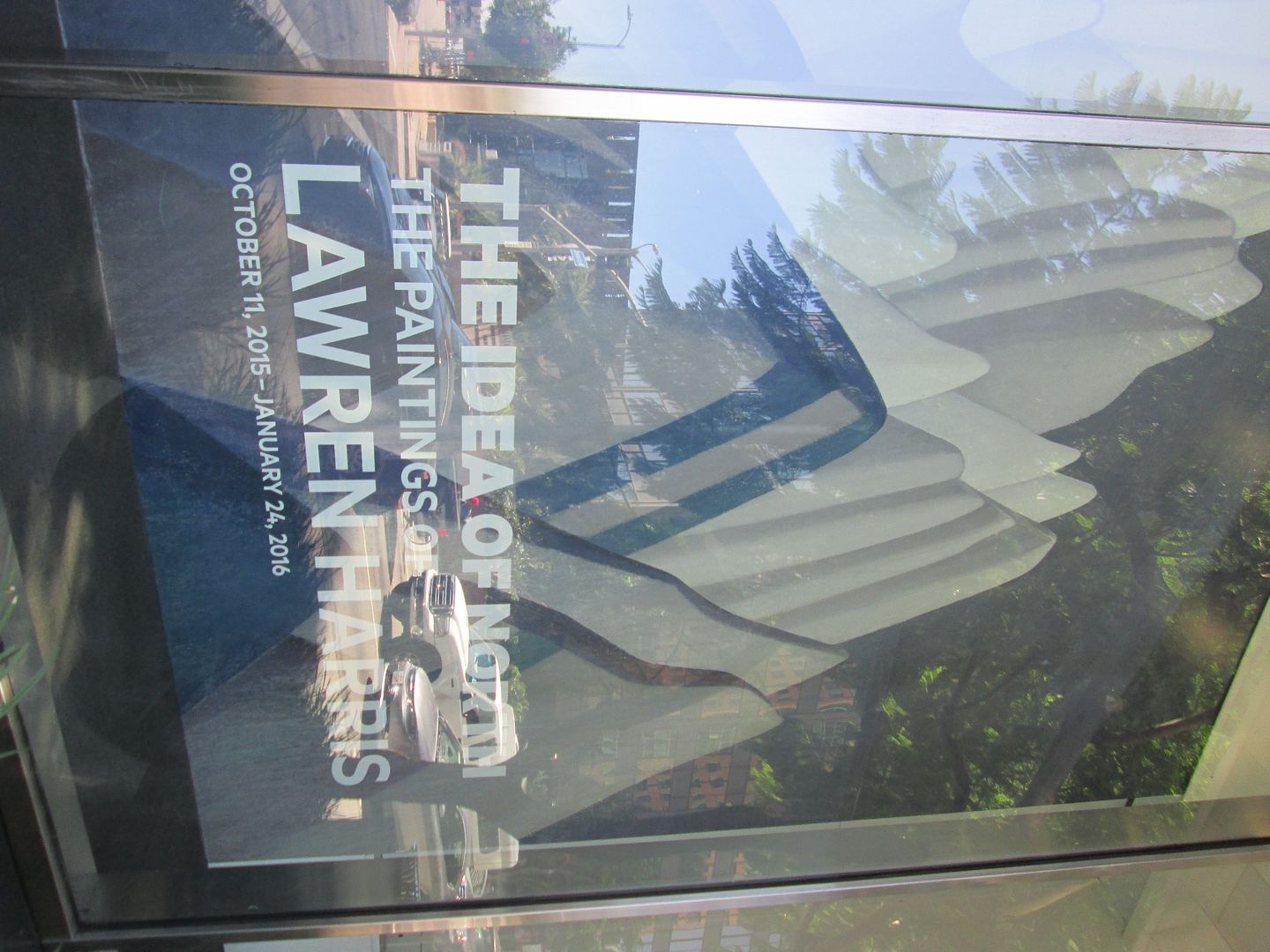
Retrospective exhibit of paintings by Lawren Stewart Harris
at the Armand Hammer Museum in October 2015

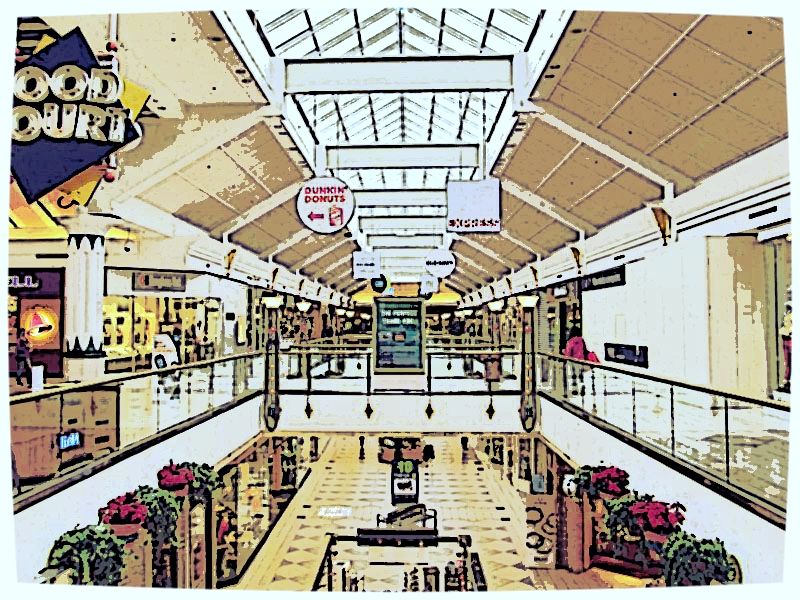
Last Call, Last Mall

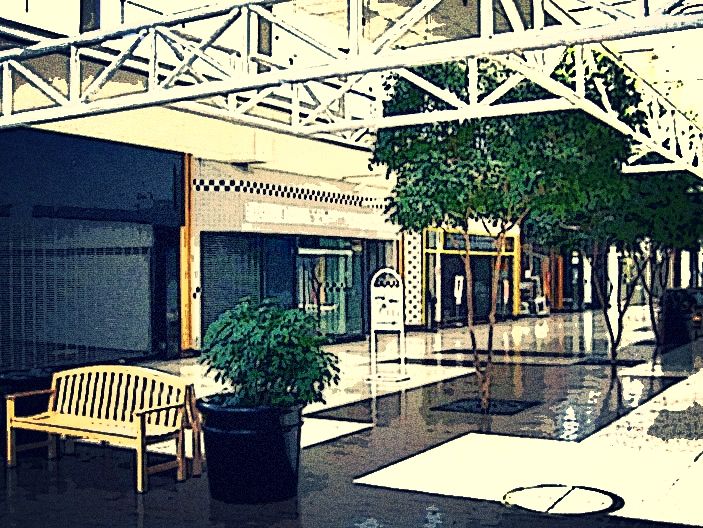
• last call to do your shopping at the last mall •

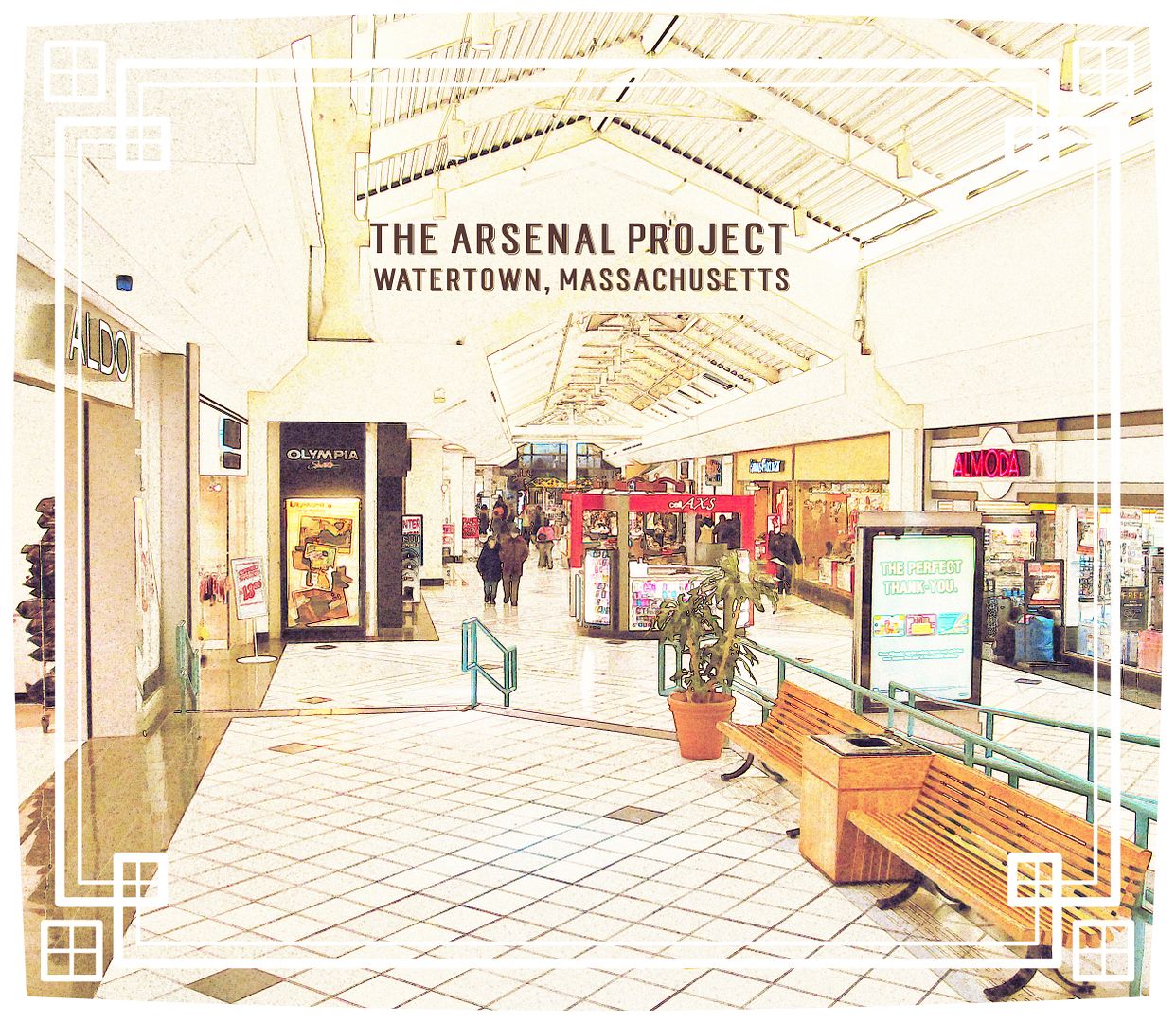
cottonwood mall, Holladay Utah arsenal mall, watertown, massachusetts
square one mall, saugus, massachusetts

The third pic is Square One Saugus Mall by John Phelan, who says we can edit if we give him credit.

1. Cottonwood Mall in the SLC suburb of Holladay died. Cottonwood Mall is dead, deceased, kicked the bucket, bought the farm. One of the real last malls. When I was on staff at Sizable Suburban Church, I loved to take the short drive over to the clean, bright, enticing mall at lunch time for a little shopping and a little lunch—such sensory appeal because I'd just hailed into town from the inner city? Not sure. It's unlikely I'd every know for sure.

2. My last divinity school semester I enjoyed both the older Watertown Mall and the newer Arsenal Mall near my Watertown residence. I haven't been there since, but websites show both still live and kicking.

3. From Boston's historic North End I'd sometimes drive over the Mystic River Bridge, realname "Tobin Bridge." Despite being a toll road, the two-mile span high above the river was fun and the most convenient passage to the north shore. Wikipedia says since 21 July 2014 the bridge has been taking only electronic tolls. If I didn't have a lot of time or had the inclination, I'd take a quick trip to New England Shopping Center, the old name of Square One Mall; if time was no object (as if that ever would be the case), I'd take the longer trek up the coast to Northshore Mall in Peabody.

Along the Eight

Mission Valley San Diego Bright Flowers
Highway 8 San Diego
Highway 8 San Diego
Highway 8 San Diego
Highway 8 San Diego
Mission Valley San Diego Bright Flowers
Along Interstate Highway 8 in San Diego, California
Mission Valley
Wednesday 17 June 2015

Friday, March 15, 2024

Five Minute Friday :: Hurry

interstate 8 in San Diego California
Mid-June 2015 along Interstate Highway 8 in San Diego, California


Five Minute Friday :: Hurry Linkup

Intro

FMF host Kate has been participating in a study of the gospel according to John at her church. When she mentioned they're using a book by Melissa Spoelstra, I lit up because I remembered Melissa's excellent study on Joseph and forgiveness I read and reviewed.

Although Kate observed that Jesus never seemed to hurry through his (three year long, according to John) public ministry, that really depends on which gospel account you're considering. John's Jesus feels focused, calm, and deliberate, because *even* more than synoptics Mark, Luke, and Matthew, John brings us realized eschatology of the right here, right now of the reign of heaven on earth. Celebrating at a wedding party is Jesus' first act of public ministry in John, so we've got the astonishing goods that happen "on the third day" at this very moment, in this very place, and it only will get better.

John is the latest gospel, and in many ways it's an outlier from the other three that made the canonical cut.

However, when we read Mark, the earliest and shortest gospel, all the action is urgent and the Savior moves nonstop. In Mark the transitional word "immediately, straightway/straightaway" occurs at least forty times. Just sayin'…


Hurry

As I write to Hurry alongside Kate's roadway traffic image, the vehicular freeway congestion and pollution that has emerged as an icon of American haste and ambition won't escape me. The worst part is that so few of us differentiate between ideas, activities, and outcomes that need to be treated as urgent, that must be attended to post-haste, and those that can take their time, those many that fare much better if they have time to wait, sprout, then finally blossom and bloom.

The day I took these photos along "The 8," or Interstate Highway 8 in Mission Valley, San Diego, I was on my way to a noontime meeting and intentionally captured the road without cars. That probably would have been impossible in Los Angeles, but San Diego is slower paced, hurries less, and leans into its small town heritage and personality more readily than places like ultra megalopolis Los Angeles (yet the city of LA has neighborhoods zoned for horses!). Does that mean San Diegans are better at discerning whether or not to hurry? To a limited extent, yes.

Whether within our family, at work, sharing the gospel, or caring for ourselves, we need to discern when to hurry ("time is of the essence!") and when hurrying is unnecessary or counter productive.


Heaven on Earth

Along with John's, the synoptic gospels all acknowledge the reign of heaven, God's Kingdom already is here on earth. A couple of proof texts, though God's presence, love, healing, and hope fills all the gospels:

• But if I cast out demons with the finger [power] of God, surely the kingdom of God has come upon you. Luke 11:20

The reign of heaven is here.

• But if it is by the Spirit of God I cast out demons, surely the kingdom of God has come unto you. Matthew 12:28

If. Since. Then. Surely. Without a doubt.

In the Spirit of Pentecost God's reign continues with the church in the world as the body of Christ. We often don't feel the calm deliberation of John's Jesus, but I love how we're slowed down and unhurried when we assemble on the Lord's day. In words from one of my favorite more recent hymns we acknowledge:

God is here!
As we your people meet to offer praise and prayer. …
Here are symbols to remind us of our lifelong need of grace;
here are table, font, and pulpit; here the cross has central place.

Written by Fred Pratt Green; please sing it to the tune Abbot's Leigh

# # #
Interstate 8 Mission Valley San Diego
five minute friday hurry highway
five minute friday button icon logo

Friday, March 01, 2024

Five Minute Friday :: Suffer

1 Peter 1:8
Rejoice with unutterable and exalted joy.
1 Peter 1:8


Five Minute Friday :: Suffer Linkup

To suffer is to bear, hold up, let, allow, permit. You may have heard the translation of Jesus' plea recorded in Matthew 19:14, "Suffer the little children come to me, and do not forbid them, for of such is the kingdom of heaven."

Common parlance has translated suffering into pain, trials, and anguish, which isn't an extreme stretch, because in a sense we do allow unpleasant events to prevail for a while, though many times we have no choice.

Our FMF host Kate explained she chose the word suffer because she loves the reminder in 1 Peter that any suffering is only for a finite length of time. Kate quoted the NIV, "…you believe in him and are filled with an inexpressible and glorious joy.

Several years ago I illustrated an 8-part series of verses from 1 Peter and 2 Peter. It was unusual because the pieces all were different sizes and different styles. Typically overall style, color palette – or minimally size – ties together a group of designs produced under the same heading, but this was different. Today's prompt prompted me to use my illustration from 1 Peter 1:8 to head today's post. The RSV I used tells us we "rejoice with unutterable and exalted joy."

A few verses earlier 1 Peter 1:3 reminds us God has given us new birth into a living hope through Jesus Christ's resurrection from the dead. Some translations says we have been "reborn."

Churches that observe Lent are at the halfway point to Holy Week when we remember Jesus arrest, trial, conviction, and crucifixion. We listen to the passion narrative about the literal pain and suffering Jesus allowed. But we need to remember when Jesus himself predicts his suffering and death, he also includes his resurrection, his rising. To be raised from death? You first must die. For the apostle Paul, the gospel is death and resurrection.

Whether we ponder and endure our own sore trials, consider the cost and outcome of those Jesus experienced, or look with sorrow-filled horror on atrocities in our own countries or places like Ukraine, it truly helps our endurance and patience to remember pain and death is not God's final answer.

1 Peter opens by addressing God's people who live as strangers, those who are resident aliens wherever they may be. NRSV says "exiles of the dispersion." That language is marked, pointed, and precise.

The pair of letters 1 Peter and 2 Peter were written to the church in diaspora that lived weekdays amidst ethnic, cultural, often linguistic and culinary strangeness; on Sundays they gathered as permanent citizens of the Kingdom of Heaven. 1 Peter and 2 Peter remind us the church always is in exile, always has at least a hint of strangeness and stranger-ness vis-à-vis those around them, even when they themselves are voting citizens in that place, under that government.

At the heart of the story of Jesus of Nazareth stands the seven days we call Holy Week: a crucified man – but – then an empty grave. As we continue in Lent, as we anticipate Holy Week and suffer through Jesus' passion alongside him, we know the Day of Resurrection will be here.

# # #

five minute friday suffer
five minute friday logo button icon

Thursday, February 29, 2024

February & Winter 2024

February Leap Month
• This is a Leap Year!

December 2023 Christmas tree header
December Features

January summary header
January Highlights

Black History Month 2024
• February is Black History Month


Urban Wilderness – City Paradise February

Calentine's Day 2024
• Valentines Day!

full snow moon
• The Full Snow Moon on the 24th was a micro moon

Daffodils
• Daffodils!

Succulents
• Succulents Duo

Living Local 2024