Friday, October 23, 2009

favorite music 5

[originally in Pentecostal Reformation Red]

Favorite Music Friday 5

I love Songbird's intro:
Davey and GoliathWhen I was a very little girl growing up in Virginia, I never missed a Sunday going to Court Street Baptist Church. But there was something else that made Sundays special, and that was "Davey and Goliath." Every week the opening strains of the theme song would find me lying on the floor, chin on hands, looking up expectantly to watch the adventures of a clay boy and his big dog.

What I didn't realize was who wrote that music, the hymn "A Mighty Fortress is Our God."

Martin LutherIt was the same Martin Luther who said: "I have no use for cranks who despise music, because it is a gift of God. Music drives away the Devil and makes people gay; they forget thereby all wrath, unchastity, arrogance, and the like. Next after theology, I give to music the highest place and the greatest honor."

On this Friday before Reformation Sunday, let's talk about music. Share with us five pieces of music that draw you closer to the Divine, that elevate your mood or take you to your happy place. They might be sung or instrumental, ancient or modern, sacred or popular...whatever touches you.

Some of us even love hymns. (Well, I do.)

1. I'll begin with my recurrent Beethoven theme... both the piano sonatas I love to play (I'm still at 27 of the 32 total, but will learn the remaining 5 one of these days) and like nothing else in the world, Symphonies 1, 2, 4 and 7.

2. Despite having a degree in piano and organ performance and a diploma from the International Summer Academy for Organists in Haarlem, I detest most 19th-century organ music and dislike the typical stereotypical diapason-heavy Church Organ Sound although like Songbird, I do love a lot of hymnody and I'm passionate about leading worship from a good organ. Whether I'm playing or listening, almost no sound excites me more than a well built, in-tune, expertly voiced instrument more-or-less designed after the North German Baroque, and a resonant room only enhances everything. Try the Flentrop in Busch Hall, Cambridge for a rush, though you need to be sitting in the right spot because the stone resonates and reverberates so. Remember, too, maybe especially as an organist you're playing the music, the instrument and the room. For a parting shot on this (2), I'll comment for a church almost constantly in need or reformation, restoration and renewal, an excellent diversity of quality music can help tremendously.

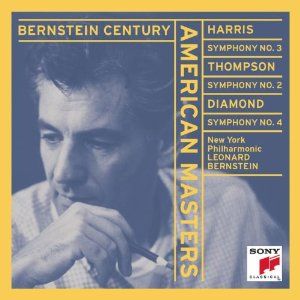
American Masters CD3. Don't Let Me Come Home a Stranger... and other music that spirits me back to a different place and time whilst showing me hope for a future different from where and how I am right now. That can include a blast of classic rock, a charge of good ole 1980's songs or any of several other doable possibilities, including classic and more contemporary hymns.

4. Roy Harris, Symphony No. 3 in one movement, one of my all-time favorites from any genre.

5. ...a fill-in-the-spaces for later...

Friday, October 16, 2009

footgear friday 5

Jan outlines today's On Your Feet! 5... and I'll start out by remembering the biblical injunction to "wear sandals" along with "take off your sandals: you are standing on holy ground." Shaking off the dusty dirt from a negative encounter with an inhospitable community is easier if you don't need to untie your shoelaces and for sure an Sandals 4 experience of the Holy Other requires no space between you and the earth we're born from and return to. Preaching barefoot?! But of course! Proclaiming and even trying explaining the gospel is an awesome, intimidating, daunting, sacred experience of Holy Otherness, and relying on the Spirit may be a bit easier with ongoing awareness of feet unshod. Besides, when you're barefoot you feel and sense otherwise imperceptible shifts and movements in the ground beneath you. So what does that say and what might you say about the promised constant Presence of God? For those who insist on referencing Isaiah's and other ancient chroniclers' "with twain they did cover their feet," I insist on reminding them that in scripture sometimes "feet" simply means the part of the body we use for walking and for making the path that wasn't evident or even there at all before we got to that place—sometimes it means: feet. Now on to Jan's 5:

1. currently flip-flops are my favorite footwear.

2. although it's definitely not the craziest shoe, boot, or sandal I've ever worn, I'll cite my experiences going through airport security post-911 wearing taller than ankle-high boots with lots of laces. Never again; that taught me!

3. as a little kid and as an older teen, I wore sneakers/ tennies a lot and loved wearing sandals during the hot summer months. At university and in social work school in the wintery Northeast I always tried to wear sandals until around Thanksgiving – late November in this country – but didn't always make it quite to then.

4. for feet (and body) feelin' "most comfortable" I used to enjoy bare feet, especially in the house, but weather permitting, these days I'll pick a pair of flip-flops. In ages past I loved the woven leather huaraches we still can get across the border in Mexico, but for the past dozen years they've been hard to find elsewhere.

5. about socks: with closed shoes other than the chunky-heeled "heels" I occasionally wear, always, always socks. If I'm wearing jeans, long pants or a floor-length skirt, they need to be conventional ankle socks. With shorts or a short skirt, short socks (I'm not sure of the proper terminology). And our nearby 99 cents only store has wonderful, often name-brand sock bargains!

Sandals 5Bonus: I began this 5 with a couple of footwear facts and now I'll tell about the two pairs of wonderful custom-made brown leather sandals I had made by the First Settler Workshop in the shadow of Faneuil Hall in Boston. Also, I used to love Tevas and wore out several pairs, but now they seem way too last-century. Finally, I digitized the sandals illustrating this blog from an outline drawing I made of some of my all-time favorite sandals. Out of a dozen versions I've chosen two with "Summer in America" because the season of summer holds connotations of productive living that consistently bears ripe and healthy fruit.

life stuff button

Thursday, October 15, 2009

blog action day | climate change

blog action day 2009

Although I knew I had to blog about climate change on Blog Action Day, I'm well aware even people who are devoting their lives to the topic don't yet know enough and there are almost limitless resources online and in print. Instead of making an attempt to say something about a subject I know far too little about, I'm linking to a couple of my own blogs, to a pair of excellent sites about aspects of climate change that especially interest me and to a handful of the many relevant Bible passages and some quotes (all scriptures NRSV).

desert spirit's fire! is a theology blog and typically I assume readers have at least a smidgen of biblical knowledge and theological vocabulary. However, with more than 9,363 bloggers registered worldwide to participate [update: 31,000 blog posts, and a few people probably will blog later] in this special Blog Action Day for climate change, I'm trying to be a little more explicit than usual about some theological concepts. And here I'll comment the way some Christians and many assorted others have tended to concentrate on human creatures almost to the exclusion of the rest of God's creation has been infinitely sad and highly unbiblical.

Church and synagogue consider the biblical scriptures an ancient witness to the Presence of God in world and creation and to God's saving acts in history, yet despite its antiquity, the bible is very clear about the interwoven interrelatedness and interdependence of all creation and about God's call to humanity for responsible caretaking and stewardship of the earth. In the creation stories in the Hebrew bible book of Genesis, God's forms, "births" the proto human A-dam from the dust of the earth; in the New Testament scriptures, gospel-writer Luke concludes his genealogy with, "A-dam, son of God." Humanity created in the image of the Creator God, a reflection of Divinity shaped out of the dirt of the ground? Indeed, yes!

As lifestyle and worldview, although they acknowledge the essential integrity of spirit and body, the biblical religions are Spirit-filled yet earthbound, for the most part lived out amidst the world. In fact, Christianity's central proclamation is God's incarnation in the human Jesus of Nazareth, the Divine enfleshed in a finite human body entering history in a most conventional manner, "born of a woman, born under the law" [Galatians 4:4b], then marking days, seasons and years whilst requiring sustaining food and drink, protective shelter, and like all of creation – animal and plant – producing waste matter and ultimately returning to the ground of its origin. God in Christ Jesus needed a sustainable earth and environment in balance with itself and so does every single facet and molecule of creation.

In the New Testament book of Acts, probably authored by the same Dr. Luke as the gospel, as people were gathered in Jerusalem, at that time considered the center of the world, on the Day of Pentecost (a Jewish feast commemorating the Sinai Covenant, "The Law" or Ten Commandments), rushing wind and blazes of fire physically signified the Spirit of Life indwelling all creation with a new, more universal pervasiveness, yet in continuity with the Wind that breathed upon and ordered the chaos at creation's dawn.

Martin Luther, the magisterial Reformer (try "meta-Reformer") spoke of the ubiquity of the Risen and Ascended Jesus Christ. What is more, in the Church's sacraments God Self-reveals in creation's commonest stuff, in water, grain and grape, grown, nurtured, sprung and harvested from the heart of the earth.

From the UK, here's an excellent article on rainforests and climate change.

Almost daily we hear about the devastating effects of climate change on polar bears; you can follow World Wildlife Fund's Canon Polar Bear tracker.

The Holy One we know as God of Abraham, Isaac and Jacob, God of the Prophets, God and Father of Jesus the Christ has experienced the same need for clean water, plentiful produce, fresh air and stable climate as the rainforests and the polar bears.

On my blog for Earth Day 2006 I said a lot I could repeat here for Climate Change Day, including paraphrasing Walter Brueggemann, who says essentially, "Of course the trees clap their hands--no more clear-cutting! Why wouldn't the seas and everything in them roar? No more pollution!"

During early September 2008 for Musical Musings on RevGalBlogPals, I celebrated the relatively recent liturgical Season of Creation emphasis.

The Genesis 9 account of God covenanting not only with human creatures but with all creation describes how God disarms, hanging a bow high in the sky as a recurrent symbol of the covenant of grace and provision.

Genesis 9:8-10
Then God said to Noah and to his sons with him, "As for me, I am establishing my covenant with you and your descendants after you, and with every living creature that is with you, the birds, the domestic animals, and every animal of the earth with you, as many as came out of the ark."
Genesis 9:12-13
God said, "This is the sign of the covenant that I make between me and you and every living creature that is with you, for all future generations: I have set my bow in the clouds, and it shall be a sign of the covenant between me and the earth."
Job 12:7-10
But ask the animals, and they will teach you; the birds of the air, and they will tell you; ask the plants of the earth, and they will teach you; and the fish of the sea will declare to you. Who among all these does not know that the hand of the Lord has done this? In his hand is the life of every living thing and the breath of every human being.
check out Job 39

and Jeremiah 8

Psalm 104 as well...and concluding Blog Action Day 2009 with a hopeful reminder, a portion of Psalm 104:10-19
You make springs gush forth in the valleys; they flow between the hills,
giving drink to every wild animal; the wild asses quench their thirst.
By the streams the birds of the air have their habitation; they sing among the branches.
From your lofty abode you water the mountains; the earth is satisfied with the fruit of your work.
You cause the grass to grow for the cattle, and plants for people to use, to bring forth food from the earth,
and wine to gladden the human heart, oil to make the face shine, and bread to strengthen the human heart.
The trees of the Lord are watered abundantly, the cedars of Lebanon that he planted.
In them the birds build their nests; the stork has its home in the fir trees.
The high mountains are for the wild goats; the rocks are a refuge for the coneys.
You have made the moon to mark the seasons; the sun knows its time for setting.

Thursday, October 08, 2009

A Call and an Oracle

this is a really really old one, but bears another speaking and a new hearing...

A Call

In November of the third year of the current regime
I saw the people, the city's people
        desolate, forsaken, hungry and forgotten
I saw the people, the city's people
        needing bread, health and work
        needing plain justice.

Then the word of Yahweh came to me and I said,
        "You're asking me to speak your word, Yahweh? I did want to be your servant, but I never meant to do anything this hard! For me to be one small voice speaking against this outrage?"

but Yahweh said to me,
        "If you do not proclaim my word, who will do it for my people?"
So I said,
        "Here I am."

An Oracle

Hear the word of Yahweh, you that turn justice on its head, you that mock compassion
You have set yourself up in a soundproof castle with no window on the world
        You ears have become deaf
You have garnered riches for yourself
You have bought and sold your carefully media-marketed image
        Your heart is cold and hard
While my people hunger to be human
        as they hunger for the fruit of the land
        for the wages of a good job.
They hunger for all of those things which I, Yahweh, their Creator gave them because I chose them, the people, for my own
But you stole and plundered what already was theirs.

And when you ask me,
        "How did I do those things, when did I do them?"
When you say,
        "I have been trying to keep the peace as a follower of Jesus,"
My word to you is,
        "You blaspheme! Better that you would tell the truth that you do not follow Jesus than lie and thus pervert his proclamation."
My word to you is,
        "because you have refused to be open and vulnerable
        because you have made a covenant with death
        because you have usurped the possibility of justice
for the impossibility of a false and perilous peace that is no peace
        because you have profaned the world with the price of your no-peace
        because you have renounced the stewardship of the earth's resources and repudiated the responsibility of your office
I, Yahweh, declare you not-human, not-in-my-image
I declare you a despiser of my servant Jesus who showed you how to be human - but your eyes have become blind
and therefore I, Yahweh, will confound your media image,
lay waste your economic abominations
and obliterate your lack of social programs
until you cry to me for mercy
but for you I will have no mercy
because you have done no mercy, no justice.

"Give ear and hear me, you people of the city,
        Forgotten and trampled upon by the wealthy but remembered and chosen by Yahweh.
Witness my word!"

Friday, September 25, 2009

celebrating Ted Kennedy

Edward Moore Kennedy, February 22, 1932 – August 25, 2009

Ted Kennedy served as the senior United States Senator from Massachusetts and came to be known as "The Lion of the Senate."

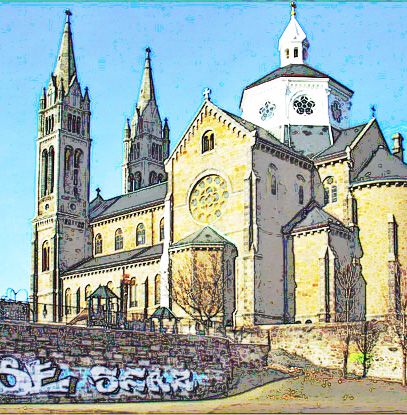
Mission Church, RoxburyHis funeral was on a rainy Saturday, 27 August 2009 at the Basilica of Our Lady of Perpetual Help, built by German immigrants and "since 1878" a parish church; with geographical designations like parish and ward, churches dare describe themselves as congregations especially for a particular neighborhood. In the Roxbury neighborhood of Boston, Mission Church is situated amidst the have a littles and have nots, creating an apt setting for the remembrance of someone who lived his life in service to often underserved and frequently disregarded populations. I've driven past the church quite a few times, though I don't recall ever being inside.

The celebration, the liturgy, the acknowledgment of Ted Kennedy's achievements and the promise of the inbreaking Reign of Heaven began with a magnificently played and sung entrance hymn:
Holy God, we praise thy name;
Lord of all, we bow before thee;
all on earth thy scepter claim;
all in heaven above adore thee.
Infinite thy vast domain;
everlasting is thy reign.
...words to stanzas 1-4 attributed to Ignaz Franz, circa 1774; translated by Clarence Walworth, 1858 (they processed into the church singing all 8 stanzas).

Scripture readings included Wisdom 3:1-9; Psalm 72 with the recurrent response, "Justice shall flourish in his time in fullness of peace forever"; Romans 8:28-31 – "nothing can separate us from the love of God"; and for the gospel, Matthew 25 – "whatever you did, for one of the least brothers of mine, you did for me."

Beginning with covering the casket in a white pall (technically a baptismal garment), the baptismal imagery was telling and pervasive: baptizing us into the death and resurrection of Jesus Christ, God clothes us in forgiven, sinless righteousness; each of the baptized wears a baptismal calling to a life of justice, a call to a journey to the cross if – "when" – necessary; a call to speak and to act prophetically against the political, economic, social, and cultural establishments. In the Spirit God calls and enables us to talk the talk and walk the walk. Figuring out and discerning a specific career path can be tough, scary, and difficult, but we all receive the same baptismal call to lives of justice and equality, to living the Magnificat...Luke 1:51-55
He has shown strength with his arm;
he has scattered the proud in the thoughts of their hearts.
He has brought down the powerful from their thrones,
and lifted up the lowly;
he has filled the hungry with good things,
and sent the rich away empty.
He has helped his servant Israel, in remembrance of his mercy,
according to the promise he made to our ancestors,
to Abraham and to his descendants forever.
Although the Kennedy clan originated from tribal cultures of ethnic Ireland and religious Rome that back in those days were not welcomed or accepted in elite residential or vacation communities in this country, these days commentators often call them America's Royalty, and they have become essentially a dynasty. In Greg Ferguson's words:
The ground is level at the foot of the cross...
We all are equal in the light of the cross
For the love of God is given freely to all
The ground is level, at the foot of the cross

Men and women, younger and older
Every culture, every color, every tongue
No more labels, no separation
As we stand forgiven at the cross
We all are one ...

Doesn’t matter your social position
Doesn’t matter if you’re rich or if you’re poor
Race or privilege, tribe or tradition
At the cross of Christ it can’t divide us anymore
Baptized into Christ, the Kennedys are God's royalty; the baptismal hymn from 1 Peter 2:9-10 would have been perfect for a reading at the service for Ted Kennedy:
But you are a chosen race, a royal priesthood, a holy nation, God's own people, in order that you may proclaim the mighty acts of him who called you out of darkness into his marvelous light. Once you were not a people, but now you are God's people; once you had not received mercy, but now you have received mercy.
The grandeur and sweep of the memorial service and media coverage were worthy of a head of state—of royalty! Ted Kennedy lived and served in the traditions of liberal, activist politics and liberal, activist, prophetic Christianity. He was a coalition-building, conciliatory politician who initiated and sponsored legislation of the people, from the people and for the people. And during the funeral liturgy, the celebrating of Holy Communion, the Lord's Supper, taken, blessed, broken and given, the Eucharist, a feast of thanksgiving, reconciliation, and life of all creation, for all creation.

Ted Kennedy's schooner Mya provided a wonderful icon of the sometimes rocky and rough, occasionally surprisingly smooth and glassy passages everyone needs to navigate through life. Water is the basic substance of creation, the essence of life: Water Is Life! We live baptized into water, drowned into our first death and raised to second birth of bounded freedom in Christ, and we need to trust God, the One Who really is the Baptizer.

On the Friday before the funeral Ted Kennedy lay in state at the Kennedy Presidential Library, located right next door to the University of Massachusetts at Boston, an urban school for non-traditional students, many of whom go on to help change their part of the world.

Psalm 72:4a insists, "He shall defend the afflicted among the people."

President Barack Obama quoted Ted Kennedy: The work begins anew. The hope rises again. And the dream lives on. Indeed it does, and it will:

Infinite Thy vast domain; everlasting is Thy reign...the dream lives on!

Thursday, September 17, 2009

Mary Travers, 1936-2009

If I Had a Hammer

words and music by Lee Hays & Pete Seeger

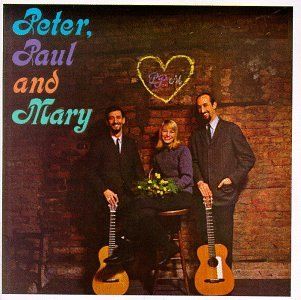
Peter, Paul, Mary self-titledIf I had a hammer
I'd hammer in the morning
I'd hammer in the evening
All over this land
I'd hammer out danger
I'd hammer out a warning
I'd hammer out love between my brothers and my sisters
All over this land

If I had a bell
I'd ring it in the morning
I'd ring it in the evening
All over this land
I'd ring out danger
I'd ring out a warning
I'd ring out love between my brothers and my sisters
All over this land

If I had a song
I'd sing it in the morning
I'd sing it in the evening
All over this land
I'd sing out danger
I'd sing out a warning
I'd sing out love between my brothers and my sisters
All over this land

Well I've got a hammer
And I've got a bell
And I've got a song to sing
All over this land
It's the hammer of justice
It's the bell of freedom
It's the song about love between my brothers and my sisters
All over this land

© 1958, 1962 (renewed), 1986 (renewed)
TRO-Ludlow Music, Inc. (BMI)

Mary

Wednesday, September 16, 2009

blogger @ 10...

blogger ten years old

blogger has aged into double-digits
all the way into 10 whole years
a couple months back I milestoned, too
with 7 years on desert spirit's fire
this blog, my main blog
my flagship theology blog

but what now can I say today
about traveling with blogger and before?
some of it's been like a country song
parts of it seem to qualify
as genuine Pauline shipwrecks

shoreside by sands of ocean pacific
by a snack shop at a Nevada truck stop
alongside an urban state of habitation
desert designs at a nearby hot spot
cycling countlessly through crayola, pantone and adobe
blog rings and theology schemes
Jeremiah, 2nd Isaiah, Luke and Revelation
illustration inspirations...

leading to hearing and saying
and almost everyday...
"that's something to blog about!"

# # #

Monday, September 07, 2009

ELCA: structured flexibility

ELCA emblemOriginal post, September 2009.

It happened recently at the Evangelical Lutheran Church in America's Church Wide Assembly: six years later, the asp page is offline now; title is/was, "Sexuality Report and Recommendations, executive summary"; here's a brief excerpt:
The proposal suggests that this church, because of its acknowledgment of and commitment to the bound consciences of all, incorporate structured flexibility in decision-making into its policies and procedures so that synods, bishops, congregations, candidacy committees, and others involved in the candidacy process and in the process of extending calls will be free to act according to their convictions regarding both the approving or disapproving in candidacy and the extending or not extending of a call to rostered service of a person who is otherwise qualified and who is living or contemplates living in a publicly accountable, lifelong, monogamous, same-gender relationship.
When I heard someone ask, "But how can human creatures bless what the Creator God does not bless?" I needed to respond with at least a short blog. When I'm teaching I always explain the bible is a culturally conditioned and culture bound document, that we try hard, sometimes very hard, using appropriate critical and interpretive tools and skills to contextualize the words on the pages for other times, other places, particularly for the time and the place where we live right now. When I'm teaching a new group or people who don't know me well, I tell them I have high regard for scripture as a divine word but equal respect for it as a human word "with all the ambiguity that implies." It's a specific witness and as Martin Luther insisted, "what preaches Christ" carries greater weight and authority than what does not. Simply put, all scripture is not equal. Jesus Christ, God's living Word, ultimately interprets the written word of the bible. The very idea that a text could be infallible or inerrant is at right angles to any convictions that could have been held in the worlds that originated those texts that oftentimes were verbally conveyed and written down at some point in time much later.

As the Barmen Declaration signatories confessed in 1934:

Barmen Declaration 50 years"Jesus Christ, as he is attested for us in Holy Scripture, is the one Word of God which we have to hear and which we have to trust and obey in life and in death.

"We reject the false doctrine, as though the church could and would have to acknowledge as a source of its proclamation, apart from and besides this one Word of God, still other events and powers, figures and truths, as God's revelation."

Who is this Jesus scripture attests to? Living hospitality, a faithful friend, the embodiment of covenantal, non-exploitative relationship. Both fully human and fully divine, in the power of the Spirit of Life Christ Jesus calls the Church and the churches to live as the demonstration and exhibition to the world of the Reign of God, in the Spirit enables us to the same ways of being and acting as he shows us. (Although Jesus' First Followers would not have had a clue as to the meaning of "church," and Matthew is the only gospel that includes the word ecclesia.) This Jesus is God incarnate, holiness enfleshed, the essence and reality of embracing love, of justice and righteousness for all creation. Jesus also is at home in the culture and religion into which he was born and spent his life.

People with more knowledge, education and insight than I possess have explained ways concepts and realities such as marriage and family have developed, evolved and changed; historically, there never has been a single normative style or structure for marriage or for family. Scriptures witness to God's nature and being, but just as much the word of "holy" writ reveal a particular place and time as some of the canonical texts condone practices like selling your daughter into slavery. In that case, "what would be a just price?" has been a typical response because after all, God mandates equitable compensation. Along with dietary proscriptions and prescriptions... you get the idea.

There may be one or two or a few passages against sexual activity with persons of one's own sex, and for a fact scripture forbids divorce, eating cattle and dairy at the same meal, eating cloven-hoofed ruminants and crustaceans (lobster, crab, and their ilk), wearing garments made of more than one kind of fiber (in that case, even 5% spandex for a little stretch is unscriptural, not to mention true abominations such as 50% cotton / 50% polyester). As Martin Luther insisted, all sin is idolatry, all sin amounts to violating the 1st commandment. In addition, 20th and 21st century medical, psychological and behavioral research and studies have demonstrated knowledge about sexual attraction and behaviors totally unknown in recent centuries, and unheard of when scripture was recorded (and when it was canonized). I've read that about 1% of the population is hard-wired to be either 100% gay or straight; the rest of us are gradations in between. So is everyone "a little gay?" Apparently not, any more than everyone is "a little bipolar," though most people's mood and affect varies considerably from one day to the next and particularly from one season to another. Recently someone suggested there's a strong element of choice in some folks' decision to life partner with someone of the same rather than the opposite sex. The individual pointed out that in general it's a lot easier to understand and therefore to spend most of your days with someone of the same gender because a lot of our attitudes and behaviors tend to be guy things, girl things, guy type or girl type in style. Similarly, most of us have abilities and interests that could lead to employment or a career in a number of areas or disciplines, but if someone who potentially could work as a history teacher chooses a less demanding path as a classroom aide, have they abrogated God's call and purpose for their lives? Possibly to a small extent, but more than anything God's call to faithful living is about good stewardship of time, talents and opportunities and especially to kind, loving non-exploitative relationships, to considering and treating others as "thous" rather than "its."

So especially regarding open factors of circumstance, choice and opportunity, much of the ELCA's decision as well as the recently defeated Proposition 8 in California simply is about equal rights.

Today is a somewhat lazy Labor Day in the USA and Labour Day in Canada, making it feel like an excellent day to get another blog online, and I needed to say something about the recent ELCA decision; here it is...

Sunday, September 06, 2009

psalm 116:12-16

Maundy Thursday Psalm 116:12-16
This is the appointed psalm for Maundy Thursday.

What shall I render to the Lord
for all his benefits to me?
I will offer the sacrifice of thanksgiving
and will call on the name of the Lord.
I will take the cup of salvation
and will call on the name of the Lord.
I will pay my vows to the Lord now
in the presence of all his people,
in the courts of the Lord's house,
in the midst of you, O Jerusalem.

Sunday, August 30, 2009

Evangelism in the California Gold Rush

When I mentioned this paper I wrote during the first semester of the American History survey to a Facebook friend, she told me she would love to read it, so here it is, carefully retyped.

Introduction

On January 24, 1848, gold was discovered in California. The discovery of gold came during an era in United States history when the force of evangelical Christianity was in operation along with that of the nation's Manifest Destiny, which was a charge to expand the reach and influence of American territory and ideals. Evangelicalism and imperialism were institutions that America's experience of the previous two centuries had informed in a unique way.

In this paper I will begin to explore the interaction between California Gold Rush mining camps and evangelicalism; I also will attempt to discern the particular style of evangelism that prevailed in the camps and mining towns.

An extraordinary amount has been written about the Gold Rush, but very little of what I had access to or found referenced was concerned specifically with religion and the Gold Rush. Because of this, I have drawn upon secondary sources that describe either the gold camps in general or religion in the San Francisco Bay area, and necessarily I have done a fair amount of speculation.

Some Historical Background

California had belonged to Mexico. The United States acquired it as a territory in 1848 at the end of the Mexican War, and in 1850 California was admitted to the Union as the thirty-first state.

Although California was not an issue in the 1844 presidential campaign, apparently a sudden interest in California had come about in 1843. One commentator mentions not only the key locations of San Francisco and Monterey, but especially the ineptness of Mexican rule, the fear of possible British expansion, and Manifest Destiny as arousing American interest.1 At that time, "the press fostered in every conceivable way the emigration to the coast." 2 The huge amount of underpopulated land must have drawn people, but so did deposits of silver, lead, gold and iron reputed to be abundant throughout the unexplored far Western territories.3 Here is a chart depicting California population growth from 1848 to 1860:
California Population

1848. . . . . . . . . 14,000
1849 (end). . . . 100,000
1852. . . . . . . . 250,000
1860. . . . . . . . 380,000
Some time earlier, in 1839, John A. Sutter had arrived in California from Switzerland and had acquired about 50,000 acres of land. On January 24, 1848 one of "Sutter's Men," James Marshall, a carpenter from New Jersey, discovered gold at Sutter's Mill at Colonna, a Sacramento territory on the American River.

Despite attempts to keep the discovery secret, by June many residents of San Francisco and Monterey were caught up in the quest for gold. By August, Gold Fever had reached all of California, Hawaii, Oregon and British Columbia; within the next few months it spread to Mexico, Peru, Chile and the rest of the United States. By 1849 virtually the entire known world knew about it.4

Newspapers were important in making known the discovery of gold. Correspondence to eastern newspapers was a significant factor: as alcaldes (mayors) and ministers wrote letters to the papers, their status gave credibility to rampant rumors regarding the quantity and the reality of the gold.

Gold Rush Participants and California Christianity

There appears to be general agreement on characteristics of the Gold Rush population. They were male, single, and fairly young; about half of them were American-born; there were a very few wives and children of the miners, and these mainly were in the towns.5 A lot of the argonauts – or goldseekers – went to California as members of an organized company or cooperative association, but almost inevitably these companies disintegrated on the trail or shortly after arrival at their destination. Most miners lived in pairs, a few lived singly or in larger groups—the groups were made up mostly of those from "common origins."6 By profession, miners were predominantly artisans, traders and unskilled laborers.
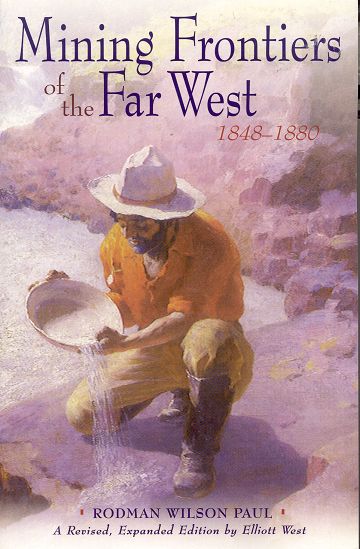
Mining FrontiersOne writer says there were always a few school teachers and ministers;7 another, that there were a disproportionate number of ministers: "one observer, doubtless exaggerating, estimated the preachers at one in ten."8 Also, California clergy were as much part of the Gold Rush as the Goldseekers: "The Gold Rush was simply the vehicle God had chosen for the evangelization of the whole world."9 . . . " [The preachers] imposed the Blue Law Gospel on mining society and prayed to strike a bonanza in souls."10 A goal was to "make California the Massachusetts of the Pacific."11 The sources cited above make no distinction between ministers who traveled to California with Goldseekers or as Goldseekers and those who were sent by denominations or other church groups. There were missionaries: the American Home Missionary Society commissioned and sent missionaries to California shortly after the initial discovery of gold.12 13

This describes only those ministers and preachers who were either sent to or drawn to California by Gold Fever, because the history of Christianity in California already was close to three hundred years old by the time of the Forty-Niners! In 1579 Francis Drake's chaplain read an Anglican service in California.14 Twenty-one Franciscan missions had been established in California from San Diego in the south to Sonoma in the north.15 In 1776, San Francisco (Yerba Buena) was established by the Spanish as a mission and presidio.16 However, by the mid-nineteenth century some missions had decayed, though some still were flourishing.17

In 1826, the Reverend Jedidiah Strong Smith, known as the "Bible Toter," was the first American to travel overland to California.18 The Reverend Walter Colton, the first resident minister in California, was Alcalde of Monterey beginning in 1846;19 in April 1847, two Methodist missionaries on their way to Oregon stopped at San Francisco and started a Sunday school.20 Also, before the end of 1847 (and prior to the discovery of gold), ministers acted as town officials, preached sermons, and started a few schools.21

Virtually all sources affirm the popular image of the Forty-Niners and their lifestyle as being – in most cases – at least close to the way things actually were. Every mining town had a commercial district that usually included bars, casinos, hotels, brothels, restaurants and dance halls, with bars apparently the main form of entertainment! One source says, "Unquestionably life in California's gold days was characterized by highly pathological conditions, even to the extent of social insanities."22 The same source mentions gambling as an obsession, says that everyone, including judges and ministers, gambled.23 Another speaks of "the tidal wave of iniquity which was gold rush California."24

There is evidence that as the Gold Rush got underway evangelism became a major activity in the San Francisco area. In a broad, fairly inclusive sense, evangelism can be defined as any activity undertaken with the intent of bringing people to Christianity. More specifically, the evangelical movement within nineteenth century Protestant American Christianity focused intensely on the redemptive person and work of Jesus Christ, on the Bible as the Word of God, and on the individual's relationship with God in and through Jesus Christ.
Revivals, Awakenings…In the goldmining areas, just as elsewhere in the United States at that time, the actual process of evangelism tended to take one of two forms: social and reform movements, such as temperance, abolitionism and sabbatarianism; and spoken proclamation of the Gospel, usually in the form of a sermon, most often in the context of a revival meeting. And quite surprisingly, in San Francisco and the surrounding area there also was an attempt to give "The Church" institutional forms analogous to those in the East through the building of physical facilities and the calling of ordained ministers to pastor the congregations that gathered around the buildings. Two or more congregations sharing the same building was not uncommon; surprising, too, is that seemingly most of the congregations were established under denominational, rather than independent aegis. Among these were Baptist (1849), Congregational (1849), Episcopal (1850) and Unitarian (1850) churches.25 No denominations of continental European origin appear to have been represented. Also, since the author of "Blue Law Gospel" cites many contemporary denominational periodicals, there must have been readers for them.

It was in more settled areas such as San Francisco, Monterey and Sacramento that congregations were gathered and established. The content of the ministry offered by and for these congregations is not altogether clear, though doubtless it included at least support for various reform movements, as well as preaching and more-or-less formally structured worship. In the available literature, casual references to Gold Rush towns seem to indicate that it was just a short ride from one town to another, although that was by no means the case, given that the actual physical distance from one locale to another made a journey for the purpose of attending worship out of the question.
Here are mileages between some points:
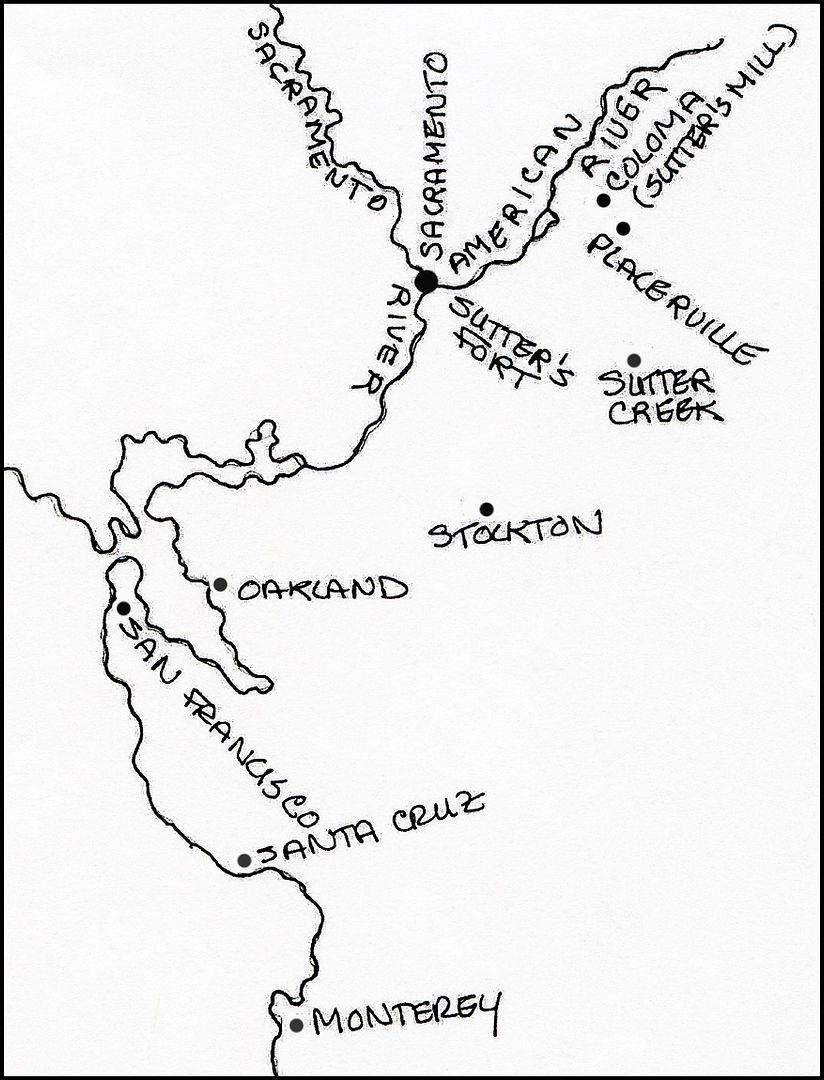
gold rush map
Mileages between some points

Monterey – Sacramento . . . . . 198
Monterey – San Francisco . . . . . 124
Monterey – Stockton . . . . . 139
Sacramento – San Francisco . . . . . 85
Sacramento – Stockton . . . . . 55
San Francisco – Stockton . . . . . 81
As one might expect from the evangelical tradition that had developed a convention of calls to individual repentance and conversion within the context of the revival meeting, it appears revival meetings were the chief form of evangelism within the Gold Camps, as well as a popular form of entertainment. And with the goal of bringing individuals – and through them, the whole society – into the kind of "right living" subscribed to by the assorted reform movements, representatives of reform movements, particularly of Sabbatarianism (dedicated to proper observance of the Sabbath, or Sunday), were quite active within the mining camps. Injunctions were directed against vices such as drinking, gambling, swearing, card-playing, prostitution, smoking, dancing and theater-going, primarily because of the tendency of people to break the Sabbath with these particular sins.26 Martin Marty says "they usually spoke first in terms of rescue (to save men from sin and a corrupt society) to be followed by repair of society through rescued individuals and finally through reform."27

In the camps six day weeks were the rule, a practice that was a response to the fourth commandment!28 Sunday was a day for various chores and amusements, as well as for attending camp meeting. John Walton Caughey describes camp congregations as "rough-looking but remarkably alert, attentive, and openhanded."29

The text of a diary highlighting the journey of a gold-seeker from Indiana to California refers to "Sabbath" a total of eighteen times. The entry for September 23, 1849, describes a Sabbath in one camp:
This is the first Sabbath I have been in the gold mines of California and I must acknowledge that the morals of the people are much better than I expected to find and we have been permitted to spend the day in peace & quietness though many are at work in the mines they are two or three miles from the encampment and do not appear to wish to disturb those who wish to observe the day; . . . the trip coming together with one years residence here will impair the constitution as much as ten years residence in any of the States . . . I am now convinced that I done very wrong in coming here with the hope of bettering my pecuniary condition alone and I now declare and humbly ask God to enable me to perform my promise that if I am again permitted to return [to] a land of peace and quietude that with the proceeds of honest industry I will strive to be content.30
It appears that many argonauts were responsive to being evangelized and "saved" but many were not. There is one reference to preachers preaching in bars in an effort to spread the Gospel,31 but in contrast, an argonaut is quoted as saying, "We are not burdened with religion here in California."32

Without differentiating between circuit riders and those called to serve a gathered local congregation, one writer says, "The pioneer preacher was far more than a preacher . . . It was incumbent upon him to become a public servant, with humane instincts, benevolent heart, ready to respond to any call for help from people of every station in life."33

There is no evidence of evangelism directed specifically toward any of the many ethnic groups that were part of the Gold Rush population.

Gold Rushers and United States Ideals

Goldseekers and evangelists each seem to represent a major aspect of the nineteenth-century American ethos. There is an stereotypical image of the American citizen – whether native-born or foreign-born – as one more concerned with ideals and "self-fulfillment" than with establishing roots in a given place.

Although early American colonists indeed were concerned enough with ideals to uproot themselves and move to a place in which they envisioned the fulfillment of their dreams, much of the driving force of early colonization actually was toward social cohesion and community—exemplified by the concept of covenant: the will of God and of the group for the common good. Although many of the miners were employed by others, the Forty-Niners' overriding passion appears to have been for personal (and private!) wealth, with no thought given to any larger, more extended community—least of all in the style of their lives in the gold camps. However, by the mid-nineteenth century the American ideal had gradually turned from the group to the individual and the Goldseekers almost perfectly exemplified this idea of individual fulfillment.

From the beginning, imperialism had been a major force and factor in American history, and whether to expand actual land holdings or to expand the influence of their own economic, religious or social ideals, Americans had a long history of believing their own ideas and ideals superior, and therefore of being justified in visiting them upon others. And for the most part, especially at mi-nineteenth century, Americans believed their mission was identical to that of establishing God's reign upon earth.

At the time of the Gold Rush, those who felt called to evangelize and convert the Goldseekers possessed, or were possessed by, a variety of imperialistic fervor that seems natural for that particular moment in American history: the tradition of imperialism and expansion had been unbroken since early colonial beginnings, and the Second Great Awakening (1800-1830 – an evangelical movement that informed virtually every aspect of culture in the United States) had been recent enough that its effects still were operative, particularly in the way conservative evangelical Christianity was fused with American nationalism. The far West was seen as another part of the Western Hemisphere to be explored and claimed for God by Protestants (Catholicism was not evangelical in style; therefore it didn't have the kind of authenticity Protestants attributed to their type of Christianity). The fruits of the Awakening also had generated many social and reform movements.

Here, too, there was continuity with an earlier, seventeenth- and eighteenth-century spirit and departure from it. In both these cases there is a consciousness of the "rightness" of Christianity, but although earlier the covenant community had been the focus and goal of bringing people into right relationship with God, in 1850, although revivals and evangelism were group phenomena, individuals and individual salvation were quite clearly the goal. This reflects the nineteenth-century Jacksonian ideal of freedom of the individual in contrast to the earlier concept to liberty for the community.

There is also an interesting relationship of gold-seekers and of evangelists to the dominant contemporary culture. At that point in time, America was starting to become an urban-industrial nation, its "becoming" fed by factors such as large and increasing labor supply, an increasing supply of production capital, and free enterprise. Undoubtedly, in the Jacksonian spirit, individual gain and profit would be a prime motivational factor in any entrepreneurial undertaking. Argonauts were caught in this spirit, and with the intention of short-circuiting all of the in-between steps and becoming instantly rich! Although there probably were people whose dream of immediate wealth was allied with a dream of using the wealth to finance industrial production or social good, we don't read about those individuals but only about those for whom gold was an end in itself.

Since even goldseekers who lived in groups or communally seem to have been solitary, and since the pursuit was almost inevitably that of the individual, the argonaut seems to have formed a caricature of the American of the era: a working-class or underclass self-starter who believed wealth was the answer to every problem and question.

The evangelists also appear to have formed a caricature – not so much as they related to American culture as a whole, since their style was so "American" for the time – but a caricature of the biblical Christian ideal for the Christian to be "in but not of the world." Although interpreting Christianity of past centuries can be problematic, one classical Christian stance has been that of interaction with the dominant culture, often in the form of social activism (another has been that of separatism and pietism).

Gold Rush evangelists saw themselves as social reformers, and they believed preaching the Gospel and reform activities were God's call to them, but their activities were inseparably yoked with the rest of American culture. On one side, as they saw the evangelical imperative to spread the Gospel as part of the American vision and of the American imperative to extend American control and influence, there was little differentiation between evangelicalism and contemporary culture. On the other side, because the social and culture milieu of the Forty-Niners was perceived as needing reform, evangelists in the Gold Rush were given reason to be and to act because of the particular conditions in the mining areas. Thus, evangelists formed a complement to the mining culture as well as being in alliance with the general American ethos. But this may not be particularly significant, since historically Christianity has tended to become allied with, and not infrequently identified with, the dominant culture, while still retaining some form of "prophecy" in order to justify the name Christian.

The California Gold Rush evangelists' brand and style of Christianity existed both because of customs and evolution in American life and because of the lifestyle in the mining camps. The form they gave their interpretation of biblical Christianity was definitely American, although probably informed to an extent by biblical ideals. Nonetheless, social reform movements, revival meetings, denominations, and the autonomous local congregation all were exclusively American institutions, as was voluntarism in all these undertakings.

Both argonauts and evangelists were part of the American conviction that life, and this world, can be better. Goldseekers were looking for an out-of-the-ordinary experience; evangelists tried to draw them out of the out-of-the-ordinary and back into the American way.


Bibliography

Caughey, John Walton. The California Gold Rush. Berkeley, University of California Press, 1948.

Ghent, Jocelyn Maynard. "The Golden Dream and the Press: Illinois and the California Gold Rush of '49." Illustrated. Journal of the West, 17:17-27, April 1978.

Graebner, Norman A. "American Interest in California, 1845." Illustrated, bibliographical footnotes. Pacific Historical Review, 22:13-27, February 1953.

Hanchett, William. "The Blue Law Gospel in Gold Rush California." Bibliographical footnotes. Pacific Historical Review, 24:361-368, November 1955.

Hunt, Rockwell D. "Pioneer Protestant Preachers of Early California." Pacific Historical Review, 16:84-96, February 1949.

Kirkby, Dianne. "Gold and the Growth of a Metropolis." Illustrated, map. Journal of the West, 17:3-15, April 1978.

Mann, Ralph. "The Decade after the Gold Rush: Social Structure in Grass Valley and Nevada City, California, 1850-1860." Pacific Historical Review, 41:484-504, November 1972.

Marty, Martin E. Righteous Empire: The Protestant Experience in America. New York: The Dial Press, 1970.

Mattes, Merrill J., editor. "Alexander Ramsey's Gold Rush Diary of 1849." Pacific Historical Review, 18:437-468, November 1949.

McLoughlin, William G. Revivals, Awakenings, and Reform. An Essay on Religion and Social Change in America, 1607-1977. Chicago: University of Chicago Press, 1978.

Paul, Rodman Wilson. Mining Frontiers of the Far West, 1848-1880. New York: Holt, Rinehart and Winston, 1963.


Endnotes

1 J.M. Ghent, "Golden Dream and the Press," Journal of the West, volume 17, pages 13-14.
2 Ibid., page 23.
3 R.W. Paul, Mining Frontiers of the Far West, 1848-1880. (New York: Holt, Rinehart and Winston, 1963), page 23.
4 Ibid., pages 12-14.
5 R. Mann, "The Decade after the Gold Rush," Pacific Historical Review, volume 41, page 500.
6 Ibid., page 487.
7 Paul, op. cit., page 17.
8 J.W. Caughey, The California Gold Rush (Berkeley: University of California Press, 1948), page 272.
9 W. Hanchett, "The Blue Law Gospel in Gold Rush California," Pacific Historical Review, volume 24, page 363.
10 Ibid.
11 Ibid.
12 R.D. Hunt, "Pioneer Protestant Preachers of Early California," Pacific Historical Review, volume 18, page 87.
13 Hanchett, loc. cit.
14 Caughey, op. cit., page 270.
15 Hunt, op. cit., page 86.
16 D. Kirkby, "Gold and the Growth of a Metropolis," Journal of the West, volume 17, page 4.
17 Caughey, op. cit., page 272.
18 Hunt, op. cit., page 85.
19 Caughey, op. cit., page 270.
20 Ibid., pages 270-271.
21 Ibid., page 271.
22 Hunt, op. cit., page 84.
23 Ibid.
24 Hanchett, loc. cit.
25 Hunt, op. cit., pages 87-95.
26 Hanchett, op. cit., page 362.
27 M.E. Marty, Righteous Empire (New York: Dial Press, 1970), page 95.
28 Caughey, op. cit., page 187.
29 Ibid.
30 M.J. Mattes, editor, "Alexander Ramsey's Gold Rush Diary of 1849," Pacific Historical Review, volume 18, pages 466-467.
31 Caughey, op. cit., page 274.
32 Hanchett, op. cit., page 364.
33 Hunt, op. cit., page 87.

Thursday, August 27, 2009

summer conversation 4

4. A Eucharistic community: the Welcome Table

John 1:1, 3 In the beginning was the Word, and the Word was with God, and the Word was God. All things came into being through him, and without him not one thing came into being.

John 12:24 …unless a grain of wheat falls into the earth and dies, it remains just a single grain; but if it dies, it bears much fruit.

1 Corinthians 11:23-24 …our Lord Jesus on the night when he was betrayed took a loaf of bread, and when he had given thanks, he broke it and said, "This is my body that is for you. Do this in remembrance of me."

And what about "this is my body"?
And "this cup is the new covenant in my blood"?
The bread points to nourishment in that same self-giving of God
At work in my body, that is in me.
And the cup points to the new community drawn together and nourished
In my blood, that is in God's total self-giving in my death.

–Paul L. Hammer–

You choose to be made at one with the earth;
the dark of the grave prepares for your birth.
Your death is your rising, creative your word;
the tree springs to life and our hope is restored…

–Fred Kaan–


In Saxon English, the Lord provided the loaf, the bread, the essentials for sustaining life. We are baptized into the biography of the baby born in Bethlehem, House of Bread. In the Eucharist, we celebrate the ultimate earth day, a feast of justice and reconciliation for all creation, that brings together the ground's fruitful yield along with the labor of farmers, vintners, truckers, grocers, bakers, sellers, weavers and potters, carpenters and contractors.
Revelation 21:1-2a Then I saw a new heaven and a new earth…and I saw the holy city, the new Jerusalem.
Who is this Lord of the Church, this Jesus?

Consider Jesus' lifestyle of justice and inclusion along with Jesus' command "do this!"


Backtracking:

1. A baptized community: Water and the Word
Galatians 3:28 There is no longer Jew or Greek, there is no longer slave or free, there is no longer male and female; for all of you are one in Christ Jesus…
Who is this Lord of the Church, this Jesus?
Consider Jesus' relationship to creation, Jesus' stewardship of all life.


2. Spaces, places, locations…

First, Second, and Third spaces, (Fourth?) places in cyberspace; the liminal, the marginal, and the central; thresholds, edges. and centers; insiders, outsiders, strangers and friends
Romans 13:8 Owe no one anything else except to love one another…
Who is this Lord of the Church, this Jesus?

Consider Jesus' sense of home and geography.


3. Jesus, us, culture, counter culture
Colossians 2:15 Having made hash of the rulers, the powers and the principalities and having been victorious over them, Christ then made a public spectacle of them!
Who is this Lord of the Church, this Jesus?

Consider Jesus' awareness of his own culture and the customs of others.

© Leah Chang

Thursday, August 20, 2009

summer conversation 3

3. Jesus, us, culture, counterculture

Continuing awareness of the interdependence of all creation…

In Jesus of Nazareth God became incarnate within a particular culture, geography and historical time. And Jesus accepted death! How much more countercultural does it get?

Contexts, worldviews: natural, economic, ethnic, symbolic, class, linguistic, religious around us and within us shape us and limit where we go, what we think about, the options open to us. An individual becomes a person by becoming embedded in a textured, interwoven history of experiences shared with others. Insiders, outsiders, strangers and friends…

Contextualizing ministry, evangelism and worship. For Martin Luther, worship and hymn-singing in the vernacular was one of the marks of the true church; there are many vernaculars besides the linguistic.
1 Corinthians 12:4-7 There are diversities of gifts but the same spirit, and different kinds of ministries and ways to serve, yet the same Lord. Although there are many various types of activities and enterprises, the same God is active and works in all of them, and each person receives gifts of the Spirit for the good of the entire community.
Christus Victor: an atonement model moving away from a focus on guilt and condemnation under the law to emphasizing freedom and victory of Christ, in Christ.
Colossians 2:15 Having made hash of the rulers, the powers and the principalities and having been victorious over them, Christ then made a public spectacle of them!
Also consider 1 Corinthians 15:54-57 and…
Hebrews 2:14-15 Therefore, since the children shared in the blood and the flesh and Christ shared in the same things, that through death he might destroy the one having power over death - that is, the devil - and he might free all those who by their fear of death were bound to slavery throughout their lives.
Let the river run, let all the dreamers wake the nation. Come, the New Jerusalem. Carly Simon, "Let the River Run"
Who is this Lord of the Church, this Jesus? Consider Jesus' awareness of his own culture and the customs of others.

Next week: 4. A Eucharistic community: the Welcome Table

An inclusive meal and a feast of justice and righteousness accomplished on earth for all creation. Now I saw a new heaven and a new earth, for the first heaven and the first earth had passed away. Then I saw the holy city, the New Jerusalem…

© leahchang

Thursday, August 13, 2009

summer conversation 2

2. Spaces, places, locations…

Continuing to focus on our interdependence with all creation.

1st spaces: family, neighbors, local schools, face-to-face relationships;

2nd spaces: workplace, university, more distant and structured settings with more choices about self-revelation;

3rd spaces: traveling, affinity, trade and professional groups, social, cultural and other diversities, at times geographically further afield with potential for greater anonymity...regarding possible

4th spaces, consider cyberspace, where you can choose to reveal who and where you are, try on new ideas and even new identities.

The liminal, the marginal and the central; thresholds, edges and centers
John 1:14a And the word became flesh and tabernacled [pitched a tent, a portable shelter] among us.
Where is home for you? Geographical origins, a more recent city or town, an emotional place, treasured people and activities? How do your experiences in various locations contribute to your understanding of yourselves, of others, of the world? Our histories and stories: insiders, outsiders, strangers and friends. …in Jerusalem, in all Judea and Samaria, and to the ends of the earth!
Romans 13:8,10 Owe no one anything else except to love one another, for anyone who loves another has fulfilled the law. Love does no evil to a neighbor; therefore love fulfills the law.
Paul insists we owe, we "ought" the love of Christ to every one another and compares love for others to a debt, an ought that we owe them.
Revelation 21:1-3 And I saw a new heaven and a new earth, for the first heaven and the first earth had passed away…and I heard a tremendous voice from the throne saying, "Now God pitches a tent and lives among all humanity, and God will travel alongside all the people wherever they may go. They will be God's people, and God himself will dwell with them and be their God."
…in Jerusalem, in all Judea and Samaria, and to the ends of the earth!
Who is this Lord of the Church, this Jesus? Consider Jesus' sense of home and geography.

Next week: 3. Jesus, Us, Culture, Counterculture

God beyond time and space became incarnate for us in Jesus of Nazareth, lived among us and shared our human experience. And Jesus accepted death! How much more countercultural does it get?

We're coming to the edge, running on the water, coming through the fog, your sons and daughters. Let the river run, let all the dreamers wake the nation. Come, the New Jerusalem.

© leahchang

Thursday, August 06, 2009

summer conversation 1

1. A baptized community: Water and the Word

Consciously connecting ourselves with all creation, recognizing and celebrating our interdependence. Recognizing the countless ways in which time and space are essential conditions in which all creation lives.
Genesis 1:1-2 In the beginning when God created the heavens and the earth, the earth was a formless void and darkness covered the face of the deep, while a wind from God swept over the face of the waters.
Water is the primordial substance of being, the womb of all creation, the fundamental stuff of our rebirth and continued aliveness. Water is the physical substance of our baptism.

Baptized into the Christ Event of God's supreme self-revelation in measurable, definable space and time, we become prophet, priests and sovereigns, in stewardship of creation and of all life. Baptism engulfs us in God's creative power of death and resurrection, identifying us with this planet's history and with Jesus Christ.

Consider our relationship to the elements of air, earth and fire…
Galatians 3:28 There is no longer Jew or Greek, there is no longer slave or free, there is no longer male and female; for all of you are one in Christ Jesus…
The waters of baptism form a border and boundary between our old, disconnected, alienated existence and our new life in the community that is the Body of the Crucified and Risen Christ.

We are the body, the corpus, of Christ! Corporate Identity [package]: our logo, our résumé, our curriculum vitae, where we've been, what we've learned, what we live for and die for…who are we? Baptism transforms us from lone, solitary individuals into a position of particularity within the gathered body of Christ. Each of us brings a special history along with unique gifts and perspectives for contribution and service within church and world.

Who is this Lord of the Church, this Jesus? Consider Jesus' relationship to creation, Jesus' stewardship of all life.

Next week:

2. Spaces, places, locations…


Where is home for you? Geographical origins, a more recent physical place or town, an emotional place, treasured people and activities of belonging? How do your experiences in various locations contribute to your understanding of yourselves, of others, of the world? 1st, 2nd, and 3rd spaces, (4th?) places in cyberspace; the liminal, the marginal and the central; thresholds, edges and centers. Insiders, outsiders, strangers and friends. …in Jerusalem, in all Judea and Samaria, and to the ends of the earth!

© leahchang