

Thursday, December 24, 2015

Wednesday, December 23, 2015
Finding Bethlehem... James W Moore
Finding Bethlehem in the Midst of Bedlam by James W Moore on Amazon
 Finding Bethlehem has an engaging, useful format. You get to look up the scripture snippets for each day's devotions, read the author's ideas that variously are thoughts related to that brief scripture passage, or an anecdote, story or a parable, and then you get to think about questions related to the day's scripture. You probably get that "bedlam" in the title is a generic term that has grown to mean messy, unresolved, sometimes noisy in a visual or auditory sense or physical (messy house, office, kids, road ahead, at least as far as you can discern from here), chaotic, unorganizable. James Moore helps us consider how we might recognize God's being born and staying put on earth with us amidst all that messiness, chaos, and irresolution. In addition to showing the reader some parallel history from the Hebrew Bible, Moore reminds us that famous basic Nativity narrative from Luke's gospel of coming into town to pay taxes along with thousands of other people, trying to find lodging (research has shown us that would not have been a problem at all for Joseph and Mary), needing to get ready to welcome their first born, etc. would be a stellar example of bedlam seeking and needing divine presence. I'm reviewing and blogging this very late Advent, almost Christmas Eve day, but please be assured there's nothing about everything between the covers that needs to be exclusively done during Advent and/or to prepare for the Christmas season.
How literally sensational it is – "sensational" in that we can access God's presence in Jesus with our five physical senses – God coming into our midst in this stable, this manger, this baby, this Jesus born in the little town of house of bread! So much so that God's enfleshment in Jesus is our central proclamation! James Moore explains some of the theology (covenant, sin, love, grace, incarnation, community, savior. redemption) clearly and simply. I believe this book would be accessible to someone with or without a lot of church experience, with or without a formal theological education or scriptural credentials. The author(s) don't talk highfalutin language; they don't talk down to the reader, either. I'd hazard a guess this could be a good small group resource for people who are newcomers to church or newly re-engaged in church activities.
I appreciate that the paper quality isn't exactly great so I won't hesitate to write on the comment pages, though I haven't done so yet. Like many bible studies from Abingdon, Finding Bethlehem in the Midst of Bedlam comes in different formats that include a leader's guide, a version for kids, one for teens, and a DVD.
However, the title page tells us this is An Advent Study for Adults by James W. Moore, with "Question, Prayer, and Focus for the Week Devotions by Pamela Dilmore. With so much space for readers to write their own reflections, question, and responses, the book doesn't contain a whole lot of text, but I wonder what percentage Pamela contributed, and I believe front and back covers need to credit her, as well?
my amazon review: enjoyable study for any time of the year
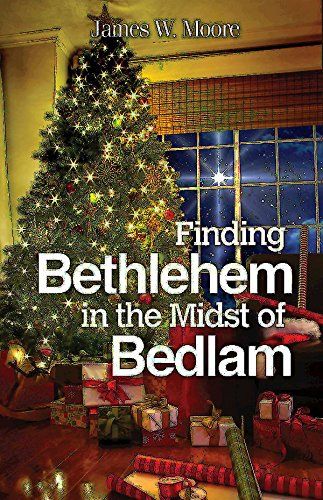 Finding Bethlehem has an engaging, useful format. You get to look up the scripture snippets for each day's devotions, read the author's ideas that variously are thoughts related to that brief scripture passage, or an anecdote, story or a parable, and then you get to think about questions related to the day's scripture. You probably get that "bedlam" in the title is a generic term that has grown to mean messy, unresolved, sometimes noisy in a visual or auditory sense or physical (messy house, office, kids, road ahead, at least as far as you can discern from here), chaotic, unorganizable. James Moore helps us consider how we might recognize God's being born and staying put on earth with us amidst all that messiness, chaos, and irresolution. In addition to showing the reader some parallel history from the Hebrew Bible, Moore reminds us that famous basic Nativity narrative from Luke's gospel of coming into town to pay taxes along with thousands of other people, trying to find lodging (research has shown us that would not have been a problem at all for Joseph and Mary), needing to get ready to welcome their first born, etc. would be a stellar example of bedlam seeking and needing divine presence. I'm reviewing and blogging this very late Advent, almost Christmas Eve day, but please be assured there's nothing about everything between the covers that needs to be exclusively done during Advent and/or to prepare for the Christmas season.
How literally sensational it is – "sensational" in that we can access God's presence in Jesus with our five physical senses – God coming into our midst in this stable, this manger, this baby, this Jesus born in the little town of house of bread! So much so that God's enfleshment in Jesus is our central proclamation! James Moore explains some of the theology (covenant, sin, love, grace, incarnation, community, savior. redemption) clearly and simply. I believe this book would be accessible to someone with or without a lot of church experience, with or without a formal theological education or scriptural credentials. The author(s) don't talk highfalutin language; they don't talk down to the reader, either. I'd hazard a guess this could be a good small group resource for people who are newcomers to church or newly re-engaged in church activities.
I appreciate that the paper quality isn't exactly great so I won't hesitate to write on the comment pages, though I haven't done so yet. Like many bible studies from Abingdon, Finding Bethlehem in the Midst of Bedlam comes in different formats that include a leader's guide, a version for kids, one for teens, and a DVD.
However, the title page tells us this is An Advent Study for Adults by James W. Moore, with "Question, Prayer, and Focus for the Week Devotions by Pamela Dilmore. With so much space for readers to write their own reflections, question, and responses, the book doesn't contain a whole lot of text, but I wonder what percentage Pamela contributed, and I believe front and back covers need to credit her, as well?
my amazon review: enjoyable study for any time of the year
Sunday, December 20, 2015
Barbara Cameron, Crossroads
Crossroads by Barbara Cameron on Amazon
 In some physical or experiential crossroads one pathway or highway sometimes lies at right angles to the other, so logically they begin and end in different places at different directions on the map. At other times one road intersects another road here and there, but both have the same origin and destination. You truly could claim every moment is a crossroads, every moment contain kairos possibilities, though deciding the basic trajectory of the rest of your days when you're still in your teens or barely our of those years is scary. And honestly, these days most middle-class North Americans don't need to make most of those major decisions quite that young.
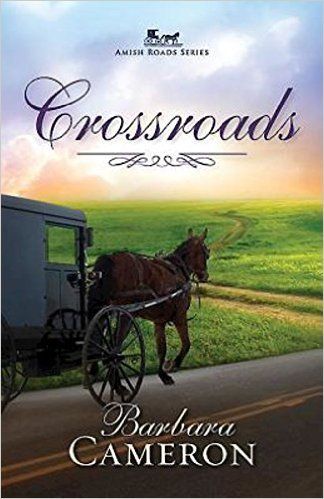
Barbara Cameron's well-written, leisurely-paced Crossroads is mostly about Isaac and Emma, a personable, young unmarried "Pennsylvania Dutch" (Deutsch) Amish couple. You may have heard that some teenaged and early 20-something Amish take months or a couple years away from the Amish ways to participate in non-Amish "Englisch" customs to help them decide whether or not to join the church and spend the rest of their lives as Amish insiders. The novel brings us closeup views of Isaac's Rumspringa (Rumschpringe, Rumshpringa, "running around') as he cuts his hair, rents his own abode and stakes out at least a temporary existence some distance away from the people and the place where he grew up. We also get a lot of Emma's reactions to Isaac's running-around!
Cameron depicts people and overall environment well with her prose, though I kept longing for visuals—drawings, photos, videos of everyone and everywhere, but reading this book encourages me to find some of my own. The glossary at the end explains that the Ordnung, or order of living, is somewhat different in every Amish group. The bishop, or ecclesiastical leader defines a lot of the rules and regulations for the community he pastors. Just as with any other organizational leaders, some bishops are more approachable and less legalistic, others are the opposite. In a first or second world country, no one truly can live completely "off the grid," but I assume the houses in Emma's and Isaac's community didn't have electricity, but used candles and lanterns, cooked with wood—or maybe coal? Pennsylvania is coal country. Like young people almost everywhere – and it doesn't end when chronological youth comes to a close – Isaac and Emma find themselves needing to sort through the complexities of relationships, the future uncertainties, the difficulties of making binding decisions (baptism, marriage) without as much information as they wished they had.
I found it interesting and surprising that although families and characters in Crossroads aren't assimilated or integrated into the surrounding "Englisch" /American Pennsylvania culture, they hover on its periphery and (for example) take advantage of tourist dollars and pizza parlors, though I'd guess that varies widely between Amish communities. Back of the book includes recipes, but only four! Again, pictures would have been an asset, though the author's vivid food descriptions in the book were quite mouth-watering. The glossary explains some terms; we get a short rundown of the Amish Roads series concept, and a teaser for the third book of the series.
my amazon review: winsome characters; interesting culture
blog notes not in my review:
A long time ago I visited Lancaster County to spend a few days with a former classmate whose spouse attended seminary in the area. We drove around sight-seeing and later enjoyed dinner at a restaurant where they served a huge delicious meal that included Seven Sweets and Seven Sours. Beyond that memory, I tend to aggregate "Amish Mennonite Brethren" into a run-on sentence without commas. I know just a little about the Radical Reformation whose initiators believed reformers Martin Luther and John Calvin did not re-form and re-shape the church to an extent sufficient to recreate it back into the highly counter-cultural reality of the earliest New Testament communities. After all, among other details, in the wake of shedding the Roman magisterium Luther and Calvin both became beholden to another magisterium. Plain People include Amish and some old order Mennonites, although there are other Christian groups that aim for a more basic, far simpler overall lifestyle than the typical North American, Western European or Northern European's – Christian or not.
Just as with the Amish, any leaders in any church tradition, whether bishop, pastor, council president, clerk of session, committee chairperson / chairpeople? vary immensely in their gifts and skills, in their openness to new ideas and new people, in their support of others taking the lead. LIttle difference there!
The Ten Commandments apply to every Christian; logically so does Jesus' Great Commandment synopsis to "love God with heart, soul and mind; to love neighbor as thyself." Then there's Martin Luther's reminder every violation of every commandment transgresses the first command to have no other gods. In every denominational and other expression of Christianity, and then in every local church (congregation, parish, ward, assembly) unwritten, unspoken rules and expectations gradually come into being and typically stay put a very long time, often forever. A visitor or newcomer will note differences from their previous churches, sometimes the differences and literal "rules" hit them by surprise when they break one. So Amish church communities with their detailed Ordnung aren't all that different from churches in the more mainline mainstream. Nor is the fact the rules of the Ordnung at times seem to supersede the commandments! Book of Order on top of the Bible?! Oh, that's almost minor.
Cultural anthropologists remind us communities and organizations with solid rules and clear expectations have a certain appeal for certain people, and sometimes as certain stages of their lives. The complexity of the world around us with its choices, demands, uncertain outcomes may make any situation with less ambiguity and fewer choices appealing. The immense benefits of real community one gets after deciding to be baptized (always a seriously considered, very adult individual decision rather than one decided spontaneously or semi-arbitrarily by parents or because of reaching a certain age such as 6 or 8 or 13) and remain within the tradition sets the Amish way far apart from most others.
 In some physical or experiential crossroads one pathway or highway sometimes lies at right angles to the other, so logically they begin and end in different places at different directions on the map. At other times one road intersects another road here and there, but both have the same origin and destination. You truly could claim every moment is a crossroads, every moment contain kairos possibilities, though deciding the basic trajectory of the rest of your days when you're still in your teens or barely our of those years is scary. And honestly, these days most middle-class North Americans don't need to make most of those major decisions quite that young.
Barbara Cameron's well-written, leisurely-paced Crossroads is mostly about Isaac and Emma, a personable, young unmarried "Pennsylvania Dutch" (Deutsch) Amish couple. You may have heard that some teenaged and early 20-something Amish take months or a couple years away from the Amish ways to participate in non-Amish "Englisch" customs to help them decide whether or not to join the church and spend the rest of their lives as Amish insiders. The novel brings us closeup views of Isaac's Rumspringa (Rumschpringe, Rumshpringa, "running around') as he cuts his hair, rents his own abode and stakes out at least a temporary existence some distance away from the people and the place where he grew up. We also get a lot of Emma's reactions to Isaac's running-around!
Cameron depicts people and overall environment well with her prose, though I kept longing for visuals—drawings, photos, videos of everyone and everywhere, but reading this book encourages me to find some of my own. The glossary at the end explains that the Ordnung, or order of living, is somewhat different in every Amish group. The bishop, or ecclesiastical leader defines a lot of the rules and regulations for the community he pastors. Just as with any other organizational leaders, some bishops are more approachable and less legalistic, others are the opposite. In a first or second world country, no one truly can live completely "off the grid," but I assume the houses in Emma's and Isaac's community didn't have electricity, but used candles and lanterns, cooked with wood—or maybe coal? Pennsylvania is coal country. Like young people almost everywhere – and it doesn't end when chronological youth comes to a close – Isaac and Emma find themselves needing to sort through the complexities of relationships, the future uncertainties, the difficulties of making binding decisions (baptism, marriage) without as much information as they wished they had.
I found it interesting and surprising that although families and characters in Crossroads aren't assimilated or integrated into the surrounding "Englisch" /American Pennsylvania culture, they hover on its periphery and (for example) take advantage of tourist dollars and pizza parlors, though I'd guess that varies widely between Amish communities. Back of the book includes recipes, but only four! Again, pictures would have been an asset, though the author's vivid food descriptions in the book were quite mouth-watering. The glossary explains some terms; we get a short rundown of the Amish Roads series concept, and a teaser for the third book of the series.
my amazon review: winsome characters; interesting culture
blog notes not in my review:
A long time ago I visited Lancaster County to spend a few days with a former classmate whose spouse attended seminary in the area. We drove around sight-seeing and later enjoyed dinner at a restaurant where they served a huge delicious meal that included Seven Sweets and Seven Sours. Beyond that memory, I tend to aggregate "Amish Mennonite Brethren" into a run-on sentence without commas. I know just a little about the Radical Reformation whose initiators believed reformers Martin Luther and John Calvin did not re-form and re-shape the church to an extent sufficient to recreate it back into the highly counter-cultural reality of the earliest New Testament communities. After all, among other details, in the wake of shedding the Roman magisterium Luther and Calvin both became beholden to another magisterium. Plain People include Amish and some old order Mennonites, although there are other Christian groups that aim for a more basic, far simpler overall lifestyle than the typical North American, Western European or Northern European's – Christian or not.
Just as with the Amish, any leaders in any church tradition, whether bishop, pastor, council president, clerk of session, committee chairperson / chairpeople? vary immensely in their gifts and skills, in their openness to new ideas and new people, in their support of others taking the lead. LIttle difference there!
The Ten Commandments apply to every Christian; logically so does Jesus' Great Commandment synopsis to "love God with heart, soul and mind; to love neighbor as thyself." Then there's Martin Luther's reminder every violation of every commandment transgresses the first command to have no other gods. In every denominational and other expression of Christianity, and then in every local church (congregation, parish, ward, assembly) unwritten, unspoken rules and expectations gradually come into being and typically stay put a very long time, often forever. A visitor or newcomer will note differences from their previous churches, sometimes the differences and literal "rules" hit them by surprise when they break one. So Amish church communities with their detailed Ordnung aren't all that different from churches in the more mainline mainstream. Nor is the fact the rules of the Ordnung at times seem to supersede the commandments! Book of Order on top of the Bible?! Oh, that's almost minor.
Cultural anthropologists remind us communities and organizations with solid rules and clear expectations have a certain appeal for certain people, and sometimes as certain stages of their lives. The complexity of the world around us with its choices, demands, uncertain outcomes may make any situation with less ambiguity and fewer choices appealing. The immense benefits of real community one gets after deciding to be baptized (always a seriously considered, very adult individual decision rather than one decided spontaneously or semi-arbitrarily by parents or because of reaching a certain age such as 6 or 8 or 13) and remain within the tradition sets the Amish way far apart from most others.
Saturday, December 19, 2015

Thursday, December 17, 2015
Five Minute Friday: Winter


Friday 18 December: Choose Your (My) Own Word, again as usual at Kate Motaung's place in cyberspace. FMF's an unedited free write—sadly, Kate has been very ill and didn't provide a prompt for this last official FMF of the calendar year 2015. Because of this, like everyone else, I chose my own word, and it's winter.
Intro: My best guess is most FMF participants live in the northern hemisphere so would be experiencing meteorological winter, getting ready to move into astronomical winter when the excitedly (by me!) anticipated winter solstice happens in the heavens next Monday evening Left Coast Time. A long way of wondering if Kate will give us a winter prompt during 2016, but no matter if she does – or not – I chose winter for mine this time.
Winter
start
Winter is... waiting for the solstice so I can start watching the days get longer. Winter is: waking up to snow falling from sky to earth and realizing there's no school or no work today! Winter is waking up to bright sunshine glancing off snowbanks, knowing the storm is past, the air is clean, and it's gonna be one of the best days ever.
Winter means getting serious at school. And super-serious at work.
Winter is waking up in the morning, show's still falling, and I need to shovel the sidewalk before it ices over. Again! It'll add some nice hours to my time card. Again.
Winter is cozy sweaters and warm parkas with huge hoods. Scarves, mittens, boots, pancakes for breakfast. Shoveling out of the driveway. Oh... remember shoveling out the teal Chevy parked along Atlantic Avenue? Up the shore to that mall. Or across town to a different mall.
Winter is snow in Julian. Snow on Mount Lemmon. Winter is the first promise of spring.
stop

Wednesday, December 16, 2015
Life Lessons from a Bad Quaker
Life Lessons from a Bad Quaker: A Humble Stumble Toward Simplicity and Grace on Amazon
 Friend and friend Brent's brand-new book (released just yesterday!) brings us a panorama of a few more or less typical days in the several and varied lives of a Bad Quaker hoping to become better by following Jesus more closely. Not too long, easy to read, fun to read, yet packed with probing questions about Jesus' clear examples and our own lifestyles.
Technically Brent is a birthright Quaker or cradle Quaker, someone literally born into that expression of Christianity. Early in the book he explains how he still needed to assess and claim the Quaker tradition for himself because there's an element of human choice and decision to follow a particular style of Christianity within the broader Way of the Nazarene Jesus. Brent tells us why simply living as Jesus' Friend is best for him. What church tradition or denomination has God called you to at this time? And why? "No one right answer," as Brent reminds us in the quick questions sprinkled through this book.
Most Americans have some awareness of the rotund guy in a black hat featured on packages of Quaker cereal products. Per the Quaker cereal website, he "is not an actual person. His image is that of a man dressed in the Quaker garb, chosen because the Quaker faith projected the values of honesty, integrity, purity and strength." Some people confuse Quakers with other Christian groups who aim to live simply, whose worship is less formally liturgical―although some Quaker worship is programmed. Amish, Mennonites, Church of the Brethren also come to mind as examples of simple Christianity; Restoration Movements in the USA during the 19th century also attempted to reclaim a more basic, foundational, New Testament Christianity. Most of my own church and Jesus experience is solidly within the theological and liturgical traditions of the Protestant Mainline, and that means an emphasis on sacraments and on scriptural scholarship, with wonderfully effective histories of social and political activism. Like myself, many within the Mainline Churches USA are not especially adept at being quiet and waiting on the Spirit to move among us. In fact, I tend to be as much of a human doing as I am a human being.
Similar to at least a half-dozen books I've read in the past year or two, Life Lessons from a Bad Quaker by J. Brent Bill encourages me to observe the world around me, assess how I relate to the people in that world, to keep asking "what would Jesus do," cuz as trite as that question sounds by now, in the Spirit of Life God calls us and enables us to be Jesus here and now, to do what Jesus would do, even to say the words Jesus might choose. The Quaker faith still projects values of "honesty, integrity, purity and strength" with each individual's life totally immersed in the very sacramental "holy ordinary" that happens to be the title of one of Brent's blogs. Maybe surprisingly, The Society of Friends does not celebrate sacraments or ordinances in the orderly programmatic sense those of us in more mainstream mainline church bodies do.
Life Lessons from a Bad Quaker brings us much more of the practical than of the theoretical. Did I mention what a human doing I naturally tend to be? That's right, I did, but in spite of that tendency, my drive to do needs a whole lot of refinement and some redefining. I'd benefit a whole lot by creating my own Life Lessons journal of some days in my own life. Maybe you would, too? Popularized by the majorly successful Godspell, Richard of Chichester's prayer pleads "May I know Thee more clearly, love Thee more dearly, follow Thee more nearly." Brent's newest book just may lead you to know, love, and follow Jesus with more simplicity and more grace.
my amazon review: For a Closer Walk with Jesus―really!
Notice of material connection in accordance with the Federal Trade Commission's 16 CFR Part 255: I received a prepublication ARC of this book from author (in this case), publisher, distributor, publicist, etc. with no requirement to write a positive review. As always, my opinions are my own.
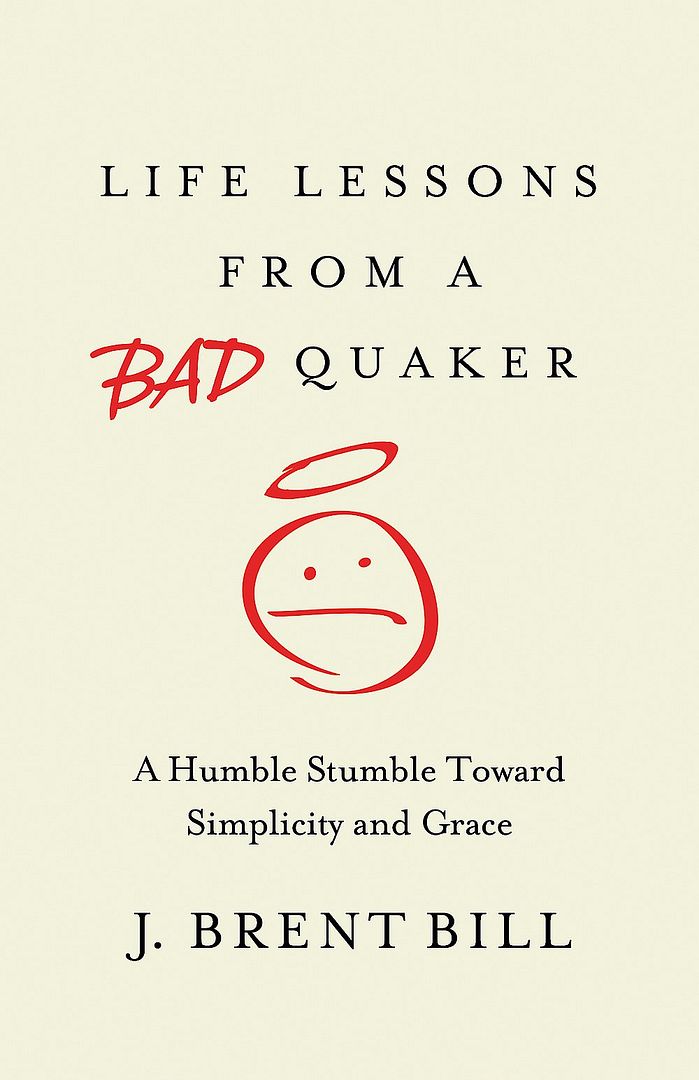 Friend and friend Brent's brand-new book (released just yesterday!) brings us a panorama of a few more or less typical days in the several and varied lives of a Bad Quaker hoping to become better by following Jesus more closely. Not too long, easy to read, fun to read, yet packed with probing questions about Jesus' clear examples and our own lifestyles.
Technically Brent is a birthright Quaker or cradle Quaker, someone literally born into that expression of Christianity. Early in the book he explains how he still needed to assess and claim the Quaker tradition for himself because there's an element of human choice and decision to follow a particular style of Christianity within the broader Way of the Nazarene Jesus. Brent tells us why simply living as Jesus' Friend is best for him. What church tradition or denomination has God called you to at this time? And why? "No one right answer," as Brent reminds us in the quick questions sprinkled through this book.
Most Americans have some awareness of the rotund guy in a black hat featured on packages of Quaker cereal products. Per the Quaker cereal website, he "is not an actual person. His image is that of a man dressed in the Quaker garb, chosen because the Quaker faith projected the values of honesty, integrity, purity and strength." Some people confuse Quakers with other Christian groups who aim to live simply, whose worship is less formally liturgical―although some Quaker worship is programmed. Amish, Mennonites, Church of the Brethren also come to mind as examples of simple Christianity; Restoration Movements in the USA during the 19th century also attempted to reclaim a more basic, foundational, New Testament Christianity. Most of my own church and Jesus experience is solidly within the theological and liturgical traditions of the Protestant Mainline, and that means an emphasis on sacraments and on scriptural scholarship, with wonderfully effective histories of social and political activism. Like myself, many within the Mainline Churches USA are not especially adept at being quiet and waiting on the Spirit to move among us. In fact, I tend to be as much of a human doing as I am a human being.
Similar to at least a half-dozen books I've read in the past year or two, Life Lessons from a Bad Quaker by J. Brent Bill encourages me to observe the world around me, assess how I relate to the people in that world, to keep asking "what would Jesus do," cuz as trite as that question sounds by now, in the Spirit of Life God calls us and enables us to be Jesus here and now, to do what Jesus would do, even to say the words Jesus might choose. The Quaker faith still projects values of "honesty, integrity, purity and strength" with each individual's life totally immersed in the very sacramental "holy ordinary" that happens to be the title of one of Brent's blogs. Maybe surprisingly, The Society of Friends does not celebrate sacraments or ordinances in the orderly programmatic sense those of us in more mainstream mainline church bodies do.
Life Lessons from a Bad Quaker brings us much more of the practical than of the theoretical. Did I mention what a human doing I naturally tend to be? That's right, I did, but in spite of that tendency, my drive to do needs a whole lot of refinement and some redefining. I'd benefit a whole lot by creating my own Life Lessons journal of some days in my own life. Maybe you would, too? Popularized by the majorly successful Godspell, Richard of Chichester's prayer pleads "May I know Thee more clearly, love Thee more dearly, follow Thee more nearly." Brent's newest book just may lead you to know, love, and follow Jesus with more simplicity and more grace.
my amazon review: For a Closer Walk with Jesus―really!
Notice of material connection in accordance with the Federal Trade Commission's 16 CFR Part 255: I received a prepublication ARC of this book from author (in this case), publisher, distributor, publicist, etc. with no requirement to write a positive review. As always, my opinions are my own.
Sunday, December 13, 2015
Lessons & Carols 2015
Lessons & Carols on Advent 3
"Chancel Banners"


from Isaiah 11:1-9
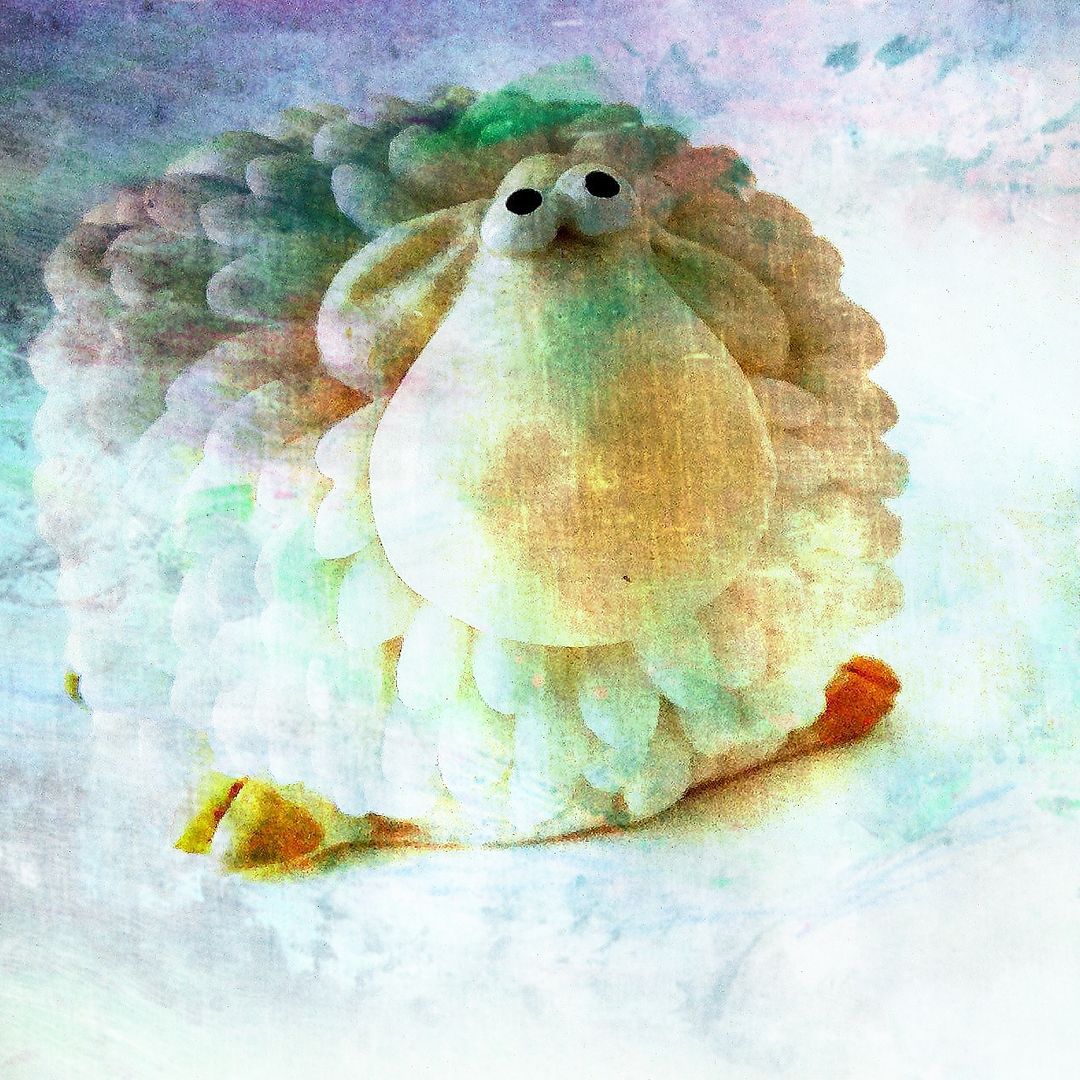
"The wolf shall live with the lamb"

from Isaiah 35:1-10
"The wilderness and the dry land shall be glad;
the desert shall rejoice and blossom;
like the crocus it shall blossom abundantly
and rejoice with joy and singing."

"For water shall break forth in the wilderness,
and streams in the desert;
the burning sand shall become a pool;
and the thirsty ground springs of water."

"Chancel Banners"


from Isaiah 11:1-9
"The wolf shall live with the lamb"
from Isaiah 35:1-10
"The wilderness and the dry land shall be glad;
the desert shall rejoice and blossom;
like the crocus it shall blossom abundantly
and rejoice with joy and singing."

"For water shall break forth in the wilderness,
and streams in the desert;
the burning sand shall become a pool;
and the thirsty ground springs of water."

Saturday, December 12, 2015

Friday, December 11, 2015
Five Minute Friday: Reflect


Friday 11 December: Reflect at Kate Motaung's place. FMF's an unedited free write, though I do my best to check auto-correct's solutions. This week's "reflect" prompt also fits Fleetwood Mac's Landslide I quoted last week; so I'll start with the song. BTW, the font in Fleetwood Mac and Landslide is Fleetwood!
Landslide
I took my love and I took it down
Climbed a mountain and I turned around
And I saw my reflection in the snow covered hills
Till the landslide brought me down
Oh, mirror in the sky, what is love?
Can the child within my heart rise above?
And can I sail through the changing ocean tides
Can I handle the seasons of my life?
Oh oh I don't know, oh I don't know
Fleetwood Mac, "Landslide," by Stevie Nicks
start writing
Before I begin to write, I always ponder, consider, or reflect upon the word (or image if that's the case) prompt. Sometimes for five minutes, sometimes overnight. Interesting that I suddenly realized although typically I refer to my spoken or written ideas on a topic as reflections (rather than thoughts, ponderings, ideas, or musings, that last word being so commonplace in the blogosphere it makes me cringe, though it's from the same root as music. I'm ready to give up on "ponder /pondering/s" for the same reason). Every one of my considerations on "reflect" pertained to what we perceive with our eyes, our visual sense. With the single exception of remembering we need what that ringleader called "our reflection from the other" to know what's going on with us, how the world perceives us at this time or assessed us at that time. The sun casts a shadow that reflects an object. In graphic design we have a "reflect" command so an object appears vertically or horizontally. Sometimes we retain the original object and have doubles, sometimes not. A mirror, a "looking glass" reflects what's in front of it, but in reverse! How about other people we need to trust reflect our behaviors, our presence, our speech? We need to realize sometimes they sort of get it right, at times totally backwards or reversed or what feels like inside out to us, but that reflection never is quite the same as the original, though it well may contain an aspect of the real truth.
stop!
Tuesday, December 08, 2015
through others' eyes: december synchroblog
The final synchroblog of 2015 also is the second inning of the new synchroblog group and page. Liz Dyer suggested the topic; K. W. Leslie hosts again:
Of course there are all sorts of directions you can go with this. How do you see through the eyes of other people? How do they see through yours? How do you sympathize with Christ, Christ sympathize with you, Christ sympathizes with other people, other people sympathize with Christ... yeah, I guess I covered all the permutations. Wait! How does Christ see through the eyes of other Christians when they see through your eyes? Oh yeah, we can go wild with this one.
Every time I think of eyes and scripture, I remember J in Monday evening women's bible study reminding us "the eyes are the most sensitive part of our bodies, so the eyes of our hearts would mean exquisite sensitivity to the situations and needs of others." Ephesians 1:18 was J's reference, though I don't recall our study topic. Some versions of the Greek give us eyes of the mind (thought, understanding, comprehension) – διανοίας – rather than heart – καρδίας – but all the Greek texts include eyes, the body part that along with our brain (mind!) creates our physical vision, our actual view of the world. By the way, in Hebrew biology the heart primarily is the seat of the will rather than of the emotions.
Scripture and eyes also evokes Psalm 145:15-16 as an invitation to offer thanks before a meal: "The eyes of all wait upon thee; and thou givest them their meat in due season. Thou openest thine hand, and satisfiest the desire of every living thing."
Seeing, visioning, perceiving, and acting with another's eyes (as K.W. suggests) ideally turns around at least a few degrees so others begin to see situations and people as you perceive them. But this mostly is about walking in the other person's sandals, learning some of their experiences, comprehending with your mind and even feeling with your heart (and soul) the why of their actions, the what of their dreams. The gospel accounts of Jesus' highly relational, always appropriately responsive interactions with other humans from all types of situations, classes, and aspirations are the models for our own behaviors. However, in the midst of many of those stories, we hear about Jesus' followers and his disciples often less than sensitive, frequently even inappropriate reactions to people and situations. Our blog prompt asks "how we can (are able to) see through the eyes of other people." Jesus' disciples had the living walking breathing talking Jesus from Nazareth as their example, and they still didn't get it right all the time. Just like them, we need to get our heads and our hearts (our wills, emotions, intentions) synced! I Photoshopped the eye image KW provided to portray different people viewing the same thing, but besides making all the eyes different, maybe I needed to change the color, size, skew, and other aspects of the words?
How can I view the world through the eyes of others, and how do they see through my eyes? I've been making an ongoing effort to talk more about myself—my history, experiences, likes, preferences, dreams, dislikes, and disgusts. People know only what they literally can see, which they then filter through their own history, experiences, dislikes, and disappointments. It's tough for me, because I've encountered too many people whose only topic of discourse is themselves. I know very well I'm far far away from that, yet still hesitate to make myself more than an incidental subject of what we're talking about at this time. However, that's still a major way I can be a factor in how friends, strangers, acquaintances, and random others view me and interact with me. Similar to when we reach a certain age – which I hope is by late teens or early twenties at the latest – and begin to have a clue where our parents and their parents have been, what has made them who they are, how they are. All in all, I have no concrete solution for this month's synchroblog question, but I pray and hope:
18so that, with the eyes of your heart enlightened, you may know what is the hope to which he has called you, what are the riches of his glorious inheritance among the saints, 19and what is the immeasurable greatness of his power for us who believe, according to the working of his great power. 20God put this power to work in Christ when he raised him from the dead and seated him at his right hand in the heavenly places, 21far above all rule and authority and power and dominion, and above every name that is named, not only in this age but also in the age to come. 22And he has put all things under his feet and has made him the head over all things for the church, 23which is his body, the fullness of him who fills all in all. Ephesians 1 NRSVAs the Church, we are the body of the crucified and risen Christ. That body includes our eyes, our vision, our mind, and our perception. Waiting upon God, and satisfying the desires and needs of every living thing, because we've learned to see and perceive who they are and what they need.
Saturday, December 05, 2015

Friday, December 04, 2015
Five Minute Friday: Season

Friday 04 December: Season at Kate Motaung's place. As always, FMF is an unedited free write. As usual, I check to be sure auto-correct read my mind accurately.
Intro: "Season" is another prompt I could use for a very long post, or a series of long ones.
People have seasons in similar ways to nature's. Have you noticed how often the changes, growth, movements, surprises of creation form models for almost identical happenings in humans? Humans, who, of course as part of creation are Human Creatures. After traveling through so many cycles of 3-month long meteorological / astronomical seasons, I'm finally beginning to appreciate and to love the physical and emotional and psychological effects of nature's differences in my own life. It used to be that I couldn't wait for late spring and the fullness of summer; only through mid-October was the natural world outside enjoyable, or even worth enjoying. I never wanted summer to end. Why wouldn't anyone long for a life that's endless summer, and all that entails in terms the fullness and maturity of our own creativity, productivity, and ability to contribute to the world surrounding us? Summer 2003 was the very first summer ever I wanted to be over as soon as possible. And then the next year's summer, and finally more than another decade of this next season hasn't born the type of fruit I imagined any more than the past one did...
Landslide
I took my love and I took it down
Climbed a mountain and I turned around
And I saw my reflection in the snow covered hills
Till the landslide brought me down
Oh, mirror in the sky, what is love?
Can the child within my heart rise above?
And can I sail through the changing ocean tides
Can I handle the seasons of my life?
Oh oh I don't know, oh I don't know
Fleetwood Mac, "Landslide," by Stevie Nicks
Wednesday, December 02, 2015
letter to grief
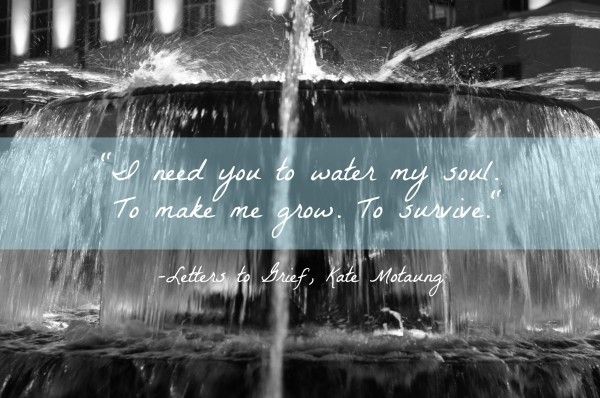
Today our Five Minute Friday host Kate Motaung offers a Letters to Grief linkup.
As I typed offline, my thoughts unraveled in a free ramble. I've saved about a third of what I wrote (update: more like at least half separated out) as a separate file, so this is an edited version with lots of deletes.
Loss, the passage of time, passing of people, end of relationships, death of hope. Grief. Emptiness, tears. Or no tears. darkness. Grief. A whole-body, mind- and spirit-wrenching response or no reaction at all.
 Like many or most, I could write about near-endless losses, my reactions, characteristic lack thereof, my lifelong habit of denying losses and (therefore) refusing to acknowledge there might be light and life on the other side of darkness and death. I've talked a little in real life about my Dad's apparent disappearing from my world with my daily expectation for ten whole long years that he'd return today—or make that tomorrow once the clock approached midnight. At 14 I finally and necessarily declared him dead in order to move on with my life. Everyone has smaller, easier, essential losses that need to be so we can move on, change, grow in every dimension, become the person God calls us to be. Home town—whatever that means. High school and teen year friends. You need to leave your first job to continue your career; if it was a good experience with fun people, that can be a serious, prolonged grief, as well. You get the general idea.
A severe injury I denied for too long cost me the career I'd intended, that I'd fully (and then some) prepared for, totally expected to continue in some shape, form or expression forever. Which did not happen. Kay Redfield Jamison speaks about aging so during a certain period in her life, "as well one must, with such loss of self, such distance from shelter, such proximity to death." Proximity to death, because the loss of my career – literally what I ran with every day – also included the end of every friendship and relationship I'd known. A brain injury that according to observations changed me. "This is not the person we hired; this is someone else," to quote Sizable Suburban Church 's recall committee chairperson. I no longer recognized myself either, but surely the gradual, grace-filled, healing, passage of time would change me back to who I'd been? Time doesn't heal, activity does? I've been there, done that, too. Still have the stole? Yes. (That's a side quote from an old blog post). Such loss of self. Yet when I glanced through the letters from last December's letters to grief linkup, every one of them seemed to be about the loss of some other person in some sense. To death, to illness, divorce, other separations or estrangements.
Today C is my grief. In church on All Saints Day they read her name not once but twice! How that happened is "complicated," but it touched my heart and finally tore part of it open. Finally.
Welcome to my household, grief. Welcome into my heart, grief.
After Shrove Tuesday 2014 Mardi Gras pancakes C and I made a covenant I've illustrated here. We sat together at the Easter Vigil.
 Not long after Easter Vigil C died. During the early part of the Great 50 Days of Easter. But after Bright Week, the Eighth Day of Creation, the Dawn of the New Creation! The Celebration of the Death of Death! I've deleted a lot of my original reflections because they felt too private, too personal, too inward and intimate. At the reception after C's funeral, her baptismal certificate was at the top of the display of the collection of her mementos and keepsakes. As the pastor observed in his homily, C now was with her parents because God claimed her. Because of Jesus' infinite faithfulness we celebrate and we live(!) the death of death itself!!
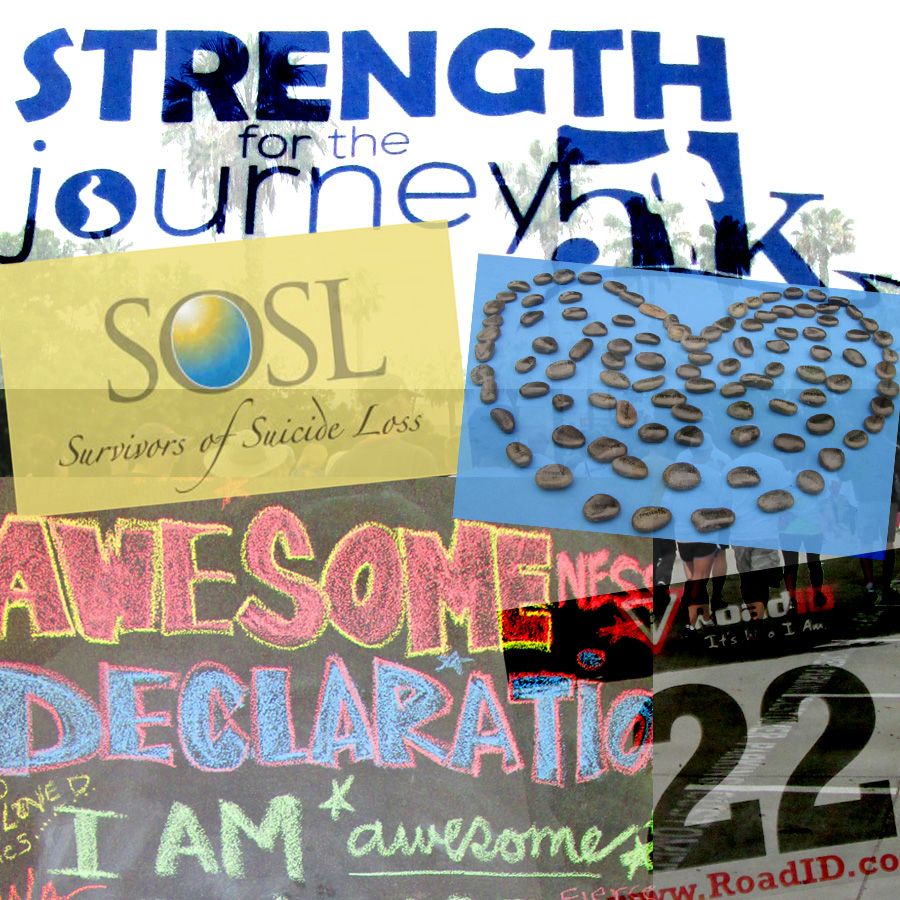
Before I left Previous City for Current City, late last spring I participated in the Survivors of Suicide Loss Strength for the journey 5K. Walk, jog, lope, run a bit, reach the finish line any way you can: my left knee still gave me enough physical "grief" I couldn't run or jog the entire course, but I still crossed the finish line.
Jog, walk, lope, run a bit, trot, skip for a few steps. Reach the finish line any way you can.
Claudia. Why? Grief? Welcome.


As I typed offline, my thoughts unraveled in a free ramble. I've saved about a third of what I wrote (update: more like at least half separated out) as a separate file, so this is an edited version with lots of deletes.
Loss, the passage of time, passing of people, end of relationships, death of hope. Grief. Emptiness, tears. Or no tears. darkness. Grief. A whole-body, mind- and spirit-wrenching response or no reaction at all.
 Like many or most, I could write about near-endless losses, my reactions, characteristic lack thereof, my lifelong habit of denying losses and (therefore) refusing to acknowledge there might be light and life on the other side of darkness and death. I've talked a little in real life about my Dad's apparent disappearing from my world with my daily expectation for ten whole long years that he'd return today—or make that tomorrow once the clock approached midnight. At 14 I finally and necessarily declared him dead in order to move on with my life. Everyone has smaller, easier, essential losses that need to be so we can move on, change, grow in every dimension, become the person God calls us to be. Home town—whatever that means. High school and teen year friends. You need to leave your first job to continue your career; if it was a good experience with fun people, that can be a serious, prolonged grief, as well. You get the general idea.
A severe injury I denied for too long cost me the career I'd intended, that I'd fully (and then some) prepared for, totally expected to continue in some shape, form or expression forever. Which did not happen. Kay Redfield Jamison speaks about aging so during a certain period in her life, "as well one must, with such loss of self, such distance from shelter, such proximity to death." Proximity to death, because the loss of my career – literally what I ran with every day – also included the end of every friendship and relationship I'd known. A brain injury that according to observations changed me. "This is not the person we hired; this is someone else," to quote Sizable Suburban Church 's recall committee chairperson. I no longer recognized myself either, but surely the gradual, grace-filled, healing, passage of time would change me back to who I'd been? Time doesn't heal, activity does? I've been there, done that, too. Still have the stole? Yes. (That's a side quote from an old blog post). Such loss of self. Yet when I glanced through the letters from last December's letters to grief linkup, every one of them seemed to be about the loss of some other person in some sense. To death, to illness, divorce, other separations or estrangements.
Today C is my grief. In church on All Saints Day they read her name not once but twice! How that happened is "complicated," but it touched my heart and finally tore part of it open. Finally.
Welcome to my household, grief. Welcome into my heart, grief.
After Shrove Tuesday 2014 Mardi Gras pancakes C and I made a covenant I've illustrated here. We sat together at the Easter Vigil.
 Not long after Easter Vigil C died. During the early part of the Great 50 Days of Easter. But after Bright Week, the Eighth Day of Creation, the Dawn of the New Creation! The Celebration of the Death of Death! I've deleted a lot of my original reflections because they felt too private, too personal, too inward and intimate. At the reception after C's funeral, her baptismal certificate was at the top of the display of the collection of her mementos and keepsakes. As the pastor observed in his homily, C now was with her parents because God claimed her. Because of Jesus' infinite faithfulness we celebrate and we live(!) the death of death itself!!
Before I left Previous City for Current City, late last spring I participated in the Survivors of Suicide Loss Strength for the journey 5K. Walk, jog, lope, run a bit, reach the finish line any way you can: my left knee still gave me enough physical "grief" I couldn't run or jog the entire course, but I still crossed the finish line.
Jog, walk, lope, run a bit, trot, skip for a few steps. Reach the finish line any way you can.
Claudia. Why? Grief? Welcome.

Tuesday, December 01, 2015
Devotions on the Hebrew Bible
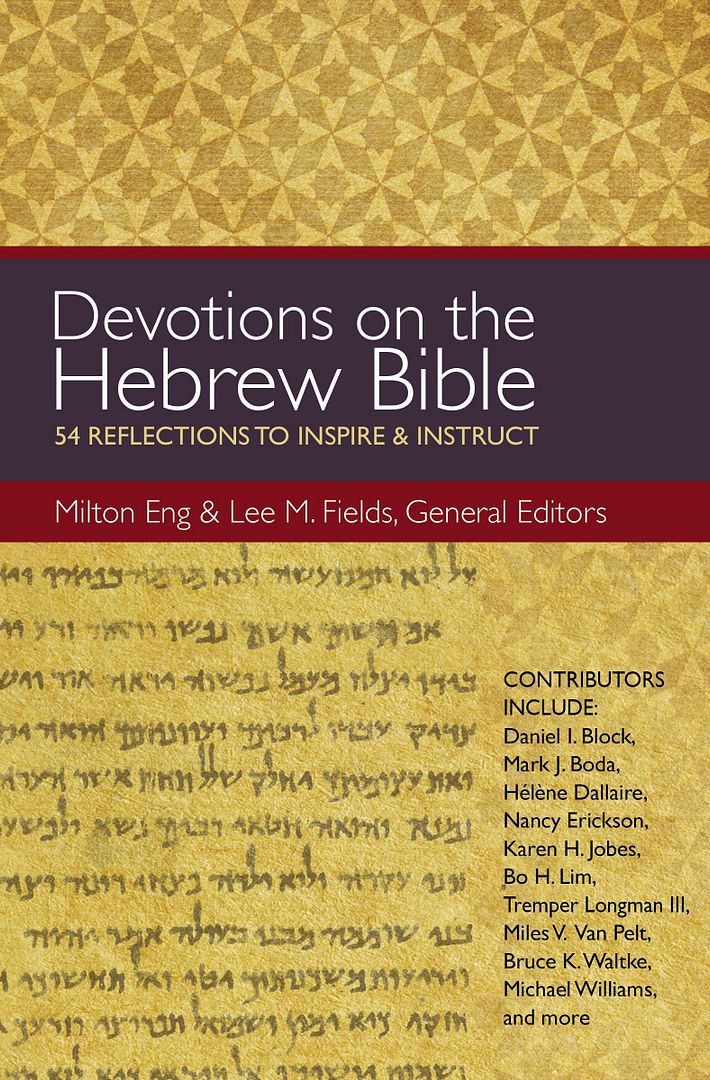
by Milton Eng and Lee M. Fields, Devotions on the Hebrew Bible: 54 Reflections to Inspire and Instruct
 With contributions from more than two dozen writers, general editors Milton Eng and Lee M. Fields bring us not quite 200 pages of reflections on the textual possibilities and grammatical construction of at least one pericope from each book of the Hebrew bible (Christian canon count). I found no hugely overwhelming "aha!" moments in Devotions on the Hebrew Bible: 54 Reflections to Inspire & Instruct, yet the meditations of about two pages each from fairly conservative Christian scholars and professors in the broader evangelical tradition always are thoughtful, often inspiring. Some of the writers view the texts specifically through a Christological lens, others don't, so this is not quite Martin Luther discovering Jesus Christ in, with, and under every single sentence of the Hebrew scriptures.
I especially appreciate the emphasis on the grammatical intricacies of the Hebrew that many of us (most, probably) never became proficient enough in the language to discover on our own. Back of the book includes a Hebrew words index and an index of grammatical terms. Although a couple of Amazon reviewers commented / complained about the size of the Hebrew font, it appears to be the same size as the English text in the main body of the book, though the English translation alongside the Hebrew is set in slightly smaller type. For me, because discerning pointing at the relatively small size ("low zoom") is the tough part, in a future edition a concession to native readers and speakers of languages that write with the Roman alphabet would be considerate. For the devotional insights, the scholarship, and the grammar, this one's a keeper for sure.
By the way, some of the Hebrew language and Hebrew bible resources at the end of this book well might interest you. There's also an earlier companion, Devotions on the Greek New Testament.
my amazon review: Hebrew language help; thoughtful devotional resource
 With contributions from more than two dozen writers, general editors Milton Eng and Lee M. Fields bring us not quite 200 pages of reflections on the textual possibilities and grammatical construction of at least one pericope from each book of the Hebrew bible (Christian canon count). I found no hugely overwhelming "aha!" moments in Devotions on the Hebrew Bible: 54 Reflections to Inspire & Instruct, yet the meditations of about two pages each from fairly conservative Christian scholars and professors in the broader evangelical tradition always are thoughtful, often inspiring. Some of the writers view the texts specifically through a Christological lens, others don't, so this is not quite Martin Luther discovering Jesus Christ in, with, and under every single sentence of the Hebrew scriptures.
I especially appreciate the emphasis on the grammatical intricacies of the Hebrew that many of us (most, probably) never became proficient enough in the language to discover on our own. Back of the book includes a Hebrew words index and an index of grammatical terms. Although a couple of Amazon reviewers commented / complained about the size of the Hebrew font, it appears to be the same size as the English text in the main body of the book, though the English translation alongside the Hebrew is set in slightly smaller type. For me, because discerning pointing at the relatively small size ("low zoom") is the tough part, in a future edition a concession to native readers and speakers of languages that write with the Roman alphabet would be considerate. For the devotional insights, the scholarship, and the grammar, this one's a keeper for sure.
By the way, some of the Hebrew language and Hebrew bible resources at the end of this book well might interest you. There's also an earlier companion, Devotions on the Greek New Testament.
my amazon review: Hebrew language help; thoughtful devotional resource
Subscribe to:
Posts (Atom)