Showing posts with label hebrew bible. Show all posts

Wednesday, March 25, 2026

Lent 5 Sermon

Typing up a sermon afterwards always feels so last Sunday, March 22nd, but I had a couple of requests for a copy and I need blog content (or fodder, maybe), so here it is, more or less. By the way, it preached better than it reads.

Leafy Cross

• Ezekiel 37:1-14


I really liked my opening prayer:

From all the ends of the earth, come to us, breath of God.
Breathing life of the Divine, embrace your people and your land.
Let us live again.
In the name of the One Spirit-sent for the life of the world.
Amen.


Two days ago on Friday we celebrated the Spring equinox, a verdant greening time as days get longer. And now we celebrate the Persian New Year with our friends—thirteen festive days of rejoicing in creation!

We're two-thirds through Lent, as Jesus and his followers draw closer to the holy city Jerusalem. They draw closer to Jesus' trial, conviction, crucifixion, death, and burial. Nearer to the day of resurrection, Easter Sunday.

Throughout scripture, hints and types and realities of resurrection foreshadow Jesus' resurrection. New life out of ashes, ruins, destruction, devastation. New life out of the death of the old.

Less than two weeks from the Friday called Good, the lectionary that gives us our scripture readings pairs Ezekiel's provocative and pictorial dialogue with God as Ezekiel raises dry bones from death to life, with the seventh and last of Jesus' "I Am" statements from John's gospel. After Jesus' raises Lazarus back to life from death (he really was dead, already buried in the tomb), Jesus declares "I Am the Resurrection and the life." John 11:25

* * *

Ezekiel was a priest in the holiness tradition of the Jerusalem Temple. About 600 years before Jesus, during the last years of Jerusalem and the Temple before the exile to Babylon, Ezekiel ministered with words from God and words of God. Deep into the long book that bears his name, chapter 37 happens when Ezekiel's proclamation moved from discouragement and lament to hope and a vision of the future.

This is pivotal because it came about when news of the destruction of Jerusalem and of the Temple reached the exiles.

"These people" somehow had developed bad theology that located God in a special way in the heart of the temple, accessible only once a year, only to the high priest under certain circumstances.

Had they forgotten the God who liberated them from slavery in Egypt? The God of the Exodus who journeyed alongside them and ahead of them throughout those forty years in the wilderness? God who provided gifts like water from the rock and manna from the sky? The Ten Words or Commandments of the Sinai Covenant that showed them how to honor God by living together faithfully honoring their neighbors?

Since the temple was gone, did that mean God was dead? They were away from the land of promise that yielded such agricultural bounty. Did that mean all of God's promises were null and void?

* * *

We don't know if Ezekiel's conversation in the Spirit with God was a physical event, a sleeping dream, or a waking vision. We do know his experience of God's initiative and the subsequent call and response as Ezekiel spoke words in the Spirit from God and words of God convinced him there was a future.

Although the human Ezekiel spoke words from God and words of God and raised dead bones to new life, we often consider new life and resurrection primarily God's thing.

But wait! In the second reading for today (that we didn't hear), the apostle Paul tells us:

If [since, because] the Spirit of the one who raised Jesus from the dead dwells in you, God who raised Christ Jesus from the dead will also give life to your mortal bodies through the same Spirit that dwells in you. Romans 8:11

Earlier on, in his first letter to the church at Corinth, we hear from Paul regarding us as the gathered body of Christ – the church, the assembly of the faithful – and us as individuals:

Do you not know that you are God's temple and that God's Spirit dwells in you? 1 Corinthian 3:16

Do you not know that your body is a temple of the Holy Spirit who is in you, which you have from God, and that you are not your own? ! Corinthians 6:19

So we've moved from bad theology of God being contained (God in a box?) in the Jerusalem Temple, to biblical theology of God indwelling us, making a home with us. We are temples of God, filled with the Holy Spirit, moving, walking, and talking alongside the people.

* * *

Ezekiel's words from God in the Spirit revitalized people who had been reduced to bones.

What dry bones of loss, death, disappointment is God calling you to resurrect with Words in the Spirit? Words from God? Words of God?

* * *

Today Jesus again invites us to the table of grace, the feast of new beginnings.

In the Lord's Supper, the Eucharist, we reenact and remember the history of the world's salvation that also belongs to us.

God remembers that we forget.

Jesus welcome everyone. You are welcome. I am welcome. We are welcome!

To God alone be glory.

Amen!
Lent 5 Judica

Wednesday, November 19, 2025

Losing Moses on the Freeway

Here's a shorter version of my original blog about this book.
• Moses came and told the people all the words of the Lord and all the ordinances; and all the people answered with one voice, and said, "All the words that the Lord has spoken we will do." —Exodus 24:3

• Now behold, one came and said to Jesus, "Good Teacher, what good thing shall I do that I may have eternal life?" So Jesus said to him, "Why do you call me good? No one is good but One, that is, God. But if you want to enter into life, keep the commandments." —Matthew 19:16-17

• The way we know we've been transferred from death to life is that we love our brothers and sisters. Anyone who doesn't love is as good as dead. —1 John 3:14

• Blessed are those who do his commandments, that they may have the right to the tree of life, and may enter through the gates into the city. Revelation 22:14

from the baptismal liturgy:
"In Christian love you have presented these children for Holy Baptism. You should, therefore, faithfully bring them to the services of God's house, and teach them the Lord's Prayer, the Creed, and the Ten Commandments. As they grow in years, you should place in their hand the Holy Scriptures…"

Serendipitously I happened to buy a book by former New York Times foreign correspondent Chris Hedges; it's Losing Moses on the Freeway: The 10 Commandments in America.

Losing Moses on the Freeway cover

In the author's story I recognize major parts of my own journey. At the beginning, the author explains God gave us the Sinai Covenant, the ten words – decalogue or commandments – to enable and sustain community—:

"They [the commandments] were for the ancients, and are for us, the rules that, when honored, hold us together and when dishonored lead to alienation, discord and violence."

Chris Hedges opens the first chapter, Mystery, with his experience as a young seminarian serving a people and a church in the inner-city Boston neighborhood of Roxbury. Its normative violence and human degradation, crumpling, decaying physical infrastructure, pervasive aura of wastedness and death amounted to a setting he'd not previously known (and probably hadn't imagined).

On page 18 Hedges, son of a pastor, admits in words identical to what I've said and written dozens of times over the past few years, "The church was part of my daily rhythm. I look at the world through the eyes it gave me." Also parallel to my experience he says, "But I also knew the church's dark side, its self-righteous smugness, its crushing piety, the way it used religion to exalt itself and how it often masked human cruelty behind the quest for virtue and piety." [page 19] To that I'll add the petty viciousness, self-centeredness, and destructiveness of both local and judicatorial church politics.

I relate to the author's anger as he chronicles [page 11] smashing a glass bottle against the front door of the church building as "…an ending, a final conclusion to a life spent in the powerful and claustrophobic embrace of the church. It is meant to be a break from God. But you trade one god for another. This is how life works. We all have gods."

For myself, the unanticipated separation from full participation in the church to which I'd devoted years of my life and that had played a central role in shaping my goals, lifestyle, and worldview is like experiencing my own death.

On page 11 Hedges says we circle back to the origins of our lives, "if not to embrace it, then to understand how it shaped us, to examine with less heat and anger our marks and scars."

I'm still examining the mosaic in order to find my place, just as I try to discern ways I've helped create it as it has created and recreated me.

On page 175 the author wisely reminds us "They [the commandments] do not call us to practice total self-abnegation, empowering others, as I did at first in Roxbury, to abuse us. They call us rather toward mutual respect and mutual self-sacrifice." In words from a pastor with whom I worked alongside, "God calls us to serve, but not to be walked all over."

To illustrate his advice of setting (physical, in this case) boundaries so you won't be broken and violated, Hedges gives the example of Martin Luther King, Jr. walking from Montgomery to Memphis with a detachment from the National Guard. [pages 29-30]

From the Holy Communion liturgy in the Book of Common Prayer:
God spake these words, and said:

I am the Lord thy God who brought thee out of the land of Egypt, out of the house of bondage. Thou shalt have none other gods but me.

Lord have mercy upon us, and incline our hearts to keep this law.

Examine your lives and conduct by the rule of God's commandments, that you may perceive wherein you have offended in what you have done or left undone, whether in thought, word, or deed. …

Like Israel formed in the searing heat and God's minimal yet faithful supply of the exodus desert, we are a people, a nation. In Lord's Day worship we retell, re-enact in baptism and the Eucharist the meta-narrative of our deliverance from death into life, of Jesus' death and resurrection. Although sometimes I think I loved the Church more than I loved Jesus, after beginning really to hear my story, someone asked me why on earth I'd remained in the church at all and I replied, "This is where I find the sacraments!"

In the Love chapter: "But by giving up parts of ourselves for others, by accepting that we must be willing to lose life to create and preserve life, we honor the core of the commandments. The commandments hold out to us the possibility of love." [page 173] Chris Hedges [page 174]: "The covenant offered by the commandments, the covenant of life, is the covenant of love. It is a covenant that recognizes that all life is sacred and love is the force that makes life together possible. … But it is never too late to turn back. Atonement permits a new way of being. It calls us to life." [pages 173-175]

We people of Maundy Thursday have received Jesus' New Commandment, the mandate of love faithful unto death; by faith and in the Spirit we have infinite access to Jesus Christ's atonement for the buying back, the redemption, for the life of all creation.

Then Moses took the book of the covenant, and read it in the hearing of the people; and they said, "All that the Lord has spoken we will do, and we will be obedient." —Exodus 24:7

Here we will take the wine and the water;
here we will take the bread of new birth,
here you shall call your sons and your daughters,
call us anew to be salt for the earth.

Give us to drink the wine of compassion;
give us to eat the bread that is you;
nourish us well, and teach us to fashion
lives that are holy and hearts that are true.

Marty Haugen, Here in This Place/Gather Us In, © 1982 GIA Publications, Inc.

• my Amazon review: law that binds; commands that free

Friday, October 24, 2025

Five Minute Friday :: Capacity

psalm 26:8
O Lord, I love the house
in which you dwell,
and the place where your glory
abides! Psalm 26:8


• Five Minute Friday :: Capacity Linkup

David wanted to build a house for God, but God replied he always had "moved around in the tent of meeting" and never ever had asked anyone for a cedar house.

It wasn't a brand new theological concern, but the famous meeting of Reformers Martin Luther and Ulrich Zwingli at Marburg centered on the Lord's Supper as they debated whether the finite (bread, fruit of the vine) had the capacity to contain the infinite. They had that debate even though Jesus had announced, "this is my body!" And even though God's incarnation in Jesus of Nazareth already answered that question! To paraphrase the Heidelberg Catechism, we move from Nativity with the mystery of Spirit in flesh to Ascension, with the mystery of flesh in Spirit.

God eventually got that house of cedar and stone, yet neither the first nor the second Jerusalem Temple had the capacity to contain God. Its mini-model of the universe was a pathetic attempt to mimic the reality of the Creator God whose place of being and acting always had been the entire panorama of creation… but "contain" the free and elusive God?!

Finally, on the fiftieth day of Easter, the day of Pentecost, the Spirit of Life filled the world. Every crack and corner and crevice. Every person.

O Lord, I love the house
in which you dwell,
and the place where your glory
abides! Psalm 26:8

Or do you not know that your body is a temple of the Holy Spirit, who is in you, which you have received from God? Now you belong to God. You are not your own.
1 Corinthians 6:9

God had moved around, peregrinated, free ranged in the tabernacle. Now we are the house in which Divinity dwells, the place where God's glory abides. God moves around everywhere in the people of God called "Christian." The Christ of God always is incarnate, enfleshed, embodied. And now in us!

What does that say about the capacity of the human heart? The mercy of each life? The welcome we offer strangers and outcasts, the sojourner and the lonely? We are the house where God lives. God's glory fills us. What does that say about God's claim and call on us as individuals? As community?

O enter, Lord, Thy temple,
Be Thou my spirit's Guest,
Who gavest me, the earth-born,
A second birth more blest!
Thou in the Godhead, Lord,
Though here to dwell Thou deignest,
Forever equal reignest,
Art equally adored.


So you can sing all thirteen stanzas just as Paul Gerhardt wrote them (1653) and Catherine Winkworth translated them (1863):

• O Enter, Lord, Thy Temple

Tune: Zeuch ein zu deinen Toren, Johann Crüger, 1653
German text: Paul Gerhardt, 1653
Translation: Catherine Winkworth, 1863, alt.

# # #
pentecost square
FMF capacity
FMF icon button logo

Friday, October 10, 2025

Five Minute Friday :: Explain

Leviticus 19:34
But the stranger that dwelleth with you
shall be unto you as one born among you,
and thou shalt love him as thyself;
for ye were strangers in the land of Egypt.
I am the Lord your God. Leviticus 19:34

• Five Minute Friday :: Explain Linkup

Before listing the demands of the commands, God explains why he calls us to obedience—and ongoing freedom:

"I am the Lord your God who brought you out of the land of Egypt, out of the house of slavery. Therefore! You shall have no other gods before me."

The Ten Words of the Sinai Covenant in

• Exodus 20:1-17

and in

• Deuteronomy 5:6-21

• Martin Luther explains each of the commandments in his Small Catechism.

• More wise instruction for every one of our days—and the explanation:

When a stranger resides with you in your land, you shall not oppress the stranger. The stranger who resides with you shall be to you as the native-born among you; you shall love the stranger as yourself, because you were strangers in the land of Egypt: I am the Lord your God. Leviticus 19:33-34

You shall not oppress a stranger, because you know the heart of a stranger; because you were strangers in the land of Egypt. Exodus 23:9

Stranger is translated into English as foreigner, immigrant, alien, sojourner, wanderer. What other words or phrases help explain that concept?

I hope God's people always will be strange, alien, outsiders to the ways of empire. In the realms of oppression. The houses of slavery. At least no more than a temporary resident in any of those places. Amen? Amen!

# # #
five minute friday explain
five minute friday button icon logo

Thursday, February 20, 2025

Five Minute Friday :: Worship

King of Glory, King of Peace
My header is a [large] banner I designed from the opening of George Herbert's poem, King of Glory King of Peace. The actual banner is tall, but when I realized rotating it clockwise still would read well, look good, and be more compatible wirh this format, that's what I did.

• Here's the entire poem on hymnary

• Five Minute Friday :: Worship Linkup

After Nathan accused David and predicted the death of David's child, and the child born to David and Bathsheba died. This was before the birth of Solomon:

Then David arose from the earth, washed, anointed himself, and changed his clothes. Then he came into the house of the Lord and worshiped. And then he came to his own house, and when he asked, they sat bread before him, and he ate.
2 Samuel 12:20

Reverend Herbert's poetry announces, "Seven whole days, not one in seven, I will praise Thee."

In the wake of such extreme loss, David explained he'd fasted during the boy's illness, but since he couldn't bring the dead child back to life, it was time for worship.

Losses and disappointments of different dimensions are an ongoing part of earthbound existence. Sometimes we can change the outcome after a loss; many times we cannot. Why did Israel and why does the church set aside one day every week for worship—and for rest? To know life is a gift before it is a task? To acknowledge God as creator, giver, redeemer, renewer? To admit and rejoice in our dependence on God's mercy and love?

Cornel West reminds us, "We are people of hope. Why do we party on Friday night? Why do we go to church on Sunday?" God forgives, heals, mends, forgets, and resurrects.

"Loss is real." But new life from the dead is every bit a given – a gift! – in the reign of heaven on earth.

Seven whole days, not one in seven, I will praise Thee.

Amen? Amen!
# # #
five minute friday worship
five minute friday button icon logo

Friday, August 23, 2024

Five Minute Friday :: Usually

savory veggie sandwich
• Five Minute Friday :: Usually Linkup

What a terrific prompt! I just loved Kate's rundown of old usuals that no longer are her norm.

About usually, food is my love language. Many usuals that seriously matter to me and daily affect me are food-related. Two weeks ago on my scripture blog, I wrote to the ongoing reality of one of my favorite verses:

Get up and eat; otherwise the journey will be too much for you. 1 Kings 19:5

As someone who sometimes obsesses about food, although I have very strong culinary preferences, I'll eat almost anything: 1. To tame my hunger; 2. To be polite; 3. Out of curiosity; 4. Not to waste food.

No surprise my header is a sandwich that features some of my usual favorite ingredients: good bread; tomatoes; leafy lettuce; onions; feta cheese. When I discover I really really enjoy a combination of ingredients or a particular plate, burger, or bowl at a restaurant, it easily becomes my usual. Such a creature of habit! But when or if that's not available or someone suggests another option (I like to be polite), at times – or even oftentimes – the new one tastes better and then becomes what I usually order.

Most of us usually have preferred food, typical clothes we wear, favorite household furnishings and decor, all of which stay in place until for some reason another variety becomes our usual. That closely relates to the new normals we long for and keep searching for at various life junctures—maybe especially as covid continues.

Can our usually easy-going habits with spice of life options such as food, wearables, and furniture set an example for more easily turning from longing for our old usual normal lives into living the new life in front of us with its unknown yet exciting path and destination?

# # #
1 Kings 19L7
five minute friday usually
five minute friday icon button logo

Thursday, August 18, 2022

Revised Bibliography

Justice Freedom Redemption book cover

Here are a few additions to my bibliography for [original working title], Justice, Freedom and Redemption: Divine Image and Creation's Glory, first blogged eighteen years ago in July 2004. More to follow!


New! • Bauckham, Richard, The Bible and Ecology: Rediscovering the Community of Creation. Waco: Baylor University Press, 2010.

New! • Dahill, Lisa E.; Jim B. Martin-Schramm, Jim B.; McKibben, Bill., Eco-Reformation: Grace and Hope for a Planet in Peril. Eugene, Oregon: Cascade Books, 2016.

New! • Dickinson, T. Wilson, The Green Good News: Christ's Path to Sustainable and Joyful Life. Eugene, Oregon: Cascade Books, 2019.

New! • Fox, Matthew, Creation Spirituality: Liberating Gifts for the Peoples of the Earth. New York: HarperSanFrancisco, 1991.

New! • Hiebert, Theodore, The Yahwist's Landscape: Nature and Religion in Early Israel. Minneapolis: Fortress Press, 2008.

New! • Lathrop, Gordon, Holy Ground: A Liturgical Cosmology. Minneapolis: Fortress Press, 2009.

New! • Tull, Patricia K. Inhabiting Eden: Christians, the Bible, and the Ecological Crisis. Louisville: Westminster John Knox Press, 2013.


1. Beker, Johan Christiaan, Paul's Apocalyptic Gospel: The Coming triumph of God. Philadelphia: Fortress Press, 1982.

2. Brueggemann, Walter, The Land: Place As Gift, Promise, and Challenge in Biblical Faith. Philadelphia: Fortress Press, 1977.

3. Brueggemann, Walter, The Land: Place As Gift, Promise, and Challenge in Biblical Faith. Second Edition, Minneapolis: AugsburgFortress, 2002.

4. De Waal, Esther, The Celtic Vision: Prayers, Blessings, Songs & Invocations from the Gaelic Traditions. Barnhart, Missouri: Liguori Publications, 2001.

5. Fox, Matthew, Original Blessing: A Primer in Creation Spirituality. New York: Penguin Putnam, Inc., 1983.

6. Fox, Matthew, Wrestling with the Prophets: Essays on Creation Spirituality and Everyday Life. New York: Penguin Group (USA) Inc., 1995.

7. Moltmann, Jürgen, The Spirit of Life: A Universal Affirmation. Minneapolis: Fortress Press, 1992.

8. O'Donohue, John, Anam Cara: A Book of Celtic Wisdom. New York: HarperCollins, 1997.

9. O'Donohue, John, Eternal Echoes: Celtic Reflections on our Yearning to Belong. New York: HarperCollins, 1999.

10. Santmire, H. Paul, How does the liturgy relate to the cosmos and care for the earth? In What are the ethical implications of worship? Minneapolis: AugsburgFortress, 1996.

11. Santmire, H. Paul, Nature Reborn: The Ecological and Cosmic Promise of Christian Theology. Minneapolis: Fortress Press, 2000.

12. Santmire, H. Paul, The Travail of Nature: The Ambiguous Ecological Promise of Christian Theology. Minneapolis: Fortress, 1991.

13. Stendahl, Krister, Paul among Jews and Gentiles and Other Essays. Minneapolis: Fortress Press, 1983.

Saturday, November 06, 2021

All Saints 2021

Psalm 24:1

"The earth is the Lord's and the fulness thereof;
the world and those that dwell therein." Psalm 24:1

Saturday, October 16, 2021

Five Minute Friday :: Treasure

Los Angeles community garden
• Five Minute Friday Treasure Linkup

"Segullah" – סְ×’ֻלָּ֔×” – in the Hebrew Bible is a valued possession or belonging, a special treasure. A few years ago I included a brief word study when my adult Sunday School Class considered Exodus 19. Six of the eight times segullah occurs in the Hebrew scriptures, it refers to God's people Israel: Exodus 19:5; Deuteronomy 7:6, 14:2, 26:18; Psalm 135:4; Malachi 3:17.

Writing for five:

To read scripture and take even a cursory look at history shows how God holds the people and all creation close to his heart as a special possession, precious treasure. But what do I treasure? Conventional wisdom might suggest what a person spends their time on, expends their money to buy, could be most important to them, yet an individual doesn't need to have achieved much chronology to realize circumstances sometimes prevent a person from pursuing their interests, so I won't go the elapsed time or budget line time route.

What do I especially treasure or hold dear? What passions have moved me so much I've consistently focused my hopes and whenever possible invested hours and sometimes dollars? If you've recently met me or if you knew me way back when, you'd reply "cities and the city." The overall well being of the city. The people of the city. Urban diversity and well-functioning infrastructure. As a little kid I determined I'd spend my life beautifying especially the inner city. I haven't done a whole lot of public art, but I've done a lot of creating and designing on the micro level.
# # #

• Header image is natural glory in a nearby Los Angeles community garden.

• I'm watching Major League Baseball Playoffs, so won't write more about my urban-focused education and experience that's already scattered throughout this blog and elsewhere on the interwebs.
Five Minute Friday Treasure
Five Minute Friday bbutton

Saturday, January 30, 2021

Psalm 111:5

Psalm 111:5

"He is ever mindful of his covenant."

Psalm 111:5

Revised Common Lectionary / RCL Epiphany 4B

Monday, November 19, 2018

green team talk :: bulbs roots beauty

• The Lord is with you!
• And also with you.

crocusThe church's year of grace will conclude nine days from now, and then we start another season of Advent anticipation. We count each day as we look forward to winter solstice and to the birth of the Son of Light we know as light of the world a few days later. People who follow the practical and spiritual way of the wheel of the year also yearn for light and excitedly anticipate the winter solstice; their celebration of the festival of Yule coincides with our festival of Noël.

For several years I've been following the 2-year standalone daily lectionary that's separate from the Revised Common lectionary. Specifically, I've been enjoying the Presbyterian Church (USA)'s daily office app that draws upon the daily lectionary for its scripture readings; this is the week of the prophet Joel. Most likely Joel wrote after the Babylonian exile. God's people already had escaped bondage and slavery to empires of Egypt and Babylon; now yet another empire, Persia, impinged on people's lives and freedom. Whether nation-state or trans-national industry, empires appear to be here to stay, so we need to learn ways to counter them.

21Do not fear, O soil; be glad and rejoice, for the Lord has done great things! 22Do not fear, you animals of the field, for the pastures of the wilderness are green; the tree bears its fruit, the fig tree and vine give their full yield. Joel 2:21-22

In Joel 2:21 we hear the constant biblical admonition, do not fear, don't be afraid! This time Joel addresses what the NRSV interprets as "soil." The Hebrew language uses the same word for earth, land, soil, dirt, ground; which one it refers to depends upon context. In Genesis God gives earth to humans as a gift and as a charge.The earth of Genesis becomes the land of Deuteronomy. The land of Deuteronomy becomes the heaven under our feet of well-tended, carefully stewarded turf in promised land Canaan, and in our cities and towns, as well. Joel assures the land and the residents upon the land prairies will be green again, trees will flower, vines will yield abundance.

Maybe especially as days become shorter, nights get longer, we long for light that brings life, for beauty that's evidence of life. Did you know flower bulbs including daffodils, amaryllis, jonquils, tulips. crocuses, hyacinth, grape hyacinth {a green team member added iris, and then there's narcissus}, carry anticipation of new, eastered life within them? Those bulbs contain everything necessary for new life! That is, they contain almost all the essentials for new life. Everything except winter. We can provide winter for spring bulbs by placing them in a cold place for six or eight weeks. In the LA coastal basin or one of our inland climates, a fridge probably is the best option, though if you're in mountains or desert, the garage or an unheated basement might get chilly enough long enough. crocusHushed, quiet, still, chill of winter is essential to make roots that literally give the bulbs power to make flowers; winter temps allow bulbs to grow long, deep roots. When bulbs spend enough time in the cold, they think they've experienced winter, and they grow life-giving roots. Empires and struggles are here to stay; surrounding ourselves with beauty is one way to counter them.

In scripture, well-cared-for land becomes a heaven under our feet and produces food for human and critter consumption, flowers and trees for beauty and overall planetary health. Especially in the wake of out of our control disasters like the recent night club shooting and state-wide forest fires, we need beauty to keep going on with our lives. I'm going to chill some crocus bulbs so I can anticipate and enjoy eastered new life before the season of winter's technically even over. What's your plan?

To God alone be glory; amen!

Friday 16 November 2018 • Glendale

Wednesday, June 27, 2018

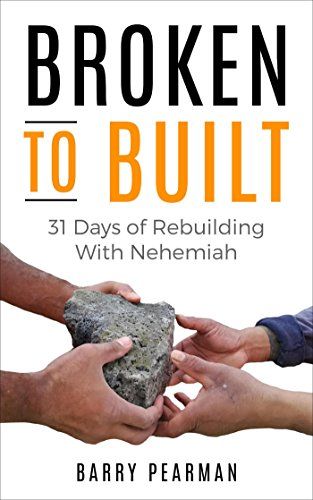
Barry Pearman :: Broken to Built

Broken to Built: 31 Days of Rebuilding with Nehemiah by Barry Pearman on Amazon

broken to built book coverFor several years I've followed Pastor Barry Pearman's Turning the Page website and his twitter. I also belong to his related Facebook page and highly recommend all of them to you.

With a short chapter a day for a month of 31 days, mental health advocate and practitioner Barry Pearman anchors his reflective insights in the post-exilic Hebrew Bible book of Nehemiah. Although the book guides individuals as they move from being Broken to becoming (re)Built, Pearman reminds us of the necessity of having community alongside us and the necessity of constant connections with God, the only truly reliable One. The visually striking cover of the book photographically illustrates the idea of interaction and cooperation; in fact, the author crowd-sourced on his Facebook page to determine which one of four cover choices most appealed to people.

This book is for everyone! in his intro the author explains, "...we are in recovery mode. We are building and growing a life out of the rubble of what was left behind. In the choking dust of rubble we find that this is no fairy tale. The biblical Book of Nehemiah is a love story. God is in love with the people of Jerusalem and sees them broken, shamed and without dignity." And, "The big idea is that recovery/life takes place in a relational context."

Each chapter opens with a very short real-life vignette from people the author knows in real life; each chapter ends with a (1)Quote to consider, (2)Question to answer, and (3)A rock to build with. I'd suggest at first quickly glancing through the entire book to get a basic overview, then using each chapter as part of your daily devotions, and during the day remembering the end of chapter Quotes, Questions, and Rocks.

Hopefully everyone's life isn't completely in shambles and shards all the time, yet there's always some element that needs to be healed and helped back to wholeness. Maybe you've heard someone mention they started therapy or counseling because parts of their lives were going extremely well, while another aspect or two was in disastrous condition? Maybe that's been your experience? Despite being grounded in scripture Jews and Christians can relate to and affirm as having authority for their lives, this book is for everyone!

By the historical time period of Nehemiah's narrative, God's people had left their existence under Egyptian imperialism centuries earlier, returned to their home-land Jerusalem after exile under the Babylonian empire (though many deported to Babylon stayed there), and now they needed to deal with another empire. The post-[Babylonian] exilic book of Nehemiah describes life under that other empire—Persia. Scripture shows us how cleverly and effectively Jews – including Nehemiah – found ways to live well, grow healthy, and thrive in spite of far from ideal surroundings. Nehemiah even was employed by the Persian king! Often we simply cannot escape negative influences; for many reasons, we frequently need to stay in our current living situation or employment context, but must figure out work-arounds, as Nehemiah did.

I especially appreciate how Barry emphasizes the critical need of having supportive people alongside us at the same time he keeps emphasizing connecting with God in prayer. Those other humans help a lot, but (aside from Jesus of Nazareth) there's not yet been a perfect, totally reliable person, so God must remain our ultimate recourse and rock.

Notice of material connection: I received a copy of this book from the author with no obligation to write a positive review. As always, my opinions are my own.

My Amazon review: Connecting with Scripture and Community

Friday, January 05, 2018

Books :: 2017

books of 2017

You can friend me and my books on goodreads and follow me on Amazon.

Here are my twenty-three books for 2017 with links to my amazon reviews; I've finished four more that will start my review series for 2018.

• Return to Paradise: The Coming Home Series — Book 3 – Barbara Cameron

• Holding Up Your Corner: Talking about Race in Your Community – F. Willis Johnson

• My Very Own Space – Pippa Goodhart

• Motherprayer: Lessons in Loving – Barbara Mahany

• The Innovation Code: The Creative Power of Constructive Conflict – Jeff DeGraff

• Once You Know This – Emily Blejwas

• Ivy and the Lonely Raincloud – Katie Harnett

• The Crooked Christmas Tree: The Beautiful Meaning of Jesus' Birth – Damian Chandler

• The Great Shift: Encountering God in Biblical Times – James L. Kugel

• Peace in the Process: How Adoption Built My Faith & My Family – Kristin Hill Taylor

• Corita Kent: Gentle Revolutionary of the Heart – Rose Pacatte, FSP

• Paris for Two – Phoebe Stone

• Garbage Night – Jen Lee

• Winds of Heaven, Stuff of Earth: Spiritual Conversations Inspired by the Life and Lyrics of Rich Mullins – Andrew Greer & Randy Cox

• Sled Dog School – Terry Lynn Johnson

• Lily's Mountain – Hannah Moderow

• All Three Stooges – Erica S. Perl

• A Bigger Table: Building Messy, Hopeful, and Authentic Spiritual Community – John Pavlovitz

• A World Ablaze: The Rise of Martin Luther and the Birth of the Reformation – Craig Harline

• Faithful: Christmas Through the Eyes of Joseph – Adam Hamilton

• Living For Another: More of Others, Less of You – Brent Gambrell

• Being Brave: A 40-Day Journey to the Life God Dreams for You – Kelly Johnson

• Walking with Peety: The Dog Who Saved My Life – Eric O'Grey

Thursday, December 07, 2017

Porch Stories :: Hope

porch stories 06 December hope

For her Porch Story this week, as Kristin Hill Taylor considers The Thrill & Pain of Hope, she tells us about a painful ear condition and anticipates {isn't anticipation a variety of hope?} celebrating the arrival of Jesus in our midst.

Last Sunday the church opened a new Year of Grace with the season of Advent, the nearly-winter month {in the northern hemisphere} we formally watch and wait for Jesus to be born in Bethlehem. The word advent has roots in the Latin ad-venire, toward-coming—just like adventure! Every year Advent begins with a splash of scriptural apocalyptic, signaling the end of the world as we've known it.

Churches that follow the Revised Common Lectionary for their scripture readings started listening to and studying the gospel according to Mark for this new liturgical year. Most weeks in the lectionary we hear an Old Testament reading from one of the prophets; as I explained to my adult Sunday School class, people tend to think of Hebrew Bible prophets calling people to repentance {to some extent they did—they also lined out if-then alternatives}, but more than a change in human attitude, behavior, and outlook, prophecy proclaimed the inbreaking of the grace-filled reign of God, the end of the old, the birth of the new creation. They announced resurrection from actual death!

Blue is the color for Advent; blue is the color of hope. Advent with its hope is a harbinger of Easter, the great Trinitarian feast of resurrection we celebrate as the fulfillment of hope. "Advent" comes from the same root as adventure. Are we ready to trust God through the season of Advent and beyond as we anticipate the defeat of death, the adventure of resurrection, the reality of the new creation? I hope so!

porch stories button

Friday, November 17, 2017

Green Team Talk :: Berries

blackberries design

Welcome to November! We're almost ready to move into meteorological winter.

All the psalmists loved and appreciated the glories of God's natural creation. The composer of Psalm 74 reminds God:
16You own the day; you own the night.
You splashed the stars, moon, and sun across the sky—the greater lights and the lesser lights.
17You stretched out the earth, determined its boundaries, settled its corners.
You created the seasons: summer, winter, autumn, and spring.

We're in the season of autumn or fall, the time of falling temperatures, falling amounts of daylight {and increasing hours of darkness}. In some sections of the northern hemisphere leaves fall off trees; in fact, we have some deciduous trees here in southern California. Most people's moods fall a little during the cooler months, even if they have no history of clinical depression. As weather gets cooler, most of us fall into a more serious work and production schedule. I've already done that this year!

For the past six months I've been loving blueberries and blackberries every morning on my cereal; I wake up thinking about breakfast! My Dominican east coast landlady introduced me to Special K—because she worked at the church food pantry, not because she was from the Dominican Republic. Over this half year, my fabulous berries have been local – from northern Mexico or southern California – and very affordable. But those days are over for a while.

Backtracking to when I first was out on my own and shopping for myself, I'd get very excited whenever the store had out of season produce like berries and tomatoes in midwinter. Because they'd been engineered(!) to travel and they'd been trucked quite some distance, they always were expensive. My grandmother the farmer who could grow anything kept telling me "No! Don't buy that stuff! Always go for seasonal and locally grown!"

It's true my half year of affordable local blueberries and blackberries is over, but recently I've been seeing berries from further south than northern Mexico. Right now prices aren't bad at all, but Chile is too far to be considered local, too far for healthy fruit, so as much as I'd love more fresh blueberries and blackberries, I'm not buying any.

What does scripture tell us about all of this? God told Abraham to go to the place God would show him. We know imperial Egypt was not the place God promised Abraham. With everything all administrated up, counted to fractions of units, stored and stockpiled to create artificial shortages and planned obsolescence, Egypt very definitely could not be the place. The exodus desert with its hot, dry, shifting sands {what can you plant in the sand?} wasn't the land of promise, either {though we've learned how much life teems underneath the surface of the desertscape}. Yet the desert provided opportunities to trust God for life-giving water, to enjoy food in this moment, not to keep it around since it wouldn't last in an edible state.

As it turned out, the place God promised to Abraham was Canaan, with its foreign gods. That place of promise also brought the heaven underfoot of land to seed, nurture, and harvest. Crops watered by streams cascading down the surrounding mountains—not by treated water running through pipes from somewhere a thousand miles away. Soil warmed by the great light of the sun in the sky above, not by artificial illumination plugged into a grid originating several states away—Arizona? Colorado?

What does this biblical model say to us? It essentially counsels us to grow our own food if possible, and what we can't grow, to buy fresh and locally grown. What do we lose? Contributing to climate change, creating even more pollution. What do we gain? A lot of flavor and savor. We also gain fruits, berries, and veggies that don't keep well because they haven't been modified to withstand hauling and storing. That fact tells us we need to enjoy our food now and not try to keep it around; it suggests whenever we have too much for ourselves and our families, we need to give any leftovers or surplus to others so everyone gets fed.

To God alone be glory—amen!
We discussed how we know what we're getting; I admitted there's often an element of risk concerning labor and other production factors we may not be able to figure out.

Monday, September 04, 2017

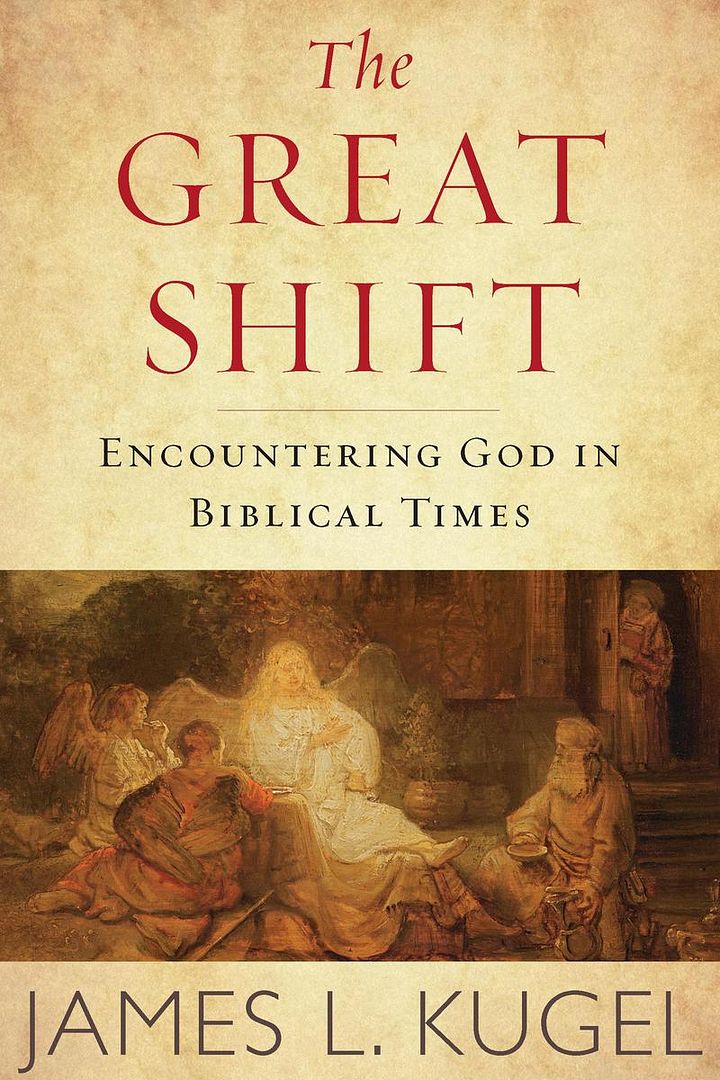
James Kugel: The Great Shift

The Great Shift: Encountering God in Biblical Times by James L Kugel on Amazon

The Great Shift book coverIt's impossible to guess how interesting or helpful someone not well-acquainted with the bible would find The Great Shift. It's also impossible briefly to describe the basic content of James Kugel's most recent book: is it about the gradual development of the concept of the individual (I, id, person, ego, self, soul), or does it describe humanity's slow recognition of the nature and essence of the God of the bible? Yes.

When a person studies scripture seriously, they learn something about sources, a fair amount about historical, cultural, political, and economic context. After some time and a lot of study, they can make educated and often accurate conjectures about where a passage might have originated, to what degree and how – sometimes even where – it could have been edited. For people of church or synagogue, making the witness of scripture a vital part of everyday family, community, and civic life is the ultimate goal.

Like the author, I claim membership in a faith community that affirms the authority of scripture as a testimony of the life together of God with the people of God and as a guide for daily life. If I'm teaching or presenting to a group that doesn't already know me, in order to defer some questions and concerns I usually explain, "I have a very high view of scripture as the word of God; I have an equally high view of scripture as a human word, with all the ambiguity that implies."

Kugel reveals new aspects of some passages many of us thought we knew. He enhances many of his observations regarding the texts of [mostly] the Hebrew bible with parallel and similar instances in extra-biblical and non-canonical literature from the same periods. It's interesting how Hebrews (later known as Israelites and then Jews) imagined and then created a religion with gods that reflected characteristics, preferences, and habits of divinities belonging to their neighbors; we're learning more and more about the strong human tendency toward mimesis or imitation, so not surprisingly, that's what they did. Or... was the original modality of Abraham, Isaac, Jacob and all the rest a real religion as we define religion? Or not? A thread that weaves through The Great Shift reminds us how early on, in many instances the god or the god's emissaries appeared or spoke in a form similar to a human person's, though communication and from the great outside, from heaven, or from elsewhere than here hardly astonished those early hearers and observers. You remember God's charge to Abram in Genesis 12? Abraham's visitors in Genesis 18? Jacob/Israel's wrestling into an out of joint hip and a new identity in Genesis 32? Those types of encounters seem to have stopped happening; the "why" belongs to some of the book's trajectory.

With a centuries-long history that ultimately becoming codified in the words of a book that at first was a neuter plural, later feminine singular, among all the deities of the ancient near east, the God Whose people would be His prized possession if they obeyed uniquely was a god of commandments (ordinances, laws, ways, statues, precepts, testimonies) spoken and given – and written down – as grace-filled gift not solely for the glory of God, but also for the well-being of all creation. A long time arriving at an understanding of a Divinity who does not require extravagant tribute, whose first concern is the integrity of the creation He even chooses to inhabit!

This is a thick, heavy book; chapters average about twenty pages each. Kugel writes extremely well, without any of those annoying habits we all know about and wish people would forget about using. Although he's also a person of religious conviction, Professor Kugel presents the material like the scholar and the teacher he is. Because of my familiarity with the biblical texts and my theological background, I found none of it tough or rough-going, but again I'd caution whether or not you're religious or even somewhat spiritual, The Great Shift may or may not be for you. It has shifted my broad perspective on the story of the God and the people of the bible and sparked my interest in reading a little more anthropology. In the end, James Kugel agrees with a quote from the late Flannery O'Connor "I do not know You, God because I am in the way. Please help me push myself aside." That's where I find myself.

My Amazon Review: Revelatory!

Thursday, August 17, 2017

Once You Know This: Emily Blejwas

Once You Know This by Emily Blejwas on Amazon
This is freedom. this is a weapon greater than any force you can name. Once you know this, and know it with all your being, you will move and act with a determination and power that the federal government cannot ignore, that the school boards cannot overlook, and that the housing authority cannot dismiss. Martin Luther King, Jr., Chicago, 1966 {ARC pages 205-206}
once you know this coverBrittany lives in inner city Chicago. Does that inevitably mean endless multi-generational recycling of WIC, welfare, worry, and weariness? Does starting life in urban (or rural) poverty mean leaving school as a dropout? Not necessarily. Once You Know This opens in Chicago, ends in Montgomery, Alabama, the city the Montgomery Bus Boycott and Rosa Parks put on the map for all time.

Without a doubt fifth-grader Brittany has inherited basic smarts, but classmates, teachers, friends, and neighbors all play essential parts in helping the eleven year old imagine and enact a future. So does the internet, though mostly by making everything easier than it would have been back in the last century.

The story moves along at an easy, interesting real-life pace; the characters are fabulous! Most of us would have loved having a creative teacher into "cultural arts" like Mr. McInnis who'd relocated north from Mississippi for his first ever teaching job. I feel as if I'd met him, met Brittany and her Mom Maureen, had more than a brief conversation with many of the other people in the book. Emily Blejwas captures reader interest and credibility, too, with micro views into Brittany's world that rang true to my own experiences growing up and later working in inner city settings.

After finding herself busted flat in Baton Rouge, Janis Joplin tried to tell us "freedom's just another word for nothing left to lose," yet freedom's really a way to claim agency, begin making choices that lead to building a future for yourself and your community. Once you know freedom... you'll be determined and powerful. No one will ignore you!

"Once you know this" isn't in the religious books category, although Brittany and Mom attend church in Chicago at least once, church ladies in their new Alabama home provide ample good eats. My Judeo-Christian tradition that affirms the Old and New Testament scriptures places a huge emphasis on freedom and obedience. Hebrew bible scholar Walter Brueggemann reminds us we celebrate the ten commandments with their bounded freedom and limits as "working papers" for life together in community.

As I've mentioned not a few times on this site and countless times in the adult Sunday School class I facilitate, we discover the neighbor at the heart of Torah, we meet our neighbor as the focus of Jesus of Nazareth's succinct summary of the ten commandments into two:

Thou shalt love the Lord thy God with all thy heart, and with all thy soul, and with all thy strength, and with all thy mind; and thy neighbor as thyself.

At the end of that summary, the gospel according to Luke includes Jesus telling the lawyer "thou shalt live" if he follows the commandments. In short, God gifted us with commandments (ordinances, precepts, statutes, law, torah) so life might thrive and harmonize with Martin Buber's definition of love as "responsibility of an I for a thou."

Brittany's Plan B worked to perfection, but back in the last century without internet, or any time during this one with internet almost everywhere, her plan wouldn't have happened without more than a little help from her friends and acquaintances. Once you know this reveals love in action. As MLK optimistically insisted, the arc of history bends in the direction of justice, and justice is where freedom, determination, power – and responsibility – live.

I'd love to see Once You Know This as a big screen or home screen movie—and I'd welcome a print sequel.

My Amazon Review: once you know... freedom!

Sunday, July 16, 2017

Isaiah 55:10-11

Isaiah 55:10-11

Isaiah 55

10For as the rain and the snow come down from heaven and return not thither but water the earth, making it bring forth and sprout, giving seed to the sower, and bread to the eater, 11so shall my word be that goes out from my mouth; it shall not return to me empty, but it shall accomplish that which I purpose, and prosper in the thing for which I sent it.

This was the first lection today—Pentecost 6A.

Wednesday, July 12, 2017

Porch Stories: Hospitality

It's high summer in the northern hemisphere—the magical season when we live more casually and openly than in the cooler months. Inspired by her kids' and her own recent experiences of welcoming and being welcomed, Kristin chose hospitality as her Porch Stories theme for today; I'll do the same.

Welcome one another, just as Christ has welcomed you, for the glory of God. Wherefore receive ye one another, as Christ also received us to the glory of God. Romans 15:7

desert spirit's fire porch stories – hospitality
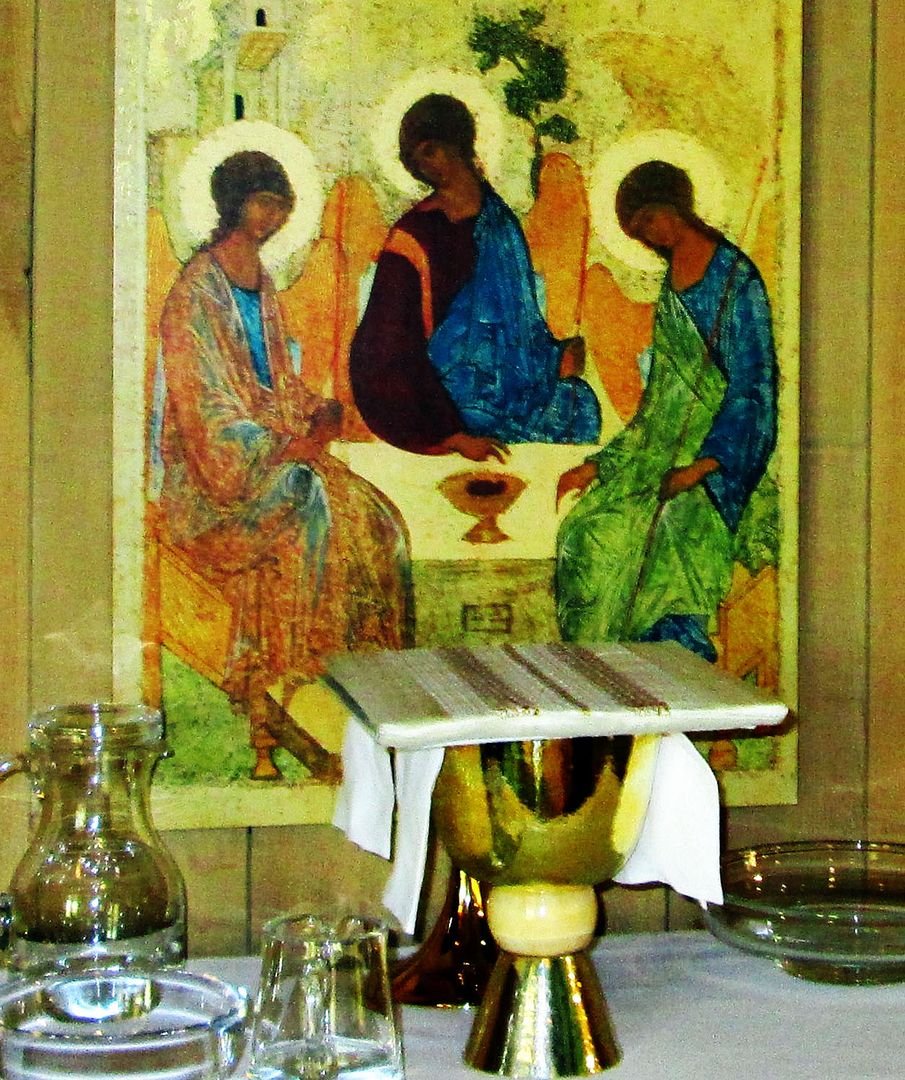
Rublev Trinity icon road to emmaus

Hospitality is a central biblical theme. In scripture we learn about Israel's and the Church's essential call and command to welcome the stranger, to make a place for the passerby and passersby, a respite for the sojourner (remember, "resident alien?") in our midst. I've blogged so often about the topic I even have a hospitality label that likely hasn't caught everything I've had to say about it—especially since google/blogger didn't introduce labels until many years after I started this blog.

My intro images are the Hospitality of Abraham trinitarian icon that's above the credence table at one of my San Diego churches. Andrei Rublev drew this icon that illustrates the story of Abraham’s three visitors in Genesis 18:1-15 with the side of the table closest to us wide open: a place for each of us at God's Table of grace! The more recent painting by He Qi illustrates the post-resurrection, Easter evening Road to Emmaus account from Luke 24:13-31 where we meet the risen Christ as simultaneously guest and host. We recognize Jesus as he welcomes us by taking, blessing, breaking, and giving the bread that's his body, the bread that's our lives. And Jesus welcomes us with an open seat on our side of the table. For many months I sat underneath that picture as I facilitated adult Sunday school because I could see the clock from that chair.

Kristin outlined where we are with perfection:
"Hospitality" and "hospital" have the same word origin, so no wonder hospitality heals. Of course, hospitality doesn't have to involve a party. We obviously like parties and gatherings around here. But hospitality can mean making a phone call or sending a text. It may means showing up with a meal or a McDonald's Coke. It's about letting someone in your life and being willing to walk into theirs. Hospitality heals, so let's take care of each other. It really doesn't have to be complicated, so let's jump in together.
Just as with other aspects of life, many of us humans imagine offering hospitality needs to be a major effort-filled endeavor. Most of us don't host or attend a big party very often, but similar to how friends and therapists remind us to appreciate the little things, we need to recognize and rejoice in the smaller, often spontaneous, inevitably fleeting times of welcoming and inclusion we make towards others, that others offer us.

A few years ago at one of the churches where I sometimes used to serve as guest keyboardist, the pastor preached on Jesus' promise, "Very truly, I tell you, the one who believes in me will also do the works that I do and, in fact, will do greater works than these, because I am going to the Father." [John 14:12] Pastor asked a for instance: "Where were you born? Lutheran General? Presbyterian Regional? St. Mary's? Where did you go to school? Concordia? Jesuit High? Holy Family Elementary?" Those examples reminded us what immense impact the many, many, many church-related, Jesus-inspired life- and world-changing good works of healing and education have had. And many, many, many of us regular people have participated in those more formally organized ministries of healing and education in official capacities as teachers, crossing guards, nurses, lunch ladies, records keepers, janitors, administrators, etc.

But this is a casual summer porch stories. Kristin asked where we're recently seen and provided hospitality?

Will friends and neighbors, strangers, and random passersby be able to identify us as the one who offered them a thirst-quenching cup of cold water Jesus mentions (Matthew 10:42)? A round of cookies for kids at play or girls night out? A bouquet of garden flowers? A handmade, hand-delivered (or maybe even a snail-mailed) greeting card? A welcoming or a consoling hug? I enjoy giving and love having those small acts of hospitality offered to me. In either direction, they say remembrance and care. A decade ago in my formal faith journey I explained, "Both my experiences of inclusion in the community and those of exclusion from the community – especially the community of faith, but also in many places and spaces in the world outside of and beyond the gathered People of God – have been significant to my growth in faith."

Welcome one another, just as Christ has welcomed you, for the glory of God. Wherefore receive ye one another, as Christ also received us to the glory of God. Romans 15:7

Whoever welcomes you welcomes me, and whoever welcomes me welcomes the one who sent me. Matthew 10:40


Yes, welcoming Jesus and the One Who sent Jesus, even in those small, seemingly insignificant transitory ways, because they all add up to more than the sum of the parts; they all contribute to healing and wholeness. Is there an open place at your table, on your porch or veranda, beside your pool, in your cabana? Healthy, whole individuals contribute to a whole and flourishing planet. As Kristin encourages, "Let's all jump in together!"

porch stories button

Friday, July 07, 2017

Five Minute Friday: Play

As summer in the northern hemisphere continues, Five Minute Friday host Kate Motaung prompts us to play. I've made this only somewhat of a FMF; because I love the topic of play, I wanted to write more than five unedited minutes would allow, so I spent less than five making a quick outline, a lot more than five writing, and I edited beyond the usual checking to find repeated words and to be sure auto-correct accurately guessed what I tried to type. But it's still quite rough... I won't revise this one, but may try another post about play.

summer play wisdom 8

The Lord created wisdom
at the beginning of his work
before the beginning of the earth
and then when he established the heavens
I, wisdom was there
when he drew a circle on the face of the deep
when he made firm the skies above
when he established the fountains of the deep
when he assigned to the sea its limit
when he marked out the foundations of the earth
then I was beside him, like a master worker
I was daily his delight
rejoicing in the inhabited world
and delighting in the human race.

Proverbs 8:22-31
This creation account from the writings in the Hebrew Bible shows us the logos at the play the logos at the work of the first creation. In scripture and in Greek philosophy, the logos is both source and immanence, in a sense that's not very different from the way a logo for an organization or a business anchors its identity and promises more to come.

Unlike much of the rest of the times of our lives, have you noticed that whenever we play, we live almost entirely in the present?

Rituals and liturgies were one of the ways God's people Israel persistently recalled the past so it would remain present. Within a context that was play more than it was anything else, Israel retold and reenacted the story of their experiences with the God of the exodus, the God who covenants with creation, the God of the commandments. Like Israel, when we worship we remember who God is, who we are, how God has acted. We affirm our dreams. We announce our hopes for the future. Not only is much of our liturgy in the present, just as play is—liturgy also creates a new and different self-contained world that exists with and within our everyday world. Liturgy provides that "foretaste of the feast to come" of the new creation.

In Hebrew history people remembered and talked about past events as if they still were in the present; their history with God gave Israel confidence about the future and willingness to continue in open and responsive covenantal partnership with God. Because they knew God's saving deeds of redemption and homecoming, they faced the future with lively hope. Sacraments and liturgy form the model we follow during the week in the world outside the gathered Sunday (or Saturday evening/Sunday vigil) assembly. In the presence and power of the Holy Spirit, the people of God at the work of the new creation are the people of God fully engrossed in the play of a making a new creation from the ruins of the old.

The Good Book tells us God created humans in the divine image—a picture you can perceive. Still further, scripture reveals the God who fills heaven and earth becoming human and finite in Jesus of Nazareth. God in Jesus Christ gave us a dream of a whole, healed, reconciled world, a world at peace and at play; Jesus challenged us to make it our dream and in the power of the promised Holy Spirit to make the new heaven and new earth reality. Just as Jesus resembles, represents, and reveals God, we become images of God when we play, when we dream, when we worship. We become people alive in the now—creative, responsive, and responsible.

The passage from Proverbs show us the logos at work is the logos at playful celebration of the first creation. In the presence and the power of the Spirit of Pentecost, the spirit of resurrection, the spirit of the new creation, our liturgies are the first fruit, the guarantee we finally will end up in God's image, since God's indwelling Spirit makes possible our play, our dreams—our parties! Like play, worship ends the division between material and spiritual we often make. Dreams start to become reality. In worship, God's people at play are God's people at the work of the new creation. Cornel West exclaims, "We are people of hope! Why do we party on Friday nights? Why do we worship on Sunday?!"


Pastor Eugene Peterson's The Message expresses it...
I don't think there's any comparison between the present hard times and the coming good times. The created world itself can hardly wait for what's coming next. Everything in creation is being more or less held back. God reins it in until both creation and all the creatures are ready and can be released at the same moment into the glorious times ahead. Meanwhile, the joyful anticipation deepens. Romans 8:18-21

Because God includes everything in the plan of liberation and redemption, as the twenty-first century people of God involved in the play and in the work of the new creation, we can wait expectantly for that time when all of life becomes play for every one of us, and like wisdom at the first creation, as co-creators with God in the Spirit we rejoice in the world inhabited by all of God's creatures.


five minute friday future five minute friday new button