Showing posts with label faves 2009. Show all posts

Tuesday, November 03, 2009

Roy DeLeon: Praying with the Body

Praying With the Body: bringing the psalms to life, by Roy DeLeon, OSB, on Amazon

Praying with the bodyI love the 7" x 8.5" dimensions, its easy heft along with the just-right feel of the way it flexes in my hands and I love the turquoise blue cover, a color of the sea and a hue of the desert. Roy's book is in the Active Prayer Series from Paraclete Press, whose about explains:
Although Benedictine spirituality is at the heart of all that we do, we publish books that reflect the Christian experience across many cultures, time periods and houses of worship. We publish books that nourish the vibrant life of the church and its people--books about spiritual practice, formation, history, ideas, and customs.
In his forward, Paulist Father Thomas Ryan says how strange it is that Jews and Christians pretty much check their bodies at the door of synagogue or church, while Muslims, Buddhists and Hindus integrate the whole person into their spiritual practices. Strange indeed, as Fr. Thomas further observes, that despite Christianity's high theology of the body and in spite of the fact that the "great Christian festivals of Christmas, Easter, the Ascension, and Pentecost all make profound and radical statements of faith about God's esteem for our embodied being.. And In Judaism, the body-mind-spirit is a seamless entity named... by a single word..."

Christianity's central kerygma, our primary proclamation is God's incarnation in the human Jesus of Nazareth. I love reminding people that the gospel-writer Luke the physician ends his genealogy with "Adam, son of God." Formed from the substance of the same earth that grows crops to nourish us and other animals that in turn feed and provide for the ground's produce, trees that shade and shelter us, that provide lumber, leaves and reeds to form into dwelling places... And Latter-day Saint theology asserts not only did the Son become embodied and enfleshed; so also did God the Father! Theology of the Holy Spirit insists on human potential to achieve the divine nature we were created to assume. In the garden the tempter told the human A-dam, "You shall be like god," and verily, we shall be! Different Christian traditions use different words but divinization, theosis, sanctification all point toward our ultimately becoming and living both fully human and fully divine, exactly like Jesus Christ, so God becomes re-incarnate and reborn in each one of us, in the community that bears the name of Jesus Christ and in all creation. The indwelling Holy Ghost means the Divine Presence very here and very now and furthermore, in Jesus Christ we all experience the resurrection of the body.

People often refer to Christianity as spiritual, though the way of Jesus is heavily economic, highly political and hardly ascetic in its celebration of gifts from the ground, in its perspective that insists on the interdependence of all life, in its historical affirmation of human sexuality and in its charge to care for all creation, the natural environment that surrounds us, envelopes us and that is not incidental but remains integral to God's action in history. In sacramental theology we speak of the capacity of the finite to contain the infinite, pointing toward interdependence of everything created to a degree no one could or would imagine on their own.

Roy organizes the book into Alleluia, Sanctus and Amen types of prayer sessions. "Alleluias" are about new beginnings. Each includes an introit, a section of a psalm. a Silent Reflection, illustrated suggestions for "Praying with the Body, Heart and Soul," Sitting in the Presence (similar to centering prayer I sometimes practice), a possible way to live your prayer, an original Contemporary Psalm and concluding prayer. At about 2 inches wide, the margins of the books have plenty of space for the participant's own notes and each discrete session features a pullquote from the psalm one might choose to contemplate or concentrate on--or possibly not at any particular time.

Although intended for the middle of the day or mid-endeavor, "Sanctus" prayer sessions could be adapted to any time of day or year. In Roy's words, they bring us "...back to the awareness that whatever is happening in our day, on our project or journeys, God is with us." (page 33)

Somewhat parallel to compline, "Amen" prayer sessions are for the close of day or "at the conclusion of an activity or project, or at a milestone." (page 97) Similar to possibilities of praying the canonical hours, although each office has evolved and developed a specific form for a particular time of day, prayers in Praying with the Body are liturgical forms with content that can be appropriated for other times than specified. Any of these practices could be repeated many many times with variations and there's no solid reason to keep Alleluia prayer sessions solely for the beginning of a day or endeavor, not any particular rationale for being anything but open to Spirit about the whats and whens and wheres for all these prayers. The book includes many line drawings of bodily prayer positions, but those too do not need to be replicated exactly in a person's own practice. Glancing through the illustrations reminds me that sometimes my body is surprisingly bendy and other times decidedly not at all, but like yoga these can be adapted some.

Thank you, Roy!

My Amazon Review: prayer-body connections: bringing prayer to life!

Thursday, October 08, 2009

A Call and an Oracle

this is a really really old one, but bears another speaking and a new hearing...

A Call

In November of the third year of the current regime
I saw the people, the city's people
        desolate, forsaken, hungry and forgotten
I saw the people, the city's people
        needing bread, health and work
        needing plain justice.

Then the word of Yahweh came to me and I said,
        "You're asking me to speak your word, Yahweh? I did want to be your servant, but I never meant to do anything this hard! For me to be one small voice speaking against this outrage?"

but Yahweh said to me,
        "If you do not proclaim my word, who will do it for my people?"
So I said,
        "Here I am."

An Oracle

Hear the word of Yahweh, you that turn justice on its head, you that mock compassion
You have set yourself up in a soundproof castle with no window on the world
        You ears have become deaf
You have garnered riches for yourself
You have bought and sold your carefully media-marketed image
        Your heart is cold and hard
While my people hunger to be human
        as they hunger for the fruit of the land
        for the wages of a good job.
They hunger for all of those things which I, Yahweh, their Creator gave them because I chose them, the people, for my own
But you stole and plundered what already was theirs.

And when you ask me,
        "How did I do those things, when did I do them?"
When you say,
        "I have been trying to keep the peace as a follower of Jesus,"
My word to you is,
        "You blaspheme! Better that you would tell the truth that you do not follow Jesus than lie and thus pervert his proclamation."
My word to you is,
        "because you have refused to be open and vulnerable
        because you have made a covenant with death
        because you have usurped the possibility of justice
for the impossibility of a false and perilous peace that is no peace
        because you have profaned the world with the price of your no-peace
        because you have renounced the stewardship of the earth's resources and repudiated the responsibility of your office
I, Yahweh, declare you not-human, not-in-my-image
I declare you a despiser of my servant Jesus who showed you how to be human - but your eyes have become blind
and therefore I, Yahweh, will confound your media image,
lay waste your economic abominations
and obliterate your lack of social programs
until you cry to me for mercy
but for you I will have no mercy
because you have done no mercy, no justice.

"Give ear and hear me, you people of the city,
        Forgotten and trampled upon by the wealthy but remembered and chosen by Yahweh.
Witness my word!"

Friday, September 25, 2009

celebrating Ted Kennedy

Edward Moore Kennedy, February 22, 1932 – August 25, 2009

Ted Kennedy served as the senior United States Senator from Massachusetts and came to be known as "The Lion of the Senate."

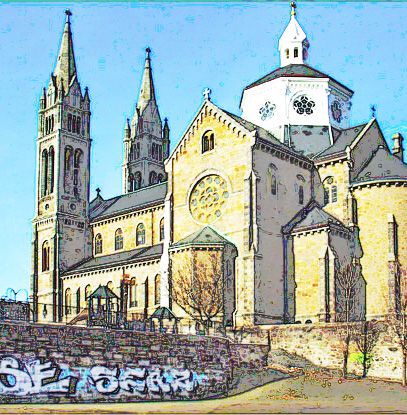
Mission Church, RoxburyHis funeral was on a rainy Saturday, 27 August 2009 at the Basilica of Our Lady of Perpetual Help, built by German immigrants and "since 1878" a parish church; with geographical designations like parish and ward, churches dare describe themselves as congregations especially for a particular neighborhood. In the Roxbury neighborhood of Boston, Mission Church is situated amidst the have a littles and have nots, creating an apt setting for the remembrance of someone who lived his life in service to often underserved and frequently disregarded populations. I've driven past the church quite a few times, though I don't recall ever being inside.

The celebration, the liturgy, the acknowledgment of Ted Kennedy's achievements and the promise of the inbreaking Reign of Heaven began with a magnificently played and sung entrance hymn:
Holy God, we praise thy name;
Lord of all, we bow before thee;
all on earth thy scepter claim;
all in heaven above adore thee.
Infinite thy vast domain;
everlasting is thy reign.
...words to stanzas 1-4 attributed to Ignaz Franz, circa 1774; translated by Clarence Walworth, 1858 (they processed into the church singing all 8 stanzas).

Scripture readings included Wisdom 3:1-9; Psalm 72 with the recurrent response, "Justice shall flourish in his time in fullness of peace forever"; Romans 8:28-31 – "nothing can separate us from the love of God"; and for the gospel, Matthew 25 – "whatever you did, for one of the least brothers of mine, you did for me."

Beginning with covering the casket in a white pall (technically a baptismal garment), the baptismal imagery was telling and pervasive: baptizing us into the death and resurrection of Jesus Christ, God clothes us in forgiven, sinless righteousness; each of the baptized wears a baptismal calling to a life of justice, a call to a journey to the cross if – "when" – necessary; a call to speak and to act prophetically against the political, economic, social, and cultural establishments. In the Spirit God calls and enables us to talk the talk and walk the walk. Figuring out and discerning a specific career path can be tough, scary, and difficult, but we all receive the same baptismal call to lives of justice and equality, to living the Magnificat...Luke 1:51-55
He has shown strength with his arm;
he has scattered the proud in the thoughts of their hearts.
He has brought down the powerful from their thrones,
and lifted up the lowly;
he has filled the hungry with good things,
and sent the rich away empty.
He has helped his servant Israel, in remembrance of his mercy,
according to the promise he made to our ancestors,
to Abraham and to his descendants forever.
Although the Kennedy clan originated from tribal cultures of ethnic Ireland and religious Rome that back in those days were not welcomed or accepted in elite residential or vacation communities in this country, these days commentators often call them America's Royalty, and they have become essentially a dynasty. In Greg Ferguson's words:
The ground is level at the foot of the cross...
We all are equal in the light of the cross
For the love of God is given freely to all
The ground is level, at the foot of the cross

Men and women, younger and older
Every culture, every color, every tongue
No more labels, no separation
As we stand forgiven at the cross
We all are one ...

Doesn’t matter your social position
Doesn’t matter if you’re rich or if you’re poor
Race or privilege, tribe or tradition
At the cross of Christ it can’t divide us anymore
Baptized into Christ, the Kennedys are God's royalty; the baptismal hymn from 1 Peter 2:9-10 would have been perfect for a reading at the service for Ted Kennedy:
But you are a chosen race, a royal priesthood, a holy nation, God's own people, in order that you may proclaim the mighty acts of him who called you out of darkness into his marvelous light. Once you were not a people, but now you are God's people; once you had not received mercy, but now you have received mercy.
The grandeur and sweep of the memorial service and media coverage were worthy of a head of state—of royalty! Ted Kennedy lived and served in the traditions of liberal, activist politics and liberal, activist, prophetic Christianity. He was a coalition-building, conciliatory politician who initiated and sponsored legislation of the people, from the people and for the people. And during the funeral liturgy, the celebrating of Holy Communion, the Lord's Supper, taken, blessed, broken and given, the Eucharist, a feast of thanksgiving, reconciliation, and life of all creation, for all creation.

Ted Kennedy's schooner Mya provided a wonderful icon of the sometimes rocky and rough, occasionally surprisingly smooth and glassy passages everyone needs to navigate through life. Water is the basic substance of creation, the essence of life: Water Is Life! We live baptized into water, drowned into our first death and raised to second birth of bounded freedom in Christ, and we need to trust God, the One Who really is the Baptizer.

On the Friday before the funeral Ted Kennedy lay in state at the Kennedy Presidential Library, located right next door to the University of Massachusetts at Boston, an urban school for non-traditional students, many of whom go on to help change their part of the world.

Psalm 72:4a insists, "He shall defend the afflicted among the people."

President Barack Obama quoted Ted Kennedy: The work begins anew. The hope rises again. And the dream lives on. Indeed it does, and it will:

Infinite Thy vast domain; everlasting is Thy reign...the dream lives on!

Monday, September 07, 2009

ELCA: structured flexibility

ELCA emblemOriginal post, September 2009.

It happened recently at the Evangelical Lutheran Church in America's Church Wide Assembly: six years later, the asp page is offline now; title is/was, "Sexuality Report and Recommendations, executive summary"; here's a brief excerpt:
The proposal suggests that this church, because of its acknowledgment of and commitment to the bound consciences of all, incorporate structured flexibility in decision-making into its policies and procedures so that synods, bishops, congregations, candidacy committees, and others involved in the candidacy process and in the process of extending calls will be free to act according to their convictions regarding both the approving or disapproving in candidacy and the extending or not extending of a call to rostered service of a person who is otherwise qualified and who is living or contemplates living in a publicly accountable, lifelong, monogamous, same-gender relationship.
When I heard someone ask, "But how can human creatures bless what the Creator God does not bless?" I needed to respond with at least a short blog. When I'm teaching I always explain the bible is a culturally conditioned and culture bound document, that we try hard, sometimes very hard, using appropriate critical and interpretive tools and skills to contextualize the words on the pages for other times, other places, particularly for the time and the place where we live right now. When I'm teaching a new group or people who don't know me well, I tell them I have high regard for scripture as a divine word but equal respect for it as a human word "with all the ambiguity that implies." It's a specific witness and as Martin Luther insisted, "what preaches Christ" carries greater weight and authority than what does not. Simply put, all scripture is not equal. Jesus Christ, God's living Word, ultimately interprets the written word of the bible. The very idea that a text could be infallible or inerrant is at right angles to any convictions that could have been held in the worlds that originated those texts that oftentimes were verbally conveyed and written down at some point in time much later.

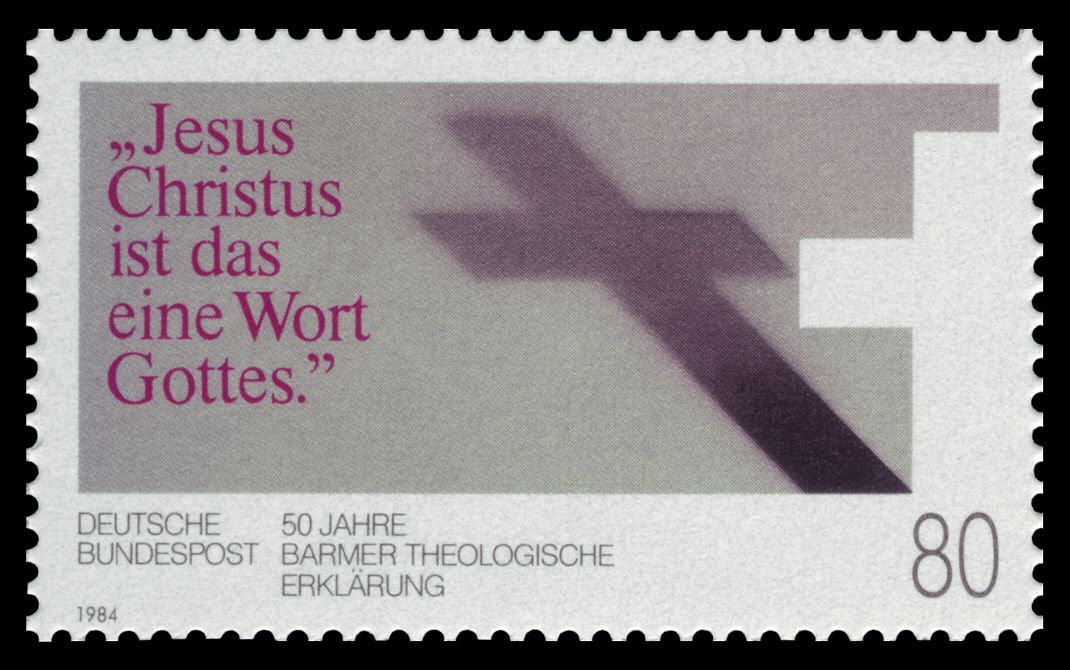
As the Barmen Declaration signatories confessed in 1934:

Barmen Declaration 50 years"Jesus Christ, as he is attested for us in Holy Scripture, is the one Word of God which we have to hear and which we have to trust and obey in life and in death.

"We reject the false doctrine, as though the church could and would have to acknowledge as a source of its proclamation, apart from and besides this one Word of God, still other events and powers, figures and truths, as God's revelation."

Who is this Jesus scripture attests to? Living hospitality, a faithful friend, the embodiment of covenantal, non-exploitative relationship. Both fully human and fully divine, in the power of the Spirit of Life Christ Jesus calls the Church and the churches to live as the demonstration and exhibition to the world of the Reign of God, in the Spirit enables us to the same ways of being and acting as he shows us. (Although Jesus' First Followers would not have had a clue as to the meaning of "church," and Matthew is the only gospel that includes the word ecclesia.) This Jesus is God incarnate, holiness enfleshed, the essence and reality of embracing love, of justice and righteousness for all creation. Jesus also is at home in the culture and religion into which he was born and spent his life.

People with more knowledge, education and insight than I possess have explained ways concepts and realities such as marriage and family have developed, evolved and changed; historically, there never has been a single normative style or structure for marriage or for family. Scriptures witness to God's nature and being, but just as much the word of "holy" writ reveal a particular place and time as some of the canonical texts condone practices like selling your daughter into slavery. In that case, "what would be a just price?" has been a typical response because after all, God mandates equitable compensation. Along with dietary proscriptions and prescriptions... you get the idea.

There may be one or two or a few passages against sexual activity with persons of one's own sex, and for a fact scripture forbids divorce, eating cattle and dairy at the same meal, eating cloven-hoofed ruminants and crustaceans (lobster, crab, and their ilk), wearing garments made of more than one kind of fiber (in that case, even 5% spandex for a little stretch is unscriptural, not to mention true abominations such as 50% cotton / 50% polyester). As Martin Luther insisted, all sin is idolatry, all sin amounts to violating the 1st commandment. In addition, 20th and 21st century medical, psychological and behavioral research and studies have demonstrated knowledge about sexual attraction and behaviors totally unknown in recent centuries, and unheard of when scripture was recorded (and when it was canonized). I've read that about 1% of the population is hard-wired to be either 100% gay or straight; the rest of us are gradations in between. So is everyone "a little gay?" Apparently not, any more than everyone is "a little bipolar," though most people's mood and affect varies considerably from one day to the next and particularly from one season to another. Recently someone suggested there's a strong element of choice in some folks' decision to life partner with someone of the same rather than the opposite sex. The individual pointed out that in general it's a lot easier to understand and therefore to spend most of your days with someone of the same gender because a lot of our attitudes and behaviors tend to be guy things, girl things, guy type or girl type in style. Similarly, most of us have abilities and interests that could lead to employment or a career in a number of areas or disciplines, but if someone who potentially could work as a history teacher chooses a less demanding path as a classroom aide, have they abrogated God's call and purpose for their lives? Possibly to a small extent, but more than anything God's call to faithful living is about good stewardship of time, talents and opportunities and especially to kind, loving non-exploitative relationships, to considering and treating others as "thous" rather than "its."

So especially regarding open factors of circumstance, choice and opportunity, much of the ELCA's decision as well as the recently defeated Proposition 8 in California simply is about equal rights.

Today is a somewhat lazy Labor Day in the USA and Labour Day in Canada, making it feel like an excellent day to get another blog online, and I needed to say something about the recent ELCA decision; here it is...

Monday, May 18, 2009

interviewed by mom priest!

meet and greet

Today for the RevGals Meet and Greet, Mom Priest introduced reverend mom of ministry and parenting, and then invited us to an interview. Lately I've been promising myself I'd go a little more public with my own story, so here's today's installment.

1. Where do you blog?

life stuff buttonMy current main blogs are here at desert spirits fire, also known as "my formal theology blog," this far by faith. My duo of design blogs are sun country living! and suntreeriver design.

Preservation project features some urbanities; a while ago I started ...urban wilderness.. as a place to post notes and handouts from bible studies that didn't quite fit the personality of desert spirit's fire as it evolved and matured.

2. What are your favorite non-revgal blog pal blogs?

I've been reading and blogging very little lately, but probably Brent Bill's self-titled site, Wandering Spirits Kennels and a new blog a new friend recently started, Wolfsinger.

3. What gives you joy?

Being invited, wanted, needed and appreciated. So rare these days!

4. What is your favorite sound?

Waves crashing on the shoreline; lunchtime in the Central Business District; Beethoven Symphonies #1, 2, 4 and 7...lots more...

5. What do you hope to hear once you enter the pearly gates?

The classic, "well done, good and faithful servant" will sound wonderful and the invitation to "enter into the joy!"

6. You have up to 15 words, what would you put on your tombstone?


I want to be cremated, my cremains scattered into the ocean or somewhere in the desert. But you asked for 15 words and I'll leave those to my successors:

7. Write the first sentence of your own great American novel.


It's about me, me, me, of course!
She rose up from the dregs of the Gulf of Mexico, cycled through the black dirt of the Mississippi Delta, did time in the ghettos of the inner-city northeast, crossed the river to Liberal Seminary and then got dropped out of polite society.
Such a true attitude of true servanthood (not!).

8. What color do you prefer your pen?

black, though currently I'm on a roll with purple Bic pens that write in lavender

9. What magazines do you subscribe too?

Step Inside Design is the only print mag I get right now

10. What is something you want to achieve in this decade?

to learn the remaining five Beethoven piano Sonatas, to see my art on a billboard, to better live in the moment, to demand more rather than pretending to be satisfied with less

11. Why are you cool?

because I am so Renaissance Person! Designer/illustrator, performing musician, theologian...and, I hope, awesome friend

12. What is one of your favorite memories?

I can claim a literal plethora of favorite memories, but for one plus I'll cite driving up the coast alone or with friends to Gloucester, to Rockport, to Los Angeles, to just about anywhere

13. Anything else you've always wanted to be asked?


How about lunch? Can you come to my party?

Monday, April 13, 2009

thirsty journey

all saints baptismal font
Throughout the just-passed season of Lent, the baptismal font in the entrance of the church on Excursion Byway (also known as Church on the Hill) was dry, very dry, gathering a patina of dust. "We're going dry for Lent" the spiritual leader allowed. A few blocks away at the Expedition Trail building, after Brother Will inadvertently overflowed the font, the spiritual leader suggested he dry out the drenched surrounding floor. "Water is life," the banner on one of my favorite Facebook apps reminds us; know-it-all Wikipedia says the human body is 55% to 78% water, "depending on body size." What is thirst? This is a little sophomoric, but the 3rd definition for thirsty in dictionary dot com describes "eagerly desirous; eager," citing "thirsty for news" as an example.

Both the parched – thirsty – desert and watery baptism are constitutive experiences for us as individuals and as community, events that define, shape and refine us into our identity as God's called-out people. How many times have I essentially said, "in the sparse economy of the desert, God's nascent people Israel learned to receive a gift—and to recognize the gift"?! I could recapitulate a lot of what I said during January 2005 in "wilderness handbook: the desert again."

"It's a thirsty journey," the pastor of the Excursion Byway congregation observed. We know something about death from H20 dehydration and dying from lack of nutrition; what types of dying and dessication happen to individuals or communities who try to journey without water from the fountain of first death and second birth?

Five years ago in longing for home I explained:
...just like the Israelites of the Exodus, in Jesus Christ we live in the precariousness of nomadic, unsettled existence, daily undergoing baptism's liminality: each day recalling and actually reliving the perilous and risk-filled underwater moment in that watery tomb of death that at the same time is sustaining womb of new life, the fragile instant in which we need totally to trust the baptizer - who, after, all represents God, the One Who really baptizes.
Legend tells us every day Martin Luther looked into the mirror and reminded himself "I am baptized." Likewise, we need daily awareness of the uncertainties, hazards and especially the tremendous promise lying underneath ("in, with and under?!") shifting sands, rocky streets, enterprising endeavors and exciting opportunities. No one and nothing ever offers a distinct pathway or a reliable navigation device to anyone, but the God of the crucified and risen Jesus Christ journeys alongside us and gives us the gift of resurrection at adventure's end, and many times along the way.

It's a thirsty journey because it's also a dusty walk...

Monday, March 09, 2009

musical musings: March of Days, Days of March...

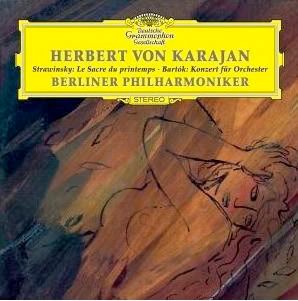
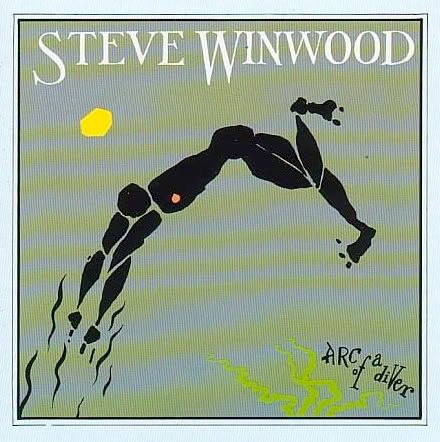
Stravinsky Rite of Spring CDArc of a Diver CD cover
Again I got to compile and host the RevGalBlogPals monthly music feast! Since we're in the liturgical season of Lent, meteorological spring has begun and it's almost the astronomical season of spring in the northern hemisphere, I chose my focus accordingly. I especially enjoyed collecting the CD cover images; here are two of the seven.

March of Days, Days of March musical musings

Thursday, February 05, 2009

Anglican Roman Catholic Dialogue

On the last Saturday of last month I was privileged to attend the formal Annual (half) Day of Anglican/Roman Catholic Dialogue (ARC) at the Roman Catholic Diocese of San Diego's Pastoral Center, a special conclusion to the Week of Prayer for Christian Unity that began with Morning Prayer in the high-ceilinged, light and bright, fairly austere, exceptionally resonant stone-floored chapel. I need to note there was a 2-manual Holtkamp tracker organ I didn't get to try because the guy who served as pianist and cantor didn't have keys or permission, but it looked enticing! Maybe another time...

St. Benedict's counsel to "Prefer Christ Above All Things" centered in Spirituality in Search for Unity was the topic. The first speaker was Fr. Luke Dysinger from St. Andrew's Benedictine Abbey in Valyermo, CA; Fr. Luke, a professed monk, ordained priest and board-certified physician teaches at St. John's Seminary in Camarillo, California. You easily can find information about Fr. Luke's splendid achievements so I won't detail them here.

Though I heard this during the Q&A at the end, for starters there is no Benedictine order per se, no one truly serves as abbot primate, but worldwide there are many communities following the Rule of Benedict. After the formal conclusion of our time together, Pastor John George Huber, who chairs our Faith, Order & Witness Committee, pictured Canon David and Father Luke in front of a beautiful illumination.
Canon David and Father Luke


From Father Luke I was surprised to hear that his Rule, the Regula Sancti Benedicti from the 6th century, predating all divisions within Christianity, is the only thing extant about Benedict; its antiquity makes it common to Roman Catholics, Anglicans and every other expression of the Church, as well. Because I live baptized, the Rule of Benedict is mine already—it is a "primordial articulation of the way we live together in community" and all about the "spirituality of the baptized, about the way Christians lived when they knew they had to give witness to their faith in a hostile world," Fr. Luke explained.

The harsh, grandiose abbot speaking in The Rule of a Master forms approximately 1/3 of Benedict's Rule. However, chapter 72 is exclusively Benedict's with nothing from the earlier Rule of a Master. As Fr. Luke observed, we find the two paths of life and death in many spiritual traditions. Check out this link to Benedict's Rule.

I savored hearing others explain what I've been trying to tell people about how God speaks through the voices of those with whom we live (work, play and pray), and through our guests, too. Not that I don't trust my own insights and perceptions, but the ongoing lack of peer conversation (still) and the way my comments and observations seem barely tolerated for a while and almost every time I know I'm making a cogent and critical contribution to the topic on tap it gets changed or my perspective dismissed. "The light that deifies" (sanctifies, uncovers and reveals our Divine nature, engenders theosis) changes and transforms us; living words bring nuances you can't "get" from a mere printed, written text. Sounds exactly like Jesus and even about Jesus' life still lived through us!

For Benedict the "Schola" is not only about a typical, formal arrangement of speaker - listener - hearer, but evokes a school of fish, a group of creatures, of created ones moving together in the same direction, an assembly, a gathering of community united in spirit and purpose. The Schola Cantorum in the monastery, the cathedral or the local parish is more than the usual choir, but a unity that sings with a single voice.

Fr. David cited claims by Paul and Benedict that living in community there's a good, legitimate competitiveness, as Paul writes in Romans 12:10-11,

love one another with mutual affection; outdo one another in showing honor. Do not lag in zeal, be ardent in spirit, serve the Lord.

I love the idea that when we look past whatever irritating thing our neighbor, friend or relative is doing and act in love anyway, there's no need whatsoever to pretend they're not driving us nuts! Dionysius the Areopagite says there is no unmediated grace, so we live as channels of divine grace to one another. That sounds Jesus-y, too! Needless to say, "only in dialogue with 'others' do we make any spiritual progress." Reprising one of our intercessions during worship: "Through your cross and resurrection, fill us with the consolation of the Spirit," Fr. Luke cited Martin Luther's insisting the "consolation of the brethren is a means of grace."

Moving from spectacles, signs and wonders to simple presence...in the past I've written, taught and tried to remind myself that even the gods of the Egyptians could do the signs and wonders, but one of the revolutionary things about Yahweh was YHWH's constant, unmediated, presence with creation. Although he responded later to several questions from the audience, Fr. Luke closed his formal talk by telling us our self-identification with a particular denomination, tradition, community, liturgical style or theological perspective is "wonderful and beautiful, but insufficient." We need the great(er) whole.

Canon David Caffrey, rector of Trinity Episcopal Church, Redlands, in the San Bernardino mountains presented the second and concluding talk.

As Father Luke already had told us, in Thomas Cranmer's Book of Common Prayer we find "Anglican spirituality is profoundly Benedictine." Canon Caffrey explained a trio of main points: 1) the Benedictine nature of Anglicanism; 2) points of convergence between Roman Catholicism and Anglicanism; and 3) practical grounds and common witness between the two traditions. There are varying cultural expression but no substantive differences; in other words, we all have the same DNA. As he pointed out, literally hundreds of monastery ruins are scattered throughout the British Isles!

Briefly for this blog, triune pairs: work, study and prayer plus obedience [ob + audire - "leaning toward listening"], stability [doing life with others, being a Christian with others and yes, you do need to go to church to be a Christian, you need to be stable to stay put and sink deep roots, since nothing can thrive or even survive with multiple random uprootings and replantings] and conversion - the dynamic process of growth and metanoia, conversion.

A shorthand description of Anglicanism and, of course, its primary expression in this country as The Episcopal Church would say it's neither experiential nor confessional, but pragmatic and liturgical: it's about showing up, gathering in assembly, eating together and drinking together—a life centered in the Eucharist. In all 3 lectionary years we find the pericope about the apostle Thomas on Easter 2. Canon Caffrey told us Thomas was no doubter; Thomas showed up, and that is faith! The opposite of faith is disobedience, not doubt.

Like Father Luke, Canon Caffrey reminded us God best speaks to us within community, when others are present. These days I'm still wondering about things the mirror I've found in others has been showing me about myself for all too long. The monastery abbot is commissioned by rule to listen to others! In describing some differences in style, Canon Caffrey more than suggested the strong suit of both Anglicanism and Roman Catholicism is the post-conversion resources the traditions provide a person "for the long haul, for the day to day, daily grind." Both toolshed and sacristy are equally sacred...

Before lunch of sandwiches, chips (pickles, cookies, soft drinks and healthy beverages) from a local Togo's, both speakers fielded a handful of questions. Regarding iconography of the Divine, Fr. Luke reminded us the only face of God is the face of Jesus Christ—the gray-haired bearded guy behind a cloud is false and there never was an avian incarnation, either...

This reminds me of the small Yahweh fan group (ummm..."Product Page") I belong to on Facebook! Nonetheless, ever since the Bethlehem manger held the mystery of Spirit in Flesh, God never has a dis-carnate existence. An audience member asked about the emphasis on Christ rather than on Jesus—especially interesting given the Nazarene's own preference as recorded in the synoptics for calling himself son of man, the human one. An excerpt from one of Brian Wren's hymns has been making web rounds, from the Christmas cantata Welcome All Wonders:

Good is the flesh that the Word has become
good is the birthing, the milk in the breast,
good is the feeding, caressing and rest,
good is the body for knowing the world,
Good is the flesh that the Word has become.

Good is the body for knowing the world,
sensing the sunlight, the tug of the ground,
feeling, perceiving, within and around,
good is the body, from cradle to grave,
Good is the flesh that the Word has become.

Good is the body from cradle to grave,
growing and aging, arousing, impaired,
happy in clothing, or lovingly bared,
good is the pleasure of God in our flesh,

Good is the flesh that the Word has become.

The half-day with ARC San Diego again has gotten me thinking. How did I feel in that environment? Very much the way I feel on the University of San Diego Campus, actually: peacefully calm, often wondering what it would be like to attend school and learn in such a space. The scriptural grounding and thoughtful structure of the very well performed liturgy and the excellent congregational participation made me realize (again) why people remain in the Roman Catholic tradition and reminded me of my need for the Church's historic sacramental liturgies and the way they connect the extreme brokenness of my history of the past dozen plus years to the church and to the people of God in every place and time.

My near-constant cry and overwhelming grief has been about the loss of history shared with people I'd fully expected to grow old(er) with, though I truly appreciate people I've met who do seem to take me for what they see and seem willing to gradually hear more of my story. In my own words, "people willing to hear my story and to trust me with theirs."

In the wake of the ARC dialogue, again I'm seeking God's current calling to me, again I'm agonizing about stewardship of my gifts, education and experience—of my life. I've never lived inside its gates, but the social scientist and the human within me has a sense that churches that are organized more vertically and heirarchically somehow have more freedom within the ranks, as if the lines are clearer.

Amidst my continued praying, thinking and hoping, I'll conclude with a picture of this ceramic that's exactly like the one I received as a gift at one of the many parties and farewell receptions held for me before I left City of History for the Intermountain West. And yes, not only the sacraments but memories and physical symbols of my own achievements and accomplishments are a huge part of what gives me hope for a meaningful life of service in what I need to trust will be the very proximate future.

Holy Family Benedictine Ceramic
Saint Andrew's Abbey features many of the uniquely characteristic ceramics designed by Father Maur van Doorslaer, O.S.B.. I wish to my (probably very occasional, given the rate I haven't been posting) blog readers, to the world and these days particularly to myself fulfillment of this Celtic prayer of many versions and variants I first heard in the Moody Blues' Celtic Sonant:

Deep peace of the running wave to you
Deep peace of the flowing air to you
Deep peace of the quiet earth to you
Deep peace of the shining star to you
Deep peace of the son of peace to you

May the endless peace
of the Crucified and Risen One heal us all and abide with us.
Amen!