Showing posts with label posada. Show all posts

Sunday, December 31, 2023

Saturday, December 31, 2022

December 2022 In Town

December 2022 blog header
• Urban Wilderness Lectionary Project for December

posada goats and sheep
• Goats and sheep who visited during our Posada and Toy Gift Shop. There also were chickens, but as an innkeeper I didn't get to visit them because they'd already been crated up and were ready to travel back home by the time I arrived at their pen.

posada toy shop
• Toy Shop and Snack sampler from our Posada Day.

Los Angeles Mountain Lion King P22
• They captured the Lion King of Los Angeles, NPS P-022, transported him to San Diego Zoo's Safari Park for observation, and after discovering the mostly Griffith Park resident puma-mountain lion was "drastically underweight" with kidney and heart failure, parasites, and injuries from a probable vehicular encounter, made the difficult decision to euthanize him. The sad loss of the big cat who roamed the wild and wonderful urban jungle of Los Angeles, often hanging out around the Hollywood Sign, was the top LA story of 2022. There's now a petition to get P-22 a star on the Hollywood Walk of Fame.

• Here's P-22's official bio; you can read many more puma profiles on the National Park Service website, though the California Department of Fish and Wildlife manages mountain lions.

Christmas trees and Toy Shop Sign
• Toy Shop sign and Christmas Trees sampler on our Posada Day.

Living Local 2022
California backyard sunflower

Friday, December 31, 2021

December 2021 All Around Town

December 2021 all around town header

• Urban Paradise Lectionary Project: Four for December

Armenian Cathedral Burbank California
• Tuesday 07 December: Ecumenical Prayer followed by Soup, Bread, and Pastries at the Armenian Cathedral in Burbank

Toy Drive Books
Toy Drive Triptych
• Neighborhood Toy Drive and Christmas Party on Saturday 11 December

Four Candle Lights
hree Sups of Tea
Hello Spring and Roses Tea Cups
• Day Long Worship Planning Retreat on Thursday 16 December

Las Posadas flyer
Las Posadas Cookies
• Las Posadas Tuesday 21 December "Wear Your Own Costume" because of COVID. I was a black cat panther.

Nativity Scene
• Front Lawn with Nativity Scene to set the seasonal theme

• Christmas Eve – Participatory Lessons and Carols at church. I got to be pianist because our staff pianist's spouse had a high fever so the fam wisely didn't go anywhere.

• On 26 December, "The First Sunday of Christmas," three of us gave a talk – here's mine – focused on our testimony of Christmas. Instead of live music we had a wonderful video of scripture readings and music for another Lessons and Carols.

• The afternoon of 26 December I finally saw West Side Story 2021, one of very few movies I absolutely wanted and needed to see.

house blessing cow clock elephant
• Final event of the departing year—house blessing for Jeremiah at noon on Friday 31 December. His place is full of beautiful furniture and decor. I've included pictures of the cow painting that's similar to one or two I have; the tall digital clock he got at Home Depot for an amazing price; elegant elephant tapestry.
Living Local 2021

Wednesday, October 11, 2017

#Write31Days 11 • San Diego County

VBS 2013 leaving on Friday VBS 2013 Friday cupcake snacks VBS 2013 towels on Friday

Filling in the blanks on my perfunctory San Diego County post from last night.

You don't need to listen to many weather forecasts to realize San Diego County has four micro-climates: coast, inland valleys, mountains, and desert. Depending on the moment in time, the City of San Diego {also known as "Previous City" in this blog} has either the seventh or the eighth largest population in the USA. San Diego overall has a true multiple mystique that includes small town – almost hick town – sensibility, border town awareness, shadow of the huge city up north inferiority, all the while plainly recognizing itself as a surfers delight, as that place where "I plan to keep this job only until surf's up again, so why bother to do it well?"

With its oversight of air, land, and sea, the Unified Port of San Diego meant 1–flying out of and into Lindbergh Field to and from Tucson more times than I can count. It sometimes lead to 2–walking across the international border for a day of bargaining, purchasing, and savory comida local because I had papers. For several years it meant driving to the international border for posada sin frontera that provided temporary respite, a short-term home for the Holy Family on their way to Bethlehem; symbolically posada sin frontera also announced solidarity with and sanctuary for all strangers, sojourners, or travelers, documented or not. I've already written about the 3–place of ships or Embarcadero in this series.

The Pacific coast of San Diego is a place of wild imaginings because you know it stretches further than anyone possibly could see. Ocean Pacific is where you can't help but "still feel small when you stand beside the ocean" as Mark Sanders' and Tia Sillers' "I Hope You Dance" implores. The far-reaching expanse of San Diego County included concerts in North County, seasonal excursions to Julian to enjoy snow, apples, hiking, day-long and weekend retreats. San Diego County was Thanksgiving Day Dinner with neighbors and friends, with their neighbors and friends.

The San Diego County Fair (formerly Del Mar Fair) became the place where I received multiple awards for my art and design, including a Best in Show and two Best in Class. {I'll photograph my ribbons and rosettes and add them to this post when I retrieve them from storage.} San Diego County meant acceptance into juried art shows and several other presentations of my own design. University City in San Diego County award me a prize for Street Banner contest entry; you know I loved seeing my banners all over that section of town! That was a few years ago, so I imagine all the banners from that year have faded enough they no longer use them.

San Diego County was a place where several churches welcomed me to various ministries. That's a long one I won't even attempt to blog... When this series concludes I'll take some time to illustrate my post more generously, but for now my three header photos are from Vacation Bible School 2013 at Church Around the Corner. The open, casual welcome from pastors and people finally gave me confidence to leave a place that had offered me growth and change, yet at the same time helped me admit I needed more. During fall, winter, and spring I was part of the prepare and serve crew for Thursday evening family dinners; bible study followed, and I got to facilitate whenever senior pastor was out of town. Three summers in a row I taught Vacation Bible School at Church Around the Corner.

That's my summary of San Diego County highlights; stay tuned for City of San Diego.

write 31 days 2017 button

Friday, July 17, 2015

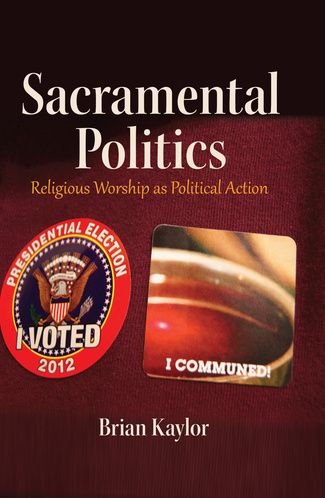
Brian Kaylor: Sacramental Politics

Sacramental Politics: Religious Worship as Political Action (Frontiers in Political Communication) by Brian Kaylor on Amazon

Notice of material connection: I received this book for free from The Speakeasy, with no requirement to write a positive review. I am disclosing this to comply with the Federal Trade Commission's 16 CFR Part 255.

Interesting, uneven, and thought-provoking—also essential, if you dare!

Sacramental politics coverSuch an important book! Everyone in the USA and elsewhere who sometimes attends church and/or calls themselves Christian could benefit from reading and considering Sacramental Politics. Unlike some other countries, USA never officially has possessed an established church or religion, yet author Brian Kaylor mostly reflects upon and analyzes politically-oriented religious behaviors in the contemporary USA, though he delves a bit into this country's political past, mentions the Confessing Church in Germany with its Barmen Declaration, and also discusses this country's most active branch of the Anglican Communion, The Episcopal Church USA. How fascinating that with our institutional separation, functional interaction of religion and politics in this country, they routinely have prayer rooms at the party connections. I think I knew that, but...
Overall, author Kaylor's perspective is not what some of us might observe and reflect upon regarding the dominical sacraments / ordinances of baptism and holy communion being politically, socially, and culturally subversive. In fact, he never quite gets there, possibly because of his anabaptist background, but he offers so much else. It's impossible to highlight all the rich highlights in a review or even in a basic book report, so I'll mention only a few.

The seven chapters includes (the biblical number) seven categories; to entice you to start reading, they're about Religious Worship as ...

(1) Political Rhetoric
(2) Partisan Politics
(3) Public Policy Promotion
(4) Political Messaging
(5) Political Space
(6) Inherent Political Action
(7) Politics

So many aspects of our lives as Christians to consider! Whenever someone complains about "politics" in the church in a club, or anywhere, I remind them "to be human is to be political." At least that's been the case since humans moved away and grew their affiliation groups larger than Abraham of Ur's nuclear family. Are our public prayers as pastors, as lay people, as politicians, or as office holders directed only to Divinity, or are they news bulletins and hortatory speeches primarily intended for the human audience? Is God's political party red, blue, purple, or other? Does God even "do" politics? Given that Jesus died from the actions of imperial powers, God clearly has been majorly involved not only in religious practices, but also in political, cultural, and general human endeavors of every kind.

When we interpret scripture, have we gotten into the irresponsible habit of imposing our perspectives and predilections onto the scriptural texts―eisegesis? Or do we at least attempt faithfully to extract and apply scripture's perspectives onto our decisions and into our daily lives―exegesis? It can be close to impossible to separate out our social, cultural, and political experiences from the witness of scripture. Faithfully contextualizing texts that come from a very different culture and that variously are between 4,000 and 2,000 years old always is difficult and dangerous. They didn't have parliamentary government, the great republic's imperium in imperio, internet fund-raisers, or corporate lobbying, and it's truly impossible to overlay a lot of scripture injunctions onto our current ways of being and living. A king like the other nations? The parliament that appears so effective for that country in the other hemisphere that also has a much smaller, far less diverse population?

The book's early chapters that dissect and analyze the content of praying, preaching, campaigns, etc. became confusing, mind-boggling, dull and repetitious. A lot of that information would be more clearly presented as a chart or in a table. My favorite chapter and probably the best-written and most clearly expressed is chapter 5, "Religious Worship as Political Space." Partly because public and liturgical space is a favorite topic of mine, partly because I know about Friendship Park and ongoing concerns about the international border between USA and Mexico. I've participated in the annual Posada sin Fronteras at least twice, but that was before the feds put up yet another barrier wall to interfere even more with interactions between the two countries.
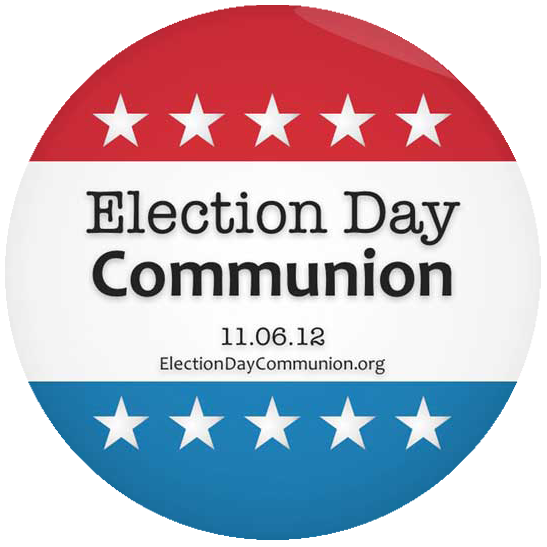
election day communion buttonProbably due to my being in several states of disarray at the time, despite being online a lot, I'd missed out hearing out and participating in Election Day Communion on Election Day Night in 2012, but I'll be looking for one in 2016!
Brian Kaylor's vision and resulting content of Sacramental Politics is important for anyone, but the entire book needs a thorough, tight, no-holds-barred editing. Many paragraphs are long and unclear, and Sacramental Politics probably wins the prize for total number of parenthetical remarks and observations. Most of those could be eliminated and their content expressed in other ways. Many probably aren't even necessary! I noticed several misspellings that an editor probably would have caught and changed, and it's Agnus Dei – not Angus Dei – something autocorrect most likely didn't know. Also, despite the literary convention of sometimes using a noun as an adjective and that I like a lot, "Episcopalian" is the noun, "episcopal" the descriptive adjective. It may feel like another minor quibble, but it would be good if Kaylor would indicate United Methodist if that's the church body he's referring to, and in a similar way ELCA/ Evangelical Lutheran Church in America or PC(USA) Presbyterian Church USA if those are his referents. Because there also are more conservative – rather than progressive mainline – denominations with the names "methodist, lutheran, and presbyterian," it's important to specify which. Also, I found almost every one of the quotes from other documents or sources extremely interesting, so why not format them in the same easily-readable type size as the rest of the text, yet still indent it in blockquote style?

If the author edits and updates this book, it would be wise for him to run the content past people actively involved in each Christian tradition. For example, some Lutherans and other protestants offer an option for the private, individual confession that Roman Catholics nowadays call the sacrament of reconciliation, but like most other protestants, Lutherans claim only two actual sacraments: baptism and holy communion—confession and Absolution/Penance lacks a physical, sensible, earthly "sign." Although Latter-day Saints often refer to their main weekly worship service that features the bread and cup of Holy Communion as "Sacrament Meeting," they use the terminology of ordinance rather than sacrament, so no, the LDS church does not have only one sacrament, but quite a few ordinances. The first church of my involvement was American Baptist-USA, but I'm not acquainted with current liberal baptist practices and even if I were involved in a community of baptists, with their truly local polity my experience might be far different from most others. Martin Luther's Two Kingdoms theology confuses even those from a solid confessional Lutheran background, but briefly, none of the Reformers could imagine any aspect of life being outside God's divine sovereignty.

If any congregations, pastors, judicatories or even lone solitary individuals would dare, they need to read and consider this book! Because Sacramental Politics focuses almost exclusively on the USA, they'll discover God never has been a Democrat of any era or any variety, a Republican from any place or space, a Libertarian, a Communist or a member of the Green party, or even a declared Independent. But you know, God still is passionately political!

The book includes scores of useful references and an index.

my amazon review: interesting, uneven, and thought-provoking—also essential, if you dare!

Monday, December 17, 2007

posada sin fronteras...

...14th annual

el otro lado del otro lado || the other side of the other side

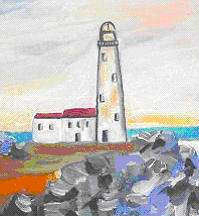
This is a slice of Gloria Caballero's painting of the Tijuana Lighthouse; although unlit, its brightness and elevation formed a beckoning beacon Tijuana lighthouseSaturday afternoon from 3:30 until dark when a couple hundred of us gathered on each side of the international border at Border Field State Park in Chula Vista – "Lovely View" – where Alta California and Baja California meet each other. We sang and prayed; we heard words of hope, hospitality and freedom. Getting there took some effort this year because everyone had to park over a mile away and trek through the sand. When we tried walking through loose sand our footing was unsteady and difficult, but closer to the shore the ocean water packed the sand, making it firm enough to walk in relatively comfortable safety. Nice metaphor that reminded me "On Christ the solid rock I stand; all other ground is sinking sand."

Before sun country living became my design blog, the first 24 posts were random, sometimes unworked-through ideas, including some from my commonplace books. Related to this topic of borders, this post quoted from an old series of AT&T (print and television both, I believe); here's what I blogged:
  • At least talk to each other!
  • Divisions evolve from the barriers we construct
  • Evol/Love (in addition to the print ad, I saw this one in a video at the Museum of Science and Industry in Chicago)
  • Meet somebody halfway
  • Out of a sense of self, a sense of the other
  • Reach out for someone
  • Understanding begins with communication
  • There's something you can do about it ... meet somebody halfway ... to communicate is the beginning of understanding!
...did someone say "speech is the language of covenant?" I read that somewhere and I completely agree!
the descriptive intro ¶ in the posada bulletin explains
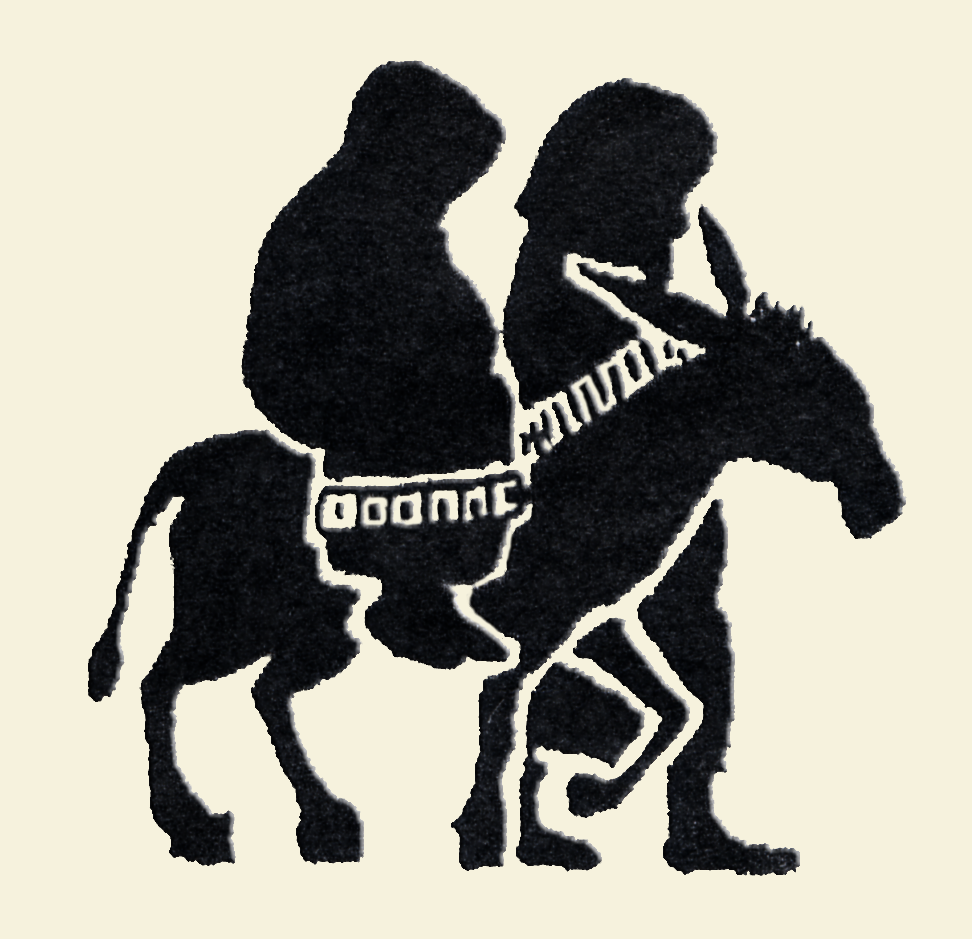
All the world's great religions recognize hospitality for the stranger as a sign of mature faith. La Posada is a reenactment of the Bible story of Mary and Joseph who, while sojourners in Bethlehem, were forced to seek shelter on the night of Jesus' birth. It is a venerated Christmas tradition across the Americas. BTW, this drawing of a couple and their donkey is a scan of the event bulletin cover; I don't know the artist.
posada family This resonates immensely with our Advent discussions about God from the exceedingly other side (heaven) coming to this side (earth) in order to make a home among the people—un hogar entre humanidad! God's makes shekinah, tabernacles, pitches a tent in order to journey alongside creation; in Jesus, God makes a posada sin fronteras, a boundless dwelling! "Posada" implies more of a fixed and reliable stopover place than it does a portable carry-on-your-back tent, but as image and reality of God's essential call to hospitality, the posada concept works as well as the tent.
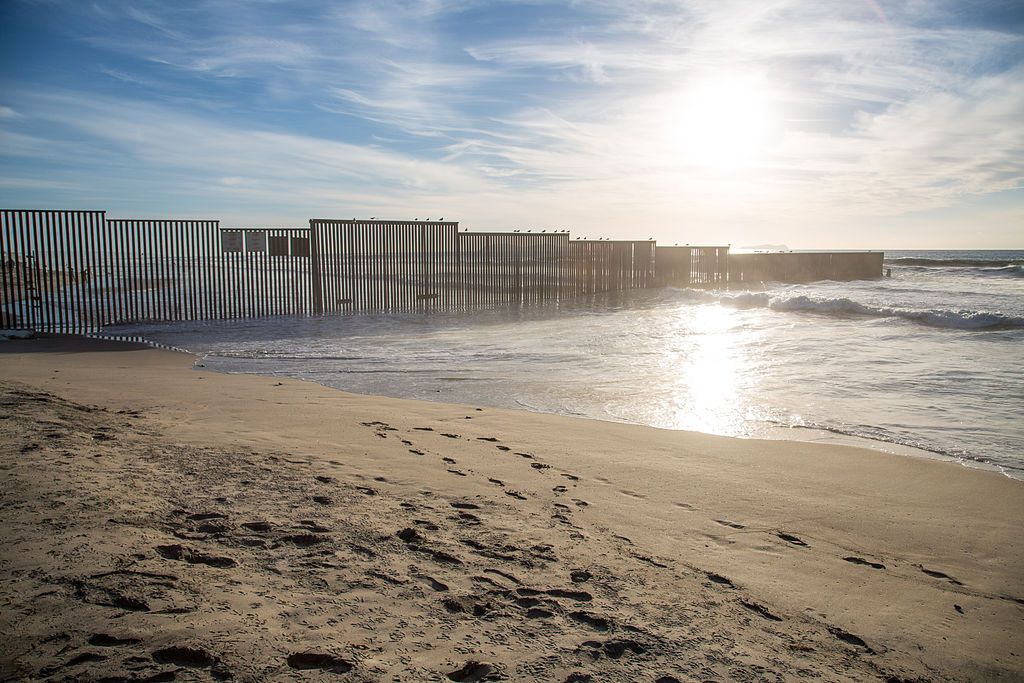
Along with the contemporary Mexican church we celebrated hospitality with a party to welcome the Holy Family, and akin to practice of the ancient church, we also mourned those who have died crossing the border, responding "presente" to the reading of each name: present to God, finally at home. border fence This years theme was Families without Borders; Mexican sponsors included Casa del Migrante, Comision Nacional del los Derechos Humanos and Arquidiocesis de Tijuana/Pastoral de la Movilidad Humana. American Friends Service Committee, Ecumenical Council of San Diego and Interfaith Coalition for Immigrant Rights were among the many posada sponsors on this side of the border; happily, the sponsors list is too long reasonably to include in this type of blog. Note that the border fence extends out into the Pacific surf...

When I blogged about Miroslav Volf's Exclusion and Embrace: A Theological Exploration of Identity, Otherness, and Reconciliation, I quoted from the author:
“...baptism into Christ creates a people as the differentiated body of Christ…[which] lives as a complex interplay of differentiated bodies—Jewish and gentile, female and male, slave and free—of those who have partaken of Christ’s self-sacrifice. The Pauline move is not from the particularity of the body to the universality of the spirit, but from separated bodies to the community of interrelated bodies—the one body in the Spirit with many discrete members." –page 48
As singulars or as plurals, whether we stand face-to-face or shoulder-to-shoulder, inevitably and invariably we are on each others' other sides. I do not and cannot know myself other than vis-à-vis another. When you are not there I am familia sin fronteras braceletwithout a mirror, have no reference and cannot define or describe myself. How many people have said, "Don't listen to other people"? I have no choice but to listen, because God formed me for community, has called me into communities of humans, of creation and of the Church, charging me to live as other to my other. 'Nuff said!

Because Families Without Borders – Familia Sin Fronteras – is this year's emphasis, each of us on this side received a familia sin fronteras bracelet to wear. When will difference and differentness be celebrated and welcomed? When will all of us become and live as safe posadas where our others can find a dwelling place and sacred space? If we hear the Spirit's call and trust the Spirit's provision, that parousaic time soon will be this eternal now. Amen? Amen!