Showing posts with label epistles. Show all posts

Thursday, August 06, 2026

Five Minute Friday :: Shift

1 John 3:17
If anyone has the world's goods
and sees his brother in need
yet closes his heart against him
how does God's love abide in him?
1 john 3:17

• Five Minute Friday :: Shift Linkup

My first impulse was shifting from one musical mode or key to another, shifting gears in a vehicle (did you know I loathe, despise, and abhor automatic transmissions?), changing styles, switching activities, changing your mind about something, an attitude shift. Then I read Kate's blog about work shifts! Of course! Although unlike her son, I've never worked third shift, in a past life I knew someone (RIP) who had. He explained a special kind of person loves third shift, often for all their lives.

To continue the employment topic, I can tell you working second shift isn't nearly as bad as I'd imagined. Without a doubt it's partly my gratitude for a job, almost any job, and for the most part I like the job. My fave work schedule is odd irregular days, preferably with a couple of split shifts during the week (unusual, I know). If work needs to be Monday through Friday days, 7 to 3 fits best, though in real life I've worked those hours only two separate summers.

When I was a lot younger I worked five jobs seven days a week and loved it; I'd like to figure out something like that again. Because some of those jobs had fluid hours, I averaged 35 to 40 hours each week, almost never more than 45. That was so good because I had large chunks of time off most days.

Having said that, shifting from one job to another might be on the horizon for some of us. What does a major shift like that entail?

My header art asks how God's love can abide in someone who doesn't love their sister or brother? God's love wants to abide, to make a home – an abode – in us.

We have passed out of death to life because we love the brothers and sisters. Whoever does not love abides in death. 1 John 3:14

The Greek means to pass over, to change, to depart, to move. Death to life is a very big shift!
# # #
life stuff
Sylvia
five minute friday switch
five minute friday logo

Thursday, April 24, 2025

Five Minute Friday :: Might

1 Thessalonians 1:5
The gospel came to you not in word only,
but also in power and in the Holy Spirit and with conviction.
I Thessalonians 1:5

• Five Minute Friday :: Might Linkup

Then he answered and spake unto me, saying,
"This is the word of the Lord unto Zerubbabel, saying,
'Not by might, nor by power, but by my spirit,
saith the Lord of hosts.'" Zechariah 4:6

Zerubbabel was supposed to oversee finishing rebuilding the Jerusalem Temple, but construction had slowed down and run into a glitch, as we might say. This passage reassures him that [human] resources aren't sufficient to accomplish God's work, or even to get anything done properly and completely. Cooperation and partnership between earth and heaven gets it finished, finished well, and – maybe most important – on God's timeline, not ours.

Our human power and might and effort and related gifts aren't wrong at all. After all, they are "gifts" or givens from God, and they're necessary for the ministries God calls us to. Our work in this world always partners with God's Spirit at the behest of God's call. Do you remember when Moses dialogued with God regarding "Moses, your people" or "God, your people," because it's always both/and?

Glitches in our lives happen because too often we humans try to do too much under our own steam, looking at our own clocks and calendars, too often not acknowledging the Spirit. Maybe we don't want to bother God with those smaller concerns when so much of civilization and creation needs so much healing, repair, and rebuilding?

Late December 2023 I determined to take a six month half year gap time, but as days went by and I assessed my situation, I realized a gap year made more sense. Now the chronology has spilled over a few more months into 2025, but signs and circumstances have made it clear it's finally time to move on. On God's timeline, not mine. And I anticipate more delays, possibly a roadblock or a few.

"Trust the process" has become such a cliché because that's how life works. Immerse yourself in the journey, savor each hour and each day. Ya know what? That's how humans learn and grow, how ideas develop, how dreams and visions become real. That's the way God engages us and gets things done. Not by human might, humanity's power, but by the Spirit that created the world, the Spirit that redeemed creation, the Spirit that calls us into a new creation.

Anyone who has despised the day of small beginnings
will rejoice to see the plumbline of the Lord's house
in Zerubbabel's hand. Zechariah 4:10a

Can you imagine teaching and preaching God's word without guidance from the HS? Can you imagine spreading the gospel, being the good news of God with us, God among us, without trusting in and waiting for promptings and instructions from the HS? The same holds true for every aspect of every moment of our lives. Think about it!

The gospel came to you not in word only,
but also in power and in the Holy Spirit and with conviction.
I Thessalonians 1:5
# # #
five minute friday might
five minute friday button logo icon

Thursday, May 11, 2023

Sermon on 07 May

bright flowers bouquet
On the Fifth Sunday of Easter I guest preached again. They follow the Narrative Lectionary that follows the autumn through spring academic year and gives the formal lectionary a summertime vacation. This is Matthew's year in both NL and RCL, thus my references to Matthew. They plan to study more of Jesus' Sermon on the Mount during the summer.

Instead of interpreting for the current context, I decided to introduce Romans; enthusiastic feedback confirmed that was the best decision. As before, this is more notes than it is actual preached words (because I still use notes when I need a prompt).


• Romans 1:1-17

• Grace to you and peace from Jesus Christ, firstborn from the dead and the first fruits of the new creation. Amen!

Today we're celebrating live and we're celebrating virtual on Easter five! Easter isn't only a single glorious celebration, it's a fifty-day long season that occupies about one-seventh of the year. Today is the fifth Sunday of Easter, day 29.

We've been studying Matthew's gospel, but today we start several weeks in the letter or epistle to the church at Rome. These weeks will increase our understanding of Matthew when we return to the Sermon on the Mount during summer.

Letters or epistles in the NT were sent to various churches, often in a round robin style where content and comments got added before being sent to the next place. Unlike the gospels that mostly reflect on Jesus' life and ministry, epistles tend toward teaching and doctrines that the OT and Jesus' life reveal. The letters then in turn help clarify Jesus' teachings. Technically an epistle is a sent communication.

Paul/Saul of Tarsus wrote his epistles considerably earlier than the gospels were composed. I always need to remind myself these letters were so much earlier than the gospels, yet they also reflect upon and interpret Jesus of Nazareth's ministry. The NT includes seven Paul wrote for sure; a few others bear his name as author, but weren't written by him. Back then they didn't have copyright concerns, and to attribute what you wrote to a famous person was a compliment that also would get you more readers. The NT also contains letters written quite a while later by other authors. Those would include Titus and Timothy (both attributed to Paul), Peter, James…

Letters or epistles tend toward teachings and doctrines derived from God's activity in the world, from the birth, life, death, resurrection and ascension of Jesus Christ that other sections of scripture narrate.

Romans is the latest of Paul's letters. Today I'll talk about only chapter 1 that reveals some about the rest of the book. Romans includes theology of creation, redemption, and sanctification, along with words about the church. Theology about the Triune God! You could say Romans is Saint Paul's systematic theology. Systematics is the philosophical theology that outlines and structures its topics in logical ways. Among many others, Saint Augustine, John Calvin, and Karl Barth all wrote famous systematic theologies.

Although Romans' literary format is not a gospel, Paul uses the word gospel. Gospel means good news. Maybe you've seen the stage play musical, film, or TV show Godspell? That's gospel in Old English. In the Roman imperial context, gospel already was a known concept. They referred to the birth of the future emperor a gospel. Gospel most frequently described the returning conquering general's announcement of annihilating his enemies. Just as Christianity subverts, turns upside down, and redefines many existing concepts and practices, the Christian gospel is the Good News of God's redemption in Jesus Christ. Not only is it life rather than death; the gospel of Jesus Christ is the annihilation of death and the reign of life.

As Christians we usually say the Gospel of Jesus Christ, yet Paul refers to the gospel of God, so this isn't something new. The good news for creation of redemption and renewal is the way God always has acted. In verse 16 Paul says the gospel is "God's saving power." Because of this, we can follow many gospeled threads through the Hebrew scriptures.

Reading the New Testament, we find different nuances and emphases of Gospel. For Paul in particular the gospel is death and resurrection. The word evangelical is gospel in Greek! As people baptized into Jesus Christ, we are a gospeled community.

Romans 1:16-17 is huge in the history of the church. These verses were a kind of hinge between the church prior to the Reformation in the 16th century and the church after that. Since Martin Luther's excitedly zeroing in on these verses, church and academy sometimes have said we only need to trust or have faith in God, that the medieval Roman branch of the church was mistaken when it claimed our works or behaviors could reconcile or make us right with God. As we study this letter and when we return to Matthew, it's important to remember that Paul never separates faith or trust from obedience or works (our actions). Neither did Jesus. Neither does any of the Old Testament.

Paul calls himself an apostle, but we know he wasn't one of Jesus' original twelve followers. In scripture an apostle is someone who has seen the risen Christ. You may remember in the book of Acts when they're voting to find a twelfth to join the remaining ones after Judas of Iscariot's betrayal, they insisted it had to be a "witness to the resurrection," someone who had met Jesus crucified, Christ risen face to face: Acts 1:21-26 You've probably read the account of Paul's Conversion (also in Acts, chapter 9) when the risen Christ encounters Paul along the road? That event gave Paul apostolic qualification, just as our encounters with the Risen One make us apostles.

Paul introduces himself as an apostle, yet insists it's about BOTH being disciples or followers who learn from the teaching of the earthly Jesus AND about being apostles or sent people of the risen Christ. We've been in Matthew's gospel, where Matthew's Jesus is the ultimate teacher or rabbi. Jesus wants us, his followers to be the ultimate students or disciples, "taught persons." Disciple or apostle, it's a gift of God's grace.

An epistle is a sent communication; an apostle is a sent person.

We'll soon celebrate the day of Pentecost and the gift of the indwelling Holy Spirit we receive in baptism that enables us to follow Jesus as disciples and apostles.

I hope our study of Romans will broaden, deepen, and enhance our understanding of Jesus' teaching when we return to Matthew's gospel during the summer.

To God Alone Be Glory.

Amen!
Wilshire Blvd Los Angeles near Westwood Blvd

Sunday, September 24, 2017

World Rivers Day

River Celebrations


World Rivers Day logo

The fourth Sunday of every September is World Rivers Day; founder Mark Angelo reminds us, "Rivers are the arteries of our planet; they are lifelines in the truest sense."

In addition, this year the fourth Sunday of September is River Sunday in the liturgical season of creation emphasis. Every year I design a Season of Creation series; here's my River Sunday design for 2017. Will the LA River, currently a.k.a. The World's Largest Storm Drain {flood control channel}, become a "river of the water of life, bright as crystal, flowing through the middle of the city?"

Season of Creation 4A - River

Sunday School


This double riparian party time excited me because I facilitate the {mostly-Revised Common Lectionary} adult SS at the church I attend; this morning I focused on the Philippians pericope, and began with the serendipitous start of the Philippians church. Acts 16 recounts how Paul and Timothy went to Roman colony Philippi in Macedonia, then to the river on the sabbath to find an ad hoc synagogue {if there was no local synagogue, Jews would gather at the river to form a minyan or at least to pray together}, then finding Purveyor of Purple Cloth Lydia by the riverbank, finally the baptism of Lydia and her entire family.
Acts 16

12and from Neapolis to Philippi, which is a leading city of the district of Macedonia and a Roman colony. We remained in this city for some days. 13On the sabbath day we went outside the gate to a riverside, where we supposed there was a place of prayer; and we sat down and spoke to the women who had gathered there. 14A certain woman named Lydia, a worshiper of God, was listening to us; she was from the city of Thyatira and a dealer in purple cloth. The Lord opened her heart to listen eagerly to what was said by Paul. 15When she and her household were baptized, she urged us, saying, "If you have judged me to be faithful to the Lord, come and stay at my home." And she prevailed upon us.

Most major cities originated and grew up alongside a river; waterways are strategic nodes of communication, commerce, immigration, and exchange of ideas. The early church always baptized in the flowing water of a river; a river is a dynamic, open system. How about our walk by faith? A participant at our August Green Faith Team meeting suggested being baptized in the Los Angeles (San Diego, Amstel, Cumberland, Chicago) River, identifying with the city beside the river banks, especially seeking the well-being of that river and that place. Decades ago the US Army Corps of Engineers contained the Los Angeles river in concrete, because as a flashy river it flooded easily and overflowed into neighbor communities. But... how will the Los Angeles River become a river of the water of life?

The second appointed reading for today, Pentecost 16, is from the apostle Paul's "epistle of joy" to that church at Philippi where the Roman caesar was the default divinity. In 1:27 he counsels the Christians to live their public, political lives "in a manner worthy of the gospel" as witnesses to Jesus' death and resurrection—not to Rome's death-dealing imperialism.
Philippians 1:21-30

25...I know that I will remain and continue with all of you for your progress and joy in faith, 26so that I may share abundantly in your boasting in Christ Jesus when I come to you again. 27Only live your life in a manner worthy of the gospel of Christ, so that, whether I come and see you or am absent and hear about you, I will know that you are standing firm in one spirit, striving side by side with one mind for the faith of the gospel, 28and are in no way intimidated by your opponents...

On Sunday mornings we've recently come from studying several passages from Paul's letter to the church at Rome; in chapter 8 he reminds us true children of God lovingly steward creation in ways that authentically reflect their divine origins and birthright:
Romans 8

19For the creation waits with eager longing for the revealing of the children of God; 20for the creation was subjected to futility, not of its own will but by the will of the one who subjected it, in hope 21that the creation itself will be set free from its bondage to decay and will obtain the freedom of the glory of the children of God.

River Walking


Will the Los Angeles River soon become a bright as crystal source of life-giving water for the city? As part of my quest to learn more about its history, to find out ways I fruitfully can live baptized in the city of this river, late Saturday morning I joined a River Nature Walk that started and ended along the LA Riverside at the Friends of the LA River's Frog Spot outreach center in Elysian Valley. A US Forest Service employee introduced the activity; our guide works for the US National Park Service. When will the Los Angeles River become a bright as crystal river of the water of life? The guide told us most of its water already is tertiary potable!

Paul counseled the Philippian church to live out their baptism as public witnesses to Jesus' death and resurrection. How about us? As we frequently observe during our Sunday morning discussions, even the smallest actions add up to big ones; they're synergistic— more than the sum of their individual parts! The early church always baptized in the lively waters of a river; a river is an open, dynamic system. Maybe I wasn't {definitely I was not} baptized in the LA River, but I live here now. It's my river. I acknowledge my baptism as wide open and God's call for me to care for all creation in the dynamism of the Spirit of Pentecost—especially for the natural world that makes its home alongside "my" Los Angeles River.

Frog Spot Frog Spot Tables
Los Angeles River
Los Angeles River
Los Angeles River
Los Angeles River
Frog Spot Riverr Friends of the Los Angeles River

Burnaby, BC is World Rivers Day founder Mark Angelo's hometown; I'll conclude with a Burnaby WRD design.

World Rivers Day Burnaby BC

PS city paradise :: urban wilderness is my blog for notes from classes I've participated in and facilitated.

Wednesday, August 02, 2017

Porch Stories :: 15 years

On this week's virtual Porch Stories and in their actual lives, Kristin and Greg Taylor celebrate 15 years of marriage—you can read about their very mature anniversary plans for an awesome reflection of Kristin's "Seeking God as the Author of Every Story" blog description!

desert spirit's fire porch stories – 15 years: mercy roads

desert spirit's fire @ 15: Mercy Roads


Most years I write a blogoversary post; officially and formally desert spirit's fire debuted on the middle day of July – the 16th – but it feels providential that I didn't post closer to that day, because 2017 marks this blog's 15th year, making it the perfect subject for my own Porch Story today.

Fifteen years ago I'd very recently finished a year-long certificate in Community Economic Development. After too many rough, tough, disappointing years, when I excitedly began the CED program I believed it would help me re-enter a life of meaningful service to the city and to society. Two months after graduation, I still held that conviction. In the decade plus since then, Planet Earth's itinerary has included a national and global economic downturn that's affected all individuals and entities other than the ultra-rich and super-wealthy. Along with financial struggles, I'm still (yes, "still") trying to grieve other losses and situations that turned out very other than I'd minimally anticipated.

And there I will meet with you, and I will speak with you from above the mercy seat... Exodus 25:22a

Martin Luther tells us the cross of Calvary is God's Mercy Seat or Gnadenstuhl— God's Throne of Grace and Mercy where God meets us where we are, how we are, rains boundless mercies and offers resurrection hope.

A Porch Story tends to be the type of testimony of God's faithfulness we'd recount sitting on a porch with a friend or enjoying lunch in a kitchen or at a café. In other words, most porch stories are about the little incidents and mini-moments that remind us of God's presence, that fuel and fill us so we can keep talking the talk, walking the walk.

You know how the Apostle Paul frequently lists the many disasters, shipwrecks, and other calamitous adversities he'd experienced? At least once, maybe twice in this blog I've mentioned in passing I've been through a few "Pauline-style" catastrophes, too! {Maybe especially as a woman and} in the interest of keeping on keeping on, I've done my best to sail through and hardly mention them at all to anyone.

Let's turn that around?! Truthfully – yes, really – over the course of these fifteen years, along city streets, suburban byways, urban freeways and a few country roads, other wayfarers have offered me grace-filled surprises of welcome, hospitality, and participation. Other pilgrims have put aside their druthers to rain solace, mercy, friendship, love, and inclusion on me. Is looking to the neighbor's needs rather than insisting on our own not the way of the cross? Has that not been God's call to God's people for all times and in all places? Last fall when we had several lectionary readings from Jeremiah and Deuteronomy, I talked with my adult Sunday School class about neighborology—the word about the neighbor—that's central to Torah. Neighborology that encountered us right where we lived when the guy asked Jesus, "And who is my neighbor" with Jesus' reply, "A guy was going down to Jericho..."

Who has been a neighbor to you? How have you been a neighbor? Who has shown God's mercy to you? To whom have you offered grace? What are a few of your mini-moment porch stories that fuel you along the way, fill others as they journey, to keep talking the talk and walking the walk?

porch stories button

Wednesday, March 15, 2017

Porch Stories: Initiate Peace

Initiate Peace

Kristin Hill Taylor's weekly Wednesday linkup has changed from Three Word Wednesday into Porch Stories! Today she wisely writes about God's call to Initiate Peace. Kristin's inspiration?
Lisa-Jo Baker wrote about "shalom" in her coming-soon book Never Unfriended: The Secret to Finding and Keeping Lasting Friendships. This book is even better than I expected and I'm excited to share more of it with you.

But today I want to tell you about what she said about shalom, which is more than the absence of conflict. It's interactive – and it's in the Bible more than 200 times. So let's grab initiative and let's bring peace to whoever is near.

As Kristin explained, the Hebrew word and concept "shalom" extends far beyond absence of war or conflict; shalom intrinsically belongs to God's manner of living together in community, whether that "common unity" is nuclear-extended family, a particular group that gathers around Word and Sacrament as a local expression of God's called-out assembly—ecclesia; a school of any educational level dedicated to providing the best for students and teachers, a neighborhood within a city striving not to neglect anyone's needs, aiming to provide that shalom-filled "enough" food, shelter, hope, and friendship to all comers of all ages and stages. It's true when the apostle Paul and his successors open their letters with "Grace and Peace" their word for peace is the Greek eirene that gives us "irenic" in English, but with Saul/Paul's Hebrew background his offer of the peace of Jesus Christ had to be fullness of care-filled community where no one lacked, not one had more than they needed. Paul, etc. did not refer to no-apparent-conflict or to the not-Roman, not-peace-filled Pax Romana.

Shalom's about our sensing and responding to promptings of the Spirit of Peace and doing what we can to initiate peace wherever we are, and as usual, rather than imagining God sending us to venues far away, we need to ask, "what would Jesus do?" Because in this here and this now, in the Spirit of LIfe Jesus calls us to be his voice, his hands and feet, his presence amidst whatever's surging and storming around us. Or quietly nudging. Remember, Kristin reminds us shalom is interactive. It happens when we listen to each other. When we do whatever we can do attend to the needs of a friend, a neighbor, a stranger who soon may become our neighbor or even our close friend. So simple, really. Don't quench the Spirit. Don't try to block out or explain away God's moment to moment promptings.

For this year 2017 that marks the 500th anniversary of the formal beginning of the continental European Protestant Reformation, we've seen a renewed appreciation of Martin Luther's emphasis on God's various callings to each of us; for the Reformers, every task and occupation was a calling - vocation – from God and worthy of our very best. Most of us have some sense of God's calling, preparing, and enabling us to do a particular occupation; if we're active at church, at any one time most of us have at least one calling to serve our church community in a particular way, whether our ecclesiastical leader discerned it for us at this time, the congregation elected us, or less formally, we simply offered and they accepted our offer. Long-term interim pastor at church in Previous City exclaimed, "We're not volunteers! We're called!"

Initiating peace indeed can be part of our larger callings as parent, teacher, attorney, church treasurer, or choir director. But God also makes initiating peace an ongoing mini-calling for every one. "It's interactive and...about whoever is near," Kristin insists. So that means not suppressing the voice or the needs of the other to create an appearance of no overt conflict. It means being Jesus' listening, healing, discerning presence. Last fall in the adult Sunday School class I facilitate we talked a lot about neighborology, "the word about the neighbor and our neighbor's claims on us." That would include initiating shalom whenever possible. Can you do it? Can I do it? In the power and presence of the Spirit of Shalom, we can initiate peace together!

Amen? Amen!

shalom

porch stories button

Monday, October 24, 2016

#Write31Days: 24 • global

write 31 days 2016
Monday 24 October: global

My global illustration came from my digitized analog graphic of Romans 12:2 – Do not be conformed to this world, but be transformed by the renewal of your mind...

Despite each of the four canonical gospels being written to different audience and thus from different perspective, despite the NT epistles being addressed to different assemblies and therefore custom-fitted for the original recipients, then later often redacted for other local churches as the physical letters made rounds, Saul/Paul of Tarsus and all Jesus of Nazareth's followers knew the good news of the gospel belonged to everyone everywhere. But two centuries ago the oikoumene [compare "ecumenical"], the whole, known (by Rome, Greece, their neighbors), inhabited world was tiny compared to our 21st century knowledge that we think probably has become genuine knowledge of most people and places that inhabit the globe of planet earth. Wouldn't you love to be surprised and find out otherwise?

Thursday, June 02, 2016

Five Minute Friday: Haven

Five Minute Friday host Kate's word for today is haven.

morning train

FMF: haven

"take 5" – minutes, that is.

A haven is a place of respite, of safety, of homecoming—a slice of heaven on earth. A few weeks ago in the adult SS class I lead we talked about God as a home-maker. I mentioned you don't buy or rent a home; you buy or rent a house or an apartment, and then you move in and create a home. Last Sunday I described the church at Galatia as the first ethnic church—ethnicity not in terns of Jews /gentiles as scripture typically uses the word ethnos for non-Jews, but in consideration of geographical and cultural differences. I suggested we can't require people to become like us to become members of the church; however they are, God calls us to the hospitality of welcoming everyone so that the church becomes heaven on earth, a haven for all comers. For next Sunday we'll discuss the Ephesians text that tells us in Christ we become members of the household of God. God the home-maker! Shelter, welcome, embrace, and safety sound pretty much like a heavenly haven to me. How about to you?


Header painting is my interpretation of a song from the American south. Words speak for themselves and also include:
Sister Mary wore three links of chain
On each link was my Jesus' name
All my sins been taken away, taken away
I'm on my way to the freedom land

five minute friday expect five minute friday button

Friday, May 06, 2016

three word wednesday: Choosing JOY!

Time's a-wasting to officially be part of this week's Three Word Wednesday, so I'm ready to write to Kristin's Choose JOY! To help celebrate her birthday, this week Kristin chose to Choose 37 Joys. I won't count that high; instead I've chosen a more manageable four because of four elements, four directions, and because "People will come from the east, and the west, the north, and the south, and feast at the banquet in the kingdom of God." Luke 13:29

Rejoice!

1. My header image illustrates one of my main joys—design, drawing, illustration, art... It's from a very varied 1 Peter – 2 Peter series I did, with no attempt for any consistency in style, size, media, or any design aspect.

2. I love teaching! Art, music, design, theology, so my Sunday mornings are super-joy-filled. Besides the Word and Sacrament hour that always sustains me for the week, I teach the adult SS class.

3. Summer. Always summer? Almost always. For close to a dozen years instead of not wanting summer to end I couldn't wait for autumn to begin, but recently my attitude of estival joy's returned in full.

4. All Creation! Nature, Wildlife, Gardens, Beaches, Cities—the natural, tended, built, and fabricated environments where we live and work and play. These are arenas of God's presence and grace that God calls us to care for and steward.

three word wednesday button

Wednesday, October 07, 2015

07 October: Love

31 days of free writes oct 07, love

Day 7 of Kate Motaung's October 2015 edition of 31 days of free writes. Write for five minutes. Don't edit.

Wednesday 07 October: Love

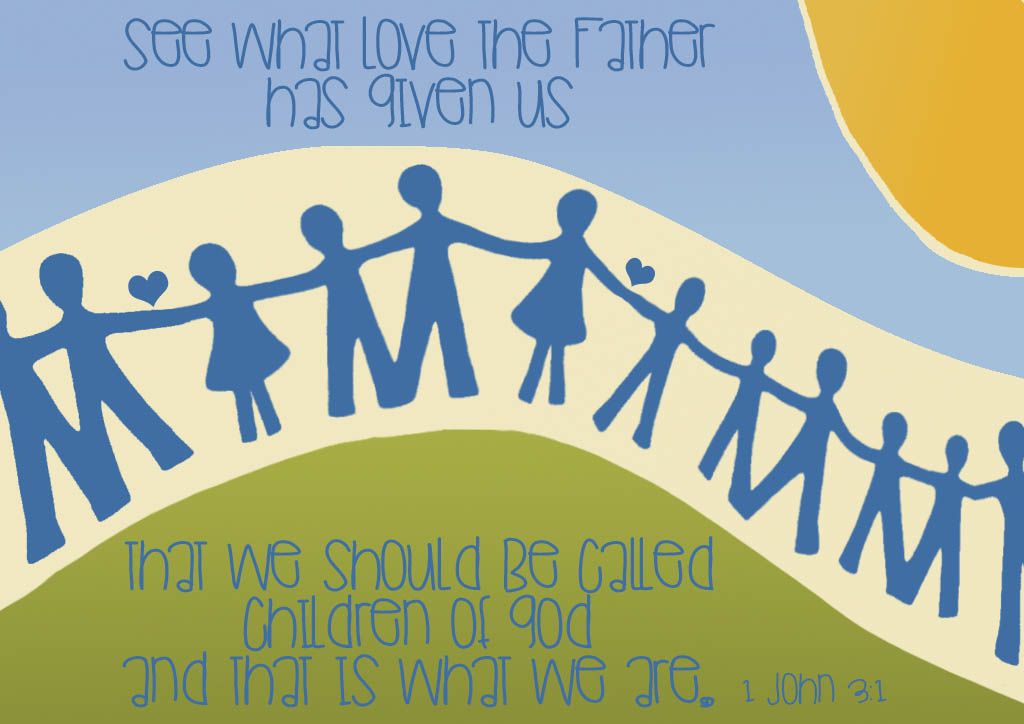
see what love the father
RCL year B, Easter 3, 1 John 3:1 – "See what love the Father has given us, that we should be called children of God and that is what we are."

Long ago, C.S. Lewis wrote a book about Love. Scripture brings us four distinctive, yet sometimes overlapping categories of love: storge, eros, philios, and agape. In fact, those categories were not Christian originals but derived from the Greek culture that surrounded the early church. In any case, this still is a free write about love for only five minutes, so instead of attempting to describe each type, I'll reflect on love in general.


I wrote the first paragraph earlier today, and after trying three or four times to write for an additional four minutes it was a total no go, so my post this time mainly is my own illustration of 1 John 3:1.

Not sure I can continue 5 minutes every single day, but I'll try some of the prompts. I asked myself what I would do if this were client design, and I know I'd push through to the end no matter how tired I was, how non-creative I was feeling (and being), how late the hours were. I can't always apply that reasoning to my own stuff, esp when I'm so exhausted and there's nothing essential about a project.

October 2015 31 days of free writes

Friday, September 11, 2015

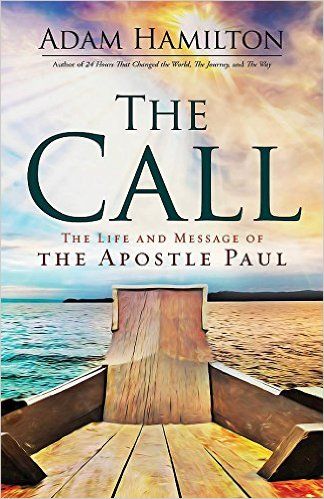
Adam Hamilton: The Call

The Call: The Life and Message of the Apostle Paul by Adam Hamilton on Amazon

the call book coverI always enjoy Pastor Hamilton's practical scholarship and his attention to contextualizing scripture into our own life and mission! The Call rollicks and frolics along with the energy and excitement of the NT book of Acts, and that's fitting, since a lot of the information we have about Saul (Jewish name) / Paul (Roman name) of Tarsus comes from the narrative in Luke's Acts.

Pastor Adam knows the texts extremely well; he's also getting to know the terrain and layout of the biblical Holy Land. As we journey with Paul and his companions, Hamilton observes what was going on in politics, in Jewish circles, in Christian hangouts, "among the" Greek and Roman gods and culture back at that time and suggests real-life present day applications for each of us in our churches and in the surrounding communities. The book places Paul's life, ministry, and letters in the times and places when and where he grew up, learned, taught, talked, and walked; this New Covenant of grace is not entirely different from the Old one, but it's about Trusting Jesus rather than Trusting Torah.

In the Protestant world in which many of us live (and move, and have our being), Paul is our most prominent theologian; we think we know him mostly for his Christology (on pages 72-74 we get a very shorthand version of the saving person and work of Jesus the Christ), yet in The Call Hamilton reminds us it is the work and reign of the Pentecostal Spirit of Life that inspired and enabled Paul /Saul; the Spirit of Life that raised Jesus from the dead in turn brings us to living faith in Jesus. As Martin Luther famously said in his Small Catechism: "I cannot by my own effort or understanding know Jesus my Lord or come to him, but the Holy Ghost has called me by the Gospel, enlightened me with his gifts, sanctified and kept me in the true faith, just as the HS calls, gathers, enlightens and sanctifies the whole Church..." In his Acts of the Apostles the gospel-writer Luke brings us most of what we know about the chronology and events in Paul's life; in fact, the Spirit is prominent throughout Luke and Acts. (Pneumatology is the branch of theology that emphasizes the person and work of the HS.)

The six chapters of The Call describe God's call to the Apostle Paul along with a parallel call to each of us: 1.to Follow Christ; 2.to Go; 3.to Suffer; 4.to Love; 5.to Give, and 6.to be Faithful. Adam Hamilton includes a few anecdotes and incidents from his own life, mostly in ways that encourage us to discover similarities in our own. The hardbound book is a comfortable size to hold and heft, printed in easily readable type, and includes B&W maps and photographs. However, I seriously wish the book had been edited to omit and change at least most – if not all – of the too many sentences written in the passive voice.

Hamilton believes Galatians is Paul's earliest undisputed epistle ... time for me to check that out.

my amazon review: Paul and Jesus; Paul and the Church

Tuesday, April 21, 2015

april synchroblog: stewardship trilogy

Bearing Fruit is this year's April Synchroblog topic! Is it not incredibly comforting, reassuring and freeing that we discover bearing fruit in the scriptural context of Jesus' vine and branches discourse?! I believe it is! Bearing fruit is an especially fitting theme for Earth Day; although April 22 (tomorrow, Wednesday this year) is the official, formal Earth Day date, many individuals, organizations, cities, counties, and towns celebrate with festivities on the nearest weekend. My synchroblog contribution is a trio of stewardship designs I created a while back, and re-imagined for this event.

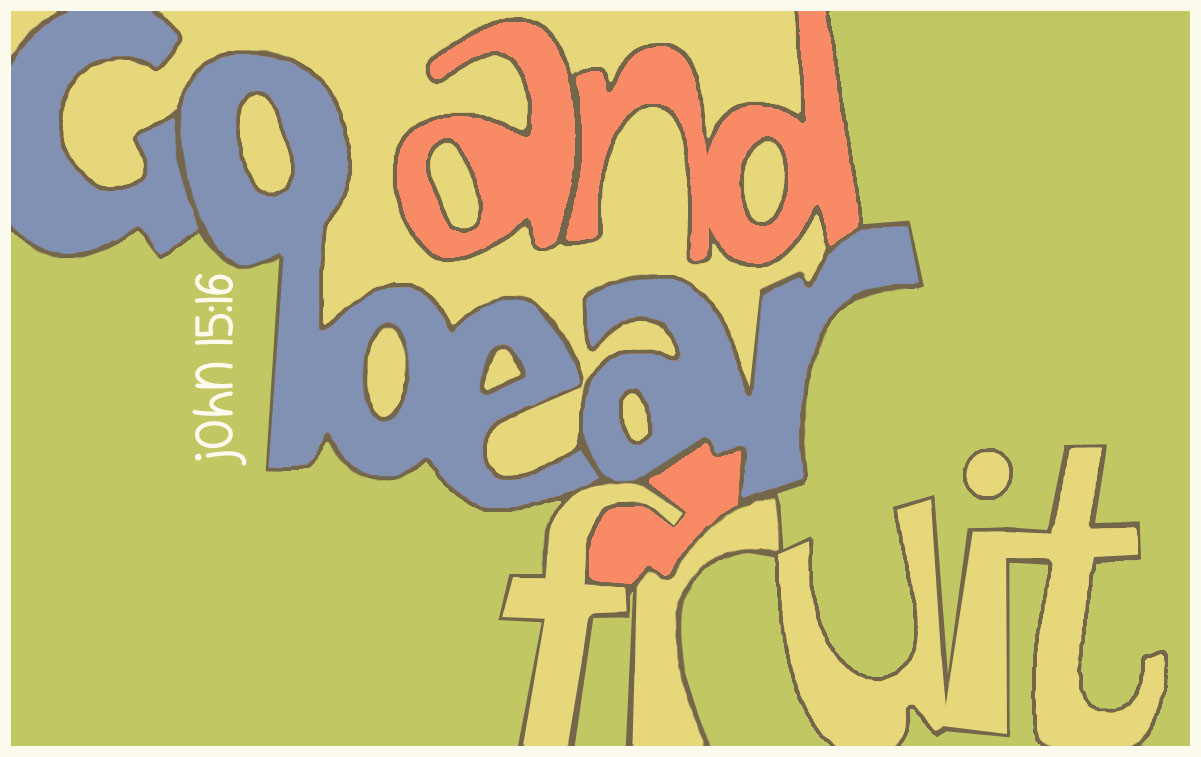
Go and Bear Fruit—John 15:16

16You did not choose me, but I chose you and appointed you that you might go and bear fruit, and that your fruit would remain, that whatever you ask the Father in my name he may give you. 17These things I command you, that you love one another. John 15

go and bear fruit

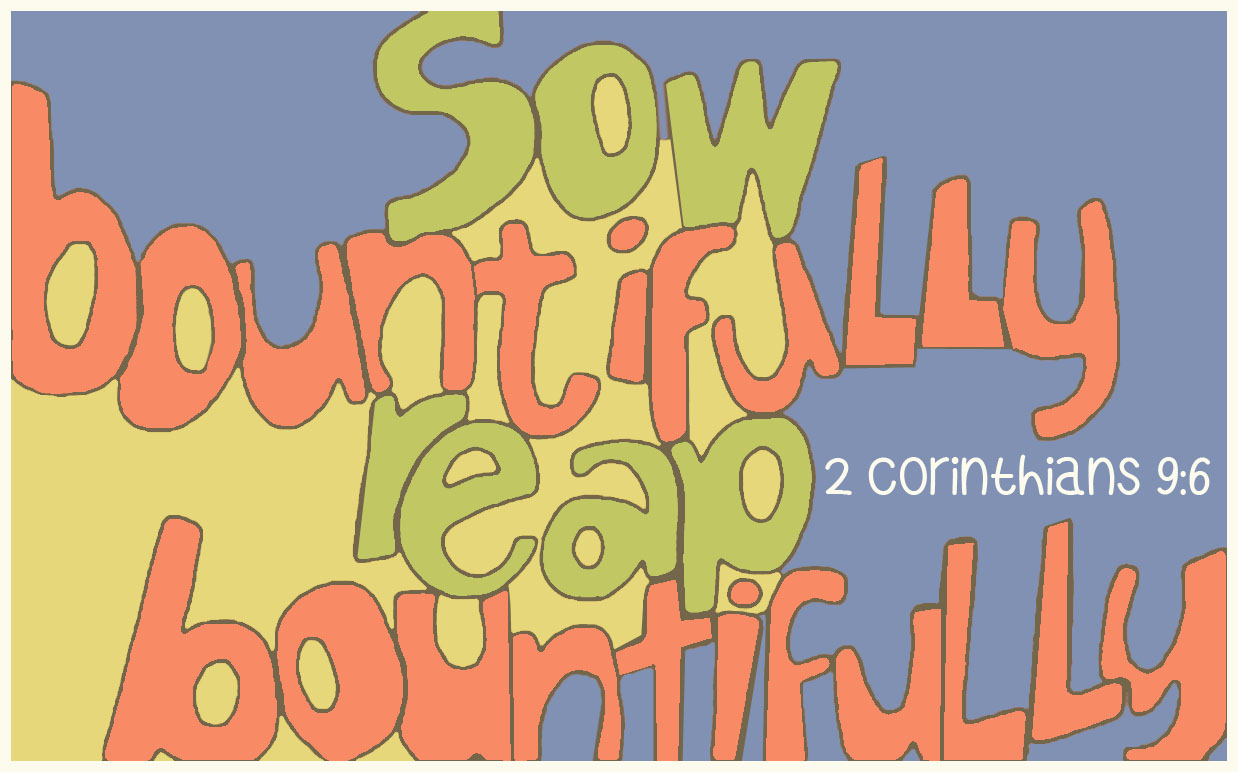
Sow Bountifully; Reap Bountifully—2 Corinthians 9:6

6But this I say: He who sows sparingly will also reap sparingly, and he who sows bountifully will also reap bountifully. 7So let each one give as he purposes in his heart, not grudgingly or of necessity; for God loves a cheerful giver. 8And God is able to make all grace abound toward you, that you, always having all sufficiency in all things, may have an abundance for every good work. 9As it is written:
“He has dispersed abroad,
He has given to the poor;
His righteousness endures forever.” Psalm 112:9
10Now may he who supplies seed to the sower, and bread for food, supply and multiply the seed you have sown and increase the fruits of your righteousness, 11while you are enriched in everything for all liberality, which causes thanksgiving through us to God. 2 Corinthians 9

sow bountifully, reap bountifully

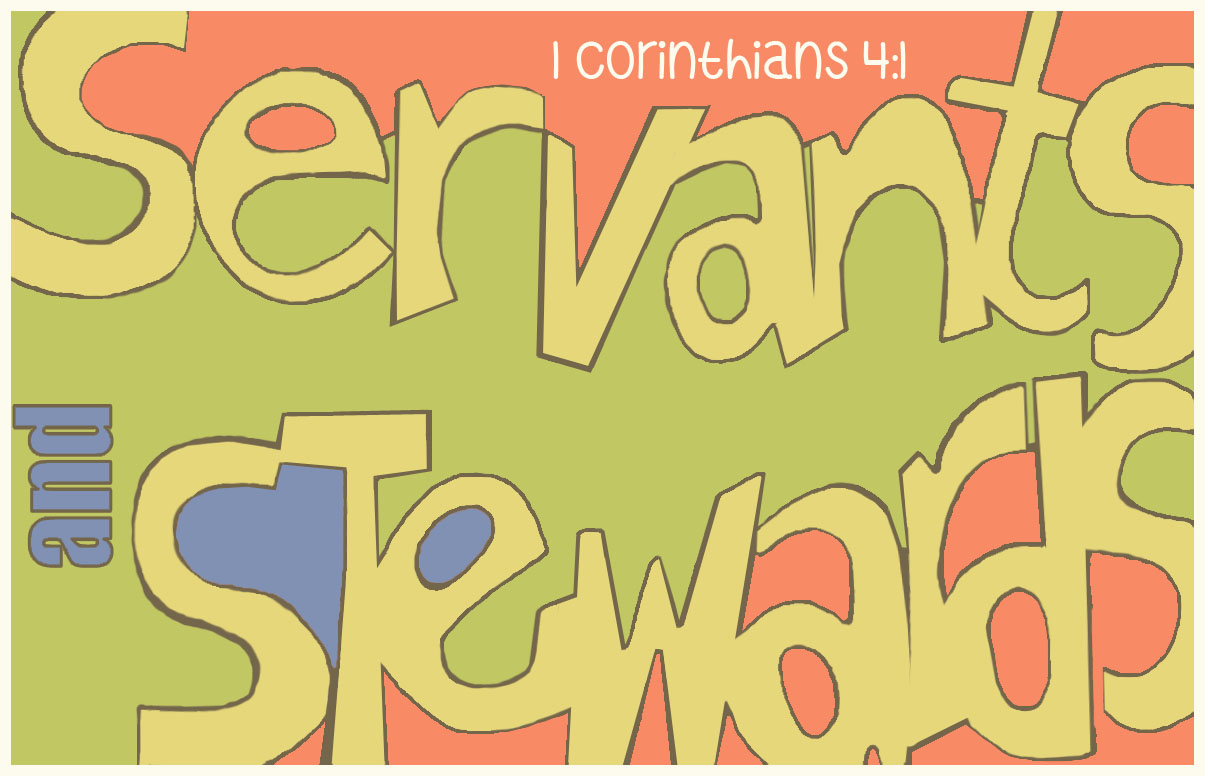
Servants and Stewards—1 Corinthians 4:1

1Consider us in this way, as servants of Christ and stewards of the mysteries of God. 1 Corinthians 4

servants and stewards

Other April Synchroblog Participants:


Tuesday, February 24, 2015

synchroblog – renewal!

February's synchroblog topic is Renewal.

For this February during Lent, here's my interpretation of Romans 12:2—Do not be conformed to this world, but be transformed by the renewing of your mind. World in this passage is "eon" rather than "cosmos." Peace, joy, and renewal to all!

Romans 12:2


This month's suggestions would make several more good blog topics for this season of Lent; here they are to remind myself:
Write something informative, tell a story, share a poem or piece of art, reveal a desire or dream, ask a question, explore something from scripture, tell us what renews you, review a book, incorporate the season of Lent in your post, as Lent is often referred to as a time of renewal, get personal and write about your own need for renewal ... the theme is wide open.


Other February synchroblog participants:

Abbie Waters – It is Well with My Soul

Done With Religion – Renewal

Mark Votova – 30 Ways the Church Can Find Renewal

Jeremy Myers – I am Dying … (So I Can Live Again)

Phil Lancaster – The Parable of the Classic Car

Susan Schiller – Renewal by Design

Glenn Hager – Repurposed

Wesley Rostoll – Why I no longer pray for revival

Clara Ogwuazor-Mbamalu – Renewal of the Spirit

K. W. Leslie – Those who wait on the Lord

Lisa Brown – Momma’s Kick Off Your Shoes and Stay For A While!

Jenom Makama – …Like An Antivirus

Leah – Renewal!

Peggy – Abi and the February 2015 Synchroblog – Renewal

Loveday Anyim Snr – Stop Right here and Renew Your Mind!

Saturday, December 13, 2014

advent 3: gaudete

Advent 3 – Gaudete

Advent 3

Rejoice in the Lord always–
again I will say, Rejoice!
Let your gentleness be known to everyone.
The Lord is at hand!
Philippians 4:4-5

Canticle of the Turning

by Rory Cooney

1. My soul cries out with a joyful shout that the God of my heart is great,
And my spirit sings of the wondrous things that you bring to the ones who wait.
You fixed your sight on your servant's plight, and my weakness you did not spurn,
So from east to west shall my name be blest.
Could the world be about to turn?

Refrain
My heart shall sing of the day you bring.
Let the fires of your justice burn.
Wipe away all tears, for the dawn draws near,
and the world is about to turn!

2. Though I am small, my God, my all, you work great things in me,
And your mercy will last from the depths of the past to the end of the age to be.
Your very name puts the proud to shame, and to those who would for you yearn,
You will show your might, put the strong to flight, for the world is about to turn.

3. From the halls of power to the fortress tower, not a stone will be left on stone.
Let the king beware for your justice tears ev'ry tyrant from his throne.
The hungry poor shall weep no more, for the food they can never earn;
There are tables spread, ev'ry mouth be fed, for the world is about to turn.

4. Though the nations rage from age to age, we remember who holds us fast:
God's mercy must deliver us from the conqueror's crushing grasp.
This saving word that our forebears heard is the promise which holds us bound,
'Til the spear and rod can be crushed by God, who is turning the world around.

Magnificat – Luke 1:46-55 – Luke 1:46-55

And Mary said,
"My soul magnifies the Lord, and my spirit rejoices in God my Savior, for he has looked with favor on the lowliness of his servant. Surely, from now on all generations will call me blessed; for the Mighty One has done great things for me, and holy is his name. His mercy is for those who fear him from generation to generation. He has shown strength with his arm; he has scattered the proud in the thoughts of their hearts. He has brought down the powerful from their thrones, and lifted up the lowly; he has filled the hungry with good things, and sent the rich away empty. He has helped his servant Israel, in remembrance of his mercy, according to the promise he made to our ancestors, to Abraham and to his descendants forever."

Hannah's Song – 1 Samuel 2:1-10

Hannah prayed and said,
"My heart exults in the Lord; my strength is exalted in my God. My mouth derides my enemies, because I rejoice in my victory.

"There is no Holy One like the Lord, no one besides you; there is no Rock like our God. Talk no more so very proudly, let not arrogance come from your mouth; for the Lord is a God of knowledge, and by him actions are weighed. The bows of the mighty are broken, but the feeble gird on strength. Those who were full have hired themselves out for bread, but those who were hungry are fat with spoil. The barren has borne seven, but she who has many children is forlorn. The Lord kills and brings to life; he brings down to Sheol and raises up. The Lord makes poor and makes rich; he brings low, he also exalts. He raises up the poor from the dust; he lifts the needy from the ash heap, to make them sit with princes and inherit a seat of honor. For the pillars of the earth are the Lord’s, and on them he has set the world.

"He will guard the feet of his faithful ones, but the wicked shall be cut off in darkness; for not by might does one prevail. The Lord! His adversaries shall be shattered; the Most High will thunder in heaven. The Lord will judge the ends of the earth; he will give strength to his king, and exalt the power of his anointed."

Monday, September 15, 2014

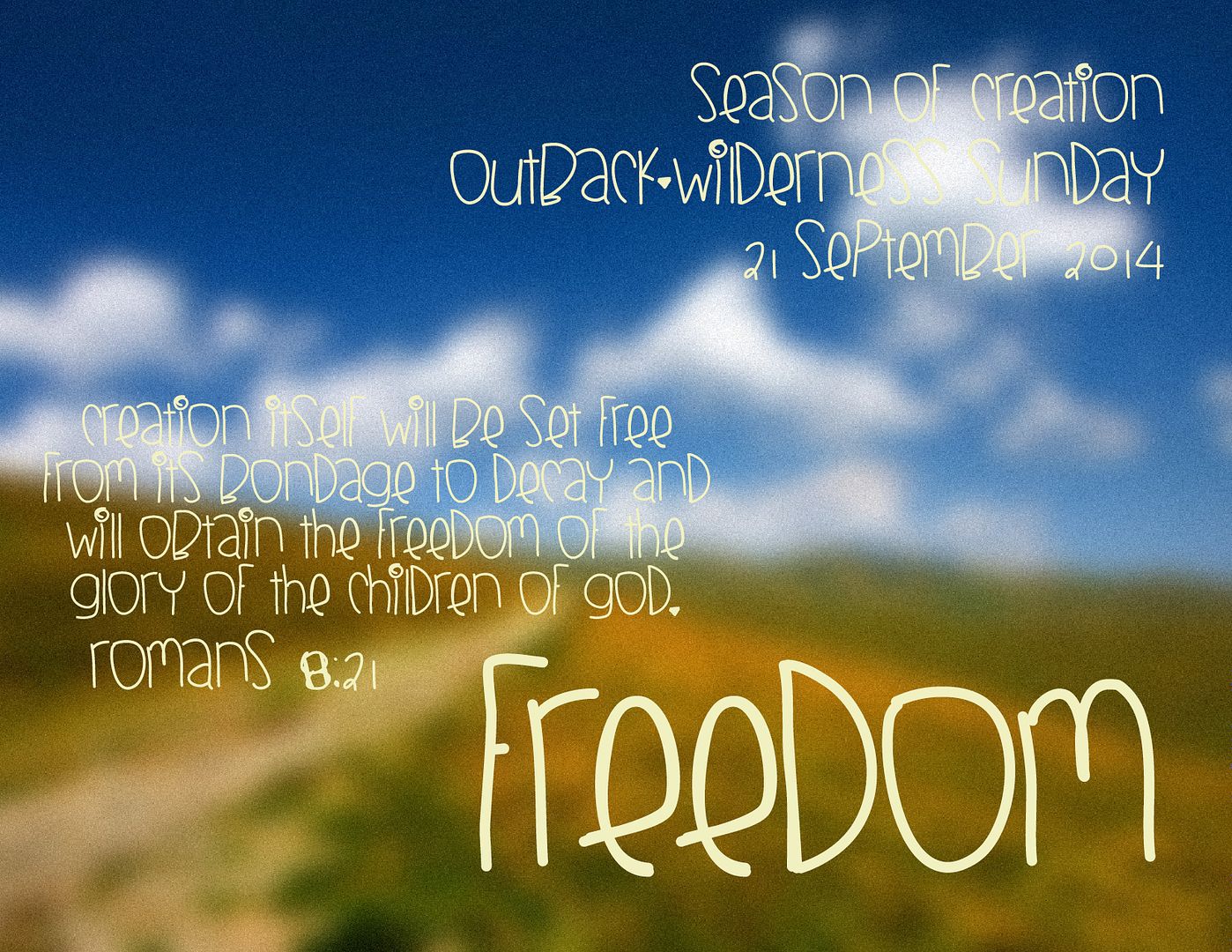
Outback/Wilderness Sunday 2014

season of creation outback Sunday posterGod of the covenanted faith-filled journey homeward, in the exodus desert you formed a people after your own heart as you led them toward the land of promise. We ask that you would lead us to trust you in our moment by moment wanderings, that we might freely serve as your gracious presence in the world. In Jesus' name, Amen!

Here's the Eucharistic Prayer I wrote for Season of Creation Year A in 2011:

Eucharistic Prayer Creation A – © leah chang 2011

Tuesday, July 22, 2014

free to be: July synchroblog

July Synchroblog: Liberty on the WordPress blog

synchroblog clothesline
This month's synchroblog header pic is via the Facebook group; the prompt for this month reads:
"July is here and I always associate that with Independence Day. I suspect that’s not terribly strange. For this month we’re working with one word: Liberty. You can write whatever you want about that word ... what feelings does it evoke? How do you define it? Do you think you live it? Or not? Those are just some ways you could look at it. You could write a poem, or a story, or a more traditional blog post. Just use the word, 'liberty' as your starting place and see where you go."

In school and out of school, I've participated in discussions of liberty and freedom, and I even found an article that describes both, particularly in terms of Thomas Jefferson's use of the term:
One should distinguish between the terms "freedom" and "liberty." Speaking generally, Freedom usually means to be free from something, whereas Liberty usually means to be free to do something, although both refer to the quality or state of being free. Jefferson's use of the terms almost always reflected those meanings. Thus, he never spoke of freedom as a right, though liberty is listed in the Declaration as one of our inalienable rights. It is safe to say that whenever Jefferson spoke of freedom, he referred to that state that is free from despotic oppression.

Especially in his epistles to the churches at Rome, Galatia, and Corinth, the Apostle Paul frequently proclaims and counsels eleutheria, typically translated into English as "freedom," the kind of easygoing, grace-filled living devoid of fear and anxiety, that lack of attachment to sin we know in Christ Jesus. And truly experience with our entire beings all too rarely. That particular freedom also is the bounded liberty (=liberation) of the children of God―free in Christ, but also keeping our own freedom along with that of our friends and neighbors whole by obeying the commandments. With its neither Jew nor gentile, slave nor free, male nor female, Galatians 3:28 ain't no emancipation proclamation! However, the Apostle Paul's, "but I was born free!" quoted in Acts 22:28 is not eleutheria-liberty at all, but indicates his being well-born as a Roman citizen, and therefore already "emancipated." Emancipated in terms of not being a subject of or potentially subject to slavery, bondage, ownership or control by any other individual or entity. For us in this century, living as citizens of a first- or second-world country with relatively open, transparent, and accountable government structures is one type of freedom, for sure.
According to Nobel Poet Laureate Joseph Brodsky: "Freedom is when you forget the spelling of the tyrant's name." I like to counsel myself and others, "Don't let people wag you! Don't let them rent space in your head!" Be your own person.
Although any synchroblog is pretty much a free-choice response, I especially love this month's suggestion simply to start with "freedom" and then go wherever it takes you. So a couple more things for now. One of my favorite contemporary Christian songs by Don Moen insists "There is therefore now no condemnation for those who are in Christ Jesus" as it quotes the opening of Romans 8:1-25

July in the northern hemisphere and in southern California is very very summer; by then most schools are out, though there are some year-round elementary schools in these here parts, and of course, for all ages, there's summer school, which I've always loved. By late July we're well into fun activities like picnics, parties, potlucks—vacation bible school will be here soon! Until a few years ago, summer always had been true freedom time for me. By "true freedom time" I mean nothing much bothered me, I didn't obsess about why someone said what they did, why someone else acted how they had—no matter what might have been going on during the previous months, whatever still stood in my way despite its being summer, and even considering what the upcoming autumn schedule looked like. For this almost over July 2014 and for the upcoming months, I'll do whatever's possible to make liberty about being free to be myself. Again. Just as it used to be.

July Synchroblog Participants so far:

Sunday, March 02, 2014

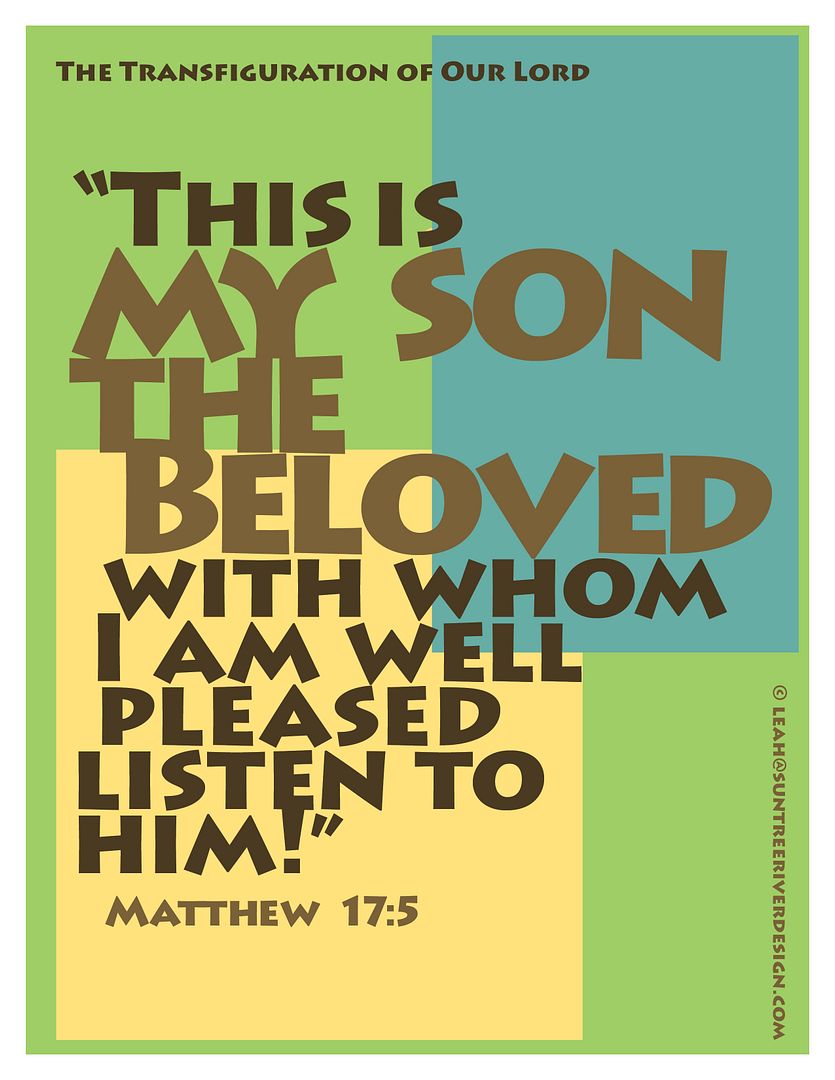
transfiguration 2014

It's been close to forever since I've blogged much in the way of theological reflections, but I liked my own notes in response to an online friend's transfiguration Sunday sermon, so here's a very slightly edited version of them along with a few additional considerations.

Matthew 17:1-9

Transfiguration 2014My friend ran with that all too common biblical and contemporary experience of fear, which I do not perceive as at all central in the texts. My response included:

Fear... we all (most of us, anyway) have too much of it, and need lots of reminders not to fear. But I believe beginning a T-Fig sermon with fear misses the point of the event and obscures the wisdom of the lectionary compilers' placing this event right before we begin lent, before the church zooms in on the journey to Jerusalem, to the cross, to the empty tomb.

The gospel-writer records this mountaintop happening as "six days later" than Jesus' telling his disciples to follow him means to take up *their* cross, lose their lives... and Jesus then will model the ultimate example of gaining new life for the whole world by giving up his own earthly life.

The words of this passage demonstrate God's historical faithfulness in speaking via both law and prophets; Elijah's presence harkens back to a related trinitarian theophany we experienced once again this year only a few weeks ago at the baptism of Jesus by John—remember, Elijah had to return, but as Jesus tells us, for him, John was Elijah!

Probably most important, a few days prior to Ash Wednesday, Jesus tells us he will be raised from the dead.

I don't know if you regularly read the first (typically Hebrew bible) lection during worship, but Exodus 24:12-18 is Moses, God, [Mount] Sinai covenant, 40 days and 40 nights, all of which tie in perfectly with this T-Fig narrative and the forty days of Lent the church is about to enter. Also, in 2 Peter 1:16-21, we find no hint of fear, but rather divine self-revelation in vision, word, and spirit.

I told my friend I loved her next-to-last paragraph reminding us about down to earth Jesus using touch and speech to calm us down. As she observed in her final paragraph, God never leaves us or forsakes us, and we need that reminder. However, I added how I believe retaining "fear does not have the last word," (as true as it is), obscures the focus on the world-transforming (and transfiguring!) crucifixion and resurrection events to come.

In other words, despite Peter's typical not-getting-it again here, fear simply is not central, but rather, so peripheral I probably would mention it only in passing, if at all.

"Listen to him!" Jesus ordered them, "Tell no one about the vision until The Human One has been raised from the dead." Listen to him—It's about death and resurrection! We charge the baptismal sponsors to "place the scriptures in their hands; bring them to the services of God's house...." so they can "Listen to him!"