Here's the mission statement I wrote when I was on staff at the church in City of History. Though it was (quite) a while ago, I don't want to lose it, so again I'm going with the online option! (Vanity note? The denom's deployed mission staff declared this mission statement a model and said he'd show it to other congregations as an illustration of what they could do.)We are the people of God, forgiven and set free by the death and resurrection of Jesus Christ; by the power of the Holy Spirit we are called together and sent into the world as witnesses to his resurrection. God calls us, a servant people, to proclaim in word and action the presence of the risen Lord to all those whom our lives touch, especially in this community.

Showing posts with label faves 2002-2004. Show all posts
Showing posts with label faves 2002-2004. Show all posts
Monday, September 13, 2004
Mission Statement
Statement of Mission

Thursday, June 24, 2004
Rivers, Deserts, Identity

Introduction
A while ago I had lunch at Olive Garden and spent part of one of my stored value gift cards. Since I think theologically something resembling 24/7/12/365, of course I began thinking about the theological implications of stored value and how such an idea could play out in our everyday lives, away from restaurants, malls and all those other shopping scenes where gift cards are easily spendable, and I started connecting stored value and stored values to the constitutive events in our lives as Christians and as a Church. This time I'll briefly explore water and manna, opening with some wet realities, and because the scriptures I'm referencing are so wonderful, I'll quote them instead of linking to them. Here's my first list of images...set your imagination free!
- Creation's primeval waters
- Jacob by the riverside
- Moses and the waters of Meribah
- Water from the rock!
- Jesus' baptism in the River Jordan
- Riverside Church!...a.k.a. the Church by the Riverside: that's supposed to be us!
- Our baptism
- Baptism contains *stored values* of death and resurrection, the "value," "worth" or worthy-ness of new life in Jesus Christ, and those *stored values* make possible our living and serving with freedom in Christ Jesus' name.
from Genesis 32 - Jacob *becomes* Israel; this is an Elohist text:
22 And he [Jacob] arose that night and took his two wives, his two female servants, and his eleven sons, and crossed over the ford of [River] Jabbok. 23 He took them, sent them over the brook, and sent over what he had. 24 Then Jacob was left alone; and a Man wrestled with him until the breaking of day. 25 Now when He saw that He did not prevail against him, He touched the socket of his hip; and the socket of Jacob's hip was out of joint as He wrestled with him.
26 And He said, "Let Me go, for the day breaks."
But Jacob said, "I will not let You go unless You bless me!"
27 So God said to him, "What is your name?"
He said, "Jacob."
28 And God said, "Your name shall no longer be called Jacob, but Israel [Prince with God]; for you have struggled with God and with men, and have prevailed."
29 Then Jacob asked, saying, "Tell me Your name, I pray."
And God said, "Why is it that you ask about My name?" And He blessed him there.
30 So Jacob called the name of the place Peniel [Face of God]: "For I have seen God face to face, and my life is preserved." 31 Just as Jacob crossed over Penuel [Face of God] the sun rose on him, and he limped on his hip. NKJV
from Genesis 35:
from the Elohist:
1 Then God said to Jacob, "Arise, go up to Bethel and dwell there; and make an altar there to God, who appeared to you when you fled from the face of Esau your brother."
2 And Jacob said to his household and to all who were with him, "Put away the foreign gods that are among you, purify yourselves, and change your garments. 3 Then let us arise and go up to Bethel; and I will make an altar there to God, who answered me in the day of my distress and has been with me in the way which I have gone." 4 So they gave Jacob all the foreign gods which were in their hands, and the earrings which were in their ears; and Jacob hid them under the terebinth tree which was by Shechem.
9 Then God appeared to Jacob again, when he came from Padan Aram, and blessed him. 10 And God said to him, "Your name is Jacob; your name shall not be called Jacob anymore, but Israel shall be your name." So He called his name Israel. 11 Also God said to him: "I am God Almighty [El Shaddai]. Be fruitful and multiply; a nation and a company of nations shall proceed from you, and kings shall come from your body. 12 The land which I gave Abraham and Isaac I give to you; and to your descendants after you I give this land." 13 Then God went up from him in the place where He talked with him.
Yahwist
14 So Jacob set up a pillar in the place where He talked with him, a pillar of stone; and he poured a drink offering on it, and he poured oil on it.
Priestly
15 And Jacob called the name of the place where God spoke with him, Bethel. NKJV
Exodus 15 - the slaves of Egypt *become* liberated Israel!
...into the Desert of Shur... to the waters of Marah... then they came to Elim, where there were twelve springs and seventy palm trees, and they camped there near the water.When the people left the geographic, phenomenological Egypt, one of their first stops in the desert was Elim, with its 12 springs of fresh water and 70 palm trees that provided shade and shelter, and which is a *type* of the deliverance we find in the plethora of gracious gifts we receive in the gospeled Reign of God in Jesus Christ. The name of the gateway to Elim's sanctuary, safety and protection was Marah, "bitter waters."
Exodus 15:26 contains critical cautions and tremendous promise, 'If you listen carefully to the voice of the LORD your God and do what is right in his eyes, if you pay attention to his commands and keep all his decrees, I will not bring on you any of the diseases I brought on the Egyptians, for I am the LORD, who heals you'" In other words, if you are obedient...
Theologian Martin Buber, in The Prophetic Faith, says, "...it is only at this point, at the exodus from Egypt, not in Egypt itself, that the people comes into actual existence, and only at this point is the name "Israel" perfectly manifest as 'the visible programme of God's sovereignty.'" (page 44) During those many years of being manna-fed, Israel lived and thrived with the experience of heavenly gifts and divine justice with the ensuing freedom that meant a Shalom'ed enough for everyone and too much for no one; under Moses' leadership and Yahweh's Lordship, the wilderness sojourners lived in daily com-pan-ionship. Again from Buber's The Prophetic Faith, page 44: "Our path in the history of faith is not a path from one kind of deity to another, but in fact a path from the 'God Who hides Himself' (Isaiah 4:15) to the One that reveals Himself." The God who Self-reveals in gifts of mercy and gifts of justice! Here's a second image list:
- Israel and desert manna
- People of God's passion and supply...
- ...try making it on their own and idolize unreal gods
- Manna contains *stored value* enabling our living precariously to minister in the world
- More stored value for further food?
- Or more *stored value* in trusting for the future and its needs?
- More for our daily rather than the stored-up valuable bread
- Like baptism, the Lord's Supper contains *stored value* enabling our living and ministering in the world
- Beginning with baptismal sacramental ordinance and continuing with a Eucharistic one (sacrament, Lord's Supper, Holy Communion)
1 The whole Israelite community set out from Elim and came to the Desert of Zin, which is between Elim and Sinai, on the fifteenth day of the second month after they had come out of Egypt.
4 Then the LORD said to Moses, "I will rain down bread from heaven for you. The people are to go out each day and gather enough for that day. In this way I will test them and see whether they will follow my instructions. 5 On the sixth day they are to prepare what they bring in, and that is to be twice as much as they gather on the other days." ...
11 The LORD said to Moses, 12 "I have heard the grumbling of the Israelites. Tell them, 'At twilight you will eat meat, and in the morning you will be filled with bread. Then you will know that I am the LORD your God.'"
13 That evening quail came and covered the camp, and in the morning there was a layer of dew around the camp. 14 When the dew was gone, thin flakes like frost on the ground appeared on the desert floor. 15 When the Israelites saw it, they said to each other, "What is it?" For they did not know what it was.
Moses said to them, "It is the bread the LORD has given you to eat. 16 This is what the LORD has commanded: 'Each one is to gather as much as he needs. Take an omer for each person you have in your tent.'"
17 The Israelites did as they were told...he who gathered much did not have too much, and he who gathered little did not have too little. Each one gathered as much as he needed...
23 He said to them, "This is what the LORD commanded: 'Tomorrow is to be a day of rest, a holy Sabbath to the LORD. So bake what you want to bake and boil what you want to boil. Save whatever is left and keep it until morning.'"...
25 "Eat it today," Moses said, "because today is a Sabbath to the LORD. You will not find any of it on the ground today. 26 Six days you are to gather it, but on the seventh day, the Sabbath, there will not be any."
31 The people of Israel called the bread manna...
33 So Moses said to Aaron, "Take a jar and put an omer of manna in it. Then place it before the LORD to be kept for the generations to come."
34 As the LORD commanded Moses, Aaron put the manna in front of the Testimony, that it might be kept. 35 The Israelites ate manna forty years, until they came to a land that was settled; they ate manna until they reached the border of Canaan.
Brief Remarks - stored value!:
Yahweh's people Israel called the manna "Bread of Heaven," and for forty years it supplied all their nourishment in the desert. In chapter 6, John the evangelist calls Jesus, the one born in the Little Town of House of Bread, Bread of Heaven, and today, the day of salvation, of shalom because we live in and with Christ Jesus, our Risen Lord, we have the benefit of living manna blessed and broken, given to and shared with everyone who wants it (everyone is welcome!), living within our community and within us to supply all our needs! Like the Israelites in the process of becoming free, as long as we remain faithful by obediently listening and obeying by doing justice and righteousness, that reality of the eucharistic manna's *stored value* will keep working for us and in us, for the world and in the world!
Like the Eucharistic Supper of the Lamb, that wilderness measure of Manna represents Jesus, the Crucified and Risen Word of Life; via John (6:48-58), Jesus called himself the real manna from Heaven, and promised anyone who ate that manna, that Heavenly Bread of Life, never would be hungry, would live forever and never die! Talk about stored value! In revelation about the Logos, the chapter 1 "Prologue" to John's gospel identifies Jesus as the Word, the verb, God's action! Jesus is the Word, Jesus is the Bread of Life, Jesus is our manna and the entire world's manna, and Jesus is our provider through the Word in the world and the Word indwelling our hearts: along with the Deuteronomic historian and Jeremiah, Paul insists, "the Word is very near you, in your mouth and in your heart, so you can do it." (Deuteronomy 30:11; Romans 10:4) Values of worth and worthiness stored in our communities and in our inmost beings to give for the life of the world, to give towards the world’s shalom!
I'll end with words by Antonio Machado from his poem, "Cantares"—poetry that expresses what Jacob/Israel and the *people* named after him were learning, in the same way we're still learning and walking by the Spirit's leading:
Traveler, there is no road; the way is made by walking.
Sunday, June 06, 2004
Malls, Cathedrals and Museums
more ideas I need to get out of the queue.
 Malls:
Although I don't often mall-crawl, when I do, I particularly notice too many people in malls and other public places look too empty, and accordingly we Christians suppose and presuppose the empties doing whatever they can do fill those empty spaces and unfulfilled lives with all kinds of stuff. From Jackson Browne's song, "Running on Empty":
 Cathedrals:
Without delving into a lot of history and in this short space necessarily leaving out the multitude of vital functions the cathedral church assumed earlier on, especially in Europe, that whole sanctuary development has a lot to do with the rationalization and bureaucratization of Christianity...and, as Max Weber pointed out, when religion becomes rationalized (and maybe denominationalized!), with a dichotomy between professional and non-professional ("lay?") practitioners, that's when the division between sacred and secular begins really big-time, and often assumes horrendous proportions, as in the Jerusalem Temple. And "horrendous proportions" as in the late Medieval church, as well, though always there have been faithful and even re-forming individuals and movements. Also, the Jerusalem Temple was a prime example of what Luther called the "domesticated God," the God at humanity's beck and whim, the trivial God who could be manipulated and coerced rather than the sovereign, free and elusive God of the Bible.
And, since the physical evidence or the "incarnate enfleshment" of who we are – the goods, or, more accurately the bads - often are the people's gods, we want to be able to control them so we purchase them to have them nearby, controllable and even accountable to us..."domesticated gods!" We're supposed to be a different, a "peculiar" people, and that gets back to our wondering how we evangelize: with modalities that look like those in that other world, as in consumer goods and consumable bads, or with unique, biblically-informed ones?
 Museums and Muses:
Churches on the way to becoming museums? Museum exhibit or mission example? Let's ask what a museum does at its best. But first, in his Powers trilogy, Walter Wink does a great job on the letters to the angels - to the spirits of the seven churches in Revelation, as he points out each organization, each institution and each organic expression of the church (local, regional, or whatever - you know!) has a particular spirit external to, greater than and different from the spirit or *angel* of any of the individuals that comprise a specific entity. It seems to me a museum at its best displays succinctly and locally a wide if not inclusive range of a particular painter, period, style or genre. So if some of our local churches or even denominations are becoming museumized (is that the same as "fossilized?"), why do we feel some of those characteristics are worth preserving? Just something to think about :)
And finally for this evening,
the church (your church, my church, anyone's church) as storefront to the consumer culture!!!
Double meaning there, as well...church members as consumers of religious offerings, pastors and church staff as providers, purveyors of consumables. Storefront is an interesting image, especially when we consider the phenomenon of the inner-city storefront church, which frequently is an immigrant church or at the very least the gathering-place for people who haven't assimilated into the dominant culture; it's a meeting place for people who haven't yet acquired or even learned what it "means" to be a real American. The original and root meaning of ekklesia, usually translated church, was the called-out, called-together assembly. As in convention or conventional! Interesting thought?

Although I don't often mall-crawl, when I do, I particularly notice too many people in malls and other public places look too empty, and accordingly we Christians suppose and presuppose the empties doing whatever they can do fill those empty spaces and unfulfilled lives with all kinds of stuff. From Jackson Browne's song, "Running on Empty":
Looking out at the road rushing under my wheelsLike all of us sometimes do, that song's singer keeps running into a nameless and meaningless oblivion-like state. The music is wonderful, energetic and drives the listener (I guess that must me) into its state of mind.
I don't know how to tell you all just how crazy this life feels
I look around for the friends that I used to turn to, to pull me through
Looking into their eyes I see they're running too ... running on empty, running behind ... you know, I don't even know what I'm hoping to find .... running into the sun but I'm running behind!

Without delving into a lot of history and in this short space necessarily leaving out the multitude of vital functions the cathedral church assumed earlier on, especially in Europe, that whole sanctuary development has a lot to do with the rationalization and bureaucratization of Christianity...and, as Max Weber pointed out, when religion becomes rationalized (and maybe denominationalized!), with a dichotomy between professional and non-professional ("lay?") practitioners, that's when the division between sacred and secular begins really big-time, and often assumes horrendous proportions, as in the Jerusalem Temple. And "horrendous proportions" as in the late Medieval church, as well, though always there have been faithful and even re-forming individuals and movements. Also, the Jerusalem Temple was a prime example of what Luther called the "domesticated God," the God at humanity's beck and whim, the trivial God who could be manipulated and coerced rather than the sovereign, free and elusive God of the Bible.
And, since the physical evidence or the "incarnate enfleshment" of who we are – the goods, or, more accurately the bads - often are the people's gods, we want to be able to control them so we purchase them to have them nearby, controllable and even accountable to us..."domesticated gods!" We're supposed to be a different, a "peculiar" people, and that gets back to our wondering how we evangelize: with modalities that look like those in that other world, as in consumer goods and consumable bads, or with unique, biblically-informed ones?

Churches on the way to becoming museums? Museum exhibit or mission example? Let's ask what a museum does at its best. But first, in his Powers trilogy, Walter Wink does a great job on the letters to the angels - to the spirits of the seven churches in Revelation, as he points out each organization, each institution and each organic expression of the church (local, regional, or whatever - you know!) has a particular spirit external to, greater than and different from the spirit or *angel* of any of the individuals that comprise a specific entity. It seems to me a museum at its best displays succinctly and locally a wide if not inclusive range of a particular painter, period, style or genre. So if some of our local churches or even denominations are becoming museumized (is that the same as "fossilized?"), why do we feel some of those characteristics are worth preserving? Just something to think about :)
And finally for this evening,
the church (your church, my church, anyone's church) as storefront to the consumer culture!!!
Double meaning there, as well...church members as consumers of religious offerings, pastors and church staff as providers, purveyors of consumables. Storefront is an interesting image, especially when we consider the phenomenon of the inner-city storefront church, which frequently is an immigrant church or at the very least the gathering-place for people who haven't assimilated into the dominant culture; it's a meeting place for people who haven't yet acquired or even learned what it "means" to be a real American. The original and root meaning of ekklesia, usually translated church, was the called-out, called-together assembly. As in convention or conventional! Interesting thought?

Sunday, April 18, 2004
Sabbath and Weekend
John Paul II, speaking to Australia's Roman Catholic bishops, on Friday, 26 March 2004 said:
I love the quote from the Bishop of Rome, and this is a great discussion question about "The whole concept of 'weekend' and the Church." During Lent 2004 I participated in a *real* rather than a *virtual* discussion of Lauren Winner's mudhouse sabbath (Paraclete Press, November 2003). And a couple years ago I read Marva Dawn's Keeping the Sabbath Wholly, (Eerdmans, September 1989) which mightily impressed me, but at that time I didn't begin making any more changes in my Sabbath-keeping than I'd made when I lived in Salt Lake City and found myself totally spurred on my the example of many of my Latter-day Saint neighbors.
For both authors, Sabbath-keeping means claiming our in-God-created images and honoring our human need for receptive, refreshing, refilling and redemptive rest. In my mudhouse sabbath discussion group, we covenanted as a group to become more aware and intentional about everything we did, whether traditionally religious or more broadly secular, and sometimes slower about everything, as well. Besides the Sabbath, the book includes chapter on "fitting" food, fasting, body, aging, doorposts, candles and weddings. Hospitality, too, mourning and prayer. As Lauren Winner points out, homes where people are always hurrying and moving fast don't light candles!
 Though I started writing this about Sabbath and Weekend, the related chapter on prayer impressed me lots, so here I'll say something about that chapter, as well. Lauren points out Jewish prayer is liturgical prayer, prayer-book prayer. She said the times she'd tried to pray only free prayer and nothing else, after a few days her prayer life degenerated into an unhealthy "me, my, I and mine." Back to the quote from Rome's current bishop: "people stay locked within a horizon so narrow that they can no longer see the heavens." He was talking about what happens when people do the sports and entertainment thing rather than the God and the godly ones, but that's exactly what happens when all of our prayer is free prayer.
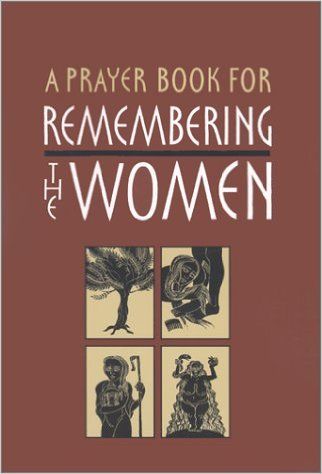
 For a couple of years I've been beginning my morning prayer-time with matins (or sometimes vespers, since I don't do well in the evening with centering or much of any purposeful prayer) from A Prayer Book for Remembering the Women, (Liturgy Training Publications, November 2001); only after I've read from a daily devotional book, often Brennan Manning's Reflections for Ragamuffins, (Harper SanFrancisco, November 1998) prayed one of the offices, and prayed a chapter of scripture - I particularly love the cosmic Christ of Colossians - do I move into intercessions, etc. After that I pray the wordless Centering Prayer. Recently I remembered how I fell in love with The Book of Common Prayer when I first discovered it at First Mariners American Baptist Church, and I plan to return to some of the BCP's liturgical prayers.
When Sunday loses its fundamental meaning and becomes subordinate to a secular concept of "weekend", dominated by such things as entertainment and sport, people stay locked within a horizon so narrow that they can no longer see the heavens.
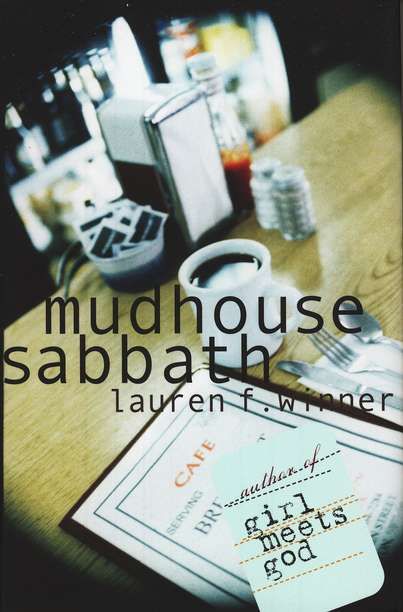
I love the quote from the Bishop of Rome, and this is a great discussion question about "The whole concept of 'weekend' and the Church." During Lent 2004 I participated in a *real* rather than a *virtual* discussion of Lauren Winner's mudhouse sabbath (Paraclete Press, November 2003).
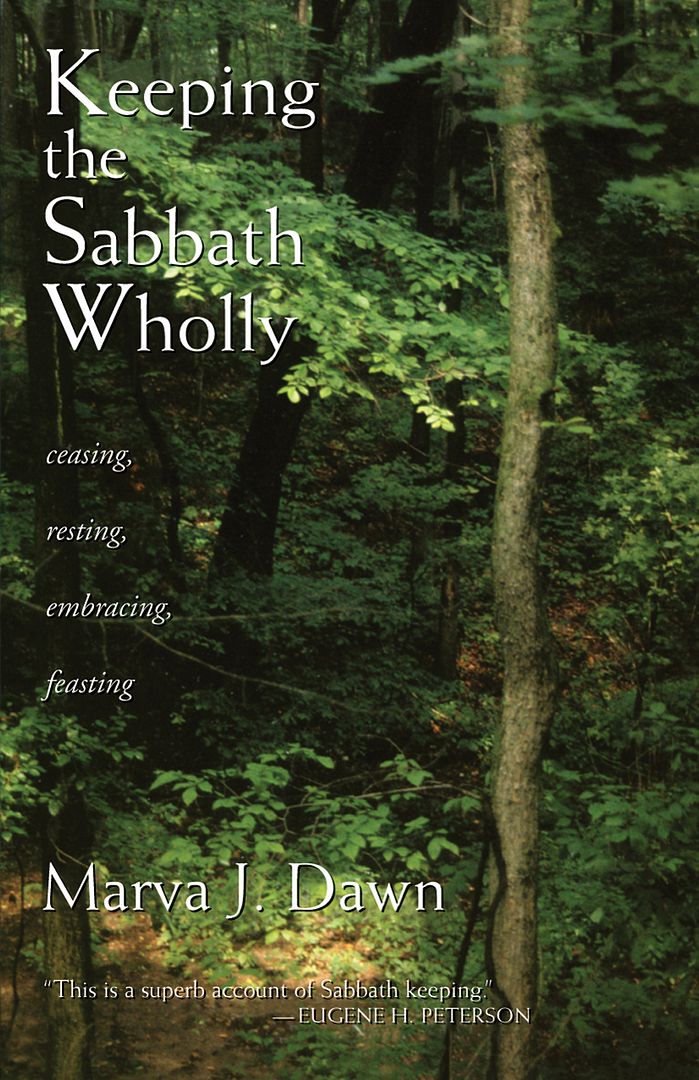 And a couple years ago I read Marva Dawn's Keeping the Sabbath Wholly, (Eerdmans, September 1989) which mightily impressed me, but at that time I didn't begin making any more changes in my Sabbath-keeping than I'd made when I lived in Salt Lake City and found myself totally spurred on my the example of many of my Latter-day Saint neighbors.
For both authors, Sabbath-keeping means claiming our in-God-created images and honoring our human need for receptive, refreshing, refilling and redemptive rest. In my mudhouse sabbath discussion group, we covenanted as a group to become more aware and intentional about everything we did, whether traditionally religious or more broadly secular, and sometimes slower about everything, as well. Besides the Sabbath, the book includes chapter on "fitting" food, fasting, body, aging, doorposts, candles and weddings. Hospitality, too, mourning and prayer. As Lauren Winner points out, homes where people are always hurrying and moving fast don't light candles!
 Though I started writing this about Sabbath and Weekend, the related chapter on prayer impressed me lots, so here I'll say something about that chapter, as well. Lauren points out Jewish prayer is liturgical prayer, prayer-book prayer. She said the times she'd tried to pray only free prayer and nothing else, after a few days her prayer life degenerated into an unhealthy "me, my, I and mine." Back to the quote from Rome's current bishop: "people stay locked within a horizon so narrow that they can no longer see the heavens." He was talking about what happens when people do the sports and entertainment thing rather than the God and the godly ones, but that's exactly what happens when all of our prayer is free prayer.
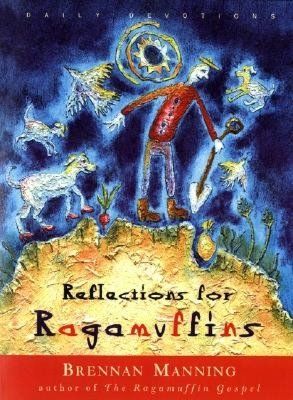 For a couple of years I've been beginning my morning prayer-time with matins (or sometimes vespers, since I don't do well in the evening with centering or much of any purposeful prayer) from A Prayer Book for Remembering the Women, (Liturgy Training Publications, November 2001); only after I've read from a daily devotional book, often Brennan Manning's Reflections for Ragamuffins, (Harper SanFrancisco, November 1998) prayed one of the offices, and prayed a chapter of scripture - I particularly love the cosmic Christ of Colossians - do I move into intercessions, etc. After that I pray the wordless Centering Prayer. Recently I remembered how I fell in love with The Book of Common Prayer when I first discovered it at First Mariners American Baptist Church, and I plan to return to some of the BCP's liturgical prayers.
Wednesday, March 24, 2004
Longing for Home
Sara recently emailed me:
Sara's words got me thinking about home, belonging, homelessness and unbelonging. Aside from not having a forever house and as a result almost living in the future when she will have a very physical and settled "place," I think part of what's happening with Sara is having lived a bunch of locales and been settled and at home in them, it's the same as I've experienced: I love being everywhere, feel everywhere is home for me, yet I always have a sense of longing not only for where I've just been but for every place I've ever lived.
 So I usually have a feeling of not belonging "here" because of my intense longing for "there!" At Open Door Books I noticed the title, home is always the place you just left: a memoir of restless longing and persistent grace–Very, very apt! Book by Betty Smart Carter; Paraclete Press; ISBN: 1557253234; May 2003
Ultimately, feeling rootless gets back to the nature and reality of living the gospel; just like the Israelites of the Exodus, in Jesus Christ we live in the precariousness of nomadic, unsettled existence, daily undergoing baptism's liminality: each day recalling and actually reliving the perilous and risk-filled underwater moment in that watery tomb of death that at the same time is sustaining womb of new life, the fragile instant in which we need totally to trust the baptizer—who, after, all represents God, the One Who really baptizes.
The early church baptized in the flowing water of a river: just as every life moment is different, you can't step into the same river more than once! Living baptized means although every moment is perched and balanced on the limen – the threshold – between our old lives of bondage to sin and self and our new lives of Eastered freedom for others, living baptized means during some of those moments we also know fleetingly the fullness of gospeled community. Many times I've pointed out for Israel the River Jordan had been the barrier separating them from the Promised Land and then became the boundary and border of their Promise Landed lives. Likewise, for us baptism keeps defining us as different from those outside the community of the church yet is an event that counts us into the people of God of all generations: the Covenanted People!
A few months ago I quoted from an author who said being grounded was one of our principal needs; to me her conviction feels so correct! But more about feeling homeless and unanchored; here's a pair of celebrated directives from the Pentateuch:
Exodus 23:9
"Also you shall not oppress a stranger, for you know the heart of a stranger, because you were strangers in the land of Egypt." NKJV
From Leviticus 25, the Jubilee chapter: v. 23
"The land shall not be sold permanently, for the land is mine; for you are strangers and sojourners with me." NKJV
In these verses, in another foretaste of His incarnation in Jesus of Nazareth, God commands Israel to show hospitality to the stranger because of their strangerness in Egypt and God assures Israel of his strangerness alongside them, so this text delineates both horizontal and vertical relationships. I love how the UCC Statement of Faith says in Christ Jesus, God "shared our common lot," and that's what God has done since the Exodus from slavery – that commonness and common lot of being a stranger, the one not-like-us, the one who doesn't belong with us or among us because they're not the same as we are. But our baptism into the Christ Event obliterates the non-essential differences between us so we can walk together as a community of crucified and risen people. In Christ Jesus God became the alien and the other for us; we live baptized into the God who in Christ still accompanies us every step of our journey.
I have been feeling homesick for San Diego and was so glad to hear from you! We are happy to be "home" with family, but are finding that we don't totally have a place here yet (emotionally). I feel kind of like I did when I came back from Russia. I was thrilled to be back, and sad that I left behind such a magical place and it really took some adjusting. I think that all change is painful but very healthy. For now we are living with Derek's Parents for a few more weeks until my parents' apartment opens up. We then plan to move into a forever house in a few more months.
Sara's words got me thinking about home, belonging, homelessness and unbelonging. Aside from not having a forever house and as a result almost living in the future when she will have a very physical and settled "place," I think part of what's happening with Sara is having lived a bunch of locales and been settled and at home in them, it's the same as I've experienced: I love being everywhere, feel everywhere is home for me, yet I always have a sense of longing not only for where I've just been but for every place I've ever lived.
 So I usually have a feeling of not belonging "here" because of my intense longing for "there!" At Open Door Books I noticed the title, home is always the place you just left: a memoir of restless longing and persistent grace–Very, very apt! Book by Betty Smart Carter; Paraclete Press; ISBN: 1557253234; May 2003
Ultimately, feeling rootless gets back to the nature and reality of living the gospel; just like the Israelites of the Exodus, in Jesus Christ we live in the precariousness of nomadic, unsettled existence, daily undergoing baptism's liminality: each day recalling and actually reliving the perilous and risk-filled underwater moment in that watery tomb of death that at the same time is sustaining womb of new life, the fragile instant in which we need totally to trust the baptizer—who, after, all represents God, the One Who really baptizes.
The early church baptized in the flowing water of a river: just as every life moment is different, you can't step into the same river more than once! Living baptized means although every moment is perched and balanced on the limen – the threshold – between our old lives of bondage to sin and self and our new lives of Eastered freedom for others, living baptized means during some of those moments we also know fleetingly the fullness of gospeled community. Many times I've pointed out for Israel the River Jordan had been the barrier separating them from the Promised Land and then became the boundary and border of their Promise Landed lives. Likewise, for us baptism keeps defining us as different from those outside the community of the church yet is an event that counts us into the people of God of all generations: the Covenanted People!
A few months ago I quoted from an author who said being grounded was one of our principal needs; to me her conviction feels so correct! But more about feeling homeless and unanchored; here's a pair of celebrated directives from the Pentateuch:
Exodus 23:9
"Also you shall not oppress a stranger, for you know the heart of a stranger, because you were strangers in the land of Egypt." NKJV
From Leviticus 25, the Jubilee chapter: v. 23
"The land shall not be sold permanently, for the land is mine; for you are strangers and sojourners with me." NKJV
In these verses, in another foretaste of His incarnation in Jesus of Nazareth, God commands Israel to show hospitality to the stranger because of their strangerness in Egypt and God assures Israel of his strangerness alongside them, so this text delineates both horizontal and vertical relationships. I love how the UCC Statement of Faith says in Christ Jesus, God "shared our common lot," and that's what God has done since the Exodus from slavery – that commonness and common lot of being a stranger, the one not-like-us, the one who doesn't belong with us or among us because they're not the same as we are. But our baptism into the Christ Event obliterates the non-essential differences between us so we can walk together as a community of crucified and risen people. In Christ Jesus God became the alien and the other for us; we live baptized into the God who in Christ still accompanies us every step of our journey.
Friday, March 12, 2004
Main Street

original Main Street Lowell Michigan photograph by AcrylicArtist on morgue file
edited by my own suntreeriver design identity
Main Street experiences?! I love this topic and the Main Street/Church Street sign on the UCC homepage is wonderful! First, I’ll confess I’ve never read Lewis’ Main Street, so I’ll run with some images and impressions. BTW, many years ago I spent an interesting citified summer on West Main Street.
That particular urban locale aside, for me the name “Main Street” kindles a generic picture and a general metaphor. My picture is from New England or somewhere in the American Midwest; it’s a single central street lined with shops: hardware store, drugstore with soda fountain, flower shop, curio shop, bookstore, coffee/sandwich shop and maybe a down-home-cookin’ restaurant. Ages ago a poem I wrote included the phrase, “The Colonial’s a restaurant on Main Street” [Hudson, Ohio]. This Main Street sports one or two branch banks, the town offices and – at one end of the commercial strip – the absolutely requisite iconic white-steepled church building, most likely Congregational/UCC, possibly Presbyterian or Lutheran, but you’d better believe it's big "P" Protestant!
My Main Street picture has featureless people, but my Main Street metaphor is primarily a lifestyle that includes a describable type of person. Here’s a start: this Main Street Person [MSP] wants to belong—to be homogenous yet stereotypically distinctive and noticeable; trendy and up-to-date about ideas, politics and general styles of everything like attire and apparel, vehicles, home furnishings, recreation pursuits and vacation venues without being on the cutting edge of much of anything; spiritual, but without real commitment to institutional religion or to the radical way of Jesus ... this MSP is anything but counter-cultural and not remotely willing to disengage from whatever society’s mainstream conventions have become for the moment, the particular moment that’s (very) close at hand. Do you remember Charles Schulz’s Lucy as psychiatrist with her, “The Doctor is in ... The Doctor is Real in?” Well this MSP is real, real “in!”
How does my life and style as a Christian correspond to this MSP? And, should it—or not? The “Main Street” subject relates to our discussion over in Evangelism and to the “12 Steps for the Recovering Pharisee (like me)” book thread. Last summer we talked about “evangelism in the vernacular,” in a twist on Luther’s insisting on “worship in the vernacular” as a mark of the true church. Peculiar people as we’re supposed to be, we also need to be appear enough like everyone else that they can identify with us and therefore with the reasons we’re in Christ―aside from God’s calling and election of us, but that’s a different subject for another day.
Recently I’ve been reading again Walter Brueggemann’s Biblical Perspectives on Evangelism; I originally read it a couple years before the UCC E-Forum became so active, and I wanted to see how my perspective had been changing. In that book he talks a lot about living “gospeled” lives, which include keeping covenant, keeping the Sabbath and keeping the tithe. During this Lent I’ll be participating in a live(!) discussion of Lauren Winner’s new book, mudhouse sabbath. And some time ago I read Marva Dawn’s Keeping the Sabbath Wholly, Ceasing, Resting, Embracing, Feasting (Eerdmans, September 1989). So I’ll conclude by saying one of the distinctions and contrasts between the MSP and what my lifestyle as a Christian needs to be involved the way I keep Sabbath! And I’m planning to continue this topic some other time.
Tuesday, September 16, 2003
Radishes in the Bible
Topical Study or Word Study or...
Since I've wondered about my current topic, "Radishes in the Bible," ever since I heard an allusion to it somewhere at whatever time that was, I decided it's high time I posted something regarding Radishes in the Bible on Desert Spirits Fire, my theology place. So here goes!
Charlotte and the White Horse,© 1955, @copy; renewed 1983 by Ruth Krauss with Maurice Sendak's exquisite illustrations (published by HarperCollins), long has been one of my favorite books, the kind of book you read over and over again. As it describes the end of the rainy season, the poetic narrative says: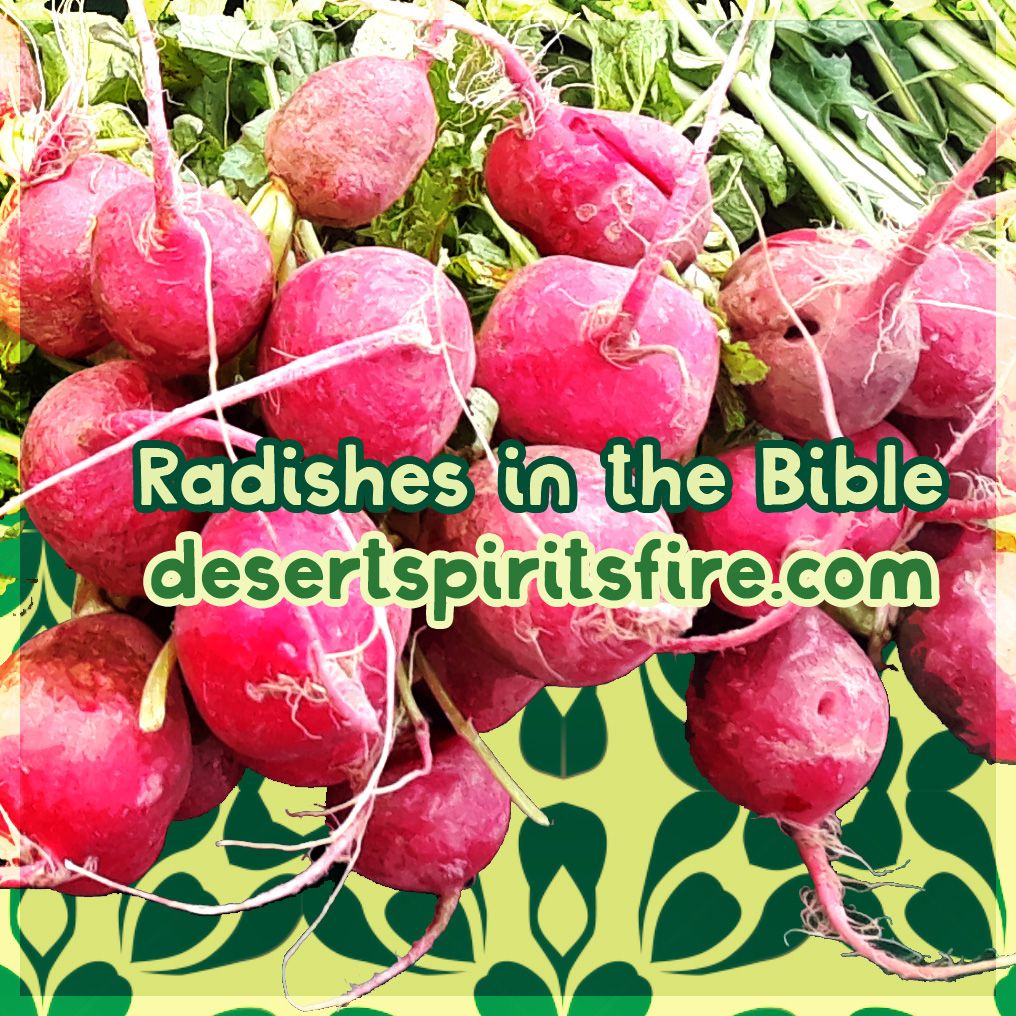 Unlike my usual approach, I searched for "Radishes in the Bible" and radishes Bible – which yielded 66 hits, like the number of books in the Bible! But none of those was truly biblical, so it looks like I'm on my own (as usual). To begin, the root of radishes means root, meaning it's both a root veggie (that we already know from how it grows) and it must be very basic or fundamental, as in the mathematical concept of "radical," and in the sense a person, behavior, idea or action can be radical. So far quite good. Then, the seeds germinate very fast, yielding greenery in only a few days. I remember buying one of those cool kits kids like and that contained radish seeds and appropriately radish-y soil, a very fun thing since the sower (me – we're talking about "biblical," not?) could see results really fast. So how biblical is that? According to a couple of my recent posts and in-person discussions, being fast, doing things fast and things that are fast or act fast aren't particularly biblical at all, since I've been observing how our God tends to act slowly – at least when we humans want God to be a fast God – and since a thousand years is to God as a nanosecond is to us...insights I gleaned, BTW, from the online discussion of Water Buffalo Theology I participated in a while ago. Isn't "gleaned" an agricultural word?
From Beliefnet I get a daily Torah reading along with Jewish Wisdom, and for September 15th they called the Wisdom, "To be rooted," and the quote from Simone Weil says, "To be rooted is perhaps the most important and least recognized need of the human soul." (from The Need for Roots found in A Treasury of Jewish Quotations, edited by Joseph L. Baron, Jason Aronson Inc.)
Enough for this time about Radishes in the Bible...
Since I've wondered about my current topic, "Radishes in the Bible," ever since I heard an allusion to it somewhere at whatever time that was, I decided it's high time I posted something regarding Radishes in the Bible on Desert Spirits Fire, my theology place. So here goes!
Charlotte and the White Horse,© 1955, @copy; renewed 1983 by Ruth Krauss with Maurice Sendak's exquisite illustrations (published by HarperCollins), long has been one of my favorite books, the kind of book you read over and over again. As it describes the end of the rainy season, the poetic narrative says:
the wind and the rains are gone
the grass is coming out of the ground
the leaves are coming out of the trees
the people are coming out of doors
they are coming out of windows
they are coming out and planting radishes
the worms are coming out of the old apples—the time of my singing is come.
Unlike my usual approach, I searched for "Radishes in the Bible" and radishes Bible – which yielded 66 hits, like the number of books in the Bible! But none of those was truly biblical, so it looks like I'm on my own (as usual). To begin, the root of radishes means root, meaning it's both a root veggie (that we already know from how it grows) and it must be very basic or fundamental, as in the mathematical concept of "radical," and in the sense a person, behavior, idea or action can be radical. So far quite good. Then, the seeds germinate very fast, yielding greenery in only a few days. I remember buying one of those cool kits kids like and that contained radish seeds and appropriately radish-y soil, a very fun thing since the sower (me – we're talking about "biblical," not?) could see results really fast. So how biblical is that? According to a couple of my recent posts and in-person discussions, being fast, doing things fast and things that are fast or act fast aren't particularly biblical at all, since I've been observing how our God tends to act slowly – at least when we humans want God to be a fast God – and since a thousand years is to God as a nanosecond is to us...insights I gleaned, BTW, from the online discussion of Water Buffalo Theology I participated in a while ago. Isn't "gleaned" an agricultural word?From Beliefnet I get a daily Torah reading along with Jewish Wisdom, and for September 15th they called the Wisdom, "To be rooted," and the quote from Simone Weil says, "To be rooted is perhaps the most important and least recognized need of the human soul." (from The Need for Roots found in A Treasury of Jewish Quotations, edited by Joseph L. Baron, Jason Aronson Inc.)
Enough for this time about Radishes in the Bible...
Thursday, August 15, 2002
Condescension?
“Tell me more about ‘condescension.’”
Oh, one of my favorite topics! To begin, our God is a God of majesty, glory and sovereignty whose supreme self-revelation is as a God Who willingly abrogates His majesty, glory and sovereignty in order to become small for us a human, in Jesus Christ. Small enough to die. For us. Our God is God of the Covenants Who tabernacles with His people (condescension again: the transcendent become immanent – visible, touchable, audible…).
A Holy God who risks His very self…to create and then to reconcile creation…Relationship is risk! Above all, the Bible witnesses to God’s passion for relationship:
I love the section of Exodus [24:7-8] when Moses comes down from Mount Sinai, reads the Book of the Covenant within the hearing of the gathered people, throws the Blood of the Covenant on the people…and then, in the very next chapter God says, “Hey Moses! Tell my people to build me a sanctuary, that I may dwell in the midst of my people!” [Exodus 25:8] That’s what it’s all about: Emmanu-El, “God With Us.” So we can do the Word…
Creation itself may be the most outrageous and radical act of God’s condescension: to create in the image of the Holy One of Being. A Transcendent Other Who tabernacles with and indwells all creation. According to God’s promise we wait for and hope for not only new heavens but also for a new earth in which righteousness dwells [2 Peter 3:13]: before the Christ Event righteousness was an attribute of God alone, but in Jesus the Christ all creation is made righteous.
Again and over again Scripture testifies to God’s ongoing, decisive and unique action in human history. Isn’t humanity’s never-ending (and eternal!) search the search for the transcendent? We don’t need to seek, because the Transcendent has sought us out and met us, revealed Herself to us, most tellingly and most definitely in a human, in one of us – in Jesus of Nazareth. In the tension and on the edge of this historical ethos we’re born, live, love, suffer, give birth of all kinds, suffer, die and are reborn. Again! And isn’t this also the “in spite of” of grace in our own lives? “Treasures in earthen vessels,” not in “religious” things. God’s love is an everyday, common, ordinary and extravagant love that continues responding to our everyday and ongoing needs.
The artist and the poet both observe, evaluate and reshape their creations, just as God does. Creation is every artist’s, every poet’s, every parent’s passion. Every creation is its creator’s dream, imagined and imaged before eternity was breathed into being, imagined forever. In God’s ongoing condescension to us the God Far Off becomes Near to us in order to reshape us into the creation we were created to be and to become. I see our creation in God’s image as giving us the spectacular gifts of freedom and choice. Radical condescension! When humanity first claimed that unspeakably awesome gift in the paradise of Eden God rejoiced in A-dam’s “disobedience” as it meant humanity freely had chosen to walk in the Holy Way rather than remain at the childish state of unquestioned obedience. In this sometimes-called “fall” into “sin” or “separation” A-dam claimed humanity’s birthright of the freedom of God’s children created in the Image of the Holy One. The tempter told our progenitors “you will be as gods” if you eat the “forbidden fruit.” And the tempter was absolutely right-on! We reclaimed the Image of the God in Whose Image we were created to be and to live.
If creation weren’t “fallen” (we’ve talked about this) – actually a pre-redemptive state/situation as creation’s fallen-ness enables creations’ return in freedom to its Creator – there would be nor need for redemption or sanctification. The Word at once judges (evaluates), holds in hope and gives itself again in promise to shatter the separation between the Word and the Word’s creation in what Bonhoeffer calls God’s “unfathomable condescension.” Although eternity is divine, time as we know time is a human construct – one of God’s gifts to human need. In Jesus the Christ eternity and time both collide and actually become indissolubly united.
And many will come from east and west and north and south, and sit at the feast in the kingdom of God. ~ Luke 13:29
The eschatological feast is both sustenance and celebration, as is the empty tomb of Easter dawn. They’re both God’s “Surprise! You haven’t been annihilated!” and they’re also an entirely new Dance of Life. William Stringfellow says (paraphrased, as I haven’t read An Ethic for Christians and Other Aliens in a Strange Land for a long time) the Bread and Cup are “tokens of the Resurrection” and these “tokens…are discerned as the Word of God indwelling all creation and transfiguring human history.” All creation is redeemed and now the transcendent Holy One is present in our very midst, in, with and under the redeemed creation (endless and eternal condescension now!). Since we are both spirit and flesh, God enters our own individual and corporate lives as both Spirit and Flesh. Everything is God’s Word and Activity, always sacramentally present in, with and under all of creation. Jesus Christ, the LORD of Chalcedon, is both Body and Spirit, just as we Christians, “little Christs,” are both body and spirit. The Risen LORD’s presence in this redeemed creation makes transcendent common, everyday stuff like water, bread and wine. Just as the empty cross and the empty grave reveal God’s presence in the world, so now does all of creation. God continues to condescend to his beloved creation as Spirit, indwelling all and enabling us to see the Face of God and live not only in Jesus, in Jesus’ People the Church – the Body of the Risen Christ – but in all people!
Like the father in the dream you wrote about, the Creator awakens and re-enters (re-minds?) creation with a new name, with a new and this time unforgettable Dance of Life (I referred to the Eucharist as a new “Dance of Life”) in which we encounter the at once Crucified and Risen One in the substance of common, ordinary, everyday existence. Now all life is Holy. Now our home is the heaven, the paradise, the Eden of the created earth that previously had been a place of alienation, bondage and disconnectedness.
Oh, one of my favorite topics! To begin, our God is a God of majesty, glory and sovereignty whose supreme self-revelation is as a God Who willingly abrogates His majesty, glory and sovereignty in order to become small for us a human, in Jesus Christ. Small enough to die. For us. Our God is God of the Covenants Who tabernacles with His people (condescension again: the transcendent become immanent – visible, touchable, audible…).
A Holy God who risks His very self…to create and then to reconcile creation…Relationship is risk! Above all, the Bible witnesses to God’s passion for relationship:
And God said: I’m lonely still…Because, as you’ve implied, the Trinity isn’t three persons who have lunch together.
And by the bank of the river
He kneeled
him down
And there the great God Almighty
Who lit the sun…
Who flung the stars…
This great God…
Kneeled down in the dust
Toiling over a lump of clay
Till he shaped it in his own image;
Then into it he blew the breath of life.
Amen. Amen.
by James Weldon Johnson, from The Creation
I love the section of Exodus [24:7-8] when Moses comes down from Mount Sinai, reads the Book of the Covenant within the hearing of the gathered people, throws the Blood of the Covenant on the people…and then, in the very next chapter God says, “Hey Moses! Tell my people to build me a sanctuary, that I may dwell in the midst of my people!” [Exodus 25:8] That’s what it’s all about: Emmanu-El, “God With Us.” So we can do the Word…
Creation itself may be the most outrageous and radical act of God’s condescension: to create in the image of the Holy One of Being. A Transcendent Other Who tabernacles with and indwells all creation. According to God’s promise we wait for and hope for not only new heavens but also for a new earth in which righteousness dwells [2 Peter 3:13]: before the Christ Event righteousness was an attribute of God alone, but in Jesus the Christ all creation is made righteous.
Again and over again Scripture testifies to God’s ongoing, decisive and unique action in human history. Isn’t humanity’s never-ending (and eternal!) search the search for the transcendent? We don’t need to seek, because the Transcendent has sought us out and met us, revealed Herself to us, most tellingly and most definitely in a human, in one of us – in Jesus of Nazareth. In the tension and on the edge of this historical ethos we’re born, live, love, suffer, give birth of all kinds, suffer, die and are reborn. Again! And isn’t this also the “in spite of” of grace in our own lives? “Treasures in earthen vessels,” not in “religious” things. God’s love is an everyday, common, ordinary and extravagant love that continues responding to our everyday and ongoing needs.
The artist and the poet both observe, evaluate and reshape their creations, just as God does. Creation is every artist’s, every poet’s, every parent’s passion. Every creation is its creator’s dream, imagined and imaged before eternity was breathed into being, imagined forever. In God’s ongoing condescension to us the God Far Off becomes Near to us in order to reshape us into the creation we were created to be and to become. I see our creation in God’s image as giving us the spectacular gifts of freedom and choice. Radical condescension! When humanity first claimed that unspeakably awesome gift in the paradise of Eden God rejoiced in A-dam’s “disobedience” as it meant humanity freely had chosen to walk in the Holy Way rather than remain at the childish state of unquestioned obedience. In this sometimes-called “fall” into “sin” or “separation” A-dam claimed humanity’s birthright of the freedom of God’s children created in the Image of the Holy One. The tempter told our progenitors “you will be as gods” if you eat the “forbidden fruit.” And the tempter was absolutely right-on! We reclaimed the Image of the God in Whose Image we were created to be and to live.
If creation weren’t “fallen” (we’ve talked about this) – actually a pre-redemptive state/situation as creation’s fallen-ness enables creations’ return in freedom to its Creator – there would be nor need for redemption or sanctification. The Word at once judges (evaluates), holds in hope and gives itself again in promise to shatter the separation between the Word and the Word’s creation in what Bonhoeffer calls God’s “unfathomable condescension.” Although eternity is divine, time as we know time is a human construct – one of God’s gifts to human need. In Jesus the Christ eternity and time both collide and actually become indissolubly united.
And many will come from east and west and north and south, and sit at the feast in the kingdom of God. ~ Luke 13:29
The eschatological feast is both sustenance and celebration, as is the empty tomb of Easter dawn. They’re both God’s “Surprise! You haven’t been annihilated!” and they’re also an entirely new Dance of Life. William Stringfellow says (paraphrased, as I haven’t read An Ethic for Christians and Other Aliens in a Strange Land for a long time) the Bread and Cup are “tokens of the Resurrection” and these “tokens…are discerned as the Word of God indwelling all creation and transfiguring human history.” All creation is redeemed and now the transcendent Holy One is present in our very midst, in, with and under the redeemed creation (endless and eternal condescension now!). Since we are both spirit and flesh, God enters our own individual and corporate lives as both Spirit and Flesh. Everything is God’s Word and Activity, always sacramentally present in, with and under all of creation. Jesus Christ, the LORD of Chalcedon, is both Body and Spirit, just as we Christians, “little Christs,” are both body and spirit. The Risen LORD’s presence in this redeemed creation makes transcendent common, everyday stuff like water, bread and wine. Just as the empty cross and the empty grave reveal God’s presence in the world, so now does all of creation. God continues to condescend to his beloved creation as Spirit, indwelling all and enabling us to see the Face of God and live not only in Jesus, in Jesus’ People the Church – the Body of the Risen Christ – but in all people!
Like the father in the dream you wrote about, the Creator awakens and re-enters (re-minds?) creation with a new name, with a new and this time unforgettable Dance of Life (I referred to the Eucharist as a new “Dance of Life”) in which we encounter the at once Crucified and Risen One in the substance of common, ordinary, everyday existence. Now all life is Holy. Now our home is the heaven, the paradise, the Eden of the created earth that previously had been a place of alienation, bondage and disconnectedness.
Subscribe to:
Posts (Atom)