Showing posts with label faves 2007-2008. Show all posts

Saturday, November 22, 2008

The Rising

Recent Thursday evenings I've finally been getting to The Rising!!! Bruce Springsteen's song, "The Rising" is the eponymous source of the community's name:
Can't see nothin' in front of me
Can't see nothin' coming up behind
I make my way through this darkness
I can't feel nothing but this chain that binds me

Come on up for the rising
Come on up, lay your hands in mine
Come on up for the rising
Come on up for the rising tonight

Sky of blackness and sorrow (a dream of life)
Sky of love, sky of tears (a dream of life)...
Sky of longing and emptiness (a dream of life)
Sky of fullness, sky of blessed life (a dream of life)

Come on up for the rising
Come on up, lay your hands in mine
Come on up for the rising
Come on up for the rising tonight


© Bruce Springsteen (ASCAP)
...a dream of life, dream of life, my dream of my life...God's dream about my life?

life stuff buttonThe Rising is the alternative, or possibly simply an alternative assembly of what several times I heard referenced as The Big Church, "The Big Church" being a sizable, relatively affluent congregation of an historic mainline denomination that has become increasingly ethnically, socially and theologically diverse over the past couple decades. Almost every Thursday evening a smallish group first gathers in the wrought iron-gated courtyard for potluck and then moves into the adjacent chapel for scripture study, reflecting, singing songs and listening to songs, worship, holy communion and Open Space.

During the years I've been back in Paradise I've gathered some of my own history with the sponsoring congregation, but won't detail any of my prior history there expect to mention I'd previously attended several worship and other events in that chapel, now reconfigured without front-facing wooden pews so we could sit on couches in a circle, enabling participants to experience more than a single expression of "open space." Literally forever it's been clear to me a more conventional, predictable style of church never would have attracted me at the beginning or during those in between times, but The Rising has a more organic feel and presents with a better integrated reality than the typical Sunday morning worship experience. But you know how much I love the Church's historic liturgy and I'm something of a lectionary geek and I'm still seeking to find a regular place of Sunday worship... however, my experience with The Rising has been really nice! "Really nice" may sound tame and unfocused, but I haven't felt threatened, I've felt welcomed, listened to and heard, and I feel The Rising is an excellent fit. I've long been searching for people willing to learn my name and willing to trust me with theirs!

Toward the start of worship the first time I was there we heard a song by one of my favorite, most thoughtful Christian groups, Faith Enough by Jars of Clay; another lyrics sample:
The storm is wild enough for sailing
The bridge is weak enough to cross
This body frail enough for fighting
I'm home enough to know I'm lost
Home enough to know I'm lost
It's just enough to be strong
Should the world rely on faith tonight
The group has been writing its own statement of faith, and together we confessed our trust in the 2nd and 3rd Persons of the Triunity (1st Person still is in progress). We've been having some discussion of the just past and passed local and national political elections and for now have finished the book of Acts, which will wrap up next week before taking a Thursday off for Thanksgiving. I love the Acts 27 passage describing Paul, 35After he had said this, he took bread; and giving thanks to God in the presence of all, he broke it and began to eat. 36Then all of them were encouraged and took food for themselves." As I mentioned to the group, from Paul we received the earliest account of Jesus' New Covenant declaration in 1 Corinthians 11:23-26. Together also, we prayed prayers and spoke words of the eucharistic liturgy, and at the end of the evening each of us individually got to hug each other and speak that evening's blessing.

Bruce Springsteen's The Rising possibly describes better than I'm able the lonely distances I've traveled, the overwhelming weight of raw grief and staggering loss, the tears, lack of tears, darkness and sadness I've been carrying along alone, the fear that's accompanied me near-countless years, the love and mercy and embrace I've dreamt of, the life I've hoped to recover. But then again, possibly I could describe my own experiences better in my own words, but I'm not ready to go all that public! I've told a few people "I crave an audience the way an addict craves cocaine," yet I don't quite dare unmask, publicly or more privately. I was convinced, I'm still convinced trying to free-lance everything was far better stewardship of my life than getting tied up in constraints and restraints of a pastoral position, current design trends, the ignorance and opinionatedness of music committees. I've been overrun with excuses, rationales and defenses, each containing at least a morsel of truth, but in the end, the painful truth remains that my phone never started ringing again, and most of my offers have been rebuffed, often met with horror.

Sky of blackness and sorrow (a dream of life)—yes, but also a Tucson dark sky southwestern sunset...

Sky of memory and shadow (a dream of life)—indeed, but remembrances that help heal and shadows that protect.

I've been going down to the beach, or close to it, for The Rising Thursday nights and found friends. According to my view from here, most Thursdays I'll be going on up (down near the beach) to The Rising, dreaming of life while relying on faith all ways, always.

Wednesday, September 24, 2008

September Prayer

Here's the prayer I wrote and offered to open today's meeting of the Faith, Order and Witness Committee.

salt leaven lightHoly God, merciful Lord, reconciling Spirit...

You again have called us together as Your people in Christ Jesus; we again gather to learn more, to further enlarge our hearts and our minds, to discern paths of agreement, but above all to follow Jesus more fully and faithfully.

Amidst endless uncertainties and certain unpredictables, You call us and in the Spirit of Pentecost You enable us to be holy and righteous, merciful and loving, reconciling peacemakers, to be Your word, Your presence, Your very image everywhere You send us.

We ask You graciously to bless this time in the Name of Jesus Christ, crucified and risen for the life of the world,

Amen!

Tuesday, September 09, 2008

season of creation

desert background white

This month again I got to do Musical Musings for the RevGals blog; because it's happening right now, I decided to celebrate the new Season of Creation liturgical emphasis—here it is!

musical musings: season of creation edition

desert background dark

Wednesday, July 30, 2008

Orientale Lumen XII West

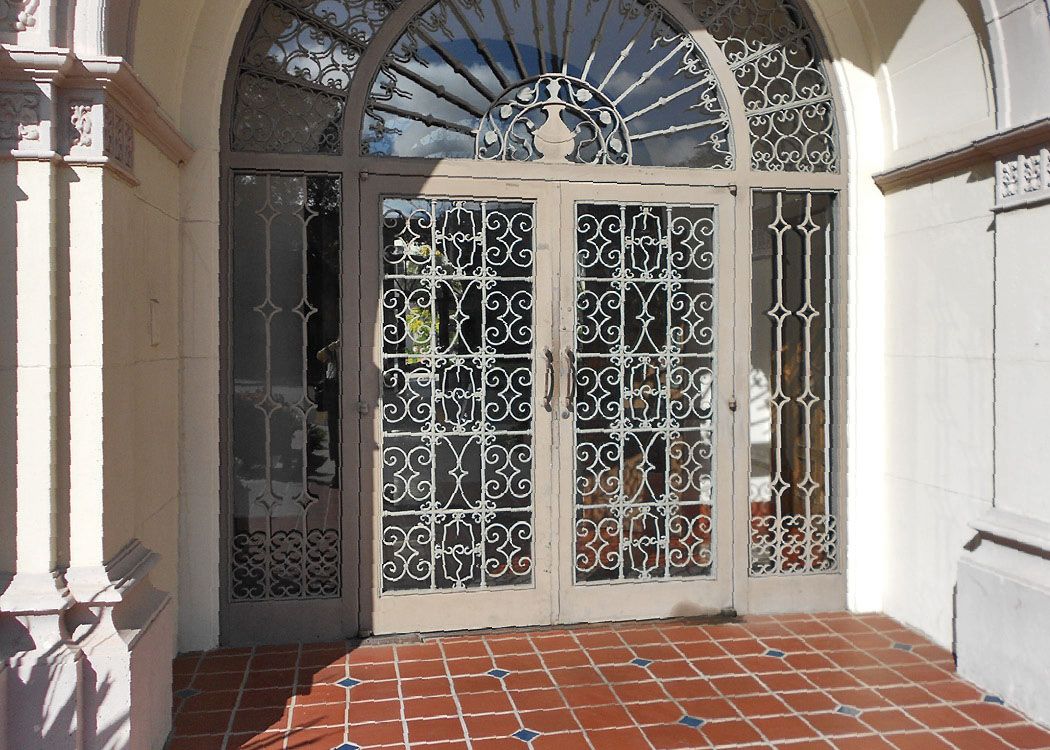
founders chapel USD door
University of San Diego Founder's Chapel Entrance Door

Intro

Again this year, Father George Morelli of the Antiochian Orthodox Church and a member of the Ecumenical Council's Faith, Order and Witness Committee arranged for committee members to attend the all-day session of Orientale Lumen West a few Wednesdays ago, on June 25. The website explains history and purpose of the annual event where "Eastern Orthodox, Eastern Catholics and Roman Catholics...meet and pray together, learn from each others' traditions, and become friends together searching for a common goal: 'that they all may be one' in the One Church of Christ."

My blog from last year's conference explains some basics: Orientale Lumen XI West. Last year's event started opening my life to the worldview of Eastern Christianity; the three talks we heard this year were exceptionally helpful in affirming some aspects of my own theology I've been thinking about a lot lately as well as attempting to explain to others.

Morning Liturgy

The Eastern Catholic Church, which is under the aegis of Rome, led the opening Eucharist. As I mentioned to my FOW colleagues, I could have gotten to Founder's Chapel at the beginning rather than close to the end in time to receive the antidoron, but intentionally didn't, since it is too painful to be excluded from the Lord's Table and my attending as a known protestant approaching the Table and being refused would have been not cool at all. Orthodox Christians couldn't commune, either...a pastor colleague from the committee told me he always gets "serious hat envy" whenever he attends an orthodox liturgy! For the past few months I've been trying hard to lighten up a lot, so his remark helped as did someone else mentioning my "lightening" attempts were most apt, given the conference is Light of the East.

Feasting and Fasting...

...according to the Byzantine Typicon, by Sister Vassa Larin and a panel discussion formed and filled our morning experience. Typicon is an ordinal liturgical book of examples rather than an obligatory code of laws. Sr. Vassa, the daughter of a priest in the Russian branch of the Byzantine tradition, is completing her PhD under Byzantine expert and Jesuit Father Robert Taft from the Pontifical Oriental Institute in Rome, and Fr. Robert was a member of the discussion panel! In this section I'm combining observations from Sr. Vassa's talk and the following discussion.

You can search to find more details on the topic, but we learned there are 6 classes of feasts, from greatest to the 6th class of simple days. I like the way the Typicon denotes which is what with a graphic symbol, and uses "rubric," a word familiar to us in the West to convey instructions in ruby or red type embedded in a liturgical text (in the Lutheran Book of Worship we also had the "pink wash" phenomenon...). I love the way Sr. Vassa explained (my paraphrase) sacraments and liturgy need to be grasped with our senses and integrated into our entire existence so we are drawn wholly into the salvific meaning of the Christ event.

Liturgy is meant to be for and by the whole church, for everyone in the church, rather than dis-integrating into rote lifelessness. But that's exactly what I've been trying hard to teach and explain: our worship describes (literally draws and writes, "en-scribes") what we believe about ourselves, about God, and about our relationship to God; in worship we demonstrate who and what we are supposed to be! How we live becomes based upon how we worship as our worship orders our lives. So if we worship money, contemporary culture, the beach, our career or anything else, that's what we become. Once again as I wrote recently (for sure not remotely original to me) "in worhsip we need to re-enact and re-appropriate the meta-narrative of our deliverance from death into life..."

Sr. Vassa described fasts as times of keeping watch, of anticipation and waiting, while feasts are fulfillment; there's penitential kneeling contrasted with eschatological standing. The purpose of the feast is to communicate, to "bring us together around the chalice," poignantly reminding me of the way we in the mostly mainline Protestant West have been working hard at achieving full communion agreements rather than continuing to go for organic unions—examples of organic union include the 4 church bodies that united to form the United Church of Christ, the 2 that came together into the Presbyterian Church (USA), and the 4 that joined and became the Evangelical Lutheran Church in America—one of those, the Association of Evangelical Lutheran Churches, originally was constituted as a uniting church...interesting (at least to me)!

"Liturgy confronts our lives with the image of a Savior who gave himself for all..." and we need to approach liturgy with a spirit of mimesis, of imitation that'll lead to a fusion of liturgy and life that creates a lifestyle (but again that's what I've been trying to say!). To quote myself from a while ago, "Worship that reflects and embodies God's Self-revelation and Self-giving in Jesus Christ." Iconography calls us to a wholly-lived life in which we become the icon, the image. Feasting is the iconological opposite of fasting and I'll say a little more about that in the Holy Time section of this blog.

Its name deriving from the same source as the English-language "type" and "typical," the Typicon points to an integrated lifestyle rather than a collection of rubrics. Fr. Robert described change in the Eastern Churches "like watching the grass grow..." but that's exactly like change in the Western Churches! Anthropological theology: the church emerging from anthropology, so in my estimation anthropology, "the word about the human" becomes ecclesiology, "the word about the called-out assembly (of humans)."

The East is legalistic?! But so is the West! A panel member observed in the olden days culture prescribed what we were supposed to wear to church (etc.). In my current spirit of lightening up, I'll tell about arriving at church on a summer Sunday morning a few years ago (I wasn't a worship leader). A friend observed, "this must be Southern California—you're wearing flip-flops to church." And yes, here in Southern California, I've preached in flip-flops as well as attending parties in them. But hasn't almost everyone?

Lunch

This year we got to have lunch in a faculty dining room and sat in comfortable chairs at a wide table overlooking an expansive canyon. The University of San Diego campus is exceptionally open and gracious, with a feel that reminds me of broadly letterspaced type that tries to convey leisure and a touch of opulence. The posted bill-of-fare didn't allow us a wide choice, but it was very tasty, though they served us their choice of (an okay) pre-planned dessert rather than giving us a choice from the printed menu. Maybe I need to write a few more restaurant reviews? But not at this time about that lunch.

Ravenna Statement

A new agreed statement from the Joint International Commission for Theological Dialogue Between the Roman Catholic Church and the Orthodox Church has been published (15 November). The commission met from 8-15 October 2007 in Ravenna, Italy, and finalised the text, which is entitled: Ecclesiological and Canonical Consequences of the Sacramental Nature of the Church: Ecclesial Communion, Conciliarity and Authority. Ravenna, the same location as the Ravenna Mosaics. We experienced a pre-recorded DVD of Metropolitan Kallistos of Diokleia discussing some intricacies of this "Agreed Statement" between the Roman Catholic and Orthodox Churches.

I love his "Church in Eucharistic Terms" and a reference to the book (I still intend to buy and read) The Church Makes the Eucharist-the Eucharist Makes the Church by Father Paul McPartlan, the Carl J. Professor at the Catholic University of America. (I'm sorry I haven't yet found a link.) Metropolitan Kallistos was born Anglican and currently serves as co-chair of the Anglican-Orthodox dialogue. Eucharistic ecclesiology with koinonia, covenental community as the leitmotif. Patriarchal structure is an "institution of the whole church..." all this makes A Formula of Agreement and Called to Common Mission sound like simplicity itself!

I don't know its origins, but a few years ago on the old United Church of Christ forums someone posted why are ecumenical relations like sex between Elephants? Here's why: it's done at a high level; it needs to be done very carefully; it's accompanied by a lot of trumpeting and braying; no one can tell if the elephants are coming or going; no one cares except the elephants! Metropolitan Kallistos also used the buzz-phrase "no bishop - no church; no church - no bishop." Describing the church as an icon of the Trinity reflecting the perichoresis of the Trinity reminded me of Miroslav Volf's (2nd, I believe) volume of free church ecclesiology, After Our Likeness: The Church as the Image of the Trinity. Metropolitan Kallistos mentioned conversations and agreements because of multiple jurisdictions and autocephalus (a word I use neither casually nor lightly, since it's not exactly part of my everyday protestant vocabulary) churches.

Holy Time

I watched just a little of the after-lunch liturgy videos and then Dr. Richard Schneider, a specialist on iconography and a professor at Canada’s York University and at St. Vladimir’s Seminary, provided the day's final plenary that essentially was about time intersecting with eternity—liturgy does not belong to the structure of time, but rather is the breaking-in of eternity into time — I'd express it as integrated chronos and kairos. Again you can search and research, but Eastern Christianity claims 5 cycles of time: Daily Prayer at essentially the same (I think) hours as the Western Church gathers to pray; baptism, marriage, ordination (a whole series from acolyte and reader through the great habit); 8 tones; movable feasts and fixed feasts. Interesting to contrast with Western protestantism's 2 sacraments, though similarly we consider the Eucharist a foretaste of the feast to come and a proleptic realization of the reign of heaven. Ordination in the West is different, too—some church bodies formally ordain deacons and elders, other simply elect or appoint and install them, though ordination to Ministry of Word and Sacrament connects the ordinand to the entire church in every place and time and authorizes them to preside at Table

Reflecting

This year I again found the ornate liturgical style in both real-life real-time and on DVD with its shiny ultra-bling and fantastically vested all-male clergy extremely off-putting, yet I appreciate the appeal to the senses. One of the presenters mentioned Orthodoxy evangelizes by means of attraction, drawing people in with the bells, smells, splendors and visible mystery. I often remind myself it took the passionate, optimistic, activist and wholistic ministry style of the first congregation I was involved with for me even to imagine the Way of Jesus as anything I'd ever consider being involved with, and I suspect that's what it would take for me even now, despite "having a rather accurate knowledge of The Way."

However, ultimately it needs to be about a style and expression that enables and supports a person's knowledge of Jesus and journey with the Lord of Life, along with a community of faith. Though I'll still insist on the necessity of vertical and horizontal connectedness, not every style of worship and preaching (or polity!) draws everyone and it's often different at different times of a person's life, as well as different days of the week.

For example, for Lord's Day/ Sunday worship I come close to insisting on liturgy and proclamation that clearly reminds me Who God is, Who Jesus is, what the Spirit is doing, that reminds me I am baptized, called and accountable, yet live under a reign of mercy and grace. But on a day or evening during the week, a far less formal, songs and bible-study teaching or discussion format is fun and fine, often healing and nurturing. A couple months ago in my first blog about Brent Bill's Sacred Compass blog, I explained about myself:
Despite a few sojourns elsewhere, I've remained mostly in this Reformation tradition because of its consistent ecumenicity and catholicity, an emphasis on the sacraments and a sacramental worldview, a justice and advocacy oriented public identity and confessional theology (something meaty to sink my brains into—I do not believe I've ever mentioned in a blog that I've actually taught Book of Confessions...); besides, these are the means of grace churches!
These are the means of grace churches but I can learn from all of them, including others in the West and those in the East.

Tuesday, June 24, 2008

Celtics 17

banner 17More Than a Feeling – Peace of Mind – It's Been Such a Long Time – Smokin'– Let Me Take You Home Tonight...

It happened 7 days ago, last Tuesday, 17 June, and arrogantly or not, for the record I'm turning this past Celtics season and their spectacular triumph in the NBA finals into a fable to parallel my own apparently non-victorious situation of the past dozen plus years. During game 6 at Boston (TDBankNorth) Garden someone held up a poster with the equation:
celtics banner 17
17, 17, 34, oh, yes! Series MVP Paul Pierce, whose website features The Man | The Player | The Community was graceful energy and determination throughout. Being interviewed at game 4 the previous Thursday he essentially said you don't think of the score--you simply play the game and gave us another explication of the famous "losing hurts worse than winning feels good," though that was prior to Tuesday...

Given that I'm making this a parable for my situation besides rejoicing in the Celtics win, the commentator who observed during an earlier game how a particular habit or trait frequently is both a person's or a team's weakness and their strength could have been talking directly about me. Assessing and surveying these too many years it's easy to see how one and the same characteristic has helped me get through too many rougher than rough patches just as in some cases it may have carried me to that point or kept me stuck there. I prefer how the word vulnerability translates into an easily-to-wound spot to "weakness," but the difference is negligible.

I noted the quote but not the date he spoke, but I loved that Los Angeles Lakers' coach Phil Jackson said "We don't stand as individuals in this game; it's a team game" and he quoted from Rudyard Kipling's "The Law for the Wolves":
Now this is the law of the jungle, as old and as true as the sky,
And the wolf that shall keep it may prosper, but the wolf that shall break it must die.
Immediately after last Tuesday's game and after we'd both posted "CELTICS!!!" status updates, Mike Lewis from church and I wall-to-walled on Facebook; here's part of our exchange:
me: [responding to Mike's Celtics status update] Oh, absolutely ! Was that not the SWEETEST victory, and even on their home court! It doesn't get any better than that--isn't Paul Pierce astounding!! Here's a high 5 for all of us, but especially for Boston and the Celtics!

Mike: Yeah, that was quite the exclamation point. KG finally came alive tonight and what a difference he made, he was a formidable presence. And how about Rondo, that little guy really was pesky and got in the Lakers business all night, he played a key role in getting the Lakers off-kilter. And finally, Paul Pierce, who after years of suffering finally got his due and cemented his place in Celtics lore. What a great season, after all these dark years it's finally nice to celebrate again!

Me: I so agree with everything you've said about everyone--and how wonderful that some of the greatest of the greats, maybe especially John Havlicek and Bill Russell were there to savor it all! I've been making these finals (actually the entire season) into a parable for my own life, since I've taken a truly unexpectedly excessive ton of hits over these years, but not to be modest, like the Celtics by grace I've been able to keep on keepin' on, all the while honing my skills in a lot of areas, and I'm waiting for my own splendid victory...here's a Bed of Roses for Boston!

banner 17Mike: I think the main thing to takeaway from the 07-08 Celtics is the fabric of their team; they were many components that meshed together as one unit. Together, they became as one and were victorious. They surrendered their desires for a greater good and emerged victorious! It was a win for the ages and very satisfying to witness this year.
Paraphrasing again, as Oprah told the teenager you know you can't do life by yourself, on your own. My innumerable attempts to reweave the fabric of my life all have pretty much failed and I've spent far too much time crawling rather than limping (let alone walking), yet I've done a ton of teaching, written a few 100 pages of substantial theology, won several design awards and produced several 100 graphic design pieces, all stuff that's ready to take me almost anywhere and none of which was there in this kind of relatively polished professional form when the recall committee hit nor even during the life stuff buttonyears immediately afterwards. Though I'll readily admit I'd accomplished a fair amount in those fields and I'll include the Beethoven Piano Sonata cycle in that series, I still have 5 more to go before I can claim to play the entire cycle to public performance level...so true I've been chippin' away at Beethoven for a long time, but when serving a local church (teaching in a local school, being a caseworker, attorney or any of a myriad of direct-service oriented callings) one simply does not have much physical or emotional space to dedicate to projects like Beethoven. Just like Paul Pierce, for the most part I haven't been checking the score or adding up the years, though the few times I've taken a count I've gasped at the number of years traversed yet quietly rejoiced at the distances I've run. So who's even thinking or imagining "Lakers over Celtics" or "Yankees over Red Sox" or "World Out There over Leah Right Here?!" In Poetry Party 17 (there's that number17 again) at the end of April I quoted the lyrics and linked to a performance of Bob Dylan's "When the Ship Comes In." It includes, "And the words that are used for to get the ship confused will not be understood as they're spoken, for the chains of the seas will have busted in the night and be buried at the bottom of the ocean." Amen?! Amen!!!

Wednesday, June 11, 2008

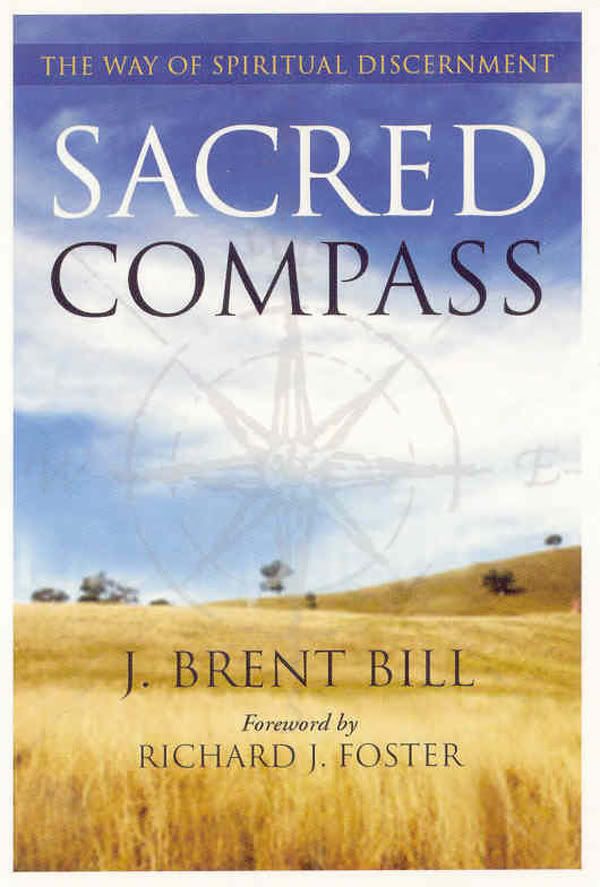
Sacred Compass 2

Today I'm blogging in growing green of Ordinary Time and starting with a backtrack from my Sacred Compass blog 1:

Sacred Compass is the latest book by Brent Bill, my friend who's a Friends (Quaker) pastor who lives in Indiana and sometimes hangs out on Facebook. Brent blogs at Brent Bill dot com and at the highly sacramental-sounding Holy Ordinary. Since I posted my first Sacred Compass blog Brent has started a Spiritual Discernment Blog; amazingly, blogger had reserved the Sacred Compass name in advance! I'd asked "is 'serendipitous' biblical theology?" I think maybe it is!

edited later: sacred compass blog spot no longer is active, so you can claim it for yourself.

Sacred CompassBrent is doing a great job keeping his book before the public and I want to be a loyal fan; after all, I'd like a few groupies surrounding me when my book (the one I haven't worked on at all for ages) debuts.

As we humanoids often observe, life is a long, strange trip. To name a handful who have walked in trust, like Abraham, Jacob and Paul and exactly like Bonhoeffer and MLK, those of us who commit to an often precarious path quickly discover it's far stranger and way more exciting than any human could invent.

Brent mentioned Mother Teresa's now-famous lack of conventional faith, suggesting her initial call to the ministry she performed may have been so blazingly glorious that almost everything in its wake plain lacked flavor. But was the Saint of Calcutta's experience unique or even unusual?? We all walk by Spirit-inspired faith rather than being led by physical human senses and plodding reason and in order to not stay stuck, everyone frequently needs to follow what seem like illogical signals. Amidst these discerning days I'm constantly reminding myself, "I'm a theologian! I can do ambiguity and paradox!" But living theology visibly out loud still take guts and generates anxiety.

What similar illuminations have I experienced?

In my first blog I quoted from one of my old commonplace books: "You won't know where you're going if you are always looking back!" And also cited a car commercial: "The need to make it home is basic, instinctual, undeniable..." on the same page of the same yellow-covered notebook I filled with mostly green writing, I wrote The road that leads you away will turn and lead you home.

In recent years a pair of extremely significant homecomings have happened to me and for me, despite my ongoing restlessness and doubts.

The first is (notice I'm present-tensing) a turning twisty road I walked in order to spend the last 18 months of my mother's life with her, a narrative easier to relate face-to-face than on paper or on the computer screen. I now recognize many of the ways God and circumstances were preparing my heart and my head to do what I needed to do and finally wanted to do.

The second road that led my heart home is the one I followed finally to become the graphic designer I'd aspired to be as early as pre-kindergarten. In my other blog I wrote:
I'd planned to become an artist, ideally to design textiles. I constantly feel and think in color and obsess about typography and I've taught art and freelanced some as a designer, but my narrative includes telling people "a greater Love than art found, claimed, and continued drawing me."
Precisely so, but I also think of the two scholarships to art school I received, along with my reasons for not going, and then the sudden opportunity I had to complete a certificate program in interactive media and graphic design. That kairos timing allowed me to gain proficiency and exposure to current softwares, something that wouldn't and couldn't have happened ages ago, and makes that part of the story very cool. Needless to say, I've had to keep updating my skills, but as an artist and designer I've come home to my heart to a satisfying degree. And as I noted, the intervening years were not artfully devoid in the least, so my experiences teaching and freelancing and always thinking in color, line and type prepared me well.

As a somewhat compulsive theologian who absolutely loves to read, study, write, teach and preach, the witness of scripture is huge in my life and world, especially as it reveals Jesus to me (of course) and particularly its revelation of how God has walked before other saints and set them free to hold wilderness feasts; I'm finally starting to own that story.

Recently I added to my list of quotes on Facebook from C.S. Lewis' Dawn Treader:
...said the Lamb, "For you the door into Aslan's country is from your own world." ... "There is a way into my country from all the worlds," said the Lamb...and he was Aslan himself...
Sometimes by radically rooted trust and sometimes with reasonably clear vision and hearing, often by gracefully perceiving subtle signs and signs, I've been making my way into Aslan's country, but the past decade has been lonely beyond description. As part of this current discernment phase I'm praying to discover a community that will welcome me into its journey, a people who will take time to learn who I am and celebrate my gifts and sense of call...

...another big "thank you," Brent!

my Amazon review: circles, angles and trajectories

Wednesday, May 21, 2008

Sacred Compass 1

Sacred CompassOh, I've been so slow getting this written and posted, but maybe not too slow, after all...as I've followed Spirit's leadings. It's now almost an entire month since I finished reading Sacred Compass, the latest book by Brent Bill, my friend who's a Friends (Quaker) pastor who lives in Indiana and sometimes hangs out on Facebook. Brent blogs at Brent Bill dot com and at the highly sacramental-sounding Holy Ordinary. I need to write this blog about discerning, trusting and following the direction(s) of Jesus' leadings in my life, but even more I need to pray, ponder and take yet another faith-filled leap into a relative unknown, trusting God cannot waste or squander any experiences, but will wrap them up and use them for the benefit of many in ways no simply human person ever could. I love the size and heft of Sacred Compass and the jacket design is beautiful, featuring my favorite yellow and blue color palette! For the past few weeks Martin Page's song from the mid-1990's, "In the House of Stone and Light," has been cycling through my head; when it was current it seemed as if every time I drove from Salt Lake City to West Valley City that song had to play on the car radio! Here's a lyrics selection:
O Mount Kailas uncover me
Come my restoration wash my body clean
I've been walking along a crooked path
Where the walls have fallen and broken me in half
I'm telling you I will not rest till I lay down my head in the house of stone and light
My spirit's been at war...
I will not rest till I lay my head in the house of stone and light!
Of course, the Rock is Jesus Christ is The Rock, Light of the World, calling us to live as His dwelling-place, house and home in the Spirit. I've probably mentioned an incident from long ago when I was teaching kids in VBS—I asked them what it means "for us to be the Body of Christ" and one of them replied, "That we can be city lights!" Exactly right!

In a (semi-obnoxious) hint of 1990's rhetoric, Martin Page also mentions "awake the child inside," leading me again to remember the diverse, activist inner-city church to which the Spirit led me and that re-birthed me in a way I cannot live differently from. Ten days ago we celebrated the Day of Pentecost, sometimes referred to as the Church's Birthday, while the secular calendar marked the same day as Mother's Day. People who know anything about me may have a clue about my fragmented, fractured situation with my human biological birth mother, but I still easily can identify gifts that brokenness has bestowed and enabled me further to give to the world. But out of necessity I frequently mark several places and times other than my initial official coming into the world as sources I find myself full-circling back to or more accurately, being sent back to. Witnessing a baptism or participating in the Lord's Supper sometimes gently, sometimes in a brilliantly illuminating manner reminds me of my origins and birth in Christ along with His promise and the Church's pledge to journey with me, however imperfectly and haltingly that occurs. After all, I've made and I've renewed those same covenants time and time again, and never fulfill them perfectly, either! Just as I've been doubly birthed in watery wombs and been sourced and re-created as part of the earth, the circular rhythms of the liturgical year do keep coming round again, despite our insisting God of the prophets, God of Israel, God and Father of Jesus Christ is God of history ...in one of my old commonplace books I quoted, "You won't know where you're going if you are always looking back!" But I'll also cite a car (Toyota?) commercial: The need to make it home is basic, instinctual, undeniable...on the same page of the same yellow covered commonplace book I filled with mostly green writing, The road that leads you away will turn and lead you home.

A couple weeks ago I listened to one of the author's podcasts; Brent read the chapter about signs we need to look for, read and interpret. God engages us as whole people with mind, body, intellect, emotions, spirit (etc.), and I recalled a few observations that started me off in God's direction; I'll describe only one for now. Ages ago on a brief visit to Albuquerque everything about the Southwestern desert absolutely enchanted me; several years later I needed to seek new employment because I'd been serving a term call that was winding down and for some excellent reasons I'd rejected the local nibbles and overtures I'd gotten. I got a wild inspiration to find a job in NM, so I sent my updated ministerial profile to the judicatory that included New Mexico. When I read about Brent's ambivalent feelings about the Indiana farm his wife considered an instance of Paradise, I immediately revisited my own feelings when I found myself invited to interview for a church - in New Mexico? no, not! - in the Great Basin high desert with its dry cold winter climate along with snowy surroundings. Yes, I got the call to serve that church, and during those years some phenomenally significant happenings unfolded in my life—in God's way, believe it or not, but in ways God had been perfectly preparing me for.

After worship on Reign of Christ 2006, in the course of talking with Larissa (she was visiting from up north a piece, where she currently lives and works) on the church patio in a burst of recognition I said to her, "God called me to this church, Old Condo Shadows, just as definitively as God called me to any congregation I served on staff." I knew it in my head, I felt it in my emotions and in my body.

As part of writing our stories, Brent suggested answering why we have chosen or stayed in our particular church tradition—a great one for me to ponder, especially given the countless times I've dared open up enough to tell people I've felt "deeply betrayed by the church" and in response to their asking, "What church?" I always reply, "the protestant mainline, the only church I've ever really known." That ecclesiastical tradition, or maybe those ecclesiastical traditions whose theology, liturgy, activism and style first attracted, then enticed, then captured me and continues to shape and form me. However...originally (from pre-kindergarten!) I'd planned to become an artist, ideally to design textiles. I constantly feel and think in color and obsess about typography and I've taught art and freelanced some as a designer, but my narrative includes telling people "a greater Love than art found, claimed, and continued drawing me." Despite a few sojourns elsewhere, I've remained mostly in this Reformation tradition because of its consistent ecumenicity and catholicity, an emphasis on the sacraments and a sacramental worldview, a justice and advocacy oriented public identity and confessional theology (something meaty to sink my brains into—I do not believe I've ever mentioned in a blog that I've actually taught Book of Confessions...); besides, these are the means of grace churches! As I continue teaching and engaging in theological conversation with people in the pews, I'm constantly aware my own theological, political and social perspectives are far closer to those of the national denominational leadership than they are to most of the folks in the pews; almost every day I advise myself "shut your mouth and open your ears!"

I feel and I know I've spent too much time without significant otherships, but maybe they're not quite as important as discovering or following the Spirit's compass to a community that has a clue as to who I am, that can call me by name. Am I asking too much? Possibly, or more likely I haven't demanded enough of others—or of myself. This road I've been traveling almost alone has broken me badly, while all these years I've kept inviting others to join me and to friend me in real life, simply to help me stand at times. Our (my) survival depends on the health of our (my) environment; healing and remaining healthy takes both grace-filled time and open space.

For a while one of our local radio stations syndicated John Tesh's radio show—Intelligence for Your Life; on one of the shows John suggested we not ask what the world needs but the correct question is what makes you alive! After all, the world needs people who are fully alive. Brent Bill suggests the test, "does this choice generate life (or death)?" Absolutely true that spending my early years in a decaying inner-city neighborhood and then serendipitously (is "serendipitous" biblical theology?) being discovered by an activist congregation full of people who knew they could help change their neighborhood, the city and even influence national politics has led me to keep insisting, "I prepared for a life of service to the church and to the world," and I still need to see my worth validated by measurable, observable outcomes. In a note to Brent I mentioned how Reformation church types don't typically count the softer spiritual practices and disciplines among their specialties; in his reply Brent observed one doesn't often hear about presbyterian mystics!

John Heinemeier in The Other Side for May 1988 observed "A spiritual revival means a revival of confidence, of hope, of the ability to affect one's own future." (page 15) Spiritual revival, renewed confidence and hope and trust I can affect my own future while I continue this precarious trek by faith rather than sight is what currently I'm seeking, and I cannot bear to hear one more person tell me, "God laughs at our plans" - "Life isn't fair" when both my earlier experiences and the witness of scripture have demonstrated God has greater plans for us than we can imagine, and God also stewards everything about us and around us in ways no human could invent. One more commonplace book quote—this one's way well-known:
God will not send you
beyond where your heart can defend you;
God will not lead you
beyond where the Spirit can feed you.
After posting this I'm going to go to the Sacred Compass page on Facebook to post this blog link and especially to discover what other people have been saying. Pre-publication at least one person commented on the April1, "April Fool" publication date. I so love the Motown favorite, "Endless Love," sung by Diana Ross and Lionel Richie, with its recurring, "And love, I'll be a fool for you." In Christ Jesus, God becomes a true fool for love of the world, love of humanity, love of all creation. How about us?

Recently I've written and talked about ways my theology can become my biography becomes my theology...discerning and trusting changes in the directions of my own Sacred Compass as well as observing those around me helps make that happen; regarding that reality, I have a few more events and incidents to blog about, but given that it's time to sleep and dream again, I'll post those in a few days. It might help if I'd refer back to the book before writing that post, because I know I've left out a whole lot that impressed me and I also missed the contest Brent announced—next time, then!

A closing observation for this evening: Brent mentioned his wife sending him visual cues and clues when he's preaching; one of them is "slow down"; another, more important one is "heart"...I tend to talk fast and I try hard to moderate my rate of speech, but I also know when my words begin running over each other, that's when my head's gotten out of the way and my heart's right in gear!

More on this topic in a few days; thanks so much, Brent!

my Amazon review: circles, angles and trajectories

Thursday, September 06, 2007

border gates; flash flood watch


In blog time this is about a week's worth late.

On the same day in the middle of last week here in Paradise, near-torrential rains caused too much H2O on the road, leading to the locally famous "turn around; don't drown" caution, and due to a protest by Mexican teachers in Baja California, the San Ysidro Port of Entry [and, of course, Port of Exit as well] border gates were closed so you couldn't drive across, though walking from one side to the other still was possible. San Ysidro is the busiest land border in the world, so imagine the confusion, changes of plans and maybe anger, too! However, all lanes were open in the slower border cities of Tecate and Otay Mesa. Both the highly visible action by the Tijuana teachers and interviews with folks who cross the international border every day for school or work or shopping made useful material for the local media and for reflection, too. I've written dozens of times about borders, containers, boundaries, hospitality, inclusion and exclusion, about sacraments—last Sunday's gospel [Luke 14:1, 7-14] gave me more to think about, and I've always found Luke's parables way easier than Matthew's, so that blog will be forthcoming soon. Or possibly not so soon after all, since hospitality has become the hot topic of my existence. Last week's major shutdown of such a major border got me thinking again about how people depend upon being able to go through gates and doors, to permeate boundaries between cities, families and, in this case, between cultures (ways of being and living with meaning) nations (political jurisdictions) and countries (geography), and what chaos and disorder potentially happens when both easy entry and easy exit in both directions become prevented, interfered with or otherwise changed.

"Turn around; don't drown"...turn around, because when the gates of the city are closed or barricaded physically or by decree (both ways, in this case) neither the Mexican nor the American border authorities will let you in, and if you violate their orders, you may find yourself in the slammer. As Christians, do we want to turn around and not drown? Isn't God's constant call to us and our preferred manner of life one of constant awareness of our baptism, in daily awareness and reaffirmation of [communal and individual] our death by drowning, which, after all, forms the fountain of our rebirth? But if we're required to go it alone, we might as well turn around and not cross the border, not dare stay suspended even for a split second in the liminal place and state that's neither here, nor there. Last Sunday senior pastor said, "beyond what we consider to be the boundaries..." I've been there, done that: death and rebirth by drowning, into life unbounded by human decree.

Please come along with me; walk with me!

Saturday, February 10, 2007

River on Fire!

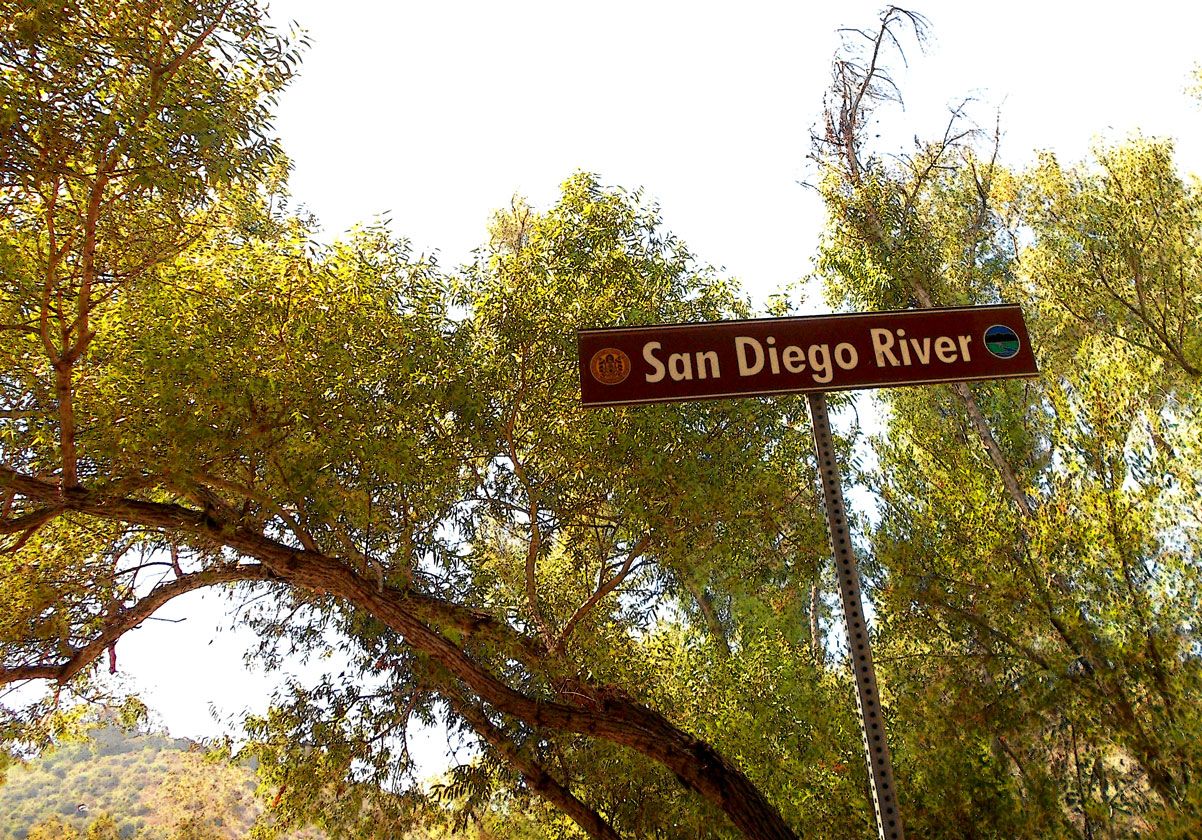
San Diego River Mission Valley

River on Fire? Not the Cuyahoga, with its notorious history of a dozen or more detectable fires, and not the San Diego River's more recent fire. Not the River Charles, either. Although I'm telling my readers this blog isn't about those rivers, I'll still ask what makes rivers catch on fire? It seems as if I blog and talk about the sacraments almost incessantly, and yes, this is yet another sacrament blog!

In Scripture, "River" often is boundary, border or barrier, and for Israel, the Jordan was all three, just as the surging, life-bestowing waters of baptism form the boundary between life, death and our new lives in community and in full-time ministry, a border differentiating us from the not-yet-baptized and sometimes a barrier to others' understanding and perceptions of our lives in Christ. Maybe baptism needs to be a barrier to our participation in many of the world's most common ways? Parallel to the Exodus from Egypt, the event that formed the identity of God's primal people Israel, baptism is a mighty Act of God, but beyond the Exodus, Jürgen Moltmann describes baptism as "sign, witness, representation and illumination of the Christ Event." In addition, the witness of scripture reveals that baptism bestows the Holy Spirit, bringer of renewing, redeeming, reforming wind and fire, bringer of the Gifts of the Spirit the apostle Paul loves talking about.

That same Paul says we're baptized into Jesus' death and resurrection, marked with the sign of the cross and the sign of the empty tomb. But living in Christ means we constantly live with paradox, and paradoxically, the Christ Event is both finished and not yet completely fulfilled. I've written about the Eucharist as commemoration, realization and anticipation, and baptism can be described in the same way. In baptism, God names us anew; we share our new name in common with our sisters and brothers. Now we claim all the separations, distinctions and distractions that once were barriers as the boundary and border of our new life together, as baptism's waters carry us home, to a place, an attitude and a condition of safety and embrace, where "I" and "me" become we and us. Because we baptize within the context of the assembly, representing the whole People of God, theoretically we can find a home anywhere we find God's people, but that theory often doesn't play out in reality.
See, the dark night has come down on us,
The world is living in its dream,
But now we know that we can wake up from this sleep,
And set out on the journey...
We'll take the road that leads down to the waterside...
We'll meet out on the water,
Where all strangers are known...

"The Ark," from Gerry Rafferty's City to City, (1978)
Of late I've been thinking so much about the fire of the Presence of God we find throughout scripture, and in our lives today. Pentecostal fire? On Advent 3 I challenged, "Today I'm asking you if the waters of baptism quench the Holy Spirit's Pentecostal fires? Think about it!" Tomorrow the choir (I get to accompany again) will sing, "You have put on Christ; in Christ you have been baptized! Alleluia, alleluia!" a festive round that's often and best sung with handbell accompaniment.

You have been baptized!

Feel that River on Fire!


That's the end of this blog for now! This is abrupt, but I'm behind in a ton of necessary stuff (though of course I make the excuse blogging prepares me for doing theology in non-blog contexts). Back to work...