Showing posts with label redemption. Show all posts

Friday, February 11, 2022

Five Minute Friday :: Commit

creation commit earth
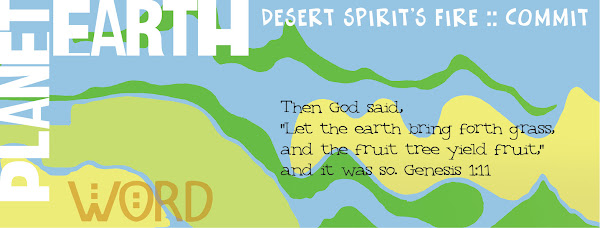
• Then God said,
"Let the earth bring forth grass,
and the fruit tree yield fruit,"
and it was so. Genesis 1:11

FMF :: commit linkup

Be committed to an institution. Join the church!

You may have heard the church is a human institution decided to God, a divine organism dedicated to humanity—and the rest of creation?

Whether or not you formally get baptized and officially join your local church as a full-fledged (flight wings more or less under your own control) voting member or mission partner, it began because of God's total commitment to you and to all God's beloved creation. As Martin Luther famously and scripturally explained the third article of the creed (sanctification), "I cannot by my own reason or strength believe in Jesus Christ my Lord or come to him, but the Holy Spirit has called me by the gospel … in the same way the Holy Spirit calls, gathers, enlightens, and sanctifies the whole Christian church on earth."

I bounced my header banner with the Genesis 1 quote off of my art for Season of Creation 2018; Word was the series focus that year. Speech and action are one and the same with God: God speaks and it happens. God's Word creates, redeems, and sustains because of God's [humanly] incredible commitment to us. Since God has covenanted with us in a completely unchanging yet endlessly adaptable commitment, is it not a privilege of grace already given to us and for us to respond with our own commitment to creation that's also our commitment to God? Caring for earth's grasses and grains, stewarding those lovely fruit-bearing trees? Not by our own power, reason, strength, or will, but because the Holy Spirit makes it possible.

So… are you ready to commit? To God who's committed to you? To the creation that's God's glory and dwelling-place, the creation that embraces us in commitment?

# # #
five minute friday commit
five minute friday button

Wednesday, March 29, 2017

Porch Stories: Serving

For today's Porch Stories, Kristin Hill Taylor's about Serving Where You Are Sent (Where You Find Yourself, etc.).

Serving

I hardly can count the times of consternation I've had when people have claimed out of context God's promise to the exiles in Babylon via Jeremiah 29:11, "I know the plans I have for you... to give you a future and a hope." The God whose Word enacts resurrection to new life from the most morbid of deaths does have a future in store for everyone, one far more abundant than our most extravagant hopes. We acknowledge scripture as God's word for us, but latching onto this passage because it feels good is blatant (or maybe pathetic) eisegesis. Holding onto that verse without the full context omits the condition of God's promise: obedience. As Walter Brueggemann points out in Out of Babylon, "this text urges coming to terms with the empire as the unavoidable matrix for Jewish well-being. [page 8] and "...it is Babylon that becomes (for now) a venue for shalom." [page 9] We know Jeremiah lived deeply informed by and responsive to the tradition of Deuteronomy with its demands of hospitality and care for all, of covenantal obedience—its emphasis on forgiveness, grace, and newness.
5Build houses, and dwell in them; plant gardens, and eat the fruit of them... 7But seek the welfare [well-being; shalom] of the city where I have sent you into exile, and pray to the Lord on its behalf, for in its welfare [well-being; shalom] you will find your welfare [well-being; shalom].
Jeremiah 29
My citation's intentional—a scripture snippet from the same chapter and historical exilic context, words that relate to wherever we are and constitute a call for us to look around right here and now–not backward or foreword in time, not geographically across town or to another hemisphere, though a different city or cultural setting well may form part of God's future for us. In every case the word for "welfare, well-being" in the Hebrew text is a shalom derivative. Like some states of the USA, you also could use the common-wealth designation.

A couple weeks ago for Porch Stories I touched on some implications of shalom. I assume most readers won't backtrack to my earlier post, so I explained:
the Hebrew word and concept "shalom" extends far beyond absence of war or conflict; shalom intrinsically belongs to God's manner of living together in community, whether that "common unity" is nuclear-extended family, a particular group that gathers around Word and Sacrament as a local expression of God's called-out assembly—ecclesia; a school of any educational level dedicated to providing the best for students and teachers, a neighborhood within a city striving not to neglect anyone's needs, aiming to provide that shalom-filled "enough" food, shelter, hope, and friendship to all comers of all ages and stages. It's true when the apostle Paul and his successors open their letters with "Grace and Peace" their word for peace is the Greek eirene that gives us "irenic" in English, but with Saul/Paul's Hebrew background his offer of the peace of Jesus Christ had to be fullness of care-filled community where no one lacked, not one had more than they needed. Paul, etc. did not refer to no-apparent-conflict or to the not-Roman, not-peace-filled Pax Romana.
It's Wednesday after Lent 4; churches that follow the liturgical calendar have journeyed more than halfway through the season of Lent. When Lent ends, the Three Days of the Triduum begins with Maundy Thursday, whose texts and liturgy retell and show us Jesus' mandate (or command) to serve one another in the way he demonstrates by washing the feet of his disciples and by instituting the freedom feast of the Lord's Supper or Eucharist—the long-standing Jewish practice of remembering by re-enacting God's people's Passover from slavery and death into life and liberty, but with a new emphasis and completion into a greater, shalom-filled redemption. Right there in the midst of where any observant Jew would have been on that day, Jesus seizes the here and now and charges his friends to "do this." Repeat this blessing and breaking of bread, this pouring-out of wine? "Do this" blood of the covenant announcement? Yes, in a sense!

Similar to how a passover seder meal and a eucharistic feast re-member liberation and resurrection with all of our five senses, we serve our neighbors' whole lives by constructing houses and planting gardens. More than once I've heard how ministering to people doesn't necessarily mean giving them what they want; it means giving them – or helping them get – what they need. What could be more essential and life-engendering than shelter and food, more shalom-restoring than creating community filled with friendship and hope, where we look around right now and right here, when we notice and attend to everyone's needs and even to some of their wants? Creating shelter from trees, leaves, vines, and sod; out of a well-tended earth—growing food. Breaking open the flesh and substance of our own lives and hearts, pouring out our essence in time, labor, and talent in service to others. Our own "little deaths" that contribute to the liveliness and well-being of others.

The Three Days of the Triduum begins with Maundy Thursday, with texts and liturgy related to Jesus' mandate (or command) to serve one another in the way his entire life showed us. This long-standing Jewish practice remembers by re-enacting God's people's Passover from slavery and death into life and liberty, but with a new emphasis and completion into a greater, shalom-full redemption that reflects God's manner of living together in the common unity of covenantal community. "A greater redemption?" Today is Thursday, tomorrow's Friday—Sunday's coming!

porch stories button

Wednesday, March 08, 2017

Three Word Wednesday: Full-Time Purpose

3 word wednesday full time purpose

When I riffed for a few on purpose as recently as the last Five Minute Friday, I quoted a famous to everyone reminder from the book of Ecclesiastes there's a suitable season along with some kind of intention for everything we do, everything that happens. Because I write to Kristin Hill Taylor's three word prompt and wanted to start before visiting her blog Wednesday morning, I messaged Kristin to ask what she was writing; she told me full time purpose arose after her daughter asked why she didn't work—"work" carrying that usual meaning of employment somewhere outside the home.

In some ways full-time purpose is the other side, a reversal of "a time for every purpose under heaven." God gives everyone the same number of hours, minutes, and seconds in each day. Those increments of time need to be filled with something—even if we imagine we're doing nothing, hours, days, and months still expire even more surely than the "best used by" date on the milk in your fridge or the salad dressing on your shelf.

Last Wednesday we entered the liturgical season of Lent; especially for Christians in traditions that don't observe the rhythms of the church's year of grace, a week ago on Three Word Wednesday I wrote a brief description of Ash Wednesday and Lent. Lent is a six-week span that purposely prepares our bodies, minds, and spirits for the Three Days – Triduum – sequence of Maundy Thursday, Good Friday, Resurrection, followed by the great fifty days of Easter that culminate with the day of Pentecost's celebration and anticipation of the reign of the Spirit of Life over all creation.

Today's about our purpose everywhere, all the time. About stewardship of the gifts and days God calls us to. When I wrote about Lent last week, I didn't mention the slowed-down, intentionally contemplative season gets its name from an old word for nature's season of spring when daylight lengthens! Many pieces of classical music use Italian language terminology to instruct the performer about mood and tempo (=time); if you see "Lento" at the start of your piano solo, that means play this slowly. What better time than a slowed-down forty days to outline your daily and weekly activities, assessing how well your lifestyle attends to the needs of your own body, psyche, and intellect. To God's purpose for you, for God's dreams and purposes for people and organizations (family, friends, workplace, school, church, clubs, government, etc.) you frequently encounter? It can be tough to acknowledge that after our relationship with God, our relationship with ourselves is most important; we're no earthly good to anyone else if we're not as all-around healthy and whole as possible. The lengthening days "springing" season of Lent is a good time to ask if we've allowed sufficient time for family nurture and care, for service to others out in the world, enough hours simply to be in God's presence praying, reading and studying scripture, discovering and uncovering what God's full-time purpose might be for my own life here and now. Oh, yes! Corporate worship at least once weekly, as well!

Traditions surrounding Lent include both "giving up" or fasting from a food (resigning from chocolate and meat are popular choices) or activity (can't miss TV show) you especially enjoy and "taking on" a practice such as additional prayer or community service. Do you know the enneagram model of personality and activity types? Mine is a "3", also known as the performer-achiever. In short, I don't really know the difference between what I do and who I am—it feels all the same, though deep down of course I know better. Discovering a current full-time purpose during Lent is an outstanding option for people like myself who want to fill every second with meaning and purpose. Everyone who reminds us "meaning and purpose keep you sane" is absolutely accurate, since reaching outside oneself and being there for others can sweeten bleak, disappointing (temporary, I trust) circumstances. But hey, none of us individually or collectively is going to redeem the world and thankfully, we don't need to—Jesus Christ already has done that. Prayerfully, deliberately, and even slowly, we do need to consider God's call to us in terms of rounding out our own full-time-purpose as the Spirit of Life realizes the fullness of earth's redemption.

3 word wednesday button

Friday, December 09, 2016

Five Minute Friday: Joy!

Again this week, Kate Motaung hosts a Five Minute Friday free write at her welcome place in cyberspace; today brings us Joy! as an amazingly appropriate seasonal prompt.

Intro:

Two Sundays ago, churches that follow the mostly lectionary-based liturgical calendar began a new year of grace on the first Sunday of Advent. Sunday, December 11th and its vigil on Saturday, December 10th will be Advent 3; the liturgical name of this third Sunday of Advent is Gaudete, "Rejoice" after the Latin introit or entrance prayer that comes from Philippians, "Rejoice in the Lord always!" I teach adult Sunday School at my church; most weeks we study and reflect upon one of the appointed Revised Common Lectionary scripture texts for the day. The first reading for all four Sundays of Advent for current "Matthew's lectionary year A" is from the first part of the long Hebrew Bible book of Isaiah—chapters 1 through 39. However, the writing and concepts are not necessarily all of a piece, definitely not all from Isaiah of Jerusalem, but in any case, whenever we teach, preach, read, wonder, we still need to deal with what's in the canon, and deal with where we find it placed. For Advent 3, in Isaiah 35, we have pure poetry about God's redemption of human creatures and the redemption, re-casting, almost a re-creating of the natural creation. And how? With water! Water was the womb of earth's first creation, of our first birth and of our second birth. Water. Is. Life. Life is joy!

FMF: Joy–Water is Joy!

Isaiah 35:1-2


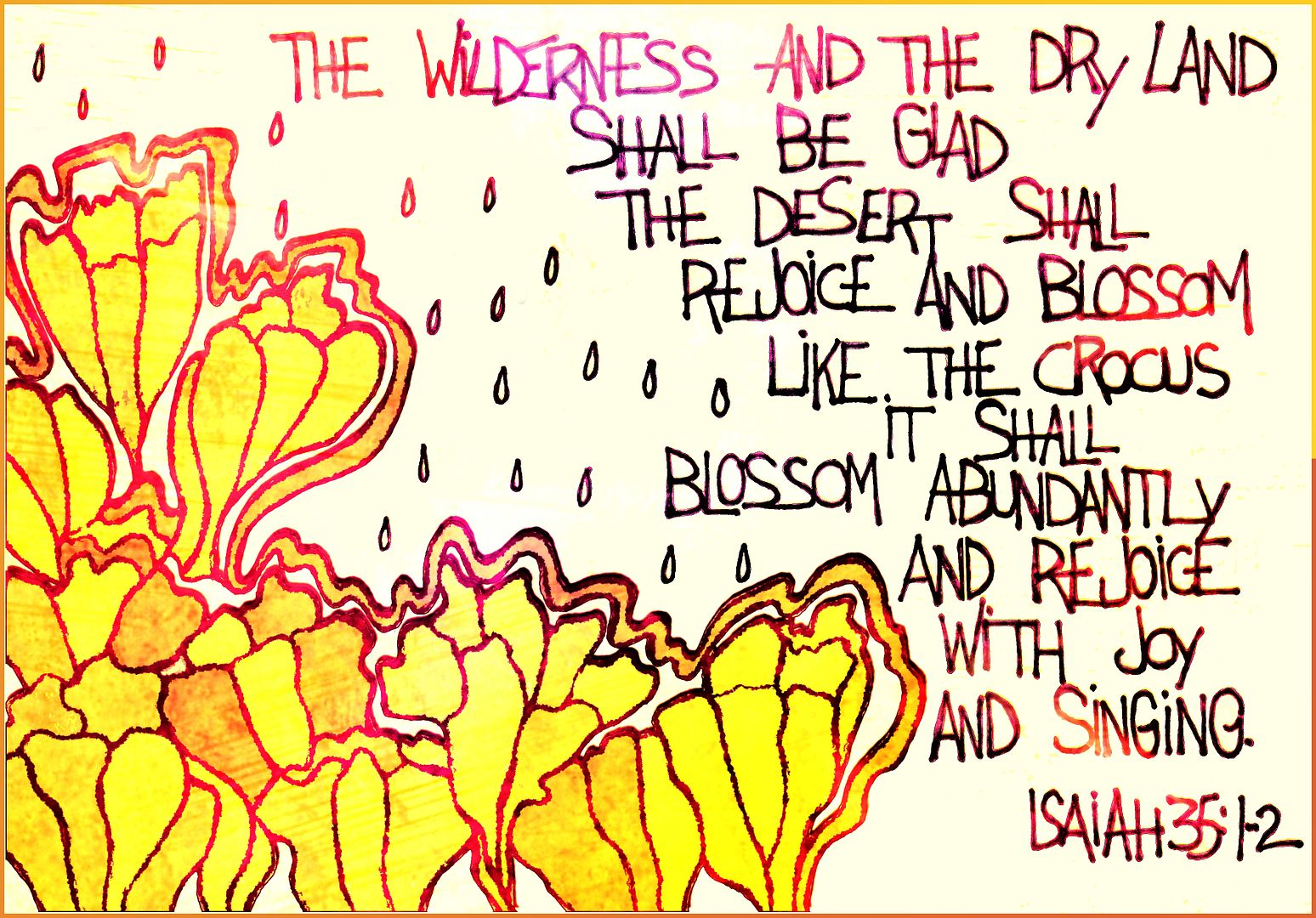
1The wilderness and the dry land will rejoice! the desert shall rejoice and blossom; like the crocus 2it shall blossom abundantly, and rejoice with joy and singing.

Isaiah 35:1-2Desert! We easily forget southern California is a coastal desert because of all the water we import from elsewhere in the state and from outta state, but everyone knows we need to "Save The Drop LA." Desert! The Ancient Near East and Contemporary Near East are desert habitats. Specifically in the history of the people of God, we remember the exodus desert of the Sinai wilderness as The Place of identity formation, the locus and the situation where YHWH led, shaped, fed, created a people after his own heart. The God of the Exodus and the people of the exodus rendezvoused with each other, fell in love and slowly moved toward covenantal trust.

Have you driven through the hot desert during the day? Or maybe at night when the air is cooler? Have you ever visited a desert (Anza-Borrego, for example) in glorious spring bloom? 1st Isaiah tells us the desert itself will "rejoice with joy and singing." I once had a housemate named Rejoice—being near her was a reminder to enjoy, and then enjoy again and again. Walter Brueggemann tells us of course the seas roar!...no more pollution! Of course the trees clap their hands...no more clear-cutting! Images of the eventual reality of the full redemption of all creation – not solely humanity – reverberate through all three sections of the book of Isaiah and are prominent in the psalter, particular in Nativity psalms 96, 98, and 148; what a fabulous lead-in to our celebration of the great trinitarian feast of creation that's Christ's Mass this poetry picture is for us. The desert rejoices because as you already know—Water. Is. Life. Water is joy! Rejoice!

five minute friday buttonfive minute friday joy

Tuesday, November 08, 2016

Green Team Talk – Reformation/All Saints

Here's the devotional talk I gave last Thursday for the Green Faith Team meeting.

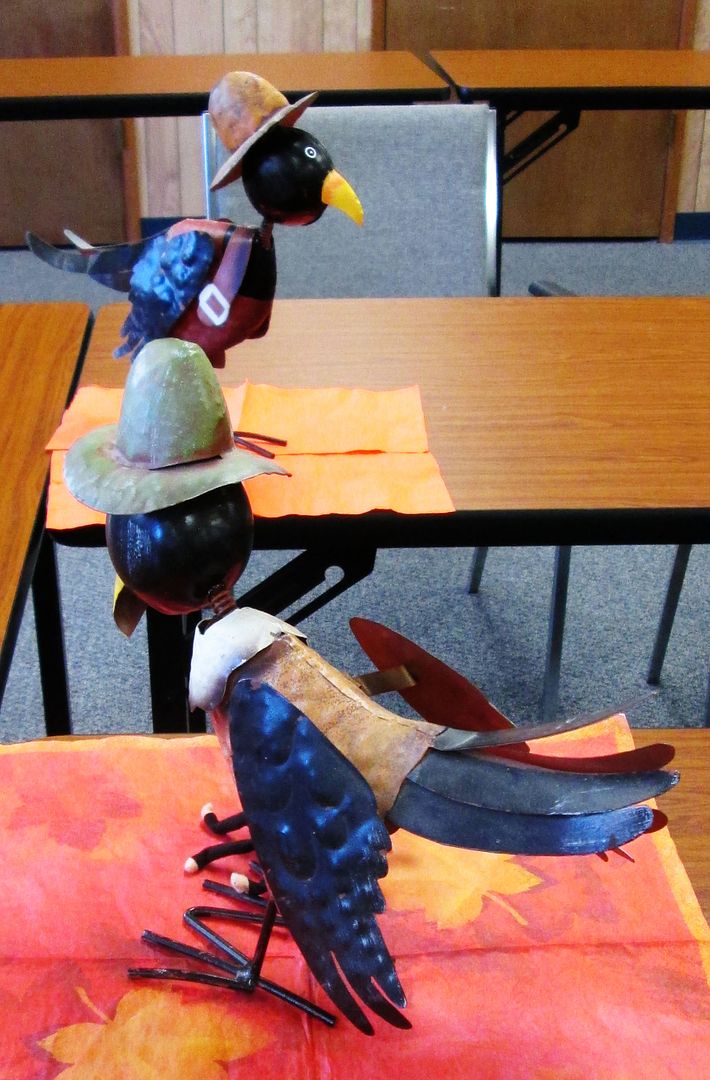
Congress of Two Crows• This week brings a confluence – a literal flowing together as rivers and streams of water do – of Reformation and All Saints. We celebrated Reformation last Sunday, recalling changes in the church the Holy Spirit made through human agency and also anticipating a church that never remains stagnant, always is alive. Next Sunday will be All Saints, when we especially remember those who have passed into the Church Triumphant, but All Saints is our day, as well. These actually are back-to-back festivals on 31 October and 01 November, but most churches celebrate both Reformation and All Saints on Sundays, since few people will attend weekday or weeknight services.

• Reformation is a major festival of the Holy Spirit when we "wear red," as we always do on the Day of Pentecost. The reading from Ephesians [1:13-14] for All Saints reminds us each of us in baptism carries the sign and seal of the Holy Spirit. All Saints is another festival of the Spirit!

• Pretty much from necessity, the Reformers particularly emphasized theology of redemption, of God's grace freely poured out, offered to all, given to all, through the birth, life, death, resurrection and ascension of Jesus Christ.

• The reformer Martin Luther got his theology from Galatians and from Romans, 1st Lutheran Glendale CAbut the psalms gave Luther his passion! Everyone knows the hymn he wrote based on Psalm 46; Pastor Eugene Peterson's version tells us the city streets are safe because God lives in the city; the city is safe because God bans war and breaks weapons. The city is a delight because God plants trees and flowers!

• We celebrate Pentecost and Reformation as major festivals of the presence of God in the Holy Spirit. But there is more! The priestly scribes who brought us the latest Pentateuch source [designated P] wrote late in the Babylonian exile or possibly after the exile, since dating is a bit confounded. They received a revelation that the destruction, the end of the Jerusalem Temple wasn't such a huge deal, after all. Imagine the crazy idea of a real God beyond space and time contained in a mini-replica of the earth and the heavens—that's what temples were! In Genesis 1 the priestly scribes show us all of the living structure of planet earth, the whole panorama of creation as God's dwelling place, the temple of the Divine. Genesis 1 also bring us the spoken Word that creates, orders, tames – redeems, renews, and reforms. And of course, we know Jesus Christ supremely as the Word of God.

• But there is still more! The Reformers – especially magisterial reformers John Calvin and Martin Luther – mostly concentrated on theology of God's grace-filled redemption of human creatures through the reconciling Christ Event. Halloween peopleHowever, John Calvin brings us a rich theology of creation revealing God's providence, of God's grace and providence revealed for all creation, not solely human creatures. Martin Luther brings us the insight of the Divine presence in, with, and under all creation. Beyond that, Luther affirms the ubiquity – the everywhere-ness – of the risen and ascended Jesus Christ. Can you say sacraments?

• The lectionary reading from Ephesians for All Saints reminds us baptism marks and seals us with the Holy Spirit. In the power and presence of the Holy Spirit, like all of planet earth, each of us is a dwelling place of God! Along with Reformation, All Saints is a festival of the Spirit; besides commemorating those in the Church triumphant, All Saints is a day for those of us still on planet earth, as well. How exciting to have the confluence of those major festivals this time of the year!

• And now? We need to trust, we can trust, the bounty of life in the Holy Spirit, the imagination of all creation, the reign of grace.

To God Alone Be glory; Amen!

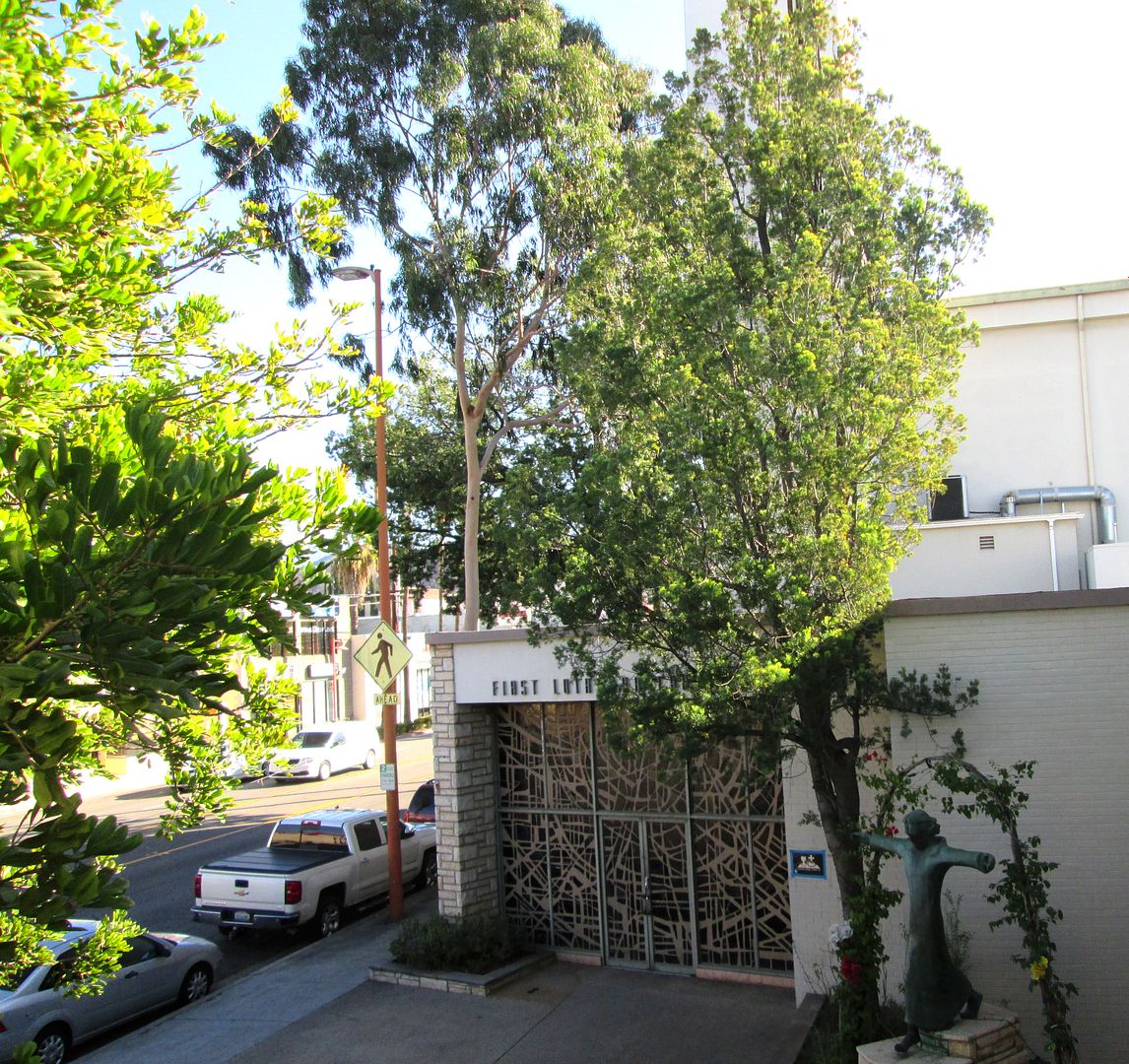
Judicatory offices share the campus with First Lutheran Glendale Church and School.

Saturday, April 19, 2014

Easter 2014

easter banner

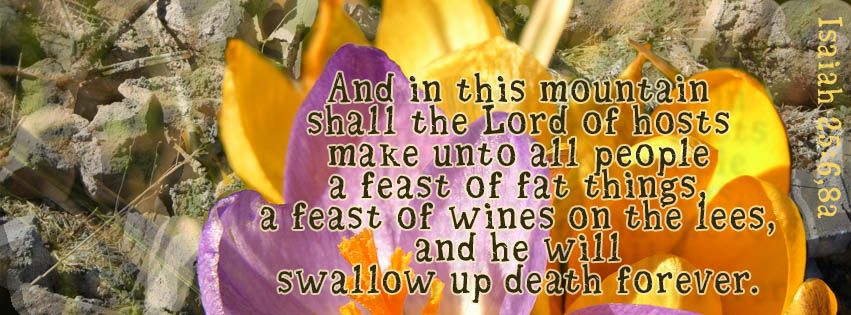
And in this mountain
shall the Lord of hosts
make unto all people
a feast of fat things,
a feast of wines on the lees,
and he will swallow up death forever.
Isaiah 25:6, 8a

Tuesday, October 22, 2013

justice is important; food is essential

October Synchroblog


October synchroblog
October synchroblog: what is social justice, really? Really, what is social justice?

Defining terms, I'll take "social" to be all or most of the people in a given geographical area or population cohort. Such as? Everyone in Current City, since for the most part, people are most interested in local concerns. I'll run with "justice" mostly as distribution of goods and services (implying also bads and disservices) in terms of who gets what, when, how, why... however, at least this time, I'm not equating justice with equality.

Hebrew bible scholar Walter Brueggemann tells us, "Justice is important, but food is essential." How powerful it is that we celebrate the fullness of redemption with a literal "Holy Communion," coming together around a table that's a festival of thanksgiving, a Eucharistic meal, a foretaste of the "Messianic Feast"? A time and a place where the land has been healed, crops are healthy (non-GMO), everyone contributes in some way to the food on the table, and everyone enjoys the feast. The gospel accounts – especially Luke's – tell about Jesus eating and celebrating with friends, disciples, strangers, and outcasts. And about giving his body for the life of the world.

Basic human needs include food, potable water, sleep, breathable air, and community. For the past year I've been participating in an ongoing weekly Thursday evening story about food freely offered to all comers at Church Around the Corner. Some of us arrive early to help set the table, make lemonade, slice, dice, sauté, bake, and grill. Lately we've been serving rather than having guests serve themselves. For a couple of hours, non-church neighborhood folks, usually some from one or more of the nearby homeless enclaves, regular church participants, and anyone else who stops in becomes part of this "family meal," as the sign in front of the church building describes it. Most everyone already has access to safe water, some place to sleep, air that's not actually toxic, and sometimes a ready supply of good food (although sometimes not so ready and not so good). Each Thursday we also offer that essential of community, a place of safety and belonging—if only briefly.

Who gets what, when, how, and why? Anyone who stops by gets a multi-course meal, conversation if they want to talk, an invitation to return, even questions about why we're doing this answered. We let them know they are so very welcome at Sunday worship, also! Why is Church Around the Corner providing good food for everyone? Partly to follow the example of Jesus, as part of their desire to live a Eucharistic lifestyle beyond weekly Sunday morning liturgy, partly because their position in that neighborhood mandates they reach out and serve their neighbors—all or most of the people in that particular neighborhood.

Justice is important, but food is necessary. Social justice is about getting a little more than those essentials, but making basics easily available helps begin freeing people to seek, to be open to opportunities for other aspects of justice.

Other October Synchroblog Participants:

Sunday, September 01, 2013

Rivers by Michael Farris Smith

Legal note in accordance with Federal Trade Commission 16 CFR. Part 255: I received this product for free from Amazon Vine with no requirement to write a positive review.

Additional blog material not included in my review:
You know I had to choose this book! I was born in the very deep south of the USA; as a little kid I lived with my late Dad while he taught forestry at Mississippi State—although I never really knew him, his obit says he worked in Gulfport those last couple decades of his life. Besides, Rivers is loaded with biblical and theological imagery. So here's my take on Rivers, by Michael Farris Smith.

Rivers book cover In the dark, murky, weather events and human interactions in this soon to be published book by Michael Smith, we find some apocalypticism in the natural world as we've known it unfurled into chaotic disarray, though very little apocalyptic in the literary sense of veiled, coded, communications. Is "protagonist" still a viable word? If so, it sounds too pretentious for something set in the Southern USA, too mannered for anything on my book shelves, so I'll refer to Cohen and Mariposa as the main characters.

Cohen's name connotes priest, a mediator between earth and heaven; Mariposa is the resurrection symbol of butterfly. The quick-moving narrative is biblical, it is southern, in some ways it's even a little southern religious. But not tent revival meeting, crickside baptism religion. Religious mostly in symbols of night, darkness, dawn, violence, blood, water, death, birth, resignation, and redemption. In the scriptural symbol of house as sheltered dwelling, house as lineage and continuation of one's name and presence in the world.

At book's opening we learn that Cohen, like his father before him, framed houses. Cohen's wife Elisa and his unborn daughter named Rivers both are dead. On horseback, on foot, in a truck, anyway he can move an inch or a mile, Cohen aims for Gulfport; along the way, he becomes entangled and intertwined with a couple dozen folks. He's no longer physically framing houses, and the daughter who promised Cohen's future is gone, so Mariposa needs to enter the story. Due to violent circumstances and mortal injury, Cohen eventually dies, but (of course) not before Mariposa becomes pregnant with Cohen's offspring. Was it not inevitable that amidst the end of the world as many had known it, a child from Cohen, whose name suggests connecting heaven and earth, would come into the picture to offer a future and a hope because of Mariposa, the butterfly that emerges from the caterpillar's tomb? Did it not need to happen that Cohen again would frame a house, this time one that bore his DNA and carried his lineage?

As much as I enjoyed Smith's writing and his Southern Impressions, and appreciated how he skillfully painted one scene after another, I was a little disappointed that Cohen and Mariposa were the only clearly drawn characters, but that may have been intentional. Also, this book was just about the correct length. If environmental. southern, or (semi)-apocalyptic fiction is one of your pleasures, I hope you'll consider reading Michael Farris Smith's Rivers. Thank you.

my amazon review: new from Michael Farris Smith

Tuesday, July 09, 2013

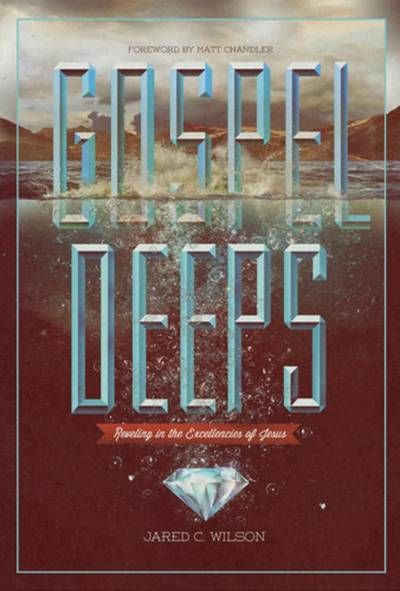
Gospel Deeps

Gospel Deeps: Reveling in the Excellencies of Jesus on amazon

Jared Wilson and /or the church he serves are affiliated in some way with:
The Resurgence

Gospel Alliance New England

• Jared Wilson pastors Middletown Springs Community Church in Vermont

and he has his own site:

Jared Wilson dot com
For what it's worth, Jared Wilson is from a theologically altogether more conservative background than I am. Complementarian gender roles in marriage, all-male church officers, a less sacramental worldview—these differences and others could become obstacles for me in some conversations. However, in this book, Pastor Wilson lines out, explains, and scripturally grounds the multifaceted depth, height and breadth of the person, position, and power of Jesus Christ in a manner virtually no Christian could dispute, and without once leaving a solid trinitarian perspective behind in the dust.

With easy-going prose, not many theological technicalities, and an easygoing conversational manner that truly makes me want to meet him in person, in fewer than 200 pages Wilson reminds those who've been absent from church for a while, those who've been attending Sunday and weekday worship faithfully, pastors who preach the gospel, how it's all about Jesus, because ultimately it's also about God's total loving claim upon all creation; I especially appreciated chapter 8, "Cosmic Redemption." A scripture index at the back is useful, also. Very definitely a very high recommend!

my amazon review: deep excellence

Tuesday, May 28, 2013

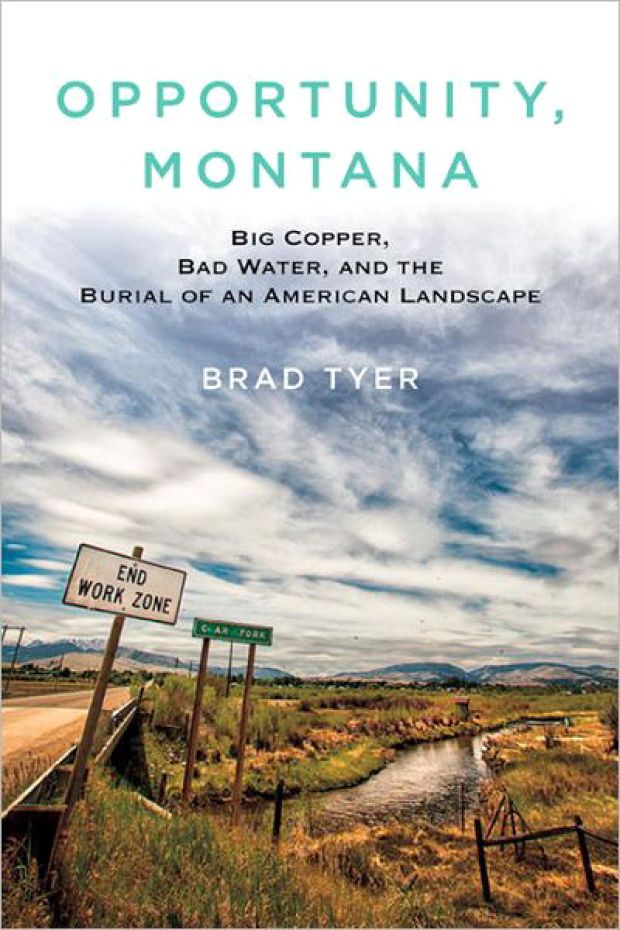
Opportunity, Montana

Opportunity, Montana: Big Copper, Bad Water, and the Burial of an American Landscape on Amazon

If you go to the Amazon product page, be sure to watch the video.

Opportunity book cover "Opportunity was born so that Anaconda could live, and now it's dying for Missoula's sake." [page 217]

Brad Tyer has written a revelatory, passionate, occasionally autobiographical, somewhat historical chronicle about the Clark Fork of the Columbia River, about a very small town named "Opportunity," about the human and planetary cost of extractive mining for metals, about the staggeringly high price of industrialization. Montana is one of the handful of the contiguous 48 United States I've never driven through or along the edge―never even alighted momentarily at a Montana airport on my way to another destination. However, before I read this book, I'd bought the "Big Sky" chamber of commerce image of a near-pristine, close to unspoiled Montana. This book changed my perspective and my awareness!

Had I simply not been aware of the violence Montana's mining history did to land and to people, did I not think of where so many mineral resources (copper, especially) needed for wiring Planet Earth for electrical and electronic aspects of modernization and industrialization originated? I don't know. I've seen Kennecott's enormous open pit copper mine that also yields substantial gold, silver, molybdenum, and sulfuric acid at Bingham Canyon, Utah; I've visited several Arizona mining sites; I've traversed Tennessee, Kentucky, West Virginia, and Pennsylvania, all with deeply conflicted feelings. Particularly contested feelings where earth has been turned inside outside, mountaintops sliced off, green hills stripped barren.

In the Jubilee text of the book of Leviticus we hear, "The land shall not be sold in perpetuity, for the land is mine; with me you are but aliens and tenants. Throughout the land that you hold, you shall provide for the redemption of the land." [Leviticus 25:23-24] here's Leviticus 25. I'm so sure... I am so sure .... proof texting with a snippet of scripture can be plain irresponsible, but can a violated, desecrated, and profaned land ever be redeemed, literally "bought back" and restored into healthy well-being?

"Opportunity was born so that Anaconda could live, and now it's dying for Missoula's sake." [page 217] We know all about that necessary and inevitable cycle of life – death – life – death – life... With "big copper" and "bad water" in the subtitle, this book – and this blog post – primarily are about the place of Opportunity and about the Clark Fork, a tributary of the Columbia that's a river in its own right, but, as author Tyer observes, aptly does not include "River" in its official name, since it's been treated more like a utensil than like a living part of nature. At the end of his book, Brad Tyer describes how redemption of the Clark Fork slowly and gradually is happening. Will a newly created river and riverbank have all the characteristics of its unspoiled, original state? No, but along with the surroundings it touches and influences, it will be livable for plants, wildlife, and people, and will form a prototype of what may be possible in other venues.

Reviews and publicity about this book have emphasized Tyer's interspersed accounts of his interesting but not atypical relationship with his late father, whose main life work was in municipal wastewater management, and to whom he dedicated the book. They didn't disrupt the broad scope of the book at all; in fact, I found them interesting. Who doesn't have stories about ways their parents' attitudes and behaviors have shaped their lives? My late grandfather was a Pennsylvania coal miner; more accurately, I am the granddaughter of a Pennsylvania coal miner, hence my interest in this book.

Any of Tyer's seven chapters would make an excellent serious magazine or journal article by itself: Headwater; Venus Rising; Red Harvest, Clark Fork; Opportunity, Revival; and Confluence. Opportunity, Montana is one of those rare books where almost every detail and description grabbed me. If you count mining, social or industrial history, environment, or future generations among your interests, consider reading Brad Tyer's Opportunity, Montana.

my amazon review: mining and a future for Montana

Saturday, May 18, 2013

new normal

Saturday of Easter 7 / Eve of the Day of Pentecost

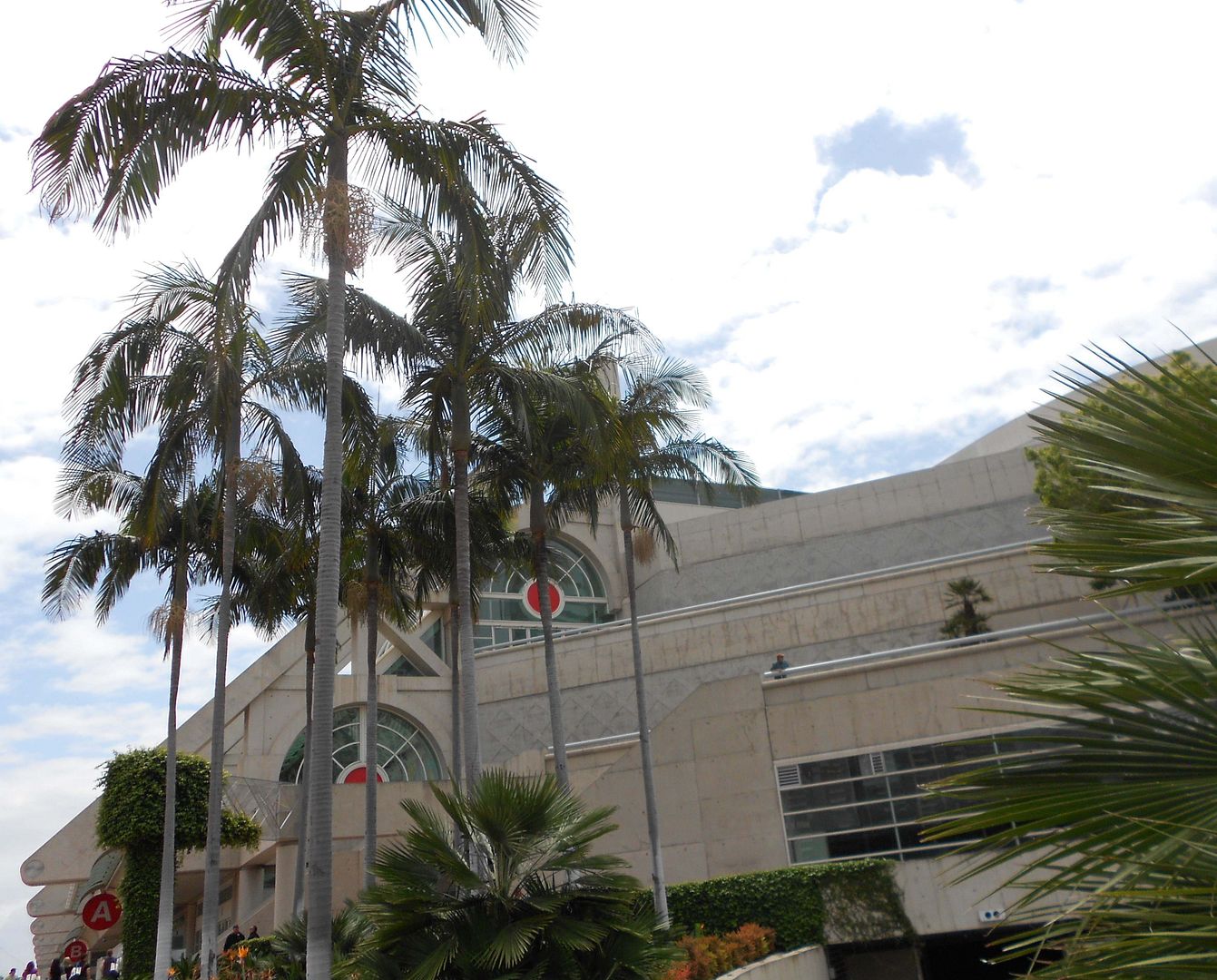
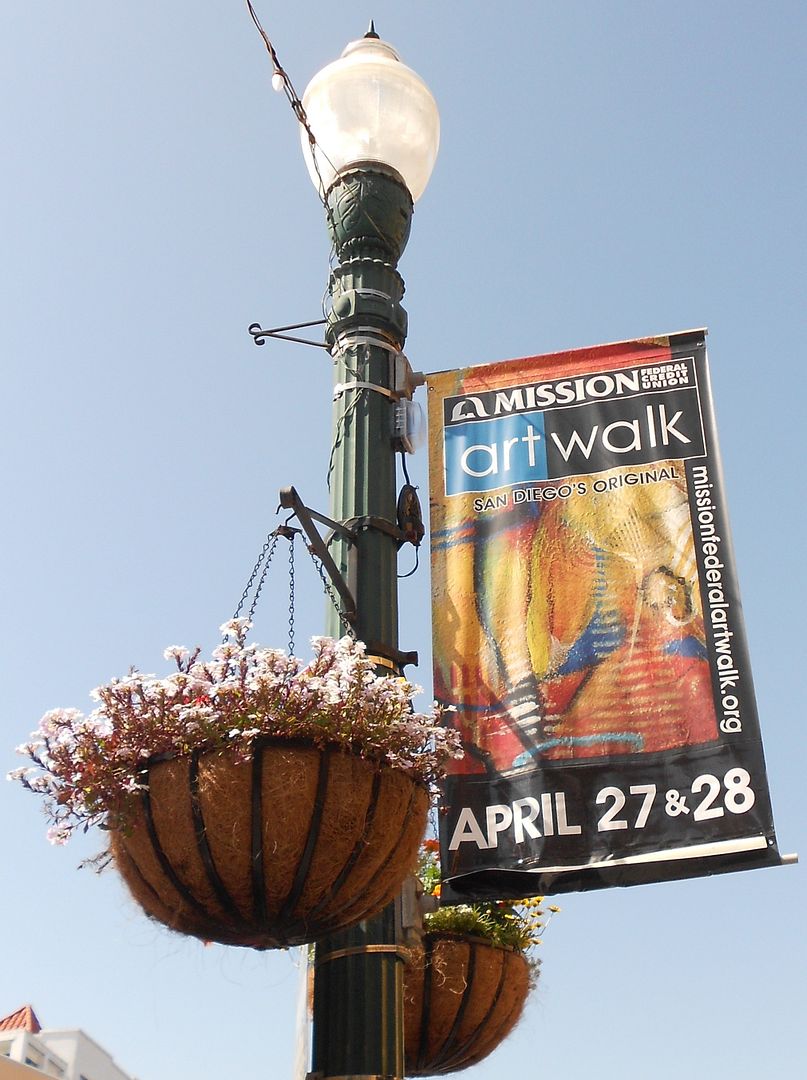
Last month I attended the Print Week vendor trade show on Thursday morning 25 April, ArtWalk the afternoon of Easter 5—28 April. God commands Israel to re-member their history and re-assemble in a sense [past] events they've experienced, essentially to bring them into the present. God charges the people to recall both devastations and redemptions that have re-created them into the community – and the individuals – they've become.

As always, I rode the super-fast express bus 50 downtown to Print Week, which meant walking about .6 miles to the convention center; on my walk I re-imaged when I worked downtown in a former life. The Commonwealth of Massachusetts' housing peeps were at Government Center, so that felt a little different from strolling through downtown San Diego, but the year I worked at the design studio was in the CBD and a blast of a location.

Recently this has been all over the 'net, so I'll simply quote to set the pace for the next section of this post:
The Italian immigrants of Roseto, Pennsylvania, ate meatballs fried in lard, gorged on pasta, and smoked, but they had half the risk of heart disease as the rest of the country. Why? Researchers concluded that it was because they lived communally, celebrated regularly, and had a huge network of friends. Dinner party, anyone?
Here's a scant handful of "what really was memorable."

• Prior to my move to Former City, being courted by Historic Inner City Church truly was exciting and kind of a mind-trip (they consider me qualified for this?!), but what were the details of that possible call? I don't recall. But I do remember potluck Thanksgiving Dinner at the HICC parsonage.

• From my last couple of years in Seafaring Town at the end of the last century, when I roomed with Heather, it was "do you want your pasta on a plate or in a bowl?" Aside from some gardening and drawing, sharing meals remains my main memory.

• Later with Nick in City of History, I'll never forget dinner together every evening—in fact, aside from starting to write some again by starting an urban page on the old MSN groups, that's the only thing I remember.

• About the church that since that summer disbanded and recently regathered as a mission in a different form? I enjoyed preparing and leading intercessions for Sunday liturgy, I liked playing organ/piano keyboards those Sundays, but more than anything, midweek evening Bible Study, dinner, and Eucharist humanized and fed me.

Week after week in this town, we have another military farewell, or homecoming, or sometimes one of each. Recently on the national news, we've seen families, friends, and communities literally "come together" from all corners and support each other, stand along side each other, and be there physically, emotionally, on every level for individuals and families who've experienced overwhelming losses and who need to grieve, who need help creating elusive "new normals."

In all this I still cannot shake the conviction individuals are supposed to be connected to other people. As Oprah said to the teenager, "You know you can't do life on your own." I remember waiting for a plane or car to pull up; sometimes I was in the car or plane, sometimes someone else was on their way to visit me at my place. Will that happen again? I'm too weary and actually have grown too smart to try to engineer that type of happening again, as I unsuccessfully tried to do for a few years.

Life is about seeking and finding a reasonably good fit amongst people, tasks, and goals. Barring a very cold climate (International Falls, Yukon Territory), I know I could be happy as long as I had human support, a few opportunities to contribute to the greater good. For me it's more about geography and weather and climate than about culture. Even so, how is it that I don't do concerts or museums? Why haven't I for a long time?

To start those activities in a new city or town, you need to connect with people; later you can do them by yourself. Education and skills usually literally "buy" (purchase) certain accoutrements and perks… but I'm well aware of the multitude of free and very-low cost high cultural (remember Edmund Sapir's Kultur?) and ethnic cultural opportunities around here. However, as I wrote at the top of this post, I did go to spring ArtWalk this year. It was fun, but nothing about booth browsing and people watching was enticing enough to convince to go again, unless someone will go with me.

For the past month I've loved listening to the vireos sing! Bird calls are innate; however, birds need to learn to sing from other birds. They begin with a sub song that's not quite singing, then go on to imitative (of other birds, of course) plastic song (interesting terminology), finally find their own crystallized songs. I'm yearning for a community that will teach me my own song, or help me relearn, or maybe that's remember my song, that will help me start composing new songs. A community of people who will raise me from this death?

telling the story

Wednesday, April 24, 2013

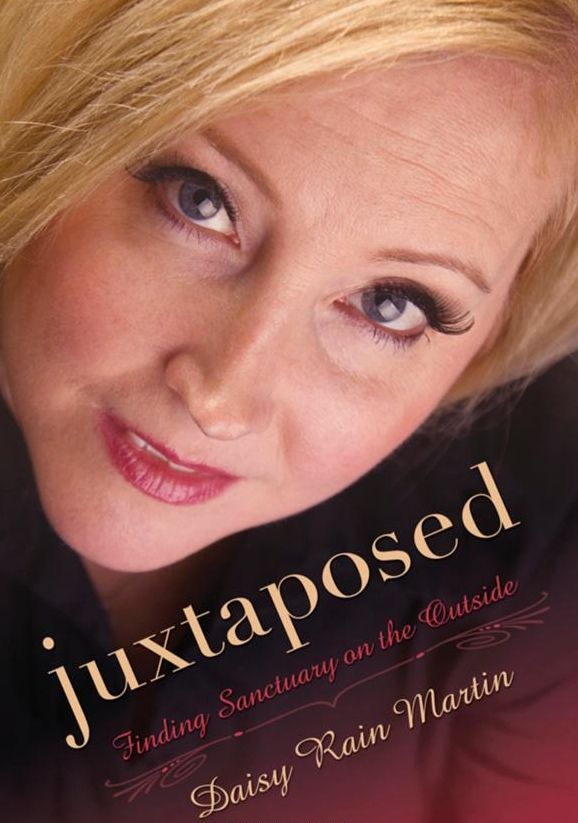
Juxtaposed

Juxtaposed: Finding Sanctuary on the Outside on Amazon

Daisy Rain Martin's site... includes resources and hope for revealing and healing from abuse.

As we walk through this world – and as we engage scripture – we discover countless juxtapositions of seemingly polar opposites: sin and grace; evil and good; brokenness and redemption; oldness and newness. Daisy Rain Martin reminds us, "The universe is random. This is Earth where sad things happen. And God wastes none of it."

Juxtaposed book coverDaisy spent her earlier years "between the sanctified and the insane," ultimately becoming humanly whole in spite of the horrific direct sexual, emotional, and physical abuse she endured from her mother's husband, the silent and tacit abuse she suffered because of her mother's complacency. From cradle on, Martin lived in patriarchal, secretive, self-righteous, Pentecostal Christian setting that mightily contributed to her attempts to hide and to justify the abuse as it happened to her. The first part of her first-person narrative moves at breakneck speed through stories of her childhood, then onto her college years at what's now Vanguard University. It slows down some to offer long and closeup views of her life today with her son and husband; finally at the end of the book, Daisy describes the type of redemption her once-devastated life now offers the inner-city youth she teaches. "A Daisy Flower with a Rain of Hope" sets possibilities and alternatives before those kids, challenges them to grasp newness and a future in their hands. She exclaims about what hope can do for a kid, for any one!

I loved listening to her recount stories of the ultra-conservative, highly legalistic church experiences of her youth; learning about her and her husband's (in the end) negative times with a new church start that appeared to begin in a positive manner heartened me, too. As the author points out, people have survived and thrived beyond far worse than she has; comparison's typically are a bad idea, though placing yourself, your past, present, and possible future into the story is a big part of the value of a biographical book. As I read, I wondered how much of my own past I still needed to shed in order to testify as Daisy does, "I enjoy a life of abundance and hope and freedom beyond anything I could have ever thought or imagined because I have let go of my past. Literally. That includes people." That's a tough one: not only deciding to spend less time with a particular person, more time with people who are healthier influences, but zapping people completely out of your life? I feel that's what most of the people who were part of my former life did to me, yet despite my behaviors and attitudes never achieving perfection, I still cannot fathom how and why I was so not okay to them.

Despite the literal atrocities Daisy experienced, the biological heritage from her birth father definitely contributed to her ability to endure, as did her apparent ability to view goings-on with some detachment. I love her description of finally getting beyond denial, raging at God, and opening a path to start healing. Snippets of this story could be almost anyone's, and God wastes none of what happens to us―none of what we sometimes cause to happen to others, either.

I read the digital version of Juxtaposed, but we'd call this book a page-turner if it were analog. "Raw!" and "powerful!" are book review clichés, but Juxtaposed is those and more. I want to meet and talk with Daisy Rain; I'm waiting for her to come to a town near mine. Soon.

my amazon review: the history and the hope

Monday, March 25, 2013

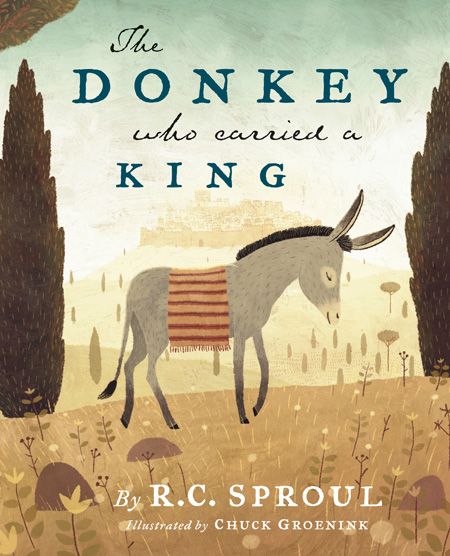
The Donkey Who Carried a King

The Donkey Who Carried a King on amazon. This book features a biblically-reflective narrative by R. C. Sproul with illustrations by Chuck Groenink.

Donkey Who Carried a King front cover In a similar manner to several books I've recently read, The Donkey Who Carried a King seeks to integrate scripture and "real life" by depicting current-day characters interacting with characters in a biblical story, or by relating scriptural characters' experiences to a present-day situation. In this instance, Reilly is a young American or Canadian (I believe, since he calls his mother "Mom") boy who isn't as popular at school as he'd like to be, so Reilly's grandfather decides to tell the Palm Sunday / Passion Week story of Jesus' triumphal entry into Jerusalem.

Yesterday was Palm Sunday 2013! Again we heard "The Lord has need!" "Hosanna!" "If these were silent, the stones would shout!" As many churches have been doing for a couple of decades, we celebrated Palm/Passion Sunday, moving too swiftly from Jesus' palms- and praise-surrounded triumphal entry to the walk with the cross, to the cross of crucifixion.

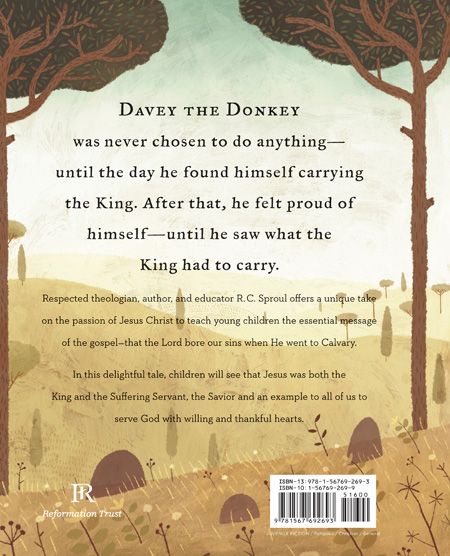
As part of creating context, author Sproul reminds us of other donkeys in the bible: diviner Balaam's donkey in Numbers 22; and Joseph's donkey – called "Barnabas" here – who carried Jesus of Nazareth's mother Mary. Through the voice of Davey the Donkey, Reilly's grandfather explains to his young grandson a servant God dying to self, and rising to new life for the redemption of the world, along with God's call to us to live as a servant creation―whether donkey or human. Donkey Who Carried a King back cover

For the Parents / Understanding the Story at the end of the book lines out some scriptural and doctrinal background. It's not comprehensive, but it is a good start in terms of reminding or teaching parents some basics and helping them explain to younger kids how the story of Donkey Davey and King Jesus is part of a larger, historically, and theologically interwoven fabric that also calls and enables us to live as servants.

Chuck Groenink's earthen-hued illustrations of both contemporary and biblical scenes are exceptionally beautiful. The book design also is exquisite, with some pages of text on a plain white background, others with words superimposed on the illustrations themselves. I realize R.C. Sproul is more accustomed to writing heavy-duty theology for adults than explanations for young people, yet he does well with this relatively simple account that alternates between donkey Davey and boy Reilly. The Donkey Who Carried a King could be a valuable addition to church or family Lenten, Palm Sunday, or Good Friday activities.

my amazon review: A Servant God, A Servant Creation

Monday, February 18, 2013

The Message and the Kingdom

The Message and the Kingdom: How Jesus and Paul Ignited a Revolution and Transformed the Ancient World, by Richard A Horsley and Neil Asher Silberman on Amazon.

Some of us who inhabit the world of the church distinguish between "Jesus Christians" (frequently Roman Catholics, people in "just peace" churches, other activist Jesus emulators), who follow the Jesus of the synoptic gospels and the Didache, and "Pauline Christians" (usually stereotyped as Protestants in church bodies of continental European Reformation heritage), who love to theologize the Pauline and deutero-Pauline epistles.

Scholars Horsley and Silberman offer economic, political, social, cultural, and sometimes religious considerations of Jesus of Nazareth's influences in a turbulent Ancient Near East during his time on earth and after his death; they also bring an overview of Paul/Saul of Tarsus' varied influences on early Jesus-followers. They caution us popular assumptions and shorthands aren't always so!

It wasn't all about peasant revolts, rural poverty, urban exploitation, or even oppressive empire, but for most groups, following Jesus or The Way of Jesus began as a hopeful attempt to regain some control over an existence slammed by dehumanizing religious and/or imperial injustices. The authors describe the why and the where of texts and trajectories of Mark, Matthew, John, and Luke-Acts; they remind us St Paul was far from a "this is how it needs to be / one size fits every group" teacher and missionary. (We don't need another proof-text...) "Within seventy-five years of the crucifixion of Jesus in Jerusalem, the signs of the Kingdom were unmistakable wherever the assemblies of the saints gathered. The most important rituals of every Christian's life―baptism, Lord's Supper, and collections―seemed to gird the assemblies scattered through the eastern Mediterranean..." [page 224] Sacraments and works of mercy are central to today's church assemblies, also.

The Message and the Kingdom is solidly scholarly, yet reads like listening to an interesting lecture series that respects those with an academic bent, doesn't confuse or demean those without. I love the multicolored perspectives woven through the chapters! "Jesus Christians" tend to emphasize Jesus the teacher, healer, transformer of society, and prophet; "Pauline Christians" love to dig into theology, Christology, eschatology, sin, death, and redemption. This book works well for both groups, and though neither the ecclesiastical nor the spiritual dominates the book, Silberman and Horsley don't exclude them, either! End matter includes narrative bibliographical notes on each chapter, a big bibliography, and an index.

my amazon review: many perspectives on Jesus and Paul

Tuesday, April 10, 2012

April synchroblog | resurrection - or not!

April synchroblog on wordpress, intro:
We want to ask, “What if the resurrection is a lie?” Asking this question will help each of us understand our faith, provide insight to why we follow Jesus, and open up ways of interacting with people who do not believe in the resurrection. April Synchroblog posts could also ask any of these related questions:

• If the resurrection did not happen, how would the world be different?
• If Jesus did not rise, would you still follow His teachings and example? Why or why not?
• If the resurrection did not occur, what religion (if any) would you be part of? Why would you choose this religion?
• Paul writes in 1 Corinthians 15 that if Jesus did not rise, our faith is in vain, and we are still in our sins. Because of what Jesus accomplished through His death and resurrection, this is undoubtedly true, but if Jesus did not rise, what other options are there regarding our sin? How would you deal with it?
• If Jesus did not rise from the dead, but the Scriptures say He did, how would this affect your view of Scripture? How would you now read and understand these passages that talk about His resurrection?
• If Jesus did not rise, how would this affect your view of Jesus? Could He still be God incarnate?
Pondering any of these questions would be interesting; this time I'll briefly respond to:

• If the resurrection did not happen, how would the world be different? and
• What religion (if any) would I be part of and why?

Intro

The gospel is physical, tangible, audible, sensory - "sensible" - in Westminster terms, yet the Spirit gives true life. Everyone has known people whose bodies have seriously weakened and whose faculties have diminished, yet who are fully alive. From history and from our own experience we know institutions originally organized to be helpful often becomes agents of death, human relationships can be deadly, war and armed conflict are death-dealing...

If the resurrection did not happen, how would the world be different?

april synchroblogThroughout the Hebrew Bible we discover "types" of The Resurrection in events of liberation and deliverance. This typology includes God's definitive prototypes of redemption from death on the passover, of freedom from slavery through the exodus. The image of Pharaoh's army drowning in the water of the Red Sea doesn't thrill me, but the enemy does need to be vanquished and banished and the Apostle Paul calls death the last enemy. Hebrew bible typology also includes realities of new birth from the surging waters of first creation, from the flood that floated Noah's ark, of Divine faithfulness in covenant-making and covenant-keeping. We hear about many unforgettable Spirit-called and Spirit-inspired humans without whom the outcome of history would have been very different--you can refer to them as "types" of Jesus Christ! The jubilee passage in Leviticus 25 mandates Yahweh's people release or redeem, buy back, all held captive by indebtedness of any kind, including servitude to others; the 50th Jubilee Year also grants the land a full year without work. Especially in the Hebrew scriptures, we encounter land as promise, as gift, and as covenant partner with humanity. In short, the Hebrew bible provides hints of resurrection, of the ultimate covenant with life.

Because of these events, even if the God of Abraham, Isaac, and Jacob, God of the prophets, had not enacted resurrection from the dead, I'd still be happy and privileged to trust and follow Yahweh. After all, the Hebrew Bible's record of Yahweh's deeds of unexpected deliverance reveals a God of power, love, mercy, and surprise like none other!

If the resurrection did not occur, what religion would I follow and why would I choose this path to help guide me?

If the resurrection hadn't happened and Yahweh weren't an option, what way of being and living might I follow? Despite knowing next to nothing about them, paganism and earth religions in general attract me because of their emphasis on the astronomical seasons, on the sacredness of creation, because of their focus on a lifestyle fully integrated with the history and gifts of this planet. I follow closely the recurring cycles of the church's liturgical year that in the Northern Hemisphere parallel nature's own seasons; the liturgical calendar has become "fully integrated" into the daily and seasonal rhythms of my own life. Alongside this practice at church and at home, I love acknowledging and observing summer and winter solstice, spring and autumn equinox and the cross-quarter festivals. Do these supply the earth or individuals with resurrection from death? Not really, since in them there's a recycling of the same or similar events (and some surprisingly unanticipated events now and then), yet they bring awareness of winter cold and somnolence not being a final word as spring ushers in fragile new life; in a recent blog I wrote how living close to the land for a while helped me learn to trust death. After a few years on planet earth we discover spring won't stay around forever, either, but literally grows and greens into summer. Just as in the long green and growing liturgical Ordinary Time/Time of the Church that also can be counted and numbered as "Sundays after Pentecost," the festival day celebrating the reign of the Spirit of Life, summer days and nights bring physical changes along with greater wisdom and maturity both in the earth and in human creatures moving into their summer years. Knowing that slowing down during the waning days of autumn will lead to apparent death when winter arrives is coupled with realizing a brand-new season of spring again will emerge from winter! Like Judaism and Christianity, nature religions are physical, tangible, audible, sensory - "sensible" - ways that appeal to and engage the whole person: body, mind, senses and spirit. Just as in the witness of the bible, in earth religions the land is promise, gift and full partner with humanity.

Thanks for this blogging opp!

Other April Synchroblog Participants:

Thursday, March 22, 2012

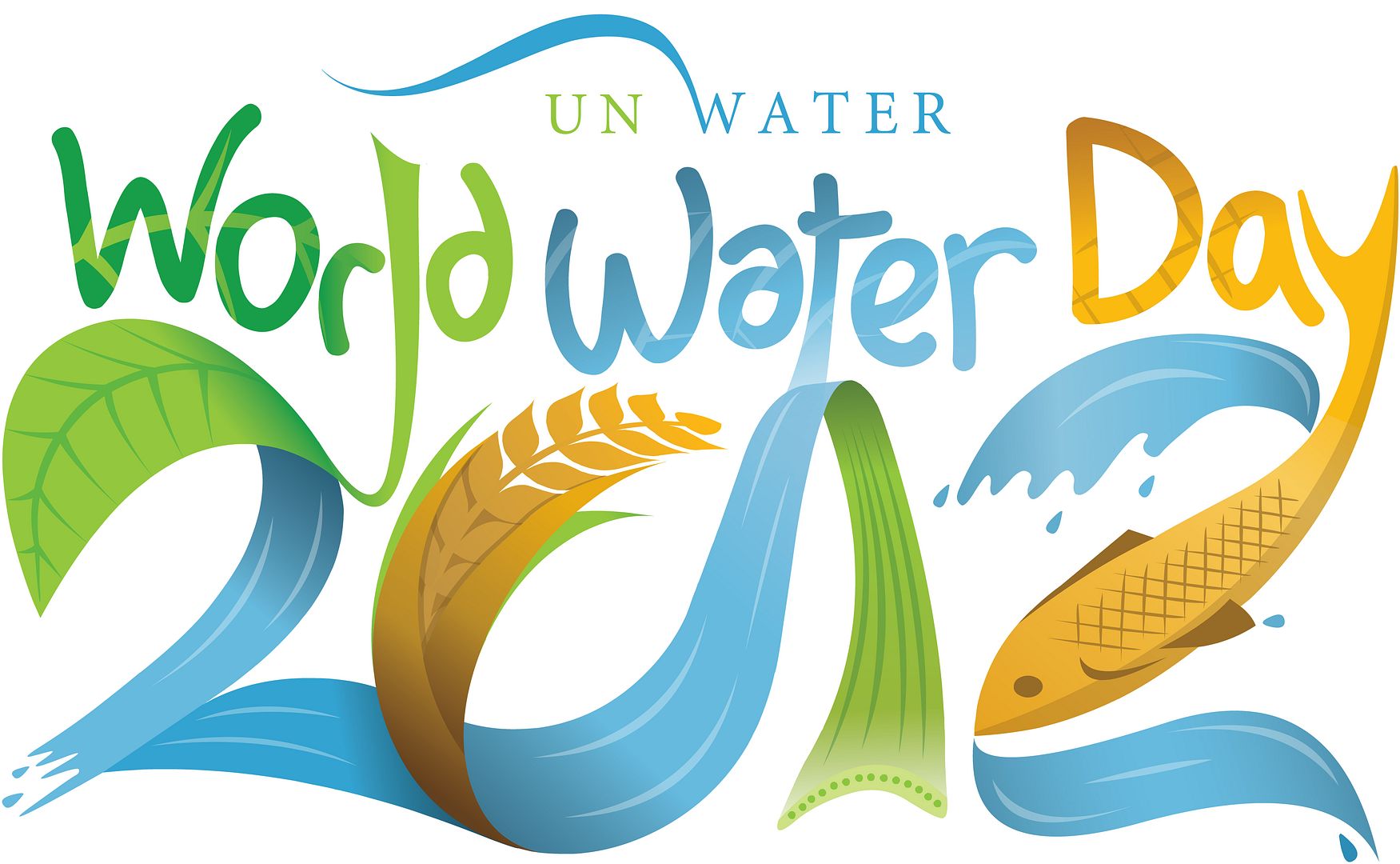
World Water Day 2012

world water day 2012 banner

World Water Day 2012—"International World Water Day happens annually on 22 March as a means of focusing attention on the importance of freshwater and advocating for the sustainable management of freshwater resources"—since 1993 and counting! The landing page lists topics for each of the past World Water Days; this year's emphasis is "Water and Food Security."

I'll highlight just a couple of their FAQs about water:

• All the food from crop and livestock production, inland fisheries or aquaculture, forest products, requires water. This water comes from rain and moisture stored in soils (green water) or from withdrawals in watercourses, wetlands, lakes and aquifers (blue water).

• 70% of the blue water withdrawals at global level go to irrigation. Irrigated agriculture represents 20% of the total cultivated land but contributes 40% of the total food produced worldwide.

world water day bannerWater is life! Digging wells for safe water and teaching reading for literacy are hands-down the best ways missionaries, peace corps and other deployed aid workers can change communities and individual's lives.

Common theological words and concepts such as water, bread, Lord, and land are what late anthropologist Clifford Geertz called thick: they're about basic essentials; pack a clout; don't need to be modified by fancy descriptive adjectives; most are Anglo-Saxon in origin. Over desert spirit's fire's almost ten years, I've written a lot about water.

The bible that holds Christianity's collected sacred texts begins with waters of the first creation and concludes with rivers of the new creation. Water is the womb of this planet's creation and the womb of our first birth as humans. In baptism water is the womb of our first death and of our re-birth – our re-creation – as we identify with earth's history. I'll quote one of my posts from a recent contest:
My particular Reformation tradition emphasizes the ongoing Divine presence and God's continued self-giving in the sacraments. But baptism and holy communion are far more than something we do in a ritualized way when we gather—they are lively signs to the world of our seeking and working for justice for all peoples and all the earth everywhere. Sacraments also signify the sacredness of all life as they form a microcosm of the promised time of the fullness of redemption for all creation. Real food is not manufactured in laboratory-like factories; real food comes from the earth and for celebrating sacramental ordinances we use flowing water, juice or wine from the fruit of the grapevine and (ideally recently homemade) bread baked from natural ingredients, so we need to be friends of the earth to continue celebrating sacraments.
BTW, that post was the first weekly contest winner!

Today for my Facebook page and profile status updates, I said I was going to blog about World Water Day and try to be a better friend of the oceans and rivers, a better friend of the earth. To help that happen, I'm going to follow some of the suggestions listed in the FAQs.

world water day 2012 banner

Tuesday, December 27, 2011

still waiting for redemption...

Jesus is here and I'm still waiting for redemption, yes I am! Plus, as I pulled together some scattered thoughts and notes, I realized most of them would work better for another, separate blog, possibly during early epiphany. Absolutely for sure I have a lot to say about ways following Jesus leads us into places and situations we wouldn't have guessed, and truly hope to do so soon.

Christmas synchroblog on wordpress and some [serving] suggestions:
"And Jesus doesn't always give us what we expect either. We welcome him as a cute little baby but if we continue to journey with him, we soon realize that he wants to turn our world upside down. A child born in a stable is much easier to cope with than a revolutionary leader. This month's synchroblog is centered around the unexpected consequences of our journey with Jesus. Where has it led us that we never anticipated? In what ways has it really turned our world upside down?"
Moving from my advent blog, gifts from the ground; hope for the earth to realizing even before the liturgical and popular celebrations of Jesus' birth on 24 and 25 December we've long known so much beyond the fulfillment of the Advent texts we've been hearing...

titus - grace has appearedBefore a baby arrives, we usually have a clue about the baby's parents, about some of their other relatives along with their backgrounds and experiences; we have more than a hint about the baby's geographical place on the planet along with their social and cultural milieu. Despite the quantifiable info, there's so much we don't know about ways that baby become child become teenager and then adult will engage the world, make a name in the news or on the street or possibly fade into oblivion. On the surface, the life of Jesus of Nazareth is pretty much parallel to almost anyone else's in that time and place. You know the narrative!

To quote from my Advent blog, "Though it's common to hear Christianity referred to as 'spiritual' practice, the way of Jesus is heavily economic, highly political and hardly ascetic in its celebration of gifts from the ground, in its perspective that insists on the interdependence of all life, in its historical affirmation of human sexuality and in its charge to care for all creation..."

Maybe especially though for sure hardly exclusively, as church bodies that grew out of the Reformation, we engage the public square and live as political, cultural and economic beings every bit as fully in the world as within the gathered assembly of the church. It's not solely "Jesus and me" but more expansively "Jesus and me in the world and for the world!" from Advent 2B: "...in accordance with his promise, we wait for new heavens and a new earth, where righteousness is at home." 2 Peter 3:13

Unexpected consequences of my journey with Jesus? Like Jesus, I was born into linear time and measurable geography. Forget about Christmas 2011—have I been getting what I expected? No, hardly in the least. I prepared for a life of service to church and world, expecting to participate in the economic, political and not ascetic way of Jesus that celebrates all creation; academically and practically I prepared to engage the public square, to challenge and maybe subvert the status quo; I expected to live at least somewhat counter-culturally. I knew the road would be rocky, but never expected to journey alone for so many years and fully expected eventually to come out on the other side of death into a relatively broad space where my participation would be welcomed and valued.

At the end of my Advent synchroblog, I mentioned "a world that cries out for cooperation, interdependence and redemption." Will no one cooperate with, depend upon me, so I might be redeemed, bought back into the land of the living? How else can we live but with each other? How else will I live again?

other synchroblog participants:

• Glenn Hager, Breathe, Underwear for Christmas

• Jeremy Myers, Till He Comes, Unexpected Gifts from Jesus

• Jeff Goins, GoinsWriter, Day After Christmas

• Wendy McCaig, Unwanted gifts...

• Christine Sine, GodSpace, The Wait Is Over - What Did I Get?

• M Kettleson, The Real Journey, Following the Baby We Just Celebrated

• Kathy Escobar, pain relief not pain removal

• Ellen Haroutunian, Jesus came, did you get what you expected?...

• Carol Kuniholm, Words Half Heard, What the Magi Found

• Sally Coleman, Eternal Echoes, unexpected...

Tuesday, November 29, 2011

gifts from the ground; hope for the earth

This is part of the more-or-less monthly synchroblog series when as many people who choose get to blog on the same topic at the same time.

Advent synchroblog on wordpress and what's going on: "To begin Advent we are exploring ideas that are encompassed in "Jesus Is Coming: What Do You Expect?" ... What are we expecting? How will it impact our lives and our faith?"

I really really appreciate getting a writing (or designing) prompt, something a little more specific than "Advent again!" or "Lectionary Year B again!" and wondering how our expectations might influence and make a mark in our lives and world feels just right. You can read the scriptures on textweek and elsewhere.

advent 1The texts for lectionary year B - Mark's year again - are about [God's!] faithfulness and about restoration; about transgression and redemption; about covenant and place. Images of personified nature in action, apocalyptic visions and unconventional human pregnancies. When we're pondering secular history, interpreting the past through the present - historicism - is bad form, but we interpret promises and events in scripture through the present literally all the time. During advent we hear about preparations and predictions and although we already know Jesus was born and Jesus still is here, what does it mean to live as people of hope, people once again awaiting God's promised presence in this early 21st century year 2011? From scripture, from Jesus of Nazareth's ministry and from God's grace-filled, Spirit-enabled call to the Church, we know nature is not the backdrop, nor is it the stage, the arena or even the means of God's action and self-revelation; in many ways nature is an actor and an end in itself.

The Feast of the Nativity, the first in the trilogy of great trinitarian celebrations with Easter (redemption) and Pentecost (sanctification) to follow is "The" supreme celebration of Creation. Christmas gifts ideally are gifts of creation: cookies; quick breads; pickled herring; mulled wine; homemade candles; hand knit scarves and sweaters. Considering Judaism's and Christianity's affirmation and celebration of the body and of the natural, phenomenological world, is it surprising (or is it possibly not at all surprising?) that at nativity-tide we acknowledge a newborn infant essentially formed from the substance of the same earth that grows crops to nourish us and that's closely related to other animals, "animate beings," that give yarn for knitting, help fertilize the ground, land that grows trees that shade, that gift us with lumber to make houses and shopping centers... we read scripture backwards and realize this baby named "Jesus - Save!" is the start of the New Creation!

Though it's common to hear Christianity referred to as "spiritual" practice, the way of Jesus is heavily economic, highly political and hardly ascetic in its celebration of gifts from the ground, in its perspective that insists on the interdependence of all life, in its historical affirmation of human sexuality and in its charge to care for all creation—in sacramental theology we even speak of the capacity of the finite to contain the infinite! Advent marks the start of a brand-new liturgical year and in these advent texts we again discover nature and the created environment are not the theater of God's revelation, not the stage of history, but integral to God's actions in history.

from Advent 2B: "...in accordance with his promise, we wait for new heavens and a new earth, where righteousness is at home." 2 Peter 3:13

from Advent 4B: 6 I have not lived in a house since the day I brought up the people of Israel from Egypt to this day, but I have been moving about in a tent and a tabernacle. 10 And I will appoint a place for my people Israel and will plant them, so that they may live in their own place ... 2 Samuel 7

The Feast of the Nativity, the first in order of the trilogy of great trinitarian celebrations with Easter (redemption) and Pentecost (sanctification) to follow is "The" supreme liturgical celebration of Creation; historically Christmas gifts have been gifts of creation.

What now? What do I expect and what am I planning to do for the start of this new liturgical year? How can I live in hope for the earth and for those who make earth their dwelling-place? I'm doing what I can to make my gifts this nativitytide not only gifts of creation but gifts for creation. Like someone trying to sort through accumulated notes, texts, papers and related from a few hundred years of school (that does sound autobiographical?) or similar to doable advice from cognitive behavioral therapy, I'm starting small. Loving where I am and showing it by consuming as little as possible, buying local, bartering goods and services rather than exchanging currency whenever possible. A couple loaves of bread in exchange for a pair of knit mittens? A locally sourced, home-cooked meal for clean windows?

Nature is no more spectator than humans are! In sacramental theology we speak of the capacity of the finite to contain the infinite… whether your theology considers baptism an ordinance or a sacrament, it can't happen without clean, flowing water. Whatever your theology of the Lord's Supper, Holy Communion, the Eucharist, it cannot happen without fertile soil, unfiltered sun, farmers and vintners and bakers, potters and speakers of the word.

I'm starting small this year, by giving gifts of creation to a world that cries out for cooperation, interdependence and redemption.

other participants include
• ron cole at the weary pilgrim – advent: reimagining everything
• liz dyer at grace rules – expect the unexpected
• mix melly at perchance to dream – parousia
• kathy escobar at the carnival in my head – present, humble, vulnerable
• David Perry at Visual Theology – Advent As A Mirror of Possibility
• Christine Sine at Godspace – Jesus Is Coming What Do We Expect?
• Liz VerHage at Living Theology
• Sally Coleman at Sally's Journey – Come Spirit of Advent
• Jeremy Myers at Till He Comes – Jesus Is Returning Today
• Glenn Hager – Antithetical Advent
• Ellen Haroutunian – Remember Our Story
• Carol Kuniholm at Words Half Heard – What I'm Waiting For
• Mihee Kim-Kort  – Advent Expectations: Keep Awake
• John Reid at Blog One Another – Undiscovered Advent: The Second Coming of Christ
• Dave Wainscott – For Advent I'm Expecting What I Desire and What I Deserve
• David Henson – Reflections on the Second Sunday of Advent
• david perry at visualtheology – word, life space and enlightenment

Saturday, July 30, 2011

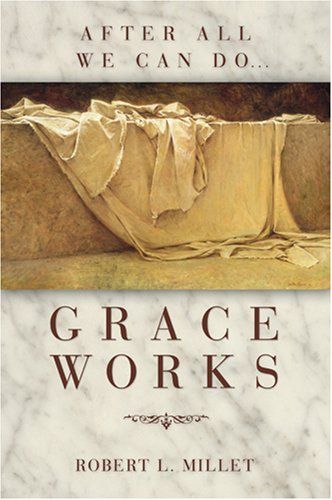
Grace Works

Grace Works, by Robert L. Millet

grace works coverRobert L. Millet is Richard L. Evans Professor of Religious Understanding at Brigham Young University. Although this book isn't an official Latter-day Saint publication, it's published by Deseret Book and approaches the subject from a Mormon perspective. However, the author has read widely and includes many references to non-LDS theologians, including C.S. Lewis and Karl Barth. "After all we can do" in the kicker to the title references 2 Nephi 25:23, but doesn't quite describe the LDS or any scriptural view of God's gracious work of redemption without a tad of explanation, including 2 Nephi 10:24 "after ye are reconciled unto God, that it is only in and through the grace of God that ye are saved." All we humans can do is "be reconciled unto God"—but even that reconciliation also is a gift of grace.

Disclaimer: including front matter, Grace Works is only 150 pages and is printed in a gracious size of graciously leaded type, so don't expect it to be completely comprehensive.

The book focuses around and keeps returning to the author's statement on page 2: "Because the Atonement is central, fundamental, and foundational, it provides meaning and purpose for every other doctrine and every covenant and ordinance. It is the lens through who we view every principle, precept, and practice in the Church." From explaining that Fall and Atonement are kind of like a "package deal," throughout the book Brother Millet provides clear explanations and relevant examples. On page 17 he lines out seven ways scripture uses the word grace: God's favor or acceptance; God's blessing; an outpouring of God's Holy Spirit or of spiritual gifts; a calling to preach the gospel; blessings associated with a person's lineage; strength to overcome and endure; that which conveys salvation and wholeness... on page 18, he tells us from a doctrinal perspective grace is God's mercy, love, condescension, lovingkindness and unmerited favor toward humanity.

Succinctly, born into the fallout of "The Fall" of humanity means "The natural man is an enemy to God in that he or she is operating on an agenda other than God's." [page 35] Natural, fallen and sinful essentially are synonyms. Grace Works is rich in teachings, explanations and especially in its reassurances that as essential as it is to keep the commandments, to love righteousness and do justice whilst walking through a broken, shattered and unreconciled world, none of that is enough because it's humanly impossible. In short, God chooses to remain with us, journey alongside us and enable redemption (salvation, wholeness, reconciliation) because even in us, incarnation, cross, Easter's empty grave and the Pentecostal reign of the Spirit remain God's work and God's glory, not ours.

At the back of the book you can find endnotes, a bibliography, a scripture index separated out into OT, NT, BoM, D&C and Pearl of Great Price along with an extremely thorough subject index.

For sure I'd like more emphasis on the inter-responsibility of community and individual, more explicit mention of our gospel call to help enact justice, healing and liberation to all creation and every segment of society, but what's already there on the pages of Grace Works works well for me and after all, it's barely 150 pages! With Robert Millet's broadly and ecumenically Christian worldview that's anything but exclusively Latter-day Saint, I'll give it a 5-star recommend.

my Amazon review: God's work, God's glory