Showing posts with label gospel. Show all posts

Monday, June 08, 2026

Pentecost 2A

My sermon from yesterday.

Matthew 9:9-13

As Jesus was walking along, he saw a man called Matthew sitting at the tax-collection station, and he said to him, "Follow me." And Matthew got up and followed Jesus.

And as Jesus sat at dinner in the house – Matthew's house – many tax collectors and sinners came and were sitting with Jesus and his disciples.

When the Pharisees saw this, they said to his disciples, "Why does your teacher eat with tax collectors and sinners?"

But when Jesus heard this, he said, "Those who are well have no need of a physician, but those who are sick. Go and learn what this means, 'I desire mercy; not sacrifice.' For I have not come to call the righteous but sinners."
picnic table
Here in the global North, we're one week into the halcyon days of summer, with sunny days, star-spangled nights, picnics, barbecues, music on the half shell, and feeling all of our dreams may come true, after all.

At the same time, the church's year of grace has opened wide the six month long season when we count Sundays after the Feast of Pentecost, a time of the Holy Spirit of Pentecost when the Church really comes into its own as we discern God's call and claim on our lives, and what ministries God may be calling us to respond to. Green is the liturgical color for these months, as we act in ways that help the world around us bloom and flourish.

This is the year of Matthew's gospel; today's gospel reading is Jesus' call to Matthew and Matthew's response. Although none of the earliest gospel manuscripts indicate an author, a community gathered around this disciple Matthew probably wrote this gospel.

As we just heard, Jesus notices Matthew at his workplace. Matthew collected taxes, tariffs, and tolls in the employ of the occupying Roman government. People generally hated tax collectors because – among other abuses – they added on their own charges to the amount required to return to Rome.

The gospels of Matthew, Mark, and Luke all contain this story. And, Mark and Luke tell us this tax collector's name was Levi, which means he was from the priestly tribe of Levites that ministered at the Jerusalem Temple. In other words, his life had fallen off the rails and he was in a profession opposed to his origins.

Today's reading from Matthew's gospel only mentions a house, but Luke and Mark tell us it was Matthew's house where Matthew/Levi made an extravagant banquet. Although we don't know the elapsed time between Jesus' invitation and Matthew's response, Matthew doubtless already knew a lot about Jesus. As part of his response to Jesus' invitation to follow him, Matthew offered an amazing feast to all comers, as if he already knew plentiful food was one of the signs of the presence of God's reign on earth.

Luke tells us everyone reclined at table. In that culture, reclining for a meal was a sign of shalom, of having "enough," no longer needing to scratch for life or be beholden to empire. Reclining at table meant everyone was an equal among equals.

* * *

You know about the ultra-religious pharisees with their self-righteous attitudes, and how they separated themselves from everyone else to avoid contamination. Jesus references "sacrifice" of the ceremonial law that did nothing to connect anyone to God, nothing to benefit anyone anywhere. Jesus reminds us he wants mercy.

Long ago in a previous life I knew a young woman I'll call Cheryl, because her name was Cheryl. Life dumped a lot on her from outside, and she made some decisions that had negative outcomes. It felt as if everyone was giving her unhelpful suggestions. When a new dog came into Cheryl's life and she decided to adopt him, she told me she asked herself what trait or characteristic did people need most? Her answer was mercy, so she named her new canine companion Mercy.

Is God able to name and call each of us Mercy and Merciful?

* * *

Originally for this start of the season of Pentecost when we discern and engage ministries that help the world bloom and flourish, I considered asking all of us to divide our lives into our immediate home, workplace, neighborhood; this parish and any other church communities where you're involved; and the larger, greater world out there. I thought I'd ask each of us what God is calling us to do in each of those arenas—smaller, manageable acts of service. That still feels like a good idea, but it's clear to me that the past couple of months, last Sunday's guest from Global Refuge, the needs of the city and county of Los Angeles and beyond, and today's immigration focused retreat after worship all point us to a continued emphasis on immigration and immigrants.

Last week Karla from Global Refuge placed immigration in the context of the Pentecost of our baptism! Scripture tells us we all are strangers and sojourners everywhere we go, and God travels with us.

I don't have an answer or a suggestion for ways to engage and minister around immigration during the next few months. We know it takes prayer, thought, listening, time, and conversations to discern where God is leading us and the nature of our responses.

* * *

Again today Jesus invites everyone to the table of grace for a foretaste of the feast to come when…

…many will come come from the east and the west, the north and the south, and recline at table in the Kingdom of Heaven. Luke 13:29

Amen? Amen!

Our song of the day is "We Come to the Hungry Feast"
table filled with food

Saturday, January 17, 2026

Baptism of Jesus 2026

baptism of jesus matthew 3:17
Matthew 3:13-17

13 Then Jesus came from Galilee to John at the Jordan, to be baptized by him. 14 John would have prevented Jesus, saying, "I need to be baptized by you, and do you come to me?" 15 But Jesus answered him, "Let it be so now, for it is proper for us in this way to fulfill all righteousness." Then John consented.
16 And when Jesus had been baptized, just as he came up from the water, suddenly the heavens were opened to him and he saw God's Spirit descending like a dove and alighting on him. 17 And a voice from the heavens said, "This is my Son, the Beloved, with whom I am well pleased."

The Baptism of Jesus

As always, this is approximate, but I'm still happy to have enough notes to blog. As always, the real thing last Sunday was more dramatic and maybe even a little poetic.


The baptism of Jesus! Jesus' baptism in the Jordan River by his cousin John the … Baptist! John baptizes Jesus in the wilderness, away from centers of commerce, politics, religion. Far from the establishment. In the Jordan that was the boundary and the border to the Promised Land for God's people Israel after their lives of slavery in Egypt and their long trek through the exodus desert as they trusted God's total provision.

We find this event in all four of the gospels, so let's sit up and take notice because it must be important, maybe even pivotal. Today we hear from Matthew that has been our featured gospel since the church opened wide a new year of grace on the first Sunday of Advent. Each gospel has a distinct personality because the writer(s) wanting to convey particular facts and events.

Matthew views Jesus as the new Moses, a new King David. Moses is about the Reign of Heaven, Kingdom of Heaven rather than the reign or kingdom of God because Matthew wrote to Jewish Christians and Jews do not speak the divine name. Matthew never lets up on justice and righteousness.

Near the start of Matthew, an angel tells Jesus' stepfather Joseph to name the soon to be born baby Emmanuel or "God with us." This infant will be the presence of heaven in our midst! At the very end of Matthew's gospel, Jesus tells us to remember his promise to be with us forever, even until the end of time. (Matthew 28:20)

Matthew starts by announcing a book of beginnings or origins – biblios (book) geneseos (origin), A new creation, a new Genesis. Do you think that's why the committee that compiled the New Testament placed Matthew first?

We know Jesus' conception, birth, life, death, resurrection, and ascension as the first fruits of the new creation. But look where we are for Jesus' very first public appearance as an adult. It's away from the movers and shakers, far distant from the religious, commercial, and political establishment. It reveals God's paradoxical way of making all things new—starting at the edges!

Doesn't that remind you of Jesus' mother Mary's Magnificat? She sang how God has:

• Scattered the proud
• Brought down the powerful
• Lifted up the lowly
• Filled the hungry with good things
• Sent the rich away empty

* * *

Jesus' mikvah or baptism wasn't the same as our Trinitarian baptism into Father, Son, Holy Spirit. It was more of a new beginning for the nation, with the individual, the smallest unit participating as part of the larger whole.

Our Trinitarian baptism is a sacrament, a means of grace, a mighty act of God. As the Apostle Paul tells us in 2 Corinthians 5:17, in baptism we became part of the new creation.

We famously consider Jesus baptism a Trinitarian theophany, or revelation of all three persons of the trinity. Theo = God; Phan = revealing, showing forth. And there are similarities between Jesus' baptism and ours.

Baptism begins Jesus' public ministry; baptism begins our public ministries outside of the immediate household. On this day many churches have a renewal of baptismal vows; today we gave thanks for our baptism with water and word, as we remembered and renewed God claiming, calling, and sending us in baptism.

* * *

But where are we as we celebrate the Baptism of Jesus? We're in the season of Epiphany that emphasizes Jesus as light of the world, God's salvation for everyone everywhere. We often symbolize that by light that reaches around the globe and can't be extinguished.

Light was the first element of creation. Without light there is no life.

We try to prayerfully honor our baptismal calling to work for justice, to act in ways that increase the greater good and maybe result in Good Trouble!

However, this country and the world, as well as most of us are in pain, loss – full of uncertainty about the future that's never a known factor; we're unsure more than usual of our next move or what tomorrow will bring.

Though we can't neglect or ignore those big concerns, let's try to focus on the micro level as we live out our baptism during this season of Epiphany.

Let's be light and life to each other at home – work – school – church. Let's how up for each other. And please tell each other what you need. Don't assume anyone read minds.

• We can do this!
• We are baptized!
• Amen!
* * *

Again today Jesus invites us to the Table of Grace. Jesus welcomes everyone to a taste of the New Creation where all is healed, all is whole, where creation's bounty knows no limits, where love embraces all.

Come, let us eat, for lo, the feast is spread.
Come, let us drink for lo, the cup is poured.

You are welcome.
I am welcome.
We are welcome!

To God alone be glory.
Amen!

Thursday, June 19, 2025

Five Minute Friday :: Circle

Scan 11 Circles
Five Minute Friday :: Circle Linkup

Talk about the circle of life is common. Because it's part of the way God has ordered creation, it's naturally part of our understanding. But the circle of life is only one way God orders and arranges creation and the times of our lives.

Nature religions and individuals with no religious or spiritual practice often claim that circular reality, but they leave out a huge part of scripture's witness to God's activity in creation, in history, in our daily walkabouts—resurrection from death.

During his public ministry, Jesus invited everyone to become part of his insider circle. In my baptism, God calls me to live as an outsider to most polite, tamed, predictable structures. God calls us to live as insiders to the way of Jesus.

Life in Jesus' circle is an identity shaped by the contours, demands, and relentless grace of the gospel that seeks justice, freedom, and shalom for all creation. Living in Jesus' circle is life sourced from Word and Sacrament, modeled by the order of creation, the actions and words of the prophets, and especially the birth, life, death, resurrection, and ascension of Jesus the Christ.

How many times have I quoted Cornel West:

We are people of hope. Why do we party on Friday nights? Why do we go to church on Sundays?

Because it's often the surprise of resurrection from the dead. The feast of fat things for all comers, even late comers. The full day's pay for everyone, even if you signed up at the last hour. The community of shalom sufficiency for friends, enemies, strangers, insiders, outsiders.

The worldview of the bible is open-ended, no longer the endless, predictable recycling of the same thing, yet there is a sense of constancy, of divine design and purpose to the order of nature and creation. Similar to my editing an image in Photoshop, the Holy Spirit edits, styles, filters, re-colors, and reformats people, communities, and institutions. The Spirit of Pentecost brings prophetic promises and broken hopes to life.

It's life-giving, world-changing, society-transforming, creation-renewing death and resurrection stuff!

It's no longer an endless circle of the same thing, so why do you still seek the living among the dead? Right here and right now, we live on the other side of death.

# # #
easter tulips
five  minute friday circle
fice minute friday icon button logo

Friday, June 06, 2025

Five Minute Friday :: Honor

bread and cup
Five Minute Friday :: Honor Linkup

• I'm picking up on this old one about towels and service—honor, as well.

Yesterday I asked a guest who was checking in at the hostel where I've been staying and working if he needed a towel. He said no, he didn't; he had a couple of towels with him. I replied I always travel with a towel, too. I started that habit when I stayed in European hostels, and continued it traveling cross-country USA, occasionally lodging in a motel or hotel, but often in a hostel or with a classmate or friend who had limited linens with limited or no laundry facilities.

To receive, claim, or possess an honor is a privilege. It's a charge. It's a responsibility. It's often a trust from other humans. It's often a sacred trust from God.

Revelation 7:9,10,12

9 After this I looked, and there was a great multitude that no one could count, from every nation, from all tribes and peoples and languages, standing before the throne and before the Lamb, robed in white, with palm branches in their hands. 10 They cried out in a loud voice, saying, "Salvation belongs to our God who is seated on the throne, and to the Lamb!"
12 "Amen! Blessing and glory and wisdom and thanksgiving and honor and power and might be to our God forever and ever! Amen."

Consider honors we have in our families, cities, towns, and workplaces. Honors the church gives us on occasion. The privilege of preaching law and gospel to bring a word of grace; breaking bread and pouring wine, making sure the eschatological feast has flavor and substance. Counseling and consoling. Calls for justice and righteousness.

In order to receive thanksgiving, honor, and glorious blessing, God in Christ Jesus has been responsible – fully responded – to our human needs.

But I started out with towels and time is limited, so where's the honor there?

I observed that to receive, claim, or possess an honor is a privilege. It's a charge. It's a responsibility. It's often a trust from other humans. Often it's a sacred trust from God.

Part of privilege is following Jesus to help make a person or a community more whole. Like a surfer's towel, if you carry one all the time as I generally do (when I travel, not usually round about town) and like that guest does, it can mean warmth and compassion. It can soak up tears, blood, rain, sweat, or water after a refreshing shower. Honoring that other person's needs is a high honor for us. Amen? Amen!

# # #
yellow towel
five minute friday honor
five minute firday button icon logo

Thursday, April 24, 2025

Five Minute Friday :: Might

1 Thessalonians 1:5
The gospel came to you not in word only,
but also in power and in the Holy Spirit and with conviction.
I Thessalonians 1:5

Five Minute Friday :: Might Linkup

Then he answered and spake unto me, saying,
"This is the word of the Lord unto Zerubbabel, saying,
'Not by might, nor by power, but by my spirit,
saith the Lord of hosts.'" Zechariah 4:6

Zerubbabel was supposed to oversee finishing rebuilding the Jerusalem Temple, but construction had slowed down and run into a glitch, as we might say. This passage reassures him that [human] resources aren't sufficient to accomplish God's work, or even to get anything done properly and completely. Cooperation and partnership between earth and heaven gets it finished, finished well, and – maybe most important – on God's timeline, not ours.

Our human power and might and effort and related gifts aren't wrong at all. After all, they are "gifts" or givens from God, and they're necessary for the ministries God calls us to. Our work in this world always partners with God's Spirit at the behest of God's call. Do you remember when Moses dialogued with God regarding "Moses, your people" or "God, your people," because it's always both/and?

Glitches in our lives happen because too often we humans try to do too much under our own steam, looking at our own clocks and calendars, too often not acknowledging the Spirit. Maybe we don't want to bother God with those smaller concerns when so much of civilization and creation needs so much healing, repair, and rebuilding?

Late December 2023 I determined to take a six month half year gap time, but as days went by and I assessed my situation, I realized a gap year made more sense. Now the chronology has spilled over a few more months into 2025, but signs and circumstances have made it clear it's finally time to move on. On God's timeline, not mine. And I anticipate more delays, possibly a roadblock or a few.

"Trust the process" has become such a cliché because that's how life works. Immerse yourself in the journey, savor each hour and each day. Ya know what? That's how humans learn and grow, how ideas develop, how dreams and visions become real. That's the way God engages us and gets things done. Not by human might, humanity's power, but by the Spirit that created the world, the Spirit that redeemed creation, the Spirit that calls us into a new creation.

Anyone who has despised the day of small beginnings
will rejoice to see the plumbline of the Lord's house
in Zerubbabel's hand. Zechariah 4:10a

Can you imagine teaching and preaching God's word without guidance from the HS? Can you imagine spreading the gospel, being the good news of God with us, God among us, without trusting in and waiting for promptings and instructions from the HS? The same holds true for every aspect of every moment of our lives. Think about it!

The gospel came to you not in word only,
but also in power and in the Holy Spirit and with conviction.
I Thessalonians 1:5
# # #
five minute friday might
five minute friday button logo icon

Thursday, January 23, 2025

Five Minute Friday :: Favor

jubilee

• Five Minute Friday :: Favor Linkup
Luke 4:14-21

Then Jesus, filled with the power of the Spirit, returned to Galilee. … He stood up to read in synagogue, and the scroll of the prophet Isaiah was given to him. He unrolled the scroll and found the place where it was written:
"The Spirit of the Lord is upon me, because he has anointed me to bring good news to the poor. He has sent me to proclaim release to the captives and recovery of sight to the blind, to let the oppressed go free, to proclaim the year of the Lord’s favor."
Then he said to them, "Today this scripture has been fulfilled in your hearing."

The year of the Lord's Favor!

Jesus was 30 years old and had been attending synagogue for a long time. He knew the texts of scripture well, so after the attendant handed him the Isaiah scroll, Jesus would have been able to pick and choose the passage he wanted to read that comes from the third section of the long book of Isaiah. But it's possible they had a set reading schedule, the way many churches follow the revised common lectionary.

Jesus combines Isaiah 61:1-2a
"The spirit of the Lord God is upon me, because the Lord has anointed me; he has sent me to bring good news to the oppressed, to bind up the brokenhearted, to proclaim liberty to the captives, and release to the prisoners; to proclaim the year of the Lord’s favor."

And Isaiah 58:6
"To loose the bonds of injustice, to undo the thongs of the yoke, to let the oppressed go free, and to break every yoke?" (Jesus leaves out words about vengeance.)

The year of the Lord's Favor!

This is Luke's version of Jesus public ministerial debut. Just as for John who opens Jesus' public ministry with a party (on the third day, because?), it's also in his Galileean hometown, a working class place full of thieves, robbers, petty criminals, and gentiles! This passage highlights Luke's themes of Holy Spirit, the marginalized, the underprivileged.

The year of the Lord's Favor!

Jesus tells his listeners right now, today, this Isaiah text has been fulfilled. Jesus mentions the year of the Lord's favor, the Jubilee 50th year – 7 years times 7 – from Leviticus 25: debts cancelled, captives released; although the land kept sabbath every seven years, during the jubilee that's not only holy to the Lord, but "holy to you" (that's us, the Lord's people), no pruning or extra harvesting. Plus, although all the land belongs to God, in the jubilee year fields will return to their original stakeholders.

And why? Leviticus 25:38 explains, "I am the Lord your God who brought you out of the land of Egypt, to give you the land of Canaan, to be your God."

During Advent we hear Mary's Magnificat, also from Luke's gospel where Jesus' mother announces great leveling and immense reversals of have-nots gaining essentials for life, with those who have-a-lot in a material sense losing some of their wealth in a massive re-distribution.

The year of the Lord's Favor!

During Advent and at other times we sing Canticle of the Turning that paraphrases Mary's words. Jesus' announcement of himself as God's justice and restoration embodied picks up on Mary's themes of distributive justice and equality. Mary would have known Hannah's song from 1 Samuel 2:1-10 so well she could riff on it.

The year of the Lord's Favor!

The year of the Lord's favor! A life that still would include usual stressors of family, work, decisions, disappointments, but it would be so much lighter because everyone would have enough money, no debts, enough good food and housing, reliable health care. Wouldn't the Lord's favor be a reason for a jubilee celebration?!

How does this gospel text call and claim us? To announce and enact the year of the Lord's favor?!

The Spirit of the Lord is upon us…

The year of the Lord's Favor! Jubilee!

# # #
five minute friday favor
five minute friday button iconlogo

Friday, September 20, 2024

Five Minute Friday :: Matter

heart tree
Five Minute Friday :: Matter Linkup

Matter has substance. Matter is of concern and import. Matter has weight and density. Matter has influence. Any physical matter, any relational matter, any matter of any kind has heart. Matter comprises Creation

The heart of the matter is an interdependent creation.

Heart of the matter is keeping covenant together. Meeting the demands of the commands; grace and forgiveness when we don't.

Forgiveness is the heart of the matter. The heart of the matter is forgiveness.


• Written by Don Henley, J.D. Souther, and Mike Campbell, "The Heart of the Matter" was a major Don Henley hit.
I got the call today, I didn't wanna hear
But I knew that it would come

I'm learning to live without you now
But I miss you sometimes
The more I know, the less I understand
All the things I thought I knew, I'm learning again
I've been tryin' to get down to the heart of the matter
But my will gets weak
And my thoughts seem to scatter
But I think it's about forgiveness
Forgiveness
Even if, even if you don't love me anymore

These times are so uncertain
There's a yearning undefined
People filled with rage
We all need a little tenderness
How can love survive in such a graceless age
The trust and self-assurance that lead to happiness
They're the very things we kill, I guess

And my friends seem to scatter
But I think it's about forgiveness
Forgiveness
Even if, even if you don't love me anymore

I've been tryin' to get down to the heart of the matter
Because the flesh will get weak
And the ashes will scatter
So I'm thinkin' about forgiveness
Forgiveness
Even if, even if you don't love me anymore

The heart of the matter is keeping covenant together. Meeting the demands of the commands; grace and forgiveness when we don't.

Forgiveness is the heart of the matter. The heart of the matter is forgiveness. The heart of the gospel is forgiveness.

# # #

• Stained Glass heart is from the extraordinary windows that face the street at the now disbanded First Church, Glendale, California. Judicatory offices are in the building, and they use the downstairs space for worship.

• Heart cutouts are from students at the (now relocated) day school that was on the same campus.
heart stained glass window first church glendale california
paper heart cutouts
five minute friday matter
five minute friday icon logo button

Thursday, May 11, 2023

Sermon on 07 May

bright flowers bouquet
On the Fifth Sunday of Easter I guest preached again. They follow the Narrative Lectionary that follows the autumn through spring academic year and gives the formal lectionary a summertime vacation. This is Matthew's year in both NL and RCL, thus my references to Matthew. They plan to study more of Jesus' Sermon on the Mount during the summer.

Instead of interpreting for the current context, I decided to introduce Romans; enthusiastic feedback confirmed that was the best decision. As before, this is more notes than it is actual preached words (because I still use notes when I need a prompt).


Romans 1:1-17

• Grace to you and peace from Jesus Christ, firstborn from the dead and the first fruits of the new creation. Amen!

Today we're celebrating live and we're celebrating virtual on Easter five! Easter isn't only a single glorious celebration, it's a fifty-day long season that occupies about one-seventh of the year. Today is the fifth Sunday of Easter, day 29.

We've been studying Matthew's gospel, but today we start several weeks in the letter or epistle to the church at Rome. These weeks will increase our understanding of Matthew when we return to the Sermon on the Mount during summer.

Letters or epistles in the NT were sent to various churches, often in a round robin style where content and comments got added before being sent to the next place. Unlike the gospels that mostly reflect on Jesus' life and ministry, epistles tend toward teaching and doctrines that the OT and Jesus' life reveal. The letters then in turn help clarify Jesus' teachings. Technically an epistle is a sent communication.

Paul/Saul of Tarsus wrote his epistles considerably earlier than the gospels were composed. I always need to remind myself these letters were so much earlier than the gospels, yet they also reflect upon and interpret Jesus of Nazareth's ministry. The NT includes seven Paul wrote for sure; a few others bear his name as author, but weren't written by him. Back then they didn't have copyright concerns, and to attribute what you wrote to a famous person was a compliment that also would get you more readers. The NT also contains letters written quite a while later by other authors. Those would include Titus and Timothy (both attributed to Paul), Peter, James…

Letters or epistles tend toward teachings and doctrines derived from God's activity in the world, from the birth, life, death, resurrection and ascension of Jesus Christ that other sections of scripture narrate.

Romans is the latest of Paul's letters. Today I'll talk about only chapter 1 that reveals some about the rest of the book. Romans includes theology of creation, redemption, and sanctification, along with words about the church. Theology about the Triune God! You could say Romans is Saint Paul's systematic theology. Systematics is the philosophical theology that outlines and structures its topics in logical ways. Among many others, Saint Augustine, John Calvin, and Karl Barth all wrote famous systematic theologies.

Although Romans' literary format is not a gospel, Paul uses the word gospel. Gospel means good news. Maybe you've seen the stage play musical, film, or TV show Godspell? That's gospel in Old English. In the Roman imperial context, gospel already was a known concept. They referred to the birth of the future emperor a gospel. Gospel most frequently described the returning conquering general's announcement of annihilating his enemies. Just as Christianity subverts, turns upside down, and redefines many existing concepts and practices, the Christian gospel is the Good News of God's redemption in Jesus Christ. Not only is it life rather than death; the gospel of Jesus Christ is the annihilation of death and the reign of life.

As Christians we usually say the Gospel of Jesus Christ, yet Paul refers to the gospel of God, so this isn't something new. The good news for creation of redemption and renewal is the way God always has acted. In verse 16 Paul says the gospel is "God's saving power." Because of this, we can follow many gospeled threads through the Hebrew scriptures.

Reading the New Testament, we find different nuances and emphases of Gospel. For Paul in particular the gospel is death and resurrection. The word evangelical is gospel in Greek! As people baptized into Jesus Christ, we are a gospeled community.

Romans 1:16-17 is huge in the history of the church. These verses were a kind of hinge between the church prior to the Reformation in the 16th century and the church after that. Since Martin Luther's excitedly zeroing in on these verses, church and academy sometimes have said we only need to trust or have faith in God, that the medieval Roman branch of the church was mistaken when it claimed our works or behaviors could reconcile or make us right with God. As we study this letter and when we return to Matthew, it's important to remember that Paul never separates faith or trust from obedience or works (our actions). Neither did Jesus. Neither does any of the Old Testament.

Paul calls himself an apostle, but we know he wasn't one of Jesus' original twelve followers. In scripture an apostle is someone who has seen the risen Christ. You may remember in the book of Acts when they're voting to find a twelfth to join the remaining ones after Judas of Iscariot's betrayal, they insisted it had to be a "witness to the resurrection," someone who had met Jesus crucified, Christ risen face to face: Acts 1:21-26 You've probably read the account of Paul's Conversion (also in Acts, chapter 9) when the risen Christ encounters Paul along the road? That event gave Paul apostolic qualification, just as our encounters with the Risen One make us apostles.

Paul introduces himself as an apostle, yet insists it's about BOTH being disciples or followers who learn from the teaching of the earthly Jesus AND about being apostles or sent people of the risen Christ. We've been in Matthew's gospel, where Matthew's Jesus is the ultimate teacher or rabbi. Jesus wants us, his followers to be the ultimate students or disciples, "taught persons." Disciple or apostle, it's a gift of God's grace.

An epistle is a sent communication; an apostle is a sent person.

We'll soon celebrate the day of Pentecost and the gift of the indwelling Holy Spirit we receive in baptism that enables us to follow Jesus as disciples and apostles.

I hope our study of Romans will broaden, deepen, and enhance our understanding of Jesus' teaching when we return to Matthew's gospel during the summer.

To God Alone Be Glory.

Amen!
Wilshire Blvd Los Angeles near Westwood Blvd

Friday, February 10, 2023

Five Minute Friday :: Access

five minute friday access outside door with key in lock
Five Minute friday :: Access Linkup

How do you access it? With a key? Is there an access code with letters and/or numbers? What do you mean by "access?" Unlock? Go inside? Learn the secret? Is this access one-sided or reciprocal? So many questions. Speaking of codes and accessing, the proper code helps you access and engage apps, pages, and related.

And then… there's the debate about accessible places, opportunities, and "other," mostly related to public spaces, employment, and the digital world.

Sound bytes from the Youngbloods' classic hippie anthem "Get Together" have been getting airplay. The song's from an idealistic era of love don't hate, include don't exclude, accept don't reject, but isn't that idealism lived out exactly what we need in this fragmented world where hatred, exclusion, rejection, and refusal to listen and try to understand threaten to send civil society and the proclamation of the gospel into oblivion?

Love is the currency of the gospeled community:

By this everyone will know that you are my disciples, if you love one another. John 13:35

"Get Together" reminds us we have the key, the access code that unlocks both fear (how many times does scripture counsel us do not fear?) and love.

Love is but a song we sing
Fear's the way we die
You can make the mountains ring
Or make the angels cry
Though the bird is on the wing
And you may not know why

If you hear the song I sing
You will understand, listen
You hold the key to love and fear
All in your trembling hand
Just one key unlocks them both
It's there at your command

Come on, people now
Smile on each other
Everybody get together
Try to love one another right now

Songwriters: Chet Powers
Get Together lyrics © Ivan Mogull Music Corp., Irving Music Inc.
# # #
five minute friday access
five minute friday icon

Wednesday, February 01, 2023

Sermon for 29 January

shalom word across gradient background
Intro:

These days I preach from notes, so typically I can't easily fill in the spaces and blog. Besides, a homily really is for a specific day and place, for "those people" in the best sense of the word. However, for 29 January I typed out a lot before making notes (church pastor requests guest preachers to send her some content beforehand—a good idea in many ways), and from the compliments plus my own perception I believe it went well, so here you go. Not surprisingly, the real life sermon was a few minutes longer than it blogs. Scripture was Matthew 6:7-14. During the autumn through spring academic year they follow the Narrative Lectionary that emphasizes the larger story of God and God's people. This year the NL twins with the Revised Common Lectionary with Matthew as the featured gospel.

Matthew Background

Today we continue in Matthew's gospel. Each of the four gospels has a distinctive personality, flavor, and style. Along with Mark and Luke, Matthew is one of the gospels that views Jesus' life and ministry in a similar way. In fact, all three contain a lot of the exact same content. Scholars believe authors of Luke and Matthew had a copy of Mark, so they literally copied and pasted big chunks.

This is Matthew's year in both of the lectionaries that suggest scriptures to read and study, so we'll spend a lot of time on Matthew to learn more about the Jesus Matthew presents, more about the way Jesus teaches us to live.

Matthew starts out as the story of a new creation, biblios geneseos—the same word as Genesis, the very first book of the bible. According to Matthew, Jesus of Nazareth's birth, life, death, resurrection, and ascension initiates this new creation, new genesis. According to Jesus, our lives and ministries continue the new creation, the new genesis.

As Matthew's gospel progresses, Jesus provides formal instruction in the Sermon on the Mount and offers parables about the reign of heaven. We see Jesus healing diseases and confronting economic, religious, and governmental powers that be.


Sermon on the Mount

Today we continue with the Sermon on the Mount. Jesus' sermon on the mount has five sections that parallel the five books of Moses in the Torah or Pentateuch: Genesis, Exodus…

Through Moses God gave the people ten words or commandments at Mount Sinai. Jesus brings us words of life in the Sermon on the Mount on another hill or high ground, with a different style from the commands God gave us through Moses, yet like the ten words/decalogue, Jesus is all about our flourishing together in safe, healthy, productive community. Jesus' entire ministry shows us how to live and love together in service, how to be church together.

Jesus was a rabbi or teacher who moved around a lot. For Matthew, Jesus is the ultimate teacher who wants his followers to be the best learners ever. As Pastor MAH mentioned, it's interesting that Matthew is the only gospel that uses the word church or ecclesia; we mostly know the word "church" from the letters or epistles. This called out assembly (us) is the Roman City Council, the Los Angeles City Council, the New England Town Meeting that gathers together, deliberates together, and in our case, prays and worships together.

Starting with the Sermon on the Mount, Jesus' entire ministry shows us how to live and love together in service, how to be church together. Rabbi Jesus wants us to be the best learners ever. Jesus' ministry leads to healthy community. When we follow Jesus, our ministries lead to good community.


Jesus' Model Prayer / What is Prayer?

Today we're considering the model prayer Jesus taught his followers. We call it the Lord's Prayer, and almost all worship services include it in traditional or contemporary language.

But first, what is prayer? Prayer is communication with God. Prayer takes many forms. Sometimes we read prayers the church has treasured for a long time, such as from the liturgy and devotional books. Sometimes we speak words from our heart. Scripture includes many prayers. The book of Psalms was the prayer book and the hymnal of the synagogue; Christian hymnals include many songs based on psalms. There's silent prayer when you sit, stand, or maybe lie down to bask in God's presence. The apostle Paul told us to "pray always," which is an attitude of openness to God. You may have heard we usually become closest to those we talk with the most.

Prayer is communication with God. As we pray, God also communicates with us.

Let's look at this particular prayer Jesus taught his followers. Jesus outlined this prayer not necessarily for us to repeat the exact words as we do every week in worship, but to follow its general content.


Lord's Prayer/ Our Father

It starts out with addressing God and requesting God's name be holy or set apart. In that culture, a name reflected or described the essence of a person. A few months ago Pastor MH preached a sermon about Names of God. That could make an excellent study or journal entry for us to continue.

"May your kingdom come, your will be done" asks God to make the world heaven on earth.

Daily bread or bread for tomorrow? Food is essential! We can't keep on with other endeavors without food, water, sleep… In his Small Catechism Martin Luther explains "daily bread" is shorthand for everything we need. That would include solid housing and safe streets, streets and roads to get us from here to there, good government, functional families. Daily bread may include high-speed internet, too.

What else is essential for all of us? What is essential for you and your family? What would your "daily bread" list of essentials include? Is there anything you might leave off your list?


Forgive us our debts or sins

"Forgive us our debts or sins" is a huge one for everyone. Some versions of Jesus' prayer ask forgiveness for trespasses, which sounds like entering someone else's property without permission (in many senses, it is). In Jesus' world sin and debt essentially were the same thing. Tenant farmers, people who fished the sea, and those who sold goods and wares often found themselves owing their soul to landlords and to the government.

In this year 2023, the world is full of financial debt and obligation. Many people are in serious credit card debt from trying to stay afloat during Covid. However, this prayer also asks to forgive (the opposite of to give) all those ways we've offended people (friends, relatives, acquaintances, etc.) close at hand and on the other side of the planet, our lack of justice to creation, everything we've done to hinder our own well-being as individuals.

Forgive is far from saying and acting as if those sins and offenses are ok and didn't do harm. Forgiveness admits and acknowledges the serious wrong someone else or we ourselves have caused.

Forgiveness has nothing to do with tolerating sin. Forgiveness is not about minimizing or denying sin.

When I forgive I've turned the wrongdoing over to God so that sin no longer is a debt or burden to me or to my community. Literally giving the sin to God means the sin or offense becomes a debt to God. Forgiving a person releases them from our lives and turns the person and the offense over to God. And sometimes it's necessary to physically release a person from our lives, as well.


Shalom

We've taken a short look at the prayer Jesus taught his first followers, the prayer scripture gives us to learn from Jesus.

Last week Pastor MH talked about shalom, the peace that's more than absence of conflict. The Lord's Prayer or Our Father prays, begs, and pleads for the reign or rule of heaven on earth.

Heaven on earth is the fulness of shalom. It begins with eliminating obvious physical, emotional, and interest conflicts, but shalom goes beyond that. Shalom is enough of everything we need to live healthy lives. As Martin Luther explained, actual daily bread or food (water, shelter, etc.) is only one part of our request in the Lord's Prayer. Shalom is integrity and honesty with each other here in community and with everyone we meet outside. Shalom is the Good News of the gospel fully lived out every day, everywhere we go.

Jesus the master teacher or rabbi teaches us how to be church together. Jesus wants all of us to be the best learners ever who pray, hope, and act to bring this world the new creation Matthew's gospel is about. We beg God to bring heaven to earth. We pray for the reign of shalom. We act in ways that welcome shalom.


Table of Grace

Again today Jesus invites us to the table of grace. This feast of life is about heaven on earth—the reign of life right here and right now. The Lord's Supper, Holy Communion, brings shalom into the world. All are forgiven. All is healed. All is whole. Everyone has enough. In the Lord's Supper we experience the new creation, if only for a fleeting moment.

Come, let us eat, for lo, the bread is spread!
Come, let us drink, for lo, the cup is poured!

You are welcome.
I am welcome.
We are welcome.

Amen? Amen!

To God alone be glory! Amen!

Friday, February 11, 2022

Five Minute Friday :: Commit

creation commit earth
• Then God said,
"Let the earth bring forth grass,
and the fruit tree yield fruit,"
and it was so. Genesis 1:11

FMF :: commit linkup

Be committed to an institution. Join the church!

You may have heard the church is a human institution decided to God, a divine organism dedicated to humanity—and the rest of creation?

Whether or not you formally get baptized and officially join your local church as a full-fledged (flight wings more or less under your own control) voting member or mission partner, it began because of God's total commitment to you and to all God's beloved creation. As Martin Luther famously and scripturally explained the third article of the creed (sanctification), "I cannot by my own reason or strength believe in Jesus Christ my Lord or come to him, but the Holy Spirit has called me by the gospel … in the same way the Holy Spirit calls, gathers, enlightens, and sanctifies the whole Christian church on earth."

I bounced my header banner with the Genesis 1 quote off of my art for Season of Creation 2018; Word was the series focus that year. Speech and action are one and the same with God: God speaks and it happens. God's Word creates, redeems, and sustains because of God's [humanly] incredible commitment to us. Since God has covenanted with us in a completely unchanging yet endlessly adaptable commitment, is it not a privilege of grace already given to us and for us to respond with our own commitment to creation that's also our commitment to God? Caring for earth's grasses and grains, stewarding those lovely fruit-bearing trees? Not by our own power, reason, strength, or will, but because the Holy Spirit makes it possible.

So… are you ready to commit? To God who's committed to you? To the creation that's God's glory and dwelling-place, the creation that embraces us in commitment?

# # #
five minute friday commit
five minute friday button

Saturday, August 07, 2021

Five Minute Friday • From

five minute friday from heaven bread of life

Five Minute Friday Linkup • From

Many churches worldwide follow the Revised Common Lectionary for their Sunday scripture readings. This year we get five Sundays in a row of John 6; this year I'm blogging five Sundays of John 6 on my Urban Wilderness Lectionary Project blog.

John 6:32-42

32Then Jesus said to them, "Amen, Amen, I tell you, it was not Moses who gave you the bread from heaven, but it is my Father who gives you the true bread from heaven. 33For the bread of God is that which comes down from heaven and gives life to the world." 34They said to him, "Lord, give us this bread evermore."

35Jesus said to them, "I am the bread of life. Whoever comes to me will never be hungry, and whoever believes in me will never be thirsty. … 38for I have come down from heaven…"

42And the religious authorities said, "Is not this Jesus, the son of Joseph, whose father and mother we know? How can he now say, 'I have come down from heaven'?"

Writing for five

Bread from heaven gives life to the world. I am the bread of life… from heaven. John begins his gospel account with, "In the beginning was the Word, and the Word was with God, and the Word was God."

The synagogue leaders were confused because they knew Jesus as a local guy, son of Mary and Joseph. They were right! Like them, we know Jesus born in Bethlehem – Little Town of House of Bread – came from the earth, his body made of creation's stuff—just like ours. Yet Jesus is from heaven. How about us?

Every one of us comes from a certain place on the map: born one place, maybe we currently live in a different one. We've been born of particular parents, and in some cases, adopted by different ones. Many of us have been nomadic enough to have more than one reply to "where are you from?"—depth and complexity of anyone's answer all depends. My casual one is "Los Angeles," but I've been known to backtrack with "I'm from San Diego," or go wayback to my geographical origins on Mobile Bay. Like Jesus, we're from earth; like Jesus, we're from heaven, too, as baptized we breathe the Spirit of the Divine.

"From heaven" means knowing justice, love, mercy, and grace. "From earth?" Solid (sometimes shifting?) ground underfoot, sun in our face, feasts of food and friends … sometimes a deluge of hunger, loneliness, thirst, and want.

When heaven and earth meet in Jesus, in each of us…?

# # #
Five Minute Friday From clothespins
Five Minute Friday button

Saturday, January 09, 2021

Baptism of Jesus 2021

baptism of Jesus 2021 Mark 1:11
Baptism of Jesus 2021

"You are my Son the Beloved. With you I am well pleased."

Mark 1:11

Wednesday, August 12, 2020

The Green Good News | Dickinson

The Green Good News: Christ's Path to Sustainable and joyful Life on Amazon

Green Good News book front coverThe Green Good News is about "green" as in new, about "green" as in sustainable ecological blessings to share. It's about "good news" as in gospel. Author T. Wilson Dickinson lives in Central Kentucky, where (among other activities) he serves as director of The Green Good News, an organization rooted in educating and cultivating communities into joyful ways of creation justice and simplicity.

To heal individuals, communities, and the land, we need to lessen behaviors that violate creation, rupture community, and cause death. At the start of this calendar year, I announced 2020 would be my year of Living Local. Although COVID-19 had started to spread, the virus still was unknown to the USA. But now for everyone worldwide, one of the paradoxical gifts of needing to stay locked down close to home for however long means living local is more necessary and it's easier to do. Having the opportunity to consider the content of The Green Good News The Book has been a timely fit as it reminds us to read food and environmental realities in the bible as they present themselves, and not solely as spiritual metaphors—though most texts easily stretch to include that essential dimension .

"…Mary Magdalene turned around and saw Jesus standing there, but she did not realize that it was Jesus. Jesus asked her, 'Woman, why are you weeping? Who is it you are looking for?' Supposing he was the gardener…" John 20:14-15

The Risen Christ is a gardener! Not exactly a local guy stopping by for his weekly cemetery-tending gig, but Jesus of Nazareth crucified and risen is the ultimate gardener through whom everything was created. He was there at the beginning and has been there all along! Though the entire bible reveals good news about God's reign of grace, we particularly associate God's living Word Jesus of Nazareth with the gospel that incorporates all creation from its start in the garden with a river of life and tree of life to its end where the garden has grown into a verdant city with a river of life and trees of life.

With aspects of autobiography, scripture study, and experience-grounded practical ideas for greener living as family and community, The Green Good News feels like a journal as it interweaves religion, economics, politics, ecology, and anthropology, as it helps us discern the unavoidable link between the environment and justice for all.

Dickinson describes what his own families and communities have done to move away from reliance on empire into covenantal lifestyles that help transform food systems while restoring land and waters in order to heal both individual bodies and the social bodies individuals create. And, of course, those social bodies include the church, the body of the Risen Christ. Your own church or biological family might enjoy chronicling its own journey of greening and resurrecting!

The Green Good News website

Facebook Page

Notice of Material Connection: I received a copy of this book from The Speakeasy with no expectation I'd write a positive review. As always, opinions are my own.

Friday, July 19, 2019

Terence Lester :: I See You

I see you by Terence Lester book cover
Equal parts testimony, analysis, and exhortation, at first glance Terence Lester's soon to be released I See You: How Love Opens Our Eyes to Invisible People is about the growing population of homeless individuals along with assorted "others than us" we don't perceive as part of mainstream society. However, as the late, highly admired and regarded Henri Nouwen observed, everyone is impoverished in some way, and surprisingly, "that’s the place where God wants to dwell! 'How blessed are the poor,' Jesus says (Matthew 5:3). This means that our blessing is hidden in our poverty. ... Let’s dare to see our poverty as the land where our treasure is hidden." from Bread for the Journey

So I See You is about all of us.

Terence tells us poverty of any kind is about lack of access, but that's only a starter. And yes, much of this book does focus on the economic and material impoverishment that often leads to individuals and families finding themselves without physical shelter, the poverty that happens because of lack of human connections, lack of a community of support and participation.

Have you noticed how homelessness and poverty tend to be systemic and multi-generational? Lester dreams of eradicating (especially) systemic injustice. I see You chronicles the author's own experiences and his observations of others who've been poor; it particularly testifies to Terence's – and other's – experiences of being seen clearly enough to have their needs acted upon and met by people acting as God's agents—as God's eyes.

13Hagar answered God by name, praying to the God who spoke to her, "You're the God who sees me! "Yes! He saw me; and then I saw him!"

14That's how that desert spring got named "God-Alive-Sees-Me Spring." That spring is still there, between Kadesh and Bered. Genesis 16, The Message

The author reminds us scripture has over two thousand references to poverty and justice; we need to recognize aspects of justice include distributive, retributive, restorative, and procedural. Possibly others, as well, though they may be sub-sets of these primary types. Quite a while ago senior pastor asked what classes I was taking and I mentioned one called "Poverty and Justice." Senior pastor responded with a longish speech about the criminal (retributive) justice system and the highly disproportionate number of persons of color and others without economic means who remain incarcerated. I replied, "No! You're thinking of retributive justice! This course is about distributive justice! Who gets what, how, when, and why!" Most poverty seems to happen because of disconnects in distributive justice that often cascade into other injustices.

Hagar's God who sees me is a God who sees each of us as we really are. That includes individuals with massive financial resources it's easy to stereotype as having everything; it includes people in ragged clothes holding a Please Help! sign at the freeway entrance. What stereotypes do you need to start breaking down? What ones do I still hold onto?

Scripture tells us, Jesus shows us how God created humanity in the image of the divine. In the power of the Holy Spirit of life, God calls and enables us to claim that divine nature and live as God's presence on earth, to act as God's voices, hands, feet, and eyes everywhere we go.

Almost everyone underestimates what a "regular" person can accomplish. Terence advises each of us, "Do something, anything for the [solitary] one." I like to remind my adult Sunday School class everything we do is synergistic and adds up to far more than the sum of our small, individual actions and prayers. "Prayers"? Yes. Read the gospels! Jesus always prayed before taking any significant action, before making any response to human need.

"Where will you start after reading this book?"

With God's blessings to us concealed in our own poverties, with God's blessings and presence in those we see and encounter hidden in their own unmet needs, in the power and the grace of the Holy Spirit, each of us can be the spring named God-Alive-Sees-Me as previously invisible people become visible to us.

Some link love:

Terence Lester online

Terence on Facebook

Terence Lester's Instagram

Terence Lester on twitter

Love Beyond Walls, an organization Terence and his spouse Cecilia started to draw attention to homelessness and poverty and to help mobilize people in situations of poverty into a full future.

Notice of Material Connection: As a member of the launch team, I received a complimentary pre-publication copy of this book with no requirement or expectation I'd write a positive review. As always, my opinions are my very own, and I wouldn't have it any other way.

my amazon review: vision and hope

Wednesday, March 21, 2018

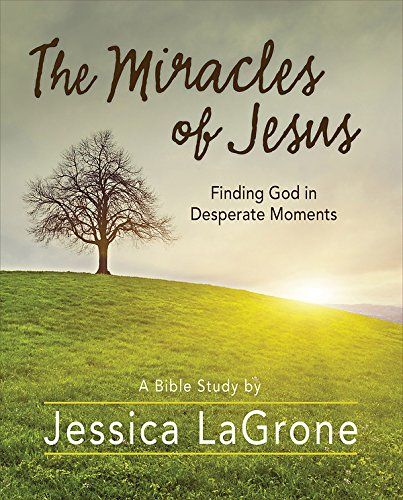
The Miracles of Jesus :: Jessica LaGrone

Miracles of Jesus Jessica LaGrone, book coverOriginally and/or (maybe) ideally intended for group study, this 6-weeks of weekdays consideration of Jesus of Nazareth's miracles in 30 short chapters was sheer excellence for my individual study at this stage of my journey. I spent about 3 weeks with The Miracles of Jesus; some days I'd study more than one chapter, occasionally skip over a day and not open the book at all.

Classic definition of a true miracle of God probably would be a suspension or even a reversal of humanly expected rules of nature, but trying to describe the divine and subsequently limit God's grace and activity with humanity and the rest of creation has led to far too many unfaithful expressions of biblical religion, so I'll leave it at that.

"Desperate moments" refers to physical, spiritual, social, and/or cultural situations of extreme need. "Cultural?" Yes, of course—had the hosts of the first of Jesus' signs we find in the gospel according to John, the Wedding at Cana, run out of wine, it would have been complete cultural embarrassment and true disaster that would have cascaded down through subsequent generations. (If you're familiar with differences between synoptic gospels Mark, Matthew, and Luke and the fourth canonical gospel, you probably remember John's community refers not to miracles but to signs human senses can perceive.) "Cultural" of course, because by definition Christianity always is incarnational, embodied within a particular culture. Including yours, including mine, including and encompassing theirs and ours. I love how the author brings in a few of her own experiences related to the miracle under discussion, but rather than making everything about her life and testimony she does it in a way that encourages readers to search their own daily lives, helps a reader trust God's paradoxical activity to meet their needs, as well. I also appreciate her intelligently referencing critical biblical scholarship in a manner that demonstrates the scriptural text itself comes to us in, with, and under the apparent accidentals of daily earthbound life.

Book size and layout is very attractive with plenty of room to write your own notes if you desire. This is part of a series of studies from the United Methodist Church's Abingdon Women, which is almost too bad and very sad, because nothing at all in The Miracles of Jesus is gender-specific, and that information might discourage a few guys from checking it out and benefiting from it. Though I'd be willing to loan out Jessica LaGrone's Miracles of Jesus, I plan to keep this book and work my way through it again. I'd also be open to participating in a group study focused on these chapters. What else? I'm curious about the content of the accompanying video.

my Amazon Review: Outstanding in Every Way

Tuesday, December 19, 2017

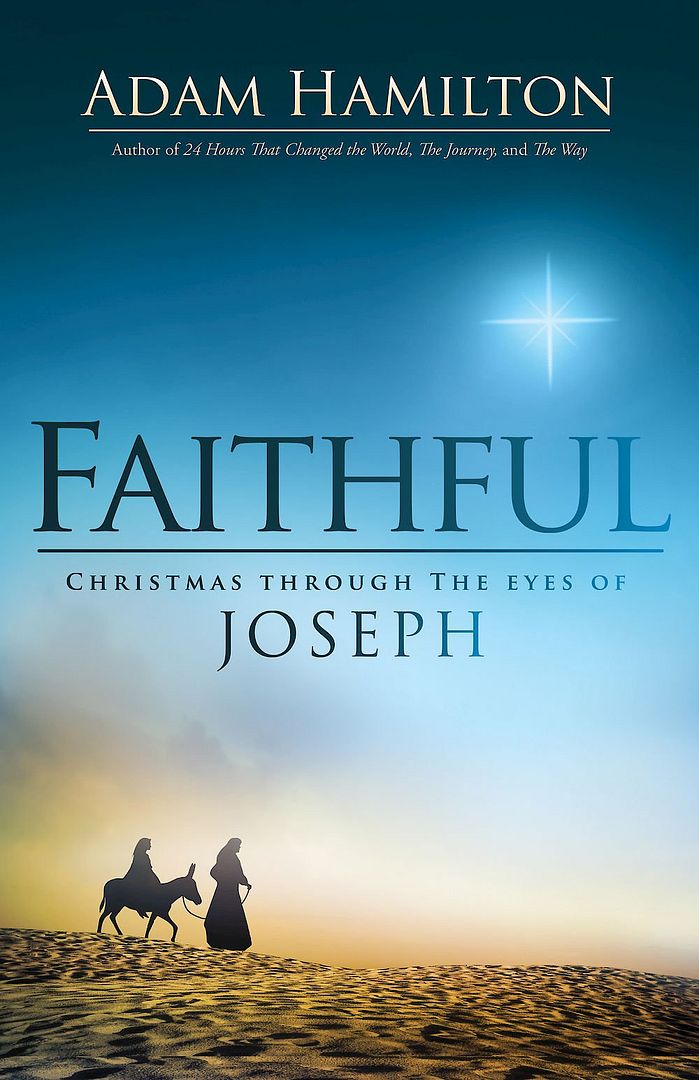
Faithful :: Adam Hamilton

Faithful: Christmas Through the Eyes of Joseph by Adam Hamilton on Amazon

Faithful Joseph by Adam Hamilton coverWe're in the season of Advent that prepares us for Christmas, so why not learn more about Joseph, Jesus' earthly father (stepfather, adoptive father)—Joseph the spouse of Jesus' mother Miriam/Mary? Pastor Adam Hamilton has written another insightful and interesting scripture-related book; as usual, he doesn't talk down to readers, but also makes sure it's mostly easy to comprehend. I enjoyed the historical background at the start of this short book; it included information about non-canonical sources, and speculation on what might have been happening based upon that cultural context. Hamilton brings in some of his own experience as a pastor and a dad, but doesn't overwhelm the pages by making it too much about himself.

In retelling what we know of Joseph's story from scripture and imagining what might have happened, Faithful shows many ways people, events, creation's needs and God's mercy-filled love weave together to unsettle the status qho(s) and recreate a redemptive whole. Inspirational and reassuring, Christmas Through the Eyes of Joseph is just in time for the longest night of the year, just in time to celebrate Jesus' nativity in the church and in the world, because this is one season the world out there has some idea of what the church happens to be about.

As for many books from Abingdon, you can purchase an entire series of products related to this book by Adam Hamilton to assist in your study of Joseph.

My Amazon Review: Inspirational and Reassuring

Wednesday, April 26, 2017

Porch Stories: Tales as Old as Time

Time for another Wednesday Porch Stories linkup hosted by Kristin Hill Taylor; time for Tales as Old as Time. As she reflects on several cinematic updates and remakes, Kristin admits, "I didn't expect to love remakes of movies I watched as a kid. Like Annie. Or The Parent Trap. And now Beauty and the Beast. In all three instances, I love the new version – the version my kids will call their own – better than the one I had always known. I surprise myself because I'm usually not so quick to embrace change."

desert spirit's fire porch stories tales as old as time

If you attend church, you may have sung the old hymn "I love to tell the story ... of Jesus and his love." Several times I've mentioned the Sunday morning class I facilitate at the church I attend. We sometimes call it bible study, sometimes adult forum, sometimes Sunday School, but we mostly draw upon at least one of that day's scripture texts from the Revised Common Lectionary, so ideally our discussion becomes God's living word to us for this place and this time. More often than not we discuss the gospel account for that Sunday, those two thousand year old stories that often refer to events thousands of years older—tales and chronicles as old as linear time itself! I've round tripped through the 3-year long RCL quite a few times; even if I hadn't, I'd still remember Jesus' post-resurrection appearances. We speak of post-resurrection appearances, but they weren't simply someone or something that looked to be Jesus; after his death and resurrection, people experienced Jesus of Nazareth the Christ of God physically right there and then on earth in the flesh as post-resurrection realities.

Most likely you know scripture is full of do not fear! – don't be afraid! – fear not! and related admonitions because humans tend to react in fear or apprehension—sometimes even to something as seemingly unthreatening as new versions of favorite films. Jesus' disciples even feared the resurrected Savior himself!

The third Sunday of Easter that's on the calendar of the church's year of grace in four days features a pair of travelers walking along a road about seven mlles from Jerusalem on the evening of the day of resurrection. Only the gospel of Luke [24:13-35] contains it, yet it makes the RCL schedule for Easter evening in all three lectionary years as well as being the appointed gospel reading for Matthew's year A and Mark's year B. Crucified, risen, scarred yet fully alive, Jesus of Nazareth joined and conversed with the guys along Emmaus road. Yet only when they later experienced their companion along the byway replicating history by taking, blessing, breaking, and distributing bread did they recognize the stranger as Jesus.
33That same hour they got up and returned to Jerusalem; and they found the eleven and their companions gathered together. 34They were saying, "The Lord has risen indeed, and he has appeared to Simon!" 35Then they told what had happened on the road, and how he had been made known to them in the breaking of the bread.
Luke 24
Sufficiently free of fear by then to venture over to Jerusalem to repeat the ministry Jesus modeled by turning the world upside down?

During the Great Fifty Days of Easter the lectionary brings us stories from porches, marketplaces, homes, town squares, house churches—all those places people go to and interact with other humans. Although worship leaders and preachers who follow the lectionary still sometimes choose their own passages in order to focus on special observances or major world events, the first scripture reading appointed for each Sunday during the Easter session is from the book of Acts. And you know what? All those Acts of the Apostles' stories about all those places show us people who are bold, outspoken, and fearless as they proclaim the love of God poured out onto all creation in Christ Jesus. What's the difference? The person and presence of the Holy Spirit pervades Luke's gospel, yet the evocative rendering of the Day of Pentecost with fire and flames in Acts 2 is another pericope or scripture selection unique to Luke, and the rest of the apostles' acts happen in the wake of that Day of Pentecost.

Kristin admits she's usually not quick to embrace change or newness; like many humans, I alternate between being highly flexible and spontaneous as in, "Of course I'd love to do that! I'll be ready in ten minutes," and mind-mindbogglingly inflexible as in "I can't possibly consider such a thing without at least ten days' notice." New versions of movies or TV shows, a newly illustrated edition of a book or a redecorated room don't turn our worlds upside down in terms of changes, yet they still represent newness and difference from what's already over and past. Jesus went ahead of his disciples to Jerusalem, to the center of the known world of his day. The Crucified and Risen One goes ahead of us to the next place God will call and send us. Not quick to welcome change? Do we still fear? Dare we not trust the unexpected surprise of resurrection?

As we study scripture on Sunday mornings and on our own during the week, all of us hope to relate the texts to our own circumstances well enough to start trusting the Holy Spirit of God more and more, to open the biblical narratives wide, deep, and high enough to make them God's living words to us. The old old story of Jesus and his love we sing about in "I love to tell the story" is a tale as old as two thousand year's worth of time plus more millennia not recorded in any history book. We think we know the rest of the story because all of scripture is full of God resurrecting life from death, but we really don't and won't know what God will enact in our cities and communities, along our sidewalks and freeways (in our own hearts!) until we follow Jesus to the Jerusalems that are the centers of our worlds and lives, until we follow Jesus' call and begin turning those worlds upside down and inside out in the Spirit of Pentecostal fire and freedom!

porch stories button