







1 Peter 1:8
Showing posts with label 1 Peter. Show all posts
Friday, January 24, 2025
Tuesday, June 25, 2024
Five Minute Friday :: Choice
• Five Minute Friday :: Choice Linkup
Choice:
• something chosen or selected
• the object of choosing or selection
For you are a people holy to the Lord your God.
The Lord your God has chosen you out of all the peoples on the face of the earth
to be his people, God's treasured possession.
Deuteronomy 7:6
For you are a chosen generation
a royal priesthood
a holy nation
a people for God's own possession.
that you may proclaim the excellencies
of the One who called you out of darkness
into the marvelous light.
1 Peter 2:9
...I have called you friends...
you did not choose me
but I chose you.
John 15:15, 16
God reminds us to remember:
I led you through the desert
I quenched your thirst with water from the rock
I fed you with manna from the sky
I zapped your enemies
I made you my chosen
# # #
Choice:
• something chosen or selected
• the object of choosing or selection
For you are a people holy to the Lord your God.
The Lord your God has chosen you out of all the peoples on the face of the earth
to be his people, God's treasured possession.
Deuteronomy 7:6
For you are a chosen generation
a royal priesthood
a holy nation
a people for God's own possession.
that you may proclaim the excellencies
of the One who called you out of darkness
into the marvelous light.
1 Peter 2:9
...I have called you friends...
you did not choose me
but I chose you.
John 15:15, 16
God reminds us to remember:
I led you through the desert
I quenched your thirst with water from the rock
I fed you with manna from the sky
I zapped your enemies
I made you my chosen
tags, topics
1 Peter,
deuteronomy,
Five Minute Friday,
john,
st john
Friday, March 01, 2024
Five Minute Friday :: Suffer
1 Peter 1:8
• Five Minute Friday :: Suffer Linkup
To suffer is to bear, hold up, let, allow, permit. You may have heard the translation of Jesus' plea recorded in Matthew 19:14, "Suffer the little children come to me, and do not forbid them, for of such is the kingdom of heaven."
Common parlance has translated suffering into pain, trials, and anguish, which isn't an extreme stretch, because in a sense we do allow unpleasant events to prevail for a while, though many times we have no choice.
Our FMF host Kate explained she chose the word suffer because she loves the reminder in 1 Peter that any suffering is only for a finite length of time. Kate quoted the NIV, "…you believe in him and are filled with an inexpressible and glorious joy.
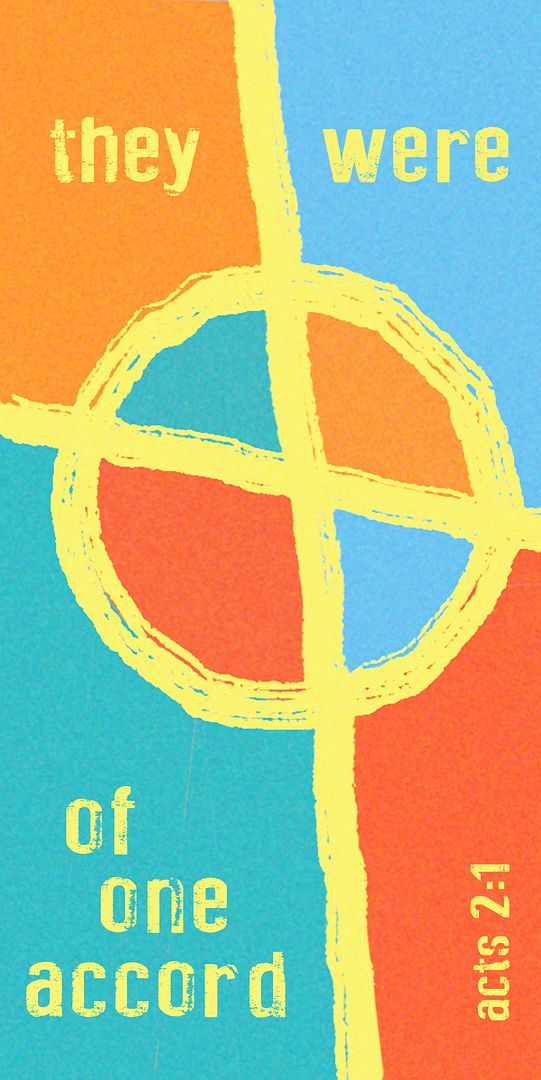
Several years ago I illustrated an 8-part series of verses from 1 Peter and 2 Peter. It was unusual because the pieces all were different sizes and different styles. Typically overall style, color palette – or minimally size – ties together a group of designs produced under the same heading, but this was different. Today's prompt prompted me to use my illustration from 1 Peter 1:8 to head today's post. The RSV I used tells us we "rejoice with unutterable and exalted joy."
A few verses earlier 1 Peter 1:3 reminds us God has given us new birth into a living hope through Jesus Christ's resurrection from the dead. Some translations says we have been "reborn."
Churches that observe Lent are at the halfway point to Holy Week when we remember Jesus arrest, trial, conviction, and crucifixion. We listen to the passion narrative about the literal pain and suffering Jesus allowed. But we need to remember when Jesus himself predicts his suffering and death, he also includes his resurrection, his rising. To be raised from death? You first must die. For the apostle Paul, the gospel is death and resurrection.
Whether we ponder and endure our own sore trials, consider the cost and outcome of those Jesus experienced, or look with sorrow-filled horror on atrocities in our own countries or places like Ukraine, it truly helps our endurance and patience to remember pain and death is not God's final answer.
1 Peter opens by addressing God's people who live as strangers, those who are resident aliens wherever they may be. NRSV says "exiles of the dispersion." That language is marked, pointed, and precise.
The pair of letters 1 Peter and 2 Peter were written to the church in diaspora that lived weekdays amidst ethnic, cultural, often linguistic and culinary strangeness; on Sundays they gathered as permanent citizens of the Kingdom of Heaven. 1 Peter and 2 Peter remind us the church always is in exile, always has at least a hint of strangeness and stranger-ness vis-à-vis those around them, even when they themselves are voting citizens in that place, under that government.
At the heart of the story of Jesus of Nazareth stands the seven days we call Holy Week: a crucified man – but – then an empty grave. As we continue in Lent, as we anticipate Holy Week and suffer through Jesus' passion alongside him, we know the Day of Resurrection will be here.
tags, topics
1 Peter,
2 Peter,
Five Minute Friday,
holy week
Friday, July 29, 2022
Five Minute Friday :: Be
• Five Minute Friday :: Be Linkup
This week I'll be on the music train again. "Be" reminds me of one of my all time fave songs (who knows how many of those there be? Don't ask.), Edwin McCain's "I'll Be" released as a single in 1998 out of his 1997 album, Misguided Roses.
Even as Christians who know in our head God created us as human beings – not human doings – we're also exquisitely aware our being often results in selected actions that respond to needs around us. God acts in love, justice, mercy, and generosity because God's character, God's essence – God's being – is loving, just, merciful, and generous.
I understand that "I'll Be" is a breakup song (but in that case, why would anyone ever include it on a wedding playlist?), with the singer announcing he'll be captivated, your cryin' shoulder, love's suicide, better when I'm older, greatest fan of your life. So it's all relational.
Particularly the theology we've inherited from the apostle Paul (try especially Corinthians, Galatians, Philippians, Romans) proclaims our essential position is to be "In Christ." Yes. Last Sunday we sang, "In Christ Alone My Hope Is Found" and "My Hope Is Built on Nothing Less than Jesus' Blood and Righteousness." BTW, I was guest preacher on 1 Peter 2:1-10 and requested those songs, but I preach from notes so can't realistically blog my talks. Jesus Christ always is our source, beginning, re-source and refuge. As we be solidly grounded in Jesus the living stone, we then can be living stones ourselves, so others can count on us. Because it's all relational.
Serious theology aside, what will I be? For you and the rest of the world, I'll be a creation-lover, urban artist, keyboard player, desert spirit, city being… Notice how a basic "I'll be" identity overlaps with what that someone does—because it's so relational.
What has God called you to be? What do you want to be? What will you be?
# # #
This week I'll be on the music train again. "Be" reminds me of one of my all time fave songs (who knows how many of those there be? Don't ask.), Edwin McCain's "I'll Be" released as a single in 1998 out of his 1997 album, Misguided Roses.
Even as Christians who know in our head God created us as human beings – not human doings – we're also exquisitely aware our being often results in selected actions that respond to needs around us. God acts in love, justice, mercy, and generosity because God's character, God's essence – God's being – is loving, just, merciful, and generous.
I understand that "I'll Be" is a breakup song (but in that case, why would anyone ever include it on a wedding playlist?), with the singer announcing he'll be captivated, your cryin' shoulder, love's suicide, better when I'm older, greatest fan of your life. So it's all relational.
Particularly the theology we've inherited from the apostle Paul (try especially Corinthians, Galatians, Philippians, Romans) proclaims our essential position is to be "In Christ." Yes. Last Sunday we sang, "In Christ Alone My Hope Is Found" and "My Hope Is Built on Nothing Less than Jesus' Blood and Righteousness." BTW, I was guest preacher on 1 Peter 2:1-10 and requested those songs, but I preach from notes so can't realistically blog my talks. Jesus Christ always is our source, beginning, re-source and refuge. As we be solidly grounded in Jesus the living stone, we then can be living stones ourselves, so others can count on us. Because it's all relational.
Serious theology aside, what will I be? For you and the rest of the world, I'll be a creation-lover, urban artist, keyboard player, desert spirit, city being… Notice how a basic "I'll be" identity overlaps with what that someone does—because it's so relational.
What has God called you to be? What do you want to be? What will you be?
tags, topics
1 Peter,
Five Minute Friday,
music
Sunday, May 31, 2020
May & Spring 2020


• It's the end of another meteorological season! Time to link to Emily Freeman – What I learned this spring. It's my third monthly roundup blog in the current global season of COVID-19. And? Today, the Fiftieth Day of Easter that's the Day of Pentecost is the third day of the #LARiots2020, second day so far of a stay at home curfew for all but essential workers. National Guard has been deployed: 500 troops to the city; 500 to the county. Heartbreaking.
• March 2020 Highlights

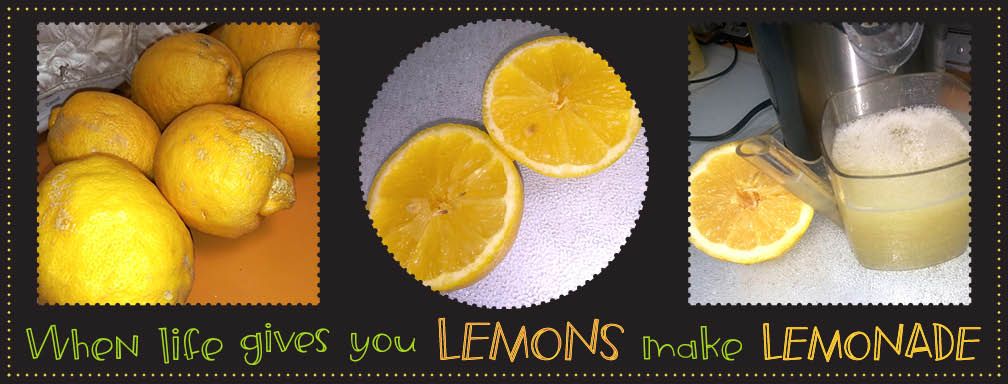
• By mid-March #SaferAtHome and #StaySafeStayHome were in place, so Green Team transformed the long-planned actual World Water Day into a virtual event. "When life gives you lemons make lemonade." See you next year by the river?!
• April 2020 :: Lockdown
• I didn't picture either Easter Sunday or Earth Day 50 in my April summary blog! However, I gave both events a solid paragraph and I'd already blogged both days. If I'd been able to get out in the world to celebrate, both festivals would have included many many pictures.
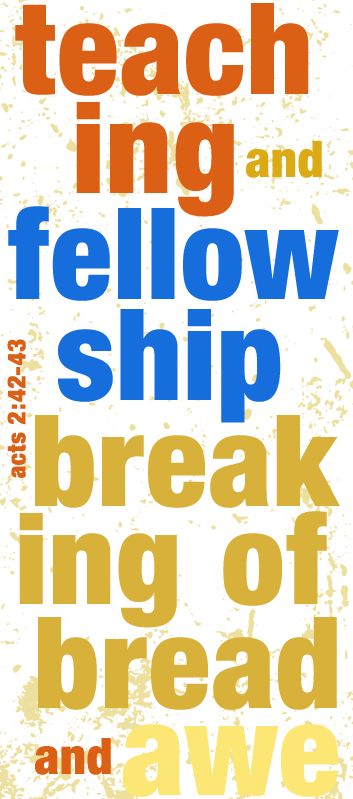
• Easter 4 Sunday School notes – "Teaching and Fellowship Breaking of Bread and Awe" Acts 2:42-43

• Preparing detailed lessons to email to my mostly-lectionary [mostly] adult Sunday School class has become major since the world started #ShelterInPlace; partly for lack of outings and other activities around town, partly because they've been coming out really well, I'm linking to all 5 reflections for May and adding illustrations. Have I said this before? The notes I used to blog (and will again) after interactive Sunday morning discussions were more interesting and dynamic, but for people who weren't there that Sunday, these newfangled lessons may be easier to follow.

• Every year includes a Cinco de Mayo; no other has happened during a year like this. Here's one of my all-time favorite designs from a previous year in Previous City.
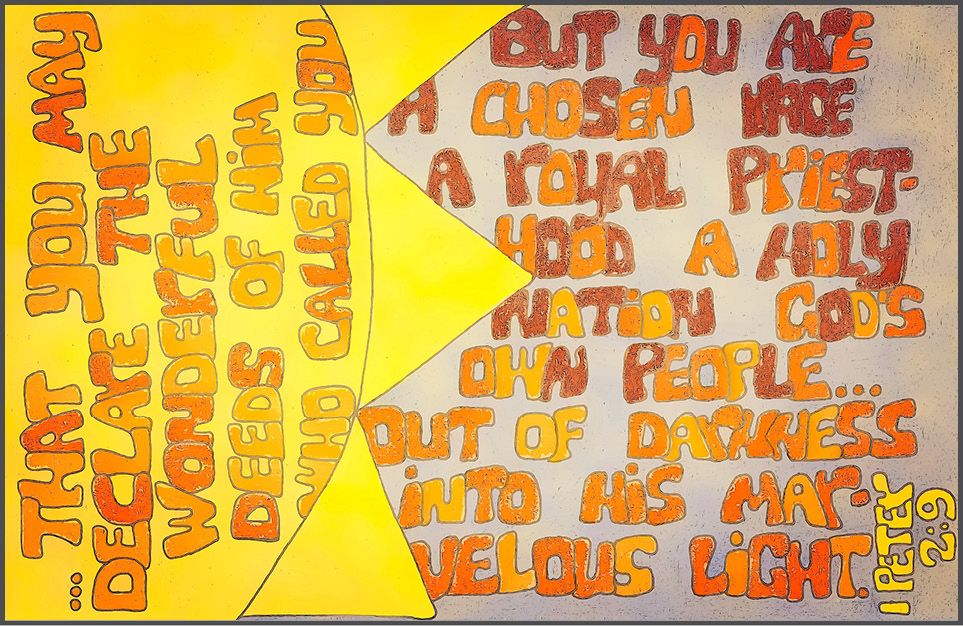
• Easter 5 Sunday School notes – "Chosen Royal Holy God's Own People" 1 Peter 2:9


• When physical distancing got serious, my nearby Subway franchise stopped offering trays and baskets to customers, then became takeaway only, then closed down completely for a few weeks. A couple weeks ago it opened again for takeaway. With restaurants now permitted limited indoor dining, I wonder if they'll reopen to eat-in, sit-down?
• Easter 6 Sunday School notes – "You will get your quilt" John 14:16

• Ascension / Easter 7A Sunday School notes – no illustration for this one.
• Day of Pentecost Sunday School notes


• In January I declared 2020 my year of living local. So far it has meant no amazon purchases, more fruits and veggies grown nearby, community owned restaurants and other retail outlets. #SaferAtHome has helped make life extremely local… families are doing better at being together; board game sales have increased a lot!

tags, topics
1 Peter,
acts,
COVID-19,
earth day,
john,
Los Angeles,
pentecost,
st john,
What I Learned in...
Saturday, April 28, 2007
Christianity for the Rest of Us 3
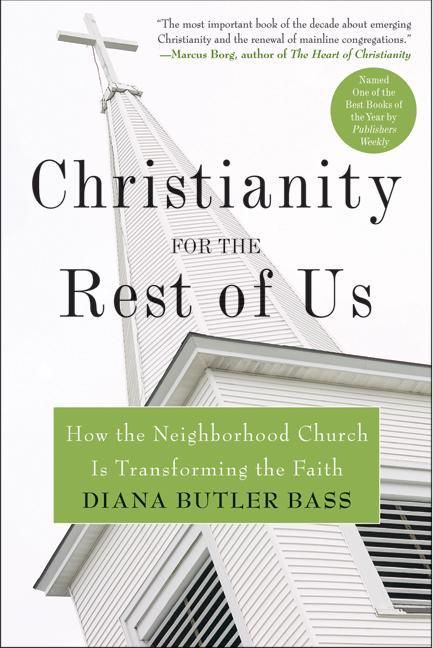
Christianity for the Rest of Us: How the Neighborhood Church Is Transforming the Faith, by Diana Butler Bass.

Christianity for the Rest of Us Blog 1
Christianity for the Rest of Us Blog 2
As I previously blogged, this subject is close to my heart and central to the needs of most of us in the protestant mainline; this book gives me so much hope! The RevGals' basic consensus was like mine—this book gives all of us hope! I love the RevGals' passion for unity in diversity, too. Just like mine!
A sudden memory inspired this third blog on this book...
Probably within the past ten years, but likely at the far end of that number, one of the national news magazines – Time, Newsweek or U.S. News – had an extensive cover feature on the American Protestant Mainline. It's been a while since I subscribed to any of those (mainline) mags, but I seem to recall purchasing a copy on the newsstand, so maybe I still have it somewhere. They featured the same denominations as Christianity for the Rest of Us, with the addition of Baptists – of which they said "there are many," but I believe most of the Baptist churches in the study were from the liberal American Baptist Convention-USA, headquartered in Valley Forge Pennsylvania. (You can find direct links to the other study denomination links in my Blog 1.) The news mag article(s) described local churches very similar to those DBB describes, and I remember the striking phrase, "Any of these churches is a wonderful place to be!"
Clearly I'm still in lots of pain over the too many times I'd been excluded from participation in churches over the past too many years, but I'm always saying things like, "I'm not claiming any of this remotely is my fault, because no matter how I parse it, people have been just plain rude and just plain considered me a threat." However, my segue to that and similar statements usually is something like, "A huge part of the answer is these have been the wrong kinds of churches." By that I'm not saying any of these mainline or whatever or whichever has been theologically erroneous or otherwise not appropriate, but the social and cultural settings haven't been where reasonably I could expect my abilities and background to be appreciated and exploited. It offends my still sometimes working-class sensibilities, but despite the fact there always would be exceptions, a church in the Harvard Square or UC Berkeley environs would have been very different with a radically differing outcome in terms of their welcoming (and yes, exploiting) my gifts and regular participation.
In my second blog I'd intended to mention how much I loved the concept of people and groups being politically neither Blue nor Red but Purple, and how I love the implications of early Christians adopting the royal color purple for radical, subversive usage and intent in seeking to follow The Way. In that era in that part of the world, only royals were allowed to wear purple; remember Lydia from Thyatira we read about in Acts 16? Lydia's story happens right after Timothy joins up with Paul and Silas and just before Paul and Silas end up in prison; the entire passage is magnificently evocative:
Here's the 1st Peter scripture from Blog 1:
By Leah, baptized into Jesus Christ and hoping to find a church that's a wonderful place to be.
###
Christianity for the Rest of Us Blog 1
Christianity for the Rest of Us Blog 2
As I previously blogged, this subject is close to my heart and central to the needs of most of us in the protestant mainline; this book gives me so much hope! The RevGals' basic consensus was like mine—this book gives all of us hope! I love the RevGals' passion for unity in diversity, too. Just like mine!
A sudden memory inspired this third blog on this book...
Probably within the past ten years, but likely at the far end of that number, one of the national news magazines – Time, Newsweek or U.S. News – had an extensive cover feature on the American Protestant Mainline. It's been a while since I subscribed to any of those (mainline) mags, but I seem to recall purchasing a copy on the newsstand, so maybe I still have it somewhere. They featured the same denominations as Christianity for the Rest of Us, with the addition of Baptists – of which they said "there are many," but I believe most of the Baptist churches in the study were from the liberal American Baptist Convention-USA, headquartered in Valley Forge Pennsylvania. (You can find direct links to the other study denomination links in my Blog 1.) The news mag article(s) described local churches very similar to those DBB describes, and I remember the striking phrase, "Any of these churches is a wonderful place to be!"
Clearly I'm still in lots of pain over the too many times I'd been excluded from participation in churches over the past too many years, but I'm always saying things like, "I'm not claiming any of this remotely is my fault, because no matter how I parse it, people have been just plain rude and just plain considered me a threat." However, my segue to that and similar statements usually is something like, "A huge part of the answer is these have been the wrong kinds of churches." By that I'm not saying any of these mainline or whatever or whichever has been theologically erroneous or otherwise not appropriate, but the social and cultural settings haven't been where reasonably I could expect my abilities and background to be appreciated and exploited. It offends my still sometimes working-class sensibilities, but despite the fact there always would be exceptions, a church in the Harvard Square or UC Berkeley environs would have been very different with a radically differing outcome in terms of their welcoming (and yes, exploiting) my gifts and regular participation.
In my second blog I'd intended to mention how much I loved the concept of people and groups being politically neither Blue nor Red but Purple, and how I love the implications of early Christians adopting the royal color purple for radical, subversive usage and intent in seeking to follow The Way. In that era in that part of the world, only royals were allowed to wear purple; remember Lydia from Thyatira we read about in Acts 16? Lydia's story happens right after Timothy joins up with Paul and Silas and just before Paul and Silas end up in prison; the entire passage is magnificently evocative:
Acts 16On the Sabbath, expecting to "find a place of prayer" at the river, they also found a place for baptism, where people formally could separate from former allegiances and lords, and officially be baptized into the reign of heaven on earth under the Lordship of the crucified and risen Jesus Christ—a Lord at once both royal and subversive! Lydia, the first European Christian was a woman, and one who "dealt in" clothing for kings but dared publicly sign onto the subversive lifestyle of the followers of Jesus Christ. In that era of the nascent church, Christianity provided a radically alternative perspective: politically to the point of sedition and socially to the extent of welcoming and actually including all comers. Lydia, newly-baptized and a merchant who routinely interacted with high and mighty royalty, knew God called her to hospitality and community.
13 On the Sabbath we went outside the city gate to the river, where we expected to find a place of prayer. We sat down and began to speak to the women who had gathered there. 14 One of those listening was a woman named Lydia, a dealer in purple cloth from the city of Thyatira, who was a worshiper of God. The Lord opened her heart to respond to Paul's message. 15 When she and the members of her household were baptized, she invited us to her home. "If you consider me a believer in the Lord," she said, "come and stay at my house." And she persuaded us. NIV
Here's the 1st Peter scripture from Blog 1:
1 Peter 2:9-10The end of another incomplete blog (what else is new), but here it is, nonetheless.
But you are a chosen, elect people (birthed, descended), a royal priesthood, a holy nation (ethnic), a people (folk) belonging to God, that you may declare the praises of him who called you out of darkness into his wonderful light. Once you were not a people (folk), but now you are the people (folk) of God; once you had not received mercy, but now you have received mercy.
By Leah, baptized into Jesus Christ and hoping to find a church that's a wonderful place to be.
tags, topics
1 Peter,
acts,
book discussion,
ecumenism,
epistle,
epistles,
hospitality,
sacraments,
water
Tuesday, April 17, 2007
Christianity for the Rest of Us 1
From RevGalBookPals.
Because the March date for the first discussion came so abruptly, I didn't participate (the book didn't interest me much, either); however, the next book will be Christianity for the Rest of Us: How the Neighborhood Church Is Transforming the Faith, by Diana Butler Bass. This subject is close to my heart and central to the needs of most of us in the protestant mainline, so this time I'm reading, thinking and blogging. This book gives me so much hope!
Each RevGals book discussion formally will begin on the fourth Monday of every month, with an option to post a little in the comments section or link directly to a longer blog post about the book. I am delighted to get blog fodder, and in my characteristic style, I'll do several actual blogs. So far I've read about half of Christianity for the Rest of Us, highlighting and making comments as I went along, but for this introductory blog, I'm writing from memory and plan to blog specifics later.
You can go to the author's site or the Amazon page to find out more, but basically the study included ten core study churches plus forty correlated validation churches. Spread across the continental United States, all were what used to be generically referred to as mainline protestant, though these days that old once predictably socially, theologically and politically mainline has become sideline or spurline: United Methodist; Evangelical Lutheran Church In America; United Church of Christ, Presbyterian Church (USA); Episcopal Church, and Disciples of Christ. The project combined participant observation, personal reflections from the book's author, from congregation leaders (both pastoral and lay) and from rank and file members with relatively hard data collection and crunching. The Practicing Congregations site didn't work any of the times I tried it, but maybe it'll be live later on.
The prose is easygoing, flowing, readable, and non-annoying, which I very much appreciate. But to get it out of the way, I'll start with a single complaint—so far my only reservation! Several of the study congregations are in the United Church of Christ, a denomination half a century old this year; many UCC churches originally were Congregational in name and in polity, but many weren't. Typically, a UCC church gathered prior to 1957 retains its former affiliation, like "Congregational" or "Evangelical and Reformed" in its name, and when I lived in New England, UCC folks sometimes would call themselves "Congregationalists," but that isn't even the polity any more! DBB incorrectly refers to study participants as congregationalists rather than correctly as UCC-ers. 'Nuff said...
As I read about amazing, hospitable, creative and faithful churches in this book I had trouble putting down (though finally I did, in order to go to bed and hopefully to sleep), I kept asking myself why I hadn't found, or serendipitously happened upon anything remotely like them! There are such places where a person truly can belong, can grow, change and be transformed in every aspect of being in Jesus Christ.
The "Rest of Us" means protestant (but definitely could include many Roman Catholics, too) Christians who don't affiliate or consider themselves fundamentalist or evangelical in the recently popular sense of evangelical; the book jacket features a black and white sketch of a high-steepled, white wood frame church that's probably not the big downtown First or Central Church, but the drawing is similar to enough small town, suburban and small city meetinghouses that a lot of readers probably can identify. In my blog a couple months ago about the new Evangelical Lutheran Worship book I called the ELW's cover "Reformation Red" and got corrected in the comments that the color officially is "Cranberry!!" In the dust jacket of Christianity for the Rest of Us the subtitle and author's name are encased in a red dye strike rectangle, but I won't venture the name of the color...
Over the past decade there's been a lot about the resurgence of spirituality, with countless people telling the rest of us(!), "I'm not religious, but I'm spiritual." DBB distinguishes between ecstasy, which she calls "spiritual" and religion, or "order," a distinction I'd never considered!
From the Introduction:
Chapter One is about "The Vanished Village," that seemingly self-contained community where everyone knew everyone else, together with most of their comings and goings; the village space that held and held together an individual's and a family's entire life of workplace, school, house of worship, residence, markets, and other services, so no one ever needed to go physically outside the perimeter. As the author points out, in this U.S.A. that kind of village went away just a few decades ago, within most of our lifetimes. Among everything else, the village was a uniculture, too—homogeneous in most aspects. Chapter Five, "Finding Home," is about returnees, exiles, immigrants, converts and villagers. I love the emphasis on pilgrims on a pilgrimage that threads throughout what I've read thus far. And the clarifying observation on page 86, "...as a pilgrim of Christ, you will sometimes be the host and sometimes the guest." This book gives me so much hope—but I already said it did!
Goleta, California, Presbyterian Church! As DBB observes on page 144, "Despite its small-town agrarian roots, [the city of] Goleta is now pure California; it is ethnically, socially and culturally diverse—and completely post-Christian." She quotes Pastor Steve Jacobsen: "For centuries congregations were formed around ethnic identities..."
Seem as if everyone knows that, and a few decades away from the Vanished Village (at least for most of us in the continental United States), as a country we now are not only a geographically diverse landscape; as a political people, we have become ethnically, linguistically, racially and culturally diverse beyond anyone's anticipation, many of us claiming more than one of each category. I love this relatively late passage from 2 Peter, where the epistle's author uses three different Greek words with three different implications for the English word people:
1 Peter 2:9-10
But you are a chosen, elect people (birthed, descended), a royal priesthood, a holy nation (ethnic), a people (folk) belonging to God, that you may declare the praises of him who called you out of darkness into his wonderful light. Once you were not a people (folk), but now you are the people (folk) of God; once you had not received mercy, but now you have received mercy.
We know the Galatian Church identified as the first of what these days we'd call an distinctively ethnic congregation, one gathered on the basis of genetic and cultural inheritance. Something to think and blog about?! I hope to finish reading and blog at least one more time before the official RevGals discussion begins next Monday; I also expect I'll get lots of ideas from other bloggers.
Because the March date for the first discussion came so abruptly, I didn't participate (the book didn't interest me much, either); however, the next book will be Christianity for the Rest of Us: How the Neighborhood Church Is Transforming the Faith, by Diana Butler Bass. This subject is close to my heart and central to the needs of most of us in the protestant mainline, so this time I'm reading, thinking and blogging. This book gives me so much hope!
Each RevGals book discussion formally will begin on the fourth Monday of every month, with an option to post a little in the comments section or link directly to a longer blog post about the book. I am delighted to get blog fodder, and in my characteristic style, I'll do several actual blogs. So far I've read about half of Christianity for the Rest of Us, highlighting and making comments as I went along, but for this introductory blog, I'm writing from memory and plan to blog specifics later.
You can go to the author's site or the Amazon page to find out more, but basically the study included ten core study churches plus forty correlated validation churches. Spread across the continental United States, all were what used to be generically referred to as mainline protestant, though these days that old once predictably socially, theologically and politically mainline has become sideline or spurline: United Methodist; Evangelical Lutheran Church In America; United Church of Christ, Presbyterian Church (USA); Episcopal Church, and Disciples of Christ. The project combined participant observation, personal reflections from the book's author, from congregation leaders (both pastoral and lay) and from rank and file members with relatively hard data collection and crunching. The Practicing Congregations site didn't work any of the times I tried it, but maybe it'll be live later on.
As I read about amazing, hospitable, creative and faithful churches in this book I had trouble putting down (though finally I did, in order to go to bed and hopefully to sleep), I kept asking myself why I hadn't found, or serendipitously happened upon anything remotely like them! There are such places where a person truly can belong, can grow, change and be transformed in every aspect of being in Jesus Christ.
The "Rest of Us" means protestant (but definitely could include many Roman Catholics, too) Christians who don't affiliate or consider themselves fundamentalist or evangelical in the recently popular sense of evangelical; the book jacket features a black and white sketch of a high-steepled, white wood frame church that's probably not the big downtown First or Central Church, but the drawing is similar to enough small town, suburban and small city meetinghouses that a lot of readers probably can identify. In my blog a couple months ago about the new Evangelical Lutheran Worship book I called the ELW's cover "Reformation Red" and got corrected in the comments that the color officially is "Cranberry!!" In the dust jacket of Christianity for the Rest of Us the subtitle and author's name are encased in a red dye strike rectangle, but I won't venture the name of the color...
Over the past decade there's been a lot about the resurgence of spirituality, with countless people telling the rest of us(!), "I'm not religious, but I'm spiritual." DBB distinguishes between ecstasy, which she calls "spiritual" and religion, or "order," a distinction I'd never considered!
From the Introduction:
...[in the study] were solid, healthy churches that exhibited Christian authenticity, expressed a coherent faith, and offered members ways of living with passion and purpose. They exuded a renewed sense of mission and identity, often having emerged from dire circumstances...they were their own best selves—creative and traditional, risktaking and grounded, confidence and humble, open and orthodox. They were often in tension with local fundamentalist Christians or, surprisingly, their own denominations. And sometimes both.Disclaimer, again: I'm in the puter lab without the book but I do have a few notes. Despite my including a few page numbers, when you check your copy of the book I may have them wrong, so please don't fret.
Chapter One is about "The Vanished Village," that seemingly self-contained community where everyone knew everyone else, together with most of their comings and goings; the village space that held and held together an individual's and a family's entire life of workplace, school, house of worship, residence, markets, and other services, so no one ever needed to go physically outside the perimeter. As the author points out, in this U.S.A. that kind of village went away just a few decades ago, within most of our lifetimes. Among everything else, the village was a uniculture, too—homogeneous in most aspects. Chapter Five, "Finding Home," is about returnees, exiles, immigrants, converts and villagers. I love the emphasis on pilgrims on a pilgrimage that threads throughout what I've read thus far. And the clarifying observation on page 86, "...as a pilgrim of Christ, you will sometimes be the host and sometimes the guest." This book gives me so much hope—but I already said it did!
Goleta, California, Presbyterian Church! As DBB observes on page 144, "Despite its small-town agrarian roots, [the city of] Goleta is now pure California; it is ethnically, socially and culturally diverse—and completely post-Christian." She quotes Pastor Steve Jacobsen: "For centuries congregations were formed around ethnic identities..."
Seem as if everyone knows that, and a few decades away from the Vanished Village (at least for most of us in the continental United States), as a country we now are not only a geographically diverse landscape; as a political people, we have become ethnically, linguistically, racially and culturally diverse beyond anyone's anticipation, many of us claiming more than one of each category. I love this relatively late passage from 2 Peter, where the epistle's author uses three different Greek words with three different implications for the English word people:
1 Peter 2:9-10
But you are a chosen, elect people (birthed, descended), a royal priesthood, a holy nation (ethnic), a people (folk) belonging to God, that you may declare the praises of him who called you out of darkness into his wonderful light. Once you were not a people (folk), but now you are the people (folk) of God; once you had not received mercy, but now you have received mercy.
We know the Galatian Church identified as the first of what these days we'd call an distinctively ethnic congregation, one gathered on the basis of genetic and cultural inheritance. Something to think and blog about?! I hope to finish reading and blog at least one more time before the official RevGals discussion begins next Monday; I also expect I'll get lots of ideas from other bloggers.
Friday, March 23, 2007
Theology of the Cross 5
Theology of the Cross 5 | Lent 5 | 25 March 2007
Theology of the Cross: what does this mean for the Church’s and especially for this congregation’s life and mission?
The cross of Calvary forms the ultimate type and reality of God’s characteristically hidden and paradoxical, sacramental presence in the commonest things, situations and people. Interpreting scripture, sacraments, everything in our lives and in the world with "What preaches Christ."
A Theology of Baptism
Galatians 3:26-29; Titus 3:5-8; 1 Corinthians 12:12-13; Romans 6:1-14; Ephesians 4:4-6; Mark 1:4-11; Matthew 3:11-17; Luke 3:15-22
Theologian Jürgen Moltmann describes baptism as “sign, witness, representation and illumination of the Christ Event”; we can claim the same about the Eucharist. We know Jesus Christ as sovereign, prophet and priest; alive in Christ, we participate in that royal, prophetic priesthood. Especially in regard to those roles, how can our lives signify, witness to, represent and illuminate the birth, life, death, resurrection and ascension of Jesus Christ?
Contextualizing Baptism
We are baptized for events like 9/11; we are baptized to be the Christ alongside our friends, relatives and neighbors; we are baptized to not be an exclusive community, but to risk reaching out to image and model Jesus Christ to the world – including those who are culturally, ethnically, chronologically, occupationally, educationally different from us; to recognize Jesus Christ in others and to be the presence of the crucified and risen Jesus Christ in their lives.
A Theology of the Eucharist
1 Corinthians 10:16-17; 1 Corinthians 11:23-26; Mark 14:22-25; Matthew 26:26-29; Luke 22:14-20; Luke 24:30-31; John 6:33; John 6:51; John 6:56
Jesus said, “Do this!” Do this liturgical action?
Contextualizing Eucharist
Jesus says, “I am the Bread of Life; I am the Vine!” In every culture, grain products form a substantial nutritional base; the grain may be rice, wheat, corn, wheat, barley...the fruit of the vine is a potent and pervasive biblical symbol, and beyond there and then, lately we’ve been learning a lot about grape’s benefits! In the power of the Holy Spirit, God calls the church—
Galatians 3:1-5; 2 Corinthians 5:16-21; Ephesians 1:17-23; Matthew 28:16-20; Luke 24: 44-49; Acts 1:6-8; 2 Timothy 2:8-13; 1 Peter 2:9-10
10. What does the cross mean for this church community?
From Water Buffalo Theology: Suffering because we’re involved with others, involved with the other; participating in the “glory of the crucified Lord”. My note: the same Paul of Tarsus also talks about “the glory of the children of God!” And isn’t our glory as God’s offspring also a crucified glory and a risen glory?
11. What does all of this mean for our nearby neighbors?
When I was on staff at the church in City of History, I wrote their Mission Statement:
© Leah Chang 2007
Theology of the Cross: what does this mean for the Church’s and especially for this congregation’s life and mission?
A Tree on Your Back
1. We meet you, O Christ, in many a guise,
your image we see in simple and wise.
You live in a palace, exist in a shack;
we see you the gardener, a tree on your back.
2. In millions alive, away and abroad;
involved in our life, you live down the road.
Imprisoned in systems, you long to be free;
we see you, Lord Jesus, still bearing your tree.
3. We hear you, O man, in agony cry;
for freedom you march, in riots you die.
Your face in the papers we read and we see.
The tree must be planted by human decree.
4. You choose to be made at one with the earth;
the dark of the grave prepares for your birth.
Your death is your rising, creative your word;
the tree springs to life and our hope is restored..
–Fred Kaan, 1966
The cross of Calvary forms the ultimate type and reality of God’s characteristically hidden and paradoxical, sacramental presence in the commonest things, situations and people. Interpreting scripture, sacraments, everything in our lives and in the world with "What preaches Christ."
- Last week we talked some about God’s action and presence in the sacraments – considered a “means of grace” in this tradition – and began imagining ways we can be a means of grace in the world around us.
- It’s impossible to separate out today’s discussion topics, so I’ve suggested some texts and ideas to get us started.
A Theology of Baptism
Galatians 3:26-29; Titus 3:5-8; 1 Corinthians 12:12-13; Romans 6:1-14; Ephesians 4:4-6; Mark 1:4-11; Matthew 3:11-17; Luke 3:15-22
Theologian Jürgen Moltmann describes baptism as “sign, witness, representation and illumination of the Christ Event”; we can claim the same about the Eucharist. We know Jesus Christ as sovereign, prophet and priest; alive in Christ, we participate in that royal, prophetic priesthood. Especially in regard to those roles, how can our lives signify, witness to, represent and illuminate the birth, life, death, resurrection and ascension of Jesus Christ?
Contextualizing Baptism
We are baptized for events like 9/11; we are baptized to be the Christ alongside our friends, relatives and neighbors; we are baptized to not be an exclusive community, but to risk reaching out to image and model Jesus Christ to the world – including those who are culturally, ethnically, chronologically, occupationally, educationally different from us; to recognize Jesus Christ in others and to be the presence of the crucified and risen Jesus Christ in their lives.
A Theology of the Eucharist
1 Corinthians 10:16-17; 1 Corinthians 11:23-26; Mark 14:22-25; Matthew 26:26-29; Luke 22:14-20; Luke 24:30-31; John 6:33; John 6:51; John 6:56
Jesus said, “Do this!” Do this liturgical action?
Contextualizing Eucharist
Jesus says, “I am the Bread of Life; I am the Vine!” In every culture, grain products form a substantial nutritional base; the grain may be rice, wheat, corn, wheat, barley...the fruit of the vine is a potent and pervasive biblical symbol, and beyond there and then, lately we’ve been learning a lot about grape’s benefits! In the power of the Holy Spirit, God calls the church—
- As the body of the risen Christ, the Bread of Life, to nourish the world, especially the stranger, the outcast and the ‘other’
- Like the Eucharist, to reveal Jesus’ crucified body in its redeeming brokenness
- To reveal Christ’s risen body in its liberating wholeness
- As branches of Jesus, the Vine, to pour out our lives to those around us
Galatians 3:1-5; 2 Corinthians 5:16-21; Ephesians 1:17-23; Matthew 28:16-20; Luke 24: 44-49; Acts 1:6-8; 2 Timothy 2:8-13; 1 Peter 2:9-10
10. What does the cross mean for this church community?
From Water Buffalo Theology: Suffering because we’re involved with others, involved with the other; participating in the “glory of the crucified Lord”. My note: the same Paul of Tarsus also talks about “the glory of the children of God!” And isn’t our glory as God’s offspring also a crucified glory and a risen glory?
11. What does all of this mean for our nearby neighbors?
When I was on staff at the church in City of History, I wrote their Mission Statement:
We are the people of God, forgiven and set free by the death and resurrection of Jesus Christ; by the power of the Holy Spirit we are called together and sent into the world as witnesses to his resurrection. God calls us, a servant people, to proclaim in word and action the presence of the risen Lord to all those whom our lives touch, especially in this community.The author of Water Buffalo Theology talks about “neighborology”—the word about the neighbor! The Bible and Jesus Christ reveal God’s attachment to the world of creation to the point of learning and knowing us so completely as to walk in our sandals (Tevas, or flip-flops or boots or snow boots...) and to die a physical death, just as all of us inevitably will. Especially in the shadow of the cross, how can we practice neighborology?
© Leah Chang 2007
Subscribe to:
Posts (Atom)


