Showing posts with label covenant words hope. Show all posts

Saturday, January 30, 2021

Psalm 111:5

Psalm 111:5

"He is ever mindful of his covenant."

Psalm 111:5

Revised Common Lectionary / RCL Epiphany 4B

Wednesday, January 04, 2017

Three Word Wednesday: Happy New Year!

happy new year 2017

For my first blog of 2017 I'm linking up with Kristin Hill Taylor's almost weekly Three Word Wednesday; as usual I'm writing to her prompt – a predictable and create-able Happy New Year! I always enjoy this opportunity because in Kristin's words, "Three Word Wednesday is a chance to pause and hear God. Sum up what you're hearing in three words and then share the rest of the story. How's your new year going? Do you have any resolutions or insights?"

At least a half-dozen times I've mentioned the four annual new beginnings I celebrate. In order of importance...

1. My birthday—I'm cool when people remember it, equally okay if they don't.

2. Secular calendar new year: occasionally I've gone to party, church, or restaurant on New Year's Eve, but don't care about being awake when the ball drops. However, I enjoy anticipating new calendar pages to fill, good reasons to do things a little differently. Then there's reality of more minutes, more hours of daylight that happen with the new year! This afternoon I made my first mall visit of 2017. Nice to see many nativity decorations still in place, as the twelfth day of Christmas doesn't happen until Friday. Predictably marked-down prices on fall and winter clothes and household gear, but stacks of long-sleeved shirts in symbolic spring pastels of blue, green, peach, lavender, orchid (one line of tops had two different versions of light purple), yellow, pink, etc. energized me!

3. Every twelve months the church begins a new year of grace on the first Sunday of Advent—more than a month earlier than the world surrounding the church welcomes another year. Each Advent we begin reading from a different synoptic gospel in the Revised Common Lectionary rotation; texts for the first Sunday of Advent always include a splash of apocalyptic, signaling the end of the world as we've known it. Scripture readings, colors, symbols, and songs all come together to help create a sense that something already new is here and now, something even more amazing on the way. Watch. Look. Listen. Hope!

4. The New School Year's always been my big one, chock full with symbol, ritual, liturgical action, speech—talk about holy time! With more than a suggestion of holy space and place. Major action starts even before the very late August date or Labor Day week when classrooms re-open: buying or setting aside clothes; new haircut (new hair style?). Notebooks, binders, backpacks, and pens. Figuring out transportation—school bus; city bus; commuter train; walking if you're really lucky; on- or off-campus parking. Do you need a sticker or other permit? Will this be a new to me school or an old one? Excited plans to reunite with old classmates or anxiety about meeting new ones? Housing? Probably with family of origin or close relatives if you're 12th grade or under. Otherwise, on- of off-campus? In addition, did all the classes you wanted "take" when you registered at the end of spring semester or do you need to wade through a marathon drop-add-change event?

Other religions, countries, and cultures feature new beginnings, as well. Typically I note those only in passing, but wouldn't it be a fun project to celebrate more of them with traditional food and related festivities?

But Kristin asked how this new year 2017 is going so far. Aside from needing to move as soon as possible for practical reasons and because of health concerns... did I really say that out loud in public? Yes.

Post title is "Happy New Year." Not joyous new beginnings, not joy-filled January. Scriptures and sages and our own experiences all own that abiding joy is evidence of God's presence. Happiness is more mundane, something lesser-than, more earthbound, yet that ultra-frequent "blessed" word in scripture translates to happy in English, selig in German. The psalter opens with...
1Happy are those who do not follow the advice of the wicked,
or take the path that sinners tread, or sit in the seat of scoffers;

2but their delight is in the law of the Lord,
and on his law they meditate day and night.

3They are like trees planted by streams of water,
which yield their fruit in its season, and their leaves do not wither.
In all that they do, they prosper.

Not only Psalm 1, but many many passages in scripture promise if we delight in the commandments, if we obey, if we keep covenant, happiness will be ours. Do I have resolutions or insights for this new calendar year 2017? To keep more faithful covenant with God and with all creation. To claim this as a happy new year for the remainder of January and for the next twelve months!

3 word wednesday button

Thursday, February 18, 2016

Five Minute Friday: Forget

five minute friday forget five minute friday button


Every Friday on Heading Home, Kate Motaung hosts a 5 minute free write. This week's word is Forget.

We live in the mercy-filled, loving sovereignty of the God who covenants with all creation, the God who remembers—this includes God remembering that we humans frequently forget. God is ever-mindful of his covenant (Psalm 111:5b, NRSV); God never forgets his covenant (Psalm 111:5b Good News Version). God will not, cannot forget creation.

Oh, there are many many events we need to forget and forgive. Hurts and misunderstandings by people who truly care for us. Some of our own unintended behaviors. Unexpected failures. It's also healthy to remember situations and people who are not good for us, who tempt us to bad actions, threaten to lower our standards, cause us to forget our divine heritage as sons and daughters of the Most High.

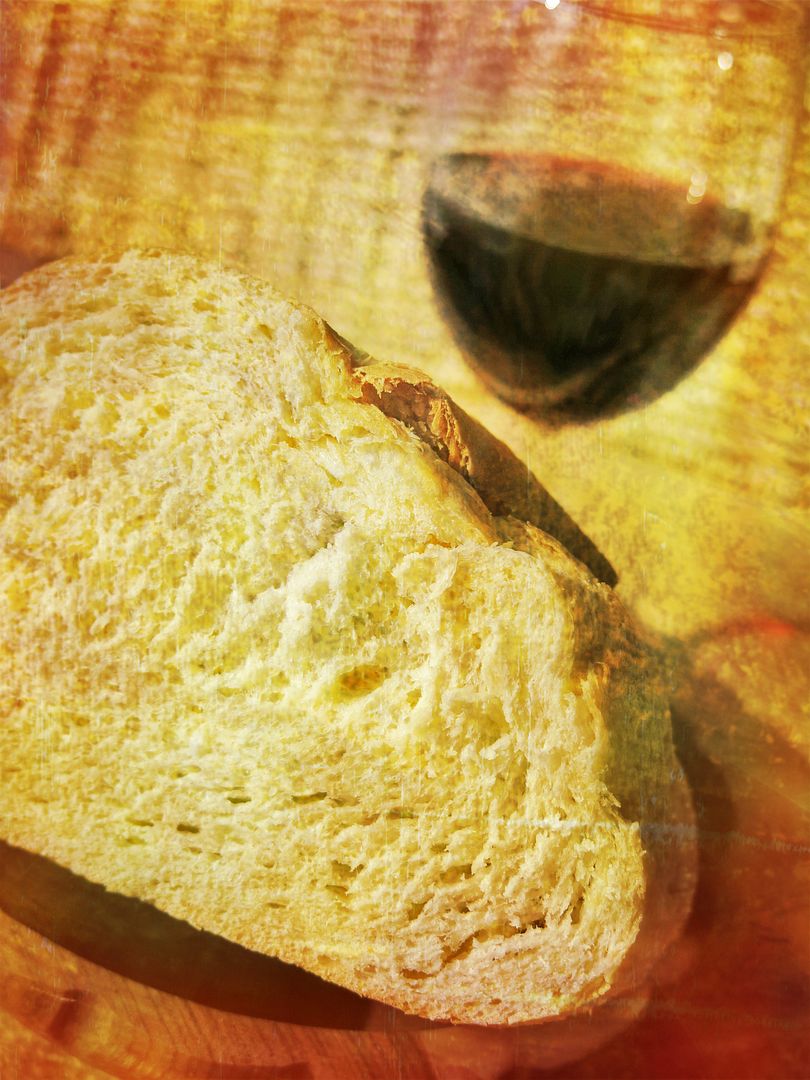
So that all of us together just might remember and not forget God's grace-filled presence and actions quite so readily, Jesus commanded us to take, bless, break, and share the bread of his life broken for us and the cup of his new covenant. The Apostle Paul reminds us whenever we meet together to celebrate holy communion, "as often as you eat this bread and drink the cup, you proclaim the Lord’s death until he comes." Jesus is at once both crucified and risen Lord—as often as you celebrate the Lord's Supper, you proclaim his resurrection, too. Let's not forget! Announce resurrection to the world? Don't forget to practice resurrection!

bread and cup

1 Corinthians 11

23For I have received of the Lord that which also I delivered unto you, that the Lord Jesus the same night in which he was betrayed took bread: 24And when he had given thanks, he brake it, and said, Take, eat: this is my body, which is broken for you: this do in remembrance of me. 25After the same manner also he took the cup, when he had supped, saying, this cup is the new testament in my blood: this do ye, as oft as ye drink it, in remembrance of me. 26For as often as ye eat this bread, and drink this cup, ye do shew the Lord's death till he come. KJV

Thursday, September 05, 2013

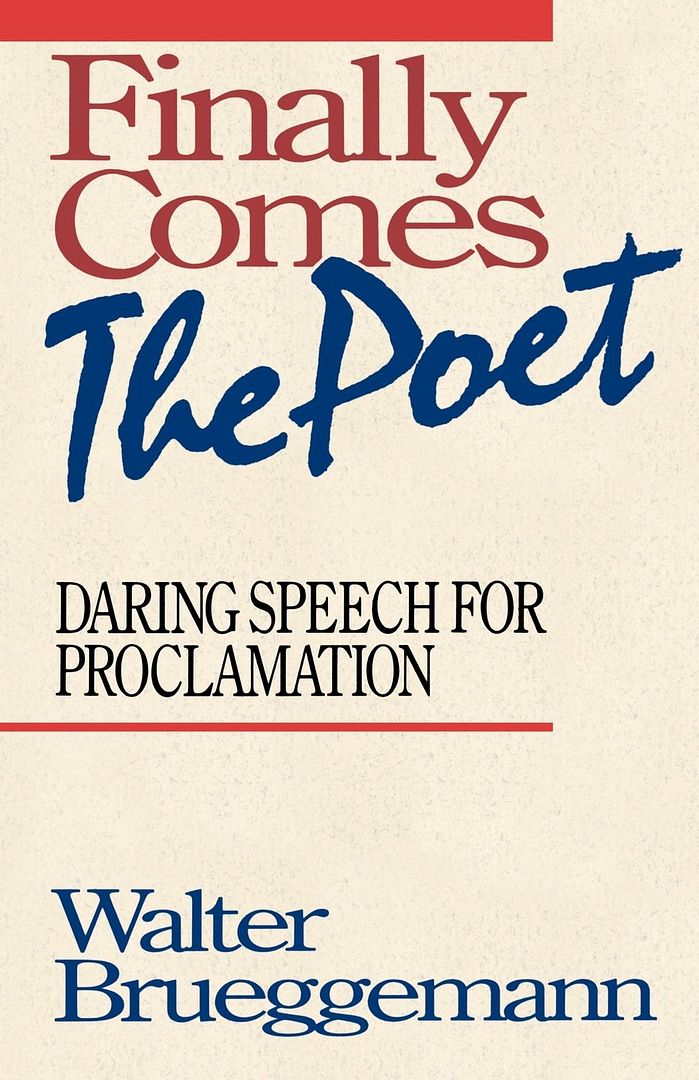
Finally Comes The Poet

Finally Comes the Poet, Daring Speech for Proclamation by Walter Brueggemann on amazon

finally comes the poet cover Walter Brueggemann found this book title in "Passage to India," from Walt Whitman's Leaves of Grass. This world has become "prose-flattened," so an alternative mode of addressing and encountering became the subject of the 1989 Lyman Beecher Lectures at Yale Divinity School.
Poetry isn't necessarily rhyme, metaphor, or simile, but poetry is the same type of alternative to conventional verbal expression that resurrection is to the reign of death. Israel spoke of the prophet, Greece of the poet, but both poet and prophet spoke and gave (in the Spirit they still speak and still give) the world jarring, angular, prodding, probing, redemptive words.

This is Brueggemann, so you won't be surprised to know he reminds us "Word has its habitat in Sacrament. But it is to say more. It is to say that all our talking and listening is out of baptism and into baptism." (page 85)

In some ways Finally Comes the Poet is mostly a book for preachers and for those who regularly attend to preaching, but it's also a book for every one of us wherever we are. For the preacher in her or his daily sojourns to the mall or the grocery store or the watering spot. For every one of us who gathered around Word and Sacrament last Sunday, who now gather around colleagues at the office, grandkids at the kitchen table, second graders in the classroom, "bound in covenant to the life of God" (page 85), inspired to speak and evoke a lively and life-giving alternative to the reign of death.

So let's not be prose-flattened? Let's all be and become the poet for each other!

my amazon review: Finally Comes The Poet

Saturday, August 31, 2013

Deep Memory, Exuberant Hope

Deep Memory, Exuberant Hope: Contested Truth in a Post-Christian World by Walter Brueggemann on Amazon

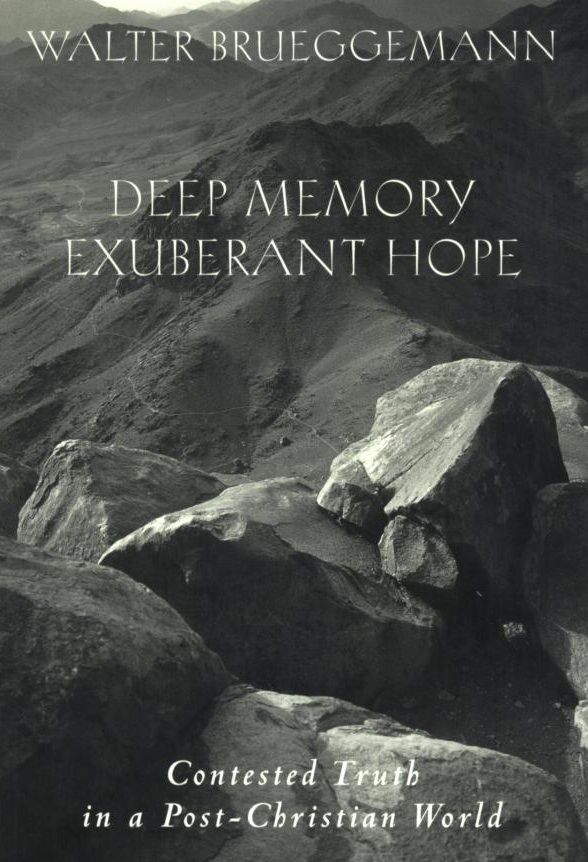
deep memory, exuberant hope coverThis is the third and final offering in a trilogy of reflections on our lives together by Walter Brueggemann, published by Fortress Press at the end of the last century, beginning of this one.
In memory and in hope, "We are forever re-imagining and retelling and reliving our lives through the scandal of Friday and the rumor of Sunday." Preaching as sub-version: a life-giving word within a death-dealing situation. Staying in Egypt is not our only option, and remember, [the exilic] 2nd Isaiah "funded Handel's Messiah!"

In this last book of the series that began with The Covenanted Self, and continued with Texts that Linger, Words That Explode, Walter Brueggemann asks why on earth anyone would want to "delete YHWH" [page 119] in relating these stories, these sagas, if you weren't proclaiming YHWH's agency and part in them? Well, if it weren't for YHWH, we wouldn't be reading or talkin' about any of these mighty acts of creation, liberation, homecoming, and resurrection because they wouldn't have happened; we couldn't begin to envision the possibility of daily bread for which we do not owe empire. In fact, if you do leave YHWH out of everything, "...not much that matters remains."

All three books in this series would be outstanding preaching and teaching resources; they even include detailed endnotes, as well as author and scripture indices.

my amazon review: deep memory, exuberant hope

Texts that Linger, Words that Explode

Texts That Linger, Words That Explode: Listening to Prophetic Voices by Walter Brueggemann on Amazon.

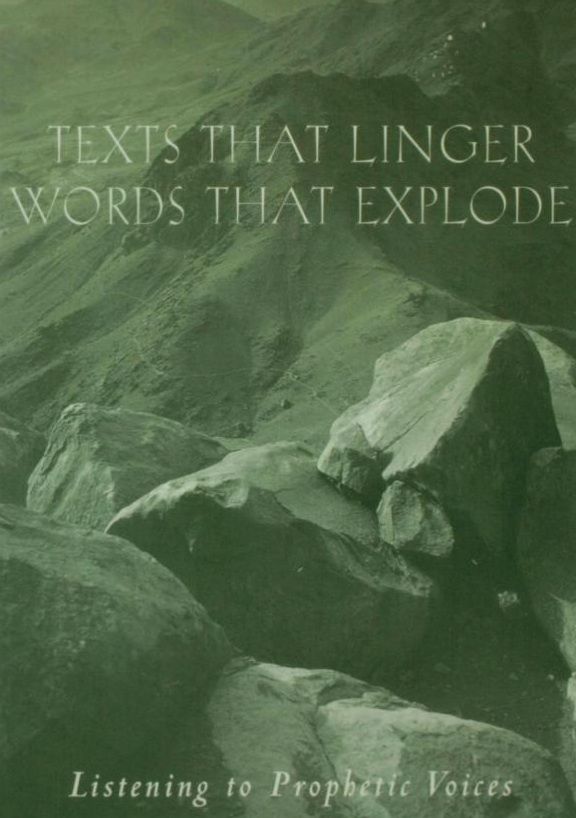
In the first book of this 3-book series of collected lectures, The Covenanted Self, Brueggemann discussed creation in covenant with Creator—especially regarding the life-giving words of the Ten Commandments of the Sinai Covenant and their later interpretation by Jesus of Nazareth as the Great Commandment to love God, Neighbor, and self. texts that linger words that explode coverIn Texts that Linger, Words that Explode, the second group of considerations of (mostly) texts from the Hebrew scriptures, the author emphasizes prophetic words, warnings, and promises from the Hebrew bible, relates them to the "fully-texted" [page 8] community of the New Testament, and insists upon the ongoing necessity of obedient, covenantal life in our own commodity-saturated context.
It's a logical continuation to contemplate dangers and outcomes of not following the Spirit of the Sinai Covenant, of not living justly with one another and with all creation, of not making God and neighbor a priority, of succumbing to temptations of fear, anxiety, and those still-present spurious allurements of consumerism and bling. As he almost always does, Walter Brueggemann reminds us the baptized, gospeled, "fully texted" community in which we gather around word and sacrament is the foundation of our own lives in resistance to death-dealing temptations, in embrace of resurrection-risking obedience. It's impossible to highlight and cite the 80% – 90% of everything in this series I found interesting and important, so I trust you'll consider reading these books for yourself. Deep Memory, Exuberant Hope, is the third and last book of this series.

my amazon review: words that linger, texts that explode

Monday, August 26, 2013

The Covenanted Self

The Covenanted Self: Explorations in Law and Covenant by Walter Brueggemann on Amazon

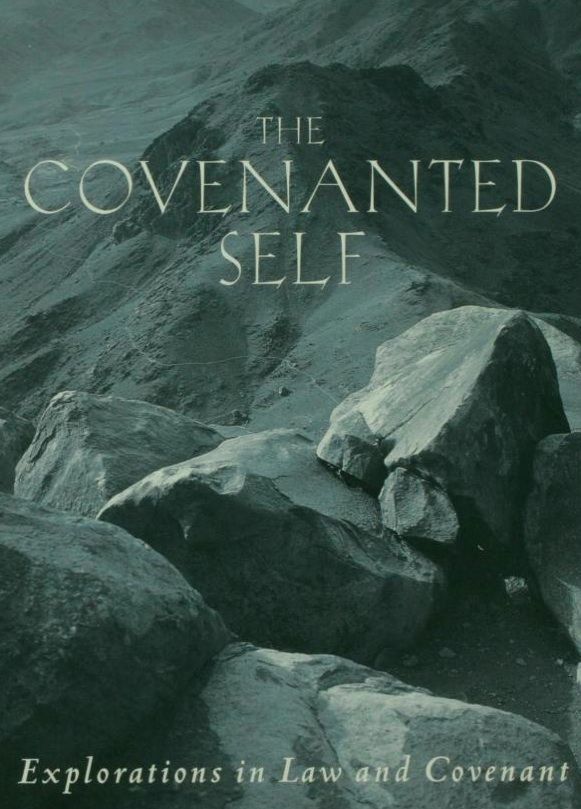
covenanted self cover The Covenanted Self is the first of a three-book series of Hebrew Bible-focused articles that continues with Texts that Linger, Words that Explode, and concludes with Deep Memory, Exuberant Hope. In a formal sense, "Covenant" in the title mostly refers to the brokered-by-Moses Ten Commandments of the Sinai Covenant between Yahweh and Israel. We first hear the words of the Decalogue in Exodus, and then again in the book of Deuteronomy, where we also read accounts of real people working out life in obedience as dangers to their own freedom and threats to the Lordship of YHWH surround them. And now, as a baptized people, we follow the commandments in our own daily journeys of life together at home, in church, in nearby community, and in the larger world.

Whatever the context then or now, there or here, Brueggemann emphasizes how those flexible, dynamic, yet explicit guidelines for just, sustainable, life together within the spirit of the law could not run more counter to the consumerist debtor economy most of us in the West were born into. We need to trust God's promise depends upon grace, but also upon our obedience. The book includes excellent endnotes, an author index, and scripture references.

my amazon review: The Covenanted Self

Friday, March 23, 2007

Theology of the Cross 5

Theology of the Cross 5 | Lent 5 | 25 March 2007

Theology of the Cross:
what does this mean for the Church’s and especially for this congregation’s life and mission?

A Tree on Your Back

1. We meet you, O Christ, in many a guise,
your image we see in simple and wise.
You live in a palace, exist in a shack;
we see you the gardener, a tree on your back.

2. In millions alive, away and abroad;
involved in our life, you live down the road.
Imprisoned in systems, you long to be free;
we see you, Lord Jesus, still bearing your tree.

3. We hear you, O man, in agony cry;
for freedom you march, in riots you die.
Your face in the papers we read and we see.
The tree must be planted by human decree.

4. You choose to be made at one with the earth;
the dark of the grave prepares for your birth.
Your death is your rising, creative your word;
the tree springs to life and our hope is restored..

–Fred Kaan, 1966

The cross of Calvary forms the ultimate type and reality of God’s characteristically hidden and paradoxical, sacramental presence in the commonest things, situations and people. Interpreting scripture, sacraments, everything in our lives and in the world with "What preaches Christ."
  • Last week we talked some about God’s action and presence in the sacraments – considered a “means of grace” in this tradition – and began imagining ways we can be a means of grace in the world around us.

  • It’s impossible to separate out today’s discussion topics, so I’ve suggested some texts and ideas to get us started.

A Theology of Baptism

Galatians 3:26-29; Titus 3:5-8; 1 Corinthians 12:12-13; Romans 6:1-14; Ephesians 4:4-6; Mark 1:4-11; Matthew 3:11-17; Luke 3:15-22

Theologian Jürgen Moltmann describes baptism as “sign, witness, representation and illumination of the Christ Event”; we can claim the same about the Eucharist. We know Jesus Christ as sovereign, prophet and priest; alive in Christ, we participate in that royal, prophetic priesthood. Especially in regard to those roles, how can our lives signify, witness to, represent and illuminate the birth, life, death, resurrection and ascension of Jesus Christ?

Contextualizing Baptism

We are baptized for events like 9/11; we are baptized to be the Christ alongside our friends, relatives and neighbors; we are baptized to not be an exclusive community, but to risk reaching out to image and model Jesus Christ to the world – including those who are culturally, ethnically, chronologically, occupationally, educationally different from us; to recognize Jesus Christ in others and to be the presence of the crucified and risen Jesus Christ in their lives.

A Theology of the Eucharist

1 Corinthians 10:16-17; 1 Corinthians 11:23-26; Mark 14:22-25; Matthew 26:26-29; Luke 22:14-20; Luke 24:30-31; John 6:33; John 6:51; John 6:56

Jesus said, “Do this!” Do this liturgical action?

Contextualizing Eucharist

Jesus says, “I am the Bread of Life; I am the Vine!” In every culture, grain products form a substantial nutritional base; the grain may be rice, wheat, corn, wheat, barley...the fruit of the vine is a potent and pervasive biblical symbol, and beyond there and then, lately we’ve been learning a lot about grape’s benefits! In the power of the Holy Spirit, God calls the church—
  • As the body of the risen Christ, the Bread of Life, to nourish the world, especially the stranger, the outcast and the ‘other’

  • Like the Eucharist, to reveal Jesus’ crucified body in its redeeming brokenness

  • To reveal Christ’s risen body in its liberating wholeness

  • As branches of Jesus, the Vine, to pour out our lives to those around us

9. What does the cross mean for each of us as individuals?

Galatians 3:1-5; 2 Corinthians 5:16-21; Ephesians 1:17-23; Matthew 28:16-20; Luke 24: 44-49; Acts 1:6-8; 2 Timothy 2:8-13; 1 Peter 2:9-10

10. What does the cross mean for this church community?

From Water Buffalo Theology: Suffering because we’re involved with others, involved with the other; participating in the “glory of the crucified Lord”. My note: the same Paul of Tarsus also talks about “the glory of the children of God!” And isn’t our glory as God’s offspring also a crucified glory and a risen glory?

11. What does all of this mean for our nearby neighbors?

When I was on staff at the church in City of History, I wrote their Mission Statement:
We are the people of God, forgiven and set free by the death and resurrection of Jesus Christ; by the power of the Holy Spirit we are called together and sent into the world as witnesses to his resurrection. God calls us, a servant people, to proclaim in word and action the presence of the risen Lord to all those whom our lives touch, especially in this community.
The author of Water Buffalo Theology talks about “neighborology”—the word about the neighbor! The Bible and Jesus Christ reveal God’s attachment to the world of creation to the point of learning and knowing us so completely as to walk in our sandals (Tevas, or flip-flops or boots or snow boots...) and to die a physical death, just as all of us inevitably will. Especially in the shadow of the cross, how can we practice neighborology?

© Leah Chang 2007