Showing posts with label epistle. Show all posts

Thursday, April 24, 2025

Five Minute Friday :: Might

1 Thessalonians 1:5
The gospel came to you not in word only,
but also in power and in the Holy Spirit and with conviction.
I Thessalonians 1:5

Five Minute Friday :: Might Linkup

Then he answered and spake unto me, saying,
"This is the word of the Lord unto Zerubbabel, saying,
'Not by might, nor by power, but by my spirit,
saith the Lord of hosts.'" Zechariah 4:6

Zerubbabel was supposed to oversee finishing rebuilding the Jerusalem Temple, but construction had slowed down and run into a glitch, as we might say. This passage reassures him that [human] resources aren't sufficient to accomplish God's work, or even to get anything done properly and completely. Cooperation and partnership between earth and heaven gets it finished, finished well, and – maybe most important – on God's timeline, not ours.

Our human power and might and effort and related gifts aren't wrong at all. After all, they are "gifts" or givens from God, and they're necessary for the ministries God calls us to. Our work in this world always partners with God's Spirit at the behest of God's call. Do you remember when Moses dialogued with God regarding "Moses, your people" or "God, your people," because it's always both/and?

Glitches in our lives happen because too often we humans try to do too much under our own steam, looking at our own clocks and calendars, too often not acknowledging the Spirit. Maybe we don't want to bother God with those smaller concerns when so much of civilization and creation needs so much healing, repair, and rebuilding?

Late December 2023 I determined to take a six month half year gap time, but as days went by and I assessed my situation, I realized a gap year made more sense. Now the chronology has spilled over a few more months into 2025, but signs and circumstances have made it clear it's finally time to move on. On God's timeline, not mine. And I anticipate more delays, possibly a roadblock or a few.

"Trust the process" has become such a cliché because that's how life works. Immerse yourself in the journey, savor each hour and each day. Ya know what? That's how humans learn and grow, how ideas develop, how dreams and visions become real. That's the way God engages us and gets things done. Not by human might, humanity's power, but by the Spirit that created the world, the Spirit that redeemed creation, the Spirit that calls us into a new creation.

Anyone who has despised the day of small beginnings
will rejoice to see the plumbline of the Lord's house
in Zerubbabel's hand. Zechariah 4:10a

Can you imagine teaching and preaching God's word without guidance from the HS? Can you imagine spreading the gospel, being the good news of God with us, God among us, without trusting in and waiting for promptings and instructions from the HS? The same holds true for every aspect of every moment of our lives. Think about it!

The gospel came to you not in word only,
but also in power and in the Holy Spirit and with conviction.
I Thessalonians 1:5
# # #
five minute friday might
five minute friday button logo icon

Thursday, January 30, 2025

Five Minute Friday :: Second

1 John 3:1 children of God
• Five Minute Friday :: Second Linkup

Retail merchandise – especially clothing – isn't always exactly perfect. For one reason or another, the end product sometimes has flaws, and sometimes the usual input doesn't even result in a finished product. That doesn't mean they can't be sold, but they get various warning labels like second, irregular, or imperfect—there's even a category of thirds.

Humans aren't always exactly perfect in any endeavor or situation. Contests and competitions include first place (blue ribbon), second (red ribbon) and third (white) or fourth (yellow). An organization or sponsor even can go further down the line. Graduation classes get numerically ranked. First in your class! Valedictorian. Second? Salutatorian. Everyone can't be first. Or even second in everything.

Although I usually got good grades in school if I tried hard enough (good instructors helped), academically I've never been particularly rank or ratings conscious. However, those years I entered art in the San Diego County Fair the first place blue and the second place red ribbons I won always excited me, and I worked during the year for best results. (After writing that, I suddenly feel I need to enter the LA County Fair. It will cover the month of May with the theme Art Unleashed.)

Humans can get competitive. We tend to compare ourselves with other people, compare today's accomplishments with yesterday's and last year's. But in the end, first, second, irregular, or imperfect matters not because:

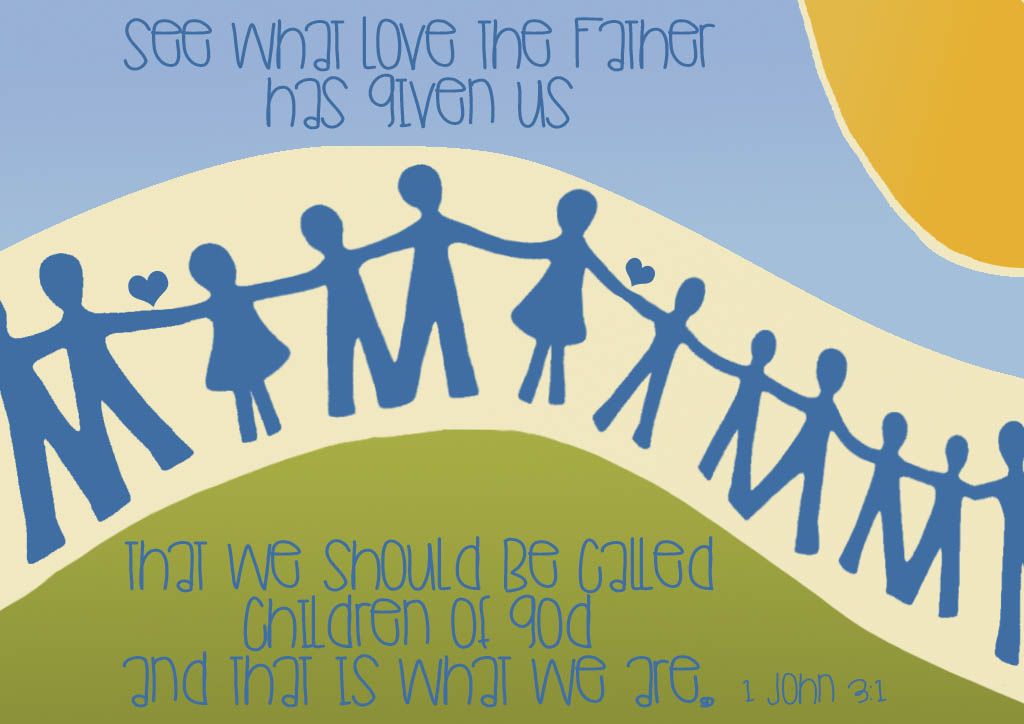
See what love the Father has given us
That we should be called children of God
and that is what we are.
1 John 3:1

# # #
five minute friday second
five minute friday bitton logo icon

Thursday, May 11, 2023

Sermon on 07 May

bright flowers bouquet
On the Fifth Sunday of Easter I guest preached again. They follow the Narrative Lectionary that follows the autumn through spring academic year and gives the formal lectionary a summertime vacation. This is Matthew's year in both NL and RCL, thus my references to Matthew. They plan to study more of Jesus' Sermon on the Mount during the summer.

Instead of interpreting for the current context, I decided to introduce Romans; enthusiastic feedback confirmed that was the best decision. As before, this is more notes than it is actual preached words (because I still use notes when I need a prompt).


Romans 1:1-17

• Grace to you and peace from Jesus Christ, firstborn from the dead and the first fruits of the new creation. Amen!

Today we're celebrating live and we're celebrating virtual on Easter five! Easter isn't only a single glorious celebration, it's a fifty-day long season that occupies about one-seventh of the year. Today is the fifth Sunday of Easter, day 29.

We've been studying Matthew's gospel, but today we start several weeks in the letter or epistle to the church at Rome. These weeks will increase our understanding of Matthew when we return to the Sermon on the Mount during summer.

Letters or epistles in the NT were sent to various churches, often in a round robin style where content and comments got added before being sent to the next place. Unlike the gospels that mostly reflect on Jesus' life and ministry, epistles tend toward teaching and doctrines that the OT and Jesus' life reveal. The letters then in turn help clarify Jesus' teachings. Technically an epistle is a sent communication.

Paul/Saul of Tarsus wrote his epistles considerably earlier than the gospels were composed. I always need to remind myself these letters were so much earlier than the gospels, yet they also reflect upon and interpret Jesus of Nazareth's ministry. The NT includes seven Paul wrote for sure; a few others bear his name as author, but weren't written by him. Back then they didn't have copyright concerns, and to attribute what you wrote to a famous person was a compliment that also would get you more readers. The NT also contains letters written quite a while later by other authors. Those would include Titus and Timothy (both attributed to Paul), Peter, James…

Letters or epistles tend toward teachings and doctrines derived from God's activity in the world, from the birth, life, death, resurrection and ascension of Jesus Christ that other sections of scripture narrate.

Romans is the latest of Paul's letters. Today I'll talk about only chapter 1 that reveals some about the rest of the book. Romans includes theology of creation, redemption, and sanctification, along with words about the church. Theology about the Triune God! You could say Romans is Saint Paul's systematic theology. Systematics is the philosophical theology that outlines and structures its topics in logical ways. Among many others, Saint Augustine, John Calvin, and Karl Barth all wrote famous systematic theologies.

Although Romans' literary format is not a gospel, Paul uses the word gospel. Gospel means good news. Maybe you've seen the stage play musical, film, or TV show Godspell? That's gospel in Old English. In the Roman imperial context, gospel already was a known concept. They referred to the birth of the future emperor a gospel. Gospel most frequently described the returning conquering general's announcement of annihilating his enemies. Just as Christianity subverts, turns upside down, and redefines many existing concepts and practices, the Christian gospel is the Good News of God's redemption in Jesus Christ. Not only is it life rather than death; the gospel of Jesus Christ is the annihilation of death and the reign of life.

As Christians we usually say the Gospel of Jesus Christ, yet Paul refers to the gospel of God, so this isn't something new. The good news for creation of redemption and renewal is the way God always has acted. In verse 16 Paul says the gospel is "God's saving power." Because of this, we can follow many gospeled threads through the Hebrew scriptures.

Reading the New Testament, we find different nuances and emphases of Gospel. For Paul in particular the gospel is death and resurrection. The word evangelical is gospel in Greek! As people baptized into Jesus Christ, we are a gospeled community.

Romans 1:16-17 is huge in the history of the church. These verses were a kind of hinge between the church prior to the Reformation in the 16th century and the church after that. Since Martin Luther's excitedly zeroing in on these verses, church and academy sometimes have said we only need to trust or have faith in God, that the medieval Roman branch of the church was mistaken when it claimed our works or behaviors could reconcile or make us right with God. As we study this letter and when we return to Matthew, it's important to remember that Paul never separates faith or trust from obedience or works (our actions). Neither did Jesus. Neither does any of the Old Testament.

Paul calls himself an apostle, but we know he wasn't one of Jesus' original twelve followers. In scripture an apostle is someone who has seen the risen Christ. You may remember in the book of Acts when they're voting to find a twelfth to join the remaining ones after Judas of Iscariot's betrayal, they insisted it had to be a "witness to the resurrection," someone who had met Jesus crucified, Christ risen face to face: Acts 1:21-26 You've probably read the account of Paul's Conversion (also in Acts, chapter 9) when the risen Christ encounters Paul along the road? That event gave Paul apostolic qualification, just as our encounters with the Risen One make us apostles.

Paul introduces himself as an apostle, yet insists it's about BOTH being disciples or followers who learn from the teaching of the earthly Jesus AND about being apostles or sent people of the risen Christ. We've been in Matthew's gospel, where Matthew's Jesus is the ultimate teacher or rabbi. Jesus wants us, his followers to be the ultimate students or disciples, "taught persons." Disciple or apostle, it's a gift of God's grace.

An epistle is a sent communication; an apostle is a sent person.

We'll soon celebrate the day of Pentecost and the gift of the indwelling Holy Spirit we receive in baptism that enables us to follow Jesus as disciples and apostles.

I hope our study of Romans will broaden, deepen, and enhance our understanding of Jesus' teaching when we return to Matthew's gospel during the summer.

To God Alone Be Glory.

Amen!
Wilshire Blvd Los Angeles near Westwood Blvd

Friday, June 10, 2022

Five Minute Friday :: Stir

2 Timothy 1:6-7 stir up your gifts
Five Minute Friday :: Stir Linkup

Therefore [because of the faithfulness of Timothy's mother Eunice and grandmother Lois] I remind you to stir up the gift of God which is in you through the laying on of my hands. For God has not given us a spirit of apprehension, but of power and of love and of clear understanding.

2 Timothy 1:6-7

Word study this time!

Stir up God's gift(s) that are inside us. Exactly like when we stir dying embers and the entire fire reignites, getting our talents and abilities out where people can notice and know them, where we can use them, literally stirs them up and helps them blossom and bloom. Like the wind and the fire of Pentecost, "stirred up" gifts spread far to benefit the world. I'll take stir further! Stirring cooking or baking ingredients together combines them to create yummy results no one ever could get from only a single ingredient. Using our gifts and talents together…

I love that the Greek words for grace and joy are very similar – probably from the same root. Charisma, the word for gift in this scripture literally comes from "charis" or grace. Doesn't using our gifts of grace result in joy all around for everyone?

The apostle Paul counsels his ministry sidekick Timothy to build on the testimony in words and action of his grandmother and his mother. You probably know scripture constantly tells us "do not fear." Although some translations of these verses read "God has not given us a spirit of fear;" rather than phobos that gives us the too familiar English phobia and phobic, the Greek here is closer to apprehension, uneasiness, or "timidity" several translations offer.

In Romans 8:16 Paul announces the Holy Spirit resonates with our human spirit to let us know we are God's offspring. Given the reality of God's own Spirit indwelling us, is it any surprise that our power is the dynamite word scripture often uses for God's own power?

One more! Our spirit of love is God's world-embracing unconditional agape! Do we believe it, can we rock it? Maybe so, with clarity, understanding and self-possession.

# # #
five minute friday stir
five minute friday icon

Sunday, August 27, 2017

Pentecost 12A: Romans 12:2

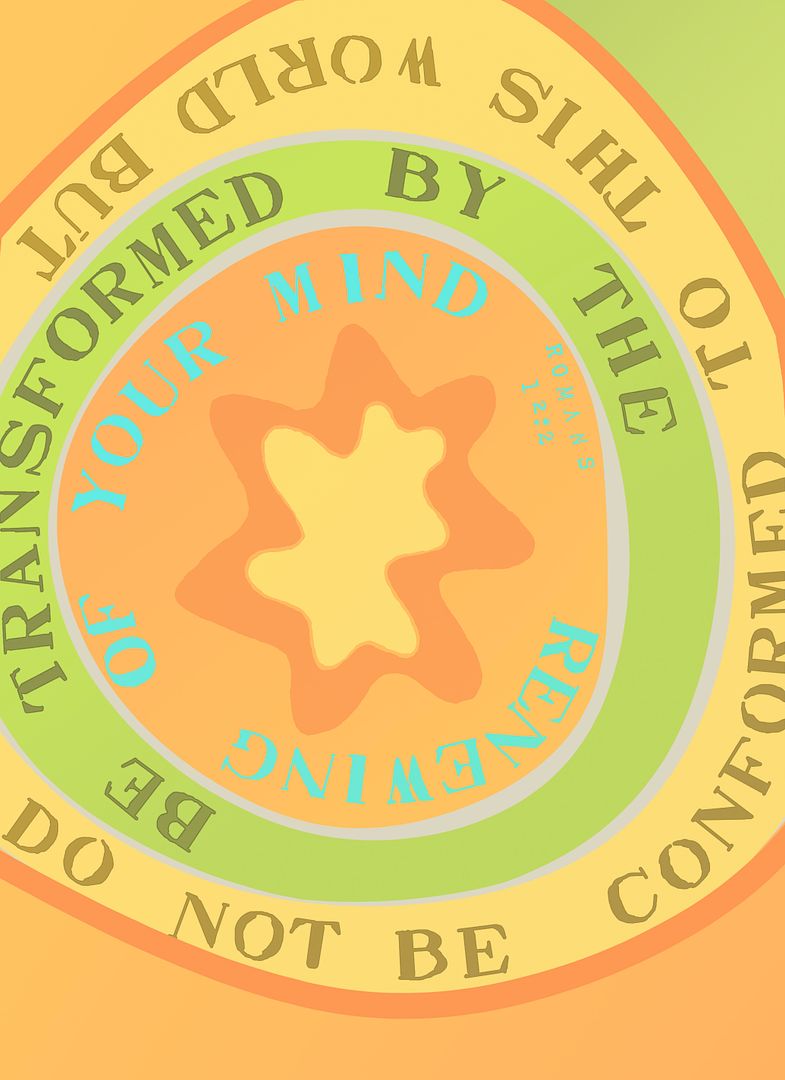
Romans 12:2

"Do not be conformed to this world but
be transformed by the renewing of your mind."

Romans 12:2

Tuesday, November 08, 2016

Green Team Talk – Reformation/All Saints

Here's the devotional talk I gave last Thursday for the Green Faith Team meeting.

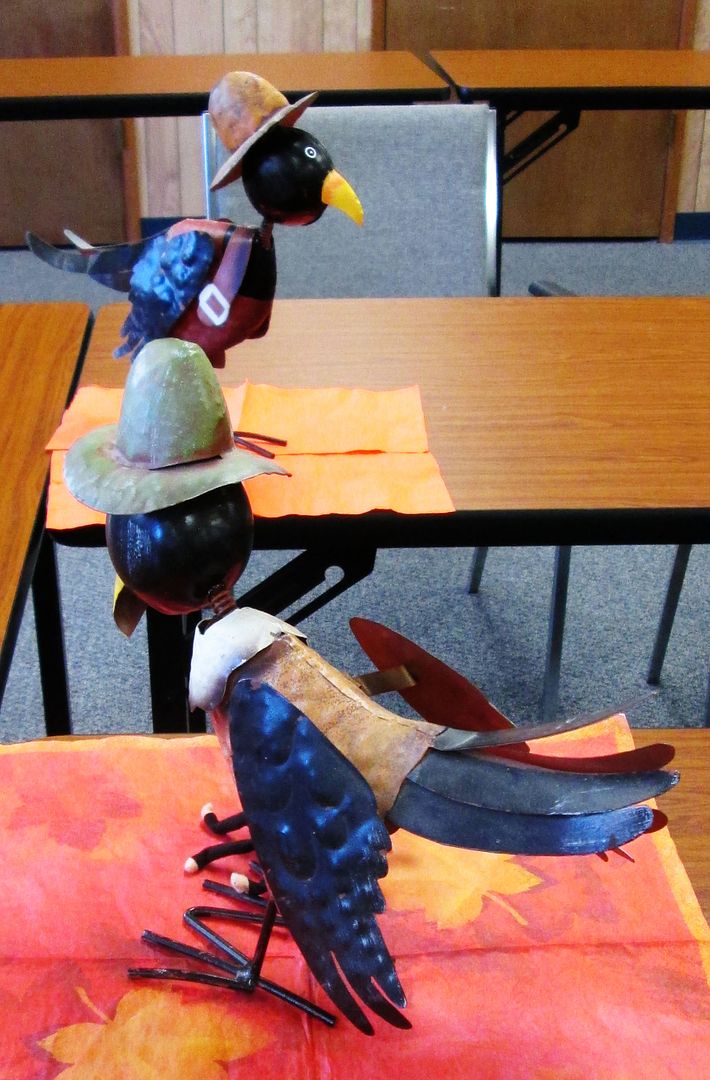
Congress of Two Crows• This week brings a confluence – a literal flowing together as rivers and streams of water do – of Reformation and All Saints. We celebrated Reformation last Sunday, recalling changes in the church the Holy Spirit made through human agency and also anticipating a church that never remains stagnant, always is alive. Next Sunday will be All Saints, when we especially remember those who have passed into the Church Triumphant, but All Saints is our day, as well. These actually are back-to-back festivals on 31 October and 01 November, but most churches celebrate both Reformation and All Saints on Sundays, since few people will attend weekday or weeknight services.

• Reformation is a major festival of the Holy Spirit when we "wear red," as we always do on the Day of Pentecost. The reading from Ephesians [1:13-14] for All Saints reminds us each of us in baptism carries the sign and seal of the Holy Spirit. All Saints is another festival of the Spirit!

• Pretty much from necessity, the Reformers particularly emphasized theology of redemption, of God's grace freely poured out, offered to all, given to all, through the birth, life, death, resurrection and ascension of Jesus Christ.

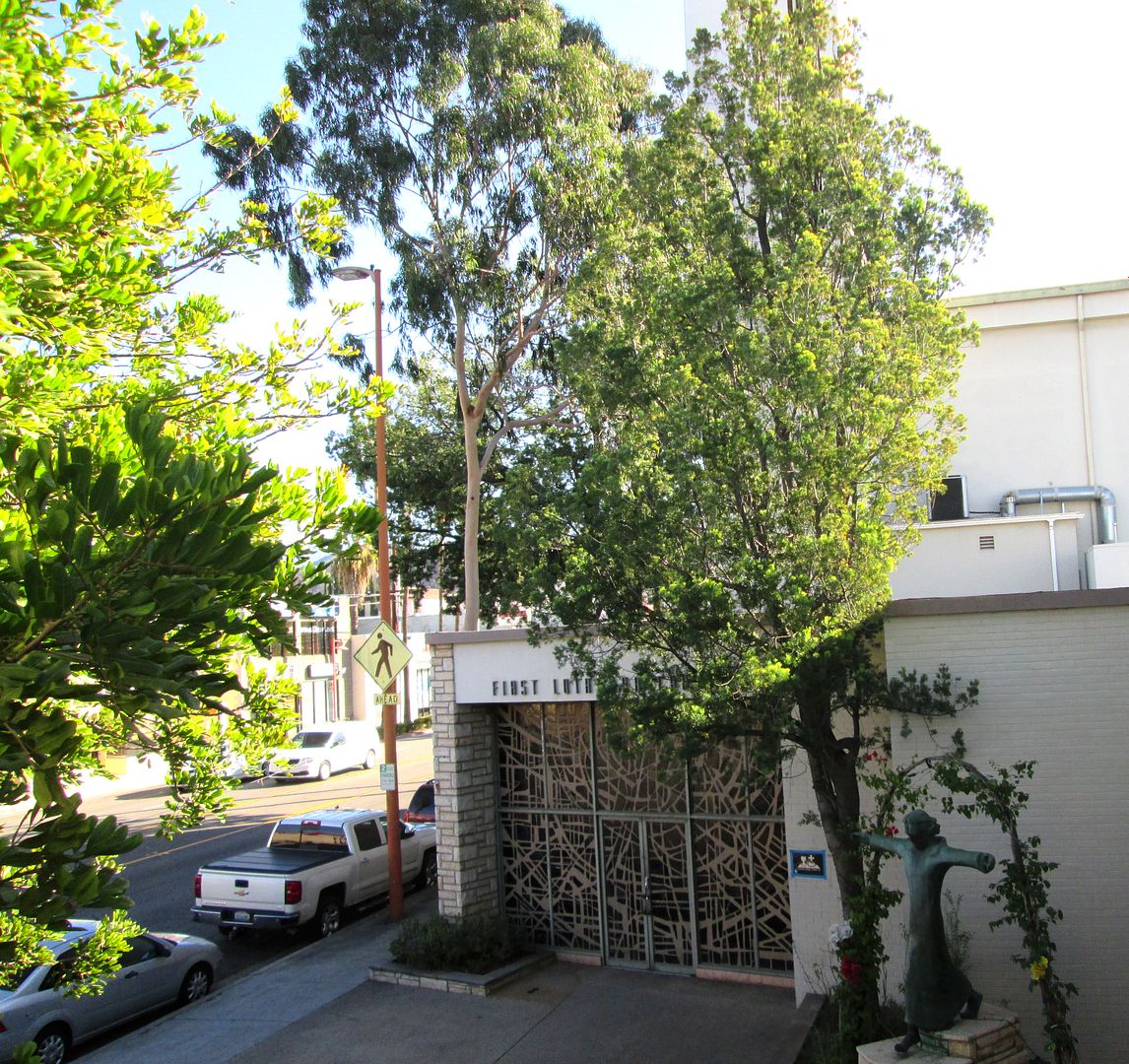
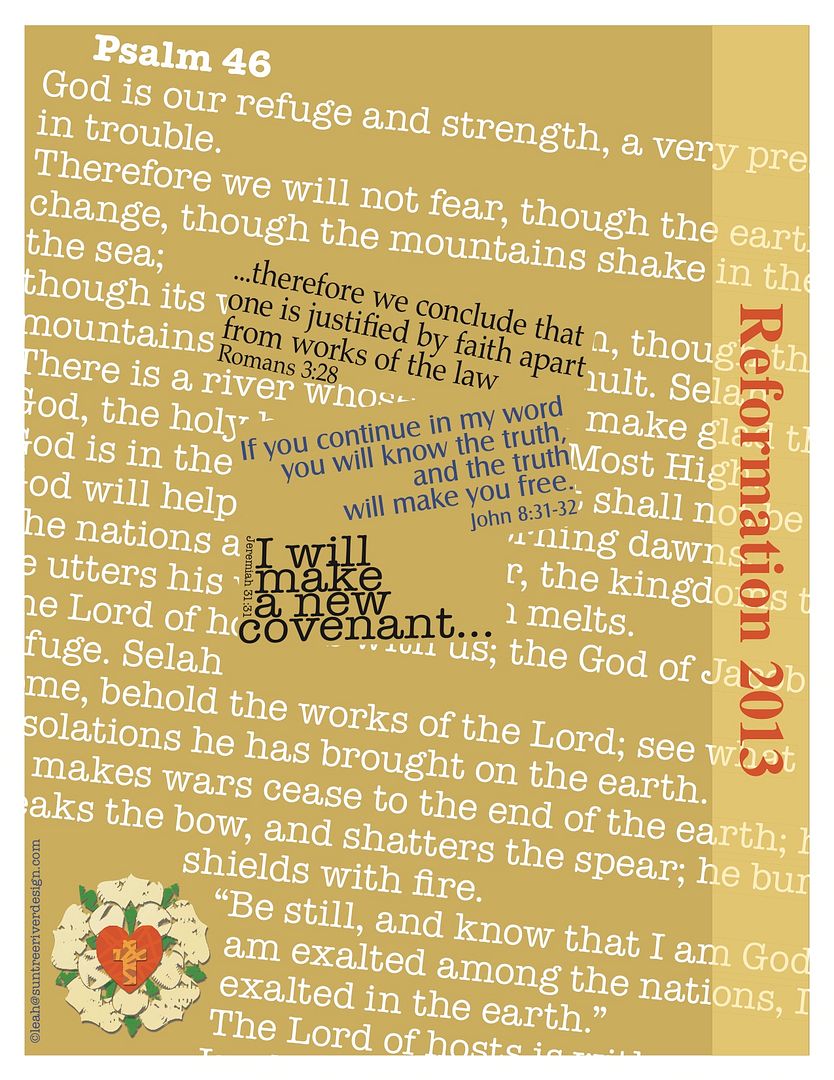
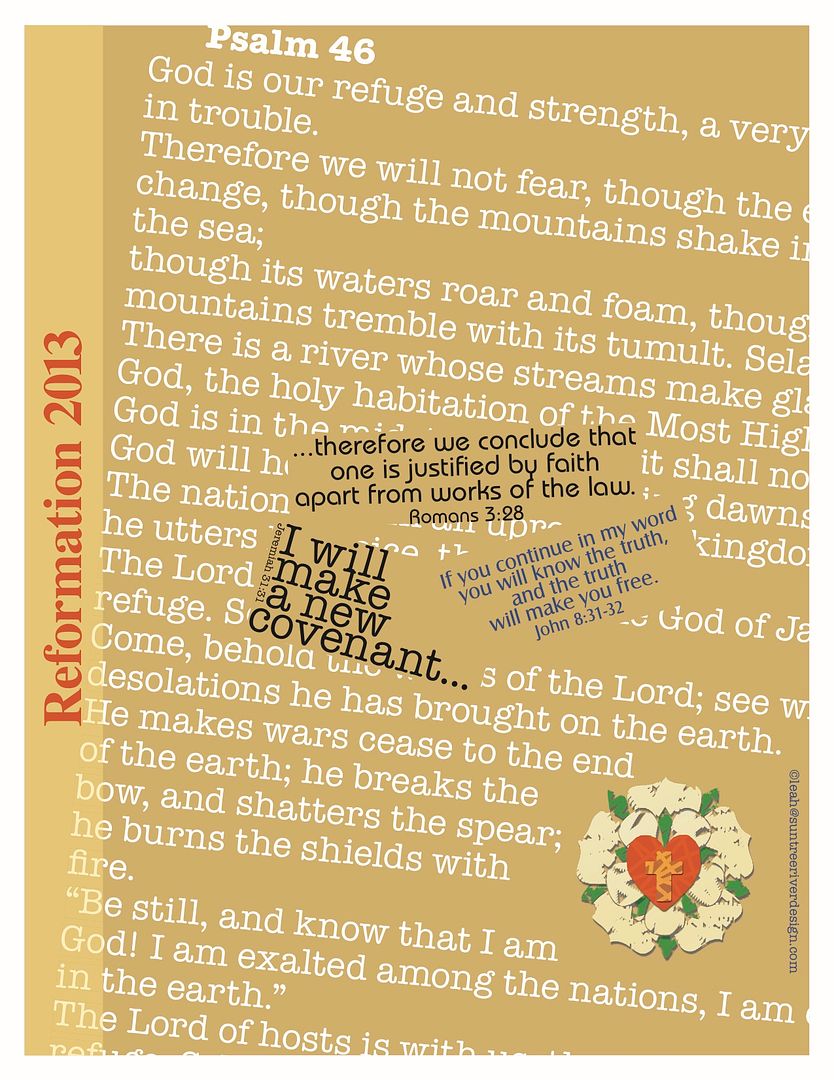
• The reformer Martin Luther got his theology from Galatians and from Romans, 1st Lutheran Glendale CAbut the psalms gave Luther his passion! Everyone knows the hymn he wrote based on Psalm 46; Pastor Eugene Peterson's version tells us the city streets are safe because God lives in the city; the city is safe because God bans war and breaks weapons. The city is a delight because God plants trees and flowers!

• We celebrate Pentecost and Reformation as major festivals of the presence of God in the Holy Spirit. But there is more! The priestly scribes who brought us the latest Pentateuch source [designated P] wrote late in the Babylonian exile or possibly after the exile, since dating is a bit confounded. They received a revelation that the destruction, the end of the Jerusalem Temple wasn't such a huge deal, after all. Imagine the crazy idea of a real God beyond space and time contained in a mini-replica of the earth and the heavens—that's what temples were! In Genesis 1 the priestly scribes show us all of the living structure of planet earth, the whole panorama of creation as God's dwelling place, the temple of the Divine. Genesis 1 also bring us the spoken Word that creates, orders, tames – redeems, renews, and reforms. And of course, we know Jesus Christ supremely as the Word of God.

• But there is still more! The Reformers – especially magisterial reformers John Calvin and Martin Luther – mostly concentrated on theology of God's grace-filled redemption of human creatures through the reconciling Christ Event. Halloween peopleHowever, John Calvin brings us a rich theology of creation revealing God's providence, of God's grace and providence revealed for all creation, not solely human creatures. Martin Luther brings us the insight of the Divine presence in, with, and under all creation. Beyond that, Luther affirms the ubiquity – the everywhere-ness – of the risen and ascended Jesus Christ. Can you say sacraments?

• The lectionary reading from Ephesians for All Saints reminds us baptism marks and seals us with the Holy Spirit. In the power and presence of the Holy Spirit, like all of planet earth, each of us is a dwelling place of God! Along with Reformation, All Saints is a festival of the Spirit; besides commemorating those in the Church triumphant, All Saints is a day for those of us still on planet earth, as well. How exciting to have the confluence of those major festivals this time of the year!

• And now? We need to trust, we can trust, the bounty of life in the Holy Spirit, the imagination of all creation, the reign of grace.

To God Alone Be glory; Amen!
Judicatory offices share the campus with First Lutheran Glendale Church and School.

Thursday, April 28, 2016

Five Minute Friday: Pass

Time for Five Minute Friday! Time to write unedited for five minutes—more or less. Kate Motaung hosts again with this week's pass prompt.

5 Wellesley Park porch
Pass is another word with multiple meanings, another that doubles as noun and as verb. When you group layers together in Photoshop, they default to pass through blending mode that applies the same layer style to every single layer rather than only one. That type of pass isn't all that different from taking a route through a mountain pass. Not hugely distinctive from sliding alongside the vehicle in front of you by passing it to get past it so it ends up behind you. Someone offers you food that doesn't interest you or an opportunity you're not ready for? I'll take a pass on crustaceans—I'm deathly allergic to them, but in the interest of politeness, I always pass on saying much about it.

We know that we have passed from death to life because we love one another. Whoever does not love abides in death. 1 John 3:14

Let's not pass on that one!


Every one of these instances of "pass" moves – literally passes – from one state of being or doing into a different one.

five minute friday pass five minute friday button

Wednesday, October 07, 2015

07 October: Love

31 days of free writes oct 07, love

Day 7 of Kate Motaung's October 2015 edition of 31 days of free writes. Write for five minutes. Don't edit.

Wednesday 07 October: Love

see what love the father
RCL year B, Easter 3, 1 John 3:1 – "See what love the Father has given us, that we should be called children of God and that is what we are."

Long ago, C.S. Lewis wrote a book about Love. Scripture brings us four distinctive, yet sometimes overlapping categories of love: storge, eros, philios, and agape. In fact, those categories were not Christian originals but derived from the Greek culture that surrounded the early church. In any case, this still is a free write about love for only five minutes, so instead of attempting to describe each type, I'll reflect on love in general.


I wrote the first paragraph earlier today, and after trying three or four times to write for an additional four minutes it was a total no go, so my post this time mainly is my own illustration of 1 John 3:1.

Not sure I can continue 5 minutes every single day, but I'll try some of the prompts. I asked myself what I would do if this were client design, and I know I'd push through to the end no matter how tired I was, how non-creative I was feeling (and being), how late the hours were. I can't always apply that reasoning to my own stuff, esp when I'm so exhausted and there's nothing essential about a project.

October 2015 31 days of free writes

Friday, September 11, 2015

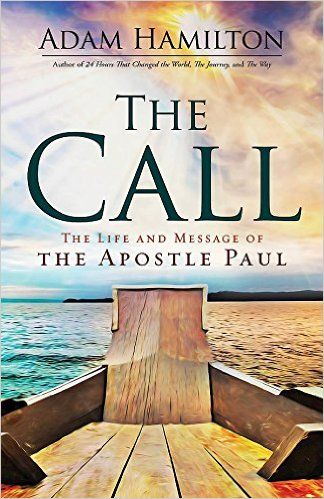
Adam Hamilton: The Call

The Call: The Life and Message of the Apostle Paul by Adam Hamilton on Amazon

the call book coverI always enjoy Pastor Hamilton's practical scholarship and his attention to contextualizing scripture into our own life and mission! The Call rollicks and frolics along with the energy and excitement of the NT book of Acts, and that's fitting, since a lot of the information we have about Saul (Jewish name) / Paul (Roman name) of Tarsus comes from the narrative in Luke's Acts.

Pastor Adam knows the texts extremely well; he's also getting to know the terrain and layout of the biblical Holy Land. As we journey with Paul and his companions, Hamilton observes what was going on in politics, in Jewish circles, in Christian hangouts, "among the" Greek and Roman gods and culture back at that time and suggests real-life present day applications for each of us in our churches and in the surrounding communities. The book places Paul's life, ministry, and letters in the times and places when and where he grew up, learned, taught, talked, and walked; this New Covenant of grace is not entirely different from the Old one, but it's about Trusting Jesus rather than Trusting Torah.

In the Protestant world in which many of us live (and move, and have our being), Paul is our most prominent theologian; we think we know him mostly for his Christology (on pages 72-74 we get a very shorthand version of the saving person and work of Jesus the Christ), yet in The Call Hamilton reminds us it is the work and reign of the Pentecostal Spirit of Life that inspired and enabled Paul /Saul; the Spirit of Life that raised Jesus from the dead in turn brings us to living faith in Jesus. As Martin Luther famously said in his Small Catechism: "I cannot by my own effort or understanding know Jesus my Lord or come to him, but the Holy Ghost has called me by the Gospel, enlightened me with his gifts, sanctified and kept me in the true faith, just as the HS calls, gathers, enlightens and sanctifies the whole Church..." In his Acts of the Apostles the gospel-writer Luke brings us most of what we know about the chronology and events in Paul's life; in fact, the Spirit is prominent throughout Luke and Acts. (Pneumatology is the branch of theology that emphasizes the person and work of the HS.)

The six chapters of The Call describe God's call to the Apostle Paul along with a parallel call to each of us: 1.to Follow Christ; 2.to Go; 3.to Suffer; 4.to Love; 5.to Give, and 6.to be Faithful. Adam Hamilton includes a few anecdotes and incidents from his own life, mostly in ways that encourage us to discover similarities in our own. The hardbound book is a comfortable size to hold and heft, printed in easily readable type, and includes B&W maps and photographs. However, I seriously wish the book had been edited to omit and change at least most – if not all – of the too many sentences written in the passive voice.

Hamilton believes Galatians is Paul's earliest undisputed epistle ... time for me to check that out.

my amazon review: Paul and Jesus; Paul and the Church

Tuesday, February 24, 2015

synchroblog – renewal!

February's synchroblog topic is Renewal.

For this February during Lent, here's my interpretation of Romans 12:2—Do not be conformed to this world, but be transformed by the renewing of your mind. World in this passage is "eon" rather than "cosmos." Peace, joy, and renewal to all!

Romans 12:2


This month's suggestions would make several more good blog topics for this season of Lent; here they are to remind myself:
Write something informative, tell a story, share a poem or piece of art, reveal a desire or dream, ask a question, explore something from scripture, tell us what renews you, review a book, incorporate the season of Lent in your post, as Lent is often referred to as a time of renewal, get personal and write about your own need for renewal ... the theme is wide open.


Other February synchroblog participants:

Abbie Waters – It is Well with My Soul

Done With Religion – Renewal

Mark Votova – 30 Ways the Church Can Find Renewal

Jeremy Myers – I am Dying … (So I Can Live Again)

Phil Lancaster – The Parable of the Classic Car

Susan Schiller – Renewal by Design

Glenn Hager – Repurposed

Wesley Rostoll – Why I no longer pray for revival

Clara Ogwuazor-Mbamalu – Renewal of the Spirit

K. W. Leslie – Those who wait on the Lord

Lisa Brown – Momma’s Kick Off Your Shoes and Stay For A While!

Jenom Makama – …Like An Antivirus

Leah – Renewal!

Peggy – Abi and the February 2015 Synchroblog – Renewal

Loveday Anyim Snr – Stop Right here and Renew Your Mind!

Monday, September 15, 2014

Outback/Wilderness Sunday 2014

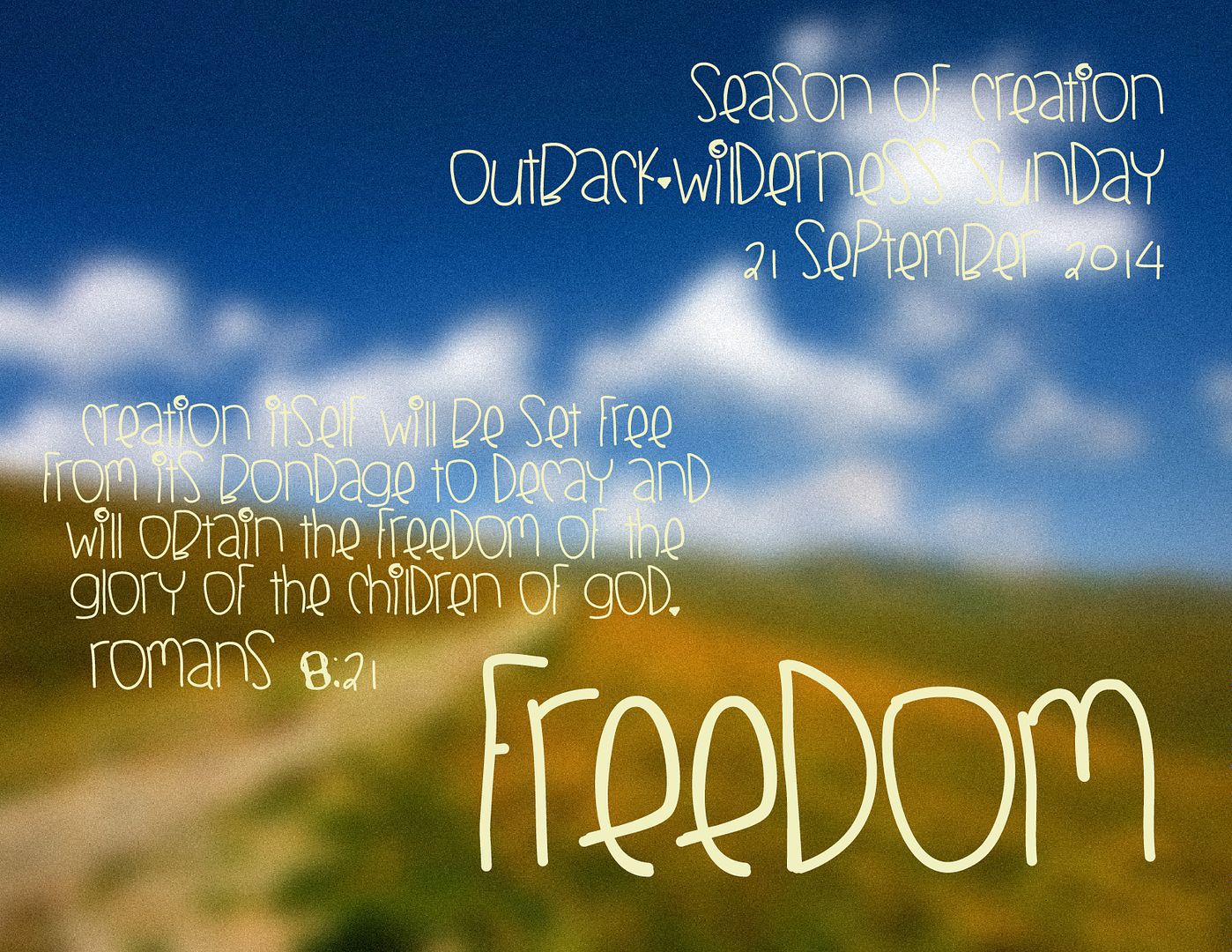
season of creation outback Sunday posterGod of the covenanted faith-filled journey homeward, in the exodus desert you formed a people after your own heart as you led them toward the land of promise. We ask that you would lead us to trust you in our moment by moment wanderings, that we might freely serve as your gracious presence in the world. In Jesus' name, Amen!
Here's the Eucharistic Prayer I wrote for Season of Creation Year A in 2011:

Eucharistic Prayer Creation A – © leah chang 2011

Tuesday, July 22, 2014

free to be: July synchroblog

July Synchroblog: Liberty on the WordPress blog

synchroblog clothesline
This month's synchroblog header pic is via the Facebook group; the prompt for this month reads:
"July is here and I always associate that with Independence Day. I suspect that’s not terribly strange. For this month we’re working with one word: Liberty. You can write whatever you want about that word ... what feelings does it evoke? How do you define it? Do you think you live it? Or not? Those are just some ways you could look at it. You could write a poem, or a story, or a more traditional blog post. Just use the word, 'liberty' as your starting place and see where you go."

In school and out of school, I've participated in discussions of liberty and freedom, and I even found an article that describes both, particularly in terms of Thomas Jefferson's use of the term:
One should distinguish between the terms "freedom" and "liberty." Speaking generally, Freedom usually means to be free from something, whereas Liberty usually means to be free to do something, although both refer to the quality or state of being free. Jefferson's use of the terms almost always reflected those meanings. Thus, he never spoke of freedom as a right, though liberty is listed in the Declaration as one of our inalienable rights. It is safe to say that whenever Jefferson spoke of freedom, he referred to that state that is free from despotic oppression.

Especially in his epistles to the churches at Rome, Galatia, and Corinth, the Apostle Paul frequently proclaims and counsels eleutheria, typically translated into English as "freedom," the kind of easygoing, grace-filled living devoid of fear and anxiety, that lack of attachment to sin we know in Christ Jesus. And truly experience with our entire beings all too rarely. That particular freedom also is the bounded liberty (=liberation) of the children of God―free in Christ, but also keeping our own freedom along with that of our friends and neighbors whole by obeying the commandments. With its neither Jew nor gentile, slave nor free, male nor female, Galatians 3:28 ain't no emancipation proclamation! However, the Apostle Paul's, "but I was born free!" quoted in Acts 22:28 is not eleutheria-liberty at all, but indicates his being well-born as a Roman citizen, and therefore already "emancipated." Emancipated in terms of not being a subject of or potentially subject to slavery, bondage, ownership or control by any other individual or entity. For us in this century, living as citizens of a first- or second-world country with relatively open, transparent, and accountable government structures is one type of freedom, for sure.
According to Nobel Poet Laureate Joseph Brodsky: "Freedom is when you forget the spelling of the tyrant's name." I like to counsel myself and others, "Don't let people wag you! Don't let them rent space in your head!" Be your own person.
Although any synchroblog is pretty much a free-choice response, I especially love this month's suggestion simply to start with "freedom" and then go wherever it takes you. So a couple more things for now. One of my favorite contemporary Christian songs by Don Moen insists "There is therefore now no condemnation for those who are in Christ Jesus" as it quotes the opening of Romans 8:1-25

July in the northern hemisphere and in southern California is very very summer; by then most schools are out, though there are some year-round elementary schools in these here parts, and of course, for all ages, there's summer school, which I've always loved. By late July we're well into fun activities like picnics, parties, potlucks—vacation bible school will be here soon! Until a few years ago, summer always had been true freedom time for me. By "true freedom time" I mean nothing much bothered me, I didn't obsess about why someone said what they did, why someone else acted how they had—no matter what might have been going on during the previous months, whatever still stood in my way despite its being summer, and even considering what the upcoming autumn schedule looked like. For this almost over July 2014 and for the upcoming months, I'll do whatever's possible to make liberty about being free to be myself. Again. Just as it used to be.

July Synchroblog Participants so far:

Sunday, March 02, 2014

transfiguration 2014

It's been close to forever since I've blogged much in the way of theological reflections, but I liked my own notes in response to an online friend's transfiguration Sunday sermon, so here's a very slightly edited version of them along with a few additional considerations.

Matthew 17:1-9

Transfiguration 2014My friend ran with that all too common biblical and contemporary experience of fear, which I do not perceive as at all central in the texts. My response included:

Fear... we all (most of us, anyway) have too much of it, and need lots of reminders not to fear. But I believe beginning a T-Fig sermon with fear misses the point of the event and obscures the wisdom of the lectionary compilers' placing this event right before we begin lent, before the church zooms in on the journey to Jerusalem, to the cross, to the empty tomb.

The gospel-writer records this mountaintop happening as "six days later" than Jesus' telling his disciples to follow him means to take up *their* cross, lose their lives... and Jesus then will model the ultimate example of gaining new life for the whole world by giving up his own earthly life.

The words of this passage demonstrate God's historical faithfulness in speaking via both law and prophets; Elijah's presence harkens back to a related trinitarian theophany we experienced once again this year only a few weeks ago at the baptism of Jesus by John—remember, Elijah had to return, but as Jesus tells us, for him, John was Elijah!

Probably most important, a few days prior to Ash Wednesday, Jesus tells us he will be raised from the dead.

I don't know if you regularly read the first (typically Hebrew bible) lection during worship, but Exodus 24:12-18 is Moses, God, [Mount] Sinai covenant, 40 days and 40 nights, all of which tie in perfectly with this T-Fig narrative and the forty days of Lent the church is about to enter. Also, in 2 Peter 1:16-21, we find no hint of fear, but rather divine self-revelation in vision, word, and spirit.

I told my friend I loved her next-to-last paragraph reminding us about down to earth Jesus using touch and speech to calm us down. As she observed in her final paragraph, God never leaves us or forsakes us, and we need that reminder. However, I added how I believe retaining "fear does not have the last word," (as true as it is), obscures the focus on the world-transforming (and transfiguring!) crucifixion and resurrection events to come.

In other words, despite Peter's typical not-getting-it again here, fear simply is not central, but rather, so peripheral I probably would mention it only in passing, if at all.

"Listen to him!" Jesus ordered them, "Tell no one about the vision until The Human One has been raised from the dead." Listen to him—It's about death and resurrection! We charge the baptismal sponsors to "place the scriptures in their hands; bring them to the services of God's house...." so they can "Listen to him!"

Saturday, February 22, 2014

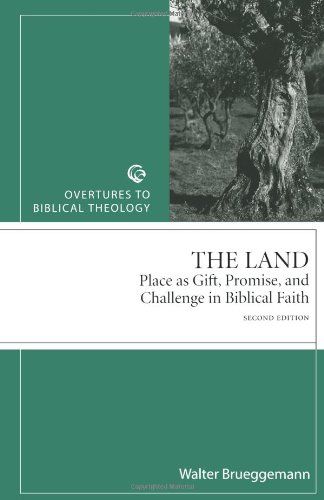
The Land: Brueggemann

Because I read this edition from 1977, my blog may not completely apply to this 2002 revision: The Land:Place as Gift, Promise, and Challenge in Biblical Faith – Overtures to Biblical Theology

the land cover Wherever you are on this planet, actual earthly turf lies under your feet, forms the foundation of your house, your workplace, of everywhere you venture. For every one of us, "land" carries heavy literal and symbolic connotations that include dirt, soil, ground, territory, settled, belonging, rooted, secure. In this second decade of the twenty-first century we've recently experienced a major economic crash followed by far lower reevaluation of residential – and other – real estate, precipitated by people who imagined inalienable land could be "owned" as property and turn big profits. Families still get relocated by governmental and other entities from storied places into historyless spaces. We've been agonizing over seemingly endless, unstoppable atrocities against the land committed by Monsanto as well as by other huge agribusiness and manufacturing conglomerates. Especially considering those events, you need to read and take to heart this book by Hebrew Bible scholar Walter Brueggemann as he helps clarify and untangle law, gospel, history and hope!

If you've studied scripture even minimally, you know Egypt "...is not the place!" The Exodus wilderness on the way to the land of promise was not "the place," either. Unlike with those managed, controlled, counted bricks and bread under Pharaoh, in the wasteland of Israel's Sinai wanderings, human administration and management of anything (let alone land and its harvests) was impossible, so with manna and quail from the sky, with water from the rock, Moses' people experienced wildness as a life-giving, life-sustaining gift from Yahweh. For Israel, land would remain gift if they would continue trustfully obeying. Likewise for us, land will become gift if we will obey and trust.

In the Hebrew Bible there is no timeless space and no spaceless time; it all is "storied place." Brueggemann reminds us as "fructifier of the land" Yahweh is a fertility god who fully participates in the agricultural cycles with earth, farmers, vintners, and crops that typically we experience as the [almost] endless recycling of the same events. Yahweh also is Lord of history―not one who protects and assures continuities in our lives, but instead works the brand-newness of political, historical, social, and individual resurrection out of sometimes unimaginably radical discontinuities. Yahweh is Lord of the Lands and Lord of the Commands―a God who keeps covenant forever, who calls us to covenant-making, and covenant-keeping. A God who calls prophets to be a voice for the land and for the people.

Although The Land relates mostly the topic of turf and dirt, gift, obedience, and community in the Old Testament scriptures, the author also brings some possible Christological interpretations of the OT texts along with land-focused insights from NT gospels and Pauline epistles (particularly Romans 4 and Galatians 3 and 4). Remember, you simply cannot empty Abraham of land! Just as in Hebrew Bible times, during the earthly ministries of Jesus of Nazareth and of the early church, we need to be about the covenantal inter-responsibility of speaking and answering, call and response, amongst Yahweh, people, and land. "Listen to the voice and the claim of the land." WB reminds us scripture emphasizes not emancipation but rootage (you already know Paul of Tarsus' eleutheria / freedom ain't no emancipation proclamation!), not meaning but belonging―we live baptized into Christ, into the people of God in every time and place.

Blogger note: the inevitable outcome of living as covenantal, creation-care people is that we'll become an inclusive, welcoming, justice-filled Eucharistic community that displays the exhibition of the reign of God to the world.

my amazon review: land as gift, promise, and hope

Sunday, March 10, 2013

Laetare 2013

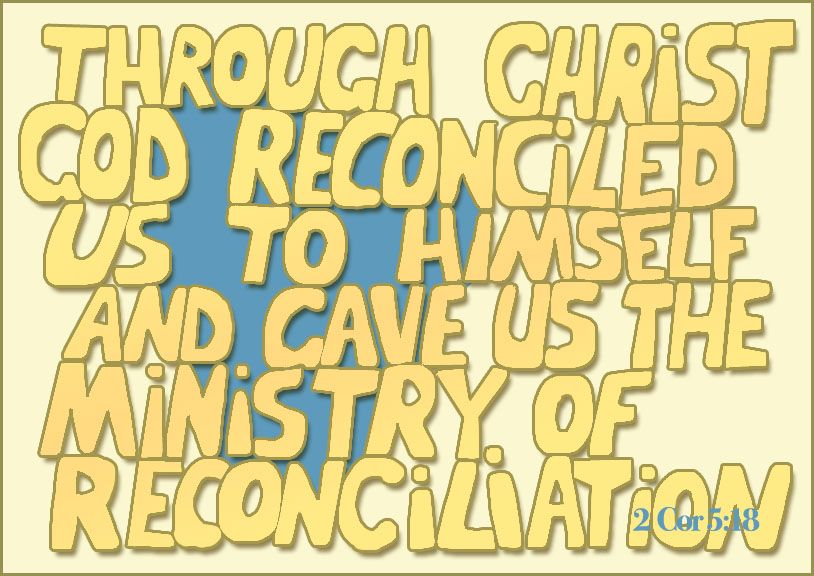
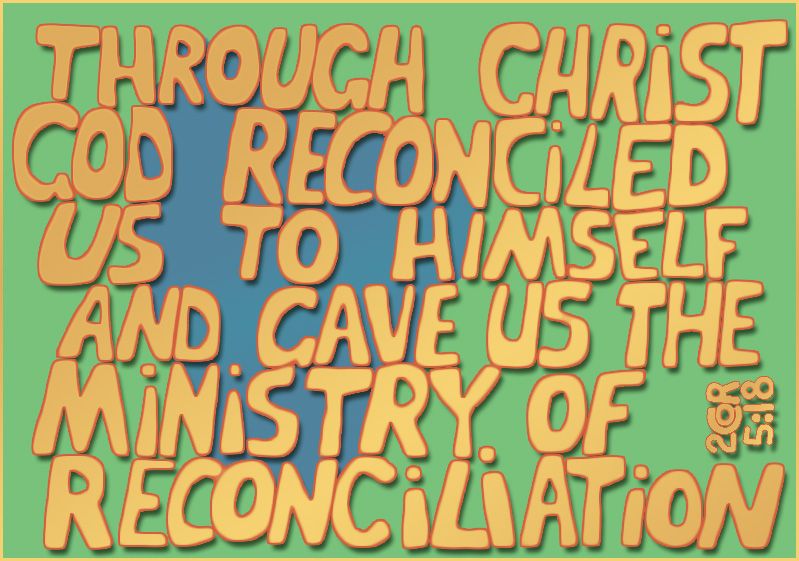
"Through Christ God reconciled us to himself and gave us the ministry of reconciliation."
2 Corinthians 5:18; Lent 4C; Lent 4 C

2 Corinthians 5:18

Sunday, November 21, 2010

Reign of Christ: Colossians 1:17

Colossians 1:17

Oh, I so love the cosmic Christ of Colossians! This is one of my favorite texts and also one of my faves of all my graphic art.