Showing posts with label schools. Show all posts

Tuesday, October 21, 2014

Thomas Menino :: Mayor for A New America

Thomas Menino :: Mayor for a New America by Thomas M Menino with Jack Beatty on Amazon

Thomas Menino Mayor for a New America cover

Disclaimer: I'm reviewing the incomplete Advance Reader Copy from Amazon Vine, so some of my remarks may not apply to the finished edition.

Multi-term Boston Mayor Thomas M Menino brings us a memorable account of his five terms in an introduction and only five chapters―but admittedly they're five long ones. The intro quickly moves us through the Boston Marathon bombing and its aftermath that created many days of national news during April 2013. As I read the intro about the Boston bombing, I felt I was there at the scene while I also clearly remembered sitting in front of my television in southern California for the next piece of news; it helped that I'd lived in Watertown and had a clue as to the lay of the land where police found the bombing suspect holed up in a boat moored in a backyard.

Chapters include: (1) Menino's early days in Boston's Hide Pahk naybahhood and how human connections, interactive politics, excellent people skills, and hard work took him to City Hall, first as acting mayor, and then as elected mayor; (2) Schools; (3) Police and Fire; (4) Getting Stuff Done; a concluding (5) "To Think I Did All That," expressing his amazement that he accomplished so much.

In contrast to most other major US cities, Boston proper covers only about 48 square miles. Nonetheless, as Menino describes and as I experienced, in historical and present-day influence, and in scope of problems such as crime, corruption, poverty, racism, educational underachievement, and wealth, Boston is very major big city. I lived in Boston more than once, so Menino's description of mostly Irish educational, police, and fire with their cronyism, deal-makings, and corruption took me back in time. Tom Menino was the first Italian-American mayor of Boston―he was the first mayor whose heritage was not Irish-American.

Some reviewers have mentioned the book emphasizes Menino's successes, and it does. Hey, he's a politician and this is in print, so of course he wants to memorialize himself well, yet he doesn't entirely omit a few endeavors that didn't bear healthy fruit. I know Grove Hall, Jeremiah E Burke High School, Roslindale Square, Roxbury… I also experienced changing Boston demographics. At one time my landlord was a second generation Italian-American; some years later, I rented from a fairly recent immigrant from the Dominican Republic.

The chapters are long yet engaging, and I was disappointed when I reached the end―is that all there is? I wanted more! My copy lacked the index I know I'd have enjoyed reading through because I'd have known most of the names and places.

Mayor for a New America leads us to ask questions about the role of government in different settings; in any case and place, how much government is too much? How much is not enough? Does a poorer or a literally poverty-stricken constituency legitimately need more services and more direct governing? How much can we expect under-educated and historically underserved populations to do for themselves? The work, the mystery, and sometimes the magic of politics helps create better lives. Thomas Menino accomplished that, and he laid a solid foundation for his successors to continue his legacy.

• My Amazon Review: vivid memories, future hopes

Tuesday, March 16, 2010

Edison School

Along with my report on Wasatch Elementary School, this article published in the Interfaith Peacemaking Resource Center of Utah’s newsletter.

With these observations about Edison Elementary, we continue our series on Salt Lake City public schools that have a high proportion of at-risk students.
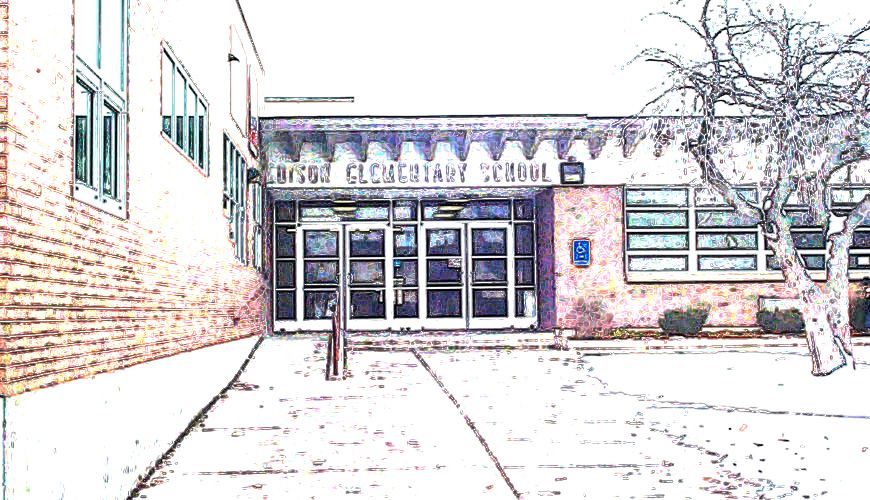
edison school

Edison Elementary School

“I believe in kids, I trust kids…if you expect great things, you get great things.” –Dale Harding, Edison Elementary Principal

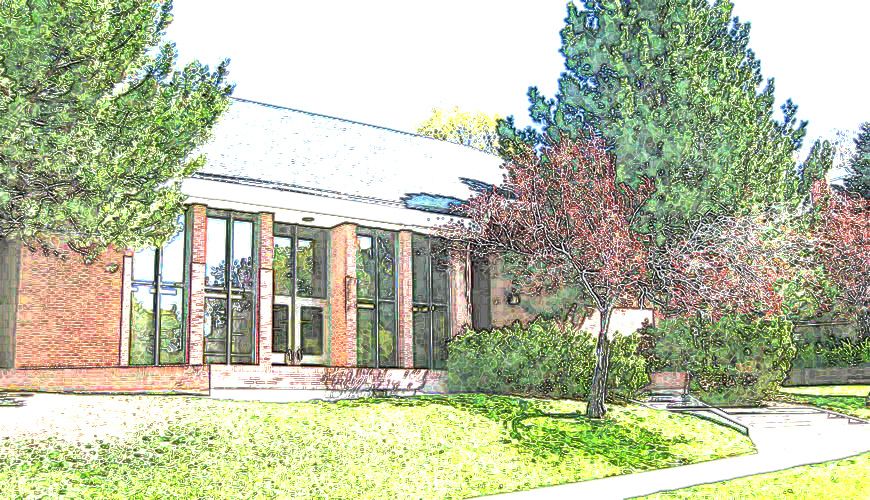
Edison School in Glendale first impressed me as a Place to Be with—it had a sense of great calm, and it was clean and orderly, without any of the confusion one often expects in an urban setting. Kids’ art covered the walls.

With 517 students in grades K-6, a preschool of 20, and a teaching staff of about 31 – all in a building built for 380 students – Edison is bursting its boundaries, both physically and in the many ways it exceeds the limitations and expectations much of the larger society tends to place upon low income, high mobility persons. Class size ranges from 24 in the lower grades to an outrageous 38 in the upper grades; nineteen classrooms of all kinds as well as two trailers house the classes. A gym, an auditorium and a gigantic playground accommodate sports, arts, cultural, social, and other enrichment activities. 3,000 donated books as well as other resources fill the new, light and airy library.

Volunteerism from the greater Salt Lake community runs extremely high: last year it totaled 14,000 hours! Neighbors of all kinds, senior citizens from all around the greater metro area, businesses (including the Bureau of Reclamation and The Salt Lake Tribune, which has an intense, ongoing involvement with the school), and University of Utah student nurses are only some of the volunteer categories.

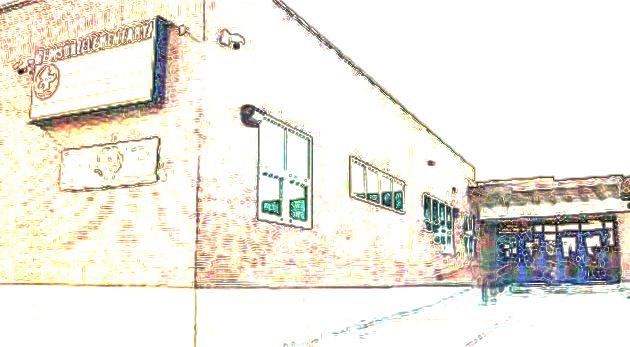
edison schoolEdison is a mini-world where fifteen languages are spoken, with 72% of the students being other-than-white. They include Pacific Islanders, African-Americans, Hispanics of many kinds, various ethnic Asians. To be a minority is to be in the majority! Dr. Harding spoke of the poverty of moral values and the absence of hope that pervaded the school when he first arrived there. Most of the families – 40% with two parents in the home – struggle to survive in every dimension of their lives. But a sense of hope and optimism is beginning to take hold at Edison. Harding and the rest of the staff have been working energetically to make certain these kids will believe in themselves and in each other, that they will be open to a free and meaningful future.

“We have three rules: ‘Respect yourself; Respect other people; Respect property,’” explained Dr. Harding.

Dale Harding is in his fourth year [1995] as principal at Edison. He has had a long, wide-ranging and clearly impassioned career in education. Not only has he been teacher or administrator in Salt Lake City, coming to Edison after a term as principal at Uintah Elementary—he also has worked in Chile, Bolivia, Saudi Arabia and Wyoming. For six years he directed the experimental school at Utah State University. Surprisingly, Harding is the only Edison staff member fluent in Spanish. Four years ago there was no PTA, no community council at Edison; now both organizations are active. Very significantly, Harding has visited every home in the area. And observing the success he and the kids are having, he says, “‘I can’ is more important than IQ.”

In spite of the apparent heavy use of alcohol and other drugs in the families many of these kids hail from, very few Edison students are drug users themselves. “Just Say No” and D.A.R.E. Clubs help them resist the pressure to experiment. During 1993-94 there were thirteen gang members – now [1995] there’s only one.

Harding explained although many had learned to use “I’m a minority” as a copout, most no longer use it as an excuse, but take more responsibility for themselves and responsibility for others. There’s also a group of kids at Edison who live in stable settings where they experience a relatively normal, supportive environment without having to contend with overwhelming social pathology; many of those will be at the school from Kindergarten through 6th grade. Dr. Harding is optimistic that about 80% of Edison’s current population will graduate from high school.

The fine arts and the cultural arts are major aspects of life at Edison. I even heard the violin program of 5th and 6th graders in action! Ririe Woodbury Dance Company works with all of the students; the Salt Lake Tribune offers writers’ workshops; celebrations such as Black History Month and Cinco de Mayo help kids find meaning and excitement in their heritage. The arts and cultural assembly was one of the very first things Harding told me about! The assembly is a recurrent event that features the diversity of expression that has helped make Edison a miniature extension of the world beyond its borders.

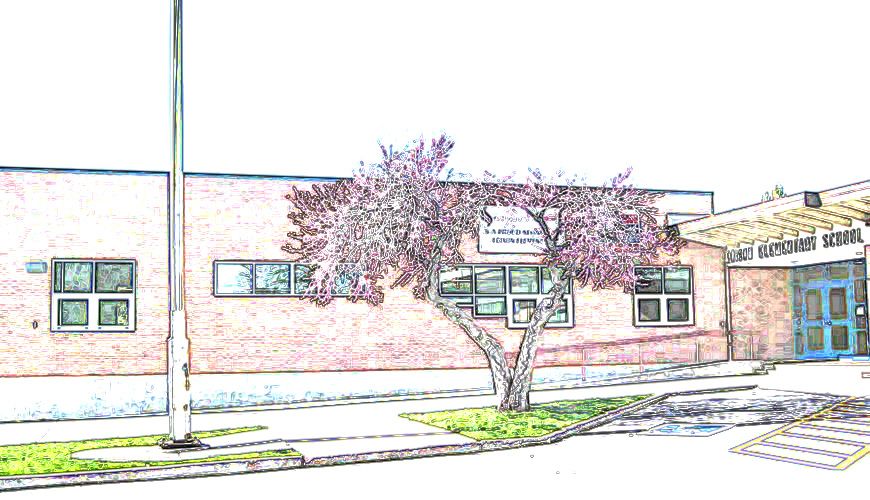
edition schoolFor fun, there’s reading books from the library, computer games in the 30-computer lab (when the academic stuff has been finished), a donated arcade that serves as a reward system, and of course the playground and sports, many of the sports facilitated by an after-school physical education teacher. Open until 9 pm three days of the week, until 6 pm on the other days, the Edison school building also houses and hosts various adult classes such as parenting, GED preparation and ESL.

As the very low absentee rate absolutely bears out, during the school day the students at Edison Elementary live a good life. Prior to arriving at Edison, many of these kids had been caught in multi-generational layers of ignorance and violence; they’d become what they had seen. With love, affirmation and support, the cycle of ignorance and abuse is breaking down, fear beginning to leave. At Edison, not only do they see an alternative—the environment actually enables them to be that alternative, to become different from what they had been. They’re becoming free, responsible and responsive persons.

They also are learning to live in a world in which diversity and difference is both normative and very good. For them, divergent styles mean learning to live with dissimilarities, and that leads to acceptance of differences. As Dr. Harding mentioned, he will not tolerate violence and aggression, and the question to resolve first always is “What happened?”—not “why?” As they learn from the staff and from each other how to live with diversity and to resolve conflict without fists or violence or any kind, hopefully the young peacemakers at Edison will grow up to become adult peacemakers.

At this point in time and space, Edison students are learning to live in a real community, with an authentic commonality. They’re in the process – just as all of us continue to be – of discovering the challenges and rewards of living together as friends, neighbors and citizens. But what of their futures? Their lives beyond Sixth Grade graduation day?

“So all of us, in union with Christ, form one body, and as parts of it we belong to each other.” –Romans 12:5

These words have become commonplace to many of us: we need to read in them, to feel in them, a live calling to reach out and to be inter-responsive to one another. Just as in great measure we have been created by each other, by one another, that creative process will continue to happen. The students at Edison will continue to need positive influences that will form and shape them into good citizens of their neighborhoods, of their cities, of their countries of this universe and of this galaxy—and even of unknown galaxies!

The students at Edison Elementary are ours, now and in the future. And we belong to them! Let's always remember that, and live our lives in response to it!

Wasatch School

In addition to some restaurant reviews I'd love to begin adding to, another phase of my sometime journalistic career included articles about elementary schools; here’s one of the pair I wrote for the Interfaith Peacemaking Resource Center of Utah’s newsletter.
Good things are happening in the Salt Lake City schools! This month features Wasatch Elementary.

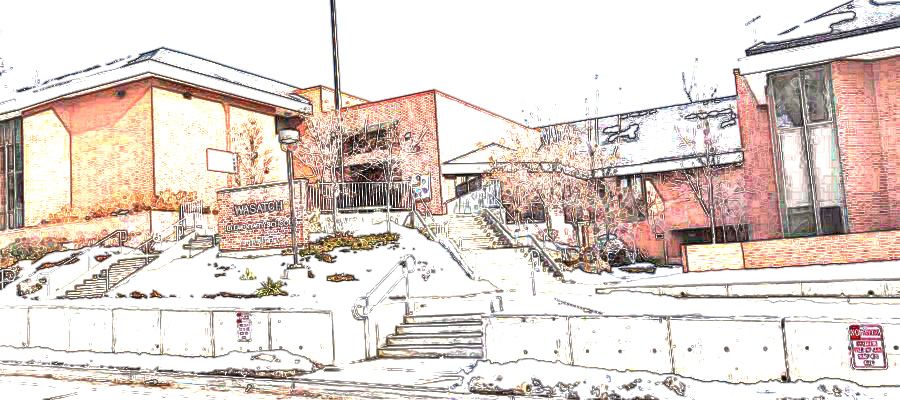
wasatch school

Wasatch School

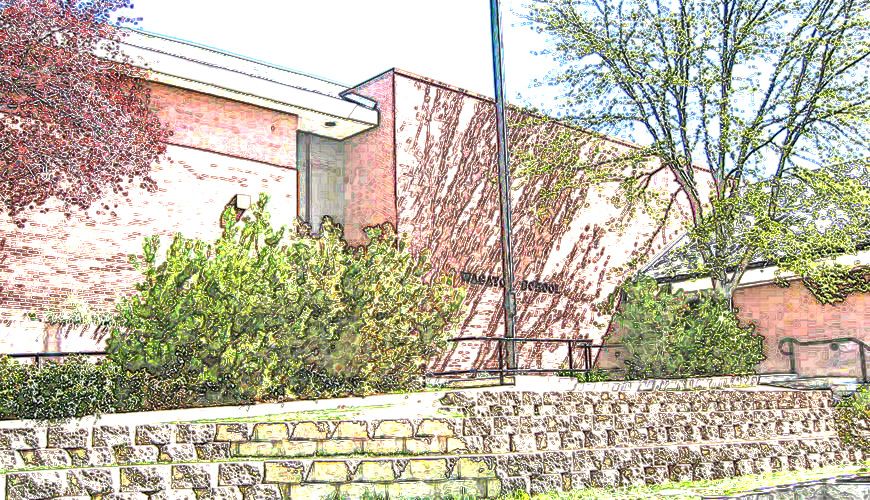
Faces in the sunshine, students at Wasatch Elementary School in Salt Lake’s Avenues neighborhood are planting theme gardens, with about half the classes involved in this year’s Outdoor Project! It’s an extension of their regular curriculum, as well as an activity in which they claim ownership and learn caretaking, sensitivity, and environmental awareness. The gardens will become part of the neighborhood, and the project’s navy blue t-shirts will carry the endeavor even beyond the school and Avenues boundaries, as a reminder that Wasatch prepares citizens to interface with the world around them and the world beyond them!

Close to downtown, close to the University of Utah, Wasatch is the school of choice for many parents seeking the very best, with students attending from all over the Salt Lake Valley. Abundant diversity includes a 50/50 poverty/affluence ratio, many different races and ethnicities, single parent families, children of university professors, children of university students, kids from House Of Hope and from Ronald McDonald House...a vast range of students in every sense of the word.

wasatch school"Kids Zone — Future Leaders being built — Enter with care & love" reads the poster greeting front door arrivals. Amy Wadsworth, Wasatch’s principal, speaks of the “global development” of the child. Any learning environment generally assumes advancement in academic and social skills, but this school goes much further and also pays careful attention to physical and emotional development, to awareness and growth in the fine and performing arts. This school is not traditional in the conventional sense of the word—the total approach is far more interactive, giving each one an opportunity to function at his or her optimal level.

How does a grade school administrator who never has taught on that level feel about her credibility as a principal?

Amy Wadsworth believes interest and expertise in teaching and education are easily interchangeable among the various levels. In her third year [1995] at Wasatch, her earlier experience included teaching English and French at Highland High School and serving as Assistant Principal at Clayton Intermediate School. Ms. Wadsworth impressed me as being readily available to the students, but also as someone who doesn’t fill or overwhelm the space that's rightfully theirs. This is a students' school!

Additional staff at the K-6 school total about 40 and includes teachers, aides, art and physical education specialists. There are “lots of good volunteers” (mainly parents), and an active corporate sponsor. Class size averages in the 20s. with three classes for each grade. There’s also a library, a playground, and a gymnasium. Although Wasatch was one of the very first schools in Salt Lake City to have computers, its computers now are among the oldest!

A sense of contentment fills the air at the residential R Street and South Temple location—the school actually feels calm and well organized. This "whole child" approach works well. With serious and usually successful attempts by the teachers and other staff to reach every area in each student’s life, kids don’t often act out in frustration and violence in attempts to be heard and attended to. Because of this, the students get along well with each other and with the adults in their lives.

wasatch schoolMs. Wadsworth observes that blending students from more troubled areas into the lower-risk population helps a great deal to offset at-riskedness. With their acceptance of each other, the kids generally don’t isolate themselves into demographically defined groups.

Usually the kids are polite, respectful, and considerate of others. But despite the all-round success the Wasatch students and their principal enjoy, sometimes there’s dissension. Classroom teachers try to process conflict in a problem-solving modality, and if the discord actually reaches the principal, she applies similar procedures. Ms. Wadsworth feels that in the future these techniques will need to be taught more formally. She says the goal is for peaceable conflict resolution to become a day-to-day practice and not just something occasionally imposed from without.

As these students find peaceful solutions becoming natural to them, they’ll easily take the skills they’ve learned at school into their family setting and into the larger Salt Lake City and world communities. This will be a great and ongoing advantage to all of us!

"Keeping high expectations" in every area helps make sure outstanding results happen. Future leaders are being built at Wasatch Elementary, and they are being treated with care and respect. And as Amy Wadsworth says, they're "such a delight!"

Faces in the sun, Wasatch School students are busy planting gardens to enhance their own lives and as a gift to their community...