Sunday, July 03, 2005

Heart Knowledge: sermon

Sunday in Ordinary Time 14 A proclamation
Sunday between July 3 and 9

Sunday, 03 July 2005

Let’s begin by hearing a Word of Life
from the Gospel according to

Matthew, chapter 11:16-19; 28-30
Jesus exclaimed:
16 “To what can I compare this age group? They are like children sitting in the marketplace and calling out to others:
17 “‘We played the flute for you, and you did not dance; we sang a sad song and you did not lament.’ 18 John the Baptist came neither eating nor drinking, and they say, ‘He has a demon.’ 19 Jesus, the Human One, Jesus, came eating and drinking, and they say, ‘Here is a glutton and a drunk, a friend of tax collectors and sinners.’ But wisdom is vindicated by wisdom’s deeds!”
Jesus continued,
28 “Come to me, all of you who are weary and burdened, and I will give you a break. 29 Take my yoke upon you and learn from me, for my heart is gentle and unpretentious, and in me you will find rest for your souls. 30 For my yoke is easy and my burden is light.”
Let’s pray together (more and less from Psalm 145:8-14):

God, for your gracious, compassionate, loving goodness to all creation, we thank You! Draw us to Yourself and let us learn from You, so we will be able to enter Your dance and show the world the glorious splendor of Your constant presence among all people of every generation. In the Name of the Living Word, Jesus Christ, Amen!
Sermon title: Heart Knowledge

Grace, mercy and peace to you from our Creator, Redeemer, Sustainer God!

How can you know someone and say something true about a person unless you know that person's heart? How can any of us say anything about God unless we know God’s heart?

Our central Christian message to the world is the way God reveals Himself to us most clearly in the human, Jesus of Nazareth; one of the primary ways we learn about God is by reading the Bible. Especially in the Gospel accounts we find in the Bible, we learn how God in Christ Jesus lived a human life like ours and learned the human heart from the experience of living human. In Jesus Christ, God learned the heart of a human person, but as humans, can we know God’s heart?

A great deal of the Bible was a product of Jewish life and culture, and in Hebrew biology, above all, the heart is the seat of the will.

Throughout all of the Bible’s witness, in the demonstration of Jesus’ life and today, in the life of the contemporary people of God, the Church, we encounter the heart of God. Maybe you know the story of Abram or Abraham from the Old Testament book of Genesis? The Bible’s text informs us Abraham was an Ivri – a Hebrew: someone from the other side! You don’t need to know formal theology or have spent time in church to realize that God is very much the Other-than-us, God is way beyond time and space, God comes from that exceedingly “other side!” However, the Bible tells us and the Church always has taught how God became incarnate, God became enfleshed as one of us, God lived as a human, in Jesus of Nazareth. From what we read in the gospels, Jesus spent most of his earthly life and ministry outside of the religious establishment and outside of the high-end social establishment; Jesus lived most of his life on the conventional systems’ and accredited authorities’ “other sides,” all the while inviting everyone to become part of his insider circle, always inviting everyone to belong to the people of God.

Back to how we can know God’s heart; from his words recorded in Matthew’s gospel, Jesus said:
16 “To what can I compare this age group? They are like children sitting in the marketplace and calling out to others:
17 “‘We played the flute for you, and you did not dance; we sang a sad song and you did not lament.’ 19 Jesus, the Human One, came eating and drinking, and they say, ‘Here is a glutton and a drunk, a friend of tax collectors and sinners.’ But wisdom is vindicated by wisdom’s deeds!”
In Hebrew biology the heart is the seat of the will; in this passage from Matthew 11, Jesus identifies with Wisdom in the Old Testament book of Proverbs; here’s part of the Wisdom text:
Proverbs 8
1 Does not wisdom call out?
Does not understanding raise her voice?
5 You who are simple, gain prudence;
you who are foolish, gain understanding.
12 “I, wisdom, dwell together with prudence;
I possess knowledge and discretion.
20 I walk in the way of righteousness,
along the paths of justice,
33 Listen to my instruction and be wise;
do not ignore it.
35 For whoever finds Wisdom finds life
and receives favor from the LORD.”
According to these words, in justice and righteousness, a wise person grabs hold of this moment, this right now; according to Jesus’ example the God-like gentle-hearted wise person invites everyone to the meal, whether it’s a banquet or a simple spread on a picnic table, helping sustain them on every life level with food and companionship, in friendship helping carry their sorrows and rejoicings.

We know Jesus as the best-ever image of God, and Jesus asks us to behave the way he did! In other words, if we’re going to be like God, one of the ways we need to imitate Jesus is by not intentionally excluding anyone...but how can we do that? We’ve already learned the heart is where the will resides, and every one of us knows how many times we fail to do what we intend to do, no matter how hard we try. A prominent author of part of the Bible, Paul, or Saul, from the city of Tarsus, has an answer for us; in the book of Romans, the letter to the Church at Rome, Paul sounds a lot like us when he says in chapter 7:
Romans 7:21a-25a

21 ...even when I want to do good, evil is right there alongside the good; 22 while in my inner being I delight in God’s law; 23 I see another law at work in my body, waging war against the law of my mind and making me a prisoner of the law of sin at work within my body. 24 What a deplorable person I am! Who will rescue me from this body of death? 25 Thanks be to God, Who rescues me through Jesus Christ our Lord!
Paul insists God rescues “through Jesus Christ our Lord.” However, for people who haven’t spent much time in church, that needs some explaining. There’s a ton of theology connected with it, but the basic truth is that in Jesus’ death on the cross of Good Friday and God raising Jesus to new life on Easter Sunday, God has done everything necessary to deliver us, to save, rescue us and forgive us from our own frustrating and often highly self-defeating behaviors, such as not feeling like bringing others into our circles, frequently wanting to put our own desires before the needs of others, constantly repeating behavior we already know leads to negative outcomes. In other words, in Jesus Christ, God rescues us from the worst parts of ourselves by re-newing and re-forming us into people who live according to Jesus’ example!

In Hebrew biology, the heart is the seat of the will! Throughout the gospels’ narrative we encounter Jesus feasting with friends, outsiders and strangers, showing the world the heart of God that wills to include, renew and restore all people into a community where everyone belongs, where there is no outsider! According to Jesus, the wise person’s - wisdom’s - practice of including everyone at meals helps lead to righteousness. We celebrate righteousness or justness as one of God’s attributes or qualities, and we recognize righteousness as one of God’s qualities Christ gives us! Does this happen when we come to faith in Jesus and in baptism? Yes, of course! But also as we continue following the gracious and inclusive Way of Jesus every day.

Via the gospel-writer Matthew, Jesus recommends, “Come to me, all of you who are weary and burdened, and I will give you a break. For my yoke is easy and my burden is light.”

During his earth-walk, Jesus found many of his examples in everyday life; in biblical days a yoke spanned the shoulders of oxen so they could share the weight of a load by pulling together. Jesus knows we need a yoke; we need to be linked together in community and connected together with Jesus, in order to lighten the many loads every one of us carries.

I can assure you – from my own experience, from other people’s testimony and from the witness of the biblical record – God knows the human heart because in Jesus Christ God has lived as one of us, God has lived a fully human life. I reassure you – from my own experience, from other people’s testimony and because of God’s faithful and unbreakable promises – as the Holy Spirit, God still lives with us, within us and among us, most specifically in the gathered assembly of the Church. In the Church we call this time in the history of the world Pentecost, meaning the days of the Reign or Sovereignty of the Holy Spirit of God.

Because the Holy Spirit of God and of the Christ is with us, we can know God’s heart as we continue fully becoming people who show the world the heart of God, including others in our insider circle. Because the Holy Spirit of God and Jesus is here, right now, we can be yoked with Jesus and yoked into community, helping friends and sometimes strangers carry their heavy loads as in turn they help bear ours. May we trust God and Jesus as together we follow the Way of Jesus!

To God Alone be Glory!!!
Amen!!!!!

Wednesday, June 29, 2005

theology rap.

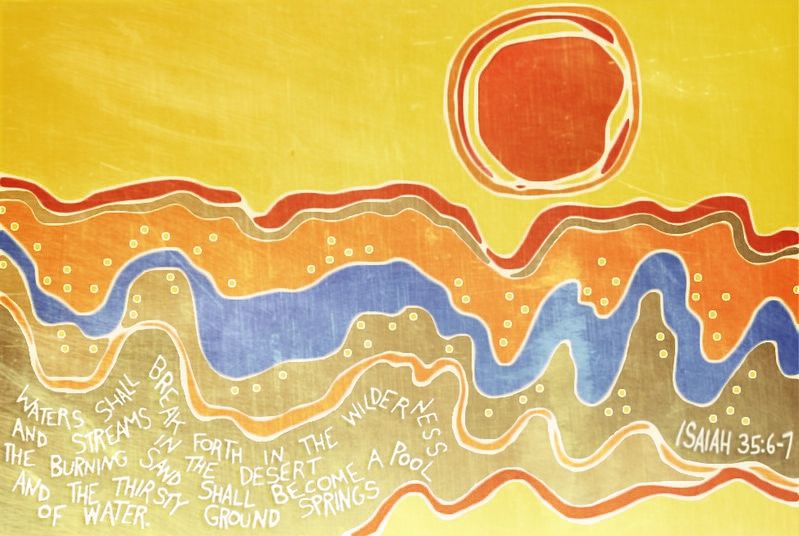
Isaiah 35:6-7

Streams in the deserts restoring us to life
Impelled by the Spirit reclaiming our strife
Bread sent from heaven and fruit of the vine
Community's nurturing right down the line
Sitting in the courtyard feeling sort of fine
Wondering what to do with no crystal-clear sign

seafood sandwich

Making lemonade and squeezing more limes
Parsing out daze but expecting few rhymes
Art world church world blog-style sites
Funky seafood burritos kiwi cranberry lights
Preachers teachers shopkeepers into God's rules
Multiplicitous musics sun-basking pools

Reading into history expectations and hope
One more time knowing now I gotta cope
Charge into the world make another new try
Instead of just settling reaching for the sky
Challenging this planet to listen now and hear
Everything I offer it experience held dear

Truro Beach House

star of india banner

Truro Massachusetts hazy morning in July
San Diego still is Paradise and this is no lie
I'm giving my sorrow and all of my pain
To God the Almighty, Lover not vain
Expecting just mercy and grace in the rain
Falling from heaven embracing the earth
God's glory incarnate declaring our worth

along the 8 June 2015

originally from Wednesday 29 June 2005

Saturday, June 25, 2005

Heart Knowledge: blog

Another reflective saunter!

Doing theology and living theology: how do you speak a valid word about a person without knowing that person's heart? How can you speak the word about God unless you know the Divine Essence from live experience? How does one - how do you, how do I, how does anyone - faithfully, authentically and with just plain reality talk about a person unless you know their experiences and especially their heart? During one of our online book discussions I’m remembering because recently I posted a lot of what I’d written, after mentioning how God in Christ Jesus shared our common lot and learned the human heart from the experience of living human, semi-rhetorically I asked, “As humans, can we know God’s heart?”

In Hebrew biology the heart is the seat of the will.

Throughout the Bible’s witness, the demonstration of Jesus’ life and the life of the Church we encounter the heart of God, which is the heart of a stranger, the heart of the *other*, the exiles, the outcast, the different ones: the anawim, least of these. Inside presupposes an outside (center/periphery? interior/exterior? probably both). Considered one of our most major progenitors in faith, Abram/Abraham was an Ivri - a Hebrew: one from the other side! In Jesus of Nazareth, God the Truly Other-than-us, God beyond time and space, from that exceedingly “other side,” became incarnate, spending most of his earthly life and ministry on the religious and social establishment’s geographic and functional peripheries and exteriors, on the conventional systems’ and accredited authorities’ “other sides.”

Remember imperial religion with its futile and fruitless quest to control and keep God at a distance (on the other side of human affairs and concerns) and at humanity’s beck and call (only coming close when humanity allowed)? As in the Jerusalem Temple, as in a lot of today’s institutional ecclesiastical entities? To shape God into exactly the *what* people wanted their god(s) to be?

Back to how we can know God’s heart: in Hebrew biology the heart is the seat of the will. Our central Christian hermeneutic is God’s definitive self-revelation in the human Jesus of Nazareth; in Christ Jesus - and in this present Pentecost, Sovereignty of the Spirit, Rain of God, in glory, grace, mercy and surprising vulnerability, the heavens are open to all the earth!

For Sunday, July 3rd (Sunday in Ordinary Time 14 A), one of the mix of at least eight Revised Common Lectionary texts is from Matthew 11; part of the part of Matthew 11 I’m planning to preach on includes:
Matthew 11:16-19; 25-30

Jesus exclaimed:
16 “To what can I compare this age group? They are like children sitting in the marketplace and calling out to others:
17 “‘We played the flute for you, and you did not dance; we sang a sad song and you did not lament.’ 18 John the Baptist came neither eating nor drinking, and they say, ‘He has a demon.’ 19 The Human One, Jesus, came eating and drinking, and they say, ‘Here is a glutton and a drunk, a friend of tax collectors and sinners.’ But wisdom is vindicated by wisdom’s deeds!”

28 “Come to me, all of you who are weary and burdened, and I will give you a break. 29 Take my yoke upon you and learn from me, for my heart is gentle and unpretentious, and in me you will find rest for your souls. 30 For my yoke is easy and my burden is light.”
To the jumble of lections for that Sunday, from Proverbs 8 I’m adding:
Proverbs 8

1 Does not wisdom call out?
Does not understanding raise her voice?
4 “To you, O humanity, I call out;
I raise my voice to all creation.
5 You who are simple, gain prudence;
you who are foolish, gain understanding.
12 “I, wisdom, dwell together with prudence;
I possess knowledge and discretion.
20 I walk in the way of righteousness,
along the paths of justice,
33 Listen to my instruction and be wise;
do not ignore it.
34 Blessed is the person who listens to me,
watching daily at my doors,
waiting at my doorway.
35 For whoever finds me finds life
and receives favor from the LORD.”
In Hebrew biology the heart is the seat of the will; in the Matthew 11 passage, Jesus identifies with Proverbs’ Wisdom. In justice and righteousness, the wise person grabs hold of this right now and feasts with friends; the gentle- and unpretentious-hearted wise one invites everyone to the banquet (or sometimes to the simple meal spread on our own picnic table), helping sustain them on every level with food and community, in the intimacy of friendship helping carry their sorrows and rejoicings. Throughout his earth-walk, Jesus’ close to indiscriminate table companionship with almost everyone except the insiders foreshadowed - yet was a taste of the completeness - of the final eschatological Reign of God. In the eucharist, in a single broken loaf and one shared cup, the assembled community of the church offers the Welcome Table’s Bread of Life in which the fruits of the totality of the redeemed and restored creation are gathered together in a single place and time.

In Hebrew biology, the heart is the seat of the will! Throughout scripture’s narrative we encounter a multitude of images of Jesus’ feasting with friends, enemies, outsiders and strangers, showing the world the heart of God that wills to redeem and restore all people and all of creation into a community where everyone belongs, where there is no outsider and not any insiders, either! Jesus’ everyday practice of eating and drinking with all gave the world a foretaste of Maundy Thursday’s New Covenant announcement, Good Friday’s New Covenant enactment and Easter Sunday’s New Covenant ratification, of Jesus’ giving his life for the lively redemption of all creation. According to Jesus, wisdom’s deeds of inclusive table camaraderie lead to righteousness, which we celebrate as one of God’s attributes, and we recognize as one of God’s attributes with which Christ attires and endows us! In faith and in baptism? Yes, of course! But also as we continue following the Way of Jesus every day.

Monday, June 20, 2005

Annihilationism

Another astonishing theological (not!) morsel from (some of) our more conservative sistern and brethren in Christ:

A couple days ago I was searching for something theological and though I can't recall my quest, I'll never forget one of the pages it turned up, but first I need to ask where have I been? I've been concerned about Purpose-Drivenism and Dispensationalism and Consumerism in the mainline churches?!

Again today I searched for the single word, Annihilationism, and got 72 hits. Here's a passage from an article I found—please note how my denying Annihilationism puts me in historically illustrious company:

Flaws in the Arguments for Annihilationism
by Stephen E. Alexander no longer is online where I originally found it

11 July 2004
Beginning in the 4th century, some Christian theologians argued that when non-believers die, their souls disappear into nothingness. Several prominent evangelicals today subscribe to this doctrine of annihilationism, and their numbers are growing. Why is this doctrine so flawed, and why should we be concerned about its prevalence?

The origins of the doctrine known as "annihilationism" go all the way back to the 4th-century when a man named Arnobius first propagated a doctrine that unbelievers passed into "nonexistence" either at death or at the time of resurrection. ...It was condemned as heresy at the Second Council of Constantinople in 553 A.D. The doctrine did not reappear again in church history until at least the 12th century. Throughout church history, leading church fathers have taken a strong stand against annihilationism ... A few of the more famous figures of Christ's church who have given whole-hearted support to the traditional doctrine include: Tertullian, Augustine, Thomas Aquinas, Martin Luther, John Calvin, Jonathan Edwards, John Wesley, George Whitefield, Charles Haddon Spurgeon, and Dwight L. Moody. The Westminster Confession of Faith was very clear in its affirming of hell as eternal punishment.

This past generation has experienced the movement of men believed to be stalwart evangelicals reaching to defend annihilationism. The well-known ones include John Stott, Clark Pinnock, John Wenham, Philip E. Hughes, Steven Travis, and their numbers (those advocating "annihilationism") appear to be growing. Why should this be so, and what is the Biblical "weight" to be given their arguments? Can it be possible that evangelicalism is being attacked from within by a low view of God and His inspired, infallible, and inerrant word?
No further comment on the afore-cited tidbit; later today I'll probably post something of my own.

Thursday, June 09, 2005

Leslie Weatherhead: The Will of God 4, 5

Leslie D. Weatherhead, The Will of God © 1944; © renewed, 1972

Will of God coverChapter 4: Discerning God's Will and Chapter 5: In His Will is our Peace


Although I read these chapters, I didn't think about them long enough or seriously enough to write any notes, but I've kept the discussion questions and maybe I'll reread both chapters so I can consider and answer the questions within the next few weeks.

Wednesday, June 08, 2005

Leslie Weatherhead: The Will of God 3

Leslie D. Weatherhead, The Will of God © 1944; © renewed, 1972

Chapter 3: God’s Ultimate Will—part 1

Will of God coverThe discussion moderator began:
Weatherhead begins by rehashing the three divisions of God"s will, as in chapters 1 and 2. Yet he offers an interesting perspective of our ability to choose and free will. How does this mesh with your view of choice and free will?
Then he asked,
Do you believe in a Devil as an actual being? Or do you believe in a metaphorical Satan--a personal adversary that can combine with other personal adversaries to create a greater, collective evil that we've seen repeatedly throughout history?
Actually, I don’t know, but I do believe in spirits of evil in the way Walter Wink talks about them in his Powers trilogy, as he draws upon deuteroPaul of Colossians and Ephesians as well as discussing the Spirits (the "Angels") of the Seven Churches in Revelation. And personally, some (most?) of us do what feels like near-constant battle with demons of various kinds, many of which very definitely live independent lives of their own--lives that seem to be ego-dystonic, something completely outside of us that inflicts themselves upon us. Not being an expert on knowledge of the bodily existence of - or the embodiment of - evil, I do think there's a real sense in which the sum of the parts frequently is greater than any of the elements of the parts: in plain English, "synergistic!"

Tuesday, June 07, 2005

Leslie Weatherhead: The Will of God 2

Leslie D. Weatherhead, The Will of God © 1944; © renewed, 1972

Chapter 2: God's Circumstantial Will

Chapter 2, part 1:


Will of God coverThis chapter deals with God's plan within certain circumstances; Weatherhead uses the image of the cross to better explain how circumstantial will works. Reading and connecting to this chapter, I keep finding myself full of gratitude for quite a few totally unintended circumstances I've found myself in--and, of course, particularly thankful for the people who've helped carry me through those times that weren't easy in any sense of the word. Here’s a little on the first part of chapter 2:

Regarding the Cross: given the circumstances of evil, the crucifixion became God's will. Dr. Weatherhead says, "The laws of the universe, which are themselves an expression of God's will, were not set aside for Jesus, the beloved Son." That fact relates to God's preference for acting in incarnational ways! Also, as our moderator observed, there are both natural and spiritual elements within God's circumstantial will.

But continuing: so, like, "every woman" has a maternal instinct...though possibly "repressed into unconsciousness?!" "...a home and husband and babies..." are a women's "primary raison d’être"?!?!?!?! This book is © 1944 and the copyright renewed in 1972. Oh, his definitive solution here is sublimation...no comment.

Chapter 2, part 2:

Whether (or not) an event is the will of God? Get our thinking straight, because the answer is both Yes and No! Once again, natural laws vis-à-vis God's [spiritual] ultimate will. "The Christian minister...he..." OK, this book was written quite some time ago...God would not allow an event to occur if of itself it had the power to defeat Godself. Dr. Weatherhead is correct that in the Bible we don't hear people explaining away diseases, etc. as "the will of God," but this has happened, or currently is happening "that God might be glorified!" He's got it right about the kingdom of evil – in deutero-Pauline terms, "powers and principalities" and their sometimes temporary sway or even what appears as their momentary rule over the Kingdom of Heaven. God's perspective is different...yes! Jesus overcoming the world rather than explaining the world!
My notes from later in this chapter:
...indeed the biblical writers were "trying to give God the credit or blame for everything that happens, even the bad stuff!" Because that's the way the people who were beholden to all those other gods were used to thinking - you remember, the temperamental nature gods and place gods that demanded tribute, propitiation, sacrifice and protection? Whatever happened, it simply had to be because of some volatile divinity's anger, pleasure, rage or approval! For a fact the Bible reveals a constantly developing, growing and evolving understanding on the people's part of Who God is and how God acts--and of God's real requirements for the people of God, coupled with increasing awareness of the gracious gifts of God that enable the people's response and fulfillment of God's holy and just demands. Of course I'll refer you to the God of love and mercy - the God of righteousness and holiness - the God Who in Jesus of Nazareth "shared our common lot." With Martin Luther I believe there's a real sense in which all scripture is not equal; like Luther, I'd definitely assign a higher position to those passages that "show forth Christ" most fully.

Monday, June 06, 2005

Leslie Weatherhead: The Will of God 1

Leslie D. Weatherhead, The Will of God © 1944; © renewed, 1972

Will of God coverFollowing the trilogy of books about mission, during the autumnal time of 2003 (that long ago!) I took part in another online book discussion; the book this time it was The Will of God. Leslie Dixon Weatherhead, the book's author, preached at City Temple in London. One site describes City Temple as "...an historic Nonconformist Congregation founded circa 1640, whose first minister was the Rev. Thomas Goodwin (chaplain to Oliver Cromwell). Today it's a cosmopolitan international church ministering in the City of London."

Since I've posted notes from at least four of our other book discussions and given the fact I don't have anything really original to put on this site at the moment, here are some my notes, mainly in response to our moderator's questions and comments. On Amazon-dot-com I found the acronym SIP and when I looked it up I discovered it meant Statistically Improbable Phrases in Amazon-speak (but likely not elsewhere). Related to this book, as SIPs Amazon listed circumstantial will, intentional will, ultimate will and evil circumstances. On to the book!

Chapter 1: God's Intentional Will—part 1

As Dr. Leslie Weatherhead points out, polar opposite outcomes cannot possibly equally be the "will of God."
  1. God's intentional will - maybe we need to reserve "God's will" for this
  2. God’s circumstantial will - in those particular circumstances
  3. God's ultimate will - in spite of evil and even through evil. As our discussion moderator mentioned, the cross achieved God's will not only in spite of but actually through.
Everything is within God's will...but human will can defeat God's will for a time, otherwise we'd have no real freedom, which we know as a facet of the image of God in which we're created. It's blasphemy to call evil, wickedness, immorality and manifestations of sin and fallenness the will of God...but he's also correct we humans sometimes imagine our imagining bad outcomes as God's will to be comforting.
Here are our moderator's questions, followed by my responses:
1) How does your concept of God's will agree or disagree with Weatherhead’s?

? on the whole it does agree – I often differentiate only between God's "perfect will" and God's "permissive will," but I like these further, more defined and refined divisions.

2) Do you also try to explain a death or other tragedy as "God’s will"?

? only in the sense of acknowledging that in sovereignty God allowed the event to happen, but not is the sense of that horrific monster sometimes known as "God’s-willa."

3) If God and his ultimate will cannot be defeated, are human efforts to combat evil in the world in vain?

? Not at all – for this I'll give that stock theological buzz-answer and say God calls us to be and to act in the image of our God who is justice, love, compassion and mercy – and in the image of our God whose name is a verb rather than a noun!

4) A participant asked, "how individual is God's will for each of us? Does God will something different for you than for me?" I responded:

? Indeed, yes - much of God's desires for us have to do with our particular circumstances and our special gifts.

Saturday, May 28, 2005

Stored Value: from Lent 2005

olive garden
Here's a spinoff on one of my favorites (Rivers, Deserts, Identity and...Freedom!) from this blog; for our Lent 2005 Church Devotional Book I reworked it some, so here's the newer version on this eve of Pentecost plus.

Exodus 16; John 6:25-34

A while ago I had lunch at Olive Garden and spent part of one of my stored value gift cards. Since I think theologically something resembling 24/7, I began thinking about the theological implications of stored value and how it could play out in our everyday lives, away from restaurants, malls, and all those shopping scenes where gift cards are easily spendable; I started connecting stored values to events defining us as Christians and as Church.

During those years of being manna-fed in the desert, Israel lived and thrived with the experience of the heavenly gifts and divine justice that meant enough for everyone and too much for no one; under Moses' leadership and Yahweh's Lordship, the wilderness sojourners lived in daily com-pan-ionship. The people Israel called the manna "Bread of Heaven," and for a long forty years wandering through the desert, the "stored value" in the manna nourished them; in trust they journeyed with the One Who bestows the bread of physical provision, gifts of mercy, and gifts of justice!

In chapter 6, John the evangelist calls Jesus, the one born in the Little Town of House of Bread, Bread of Heaven, and today, in the Lord's Supper, we know the benefit of living manna blessed and broken, given to us to supply our needs. Like the Israelites in the journey to freedom, as long as we remain faithful by doing justice and righteousness, that reality of the eucharistic manna's "stored value" will keep working for us and in us, enabling our ministry for the world and in the world.

Via the gospel writer John, Jesus called himself the real manna from Heaven, and promised anyone who ate that manna, that "Bread of Heaven," never would be hungry, would live forever and never die! Talk about stored value! Jesus the Living Word of God is the Bread of Life; Jesus is our manna and the entire world's manna. Along with the Old Covenant scriptures, Paul insists, "the Word is very near you, in your mouth and in your heart, so you can do it." (Deuteronomy 30:11; Romans 10:4) In Christ Jesus we have values of justice, mercy, and righteousness stored in our communities and in our inmost beings to give for the life of the world, to give as manna towards the world's healing and wholeness.

Tuesday, May 17, 2005

Mission and Evangelism, again:

After posting this morning, I realized including a couple more things would be a good idea; first, here's the entire Article 7 from the Augsburg Confession:

Article VII: Of the Church.
Also they teach that one holy Church is to continue forever. The Church is the congregation of saints, in which the Gospel is rightly taught and the Sacraments are rightly administered.

And to the true unity of the Church it is enough to agree concerning the doctrine of the Gospel and the administration of the Sacraments. Nor is it necessary that human traditions, that is, rites or ceremonies, instituted by men, should be everywhere alike. As Paul says: One faith, one Baptism, one God and Father of all, etc. Ephesians 4, 5. 6.
Then, here's a paraphrase of a scary incident about evangelism and mission shared by a colleague at April's Faith, Order and Witness meeting:

The close to incredible success of the Presbyterian branch of the Church in their evangelical efforts in Korea generally is well-known; however...a Presbyterian from Korea essentially maintained to an American, "We wish you could have brought us the flower of the Gospel without the flowerpot, which we definitely did not need!" As Augustana 7 insists, "Nor is it necessary that human traditions, that is, rites or ceremonies, instituted by men, should be everywhere alike." From here I'll say not only not necessary but definitely not remotely desirable, either!

Exclusion and Embrace notes

With the vital currency of mission and evangelism, (and considering the fact I've started a half-dozen ideas but developed none of those sufficiently to let them air on this blog), today I'm posting some notes from Miroslav Wolf's first book of free church ecclesiology.

exclusion and embrace cover
In Exclusion and Embrace: A Theological Exploration of Identify, Otherness, and Reconciliation, Miroslav Wolf quotes Daniel Boyarin as he points out although the Pauline solution of 1) relativizing Torah; 2) discarding genealogy; and 3) for the sake of all the families of the earth embracing the crucified and resurrected Christ as the seed of Abraham in whom "there is no longer Jew or Greek, slave or free, male or female," offered a "possibility of breaking out of the tribal allegiances...it also contained the seeds of an imperialist and colonizing practice; Paul's universalism even at its most liberal and benevolent has been a powerful force for coercive discourses of sameness, denying...the rights of Jews, women, and others to retain their difference." –pages 45-46

"...baptism into Christ creates a people as the differentiated body of Christ...[which] lives as a complex interplay of differentiated bodies—Jewish and gentile, female and male, slave and free—of those who have partaken of Christ’s self-sacrifice. The Pauline move is not from the particularity of the body to the universality of the spirit, but from separated bodies to the community of interrelated bodies—the one body in the Spirit with many discrete members." –page 48

When I read this book in early fall 2003, Wolf's articulation of Paul’s universalism really wowed me! However, it's easy to see how some of Paul's theology and ecclesiology – as well as his anthropology – could be one of many factors that has caused all too much cultural arrogance, leading in turn to cultural, economic, political and social colonialism and imperialism.

Monday, May 16, 2005

Trinity Sunday Year A

Since I really like the notes I put together for this morning's Bible study (not that the group did much with them, but – as always – the discussion was interesting, stimulating, thoughtful and even helpful!) and, in addition, since lately I've posted so little, I figured posting this would give people something to read. But a note of caution: not surprisingly, I realized I potentially had enough material for a multi-volume book! And extremely surprisingly, one of the regular participants said he'd always found the concept of Trinity easy to understand. Moving on now with the study notes:

Genesis 1:1 – 2:4a

Psalm 8

2 Corinthians 13:11-13

Matthew 28:16-20

trinity stained glass window probably in glendale california

Perichoresis of the Trinity
peri – around – choreo – dance

With perichoresis, the early Church described the Trinity as a dynamic and sometimes indistinguishable interpenetration, mutual indwelling, circumincession in unity, union, harmony, agreement, concord, consonance...

The Church [us!] as the Image of the Trinity

How does this Perichoresis relate to our lives in the world in general, our lives with other Christians and as we interact with people of other faiths and of no faith conviction?


Word and Sacrament: the Trinity and the means of grace
  • Written word; preached word; Living Word
  • Baptism
  • Earthy, earthly elements of creation—plain ordinary water; also, anointing with oil: kings, prophets and priests in Israel were anointed and we're baptized into royal, prophetic priesthood.
  • Baptized into the Christ Event in the name of the Trinity—in 325 The Council of Nicaea defined the doctrine of the Trinity; Matthew 28:19 is the only occurrence of the baptismal formula in the Bible, added later than the late 1st century manuscripts; the early church probably baptized in the "Name of the Lord."
  • Eucharist
  • Earthy, earthly common stuff of creation! | Creator
  • Our Lord Jesus Christ...Bread of Life; Cup of Salvation | Redeemer
  • Epiclesis | invoking the Holy Spirit

The Church and the Means of Grace
  • Jesus entrusted his followers – the church – with proclaiming the Gospel in word and action, baptizing and with remembering him by breaking the bread of life and offering the cup of salvation. The Gospel of Jesus Christ also is revealed to the world when we live our daily lives as sacraments mediating between earth and heaven—this is something no one and nothing else in the world can offer! The church as a community and each of us as individuals nurtured and discipled by that community take our cues and clues from the perichoresis of the Trinity and not from the consumer driven programmatic excesses of the world.
  • "The Church is the congregation of saints, in which the Gospel is rightly taught and the Sacraments are rightly administered." Philipp Melanchthon, Augsburg Confession, from Article 7
  • "Wherever we see the Word of God purely preached and heard, and the sacraments administered according to Christ’s institution, there, it is not to be doubted, a church of God exists." John Calvin, Institutes of the Christian Religion, Vol. 4, chapter 1, section 9.

Sunday, May 01, 2005

Pitching Tents!

Easter 6 A

Prayer: from Psalm 66:5-20

God, when we look at the wonders of Your creation and Your faithfulness in the world and in our lives, it takes our breath away! You transformed the raging sea into dry land and travelers crossed the river on foot, making every reason on earth and in the heavens for songs of festival celebration!

You set us on the road to life as You led us through Your refining fires; You pushed us to our limits, road-testing us inside and out; because of Your promises, We knew You were with us even when we didn’t feel Your presence.

God, with all our hearts we bless You; You never turn a deaf ear, but You always hear us and stay with us, loyal in love for us and for all of this world; we pray Your Spirit will fill our lives so we may become loyal in our love for You and all Your beloved creation!

In Jesus’ Name, Amen!

Pitching Tents!!!

May the grace, the mercy and the peace of our Creator, Redeemer, Sustainer God be with us all!

Seeking God and searching for holiness seem to be basic to our human nature! A couple thousand years ago, Paul of Tarsus, the follower of Jesus we know as a traveling preacher and teacher and as the author of some letters to the early church that made it into the Bible, stood in the town square and told his listeners they no longer needed to look for the Divine Presence they’d been striving to know, because the God of life, the God of all creation already had revealed Himself to the world. As recorded in the New Testament book of the Acts of the Apostles, here is part of Paul’s discourse in the plaza:
Acts 17:22-29

22 So Paul took his stand in the open space at the Areopagus and laid it out for them. “It is plain to me you Athenians take your religion seriously. 23 When I arrived here the other day, the shrines I came across fascinated me. And then I found one inscribed, TO THE GOD NOBODY KNOWS. I’m here to introduce you to this God so you can worship intelligently, know who you’re dealing with.

24 “The God who made the world and everything in it, this Lord of sky and land, doesn’t live in custom-made shrines 25 or need humans to run errands for him, as if he couldn’t take care of himself. This God still gives life and breath to all creation. 26 Starting from scratch, he made all the people and made a hospitable earth for them, marking the seasons and bounding the spaces for living, 27 so we could seek after God, and actually find him. God is not remote but near! 28 We live and move in him, can’t get away from him! One of your poets said it well: ‘We are God’s offspring, created by God.’ 29 Well, if we are the God-created, it doesn’t make a lot of sense to think we could hire someone to chisel a god out of stone for us, does it?”
Humans naturally seek to know God; in our quests for Divinity, we humans also tend to imagine a distant God, far away from earth and far outside of everyday human experience. But as Paul explained to his audience, we do not need to try to find God, because God already has come to us and found us first! Throughout the ages, the church has proclaimed God coming into this world and revealing Himself most definitively in Jesus of Nazareth. In the human Jesus, we meet a God not far away from earth and way outside of familiar experience, but we meet a God Who lived on this earth as one of us and even died a human death. In Jesus Christ’s birth and life, in Jesus’ death on the cross and God’s raising him to new life on Easter Dawn, God not only has sought us out but has done everything necessary for us to live forever reunited with Him, our Creator.

Although Christians affirm Jesus of Nazareth is the most accurate representation of God ever found anywhere, God always has desired for creation to receive a truthful picture of Himself.

Throughout the earlier witness of the Bible, God partially revealed himself in ways humans could see, touch, hear and feel—sometimes apparent in a cloud, or in the midst of fire, in dreams or in audible speech. Although none of these images completely revealed God’s nature, they did give people an idea of a God close to creation rather than far-away and distant. Many of you probably know the biblical narrative of the people’s journey through the desert of the Exodus, as they left oppressive slavery in Egypt and then spent a very long time getting to the Land of Freedom God promised to them. During those years, just as always, God’s passion was to be with the people of His creation.

The wilderness desert is not a place we typically find solidly-built houses or permanent habitations, but in that kind of setting tents are very functional: the type of light-weight shelter a person can fold up, pick up and carry along with them to the next place works best. That’s exactly the kind of arrangement the people who left Egypt had, and there in the desert, God shared their nomadic, wandering lifestyle, going before them and sojourning alongside them, frequently giving them visible, tangible or audible evidence of His Divine Presence with them—evidence such as fire, a cloud, bread from heaven or water from a rock. The Hebrew texts talk about God making Shekinah with the people, and that word, “Shekinah,” comes from a root meaning dwelling, so with the people and actually within the people, God found a home!

As recorded in the Old Covenant scriptures in the book of 2 Samuel 7, through Nathan the prophet, God counseled King David:
5 “Go and tell my servant David, ‘This is what the LORD says: Are you the one to build me a house to dwell in? 6 I have not dwelt in a house from the day I brought the Israelites up out of Egypt to this day. I have been moving from place to place with a tent as my dwelling.’”
In the passage we read earlier, Paul told the Areopagites we no longer need to seek God, but God seeks us out and actively reveals himself to us. uite a few years later than the Exodus, God was born into human history in the person of Jesus of Nazareth, as someone people could relate to as they talked, ate, socialized, walked, prayed and worshiped together. To describe God’s fluid, responsive and continually changing presence among the people in His incarnation, God’s enfleshment in Jesus Christ, the gospel writers tell us God “pitches a tent” among the people, in order to be with and to move alongside the people wherever they go!

After the resurrection, when Jesus was preparing to leave this earth, he gave some essential instructions to his followers; John the gospel-writer recorded Jesus’ words:
John 14:15-21

15 “If you love me, show it by doing what I’ve told you. 16 I will talk to the Father, and he’ll provide you another encourager so you will always have someone with you. 17 This counselor and advocate is the Holy Spirit of Truth. The rest of the world can’t take him in because it doesn’t have eyes to see him, doesn’t know what to look for. But you know him already because he has been staying with you, and even will be in you!

18 “I will not leave you desolate and abandoned; I will return to you. 19 In just a little while the world no longer will see me, but you’re going to see me because I am alive and you’re about to come alive in me. 20 At that moment you will know I am in my Father-God, and you’re in me, and I’m in you.

21 “The person who knows my commandments and keeps them, that’s who loves me. And God my Father will love the person who loves me, and I will love him and make myself plain to him.”
In this portion of John’s gospel, the word Jesus uses for love is agape; agape-love is the kind of love with which God loves us!! Agape is God’s all-embracing, unconditional love, and Jesus says we can love with God’s love when we follow his words and the example of his life. To make this kind of love and living a reality, Jesus promises to send a Holy Presence—an advocate, counselor and encourager; Jesus promises the companionship of the Holy Spirit of God living with us. Jesus assures us when we love with God’s impartial love—always acting in the best interest of others—the Holy Spirit of God and Christ Jesus will be alive in the world.

Throughout all of history, God has been with creation, constantly pitching a tent and making a dwelling-place within the people, showing the world evidence of His embracing presence. God has created each of us and the community of the church in a multifaceted image of the Divine, and one of these in-God-created images is for us to live as the presence of God in the world now, in this year 2005, as we trust the Holy Spirit of God within our community and in each of our lives enough to be people who “pitch their tents” for a time and then move on to the next situation of need, exactly like God did during the Exodus and the way Jesus of Nazareth did during the years he lived on this earth.

God wants us to be tent-making, tent-toting, tent-pitching people, day in and day out, and Jesus promises to those of us who live with God’s agape love the Holy Spirit making a home with us and living within us so we can be the embracing presence and visible evidence of God’s still making tent-pitching Shekinah at home with the world and in the world; God has come to dwell with us to make us people of God; now let us go out into the world to be God’s presence in the world; let us pitch our tents wherever the world has need!

To God alone be Glory!
Amen!!!

Friday, April 22, 2005

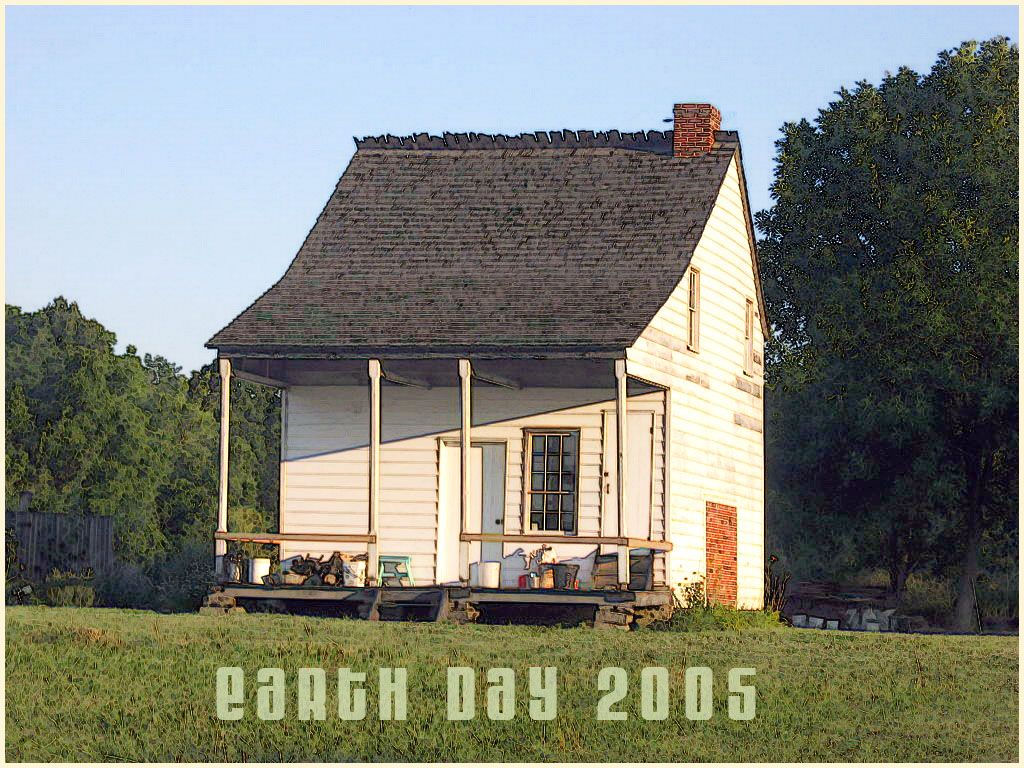
Earth Day 2005

Prophetic Commentary: Earth Day 2005

Paradise


John Prine online

earth day 2005 tutor key hills Kentucky

When I was a child, my family would travel
To western Kentucky, where my parents were born
And there’s a backward old town that’s often remembered
So many times that my memories are worn
CHORUS:
And daddy won’t you take me back to Muhlenberg County
Down by the Green River, where Paradise lay
Well I’m sorry my son, but you’re too late in askin’
Mr. Peabody’s coal train has hauled it away
Well sometimes we’d float right down the Green River
To an abandoned old prison down by Atry Hill
Where the air smelled like snakes and we’d shoot with our pistols
But empty pop bottles was all we would kill

CHORUS

Then the coal company came, with the world’s largest shovel
And they tortured the timber and stripped all the land
Well they dug for their coal till the land was forsaken
Then they wrote it all down as the progress of man

CHORUS

When I die let my ashes float down the Green River
Let my soul roll on up to the Rochester Dam
I’ll be halfway to Heaven with Paradise waitin’
Just five miles away from wherever I am


End of the Innocence

Don Henley online

Walden / Walden Woods Project

Heaven Is Under Our Feet edited by Don Henley and Dave Marsh

earth day 2005 Venoge Indiana Farmhouse

From the album, End of the Innocence

Remember when the days were long
And rolled beneath a deep blue sky
Didn't have a care in the world
With mommy and daddy standin' by
But "happily ever after" fails
We've been poisoned by these fairy tales
The lawyers dwell on small details
Since daddy had to fly

But I know a place where we can go
That's still untouched by men
We'll sit and watch the clouds roll by
And the tall grass wave in the wind
You can lay your head back on the ground
And let your hair fall all around me
Offer up your best defense
But this is the end
This is the end of the innocence

O' beautiful, for spacious skies
But now those skies are threatening
They're beating plowshares into swords
For this tired old man that we elected king
Armchair warriors often fail
And we've been poisoned by these fairy tales
The lawyers clean up all details
Since daddy had to lie

But I know a place where we can go
And wash away this sin
We'll sit and watch the clouds toll by
And the tall grass waves in the wind
Just lay your head back on the ground
And let your hair spill all around me
Offer up your best defense
But this is the end
This is the end of the innocence [Interlude]

Who knows how long this will last
Now we've come so far, so fast
But, somewhere back there in the dust
That same small town in each of us
I need to remember this
So baby give me just one kiss
And let me take a long last look
Before we say goodbye

Just lay your head back on the ground
And let your hair fall all around me
Offer up your best defense
But this is the end
This is the end of the innocence