Sunday, December 24, 2006

Traveling to Tucson Again

Originally I had a reservation on Southwest for Wednesday evening, the TV pics from Lindbergh totally horrified me plus no way could I get packed and ready in time to leave to get to the airport three hours before flight time (and possibly still miss the flight), so I cancelled my SW rez and decided to go by dog – Greyhound – again. In the past I've traveled by dog at least once in each direction and found it relatively relaxing. In addition, this time I saved close to $60 by taking the low road rather than the high skies!

Here's my chronology:

Friday evening I arrived at the downtown San Diego Gr*yh**nd Station (notice that as a cat person, I'm using a convention of treating dog stuff as an *obsc*n*ty). Talk about security—none whatsoever! I'd made my reservation online and paid for it with a credit card. I gave the reservation # to the clerk, and asked if he needed the actual credit card or my ID, but he said no, although my ticket had my name all over it. So I sauntered to the line of folks waiting to board at gate 6.

As we traveled through the dark night, the blanket of stars in the sky was wondrous; for a long time we traveled alongside the Big Dipper:

Big Dipper

I need to quote one of my favorite old-time groups, Spanky and Our Gang's
Lazy Day

Blue sky, sunshine
What a day to take a walk in the park
Ice cream, daydream
Till the sky becomes a blanket of stars
What a day for a picnic
Daisies and lots of red balloons
And what a day for holdin' hands
And bein' with you

However, it wasn't any day for any picnic!

Midway through the journey, the border patrol (USBP) always storms on the bus, checks papers, asks country of citizenship, and this time they called very blonde and Anglo-appearing) "Melissa Thompson" off the bus regarding some concern, though she re-boarded and continued through to Tucson.

When I used to go to Tucson on Southwest's now-nonexistent late afternoon flight out of San Diego, flying into the Southwester sunset was a supreme treat, esp since Tucson is an astronomer's Dark Sky area. Yesterday's sunrise was pretty special though, bringing up memories of getting into Prescott AZ around the same time of day, also during the winter.

We left Phoenix a half-hour late, at 9:30, and on a Harrah's casino bus rather than Greyhound equipment! Funny, esp given my feelings about casinos.

# # #

Friday, December 22, 2006

Festive Foods Friday 5

Another Friday 5 meme from RevGalBlogPals.

Today's Festive Foods features a tamely serious selection of questions and answers.

1. Favorite cookie/candy/baked good without which, it's just not Christmas.

In general I'm not into sweets, though I do enjoy pie (sometimes I tell people I like my fruit inside a crust with ice cream on top); having said that, Richard's mince pie comes closest—he trained as a pastry chef in Germany and his crust is even better than my Midwestern grandmother's!

2. Do you do a fancy dinner on Christmas Eve, Christmas Day, both, or neither? (Optional: with whom will you gather around the table this year?)

These days, neither—I'm not formally serving a church and I don't have family in town, so for the past few years I've celebrated Christmas in Tucson, where we'll be having traditional turkey, etc. I'm anticipating a dozen or more of us will gather around the table.

3. Evaluate one or more of the holiday beverage trifecta: hot chocolate, wassail, egg nog.
  1. Hot Chocolate: I've sworn off both HC (not Holy Communion, though) and its analog, Hot Cocoa, due to memories of waking up the morning after the evening before with a migraine.
  2. Wassail: to my knowledge I've never had it.
  3. Eggnog: Yes, yes, amen! Ideally the real thing, homemade, but with only vanilla flavoring—no rum and no rum flavoring, either.
  4. Glögg or Glugg: great memories! I discovered it when I was musician for a Lutheran congregation of Swedish origins. The senior pastor gave everyone on staff bottles of glögg plus a portion of the fruits that'd been soaked in the spirits.
4. Candy canes: do you like all the new-fangled flavors or are you a peppermint purist?

Not so much into eating the candy canes as into using them to decorate, so any flavor or color works for me, though you need to have at least a few traditional red-and-white striped.

5. Have you ever actually had figgy pudding? And is it really so good that people will refuse to leave until they are served it?

Yes, many times I've had it served with hard sauce, which I don't like, but I love FP with lemon sauce, which I'm willing to make myself.

Is it really all that wonderful?

I've never experienced anyone refusing to leave before being served FP, but don't most legends develop out of fact?
Edited to add: Well, I am APPALLED with myself that I forgot to include a question about the crown prince of holiday foods—the fruitcake. Feel free to add your thoughts on this most polarizing holiday confection.
It's been years since I've had any fruitcake, but I do like the kind that's mostly cake batter - either light or dark - with just a few fruits. I detest the kind loaded with fruit.

An additional note from moi: since I wasn't on board for the Advent Friday Five, I'm planning to answer it anyway at some point (maybe not until after Christmas) in order to make a quadrivium.

Tuesday, December 19, 2006

Advent 3: Holy in our Midst

Zephaniah 3:14-20 | Isaiah 12:2-6 | Philippians 4:4-7 | Luke 3:7-18

Holy in our Midst

Prayer:

God of all creation, as again we anticipate your Holy Presence among us not only in the Bethlehem manger but also in our neighbor next door, the homeless family in the park, the clerk at the convenience store and the conflict across the world, may we bring to all of these the joy of the Bethlehem baby; in the name of the Bringer of hope and Author of peace, amen!


May grace, peace and joy be multiplied to you, from God our Father and our Lord and Savior, Jesus the Christ!

It is an immense joy for me to be here worshiping with you once more. In some ways it seems only last week that we were together, but in reality it was late last winter during another of the church's typically more somber seasons, the season of Lent. The popular view of Advent sees it as solemn and reserved, but during the past couple decades the liturgical color for Advent has switched from purple, both a penitential color and a royal one, to blue, the color of hope. Every one of the lectionary texts today talks about joy—in fact, historically this third Sunday in Advent has been called Gaudete, after the entrance antiphon telling us to "Rejoice in the Lord always; again I say, rejoice!" Because "The Lord is near."

I'd like to read from several of the lections—first, from Zephaniah, one of the Book of the Twelve found in the Hebrew Bible. Likely you know Zephaniah is one of those prophets sometimes called "minor," but only because we don't have extensive material from them—their words to us are anything but unimportant!
Zephaniah 3:14-18a

Sing aloud, O daughter Zion; shout, O Israel! Rejoice and exult with all your heart, O daughter Jerusalem! The Lord has taken away the judgments against you, he has turned away your enemies. The king of Israel, the Lord, is in your midst; you shall fear disaster no more. On that day it shall be said to Jerusalem: Do not fear, O Zion; do not let your hands grow weak. The Lord, your God, is in your midst, a warrior who gives victory; he will rejoice over you with gladness, he will renew you in his love; he will exult over you with loud singing as on a day of festival.
Then, in place of the Psalm there's an option for a passage that's been included with the writings of Isaiah of Jerusalem:
Isaiah 12:2-6

You will say in that day: I will give thanks to you, O Lord, for though you were angry with me, your anger turned away, and you comforted me. Surely God is my salvation; I will trust, and will not be afraid, for the Lord God is my strength and my might; he has become my salvation. With joy you will draw water from the wells of salvation.

And you will say in that day: Give thanks to the Lord, call on his name; make known his deeds among the nations; proclaim that his name is exalted. Sing praises to the Lord, for he has done gloriously; let this be known in all the earth. Shout aloud and sing for joy, O royal Zion, for great in your midst is the Holy One of Israel.
In a word for us today, Zephaniah tells us our Lord, Royal Sovereign, even Warrior - to embarrass those of us who flinch at militant descriptions of God - is right here with us, giving the victory to us, renewing us in love and rejoicing over us, the people called to rejoice in the Lord! And now, not only need we not fear disaster: we shall not fear disaster any more.

And you know Paul's own joy in the churches he knew and visited:
Philippians 4:4-7

Rejoice in the Lord always; again I will say, Rejoice. Let your gentleness be known to everyone. The Lord is near. Do not worry about anything, but in everything by prayer and supplication with thanksgiving let your requests be made known to God. And the peace of God, which surpasses all understanding, will guard your hearts and your minds in Christ Jesus.
In reconsidering today's texts, I was very aware that three years ago I preached about Luke's telling us to become givers of gifts and to practice justice and righteousness in order to prepare for the approaching reign of heaven on earth. As recorded in chapter 3 of Luke's gospel, the crowds asked John the Baptist what they should do in order to prepare for the forthcoming reign of heaven, and John answered: "Whoever has two coats must share with anyone who has none; and whoever has food must do likewise." He said to the tax collectors who came to him for baptism, "Collect no more than the amount prescribed for you." To the soldiers, John instructed, "Do not extort money from anyone by threats or false accusation, and be satisfied with your wages."

This time Luke's lectionary year again is upon us, but I'm too aware of something else, and that's my own need to halt all the compulsive, restless activity on the inside and out, at least for a while, and to take in the gracious gifts around me so I can be filled by receiving and become ready to be a gift-giver again. Recently in more than one conversation, I've mentioned wanting to make the soon-upon-us winter a time of near-hibernation, and on a basic level I feel far too depleted to risk much giving or much reaching out.

Give gifts? That was for 2003; for this Third Advent Sunday of 2006 let's try "receive a gift" or "receive gifts."

Here's more from Luke's account of John the Baptist by the riverside:
As the people were filled with expectation, and all were questioning in their hearts concerning John, whether he might be the Messiah, John answered all of them by saying, "I baptize you with water; but one who is more powerful than I is coming; I am not worthy to untie the thong of his sandals. He will baptize you with the Holy Spirit and fire."
So we hear about a threefold immersion: baptism in water, in Spirit and in fire. In the process of becoming God's people, whether by John's wilderness surroundings or here in this city, it looks as if we need to receive gifts water, of Spirit and of fire in order fully to be received into the Reign of God. We began with two prophets from the Hebrew Bible telling of the nature of Salvation among us: this God here with us rejoices over us, gives the victory to us, in love renews and restores us. This God brings saving waters and healing to us. But on another level, what does the world expect, what do our nearby neighbors expect from people they see going to worship and various church activities? After all, presumably people who attend church are somehow connected to heaven, are insiders to the Divine?! Do our neighbors and does the world out there expect to meet a baptized people?

Many non-church people know something about baptism as a kind of religious ritual; in fact, many who don't regularly attend worship have had their own babies baptized or blessed or dedicated, due to pressure or strong suggestions from relatives, nostalgia or whatever. John the Baptist tells us the Coming One will baptize with the Holy Spirit and with fire, which sounds like anything but a perfunctory social ritual! In the same sentence we hear about the wind of the Spirit and fire: around these parts we know a lot about winds that stir embers into flames that in turn generate their own breezes and currents. John baptized with water and we still baptize with water. Today I'm asking you if the waters of baptism quench the Holy Spirit's pentecostal fires? Think about it!

On its first Pentecost, the Church first received the Fire and Spirit promised by John; that Day of Pentecost we read about in the book of Acts was the same day the synagogue commemorated and celebrated Moses' receiving the Ten Commandments, the Sinai Covenant with visible signs of fire and smoke.

Spirit and fire both are able to insinuate their way into the tightest spaces – even into our own too-often resistant bodies, minds and spirits. But then the Fire and Spirit of Life radiates outward from us, again making its way into other tight, cold spaces and places. The Fire and Spirit of Pentecost that inspired the nascent Church still longs to in-Breathe, to in-Spire us, the Church of the 21st Century. This Pentecostal Spirit still is able to Breathe new life and inspiration into us!

Give a gift? Give gifts? Yes, of course, just as in any other year, let us give gifts, and particularly to our nearby neighbors let us especially give the gift of gracious, un-condemning presence showing them that we, the People of God, do not consider ourselves "holier than they are," showing them we are an inclusive rather than an exclusive community, reborn of water and fire – yes! - yet reborn into the biography of the Bethlehem baby, Jesus, Who baptizes with Spirit and with Fire, bringing hope and new life to all the world. We're moving up to the Feast of the Nativity, Christmas Day; one week from today will be the Fourth Sunday of Advent in the morning and Christmas Eve in the evening. For just a word in anticipation of the coming observances of Lent and Easter, being acquainted with the paradox of the God Who fills heaven and earth starting life among us in the winsomeness, the inevitable powerlessness and other finite limitations of a human baby helps prepare us to recognize the scandal of a crucified God on Calvary's cross.

Be givers of gifts? First, before we can be gifts or give gifts to another, we need to receive the astonishing gift of God's amazing unconditional gracious love that both blazes and insinuates its way into the world and into our lives in Spirit and in Fire, re-creating, re-forming and re-filling each of us so we can become the joy-filled Presence of the Holy in our communities and in our churches and families, bringing the same hope the Bethlehem Babe brings to us, so like Jesus of Nazareth, we can be givers of gifts. May we become and may we be bringers of hope carrying the Spirit and Fire of new life to others—

Amen

Friday, December 15, 2006

desert spirit's fire logo

In process and progress—I'm designing a new letterhead, etc.—identity package (old one is for my designing identity...); I did these in Illustrator (sort of, and partly in Photoshop) and made png versions to blog; currently I'm working on the final product plus title page in InDesign—Go Adobe?!

desert spirit's fire logo desert spirit's logo - gold

Friday Five: Yuletide Favorites

Friday, December 15, 2006
Friday Five: Yuletide Favorites

This week's RevGalBlogPals Friday Five asks about our Yuletide faves:

After jumping in with both feet for my first play last week, this time is a washout.

For this mid-December Friday Five, let's explore some Yuletide favorites.

1) It's a Wonderful Life—Is it? Do you remember seeing it for the first time?


I've never seen it either first or subsequent times (not a movie fan)

2) Miracle on 34th Street—old version or new?

I saw a scratchy version of the old one as a little kid or maybe that was in junior high, but wasn't aware of an updated one.

3) Do you have a favorite incarnation of Mr. Scrooge?

Don't know who you're referring to...

4) Why should it be a problem for an elf to be a dentist? I've been watching Rudolph the Red-Nosed Reindeer for years now, and I still don't get it.

Another one I've never seen, but I'll attempt a lame logical answer by suggesting any elf's being vertically challenged means they'd have lots of problems reaching the patient.

5) Who's the scariest character in Christmas specials/movies?
  • The Bumble
  • The Ghost of Christmas Yet to Come, Muppet Version
  • That Mean Magician Who Tries to Melt Frosty
Your Nomination


Not familiar with any of the above...sob, sob, sigh!

The only Christmas special I know (and yes, make a point of watching it every year and really love) is Charlie Brown Christmas. No one scary there!

I cannot believe I'm posting this on my theology blog!

Friday, December 08, 2006

Friday Five: Christmas Music

Friday Five | 8 December 2006

As you can see from my sidebar, recently I joined a bunch of blogrings, and here's My First Friday Five. Friday Five is a regular feature of the intentional online community at RevGalBlogPals. This is so exciting!!!!!!!!

1. A favorite 'secular' Christmas song.

"Celebrate Me Home" – Kenny Loggins

2. Christmas song that chokes you up (maybe even in spite of yourself—the cheesier the better)

"Do You Hear What I Hear?" by Noel Regney and Gloria Shayne.

3. Christmas song that makes you want to stuff your ears with chestnuts roasted on an open fire.

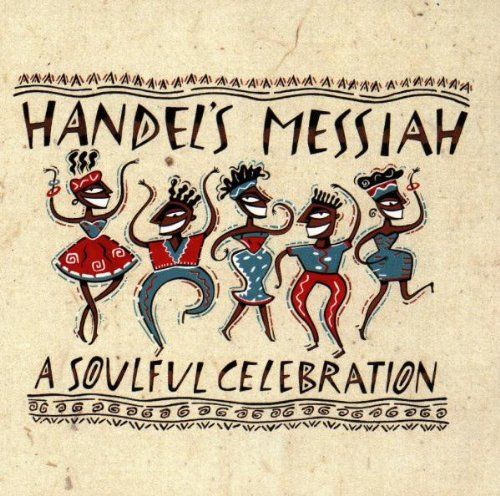
"Have Yourself a Merry Little Christmas" – I didn't know about the "artiste" my original linked to, soulful celebration messiah CDalthough I thought s/he needed to be nuked off the planet, but my search for the lyrics revealed such favorites as James Taylor, Coldplay and Carly Simon have recorded it! Aaaccckkk

4. The Twelve Days of Christmas: is there *any* redeeming value to that song? Discuss.

The dramatic performance of the song with occasional piano semi-accompaniment at the party I attended last Saturday at a friend's church redeemed it somewhat. No time to blog more about it at the moment.

5. A favorite Christmas album

Handel's Messiah: A Soulful Celebration – Quincy Jones, Take 6, Tevin Campbell et al.

PS I've kept the song titles, though I've been deleting all YT links from this blog because of the way YT vids come and go.

Tuesday, December 05, 2006

Advent 1 C

  • Jeremiah 33:14-16
  • Psalm 25:1-10
  • 1 Thessalonians 3:9-13
  • Luke 21:25-36
I'm getting this blogged and online late, considering it was supposed to be about last Sunday's text—delay mainly due to my home puter acting up, though last night I finally thought to run disk cleanup and defrag for the first time in almost three months, so it's doing better. However, I am so hankering after the laptop that'll support the design software I need.

It's Luke's lectionary year again! I love Luke—probably my favorite gospel, but I'm beginning to appreciate Mark, mostly from reading Say to This Mountain straight through and using Binding the Strong Man as a commentary and resource the last couple of Year Bs (or is that Years B?!).

Signs in the skies, the sun and the moon and the stars; excitements on earth, with roaring seas and splashing waves—after all, the Lord of the planets, the moon, and galaxies, mountains, hills and rivers, Creation's Sovereign draws close to us, so let's stand up, look up and take notice! Our redemption and creation's salvation, Righteous Branch of David's root appears in grace, dwelling among us and living as one of us while performing justice and righteousness right here, on earth, in this land, while his righteousness, heaven's holiness, becomes ours!

This amazing hymn is part of my email sig—not that I'm writing many emails these days:
Zion hears the watchmen singing,
And all her heart with joy is springing;
She wakes, she rises from her gloom;
For her Lord comes down all glorious,
The strong in grace, in truth victorious.
Her Star is risen, her Light is come.
Ah come, Thou blessed One, God’s own beloved Son:
Alleluia! We follow till the halls we see
Where Thou hast bid us sup with Thee.

–Philipp Nicolai, 1597
Of course I'm hearing JS Bach's Cantata 140, Wachet auf, as well as his Schübler-Chorale version; Paul Manz wrote at least two wonderful settings, so right now in my imagination I'm playing all of those on an organ of my dreams—possibly Haarlem's St. Bavo, or maybe a newer instrument?!

Originally I'd planned to reflect on last Sunday's pericopes, but on Sunday Pastor George S. Johnson gave me a copy of his book, Beyond Guilt: Christian Response to Suffering and inscribed it:
Isaiah 58:10-11

And if you pour yourself out for the hungry and satisfy the desire of the afflicted, then shall your light rise in darkness and your gloom be as the noonday. And the LORD will guide you continually, and satisfy your desire in scorched places, and make your bones strong; and you shall be like a watered garden, and like springs of living waters that never fail.
That may be one of Pastor George's default inscriptions, but whatever, it exactly fits where I am right now and it goes perfectly with this Advent 1's RCL, too, but I don't need to belabor the obvious. These passages remind me of days bygone when I sometimes sort of hung out with a group that included some anti-Lordites. I was born opinionated and besides, I'm an ENFJ without a single shy or reticent cell in my body, which can make me seem assertive, plus I've been known to inform people "I crave an audience like an addict craves cocaine." Nonetheless, I did my level best calmly to try explaining to the group nothing substitutes for "Lord"—it's the heavy, solid and substantial theological and political word as well as forming continuity between the Hebrew Bible and the New Covenant scriptures. So what have we here, for the first Sunday of a new liturgical year? Ownership, mastery, presence, authorship and authority; power to designate, to control and to delegate. A unique relationship to creation and to creation's stewards (us). This Lord has formed us, has bought us back, and literally owns us. We answer to this Lord, to this One we soon will meet again, strong in grace and victorious in truth, the apparently power-less newborn infant in the Judean manger! In faith and in baptism this Lord's biography - from cradle to cross to grave to Easter dawn - becomes our life story. Now what?

Thursday, November 23, 2006

Thanksgiving to Advent to Winter Solitude

Thanksgiving

The time of year is here for listing reasons for attitudes of gratitude! In my heart I hold thankfulness for nothing if not for God's matchless gifts of Church and Sacraments, and above all for Jesus Christ, Gift of Gifts. I bless God that in baptism I am paradoxically both dead and alive in Christ—both dead to the world and alive for the world; that the Good Gift of the Eucharist connects me with all creation everywhere in every age while challenging me to discern the body within the community where I find myself at that particular moment in time and space. I give thanks that I am bound by water and the Word yet claim the liberty of the children of God—bound above all by grace! This Thanksgiving 2006 I give thanks for nearby neighbors and emerging friendships, and amazingly, for a pair of online sites that have shown me (the physical, tangible gospel person) that community, trust and friendship can happen over the internet! Who would have thought?!

I give thanks for shelter, warmth, food, creation, beauty of every kind, the year-long Design School program I finished a month ago at the local branch ("expression of" as we'd say in the Church) of the New Media Consortium—I especially give thanks that God knows to keep putting options in my path sufficiently late to force me to make quick decisions! For the Interactive Media Certificate Program I interviewed and attended orientation on a Friday in early January, started classes at 7:00 the following Monday morning.

With Rascal Flatts ["Bless the Broken Road"– 2004] I bless the broken road on which I've tripped and frequently fallen. I am increasingly grateful that the God of the bible, Lord of the Church, is a servant God Who Self-reveals not in ornate finery but in the Cross of Calvary Hill and in extravagant unmerited gifts of grace given in spite of me, in spite of us, sometimes because of the messiness, brokenness and devastating shatteredness of life disintegrating into simple survival. And surely the Best News arrives to the dis- or less-enfranchised, to the broken and empty?! (I don't need to mention smelly shepherds quite yet, or do I?) If the upcoming days were not shorter, darker and a little depressing even here in Southern California, how else and why else would anyone ever be motivated to look for the light that would be invisible if not surrounded by night?

To Advent

Sunday we'll celebrate Reign of Christ, and then the season of Advent, with its retrospect and prospect of judgment, repentance, renewal, redemption and hope will be upon the world once again! In the Bethlehem manger we meet the God Who comes to earth amidst silent darkness, pleased to share our common lot—of casino-style payoffs, fast bucks, fast cars and fast career tracks? No, not—because surely brokenness, estrangement, stranger-ness, strangeness, disappointment, disillusionment, loneliness and betrayal are far more common than what the world out there deems success?! God comes to earth incarnate not only into the thick of human need but in human need, too...Jesus born in Bethlehem, Little Town of House of Bread, reveals to the world the God Who forms us, shaping our identity in situations and relationships full of uncertainty and precariousness—not in the assurances of institutions of higher learning like Harvard Business School!

To Winter Solitude

I hope to make the coming season into an experience of real, near-total winter, getting as close as possible to a somnolent hibernation into darkness in the midst of the city. What with everything going on in my heart and in my head, estivation would have been helpful this year as well, but being in the thick of design school during summer 2006 effectively zapped any estival options. Three days and three nights in the heart of the earth: heart is "earth" written with H at the beginning rather than at the end! Heart as an organic metaphor, a spatial one or place where emotions, will and humanness reside.

To Wintersong: this far by faith

Check out my blog for Epiphany 2006, where I quote Marty Haugen's version of the Service of Light that opens evening prayer or vespers:

  1. Joyous light of heavenly glory, loving glow of God's own face,
    you who sing creation's story, shine on every land and race.
    Now as evening falls around us, we shall raise our songs to you,
    God of daybreak, God of shadows, come and light our hearts anew.

  2. In the stars that grace the darkness, in the blazing sun of dawn,
    of the light of peace and wisdom, we can hear your quiet song.
    Love that fills the night with wonder, love that warms the weary soul,
    Love that bursts all chains asunder, set us free and make us whole.

  3. You who made the heaven's splendor, every dancing star of night,
    make us shine with gentle justice, let us each reflect your light.
    Mighty God of all creation, gentle Christ who lights our way,
    Loving Spirit of salvation, lead us on to endless day.
© 1990 GIA Publications, Inc.

Tuesday, November 21, 2006

Charismatic Contemplative Blog

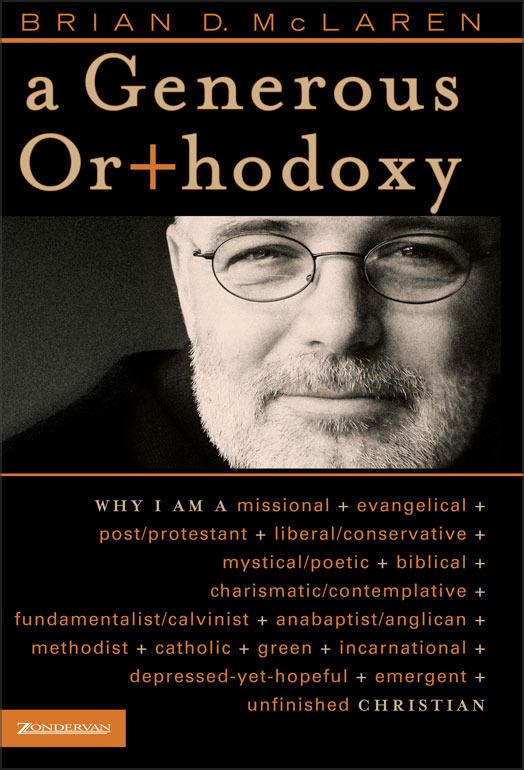
Here's another essay on another chapter of a Generous Orthodoxy; I'm not sure how many more I'll blog, at least at this time.

A Generous Orthodoxy: Why I am a missional, evangelical, post/protestant, liberal/conservative, mystical/poetic, biblical, charismatic/contemplative,...emergent, unfinished... by Brian McLaren on Amazon

A Generous Orthodoxy coverIn general I'll also go with the softer Charismatic rather than the harder-edged Pentecostal. In the chapter's first paragraph Pastor Brian says his "life was deeply and forever enriched by association with charismatic (or Pentecostal) Christians." I can say the same thing, especially during my most recent sojourn in Massachusetts. The first couple months I was there I worshiped at a mostly Black (African-American and Caribbean) Pentecostal church and later on Cape Cod sometimes attended Sunday evening worship at the Mid-Cape Assembly of God. I also painted a float and did some other stuff for that Dennisport AG's involvement in the annual Cranberry Festival. Pastor Henry Perry's officiating at Heather's dad's funeral was a real personal and theological class act, but after all, he'd been an engineer who heard God's audible voice telling him to become a pastor! That I would learn to listen and to hear...

On page 195, Brian McLaren says, "If charismatics gave me my high school diploma in the ways of the Spirit, it was from Catholic contemplatives that I entered an undergraduate degree in the liberal art of the Spirit." He writes about the RC tradition locating experiences of the HS "in the very center of normalcy" rather than "one step beyond the normal." They've got it! Just like the church we read about in Acts, the same church that moved outward from Jerusalem - all the way to where I am and where you are - led by the Same Pentecostal Spirit!

What you could call Father Thomas Keating's Centering Prayer Movement (though it's not really his at all—he wonderfully helped recover the ages-old practice) has been a gift to me and to the ecumenical church, besides crossing and often almost obliterating differences and distinctions between Christianity and other faith traditions.

That's all for this blog.
###

Saturday, November 04, 2006

Methodist Blog

Brian McLaren writes primarily about the Wesleyan (holiness, too? not in this chapter) movement that started as an Anglican offshoot and its then subsequent offshoots; I'll begin my Methodist Blog with my own experiences within today's American United Methodist Church and its antecedent denoms.

A Generous Orthodoxy: Why I am a missional, evangelical, post/protestant, liberal/conservative, mystical/poetic, biblical, charismatic/contemplative,...emergent, unfinished... by Brian McLaren on Amazon

A Generous Orthodoxy coverAges ago I spent my first undergrad stint at Boston University, nominally Methodist (Methodist hymnals in the chapel pews, and BU 's divinity school, referred to as STH for School of Theology, officially is a UMC-affiliated seminary). However, in reality BU is a large, pretty much secular urban school, despite a lot of students attending on Methodist Scholarships and even aspiring to high degrees of holiness.

When I lived in the Intermountain West, I sort of attended a small local UMC for a while and also became pianist for a Tongan UMC, splintered off from another Tongan UMC that practiced glossolalia. Last winter in my Book of Daniel blog (these days I'm not linking to much of anything, though probably at some point I should go back with live links, esp to books and blogs) I mentioned a few of the large number of church bodies, denoms and groups and factions that once had trod the Canterbury Trail, including, of course, the Wesleyan-Methodist movement. Apparently I had a great- or great-great-uncle who was a circuit rider, so he probably was Methodist, despite his biological relative, my grandfather, insisting on being Southern Presbyterian. BTW though, some of my readers likely know about Henry (Heinrich?) Muhlenberg, a renowned Lutheran circuit rider, quite surprising since denoms of continental European origin were under- to almost non-represented as Protestant Christianity moved westward.

Then again, in Tucson on Christmas Eve 2005 I attended the late in the day liturgy at a UMC and oh, would I ever love the Artist in Residence position the keyboard person at that church holds! From everything I could figure out, the church wasn't especially theologically or liturgically substantial, but that has to be my dream job!

Of course, with my being such a Daughter of the Reformation in so many ways, at times I make the sometimes false Reformed/Arminian distinction. Yes, false. But how some ever, whether one is Roman, Reformed, Free Church, or what some ever, we all possess, know and love all those amazingly wonderful hymns by Susanna's sons! Bottom line?

But this is supposed to be another blog in my series on Brian McLaren's a Generous Orthodoxy and as much as I'm enjoying getting back to reading the book, I want to read a lot of other things, work on some theology projects and also finish and begin some design stuff. After all, graduation was three whole entire weeks ago and I've flaked far long enough! On page 244 Pastor Brian says, "Luther and Calvin created Protestant intellectual systems (a kind of conceptual hierarchy) that replaced the Catholic organizational hierarchy. But nobody created a new system of spiritual formation and nurture to replace the richly developed Catholic system of spirituality that had developed during the Middle Ages...until the Wesleys. People had Protestant doctrine, but they didn't have tracks or pathways or methods to help them put that doctrine into practice." My note: actually, Luther never wrote a systematic theology, he was so busy passionately emoting, but I catch McLaren's drift.

At chapter's end he hopes, believes and prays for "a new methodism" that will recognize the importance of small groups, baptism's essential ordination to ministry, queries that help search one's soul and "discipleship as the process of reaching ahead with one hand to find the hand of a mentor a few steps up the hill, while reaching back with the other to help the next brother or sister in line who is also on the upward path of discipleship."

To me what is so key about that reaching upward and backward is to know and live as if all of us are at different stages in every aspect of our journeys in Christ—spiritual, emotional, intellectual, etc., because every one of us can learn something from someone else who is at a different stage in some part of their own journey.

evangelical Blog

11/4/2006 3:52 PM

A Generous Orthodoxy: Why I am a missional, evangelical, post/protestant, liberal/conservative, mystical/poetic, biblical, charismatic/contemplative,...emergent, unfinished... by Brian McLaren on Amazon

A Generous Orthodoxy coverAgain I'm beginning with some of my own thoughts before reading Brian McLaren's.

Before making the obvious observation that Evangelical in today's USA basically refers to a particular style of politically, doctrinally, socially individual ("I even get my very own personal Savior all for me") Protestant Christian, often associated with the Religious Right, I'll mention the Reformers called themselves Evangelische, meaning Protestant and non-Roman Catholics in Spanish-speaking countries and cultures simply style themselves evangelico/a. As you've likely observed from my blog title, McLaren designates this chapter with a lower-case "e". Ages ago I heard very theologically (and otherwise) liberal Krister Stendahl say, "I hope we are all evangelical!" In other words, he hoped all of us Christians were bearers, speakers and doers of the Gospeled Good News. Are we?

11/4/2006 8:17 PM

Page 128 of a Generous Orthodoxy: "the word Evangelical can have some pretty negative connotations. But it's a word I would rather not abandon, if I can help it. In fact, I am happy and honored to consider myself an evangelical."

Pastor Brian mentioned both negatives (similar to my list) and positives associated with capital-E Evangelicals. But then, on page 130, he says clearly, "When I say I cherish an evangelical identity, I mean something beyond a believe system or doctrinal array or even a practice. I mean an attitude—an attitude toward God and our neighbor and our mission that is passionate." He also admits "...Evangelicals have painted themselves into a lot of corners—theologically, politically, socially. But evangelical passion for spiritual experience, for spiritual understanding, for mission is precious. ...Even though it can't be bottled, it can be acquired because, ultimately, 'it' is the Spirit of Jesus, and Jesus gives himself freely to all who ask. Both Evangelicals and evangelicals know that." I like that a lot, and completely agree!

On the last page of this chapter he refers to Dave Tomlinson's term "post-evangelical," meaning coming from, emerging from, growing from, and emphasizing both continuity and discontinuity. Agreed. I'm gonna get this onto my blog so I can move on with this book and with the rest of my life. Thanks again for the gift of the book, Scott! You know it was on my Amazon Wish List!

Mystical Poetic Blog

Today I'm returning to my blogs about some of the chapters in Brian McLaren's a Generous Orthodoxy.

A Generous Orthodoxy: Why I am a missional, evangelical, post/protestant, liberal/conservative, mystical/poetic, biblical, charismatic/contemplative,...emergent, unfinished... by Brian McLaren on Amazon


A Generous Orthodoxy cover11/3/2006 3:47 PM

Before getting in to the chapter at all, I'm going to comment on the chapter title from my own immediate perspective.

Mystical: of course the medieval Christian mystics instantly come to mind, but I also recall an evangelical (in the current popular American sense of the term) wannabe who really was mainline – a guy I knew ages ago – who kept insisting we wanted nothing whatsoever to do with mystic, because "mystic" implied "unmediated" and left out Jesus Christ.

Poetic: without reading much of anything I noticed McLaren references Walter Brueggemann's book of language for proclamation I read last winter or spring, Finally Comes the Poet. As y'all y'all know, I am a major WB fan! I'm also fondly recalling Marian Conning from the old UCC forums referring to moi as a "poet theologian" at the end of our online discussion of Alan Roxburgh's The Missionary Congregation, Leadership, and Liminality.

11/4/2006 9:57 AM

Having read this chapter, yes, me too: I consider myself mystical and poetic. For me, the most helpful things in this chapter were the quotes from Brueggemann, Chesterton, C.S. Lewis, Barth, et al.

From Walter Brueggemann: "By prose I refer to a world that is organized in settled formulae, so that even pastoral prayers and love letters sound like memos. By poetry, I do not mean rhyme, rhythm, or meter, but language...that breaks open old worlds with surprise, abrasion, and pace."

From Roman Catholic theologian Hans Urs von Balthasar: "God needs prophets in order to make himself known, and all prophets are necessarily artistic. What a prophet has to say can never be said in prose."

On page 165, Brain McLaren observes, "But mystical really is a wonderful word, suggesting ways we partake of mystery, mystery beyond the grasp of reasonable prose."

And then quoting G. K. Chesterton's Orthodoxy: "The poet only asks to get his head into the heavens. It is the logician who seeks to get the heavens into his head. And it is his head that splits..." Then again Pastor Brian reminds the readers of Chesterton's observation that the Greeks made Apollo was patron god both of poetry and of healing.

This is a great chapter, even though I'm quoting rather than doing much thinking of my own. I love C. S. Lewis' Perelandra describing the season of spring as "ancient and young."

Roman Guardini (previously unknown to me—he was John XXIII's chaplain during Vatican II) wrote about the human who tries to speak about the Divine: "In the end he...says apparently wild and senseless things meant to startle the heart into feeling what lies beyond the reaches of the brain."

Kyriacos Markides, author of The Mountain of Silence, gets quoted, too: "Christianity, a Catholic bishop in Maine once told me, has two lungs. One is Western, meaning rational and philosophical, and the other Eastern, meaning mystical and otherworldly. Both, he claimed, are needed for proper breathing."

Sunday, October 29, 2006

Lent 2007 Study Outline

I'm cross-posting this from ...urban wilderness... because in the intensity of finishing school I've blogged so sparsely here and also logically, because I'm planning to post each week's actual lesson on this blog when Lent arrives.
6-part Series for Lent 2007 – Bible Study Outline
Theology of the Cross | Leah Chang


1 Corinthians 1:20-25

20 Where is the smart stuff of this world? Where are the world's heavy thinkers?... 21 Since in God's wisdom the world did not know God through their worldly kinds of smarts, it pleased God through foolish proclamation to save anyone who trusts Him. 22 Jews demand signs and Greeks crave wisdom, 23 but we proclaim Christ the crucified one, a scandal to the Jews and moronic nonsense to the gentiles: 24 But to those called, both Jews and Greeks, Christ--God's living dynamic power and God's kind of wisdom. 25 Because God's foolishness is wiser than humanity's intellectual cleverness, and God's weakness is stronger than human strength!

1 Corinthians 2:2

2 For I determined to know nothing among you except Jesus Christ, and Him crucified.

God is here! As we God's people meet to offer praise and prayer...
Here are symbols to remind us of our lifelong need of grace;
Here are table, font and pulpit, here the cross has central place...
–Fred Pratt Green © 1979 Hope Publishing Co.


Theology of the Cross: what does this mean for the Church's and this congregation's ("these congregations' in the case of OSLC) life and mission?

Week One

1. Theology of glory vs. theology of the cross
2. Hebrew Bible roots/wellsprings
3. Reading and interpreting scripture through a cruciform lens

Week Two

4. Paul, Mark and Jesus of Nazareth
5. Mark, Paul and Jesus the Christ

Week Three

6. Saul/Paul of Tarsus; Martin Luther
7. Some familiar theologians of the cross: Bonhoeffer; Dorothy Day; Gandhi; MLK; Desmond Tutu; Mother Teresa; us! Who else comes to mind?

Week Four

8. The cross and the sacraments:
          a. A theology of baptism and
          b. A theology of the eucharist

Week Five

9. What does the cross mean for each of us as individuals?
10. What does the cross mean for this church community?
11. What does all of this mean for our nearby neighbors?

Week Six

12. What does the cross mean for the world in which we live and serve?
13. The cross of Jesus Christ: Foolishness to the Greeks and foolishness to us?
14. Concluding questions, observations and loose ends

© 2006 Leah Chang

Tuesday, October 24, 2006

Nature and Mission of the Church III

Nature and Mission of the Church III
The Life of Communion in and for the World


The Nature and Mission of the Church | A Stage on the Way to a Common Statement | World Council of Churches Faith & Order Paper 198 on Amazon

© 2005 World Council of Churches, Geneva | ISBN 2-8254-1463-8

nature and mission of the church book cover

Tomorrow, Wednesday, 25 October, I get to facilitate the discussion of this chapter at our monthly Faith, Order & Witness meeting; I decided blogging my notes would serve the two-fold purpose of a review before I present and a blog. This won't be particularly organized, but I expect it'll blog out okay. Anticipating later editions of this document, I'll mostly refer to paragraphs rather than to pages.

Many topics! This section begins with

• Location and
• Relation

It ends with location and relationship, too!

¶ 67 the first paragraph of this section III talks about God giving, bestowing gifts and graces that animate the church! I love the word animate! In addition, it uses the phrase "means of grace," which is such a part of the Reformation tradition but rarely referred to within other church bodies. Proclamation; participation.

¶ 68 faith and teaching = action; activity

¶ 74 baptism as "basic bond" I'll add that baptism is a boundary defining the church's perimeter and parameters as well as excluding and forming a barrier in some ways against those who are not of the church in some sense. In and for the world becomes in the church, too – the Church and the churches become bounded containers for people and sacraments.

¶ 75, 76, 77 describe baptism well in few words

¶ 77 references social, economic, cultural (etc.) institutions that preserve human life. I'll include the church as a life-preserving and sustaining institution, too, as well as living organism. Again, baptismal relations and locations: events measurable in time and space, but located and interrelated with Christians in all ages and engaged with the world in all times and places.

The gray wash section this series uses to indicate area of disagreement or at least non-convergence speaks of the development of the terms ordinance and sacrament. Here I'll mention the churches that theologize about "means of grace" and "effective sign of grace" typically use the term sacrament while the plain ole "sign of grace" churches typically use ordinance.

¶ 78 The interrelatedness (of course!) of baptism and eucharist...interesting they're not discussing other ordinances some church bodies also officially consider sacraments.

¶ 81 I like this! About our participating actively in the ongoing restoration of creation in a way consistent with God's reconciling presence in the world. However, throughout this document I'd far prefer more references to creation than simply to human beings/humanity and the world. here's never simply a single focus to human interpretation of God's ongoing sacramental activity in the world, reminding me of Darrell Guder’s saying God does not limit Godself to the means of grace. Of course, my rejoinder to that is nonetheless, God does bind Godself to the means of grace! I'll add the church needs to continue acting sacramentally in and for the world and for all creation. But readers of my blog(s) know where I stand on that!

The gray wash spanning parts of pages 47 through 49 mentions the literal conflicts between churches and church bodies that consider Eucharistic sharing either a means to unity or the ultimate sign of unity. This sorrowful situation reminds me of Walter Brueggemann's saying (or am I imagining this from ideas he inspired?) doctrine and theology are human constructs to a great extent; our response needs to be obedience, which in many cases we unequivocally can perform.

¶ 82 Service = Ministry

¶ 83 Mutual accountability – sounds like A Formula of Agreement's mutual admonition and affirmation (are those the words? Not going to check it out at this hour).

¶ 85 All Christians everywhere have an equal obligation to proclaim the year of the Lord's favor in word and action.

¶ 86 Refers to ordination and ordained specifically as ordination to Ministry of Word and Sacrament

¶ 87 Threefold ministry of bishop, presbyter and deacon again reminds me that some church bodies – such as the ELCA – have deacons who are not part of the historic diaconate and also that differing church traditions handle this concept in differing ways, with those whose polity formally is connectionally presbyterial formally ordaining deacons and elders as well as Ministers of Word and Sacrament. I'm feeling relatively unlettered in this regard, but I can reference both today's PC(USA) and congregations in the UCC of Evangelical and Reformed heritage that have retained this practice, despite assuming the UCC's more covenantal, semi-connectional polity.

¶ 89 apostolicity: a Pauline-style list of how this has been done regarding "succession in ministry"

Gray wash on page 52 details convergence and divergence (my words) regarding (post-baptismally, I assume) ordained ministry and mentions "the ways in which ordination is considered constitutive of the Church" (!!!) as an issue to be further explored.

¶ 90 many definitions of church; here we have "Body of Christ" and "eschatological people of God," both built up by the HS...

¶ 91 Episkopé | oversight – sort of umbrella term;

moving from

• informal, organic and less structured to
• formal, institutional and more structured

¶ 92 Collegial expressions as well as personal embodiment of episkopé

page 54, gray wash: stuff about the episcopal concept of formal apostolic succession; this reminds me so of being in the Lutheran Church in America (LCA, one of the antecedent denoms of the current ELCA) when they first started calling the chief synod officer "Bishop" rather than "President"—a great hue and cry arose from the pews, mainly from American Lutherans of Scandinavian heritage who had memories of a state church in which the bishops had inordinate clout. In addition, from my limited understanding, some bishops in Sweden long had been consecrated within the historic apostolic episcopal succession that includes Rome and Canterbury. I like the way this section mentions "hitherto unrecognized parallels" between episcopal and non-episcopal polities in exercise of oversight.

Clearly, too, whether it's the PC(USA)'s Executive Presbyter, the ELCA's Bishop or the UCC's Conference Minister, in all those cases we're essentially looking at and talking about what the church long has considered a bishop or overseer, as well as a person who officially functions as pastor to the pastors, though none of those remotely has the clout or authority of a Roman or Anglican bishop. Besides, I've heard a rumor that there's hardly a more powerful ecclesiastical entity anywhere than a Methodist bishop!

¶ 96 "Web of belonging, of mutual accountability and support"

Section G is about conciliarity and primacy…

¶ 99 ...at every level conciliarity is essential; the church, whether dispersed or gather, is conciliar under the HS – "local eucharistic community"

I love the reference here to "...the all in each place" linked to the "all in every place."

¶ 102 Primacy: Alexandria; Rome; Antioch; Jerusalem; Constantinople

¶ 103 questions of jurisdiction and even competitiveness about the Bishop of Rome

Section H is about authority

¶ 105 Jesus Christ: ministry with authority placed at the service of human beings (make that at the service of creation)

¶ 106 "Authority is relational and interdependent" There's a relation between authority and commission.

I love the oblique, not-spelled out reference to Acts 1, which I'm happy to spell out, "Will you at this time refer the Kingdom to Israel?" "Wait here in Jerusalem until you are clothed with power from on high; and you shall be my witnesses...everywhere!"

As I said at this blog's beginning, this section III of the book starts with

• location and
• relation

and it ends with

• location and
• relation.

I like that a lot!

A couple more personal observations from me:

• Once again, this ecumenical discussion remains among the mainline, both Roman Catholic and Protestant, which at least in our local FOW committee includes church bodies such as the typically more conservative LC-MS and Church of the Nazarene. However, among church bodies formed from the many 19th Century Restoration Movements, only the Disciples of Christ ordinarily participates in ecumenical dialogue and in fact has become a mighty ecumenical force.

• It is striking that for the most part this document uses the term "Eucharist" for the Lord's Supper with "Holy Communion" now and then. Eucharist indeed has become the ecumenical term, just as it was the early church's. But I'm also aware some of our more conservative brethren and sistern won't say eucharist.