Friday, May 28, 2010

Bethel

bethel center building

Joel David Trout used to pastor North Park Apostolic Church, where I heard his dynamic exposition of 2 Kings 2. The particular topic of Bethel related well to Maundy Thursday as it eased into extremely early Good Friday when I started this blog post eight weeks back; the tripartite triduum liturgy had begun a few hours prior to then—here's Bethel, extrapolated and interpreted for here and now.

So you've (we've, I've) just been to Gilgal, the place of rolling away doubts, pasts, fears, transgressions, regrets and anything else that's been getting in the way. But now we need (I need, you need) to get to God's House, to Beth-El! During my undergrad years I was involved in a church that was part of an urban homeland mission and we met in a building called Bethel, though the congregation itself had a different name. During January I blogged some reasons for taking your offspring to the services of God's house; they equally apply to everyone, every age and every circumstance. At church we hear, learn and begin living the story and the stories of the covenanted people of God; we start making the old stories our stories and practice telling the stories.

At the services of God's House we celebrate and participate in the Eucharist, God's eschatological feast of justice, reconciliation, forgiveness and inclusion for all creation. This is God's manner of making new beginnings that's also a living sign of God's promised end, the welcome table of "go and do likewise." We learn to be prepared to forgive and to be forgiven... learning to live every moment "wet behind the ears" again with baptismal water, committed again to Good Friday and to Easter, constantly recovering in Walter Brueggemann's words, "...the focal drama of baptism, which is a subversive act of renunciation and embrace summoning us 'From our several enslavements ... to a common, liberated obedience.'" Something expressed so well bears repeating often!

But what else happened at Bethel for me? I began learning how to take care of the neighborhood's people and infrastructure with political action and community organizing. I enjoyed reading some Paul Tillich and Thomas Merton, although Paul of Tarsus and especially Romans overwhelmed me. We worshiped together and studied scripture and theology alongside each other. We shared meals—part of our general economic style included barter and exchange. I did homework on the roof with friends while we listened to the radio and talked; I did some art, some music and a little writing; during the summer I loved driving friends to beaches along the north shore and sometimes down route 3 to the south shore.

leaving bethel
After a season at Bethel, learning the joy and craziness of community along with its shared tasks, frustrations, anxieties and sometimes surprising hope, it's time to move on. After Bethel we need to reach Jericho, the place of radical, unquestioning, liberating obedience that continues preparing us for a together (in more than one sense) future.

(This image of the street alongside the Bethel Center in my old neighborhood shows how it is, as the street curves away from the ethnic, student, yuppy semi-ghetto – remembering "nothing much goes in or out of it that wasn't there the day before" to explain ghetto – toward commercial financial downtown City of History, but back in my days, if you didn't take the underpass walkway between the mainly residential neighborhood and downtown, you'd walk right into the central artery that now is way far gone, the result of an extravagantly expansive and $14,600,000,000 worth of "expensive" public works project, The Big Dig.)

And after Jericho? Going to Jordan... the place of boundaries between old and new, borders between strange and known, stranger and friend, barriers between where we are and where we need to be, what we have and what we want. Going to Jordan, the place of baptism for Jesus and the paradigmatic location of our baptism, too.

From Gilgal to Bethel into Jericho, all of us take along stuff – goods, bads and some indifferents – from previous locations. At Jericho we're in the place of often counter-cultural, counter-intuitive obedience and radical trust to the point of not daring question or ask a "why" out loud. At Jericho we're preparing for Jordan, for "...the focal drama of baptism, which is a subversive act of renunciation and embrace summoning us 'from our several enslavements ... to a common, liberated obedience.'"

From Gilgal to Bethel, to Jericho, to Jordan... and then to?

life stuff button

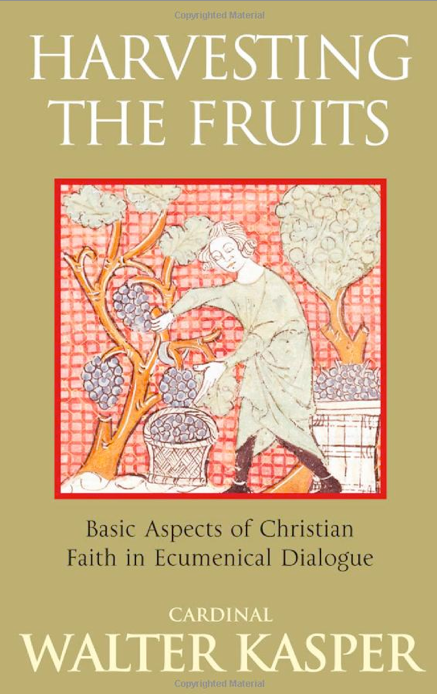
Harvesting the Fruits

Harvesting the Fruits: Aspects of Christian Faith in Ecumenical Dialogue by Walter Cardinal Kasper

Product information includes: Publisher, Continuum (December 14, 2009); ISBN-10 - 1441162720 and an updated ISBN-13 - 978-1441162724

Harvesting the Fruits"Harvesting the Fruits" references Galatians 6:9, "So let us not grow weary in doing what is right, for we will reap at harvest-time, if we do not give up." As the title of the book and the featured scripture imply, this is not a season of frustration or discouragement in ecumenical relations, we are not in an ecumenical winter, but "rich fruits" already have been harvested from these and other dialogues.

Writing about "ecumenical consensus, convergences and differences" over the biblical number of the past 40 years, Walter Cardinal Kasper brings us an easily readable, very useful overview of formal, bilateral conversations between worldwide organizational expressions of Christianity: Lutherans and Catholics / Methodists and Catholics from 1967 through the publication date of 2009; Reformed and Catholics / Anglicans and Catholics from 1970 through 2009. These dialogues were grounded in "Catholic understanding of ecumenical dialogue" and ecumenical principles stated in Vatican 2 documents Unitatis redintegratio and Lumen gentium and as Cardinal Kasper notes, they reflect multilateral interrelationships amongst the various expressions of Christianity that participated. The book is comfortable to hold, has an easily readable type face (style and point size) and includes a near-comprehensive list of abbreviations from each phase or period of each formal dialogue, one of several features that make it a wonderful reference book. The author attempts to outline where we are at this present time as well as where we in the churches can move ahead and should move ahead in the quest for common unity. Cardinal Kasper uses the traditional, 2-millennia-long theological "Father, Son, Spirit" theological vocabulary without equivocation or apology.

Harvesting the Fruits is logically organized into an introduction, four chapters and preliminary conclusions (at the end). Chapter subjects are:
1. Jesus Christ and the Trinity; 2. Salvation, justification, sanctification; 3. The Church - Nature and mission; Sources of authority; Ministry - "whole people of God" and "ordained"; Episcope / oversight - of both local church and Universal Church; 4. [dominical] Sacraments - baptism and Eucharist
Particularly beginning with the Vatican 2 Decree on Ecumenism, Unitatis redintegration in 1964, the See of Rome has considered restoration of unity in the Church a primary concern; Jesus Christ founded one Church, and only one. This particular book does not include Easter or Orthodox expressions of the Church (Cardinal Kasper refers to those as "Churches" but calls other non-Roman Catholics ecclesial communities). Except for those of Wesleyan heritage the Pentecostal churches do not participate in ecumenical activities and except when one includes the highly ecumenical Disciples of Christ (in the USA) in that category, church bodies that evolved from the various restoration movements in the 19th Century are not inclined toward ecumenism, either.

For these discussions a "common confession of the Trinity and of Jesus Christ" was the starting point. The ultimate goal of ecumenical dialogue and other shared activities includes "full visible communion in faith, sacramental life, apostolic ministry and mission" alongside the invariable and necessary differences in culture, styles of liturgy, hymnody and worship, as well as differing emphases in all the above... All of the ecumenical partners hold a fundamental common understanding of the Gospel including: creedal faith; Trinitarian conviction; and salvific action of the persons of the Trinity. Despite the basic need for more conversation and consensus, "What we share in faith is therefore much more than what divides us."


my amazon review: a healthy yield with more to come

Monday, May 24, 2010

Pentecost 2010

This is the text I wrote 3 years ago for the back of the bulletin cover I designed for the Day of Pentecost, 2007; I'm reposting for this year's Season of Pentecost.

acts 1:22 witnesses to his esurrection

In the Bible and in Christian tradition, there is no narrative or legend about the creation of fire, but there are abundant experiences of the Divine Presence in some form of fire. From the desert of the Exodus through Isaiah's vision in the temple, to Malachi and to John the Baptizer's promise of One who will baptize not only with water – but with Spirit and with Fire – a strand of purifying, redemptive heat weaves through the witness of scripture. Luke begins the Acts of the Apostles with the risen Christ promising the apostles' forthcoming baptism with the Holy Spirit; in the next chapter, we hear about the Spirit given to individuals gathered in community.

The Spirit of Life that raised Jesus from the dead calls us from wherever we are, and gathers us into an assembly that in baptism already has experienced its first death and its second birth. The Holy Spirit of God and of the Christ shapes and forms us into the people of God, a gathering of the ordinary that daily walks the extraordinary Way of the crucified and risen Jesus Christ, living as an alternative community to those under the reign of death.

Like the apostles of Jesus Christ two thousand years ago, we live baptized into the cross of Calvary, into the empty grave of Easter dawn, and into the freedom and fire of Pentecost. When our friends and neighbors meet us, like Jesus' disciples of old, may they also become witnesses to the Risen Christ!

Friday, May 21, 2010

discipline(d) 5

disciplines Friday 5; Jan hosts today.

For today's free-floating 5 Jan explains:
I so often think I have little "discipline" in my life, but there has to be a certain amount to survive and accomplish anything. Think about the various disciplines you routinely (or semi-regularly) participate in—or formerly practiced. Tell us about five in any (one or more) category(ies) that you feel like discussing.
I'm going with 5 of Jan's example suggestion categories and [originally, that is] blogging in Pentecostal Red.

1. prayer book for remembering the womenfor morning prayer I like to begin with something in print, like A Prayer Book for Remembering the Women or Morning or Evening Prayer from the BCP and then segue into some scripture (I especially love deutero-Paul in the morning) and then into free prayer. I'd like to do something similar in the evening but generally my brain is tireder than my body, so I typically end the day with prayers for every person and every cause I can think of at the time.

2. In terms of food "disciplines(?)," I always always eat something for breakfast, though I'm not hungry enough for much until mid-morning. Breakfast is just about my favorite meal to eat out in a restaurant, but when that happens it has to be brunch time so I can do justice to the offerings.

3. When I have an upcoming music gig I practice like crazy, though never even think of touching a piano or organ when I'm not scheduled to play somewhere; I'm simply not interested. However, despite having said that, I've practiced and learning to public performance level 27 of the 32 Beethoven piano sonatas, but I've done that anticipating opps to play them somewhere. some time. BTW, an audience brings me to life! I tell people I "crave an audience the way an addict craves cocaine."

4. I wish I were more disciplined at practicing drawing, because that's a major way you learn to see. When I've taken formal drawing classes the teachers always have requested we spend at least 25 hours a day drawing, though I never have. But for the limited time I've spent I've done very well.

5. Back in the day I was far more disciplined at working out and would like to be again.

Thanks, Jan! This would be an excellent one to journal more thoroughly and track my progress and continued discipline.

life stuff button

Thursday, May 20, 2010

oil and water: deepwater horizon

"Water is life," they insist. Digital, print and electronic news media have been filled with more and more devastating reports about the "Deepwater Horizon incident" oil spill that occurred in the Gulf of Mexico on 20 April. BP, the petroleum mega-giant whose equipment failure (malfunction?) caused the disaster has been filling their website with more and more unconvincing explanations and defenses.

In my recent blog, Where Can Red-Winged Blackbirds Live?, I observed
Despite current interest in ecological theology emphasizing the redemption and integrity of all creation – not solely human creatures – a lot of teaching and preaching in the Church still focuses on humanity, which in some ways may not be all that "off," given that so much of the rest of creation is in need of restoration, revitalization and resurrection from death primarily because of human sin and failure to steward creation (which naturally results in failure to take proper care of human needs).
Water, the primordial substance of the world, existed before anything else in creation; in Genesis 1 we read:
1In the beginning when God created the heavens and the earth, 2the earth was a formless void and darkness covered the face of the deep, while a wind from God swept over the face of the waters.
From the New Century Hymnal, a version of the
Thanksgiving and Blessing over the Baptismal Water:

We thank you, God, for the gift of creation called forth by your saving Word.

Before the world had shape and form, your Spirit moved over the waters.
Out of the waters of the deep, you formed the firmament and brought forth earth to sustain life.

In the time of Noah,
you washed the earth with the waters of the flood,
and your ark of salvation bore a new beginning.

In the time of Moses, Aaron, and Miriam,
your people Israel passed through the Red Sea waters
from slavery to freedom and crossed the flowing Jordan
to enter the promised land.

In the fullness of time, you sent Jesus Christ,
who was nurtured in the water of Mary's womb.
Jesus was baptized by John in the water of the Jordan,
became living water to a woman at the Samaritan well,
washed the feet of the disciples,
and sent them forth to baptize all nations by water and the Holy Spirit.

Bless by your Holy Spirit, gracious God, this water.
By your Holy Spirit save those who confess the name of Jesus Christ
that sin may have no power over them.
Create new life in those baptized this day
that they may rise in Christ.
Glory to you, eternal God,
the one who was, and is, and shall always be,
world without end. Amen!
Scripture and Church have made water and the creative word central signs of new birth in baptism and signs of the reign of heaven on earth. Studying the witness and examples in scripture, during the imperial reign of King Solomon, depletion of creation and misuse of natural resources had become the habit and the rule because of human imaginings they were the center of everything and so concomitant desires of the rich and famous for a high-end, unsustainable deluxe lifestyle could be met; that era brought the earliest biblical creation account from the writer we now refer to as the Yahwist: Genesis 2:4-25. In some ways the easy conversational intimacy between human and Creator does reflect the reality of Divine care and concern for all, but the text also exposes human arrogance and a not unusual human trait of attempting to contain, control and domesticate the elusive wildness of the God of the Bible. Remember how Israel's plea for a temple and a king partly was an attempt to become "like other nations" rather than a faithful desire to live in risk and dependence on one another as Yahweh's peculiar people? Toward the end of Solomon's rule, Jeremiah the prophet implores, "O land, land, land, hear the word of the Lord!" (Jeremiah 22:29)

After the fall of Solomon's empire, in the creation account placed first in the biblical canon, the exilic (or possibly post-exilic, since dating is a bit confounded) Priestly Pentateuch source, Genesis 1:1 - 2:3 recognized creation as orderly, the Creator God as one who acts not randomly but systematically and does not place humanity at the center or the apex of the rest of creation, but rather gives human creatures a place within the order and a call to steward, maintain, treasure and support the rest of creation. Yes, one well may argue that part of the purpose of the Priestly scribe was to grant legitimacy to an organized ecclesiastical hierarchy and given that written and orally transmitted texts are cultural artifacts likely that was a factor, but not incidentally the text carries along with it an integrated, sustainable worldview and practice rather than one subject to disintegration. Through its witness, scripture brings humanity a call to help initiate justice and redemption for all creation and an ultimate vision of the eschatological feast in which the entire earth is healthy and restored, living in mutual dependence and covenant. Without water, that dream cannot be realized.

"You choose to be made at one with the earth," sings the activist hymn written by Fred Kaan. The God outside space and outside time, God who created everything from nothing, chose decayable human flesh formed from nature's stuff, the elements of the earth, as the mode of his most decisive self-revelation. God chose to live within the bounded limits of space and time, and still chooses to do so, indwelling all creation – including streams, rivers and oceans (of course!) – with the breath of life and evidence of enduring love. On my Red-Winged Blackbirds blog I asked, "Where can God find a home?"

Back in the olden days, BP was British Petroleum, a name that evokes memories of a worldwide empire of colonies, protectorates, and other entities on which the sun never set, all administered by or somehow connected to the United Kingdom. From scriptures and other sources we recognize word and speech as both source and immanence, with lively power to initiate, suggest, birth, relate and transform. In many cultures, a person's name formally expresses the essence of the person, and it is not a stretch to suggest language carries similar power for us 21st century dwellers.

Those "theys" who remind us water is life also insist oil and water do not mix, cannot form a chemical alliance. The olive tree, giver of one of my favorite fruits, has long culinary, religious, political and liturgical histories and typically lives for a very long time. The forehead of a person being baptized is signed with a cross traced with chrism made from olive oil; just like prophets, priests and kings of Israel, they are "Christed" or chrismated, anointed. The olive tree frequently is considered the Tree of Life referred to in Revelation 22:"1 Then the angel showed me the river of the water of life, bright as crystal, flowing from the throne of God and of the Lamb 2through the middle of the street of the city. On either side of the river is the tree of life with its twelve kinds of fruit, producing its fruit each month; and the leaves of the tree are for the healing of the nations."

The tree depends on the river and the nations, the "people," the ethnos – the plain ole folk – depend on the tree that depends on the river...that depends on human care, covenant and faithfulness.

Deuteronomy 8
6Therefore keep the commandments of the Lord your God, by walking in his ways and by fearing him. 7For the Lord your God is bringing you into a good land, a land with flowing streams, with springs and underground waters welling up in valleys and hills, 8a land of wheat and barley, of vines and fig trees and pomegranates, a land of olive trees and honey, 9a land where you may eat bread without scarcity, where you will lack nothing, a land whose stones are iron and from whose hills you may mine copper. 10You shall eat your fill and bless the Lord your God for the good land that he has given you. 11Take care that you do not forget the Lord your God, by failing to keep his commandments, his ordinances, and his statutes, which I am commanding you today.
After the deluge, Noah released a dove, "And the dove came in to him in the evening; and, lo, in her mouth was an olive leaf plucked off: so Noah knew that the waters were abated from off the earth." Genesis 8:11

But also, with its purported 613 kernels, symbolizing the 613 commandments found in the Hebrew Bible, pomegranate is considered the tree of life: to be saved, whole, redeemed, shalom-full "keep the Commandments," keep covenant with all creation, that we all may live. Did I not blog, "so much of the rest of creation is in need of restoration, revitalization and resurrection from death primarily because of human sin and failure to steward creation (which naturally results in failure to take proper care of human needs)." Okay, BP, listen up!

As Lin C commented on facebook, "The ocean is the Earth's circulatory system. Kill that and we kill the earth." The whole concept of human supremacy and invincibility has been killing the earth for too long. I'm not a scientist, but from what I understand, light is life and this planet *should* survive as long as earth's Sun Star shines and is not extinguished (by human stupidity and greed). On her blog, Yearning for God, Jan linked to some beautiful, hope-filled water blessings. Where can the earth find a home and not be a stranger to itself?

my second blog about the gulf coast oil spill—last days: deepwater horizon take 2

Tuesday, May 18, 2010

prophetic imagination 5

Pulling it all Together

...and Walter Brueggemann's book, The Prophetic Imagination, again. In blog 4, I reminded readers the Nurturing the Prophetic Imagination Conference I attended at Point Loma Nazarene University was late during the season of Lent and, as I pointed out when I finally posted the blog about John August Swanson, next Sunday will be The Day of Pentecost, in case an explanation is in order.

Expressing life in-between Friday and Easter as necessarily including "Refusing to be Consoled" was particularly striking related to my own situation of loss that I seem not to be able to explain to anyone and coupled with my sense of needing to experience some Good Grief, the wrenching sorrow that includes regenerative washing with tears and perspective gainable only from ongoing conversation with others who at least sort of "get it." Recently I'd blogged about Brueggemann's insisting a huge amount of our days are sabbatarian, times we spend waiting, almost suspended in the interstitial time between Good Friday afternoon and Easter Sunday dawn. And, of course, that's another liminal, threshold experience, another one that's closely related to baptism.

As again I turned the pages of my copy of The Prophetic Imagination, (it was either the first or second thing by Brueggemann I ever read) the necessity of grief - and, of course, acknowledging that everything is not okay, cities are broken, relationships are fractured, lives are unwhole, the world has crumbled into chaos - that must go ahead of times of grieving jumped off page after page. It hadn't been that obvious to me before; it has to be something about the close relationship between truth and freedom!

Moving a few meters away from my own "place," the constant emphasis on all creation during the conference met me where I live and heartened me immensely.

Someone recently reminded me that the new creation is not pristine, but carries within its very being scars and other reminders of the pain, troubles, devastation and experiences that have brought one to the place of newness and that each of us continues carrying with us, not as unwanted weight but almost as a condition of redemption.

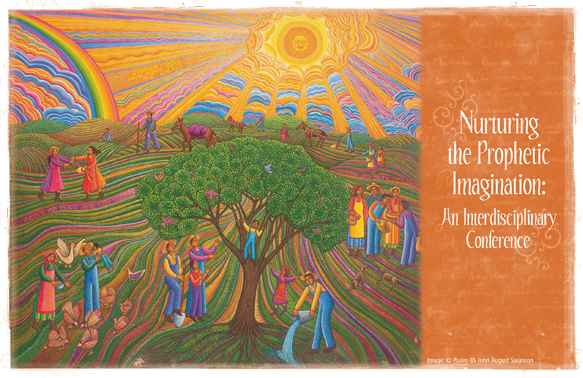
nurturing the prophetic imagination posterIn the conference sessions I attended, they didn't talk much overtly about Divine freedom – or its corollary of God's elusiveness – but the discussion still strongly implied both attributes of God. Like Walter Brueggemann's perspective on scripture, these were no talks about "god sightings" or "god experiences," yet like King Solomon and the Yahwist, each of us longs for a modicum of control over our own destiny and for a god of predictable, programmable behaviors. Scripture, the earlier Church fathers and mothers, the Reformers and a faithful contemporary Church cannot assume miracles, wonders, spectaculars, or petitions to heaven answered in compliance to man formulations or suggestions.

With most of our days on earth being sabbatarian, neither Good Friday afternoon nor Easter Sunday dawn, I'm still waiting and trusting.

prophetic imagination 4

Meeting the artist, "Art, Justice and the Imagination II: The Art of Prophets"

Although the Nurturing the Prophetic Imagination Conference happened during late Lent, I'm only now posting my 4th and 5th blogs, and we're more than halfway through Easter: next Sunday will be The Day of Pentecost.

power to the people john august swanson
John August Swanson's website explains,
"John Swanson studied with Corita Kent at Immaculate Heart College. His unique style is influenced by the imagery of Islamic and medieval miniatures, Russian iconography, the color of Latin American folk art, and the tradition of Mexican muralists."
As each person entered the room, they received gifts of three full-color, high-quality reproductions of John Swanson's best-known art. For the actual presentation, the artist narrated a slide show depicting his own artistic journey through what has become an extremely sophisticated artistic style and an involved process for producing limited edition serigraphs. What an open, gracious, humble guy! At the end, supposedly to reward us for staying through the hour plus, he gave everyone a poster-sized copy of Power to the People, one of his best-known, most detailed pieces that illustrates this blog post.

I was especially excited to meet John August because he specializes in illustrating theological subjects and because a few years ago someone told me some of my Isaiah interpretations reminded me of John Swanson's. I'm still a tad disappointed that I got to only part of the 2-2/2 day conference, but the richness and wealth of my experiences there – including the surprise of connecting with an artist I admire – as well as discovering the beautiful, dreamlike PLNU campus made it more than worthwhile.

Friday, May 14, 2010

family tree 5

Sophia hosts today's family trees friday 5.

1. I've no current serious interest in genealogy, mainly because I'm defensive about my origins and upbringing, yet I consider it a fascinating study that can help us learn a lot about ourselves, including our idiosyncrasies, habits and other behaviors. I love that liturgically we worship with everyone and with all creation, past, present and future and I love how the sacraments are acts of the treeentire Church in every place and time. As insecure, angry and otherwise not very positive as I can be when people start talking about their families and ask me about mine, I know I can rejoice in my multitudinous baptismal relationships.

2. About ancestral countries, nations and peoples and partly referencing my response to #1, as an adult I finally found out that my great-grandfather, my father's dad, was an immigrant Russian Pennsylvania coal miner. On my mother's side, my great-grandfather was Irish, though since he was nominally Prot I don't know if John/Sean Lang was Scots-Irish or ethnic Irish. He immigrated to Canada and rode on minor-league tracks for minor-league stables. I definitely have some Dutch, German, generic British Isles and other assorted sundry ancestors and yearn to be a little bit of everything since each ethnicity has at least stereotypical traits anyone would like to claim, most of those based in history. And the food, too, needless to say!

3. Great-great-great-grandmother Eliza Close is the farthest back ancestor whose name I know.

4. Regarding favorite saints or notorious sinners, my grandfather, who was raised Southern Presbyterian and would not attend church outside the South (no or not enough hell, fire and brimstone), said his uncle William P was a circuit rider, many of whom were methodist, some baptist and their ranks including Lutheran Henry Melchior Muhlenberg.

5. I want my descendants to remember that I'm tough, driven, creative, almost too persistent yet highly inpatient with people and circumstances at times.

Although I don't have a bonus a song, prayer, or poem, I've illustrated this with one of a series of drawings I made for a color theory class. And, I'll conclude saying that I love Sophia's "family—blood or chosen."

Friday, May 07, 2010

faith and politics friday 5

from across the pond in the wake of a well-publicized election with a hung outcome, Sally outlines 5 about faith and politics for today. Originally I blogged in purple that's not red, not blue yet a subversive combining of both.

to play this one even semi-adequately would take forever, so here are my quick answers for now.

1. "Jesus a political figure: discuss..."

My response to 2. helps answer this one, but Jesus was completely human and the Way of Jesus is comprehensive, so you cannot omit any facet of life from consideration of Jesus or from your own journey.

2. "Politics in the pulpit,"

Yes, to encourage everyone to participate in ongoing processes of local, state/provincial and national government because to be human is to be a citizen denizen, part of a polis, a people, so you cannot not be political. But never to advise voting or activity on behalf of a particular party, candidate, issue or cause. God does not belong to a particular party or style of governing; in fact God is not proprietary at all. However, I'd definitely encourage people to pray and perceive in order to discern the best ways justice, integrity and dignity for all creation can be achieved.

3. "What are your thoughts on the place of prayer in public life..."

No, not, though there's a longer, more detailed answer, needless to say!

4. "Is there a political figure, Christian or otherwise that you admire for their integrity?"

So very many in terms of both integrity and results! Ted Kennedy, the late senior senator from Massachusetts; Martin Luther King, Jr.; Mahatma Gandhi; Nelson Mandela—all of them very public about their faith, but doubtless I'll remember many others after I post this.

5. "What are your thoughts on tactical voting, e.g. would you vote for one individual/party just to keep another individual/ party form gaining power?"

It would depend on the urgency of the situation. One doesn't need to have achieved much chronology in order to discover very few, if any, politicians ever are able to fulfill many of their campaign promises and few of them are as skilled and able at negotiation and healthy compromise as public or politicians would desire.

Tuesday, April 20, 2010

where can red-winged blackbirds live?

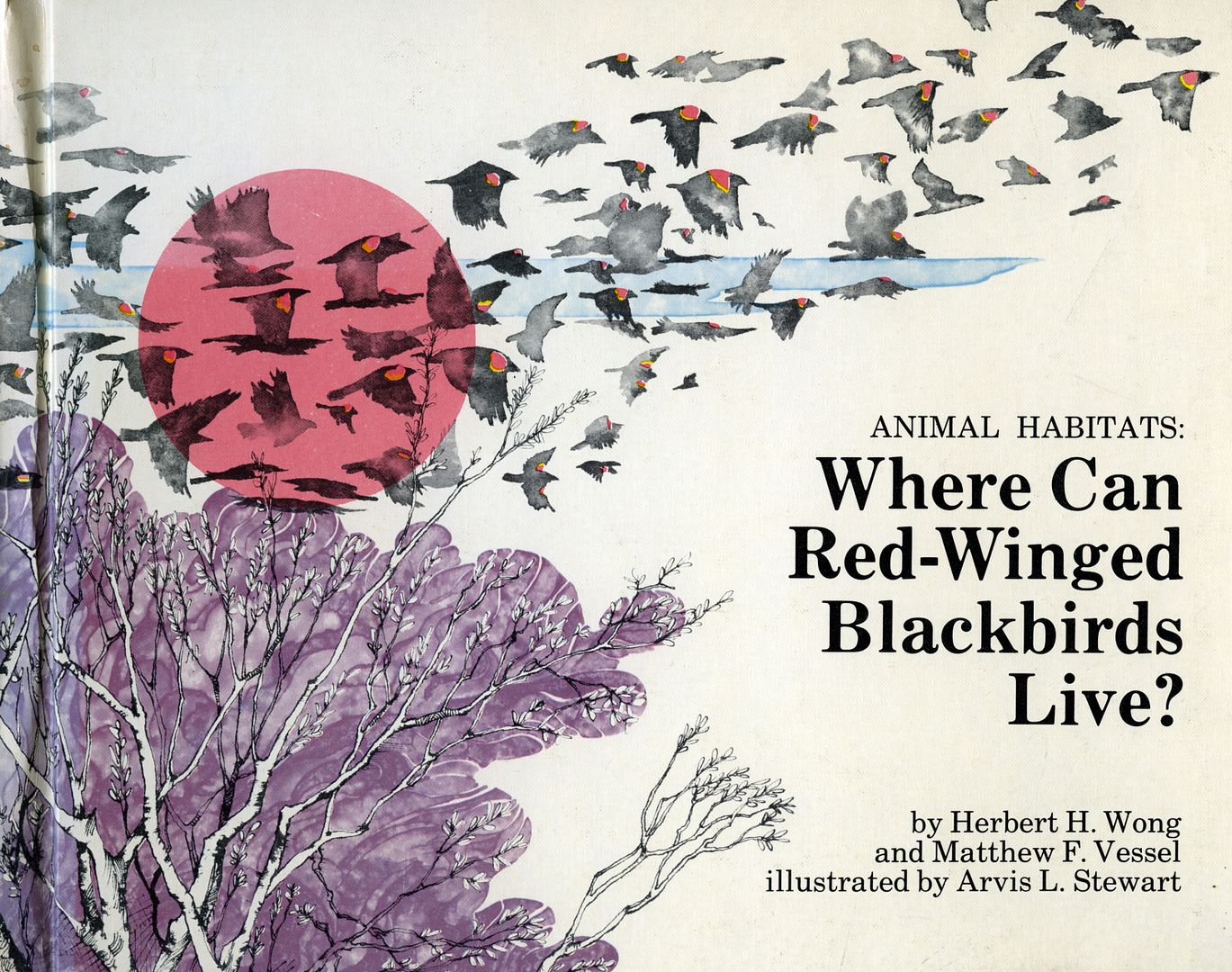
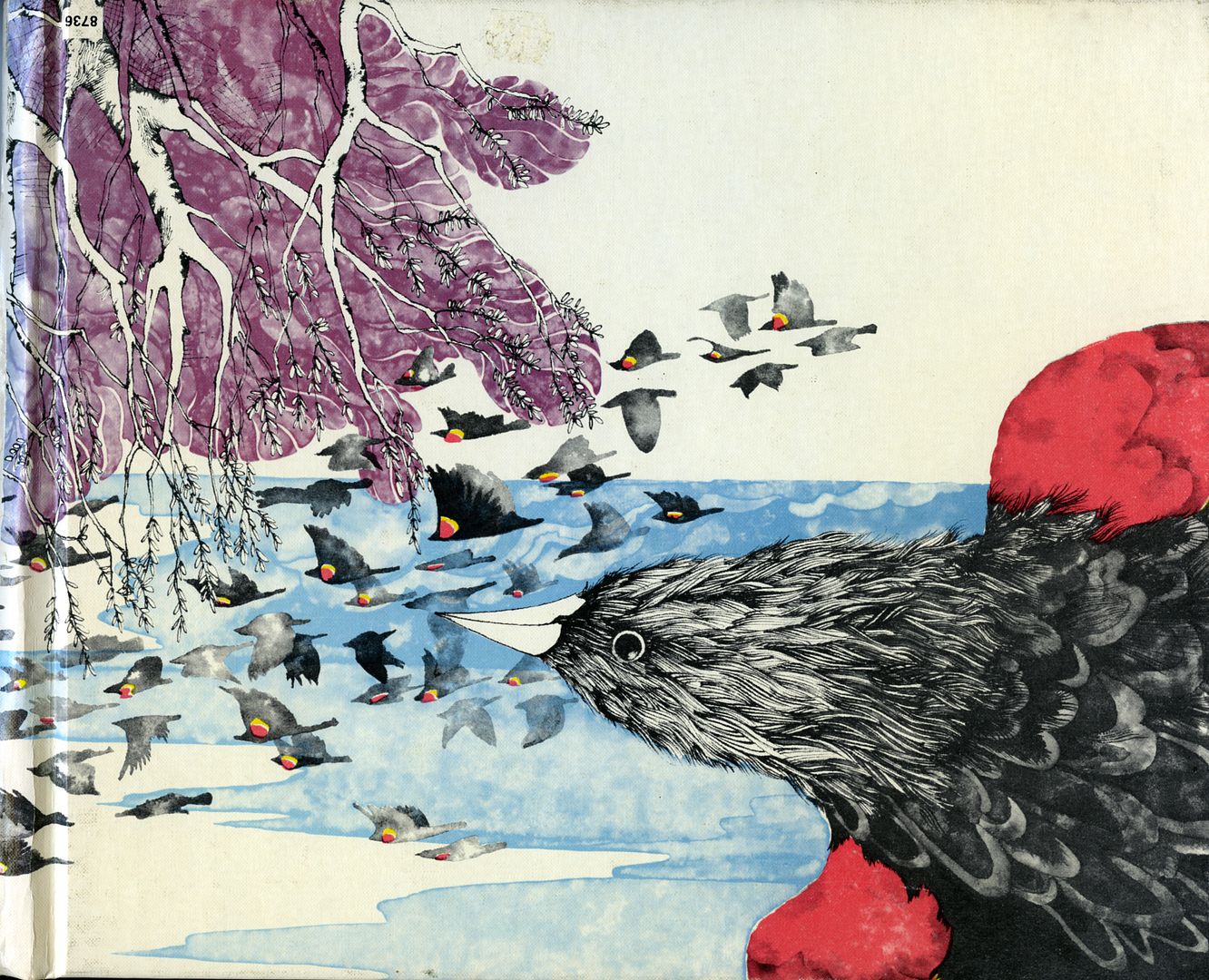
red winged blackbirds coverAnimal Habitats: Where Can Red-Winged Blackbirds Live? by authors: Herbert H. Wong and Matthew F. Vessel; illustrations by Arvis L. Stewart.

Long after the copyright date of 1970/1971 I bought this book on a whim at the nearby grocery store because the subject interested me and especially because of the enchanting illustrations! Given that this coming Thursday is Earth Day and since I've been writing some book blogs and following up some of them with Amazon reviews, I knew blogging about this book was in order. Disclaimer: blog images are in book order but don't necessarily correlate with blog paragraphs.

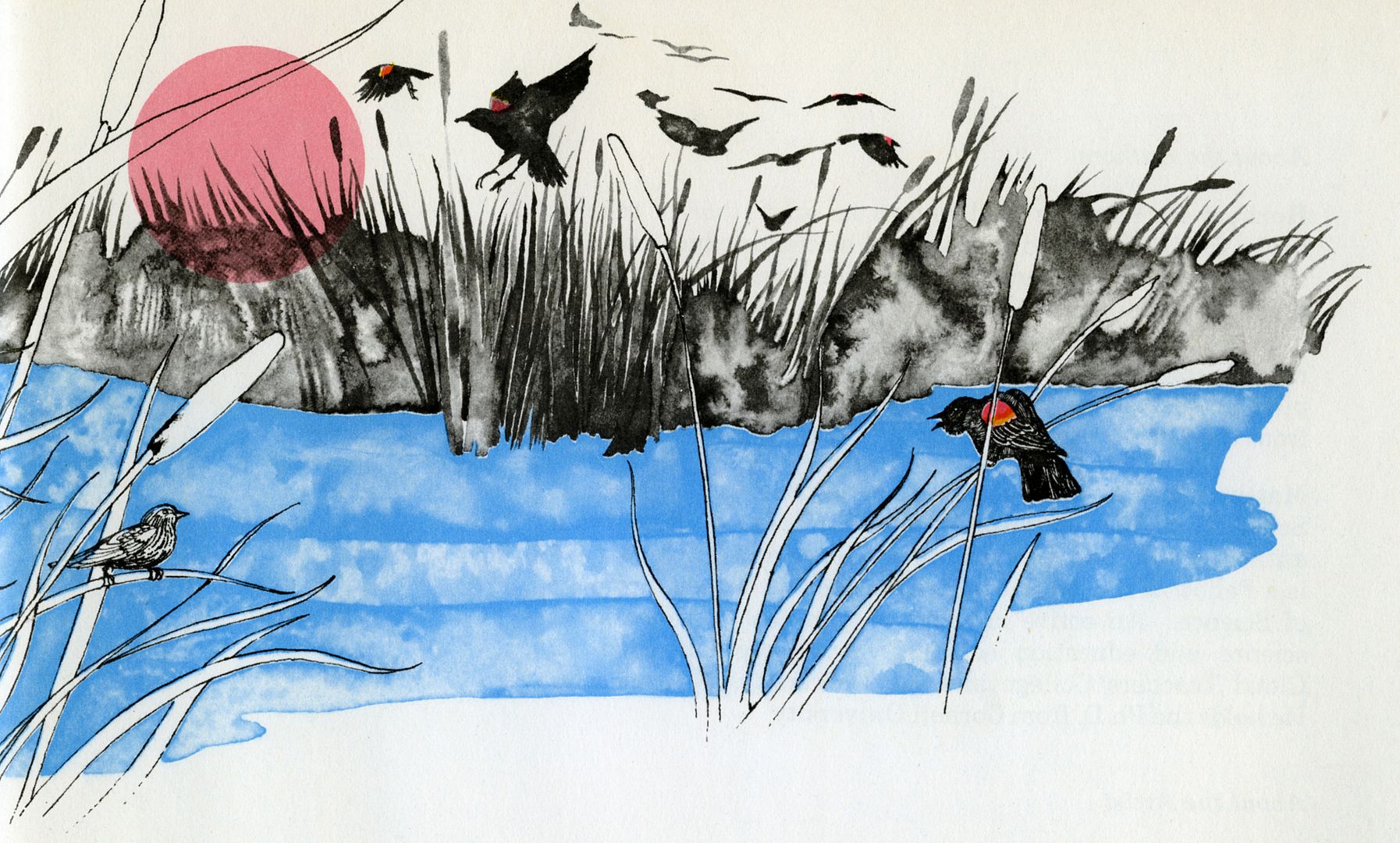
Where can blackbirds live? Where can non-human creation find a safe, nurturing, forever place? How many times have I written about that incessant, essential quest for home many of us undertake almost endlessly? blackbirds over pondHome as a location where we find a modicum of recognition, acknowledgment, safety and belonging; a place where we are with "our own / one's own kind" that's sometimes a particular culture or ethnicity or style, sometimes "own kind" is simple mutual understanding. Home has to be a place that easily supplies necessary social and emotional nutrients as well as opportunities for self-expression and service to earth, world, church and all creation. Like the blackbirds in this book, each of us journeys to find home. Some parts of the trek are physical ones, traveling over roads or through the air; some segments take us to varying habitats and various styles of community. Like the critters in this book, we assess each stop along the way for amenities it offers and those it lacks.

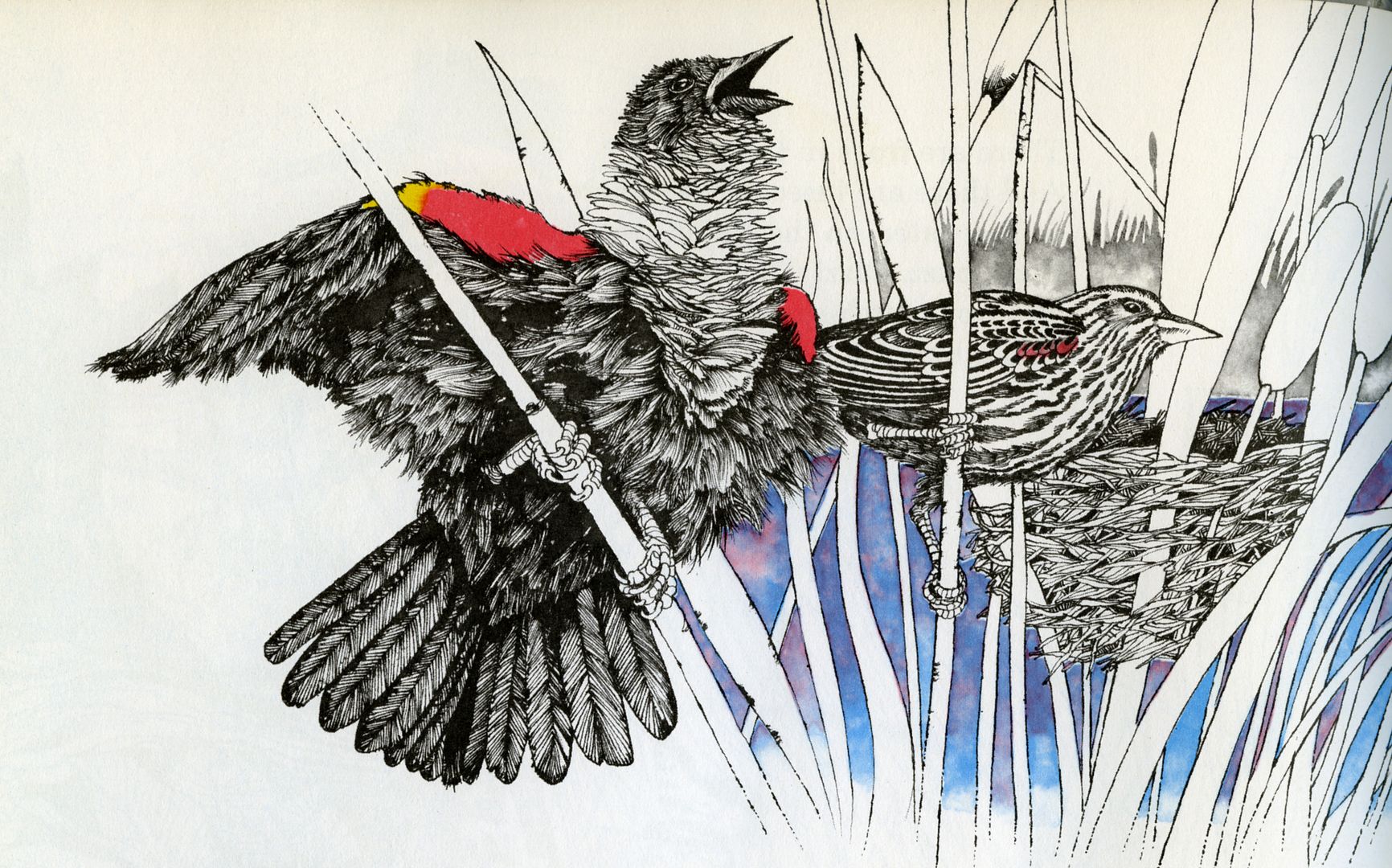
blackbird with nestDespite current interest in ecological theology emphasizing the redemption and integrity of all creation – not solely human creatures – a lot of teaching and preaching in the Church still focuses on humanity, which in some ways may not be all that "off," given that so much of the rest of creation is in need of restoration, revitalization and resurrection from death primarily because of human sin and failure to steward creation (which naturally results in failure to take proper care of human needs).

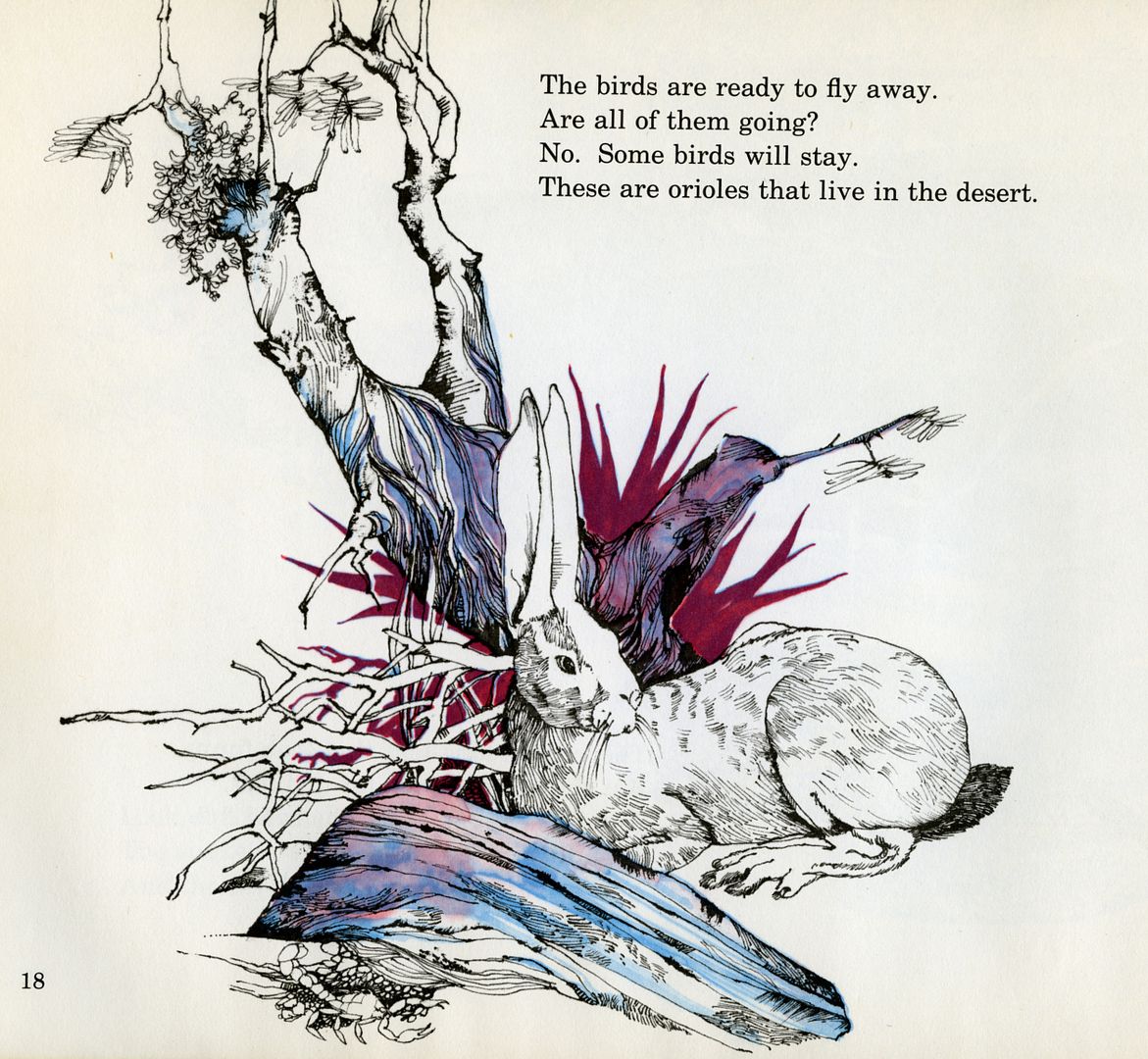
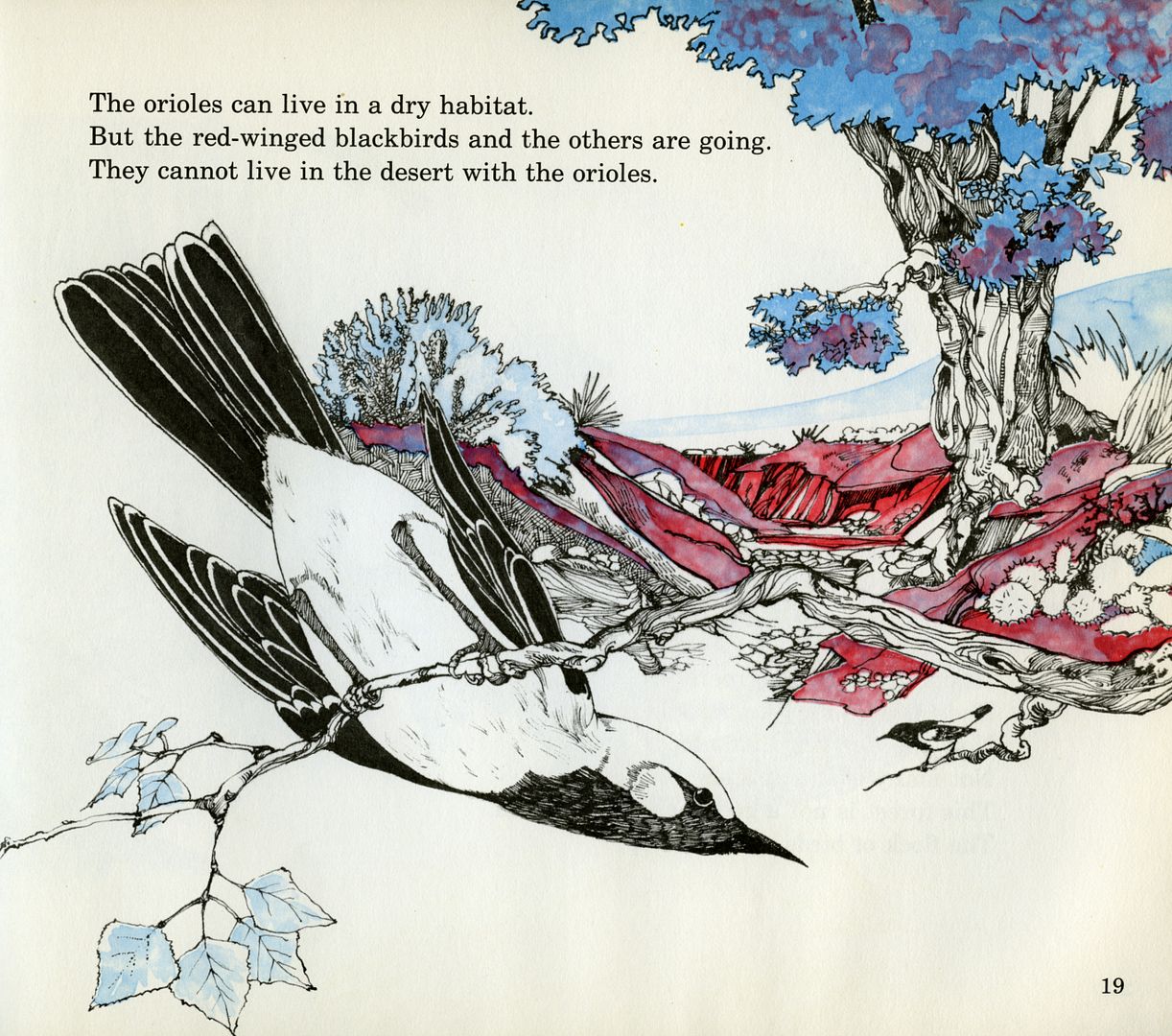
rabbitWhere? and live? are essential questions for all creation. As the narrative unfolds, red-winged blackbirds fly past and consider...the city, but they need food an urban environment can't provide. Besides, it is too structurally developed and too oriented toward humans. The desert is too dry for blackbirds, though it's not totally dry all the time. Orioles can live and thrive there—that particular habitat dryness is just right for them. They fly past a once-green forest, now charred in the wake of a fire. "At one time it was green. // There were many animals here then. // Now there is very little food."

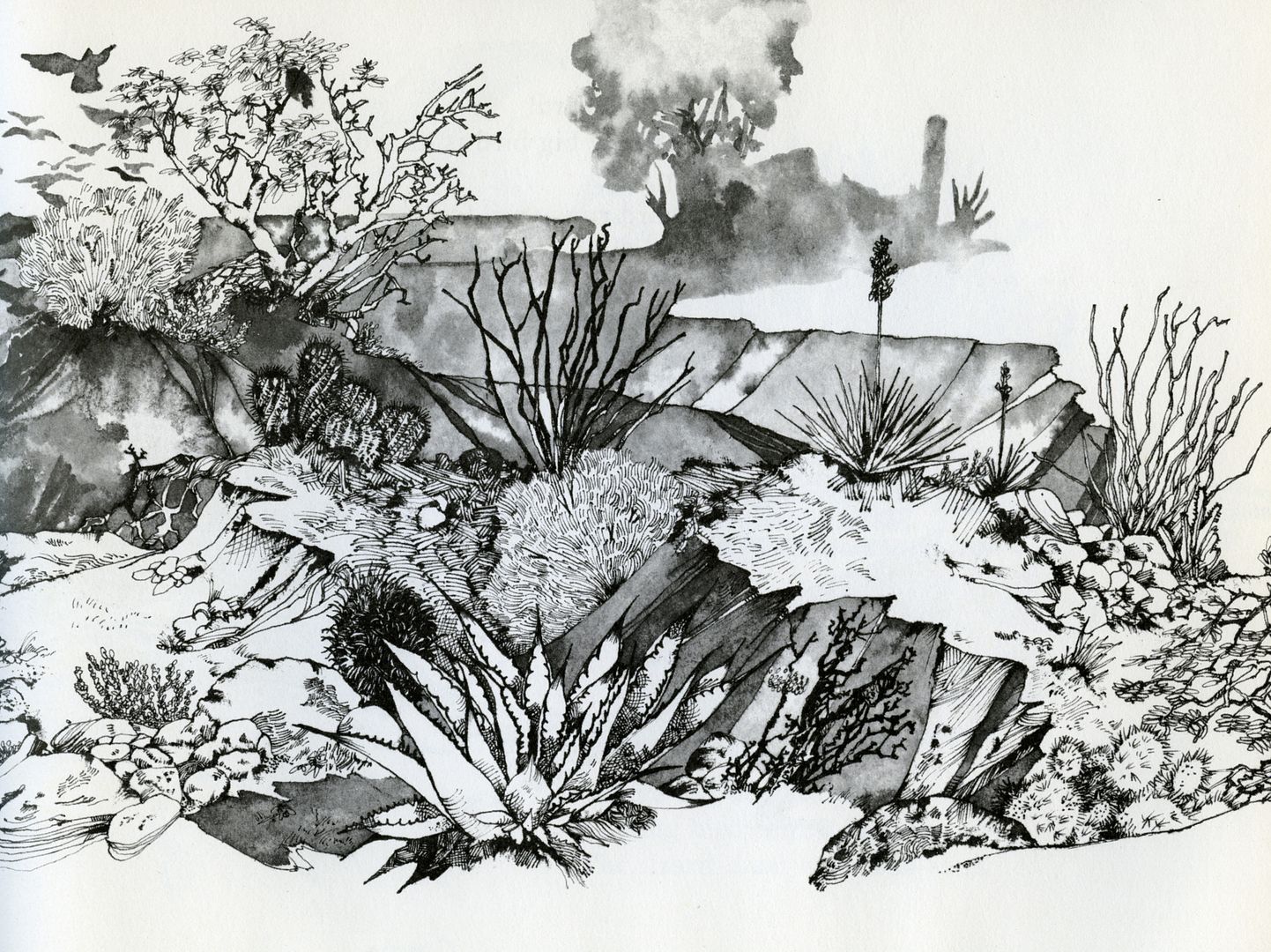
desertThen they come upon a green forest where some animals, birds and insects are at home; red-winged blackbirds and cowbirds stop there for a respite and continue on there way. Deers, woodpeckers, squirrels and insects are at home in that forest. "Some brown birds stay..." but red-winged blackbirds and cowbirds continue on their way.

They fly past "...what was once a meadow" and now is an airport. Another meadow, and "this habitat is not dry like the desert. // And it is not like the forest." It is home to hawks and rabbits; the cowbirds stay, but the red-winged blackbirds move on. Finally a pond, with water and cattails, frogs and insects, too, a place where some red-winged blackbirds already live. The blackbirds in this story "...had to fly a long way to find it. // But now they will make their homes here." The search for home seems endless, but occasionally it stops for just a while!

orioleIn Romans 8:19-23, the scriptural book theology types often refer to as the latest undisputed Pauline epistle, and is considered his systematic theology – or as systematic as that Apostle of Grace ever gets! – Saul/Paul of Tarsus insists all creation waits for redemption because true children of God, humans who authentically mirror and embody the Divine Image in which they've been created, care for the earth differently, in a manner that reflects their Divine Nature. In the witness of scripture all creation is mutually covenanted and covenanted with heaven; all creation carries within itself breath of the Divine and breathes the Spirit of Life.
19For the creation waits with eager longing for the revealing of the children of God; 20for the creation was subjected to futility, not of its own will but by the will of the one who subjected it, in hope 21that the creation itself will be set free from its bondage to decay and will obtain the freedom of the glory of the children of God. 22We know that the whole creation has been groaning in labor pains until now; 23and not only the creation, but we ourselves, who have the first fruits of the Spirit, groan inwardly while we wait for adoption, the redemption of our bodies.
red winged blackbirds coverThe garden of first creation becomes the garden of resurrection that grows into the new creation of the City of God, a habitat where all dwell in shalom. Revelation 22:1-5
1Then the angel showed me the river of the water of life, bright as crystal, flowing from the throne of God and of the Lamb 2through the middle of the street of the city. On either side of the river is the tree of life with its twelve kinds of fruit, producing its fruit each month; and the leaves of the tree are for the healing of the nations. 3Nothing accursed will be found there any more. But the throne of God and of the Lamb will be in it, and his servants will worship him; 4they will see his face, and his name will be on their foreheads. 5And there will be no more night; they need no light of lamp or sun, for the Lord God will be their light, and they will reign forever and ever.
Where can blackbirds live? Where can humans live? Where can all creation safely take up residence and flourish? Scripture tells us the God of heaven and earth chose and still chooses to make Shekinah, to pitch a tent, live and journey alongside creation. Christianity's central hermeneutic proclaims God's definitive self-revelation in Jesus of Nazareth, in a body formed from the "stuff" of the earth. Jesus the Christ, the one whose body his followers would become... where can God find a home?

Especially as the world celebrates forty years of formal Earth Day observations, this beautifully written and crafted book (though sadly out of print) would be an excellent starting point for teaching elementary or middle school students about specific needs of different species and ways human creatures can become aware and work together to heal and restore aspects of nature's habitats that have become unwell and explore and discover ways to help maintain healthy environments.

scriptures NRSV

my Amazon review: the search for home and a duplicate review!

Friday, April 09, 2010

prophetic imagination conference 3

power to the power john august poster
The next Thursday session I attended began with Artful Imagining from Andrew Hendrixson, who teaches studio art at the University of Florida, as the first presenter in an excellent, varied group of three. The last presenter in the trilogy was Teri Marcos from not far away from San Diego Azusa Pacific University. In an outstanding presentation, Jesus and the Disinherited she emphasized some aspects of Howard Thurman's life and teaching. Thurman was Preacher to Boston University a while before I attended, but his name and even his presence on campus still was legendary.

and then

In Farmer Wendell Berry's A Call to Agrarian Leadership slide presentation with commentary by Paul Kaak (also from Azusa Pacific) particularly emphasized "placed stewardship" of the church. Careful placed stewardship leads us to be concerned with where God has planted us as wherever we are, wherever the church is reminds us of what we've forgotten about the organic church and that we've forgotten and neglected it.

Paul Kaak paralleled farm with parish—after all, both concepts are geographical; he also told us Eugene Peterson (remember him? The pastor-scholar who did The Message version of the Bible) considers Wendell Berry the best pastoral theologian in the USA! Someone I knew in another life told me when he observed some people who serve in a pastoral capacity, he frequently remembered that pastoral means "rural." Moving along from C. Wright Mills Sociological Imagination to Walter Brueggemann's Prophetic Imagination... I especially love observations about agrarianism as a synoptic worldview, as comprehensive vision uniting land—agri-culture and human culture, or ways of being and acting. And oh, yes, too often the Church is all at once 1) not worldly enough; 2) too worldly and 3) needing to be whole, healthy and holy. John 17, Jesus, us and God's glory on earth, where God has "placed" us and placed, planted The Church, calling and enabling it to live as the Presence of Jesus Christ in the world.

Communications media and the individuals, communities and organizational entities of many types we observe and encounter almost daily have been returning to less toxic, simpler behaviors, as have almost all of us. In my own life it's been slow and gradual, yet I can reflect on two or three years back or more dramatically, ten or twelve years ago and even from this close a perspective I can notice small lifestyle changes that have added up to less physical and mental clutter around me and better stewardship of the places – household, neighborhood, city, county, state and world – in which I live.

Paul Kaak more than suggested contemporary industrial economies were founded on "the breaking of all ten commandments" and said the economy, the household law/stewardship of the church has behaved in the same way, also violating all of the commandments. "The organized Church makes peace with a destructive economy" though how can it make peace with the "empires of illusion" scripture forbids? Ephesians 4:18-24 Wendell Berry loves the metaphor of marriage as a model for husbandry of the land - we need to get out of passive consumption modalities and being embodying, incarnating, our own "better" stories.

Sunday, April 04, 2010

easter sunday 2010

easter 2010Psalm 118:1-2, 14-24

1O give thanks to the Lord, for he is good; his steadfast love endures forever!
2Let Israel say, "His steadfast love endures forever."
14The Lord is my strength and my might; he has become my salvation.
15There are glad songs of victory in the tents of the righteous: "The right hand of the Lord does valiantly;
easter 201016the right hand of the Lord is exalted; the right hand of the Lord does valiantly."
17I shall not die, but I shall live, and recount the deeds of the Lord.
18The Lord has punished me severely, but he did not give me over to death.
19Open to me the gates of righteousness, that I may enter through them and give thanks to the Lord.
20This is the gate of the Lord; the righteous shall enter through it.
21I thank you that you have answered me and have become my salvation.
22The stone that the builders rejected has become the chief cornerstone.
23This is the Lord's doing; it is marvelous in our eyes.
24This is the day that the Lord has made; let us rejoice and be glad in it.

Thursday, April 01, 2010

prophetic imagination conference 2

Feminist Pedagogy as Acts of Prophetic Imagination

prophetic imagination book cover
I was unable to attend the morning sessions of the Nurturing the Prophetic Imagination Conference, but I'll write a few notes and observations about the afternoon events I chose from amongst those that sadly but necessarily ran concurrently.

"Feminist Pedagogy" featured a panel of five women faculty from Point Loma. Predictably they presented, discussed and responded to audience comments and concerns about feminist perspectives regarding power, privilege, powerlessness and (often) pain. Although in most ways the content was familiar to me as much of the conversation almost replicated many classes and a few one-on-ones from undergrad years, hearing it again assured me my perception and interpretations regarding too much of what has been happening over the past couple decades have not been mistaken in the least.

They explained ways refusing to be consoled ultimately can be part of a new creation emerging from the ruins and chaos of an old, dead one. Refusing to be consoled means willingness to spend substantial time without the glib assurances, explanations and rationalizations people in the Church and maybe especially women have gotten to be adept at bringing into any situation whatsoever. Of course the world does not revolve around me, I'm not first cause of anything, God calls all of us to live as servants in the image of the Servant God but of course, also as stewards of our lives, but don't be aggressive, do not presume to impinge on anyone else's prerogative... etc., etc.. this hardly could have been more timely for me.

Someone said to me a while ago, "I am so tired of that 'cultural' excuse," yet at every moment we're backed up and face-to-face with others' culture and with our own. Despite my oftentimes insisting there is no unique human experience, I'm getting that I've been up against walls and roadblocks in my near-countless attempts to have my own experiences understood and validated. I'm getting close to nowhere, and as both writer and talker I'm a pretty good wordsmith, too. But without any doubt whatsoever having the experience, a lively walking in the shoes of another along the exact same road is leveling and brings insight no amount of conversation with the other or reading about them can bring. Observing the prophets and Jesus (the prophet) Walter Brueggemann insists acknowledging, feeling and living with and through sorrow and loss, becoming "acquainted with grief" is an essential precondition for newness - for resurrection?!

A few Thursdays ago, the weekly Ask The Matriarch advice column in the Rev Gal Blog Pals blogring and intentional online community I belong to in many ways was about that same subject. I found the initial blog post and especially the comments about peer and not-peer, collegial relationships and those between those who hold structural and assumed power in any setting or organization highly illuminating. More than anything in the world, more than adequate employment, more than regular opportunities to serve using my gifts, skills and education, I find myself seeking, yearning for and needing a place and a community of recognition, acknowledgment and embrace.

Back to the feminist pedagogy panel: someone suggested that when someone else asks what is wrong with saying "mankind" to subsume all humanity (except these days it sounds so anachronistic) to suggest, "try womankind in its place" and see how well that goes down. Even when a person hasn't been there, done that, they've all heard folks asking but why cannot that person who is - fill in the blanks with almost any fairly common yet not quite universal experience - keep on keepin' on like the rest of us have been doing?

Regarding my own situation, yes, there is no truly one-of-a-kind experience, yet I'm realizing people readily "get" events like divorce, serious illness of self or of another, firings, not getting the longed-for situation or position or opportunities, but no one hears what I'm saying about years without basic social context, without any real "remember whens" loneliness and isolation I've been unable to break into and have found impossible to transcend. And backtracking to structural power, race and/or gender-related authority, those who have it typically to not recognize the fact and frequently do not wield it well or yield graciously to the needs of those around them.

Someone said when you're no longer one of the pastors and you're looking to participate in ministry, another person gatekeeps your access to those opps. On a somewhat parallel note, I will not order from a catalog or website if all the people picture are all White (usually young, thin, gorgeous and affluent-looking). But for the most part the companies selling the stuff and producing the catalogs have not even thought about diversity.