from across the pond in the wake of a well-publicized election with a hung outcome, Sally outlines 5 about faith and politics for today. Originally I blogged in purple that's not red, not blue yet a subversive combining of both.
to play this one even semi-adequately would take forever, so here are my quick answers for now.
1. "Jesus a political figure: discuss..."
My response to 2. helps answer this one, but Jesus was completely human and the Way of Jesus is comprehensive, so you cannot omit any facet of life from consideration of Jesus or from your own journey.
2. "Politics in the pulpit,"
Yes, to encourage everyone to participate in ongoing processes of local, state/provincial and national government because to be human is to be a citizen denizen, part of a polis, a people, so you cannot not be political. But never to advise voting or activity on behalf of a particular party, candidate, issue or cause. God does not belong to a particular party or style of governing; in fact God is not proprietary at all. However, I'd definitely encourage people to pray and perceive in order to discern the best ways justice, integrity and dignity for all creation can be achieved.
3. "What are your thoughts on the place of prayer in public life..."
No, not, though there's a longer, more detailed answer, needless to say!
4. "Is there a political figure, Christian or otherwise that you admire for their integrity?"
So very many in terms of both integrity and results! Ted Kennedy, the late senior senator from Massachusetts; Martin Luther King, Jr.; Mahatma Gandhi; Nelson Mandela—all of them very public about their faith, but doubtless I'll remember many others after I post this.
5. "What are your thoughts on tactical voting, e.g. would you vote for one individual/party just to keep another individual/ party form gaining power?"
It would depend on the urgency of the situation. One doesn't need to have achieved much chronology in order to discover very few, if any, politicians ever are able to fulfill many of their campaign promises and few of them are as skilled and able at negotiation and healthy compromise as public or politicians would desire.

Friday, May 07, 2010

Tuesday, April 20, 2010
where can red-winged blackbirds live?
 Animal Habitats: Where Can Red-Winged Blackbirds Live? by authors: Herbert H. Wong and Matthew F. Vessel; illustrations by Arvis L. Stewart.
Long after the copyright date of 1970/1971 I bought this book on a whim at the nearby grocery store because the subject interested me and especially because of the enchanting illustrations! Given that this coming Thursday is Earth Day and since I've been writing some book blogs and following up some of them with Amazon reviews, I knew blogging about this book was in order. Disclaimer: blog images are in book order but don't necessarily correlate with blog paragraphs.
Where can blackbirds live? Where can non-human creation find a safe, nurturing, forever place? How many times have I written about that incessant, essential quest for home many of us undertake almost endlessly?
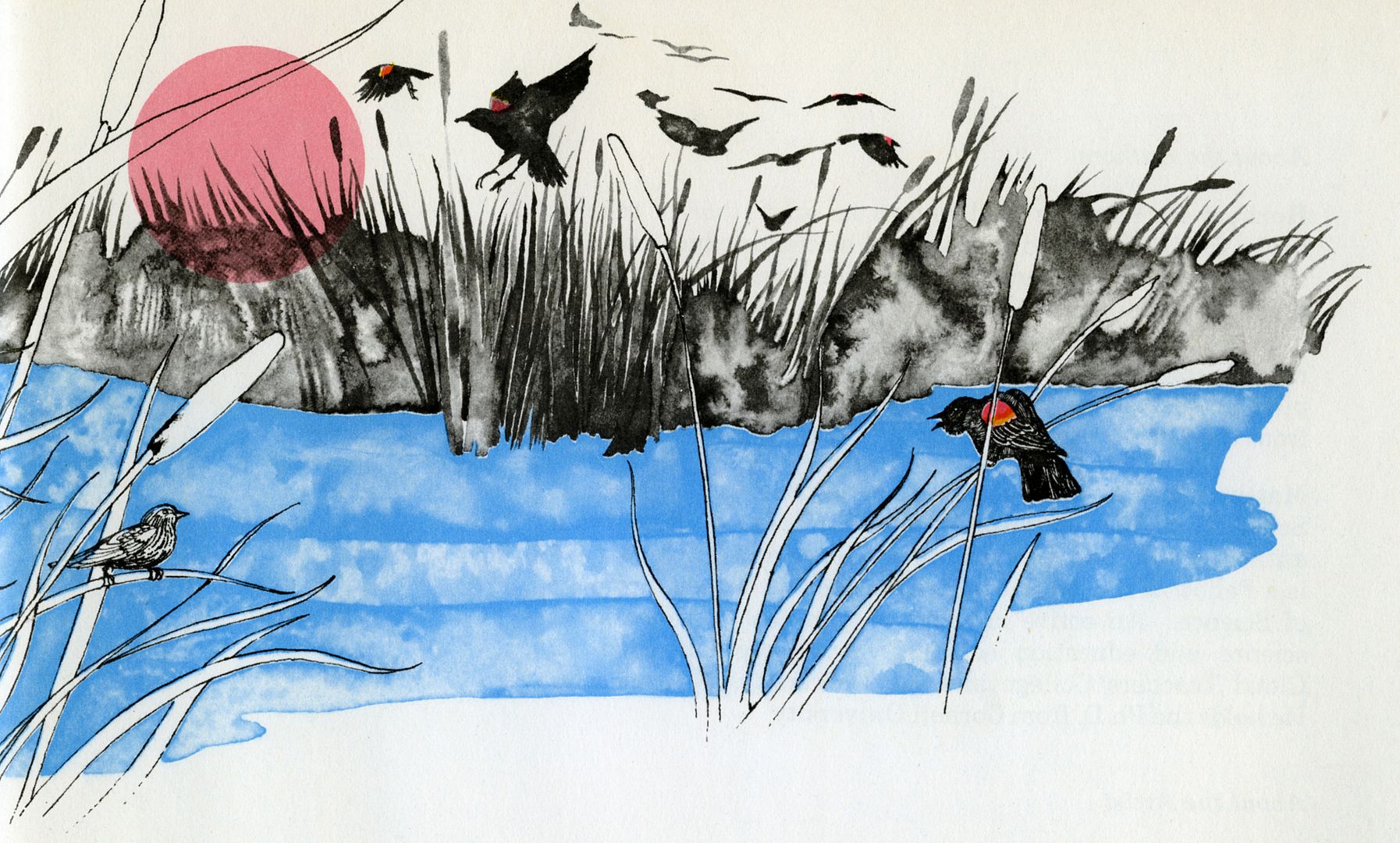 Home as a location where we find a modicum of recognition, acknowledgment, safety and belonging; a place where we are with "our own / one's own kind" that's sometimes a particular culture or ethnicity or style, sometimes "own kind" is simple mutual understanding. Home has to be a place that easily supplies necessary social and emotional nutrients as well as opportunities for self-expression and service to earth, world, church and all creation. Like the blackbirds in this book, each of us journeys to find home. Some parts of the trek are physical ones, traveling over roads or through the air; some segments take us to varying habitats and various styles of community. Like the critters in this book, we assess each stop along the way for amenities it offers and those it lacks.
 Despite current interest in ecological theology emphasizing the redemption and integrity of all creation – not solely human creatures – a lot of teaching and preaching in the Church still focuses on humanity, which in some ways may not be all that "off," given that so much of the rest of creation is in need of restoration, revitalization and resurrection from death primarily because of human sin and failure to steward creation (which naturally results in failure to take proper care of human needs).
 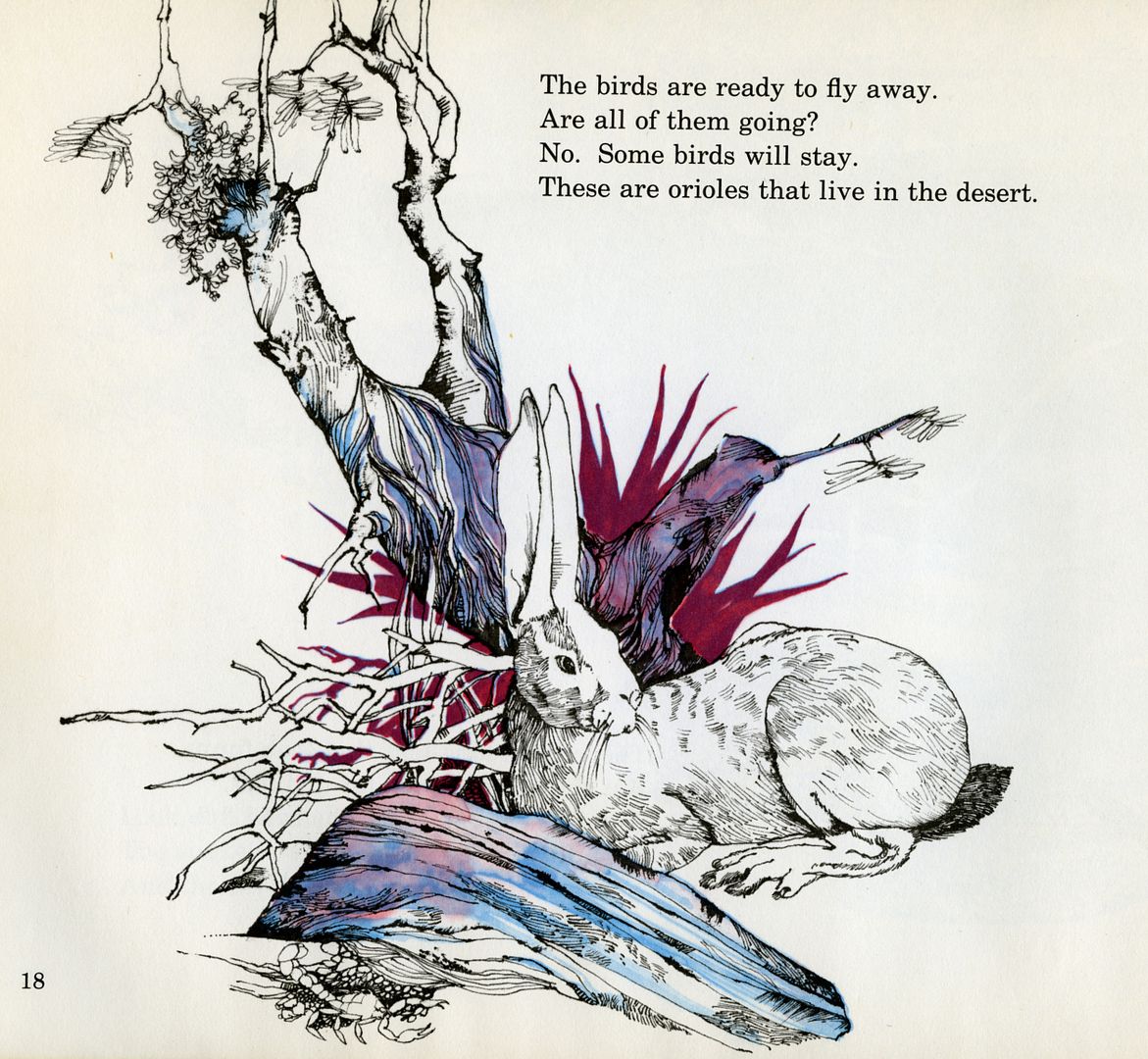 Where? and live? are essential questions for all creation. As the narrative unfolds, red-winged blackbirds fly past and consider...the city, but they need food an urban environment can't provide. Besides, it is too structurally developed and too oriented toward humans. The desert is too dry for blackbirds, though it's not totally dry all the time. Orioles can live and thrive there—that particular habitat dryness is just right for them. They fly past a once-green forest, now charred in the wake of a fire. "At one time it was green. // There were many animals here then. // Now there is very little food."
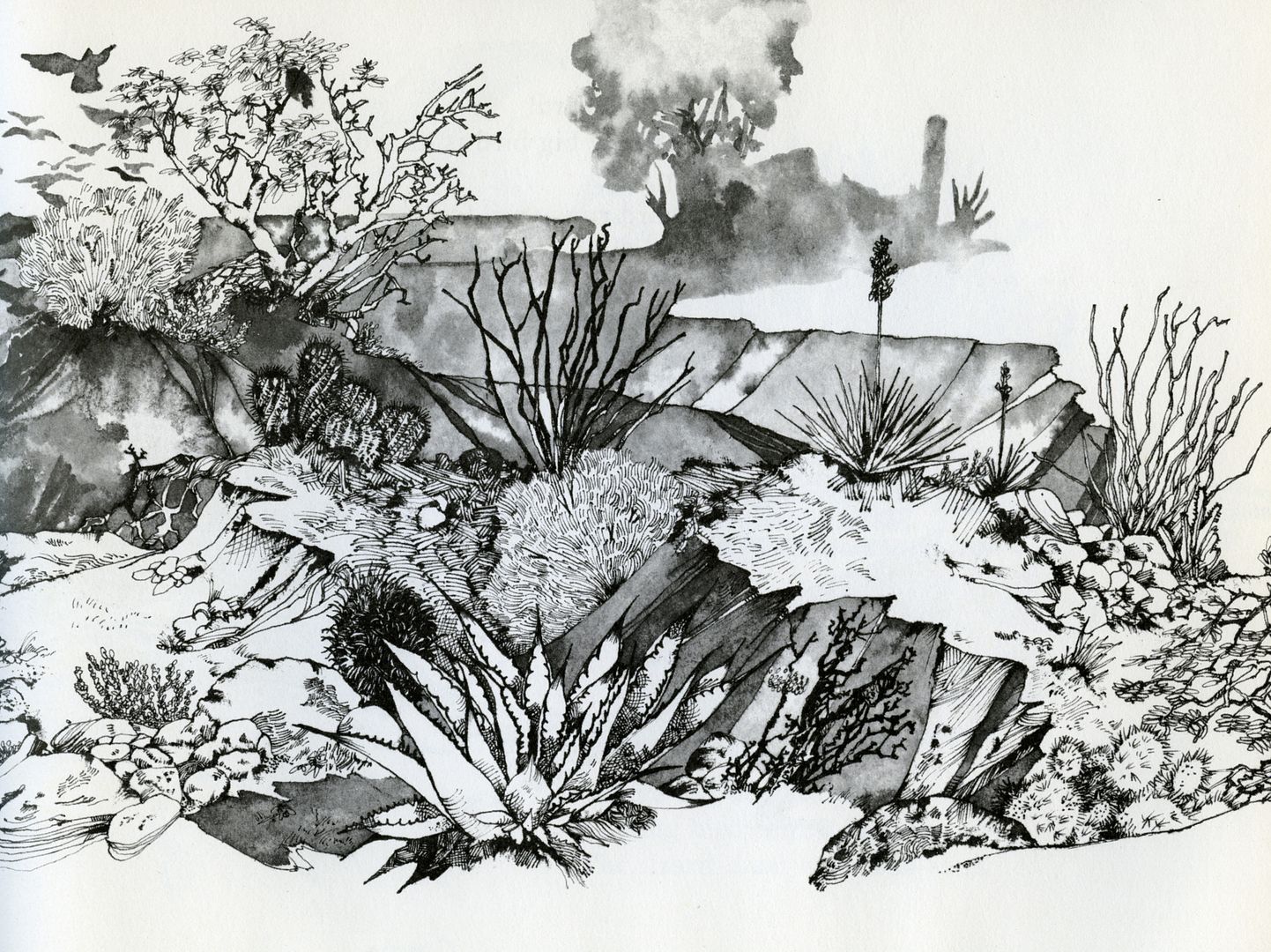 Then they come upon a green forest where some animals, birds and insects are at home; red-winged blackbirds and cowbirds stop there for a respite and continue on there way. Deers, woodpeckers, squirrels and insects are at home in that forest. "Some brown birds stay..." but red-winged blackbirds and cowbirds continue on their way.
They fly past "...what was once a meadow" and now is an airport. Another meadow, and "this habitat is not dry like the desert. // And it is not like the forest." It is home to hawks and rabbits; the cowbirds stay, but the red-winged blackbirds move on. Finally a pond, with water and cattails, frogs and insects, too, a place where some red-winged blackbirds already live. The blackbirds in this story "...had to fly a long way to find it. // But now they will make their homes here." The search for home seems endless, but occasionally it stops for just a while!
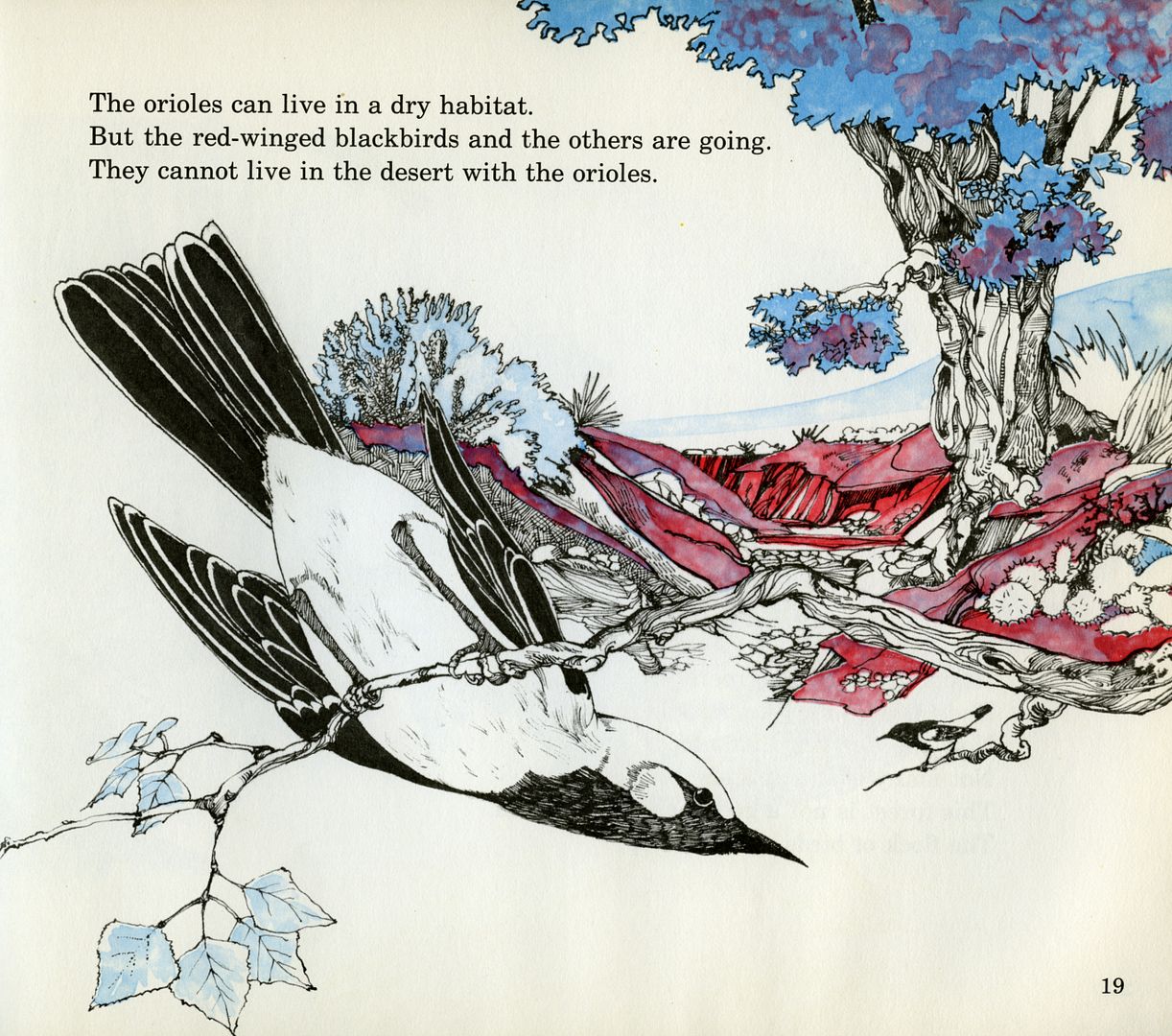 In Romans 8:19-23, the scriptural book theology types often refer to as the latest undisputed Pauline epistle, and is considered his systematic theology – or as systematic as that Apostle of Grace ever gets! – Saul/Paul of Tarsus insists all creation waits for redemption because true children of God, humans who authentically mirror and embody the Divine Image in which they've been created, care for the earth differently, in a manner that reflects their Divine Nature. In the witness of scripture all creation is mutually covenanted and covenanted with heaven; all creation carries within itself breath of the Divine and breathes the Spirit of Life.
 19For the creation waits with eager longing for the revealing of the children of God; 20for the creation was subjected to futility, not of its own will but by the will of the one who subjected it, in hope 21that the creation itself will be set free from its bondage to decay and will obtain the freedom of the glory of the children of God. 22We know that the whole creation has been groaning in labor pains until now; 23and not only the creation, but we ourselves, who have the first fruits of the Spirit, groan inwardly while we wait for adoption, the redemption of our bodies.
 The garden of first creation becomes the garden of resurrection that grows into the new creation of the City of God, a habitat where all dwell in shalom. Revelation 22:1-5
1Then the angel showed me the river of the water of life, bright as crystal, flowing from the throne of God and of the Lamb 2through the middle of the street of the city. On either side of the river is the tree of life with its twelve kinds of fruit, producing its fruit each month; and the leaves of the tree are for the healing of the nations. 3Nothing accursed will be found there any more. But the throne of God and of the Lamb will be in it, and his servants will worship him; 4they will see his face, and his name will be on their foreheads. 5And there will be no more night; they need no light of lamp or sun, for the Lord God will be their light, and they will reign forever and ever.Where can blackbirds live? Where can humans live? Where can all creation safely take up residence and flourish? Scripture tells us the God of heaven and earth chose and still chooses to make Shekinah, to pitch a tent, live and journey alongside creation. Christianity's central hermeneutic proclaims God's definitive self-revelation in Jesus of Nazareth, in a body formed from the "stuff" of the earth. Jesus the Christ, the one whose body his followers would become... where can God find a home?
Especially as the world celebrates forty years of formal Earth Day observations, this beautifully written and crafted book (though sadly out of print) would be an excellent starting point for teaching elementary or middle school students about specific needs of different species and ways human creatures can become aware and work together to heal and restore aspects of nature's habitats that have become unwell and explore and discover ways to help maintain healthy environments.
scriptures NRSV
my Amazon review: the search for home and a duplicate review!
Sunday, April 18, 2010




Friday, April 09, 2010
prophetic imagination conference 3

and then
In Farmer Wendell Berry's A Call to Agrarian Leadership slide presentation with commentary by Paul Kaak (also from Azusa Pacific) particularly emphasized "placed stewardship" of the church. Careful placed stewardship leads us to be concerned with where God has planted us as wherever we are, wherever the church is reminds us of what we've forgotten about the organic church and that we've forgotten and neglected it.
Paul Kaak paralleled farm with parish—after all, both concepts are geographical; he also told us Eugene Peterson (remember him? The pastor-scholar who did The Message version of the Bible) considers Wendell Berry the best pastoral theologian in the USA! Someone I knew in another life told me when he observed some people who serve in a pastoral capacity, he frequently remembered that pastoral means "rural." Moving along from C. Wright Mills Sociological Imagination to Walter Brueggemann's Prophetic Imagination... I especially love observations about agrarianism as a synoptic worldview, as comprehensive vision uniting land—agri-culture and human culture, or ways of being and acting. And oh, yes, too often the Church is all at once 1) not worldly enough; 2) too worldly and 3) needing to be whole, healthy and holy. John 17, Jesus, us and God's glory on earth, where God has "placed" us and placed, planted The Church, calling and enabling it to live as the Presence of Jesus Christ in the world.
Communications media and the individuals, communities and organizational entities of many types we observe and encounter almost daily have been returning to less toxic, simpler behaviors, as have almost all of us. In my own life it's been slow and gradual, yet I can reflect on two or three years back or more dramatically, ten or twelve years ago and even from this close a perspective I can notice small lifestyle changes that have added up to less physical and mental clutter around me and better stewardship of the places – household, neighborhood, city, county, state and world – in which I live.
Paul Kaak more than suggested contemporary industrial economies were founded on "the breaking of all ten commandments" and said the economy, the household law/stewardship of the church has behaved in the same way, also violating all of the commandments. "The organized Church makes peace with a destructive economy" though how can it make peace with the "empires of illusion" scripture forbids? Ephesians 4:18-24 Wendell Berry loves the metaphor of marriage as a model for husbandry of the land - we need to get out of passive consumption modalities and being embodying, incarnating, our own "better" stories.
Sunday, April 04, 2010
easter sunday 2010
 Psalm 118:1-2, 14-24
1O give thanks to the Lord, for he is good; his steadfast love endures forever!
2Let Israel say, "His steadfast love endures forever."
14The Lord is my strength and my might; he has become my salvation.
15There are glad songs of victory in the tents of the righteous: "The right hand of the Lord does valiantly;
 16the right hand of the Lord is exalted; the right hand of the Lord does valiantly."
17I shall not die, but I shall live, and recount the deeds of the Lord.
18The Lord has punished me severely, but he did not give me over to death.
19Open to me the gates of righteousness, that I may enter through them and give thanks to the Lord.
20This is the gate of the Lord; the righteous shall enter through it.
21I thank you that you have answered me and have become my salvation.
22The stone that the builders rejected has become the chief cornerstone.
23This is the Lord's doing; it is marvelous in our eyes.
24This is the day that the Lord has made; let us rejoice and be glad in it.
Thursday, April 01, 2010
prophetic imagination conference 2
Feminist Pedagogy as Acts of Prophetic Imagination
 I was unable to attend the morning sessions of the Nurturing the Prophetic Imagination Conference, but I'll write a few notes and observations about the afternoon events I chose from amongst those that sadly but necessarily ran concurrently.
"Feminist Pedagogy" featured a panel of five women faculty from Point Loma. Predictably they presented, discussed and responded to audience comments and concerns about feminist perspectives regarding power, privilege, powerlessness and (often) pain. Although in most ways the content was familiar to me as much of the conversation almost replicated many classes and a few one-on-ones from undergrad years, hearing it again assured me my perception and interpretations regarding too much of what has been happening over the past couple decades have not been mistaken in the least.
They explained ways refusing to be consoled ultimately can be part of a new creation emerging from the ruins and chaos of an old, dead one. Refusing to be consoled means willingness to spend substantial time without the glib assurances, explanations and rationalizations people in the Church and maybe especially women have gotten to be adept at bringing into any situation whatsoever. Of course the world does not revolve around me, I'm not first cause of anything, God calls all of us to live as servants in the image of the Servant God but of course, also as stewards of our lives, but don't be aggressive, do not presume to impinge on anyone else's prerogative... etc., etc.. this hardly could have been more timely for me.
Someone said to me a while ago, "I am so tired of that 'cultural' excuse," yet at every moment we're backed up and face-to-face with others' culture and with our own. Despite my oftentimes insisting there is no unique human experience, I'm getting that I've been up against walls and roadblocks in my near-countless attempts to have my own experiences understood and validated. I'm getting close to nowhere, and as both writer and talker I'm a pretty good wordsmith, too. But without any doubt whatsoever having the experience, a lively walking in the shoes of another along the exact same road is leveling and brings insight no amount of conversation with the other or reading about them can bring. Observing the prophets and Jesus (the prophet) Walter Brueggemann insists acknowledging, feeling and living with and through sorrow and loss, becoming "acquainted with grief" is an essential precondition for newness - for resurrection?!
A few Thursdays ago, the weekly Ask The Matriarch advice column in the Rev Gal Blog Pals blogring and intentional online community I belong to in many ways was about that same subject. I found the initial blog post and especially the comments about peer and not-peer, collegial relationships and those between those who hold structural and assumed power in any setting or organization highly illuminating. More than anything in the world, more than adequate employment, more than regular opportunities to serve using my gifts, skills and education, I find myself seeking, yearning for and needing a place and a community of recognition, acknowledgment and embrace.
Back to the feminist pedagogy panel: someone suggested that when someone else asks what is wrong with saying "mankind" to subsume all humanity (except these days it sounds so anachronistic) to suggest, "try womankind in its place" and see how well that goes down. Even when a person hasn't been there, done that, they've all heard folks asking but why cannot that person who is - fill in the blanks with almost any fairly common yet not quite universal experience - keep on keepin' on like the rest of us have been doing?
Regarding my own situation, yes, there is no truly one-of-a-kind experience, yet I'm realizing people readily "get" events like divorce, serious illness of self or of another, firings, not getting the longed-for situation or position or opportunities, but no one hears what I'm saying about years without basic social context, without any real "remember whens" loneliness and isolation I've been unable to break into and have found impossible to transcend. And backtracking to structural power, race and/or gender-related authority, those who have it typically to not recognize the fact and frequently do not wield it well or yield graciously to the needs of those around them.
Someone said when you're no longer one of the pastors and you're looking to participate in ministry, another person gatekeeps your access to those opps. On a somewhat parallel note, I will not order from a catalog or website if all the people picture are all White (usually young, thin, gorgeous and affluent-looking). But for the most part the companies selling the stuff and producing the catalogs have not even thought about diversity.

"Feminist Pedagogy" featured a panel of five women faculty from Point Loma. Predictably they presented, discussed and responded to audience comments and concerns about feminist perspectives regarding power, privilege, powerlessness and (often) pain. Although in most ways the content was familiar to me as much of the conversation almost replicated many classes and a few one-on-ones from undergrad years, hearing it again assured me my perception and interpretations regarding too much of what has been happening over the past couple decades have not been mistaken in the least.
They explained ways refusing to be consoled ultimately can be part of a new creation emerging from the ruins and chaos of an old, dead one. Refusing to be consoled means willingness to spend substantial time without the glib assurances, explanations and rationalizations people in the Church and maybe especially women have gotten to be adept at bringing into any situation whatsoever. Of course the world does not revolve around me, I'm not first cause of anything, God calls all of us to live as servants in the image of the Servant God but of course, also as stewards of our lives, but don't be aggressive, do not presume to impinge on anyone else's prerogative... etc., etc.. this hardly could have been more timely for me.
Someone said to me a while ago, "I am so tired of that 'cultural' excuse," yet at every moment we're backed up and face-to-face with others' culture and with our own. Despite my oftentimes insisting there is no unique human experience, I'm getting that I've been up against walls and roadblocks in my near-countless attempts to have my own experiences understood and validated. I'm getting close to nowhere, and as both writer and talker I'm a pretty good wordsmith, too. But without any doubt whatsoever having the experience, a lively walking in the shoes of another along the exact same road is leveling and brings insight no amount of conversation with the other or reading about them can bring. Observing the prophets and Jesus (the prophet) Walter Brueggemann insists acknowledging, feeling and living with and through sorrow and loss, becoming "acquainted with grief" is an essential precondition for newness - for resurrection?!
A few Thursdays ago, the weekly Ask The Matriarch advice column in the Rev Gal Blog Pals blogring and intentional online community I belong to in many ways was about that same subject. I found the initial blog post and especially the comments about peer and not-peer, collegial relationships and those between those who hold structural and assumed power in any setting or organization highly illuminating. More than anything in the world, more than adequate employment, more than regular opportunities to serve using my gifts, skills and education, I find myself seeking, yearning for and needing a place and a community of recognition, acknowledgment and embrace.
Back to the feminist pedagogy panel: someone suggested that when someone else asks what is wrong with saying "mankind" to subsume all humanity (except these days it sounds so anachronistic) to suggest, "try womankind in its place" and see how well that goes down. Even when a person hasn't been there, done that, they've all heard folks asking but why cannot that person who is - fill in the blanks with almost any fairly common yet not quite universal experience - keep on keepin' on like the rest of us have been doing?
Regarding my own situation, yes, there is no truly one-of-a-kind experience, yet I'm realizing people readily "get" events like divorce, serious illness of self or of another, firings, not getting the longed-for situation or position or opportunities, but no one hears what I'm saying about years without basic social context, without any real "remember whens" loneliness and isolation I've been unable to break into and have found impossible to transcend. And backtracking to structural power, race and/or gender-related authority, those who have it typically to not recognize the fact and frequently do not wield it well or yield graciously to the needs of those around them.
Someone said when you're no longer one of the pastors and you're looking to participate in ministry, another person gatekeeps your access to those opps. On a somewhat parallel note, I will not order from a catalog or website if all the people picture are all White (usually young, thin, gorgeous and affluent-looking). But for the most part the companies selling the stuff and producing the catalogs have not even thought about diversity.
Wednesday, March 31, 2010
prophetic imagination conference 1
the setting and the setting
 A few decades ago, Fortress Press published The Prophetic Imagination by Hebrew Bible scholar Walter Brueggemann. Whether The Prophetic Imagination or The Land was the very first ever writing of Brueggemann's I read I cannot recall, but throughout all these years both books have kept places of honor and prominence on my bookshelves, in my heart, in (and out of) my mind. Last week from Wednesday, 24 March through Saturday, 27 March Point Loma Nazarene University sponsored a conference focusing on a range of possible ways of Nurturing the Prophetic Imagination.
Psalm 85, with its assurance of justice, an essential for a shalom-filled world and its assurance of health in the land, framed the conference:
...and John August Swanson's vibrant depiction of Psalm 85 illustrated the focus of the Nurturing the Prophetic Imagination Conference . Closely in accord with Brueggemann's book and in alignment with much of the writing he has published since then, conference goals included: helping all of us in the church and as the church learn to critique dominant culture and society through a lens of God's call for just, righteous and holy living; acknowledging our share of responsibility for and complicity with the currently less-than pristine condition of the natural and the humanly built environments; an ultimately life-enabling "refusing to be consoled" by glib, easy observations and rationalizations as in a scripturally informed lifestyle grief becomes a precondition of joy; finally, daily living as a eucharistic people, as the presence of the crucified and risen Jesus Christ amidst all creation.
I'll be blogging a few more short ones about the Nurturing the Prophetic Imagination Conference, so please stay tuned to this blog spot.
 A few decades ago, Fortress Press published The Prophetic Imagination by Hebrew Bible scholar Walter Brueggemann. Whether The Prophetic Imagination or The Land was the very first ever writing of Brueggemann's I read I cannot recall, but throughout all these years both books have kept places of honor and prominence on my bookshelves, in my heart, in (and out of) my mind. Last week from Wednesday, 24 March through Saturday, 27 March Point Loma Nazarene University sponsored a conference focusing on a range of possible ways of Nurturing the Prophetic Imagination.
 Psalm 85, with its assurance of justice, an essential for a shalom-filled world and its assurance of health in the land, framed the conference:
You once favored, LORD, your land, restored the good fortune of Jacob.
You forgave the guilt of your people, pardoned all their sins. Selah
You withdrew all your wrath, turned back your burning anger.
Restore us once more, God our savior; abandon your wrath against us.
Will you be angry with us forever, drag out your anger for all generations?
Please give us life again, that your people may rejoice in you.
Show us, LORD, your love; grant us your salvation.
I will listen for the word of God; surely the LORD will proclaim peace To his people, to the faithful, to those who trust in him.
Near indeed is salvation for the loyal; prosperity will fill our land.
Love and truth will meet; justice and peace will kiss.
Truth will spring from the earth; justice will look down from heaven.
The LORD will surely grant abundance; our land will yield its increase.
Prosperity will march before the Lord, and good fortune will follow behind.
...and John August Swanson's vibrant depiction of Psalm 85 illustrated the focus of the Nurturing the Prophetic Imagination Conference
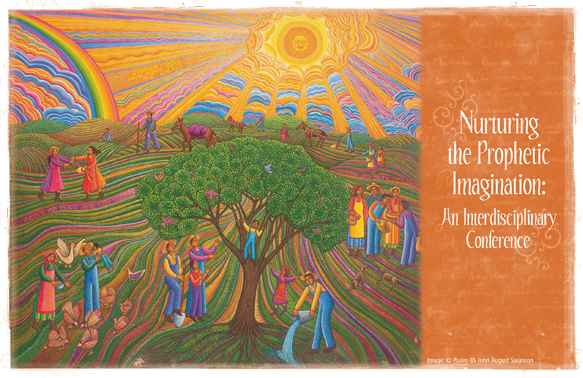 . Closely in accord with Brueggemann's book and in alignment with much of the writing he has published since then, conference goals included: helping all of us in the church and as the church learn to critique dominant culture and society through a lens of God's call for just, righteous and holy living; acknowledging our share of responsibility for and complicity with the currently less-than pristine condition of the natural and the humanly built environments; an ultimately life-enabling "refusing to be consoled" by glib, easy observations and rationalizations as in a scripturally informed lifestyle grief becomes a precondition of joy; finally, daily living as a eucharistic people, as the presence of the crucified and risen Jesus Christ amidst all creation.
 I'll be blogging a few more short ones about the Nurturing the Prophetic Imagination Conference, so please stay tuned to this blog spot.
Thursday, March 18, 2010
The Threat of Life
...sermons on pain, power and weakness, by Walter Brueggemann
...pure proclamation and holy demands...
 It seems to me that re-reading this book after a few years was extremely providential. As usual, Walter Brueggemann brings many ideas that could become teaching and preaching resources, many ideas for anyone to ponder, possibly even more so during this season of Lent. As I've done in my prior book posts, I'll reference some ideas along with their pages.
On pages 59-60, the author describes preparations for the two hundred who typically attended a long-time annual Church Strawberry Festival Social in days of yore along with the two dozen present-day attendees. Like in those days of [the exilic] Isaiah 43:18-20, the Church Strawberry Folks were so completely enamored of the past they neglected and "have completely misunderstood the present tense." What are my own excessive preparations and concomitant misunderstandings these days? I know I'd enjoy—or, I think I might enjoy a Strawberry Festival on Cape Cod, but that doesn't relate to where I live right now. Or does it? I'm trying to capture at least a dozen snapshots of my past, trying to ask myself how I got here from there. For sure the short answer is that unexpectedly I found myself journeying alone and without real community, and for far too long a loneliness. Part of an accurate reply also references the too many excuses I've made for other people and even a few too many for myself. In addition, it's been not so much planning for 50 when only 5 would attend but a related habit of waiting too long in a present that likely would not become fruitful. Those instant pics need to include and can include bountiful and healthy pasts I can duplicate in some form where I currently live.
On page 113 WB talks about "the long wait of Saturday" and observes that most of life is Sabbatarian, but how can Saturday be so persistently lonely and void of community? And are we not supposed to wait together for Resurrection Sunday's Easter dawn?! Throughout The Threat of Life WB reminds us we are baptized, and that baptismal pronoun always is we, us, our, ours and never ever an isolated, atomized autonomous "I, me, my, mine."
Evoking days of cultural anthro classes and later-on conversations in divinity school, when WB insists "You get a whole world with each food, because each food is a social reality in a social context" / "They are big, far-ranging public choices concerning foreign policy and budget and land reform and dreams..." (page 120) I respond with, "indeed, in so many ways." You are what you eat, meaning we actually become in some sense those rapacious grabbers of land, polluters of rivers and exploiters of the innocent. But maybe even more tangible and touchable, during the current economic recession and long before then, although all during my adult life I've eaten low on the food chain though not vegetarian (a little meat, chicken or fish once or twice a week), how clearly economic circumstances and anxieties about future income constrain and restrain the edibles we purchase and prepare and literally prevent us from much eating out in real sit-down restaurants with actual flatware and live wait-staff. You could say circumstances even re-train our palettes and our habits!
I love how in chapter 12, preaching on Psalm 23 for Lent 4, "Trusting in the Water - Food - Oil Supply", WB observes "The journey, with the power and purpose of God, changes the circumstances in which we live. Wilderness becomes home, isolation becomes companionship, scarcity becomes generosity. That is how the life of faith is. It is, to be sure, very different from the life where Yahweh is not at its core." (pages 94-95)
I've read and paraphrased this observation from page 153 related to Psalm 98:1-5 a ton of times:
Jerusalem had "...long since forgotten the counter-tradition of Moses..." And Yahweh's word from Mount Sinai included a heavy "If"... if you keep my commandments, if you keep covenant, if you have no other gods beside me... As Martin Luther observed, all sin violates the first commandment so that we actually need only a single commandment, the first. From Jeremiah 5:
WB interprets this as meaning truly fearing Yahweh in the popular sense of terrified, trembling, shaking fearfulness rather than calmer, quieter, awe, reverence and respect. In his Small Catechism Martin Luther begins his explanation to each commandment,, "We should fear and love God..."
As we approach the fifth Sunday in Lent, consider ways typical Lenten disciplines and practice may help achieve the possibility of new life as we abstain from all our idolatries, indulgences and distractions in favor of trusting and encountering the God who tames chaos, orders creation, enacts resurrection, demands our allegiance, and promises life if...
my amazon review: pure proclamation and holy demands
...pure proclamation and holy demands...
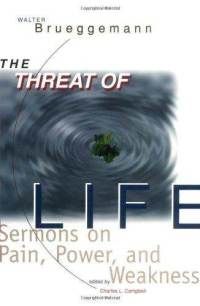 It seems to me that re-reading this book after a few years was extremely providential. As usual, Walter Brueggemann brings many ideas that could become teaching and preaching resources, many ideas for anyone to ponder, possibly even more so during this season of Lent. As I've done in my prior book posts, I'll reference some ideas along with their pages.
On pages 59-60, the author describes preparations for the two hundred who typically attended a long-time annual Church Strawberry Festival Social in days of yore along with the two dozen present-day attendees. Like in those days of [the exilic] Isaiah 43:18-20, the Church Strawberry Folks were so completely enamored of the past they neglected and "have completely misunderstood the present tense." What are my own excessive preparations and concomitant misunderstandings these days? I know I'd enjoy—or, I think I might enjoy a Strawberry Festival on Cape Cod, but that doesn't relate to where I live right now. Or does it? I'm trying to capture at least a dozen snapshots of my past, trying to ask myself how I got here from there. For sure the short answer is that unexpectedly I found myself journeying alone and without real community, and for far too long a loneliness. Part of an accurate reply also references the too many excuses I've made for other people and even a few too many for myself. In addition, it's been not so much planning for 50 when only 5 would attend but a related habit of waiting too long in a present that likely would not become fruitful. Those instant pics need to include and can include bountiful and healthy pasts I can duplicate in some form where I currently live.
On page 113 WB talks about "the long wait of Saturday" and observes that most of life is Sabbatarian, but how can Saturday be so persistently lonely and void of community? And are we not supposed to wait together for Resurrection Sunday's Easter dawn?! Throughout The Threat of Life WB reminds us we are baptized, and that baptismal pronoun always is we, us, our, ours and never ever an isolated, atomized autonomous "I, me, my, mine."
Evoking days of cultural anthro classes and later-on conversations in divinity school, when WB insists "You get a whole world with each food, because each food is a social reality in a social context" / "They are big, far-ranging public choices concerning foreign policy and budget and land reform and dreams..." (page 120) I respond with, "indeed, in so many ways." You are what you eat, meaning we actually become in some sense those rapacious grabbers of land, polluters of rivers and exploiters of the innocent. But maybe even more tangible and touchable, during the current economic recession and long before then, although all during my adult life I've eaten low on the food chain though not vegetarian (a little meat, chicken or fish once or twice a week), how clearly economic circumstances and anxieties about future income constrain and restrain the edibles we purchase and prepare and literally prevent us from much eating out in real sit-down restaurants with actual flatware and live wait-staff. You could say circumstances even re-train our palettes and our habits!
I love how in chapter 12, preaching on Psalm 23 for Lent 4, "Trusting in the Water - Food - Oil Supply", WB observes "The journey, with the power and purpose of God, changes the circumstances in which we live. Wilderness becomes home, isolation becomes companionship, scarcity becomes generosity. That is how the life of faith is. It is, to be sure, very different from the life where Yahweh is not at its core." (pages 94-95)
I've read and paraphrased this observation from page 153 related to Psalm 98:1-5 a ton of times:
No wonder that, in that ancient Psalm about God's odd power, the trees and fields and sea sing for joy, because now life becomes possible wherever the power of this God is at work. This power is unleashed in the world. We are left dazzled, because we did not think it would happen. We are threatened, because we do not want our tea party upset. We are invited, and in any case, we cannot ignore the new power.Preaching on Jeremiah 5:20-29 "God's Relentless 'If'", that became chapter 10 of the book,"Yahweh gets back into the game only because of the poet [Jeremiah] who now 're-speaks' the God of Sinai." (page 76)
Jerusalem had "...long since forgotten the counter-tradition of Moses..." And Yahweh's word from Mount Sinai included a heavy "If"... if you keep my commandments, if you keep covenant, if you have no other gods beside me... As Martin Luther observed, all sin violates the first commandment so that we actually need only a single commandment, the first. From Jeremiah 5:
20Declare this in the house of Jacob, proclaim it in Judah: 21Hear this, O foolish and senseless people, who have eyes, but do not see, who have ears, but do not hear. 22Do you not fear me? says the Lord; Do you not tremble before me? I placed the sand as a boundary for the sea, a perpetual barrier that it cannot pass; though the waves toss, they cannot prevail, though they roar, they cannot pass over it. 23But this people has a stubborn and rebellious heart; they have turned aside and gone away.in context: Jeremiah 5
WB interprets this as meaning truly fearing Yahweh in the popular sense of terrified, trembling, shaking fearfulness rather than calmer, quieter, awe, reverence and respect. In his Small Catechism Martin Luther begins his explanation to each commandment,, "We should fear and love God..."
As we approach the fifth Sunday in Lent, consider ways typical Lenten disciplines and practice may help achieve the possibility of new life as we abstain from all our idolatries, indulgences and distractions in favor of trusting and encountering the God who tames chaos, orders creation, enacts resurrection, demands our allegiance, and promises life if...
my amazon review: pure proclamation and holy demands
Tuesday, March 16, 2010
Edison School
Along with my report on Wasatch Elementary School, this article published in the Interfaith Peacemaking Resource Center of Utah’s newsletter.

Edison Elementary School
“I believe in kids, I trust kids…if you expect great things, you get great things.” –Dale Harding, Edison Elementary Principal
Edison School in Glendale first impressed me as a Place to Be with—it had a sense of great calm, and it was clean and orderly, without any of the confusion one often expects in an urban setting. Kids’ art covered the walls.
With 517 students in grades K-6, a preschool of 20, and a teaching staff of about 31 – all in a building built for 380 students – Edison is bursting its boundaries, both physically and in the many ways it exceeds the limitations and expectations much of the larger society tends to place upon low income, high mobility persons. Class size ranges from 24 in the lower grades to an outrageous 38 in the upper grades; nineteen classrooms of all kinds as well as two trailers house the classes. A gym, an auditorium and a gigantic playground accommodate sports, arts, cultural, social, and other enrichment activities. 3,000 donated books as well as other resources fill the new, light and airy library.
Volunteerism from the greater Salt Lake community runs extremely high: last year it totaled 14,000 hours! Neighbors of all kinds, senior citizens from all around the greater metro area, businesses (including the Bureau of Reclamation and The Salt Lake Tribune, which has an intense, ongoing involvement with the school), and University of Utah student nurses are only some of the volunteer categories.
 Edison is a mini-world where fifteen languages are spoken, with 72% of the students being other-than-white. They include Pacific Islanders, African-Americans, Hispanics of many kinds, various ethnic Asians. To be a minority is to be in the majority! Dr. Harding spoke of the poverty of moral values and the absence of hope that pervaded the school when he first arrived there. Most of the families – 40% with two parents in the home – struggle to survive in every dimension of their lives. But a sense of hope and optimism is beginning to take hold at Edison. Harding and the rest of the staff have been working energetically to make certain these kids will believe in themselves and in each other, that they will be open to a free and meaningful future.
“We have three rules: ‘Respect yourself; Respect other people; Respect property,’” explained Dr. Harding.
Dale Harding is in his fourth year [1995] as principal at Edison. He has had a long, wide-ranging and clearly impassioned career in education. Not only has he been teacher or administrator in Salt Lake City, coming to Edison after a term as principal at Uintah Elementary—he also has worked in Chile, Bolivia, Saudi Arabia and Wyoming. For six years he directed the experimental school at Utah State University. Surprisingly, Harding is the only Edison staff member fluent in Spanish. Four years ago there was no PTA, no community council at Edison; now both organizations are active. Very significantly, Harding has visited every home in the area. And observing the success he and the kids are having, he says, “‘I can’ is more important than IQ.”
In spite of the apparent heavy use of alcohol and other drugs in the families many of these kids hail from, very few Edison students are drug users themselves. “Just Say No” and D.A.R.E. Clubs help them resist the pressure to experiment. During 1993-94 there were thirteen gang members – now [1995] there’s only one.
Harding explained although many had learned to use “I’m a minority” as a copout, most no longer use it as an excuse, but take more responsibility for themselves and responsibility for others. There’s also a group of kids at Edison who live in stable settings where they experience a relatively normal, supportive environment without having to contend with overwhelming social pathology; many of those will be at the school from Kindergarten through 6th grade. Dr. Harding is optimistic that about 80% of Edison’s current population will graduate from high school.
The fine arts and the cultural arts are major aspects of life at Edison. I even heard the violin program of 5th and 6th graders in action! Ririe Woodbury Dance Company works with all of the students; the Salt Lake Tribune offers writers’ workshops; celebrations such as Black History Month and Cinco de Mayo help kids find meaning and excitement in their heritage. The arts and cultural assembly was one of the very first things Harding told me about! The assembly is a recurrent event that features the diversity of expression that has helped make Edison a miniature extension of the world beyond its borders.
 For fun, there’s reading books from the library, computer games in the 30-computer lab (when the academic stuff has been finished), a donated arcade that serves as a reward system, and of course the playground and sports, many of the sports facilitated by an after-school physical education teacher. Open until 9 pm three days of the week, until 6 pm on the other days, the Edison school building also houses and hosts various adult classes such as parenting, GED preparation and ESL.
As the very low absentee rate absolutely bears out, during the school day the students at Edison Elementary live a good life. Prior to arriving at Edison, many of these kids had been caught in multi-generational layers of ignorance and violence; they’d become what they had seen. With love, affirmation and support, the cycle of ignorance and abuse is breaking down, fear beginning to leave. At Edison, not only do they see an alternative—the environment actually enables them to be that alternative, to become different from what they had been. They’re becoming free, responsible and responsive persons.
They also are learning to live in a world in which diversity and difference is both normative and very good. For them, divergent styles mean learning to live with dissimilarities, and that leads to acceptance of differences. As Dr. Harding mentioned, he will not tolerate violence and aggression, and the question to resolve first always is “What happened?”—not “why?” As they learn from the staff and from each other how to live with diversity and to resolve conflict without fists or violence or any kind, hopefully the young peacemakers at Edison will grow up to become adult peacemakers.
At this point in time and space, Edison students are learning to live in a real community, with an authentic commonality. They’re in the process – just as all of us continue to be – of discovering the challenges and rewards of living together as friends, neighbors and citizens. But what of their futures? Their lives beyond Sixth Grade graduation day?
“So all of us, in union with Christ, form one body, and as parts of it we belong to each other.” –Romans 12:5
These words have become commonplace to many of us: we need to read in them, to feel in them, a live calling to reach out and to be inter-responsive to one another. Just as in great measure we have been created by each other, by one another, that creative process will continue to happen. The students at Edison will continue to need positive influences that will form and shape them into good citizens of their neighborhoods, of their cities, of their countries of this universe and of this galaxy—and even of unknown galaxies!
The students at Edison Elementary are ours, now and in the future. And we belong to them! Let's always remember that, and live our lives in response to it!
With these observations about Edison Elementary, we continue our series on Salt Lake City public schools that have a high proportion of at-risk students.

Edison Elementary School
“I believe in kids, I trust kids…if you expect great things, you get great things.” –Dale Harding, Edison Elementary Principal
Edison School in Glendale first impressed me as a Place to Be with—it had a sense of great calm, and it was clean and orderly, without any of the confusion one often expects in an urban setting. Kids’ art covered the walls.
With 517 students in grades K-6, a preschool of 20, and a teaching staff of about 31 – all in a building built for 380 students – Edison is bursting its boundaries, both physically and in the many ways it exceeds the limitations and expectations much of the larger society tends to place upon low income, high mobility persons. Class size ranges from 24 in the lower grades to an outrageous 38 in the upper grades; nineteen classrooms of all kinds as well as two trailers house the classes. A gym, an auditorium and a gigantic playground accommodate sports, arts, cultural, social, and other enrichment activities. 3,000 donated books as well as other resources fill the new, light and airy library.
Volunteerism from the greater Salt Lake community runs extremely high: last year it totaled 14,000 hours! Neighbors of all kinds, senior citizens from all around the greater metro area, businesses (including the Bureau of Reclamation and The Salt Lake Tribune, which has an intense, ongoing involvement with the school), and University of Utah student nurses are only some of the volunteer categories.
 Edison is a mini-world where fifteen languages are spoken, with 72% of the students being other-than-white. They include Pacific Islanders, African-Americans, Hispanics of many kinds, various ethnic Asians. To be a minority is to be in the majority! Dr. Harding spoke of the poverty of moral values and the absence of hope that pervaded the school when he first arrived there. Most of the families – 40% with two parents in the home – struggle to survive in every dimension of their lives. But a sense of hope and optimism is beginning to take hold at Edison. Harding and the rest of the staff have been working energetically to make certain these kids will believe in themselves and in each other, that they will be open to a free and meaningful future.
“We have three rules: ‘Respect yourself; Respect other people; Respect property,’” explained Dr. Harding.
Dale Harding is in his fourth year [1995] as principal at Edison. He has had a long, wide-ranging and clearly impassioned career in education. Not only has he been teacher or administrator in Salt Lake City, coming to Edison after a term as principal at Uintah Elementary—he also has worked in Chile, Bolivia, Saudi Arabia and Wyoming. For six years he directed the experimental school at Utah State University. Surprisingly, Harding is the only Edison staff member fluent in Spanish. Four years ago there was no PTA, no community council at Edison; now both organizations are active. Very significantly, Harding has visited every home in the area. And observing the success he and the kids are having, he says, “‘I can’ is more important than IQ.”
In spite of the apparent heavy use of alcohol and other drugs in the families many of these kids hail from, very few Edison students are drug users themselves. “Just Say No” and D.A.R.E. Clubs help them resist the pressure to experiment. During 1993-94 there were thirteen gang members – now [1995] there’s only one.
Harding explained although many had learned to use “I’m a minority” as a copout, most no longer use it as an excuse, but take more responsibility for themselves and responsibility for others. There’s also a group of kids at Edison who live in stable settings where they experience a relatively normal, supportive environment without having to contend with overwhelming social pathology; many of those will be at the school from Kindergarten through 6th grade. Dr. Harding is optimistic that about 80% of Edison’s current population will graduate from high school.
The fine arts and the cultural arts are major aspects of life at Edison. I even heard the violin program of 5th and 6th graders in action! Ririe Woodbury Dance Company works with all of the students; the Salt Lake Tribune offers writers’ workshops; celebrations such as Black History Month and Cinco de Mayo help kids find meaning and excitement in their heritage. The arts and cultural assembly was one of the very first things Harding told me about! The assembly is a recurrent event that features the diversity of expression that has helped make Edison a miniature extension of the world beyond its borders.
 For fun, there’s reading books from the library, computer games in the 30-computer lab (when the academic stuff has been finished), a donated arcade that serves as a reward system, and of course the playground and sports, many of the sports facilitated by an after-school physical education teacher. Open until 9 pm three days of the week, until 6 pm on the other days, the Edison school building also houses and hosts various adult classes such as parenting, GED preparation and ESL.
As the very low absentee rate absolutely bears out, during the school day the students at Edison Elementary live a good life. Prior to arriving at Edison, many of these kids had been caught in multi-generational layers of ignorance and violence; they’d become what they had seen. With love, affirmation and support, the cycle of ignorance and abuse is breaking down, fear beginning to leave. At Edison, not only do they see an alternative—the environment actually enables them to be that alternative, to become different from what they had been. They’re becoming free, responsible and responsive persons.
They also are learning to live in a world in which diversity and difference is both normative and very good. For them, divergent styles mean learning to live with dissimilarities, and that leads to acceptance of differences. As Dr. Harding mentioned, he will not tolerate violence and aggression, and the question to resolve first always is “What happened?”—not “why?” As they learn from the staff and from each other how to live with diversity and to resolve conflict without fists or violence or any kind, hopefully the young peacemakers at Edison will grow up to become adult peacemakers.
At this point in time and space, Edison students are learning to live in a real community, with an authentic commonality. They’re in the process – just as all of us continue to be – of discovering the challenges and rewards of living together as friends, neighbors and citizens. But what of their futures? Their lives beyond Sixth Grade graduation day?
“So all of us, in union with Christ, form one body, and as parts of it we belong to each other.” –Romans 12:5
These words have become commonplace to many of us: we need to read in them, to feel in them, a live calling to reach out and to be inter-responsive to one another. Just as in great measure we have been created by each other, by one another, that creative process will continue to happen. The students at Edison will continue to need positive influences that will form and shape them into good citizens of their neighborhoods, of their cities, of their countries of this universe and of this galaxy—and even of unknown galaxies!
The students at Edison Elementary are ours, now and in the future. And we belong to them! Let's always remember that, and live our lives in response to it!
Wasatch School
In addition to some restaurant reviews I'd love to begin adding to, another phase of my sometime journalistic career included articles about elementary schools; here’s one of the pair I wrote for the Interfaith Peacemaking Resource Center of Utah’s newsletter.Good things are happening in the Salt Lake City schools! This month features Wasatch Elementary.
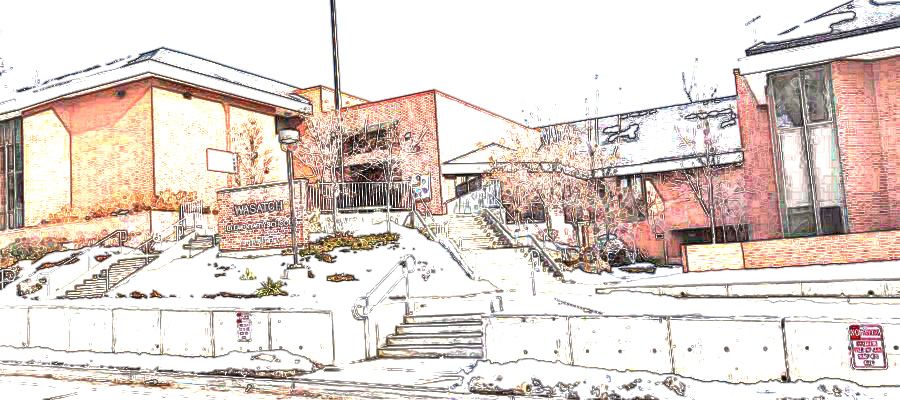
Faces in the sunshine, students at Wasatch Elementary School in Salt Lake’s Avenues neighborhood are planting theme gardens, with about half the classes involved in this year’s Outdoor Project! It’s an extension of their regular curriculum, as well as an activity in which they claim ownership and learn caretaking, sensitivity, and environmental awareness. The gardens will become part of the neighborhood, and the project’s navy blue t-shirts will carry the endeavor even beyond the school and Avenues boundaries, as a reminder that Wasatch prepares citizens to interface with the world around them and the world beyond them!
Close to downtown, close to the University of Utah, Wasatch is the school of choice for many parents seeking the very best, with students attending from all over the Salt Lake Valley. Abundant diversity includes a 50/50 poverty/affluence ratio, many different races and ethnicities, single parent families, children of university professors, children of university students, kids from House Of Hope and from Ronald McDonald House...a vast range of students in every sense of the word.
 "Kids Zone — Future Leaders being built — Enter with care & love" reads the poster greeting front door arrivals. Amy Wadsworth, Wasatch’s principal, speaks of the “global development” of the child. Any learning environment generally assumes advancement in academic and social skills, but this school goes much further and also pays careful attention to physical and emotional development, to awareness and growth in the fine and performing arts. This school is not traditional in the conventional sense of the word—the total approach is far more interactive, giving each one an opportunity to function at his or her optimal level.
 How does a grade school administrator who never has taught on that level feel about her credibility as a principal?
Amy Wadsworth believes interest and expertise in teaching and education are easily interchangeable among the various levels. In her third year [1995] at Wasatch, her earlier experience included teaching English and French at Highland High School and serving as Assistant Principal at Clayton Intermediate School. Ms. Wadsworth impressed me as being readily available to the students, but also as someone who doesn’t fill or overwhelm the space that's rightfully theirs. This is a students' school!
Additional staff at the K-6 school total about 40 and includes teachers, aides, art and physical education specialists. There are “lots of good volunteers” (mainly parents), and an active corporate sponsor. Class size averages in the 20s. with three classes for each grade. There’s also a library, a playground, and a gymnasium. Although Wasatch was one of the very first schools in Salt Lake City to have computers, its computers now are among the oldest!
A sense of contentment fills the air at the residential R Street and South Temple location—the school actually feels calm and well organized. This "whole child" approach works well. With serious and usually successful attempts by the teachers and other staff to reach every area in each student’s life, kids don’t often act out in frustration and violence in attempts to be heard and attended to. Because of this, the students get along well with each other and with the adults in their lives.
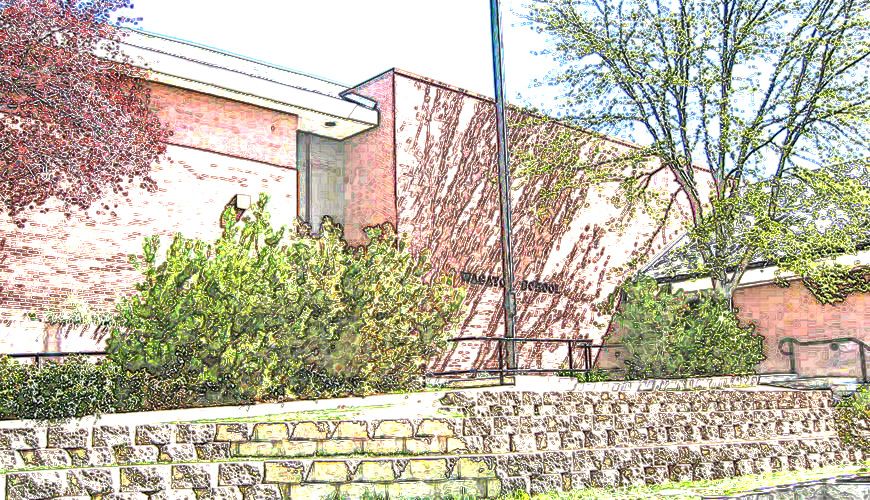 Ms. Wadsworth observes that blending students from more troubled areas into the lower-risk population helps a great deal to offset at-riskedness. With their acceptance of each other, the kids generally don’t isolate themselves into demographically defined groups.
 Usually the kids are polite, respectful, and considerate of others. But despite the all-round success the Wasatch students and their principal enjoy, sometimes there’s dissension. Classroom teachers try to process conflict in a problem-solving modality, and if the discord actually reaches the principal, she applies similar procedures. Ms. Wadsworth feels that in the future these techniques will need to be taught more formally. She says the goal is for peaceable conflict resolution to become a day-to-day practice and not just something occasionally imposed from without.
As these students find peaceful solutions becoming natural to them, they’ll easily take the skills they’ve learned at school into their family setting and into the larger Salt Lake City and world communities. This will be a great and ongoing advantage to all of us!
"Keeping high expectations" in every area helps make sure outstanding results happen. Future leaders are being built at Wasatch Elementary, and they are being treated with care and respect. And as Amy Wadsworth says, they're "such a delight!"
Faces in the sun, Wasatch School students are busy planting gardens to enhance their own lives and as a gift to their community...
Friday, March 12, 2010
spiritual or religious friday 5
spiritual or religious 5 from rev gal blog pals
(on my original post I've since edited) I'm playing partly in purple for Lent and partly in rose for Laetare...MomPriest hosts today:
1. going to church—whether Sunday worship, a potluck or a committee meeting
2. social activism
3. political activism
4. reading, writing, thinking more or less formally intentional theology: teaching, preaching, etc.
5. ecclesiastical and judicatorial structures: yes, they do help reconnect heaven and earth to some extent and I believe strongly in historical continuity in the practice of sacraments, ordinances and ordination, but at times they get a little in the way and cost too much in time, efficiency and $$$
more or less spiritual...less apparently immediate:
1. prayer in every form: free, liturgical, psalmic, simply felt rather than spoken...
2. music—singing, playing, listening, imagining
3. adventuring and contemplating nature and creation, particularly outside
4. dreaming, both waking dreams and sleeping dreams
5. storytelling and sharing meals and experiences in community
disclaimer: some of this was a little routine and maybe a tad tawdry, but it's a great topic and I was ready to play today!
(on my original post I've since edited) I'm playing partly in purple for Lent and partly in rose for Laetare...MomPriest hosts today:
Yesterday I attended a led conference by Diana Butler Bass. She is presenting new ideas on the state of the church and why there is hope for Christianity. One of her premises is a Newsweek/Washington Post poll from 2005 that states that 55% of the people in this country describe themselves as religious AND spiritual.religious, more or less—these activities have an overt binding-back, re-linking function:
Without going into detail about her understandings of religious and spiritual (you may want to attend one of her conferences, if you can) share with us five thoughts ideas or practices that you consider to be "religious." Then share with us five thoughts, ideas, or practices that you consider to be "spiritual." OR are they the same thing to you?
1. going to church—whether Sunday worship, a potluck or a committee meeting
2. social activism
3. political activism
4. reading, writing, thinking more or less formally intentional theology: teaching, preaching, etc.
5. ecclesiastical and judicatorial structures: yes, they do help reconnect heaven and earth to some extent and I believe strongly in historical continuity in the practice of sacraments, ordinances and ordination, but at times they get a little in the way and cost too much in time, efficiency and $$$
more or less spiritual...less apparently immediate:
1. prayer in every form: free, liturgical, psalmic, simply felt rather than spoken...
2. music—singing, playing, listening, imagining
3. adventuring and contemplating nature and creation, particularly outside
4. dreaming, both waking dreams and sleeping dreams
5. storytelling and sharing meals and experiences in community
disclaimer: some of this was a little routine and maybe a tad tawdry, but it's a great topic and I was ready to play today!
Wednesday, March 10, 2010
lent 2010: considerations
 Today is the middle of Lent; three weeks ago, Ash Wednesday signaled another start of the 6-week long liturgical season, traditionally and historically a time to remember Jesus' public ministry as well as a time for "giving up" or fasting from pleasurable foods and activities or sometimes "taking up" meaningful service; next Sunday will be the Fourth Sunday in (but not of) Lent. Particularly in Mark's gospel, in his 3-year long public ministry, Jesus sets his face and his will toward Jerusalem and the cross of Calvary, toward redeeming a people and a creation after God's own heart and toward shattering the divisions and divides between heaven and earth. Another exodus from bondage into freedom, another passover from death to life, a final revelation and the ultimate becoming of the New Creation, the New Jerusalem.
 A few days ago I re-read The Threat of Life by Walter Brueggemann. On page 95 he insists, "Lent is a time to quit running, to let ourselves be caught and embraced in love... Our life is not willed by God to be an endless anxiety. It is, rather, meant to be an embrace, but that entails being caught by God."
How do we differentiate a toxic Egypt and a past situation, feeling or condition that would be good to return to? Egypt is not always about brick quotas, a proliferation of pixels or paradise lost. Remembering does include the usual default remember how I led you with a pillar of cloud by day and a pillar of cloud by night and fed you with manna from the sky and water from the rock; we also need to recall the community we had, the way we were and that too often too elusive feeling of relative safety we had as well as a sense of belonging in a community that valued our participation and our presence.
Sara Jensen commented on one of my recent blogs that faithfulness in living out the gospel can be described in a single word: remember. Remembering includes the usual default remember how I brought you out from the land of Egypt, remember I fed you with manna from the sky and water from the rock; remember the gracious gifts of olive and pomegranate and figs; remember you were strangers - you know the heart of a stranger... We need literally to recollect how Jesus took bread, blessed it, broke it, gave it and told us "do this in remembrance of me. Remember Jesus, recall our baptism, by doing this liturgical action? Jesus, the One Whose biography His people would assume: suffered under Pontius Pilate, crucified, dead and buried. On the third day...
Monday, March 01, 2010
on the alien ship or home
During October 2005 I posted a slightly different version of this on my currently inactive testimony blog.
"On the alien ship or home?" Theologically, both on the alien ship and home at one and the same time. Did I ever mention ambiguity anywhere? Maybe I need to blog about aliens and homecoming yet another time... As usual, I'm thinking about the meaning, feeling, reality and necessity of that prized and elusive state known as "home."
A handful of recent and all-too-fleeting experiences of being and of feeling myself fully included have left me pondering, and very grateful, too. But on that always there other hand, the opposite experiences have kept on keepin' on too, but I'm a theologian so I'm supposed to do ambiguity well. In fact, I do ambiguity very fleetly, but in some cases which it were not so necessary. How little it takes to make me sense I'm finally home, but what a plethora of non-inclusions I've been through during the past dozen years!
I'm feeling silly, or maybe closer to creative, and "alien ship" in this blog title brings to mind our dual citizenship as Christians, which includes the familiar bible-speak of resident alien/sojourner. Our double-identity encompasses our call to live out our discipleship in the community of the church while living out our baptism in the excitement and challenge of the world outside the church. This two-pronged church/world is a form of dual citizenship - or citizen ship - too. In sojourning stranger terms, again I'll cite my referring to Abraham's being an Ivri, one from the other side, and Jesus of Nazareth's enfleshing God, One from the exceedingly other side. There's the sort-of dualism in the gospel narratives (especially Mark) of Jesus' taking a boat ride from one side over to the other side, the occasional nautical and very persistent water imagery throughout scripture, and the representation of the Church as a ship—probably you know the classic church architectural pattern of an upside-down ship? Whatever the building's design, it's appropriate to refer to the central part of the sanctuary where the congregation sits as "nave," from which (of course) the word navy derives. In addition, Noah's Ark (Noahic Ark, parallel to Noahic Covenant?) comes to mind.
Paul S. Minear, in Images of the Church in the New Testament, suggests boat/ship is not particularly central in NT imagery! I just linked to the 2005 edition of the book, but I'm quoting from the original edition published in 1960, so I won't indicate page numbers:
"On the alien ship or home?" Theologically, both on the alien ship and home at one and the same time. Did I ever mention ambiguity anywhere? Maybe I need to blog about aliens and homecoming yet another time... As usual, I'm thinking about the meaning, feeling, reality and necessity of that prized and elusive state known as "home."
A handful of recent and all-too-fleeting experiences of being and of feeling myself fully included have left me pondering, and very grateful, too. But on that always there other hand, the opposite experiences have kept on keepin' on too, but I'm a theologian so I'm supposed to do ambiguity well. In fact, I do ambiguity very fleetly, but in some cases which it were not so necessary. How little it takes to make me sense I'm finally home, but what a plethora of non-inclusions I've been through during the past dozen years!
I'm feeling silly, or maybe closer to creative, and "alien ship" in this blog title brings to mind our dual citizenship as Christians, which includes the familiar bible-speak of resident alien/sojourner. Our double-identity encompasses our call to live out our discipleship in the community of the church while living out our baptism in the excitement and challenge of the world outside the church. This two-pronged church/world is a form of dual citizenship - or citizen ship - too. In sojourning stranger terms, again I'll cite my referring to Abraham's being an Ivri, one from the other side, and Jesus of Nazareth's enfleshing God, One from the exceedingly other side. There's the sort-of dualism in the gospel narratives (especially Mark) of Jesus' taking a boat ride from one side over to the other side, the occasional nautical and very persistent water imagery throughout scripture, and the representation of the Church as a ship—probably you know the classic church architectural pattern of an upside-down ship? Whatever the building's design, it's appropriate to refer to the central part of the sanctuary where the congregation sits as "nave," from which (of course) the word navy derives. In addition, Noah's Ark (Noahic Ark, parallel to Noahic Covenant?) comes to mind.
Paul S. Minear, in Images of the Church in the New Testament, suggests boat/ship is not particularly central in NT imagery! I just linked to the 2005 edition of the book, but I'm quoting from the original edition published in 1960, so I won't indicate page numbers:
Is there an intended analogy between the boat in the storm and the church in the world? ...If this association of church and boat were certain, we might discern allusions elsewhere, as, for example, in those varied occasions when Mark pictures Jesus as teaching the crowd from a boat. It is probably that the first readers of the NT found multiple implications in all these episodes, but it is improbable that modern readers will ever agree on what those implications were. Though the stories suggest certain things about the church, it would be unwise for us to place much weight upon them.Professor Minear also considers the Ark a minor NT image and includes only a single page about it. Here's a quote:
Thus when Jesus compared the days of the Son of Man to the days of Noah he wanted to emphasize the suddenness, the unexpectedness, and the inclusiveness of God's judgment, together with the urgency of immediate and alert watchfulness. ...It's probably the eternal student in me, but before posting I love to get my ideas into almost-finished form, something I still generally aim for on my theology blog. However, sometimes I recall an incident during the time I served in Boston, when the senior pastor I served with commented on my preaching that morning: "Really good this morning—of course, you're always good, but you don't need to wrap it up as tightly as you sometimes do." I'm telling myself all my blogs are good, but I don't need to wrap them up as tightly as I sometimes do! Like a sermon, a blog is for me and for my [listeners and] readers, and I need to leave enough room and sufficient space for the Spirit to break in, engage and reveal what I'm trying to say plus a whole lot more than I've imagined.
Like the water, Baptism is a means of salvation; like the ark, the church carries the elect through the waters of eschatological crisis. This is because Baptism involved total reliance of the community upon Jesus' death and resurrection...but the NT itself is remarkably free from the vagaries of later typological fantasies. ...the OT antitype had not yet received the power to dictate or to dominate thoughts about the church. So the analogy appears both rarely and marginally in the NT. Even this limited use, however, reflects a communal mind that could see itself in the multiple mirrors of Scriptural tradition.
Beyond Guilt
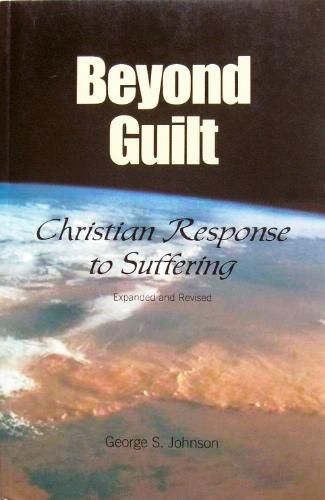
I'm continuing my series of book blogs with Beyond Guilt: Christian Response to Suffering, Expanded and Revised - this edition is © 2000; the previous one was © 1989.
A couple weeks before he left a part-time interim pastorate at a very nearby church, Pastor George Johnson gifted me with a copy of this book; inscription to me was Isaiah 58:10-11:
 Although the book essentially is about ways to move beyond guilt to scripturally informed, effective social and political action, the insights and techniques are highly applicable to anyone's life as an individual, too. Altogether this is a wonderful resource for almost any kind of church - or synagogue - study group, social action, mission, stewardship or evangelism committee! An individual or group could spend a year or more praying, thinking and working through the two dozen chapters or they could focus on an emphasis that matched their particular interests and needs and run with it for a month or so. Beyond Guilt also would be a wonderful community resource for involving people who don't necessarily identify with a faith tradition but are concerned about the environment and would like to help make changes in effective and lasting ways.
Just as with my other book blogs, I'm including some content I found particularly helpful, hoping my readers may benefit without actually reading the book at this time.
Including afterward and credits, Pastor George divides the book into 5 sections, each with a subjective both/and header:
On page 27, extracted from Desire of the Everlasting Hills - the World Before and After Jesus by Thomas Cahill, the book reminds us how Christianity's assimilation into Roman imperial power structures "seriously compromised" it, but three other early historical developments were far worse:
Since I'm such a Brueggemaniac, I loved the block of text in the intro to Chapter 6 "From Weeping to Singing"; it comes from Prophetic Voices in Exile by Walter Brueggemann:
On page 68 in chapter 12, "From Caring for Humans to Caring for Creation," there's another truly essential list of mainly misconceptions and untruths that have happened as a result of human(!) anthropocentrism; some examples are imagining natural resources as limitless; the lie that greater "material abundance" improves the quality of life and the idiocy that humans are supposed to use and control nature rather than live as stewards.
How about the very idea of asking good questions, Augustana College professor Murray Haar had learned from his father that "questions are holy." He [Murray Haar] suggested "Send the people home [from church] with a question." Would that work for you as preacher or as listener? (in pages 73-74, in chapter 13, "From Answers to Questions")
In the same chapter on page 77 a Pontius' Puddle cartoon: "Sometimes I'd like to ask God why he allows poverty, famine and injustice when he could do something about it." "What's stopping you?" "I'm afraid God might ask me the same question." Let's admit God does keep asking us those same questions... (although I've added the cartoon I've also described it for people who have turned off images or "other" concerns).

in chapter 14, "From Wealth to Partnership" on page 79, check out this idea and give it a spin:
On page 84, chapter 15, "From Despair to Hope," Pastor George suggests that exactly like the exiles in Babylon reading, pondering, reciting, chanting or singing Psalm 137 many of us also can ask "How shall we sing the Lord's song in a strange land?" (verse 4) millions find themselves exiles in their own country in the midst of "their traditional and familiar people and churches."
Still in chapter 15, on page 85 a list of 7 Hope is possibilities including:
Reflecting on this book, I especially love Pastor George's emphasis on the integrity and redemption of all creation. In the sovereignty of heaven to be faithful means to keep covenant, which means non-exploitive, "I-Thou" relationships with all creation. In many cases keeping covenant usually means staying put for a while, even when the conversations are pointless, the plans are wonky, the behaviors are wacky and the dreams does not cohere. But staying put for how long?
"a wonderful resource for activism and change": my amazon review
A couple weeks before he left a part-time interim pastorate at a very nearby church, Pastor George Johnson gifted me with a copy of this book; inscription to me was Isaiah 58:10-11:
10if you offer your food to the hungry and satisfy the needs of the afflicted, then your light shall rise in the darkness and your gloom be like the noonday. 11The Lord will guide you continually, and satisfy your needs in parched places, and make your bones strong; and you shall be like a watered garden, like a spring of water, whose waters never fail.Here's the context: Isaiah 58
 Although the book essentially is about ways to move beyond guilt to scripturally informed, effective social and political action, the insights and techniques are highly applicable to anyone's life as an individual, too. Altogether this is a wonderful resource for almost any kind of church - or synagogue - study group, social action, mission, stewardship or evangelism committee! An individual or group could spend a year or more praying, thinking and working through the two dozen chapters or they could focus on an emphasis that matched their particular interests and needs and run with it for a month or so. Beyond Guilt also would be a wonderful community resource for involving people who don't necessarily identify with a faith tradition but are concerned about the environment and would like to help make changes in effective and lasting ways.
Just as with my other book blogs, I'm including some content I found particularly helpful, hoping my readers may benefit without actually reading the book at this time.
Including afterward and credits, Pastor George divides the book into 5 sections, each with a subjective both/and header:
- chapters 1-6 Discipleship and Celebration
- chapters 7-12 Reflection and Discovery
- chapters 13-18 Feelings and Frustration
- chapters 19-24 Courage and Action
On page 27, extracted from Desire of the Everlasting Hills - the World Before and After Jesus by Thomas Cahill, the book reminds us how Christianity's assimilation into Roman imperial power structures "seriously compromised" it, but three other early historical developments were far worse:
- its alienation from Judaism
- its division into classes structures of clergy and laity
- its fragmentation into "three feuding branches"" - Orthodox, Catholic and Protestant
Since I'm such a Brueggemaniac, I loved the block of text in the intro to Chapter 6 "From Weeping to Singing"; it comes from Prophetic Voices in Exile by Walter Brueggemann:
Only grief permits newness. ... The very structure of the gospel is an argument that pain felt and articulated in God's heart permits new possibilities in the historical process - the good news concerns God's transformed heart.On pages 42 - 43 - 44, in chapter 7, "From Charity to Justice", among the commonly understood causes of "poverty, hunger and oppression" Pastor George includes "neo-colonialism, militarism, transnational corporations and especially in the church factors include ten "neglect of" items such as neglect of scriptures, neglect of community, neglect of the prophetic, of economics and neglect of the poor.
On page 68 in chapter 12, "From Caring for Humans to Caring for Creation," there's another truly essential list of mainly misconceptions and untruths that have happened as a result of human(!) anthropocentrism; some examples are imagining natural resources as limitless; the lie that greater "material abundance" improves the quality of life and the idiocy that humans are supposed to use and control nature rather than live as stewards.
How about the very idea of asking good questions, Augustana College professor Murray Haar had learned from his father that "questions are holy." He [Murray Haar] suggested "Send the people home [from church] with a question." Would that work for you as preacher or as listener? (in pages 73-74, in chapter 13, "From Answers to Questions")
In the same chapter on page 77 a Pontius' Puddle cartoon: "Sometimes I'd like to ask God why he allows poverty, famine and injustice when he could do something about it." "What's stopping you?" "I'm afraid God might ask me the same question." Let's admit God does keep asking us those same questions... (although I've added the cartoon I've also described it for people who have turned off images or "other" concerns).
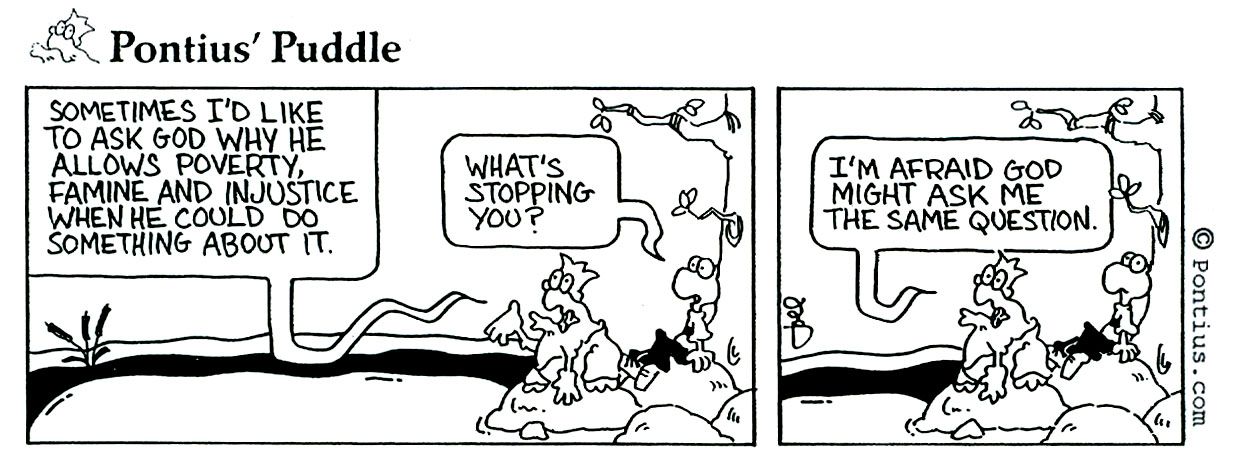
in chapter 14, "From Wealth to Partnership" on page 79, check out this idea and give it a spin:
One can begin with the scriptures. But we must remember that we always bring with us to the scriptures our own situation in life, our attitudes, our experiences and our traditions. So why not begin with the context of the world we live in and the history of where we have come from? It will make a difference in the questions we ask as we study the Bible.As Pastor George reminds us, the early Christians of Acts 2 did not have a Book of Order or a Small Catechism. I'll add they didn't *even* have the Definition of Chalcedon, the Articles of Faith or the Belhar Confession—not to mention, no Canons of Dort whatsoever! What did the early Christians possess? Memories of Jesus and experiences of God's action and presence in their lives and in the world around them possessed them and drove them to faithful action.
On page 84, chapter 15, "From Despair to Hope," Pastor George suggests that exactly like the exiles in Babylon reading, pondering, reciting, chanting or singing Psalm 137 many of us also can ask "How shall we sing the Lord's song in a strange land?" (verse 4) millions find themselves exiles in their own country in the midst of "their traditional and familiar people and churches."
Still in chapter 15, on page 85 a list of 7 Hope is possibilities including:
- Hope is found in the willingness to embrace pain and to express it.
- Hope is rooted in community and grows as we are present to one another.
- Hope is found in remaining close to nature and celebrating God's creation.
- Hope is nurtured through music and the arts.
Reflecting on this book, I especially love Pastor George's emphasis on the integrity and redemption of all creation. In the sovereignty of heaven to be faithful means to keep covenant, which means non-exploitive, "I-Thou" relationships with all creation. In many cases keeping covenant usually means staying put for a while, even when the conversations are pointless, the plans are wonky, the behaviors are wacky and the dreams does not cohere. But staying put for how long?
"a wonderful resource for activism and change": my amazon review
Subscribe to:
Posts (Atom)