Exodus 20:1-17
Central to the freedom narrative in the book of Exodus is the Sinai Covenant – the Ten Commandments or Decalogue – with its guidelines for living in covenantal community, for worshiping as the people of God, and simply how to be the people of God. Instead of giving the Commandments during the years the Hebrews existed in slavery in Egypt or waiting until after the Israelites finally crossed the River into the Land of Promise, God wisely spoke from Mount Sinai and gave the Law during the long trek through the desert as the people Israel depended on manna from heaven and water from the rock: despite the wildness of the territory, Israel received the law and learned to live fully and worship with integrity on the way to Promised Land freedom. No, law doesn't redeem, law won't "buy back" – not God's law that guides our morals and rules behaviors in family and society, not humanly invented sacrificial law nor our local motor vehicle or real estate regulations or minimum wage laws! But those laws, codes, policies, regulations, or just plain unwritten "conventions," provide structures within which society can live with freedom and receive grace.

Monday, February 28, 2005

Sunday, February 06, 2005
Transfiguration: Until the Day Dawns
Texts – NKJV
Matthew 17:1-9
1 Now after six days Jesus took Peter, James, and John his brother, led them up on a high mountain by themselves; 2 and He was transfigured before them. His face shone like the sun, and His clothes became as white as the light. 3 And behold, Moses and Elijah appeared to them, talking with Him. 4 Then Peter answered and said to Jesus, "Lord, it is good for us to be here; if You wish, I will make here three tabernacles: one for You, one for Moses, and one for Elijah."
… 9 Now as they came down from the mountain, Jesus commanded them, saying, "Tell the vision to no one until the Son of Man is risen from the dead."
2 Peter 1:16-19
 16 For we did not follow cunningly devised fables when we made known to you the power and coming of our Lord Jesus Christ, ...but were eyewitnesses of His majesty. 17 For He received from God the Father honor and glory when such a voice came to Him from the Excellent Glory: "This is My beloved Son, in whom I am well pleased." 18 And we heard this voice which came from heaven when we were with Him on the holy mountain.
19 We also have the more sure prophetic word, which you do well to heed as a light that shines in a dark place, until the day dawns and the morning star rises in your hearts…
Until the Day Dawns
"Tell the vision to no one until the Son of Man – the Human One – is risen from the dead!"
Also in some of Jesus’ words recorded by the gospel-writer Matthew, we hear: [12:40] An evil and perverse generation seeks signs, but no sign will be given it except the Sign of Jonah: for just as Jonah was three days and three nights in the belly of the great fish, so will the Human One – the Son of Man – be three days and three nights in the heart of the earth!
In the Good News according to Luke:[11:29] And while the crowds were thickly gathered together, Jesus began to say, "This is an evil generation. It seeks a sign, and no sign will be given to it except the sign of Jonah the prophet."
The Sign of Jonah—Death and Resurrection! For two thousand years, theologians and faith communities have struggled to learn and discern what Jesus means to them. We know Jesus as teacher and Jesus as political prophet; doubtless many of us consider Jesus a social activist, too. Jesus as a healer? Probably. But Jesus, the man of Nazareth, who died outside the city on a cross of shame as the Christ of God?
At the very heart of the story of Jesus of Nazareth stands the seven days we call Passion Week: a crucified man – but – then an empty grave, a narrative with no easy answers or clear-cut implications, a series of events so far outside the normally credible many of us would like to dismiss it as legend. But today's lections are not about death and resurrection but about something else altogether—they're about a spectacular manifestation of God's Glory on yet another mountaintop.
"We were eyewitness. We saw...with our own eyes." There on the mountain of the event called Transfiguration were Moses and Elijah and there was that voice...and there were Peter, James and John who saw, who eye-witnessed the meeting of earth and heaven, the holiness of everything created. Within Judaism, clouds, mountains and other expressions of nature were traditional signs of God's presence—you remember the cloud that went before Israel as a sign of God's presence in the Exodus story, and the mountain Moses climbed to receive the law, the Sinai Covenant? In telling about the Transfiguration,
Matthew, the gospel writer and Peter, the author of the epistle describe a meeting between heaven and earth, of the reconciliation of life, spelling God-with-us—of course, then there's the reciprocal of God's presence to us: our presence to God! Heaven comes down to earth countless times throughout the biblical witness, just as heaven and earth meet countless times in this world in which we live.
Jesus cautioned the Mount of Transfiguration Trio – Peter, James and John – to tell no one about the experience with Moses and Elijah, the law and the prophets, until he, the Son of Man, the Human One, had been raised from death. Tell no one until Easter! "Just as Jonah spent three days and three nights in the belly of the great fish..."
 Another Jonah, Simon bar Jonah, son of Jonah – the fisher of men renamed Peter or "Rocky" by Jesus himself – experienced the vision of Jesus transfigured and for Peter, we know the later reality of resurrection could not remain forgotten or untold! Over and over in the book of Acts and then in the later letter called 2 Peter we keep hearing Peter proclaiming the Risen Christ!
Often we recount stories about gutless Peter, almost rejoicing because he and we are similar in too many ways, but after the events of Easter and Pentecost, when preaching Christ even meant risking life itself, Peter could not help but do so.
Because of the stories of Peter's sometimes reluctance during the time he spent ministering alongside Jesus in the years prior to the crucifixion – especially the triple betrayal – I think if Peter had his human preference, he would rather not have stood up before those institutional religious leaders and assorted "others. But the word of the Risen One was not a philosophical theoretical idea out there but rather it was a word within Peter's heart, from his real-life experience walking and living with a friend who unconditionally loved him even in his weakest moments of total failure, that One he had seen crucified...
"We were eyewitnesses...with our eyes." The eye is the most sensitive part of the body; to be an eyewitness suggests vision and perception. On the Mount of Transfiguration Peter saw Jesus, Elijah and Moses; later Peter eyewitnessed Christ crucified; then he saw and experienced Christ Risen! In the life, death and resurrection of Jesus, Peter witnessed the love of God, and how could Peter be silent? Everything his teacher and companion Jesus spoke about had happened, everything – including death and resurrection, the fabled Sign of Jonah – and those events birthed hope in Rocky-Peter, so he began believing, living and proclaiming the hope of resurrection to the world.
Tell the vision to no one until the Human One is risen from the dead. A long time has passed since Jesus, James, John and Peter stood with Moses and Elijah on the Mountain of Transfiguration; a long time has passed since Peter told about seeing with his own eyes the transfigured Man of Nazareth and the glory of the Crucified and Risen Christ. In the centuries since then, far too much other than the boundless and unqualified love of God has been connected with Jesus and laid on the name of Jesus; Peter didn’t need to explain slave ships from Africa, or the Crusades, or the Salem witch trials or the decimation of villages in South America and Central America by unjust church politics; in those days of the nascent church, people hadn't yet suffered under the illegitimate authority of over-formed ecclesiastical clout.
So these days and in our own communities we can hear voices asking why we still proclaim the Crucified and Risen Lord of All!? Still today?! Like Peter? Because we too have witnessed Christ crucified in every life that falls at the hand of hatred, every heart broken by betrayal, every community brutalized by the powerful, every person left for dead; in those situations and far too many like them our eyes have witnessed Christ crucified.
And though many times we may run away like Simon bar Jonah also called "Peter," in the wake of the Day of Crucifixion we have seen and met the Risen One on Resurrection morn! Jesus promises us the Sign of Jonah—death and resurrection; Jesus charges us to "Tell no one until the Human One is risen from the dead!"
Just as the Spirit sent Peter, James and John to the Transfiguration site, the Holy Spirit takes us to places where God meets us, the contemporary people of God; the Spirit send us to places where we witness meetings between heaven and earth and see evidence of God's life-restoring and reconciling presence to us, while the Spirit enables us to be present to God, living in full response to the power of Easter within our once-devastated lives.
Together with Peter, we have been eyewitnesses of Christ's crucifixion but we also know the experience of the paradoxical power of new life born from death; those events birth hope in us—how can we be silent? Now we can believe, live and proclaim the hope of resurrection to the world!
As we prepare to enter the coming weeks of Lent, let us continue living as signs of the meeting of heaven and earth, people ready for Good Friday and eyewitness of Easter Sunday's glorious dawn!
The Word of Life,
Amen!
Matthew 17:1-9
1 Now after six days Jesus took Peter, James, and John his brother, led them up on a high mountain by themselves; 2 and He was transfigured before them. His face shone like the sun, and His clothes became as white as the light. 3 And behold, Moses and Elijah appeared to them, talking with Him. 4 Then Peter answered and said to Jesus, "Lord, it is good for us to be here; if You wish, I will make here three tabernacles: one for You, one for Moses, and one for Elijah."
… 9 Now as they came down from the mountain, Jesus commanded them, saying, "Tell the vision to no one until the Son of Man is risen from the dead."
2 Peter 1:16-19
16 For we did not follow cunningly devised fables when we made known to you the power and coming of our Lord Jesus Christ, ...but were eyewitnesses of His majesty. 17 For He received from God the Father honor and glory when such a voice came to Him from the Excellent Glory: "This is My beloved Son, in whom I am well pleased." 18 And we heard this voice which came from heaven when we were with Him on the holy mountain. 19 We also have the more sure prophetic word, which you do well to heed as a light that shines in a dark place, until the day dawns and the morning star rises in your hearts…
Until the Day Dawns
Son of the Excellent Glory, Whose birth and life among us sanctifies all creation, Creator of the Cosmic Dance and Hope Everlasting: as we celebrate another spectacular vision of your Sonship, may we relentlessly live as signs of the reconciliation of heaven and earth, in service to one another and the world. Amen!
"Tell the vision to no one until the Son of Man – the Human One – is risen from the dead!"
Also in some of Jesus’ words recorded by the gospel-writer Matthew, we hear: [12:40] An evil and perverse generation seeks signs, but no sign will be given it except the Sign of Jonah: for just as Jonah was three days and three nights in the belly of the great fish, so will the Human One – the Son of Man – be three days and three nights in the heart of the earth!
In the Good News according to Luke:[11:29] And while the crowds were thickly gathered together, Jesus began to say, "This is an evil generation. It seeks a sign, and no sign will be given to it except the sign of Jonah the prophet."
The Sign of Jonah—Death and Resurrection! For two thousand years, theologians and faith communities have struggled to learn and discern what Jesus means to them. We know Jesus as teacher and Jesus as political prophet; doubtless many of us consider Jesus a social activist, too. Jesus as a healer? Probably. But Jesus, the man of Nazareth, who died outside the city on a cross of shame as the Christ of God?
At the very heart of the story of Jesus of Nazareth stands the seven days we call Passion Week: a crucified man – but – then an empty grave, a narrative with no easy answers or clear-cut implications, a series of events so far outside the normally credible many of us would like to dismiss it as legend. But today's lections are not about death and resurrection but about something else altogether—they're about a spectacular manifestation of God's Glory on yet another mountaintop.
"We were eyewitness. We saw...with our own eyes." There on the mountain of the event called Transfiguration were Moses and Elijah and there was that voice...and there were Peter, James and John who saw, who eye-witnessed the meeting of earth and heaven, the holiness of everything created. Within Judaism, clouds, mountains and other expressions of nature were traditional signs of God's presence—you remember the cloud that went before Israel as a sign of God's presence in the Exodus story, and the mountain Moses climbed to receive the law, the Sinai Covenant? In telling about the Transfiguration,
Matthew, the gospel writer and Peter, the author of the epistle describe a meeting between heaven and earth, of the reconciliation of life, spelling God-with-us—of course, then there's the reciprocal of God's presence to us: our presence to God! Heaven comes down to earth countless times throughout the biblical witness, just as heaven and earth meet countless times in this world in which we live.
Jesus cautioned the Mount of Transfiguration Trio – Peter, James and John – to tell no one about the experience with Moses and Elijah, the law and the prophets, until he, the Son of Man, the Human One, had been raised from death. Tell no one until Easter! "Just as Jonah spent three days and three nights in the belly of the great fish..."
Another Jonah, Simon bar Jonah, son of Jonah – the fisher of men renamed Peter or "Rocky" by Jesus himself – experienced the vision of Jesus transfigured and for Peter, we know the later reality of resurrection could not remain forgotten or untold! Over and over in the book of Acts and then in the later letter called 2 Peter we keep hearing Peter proclaiming the Risen Christ!
Often we recount stories about gutless Peter, almost rejoicing because he and we are similar in too many ways, but after the events of Easter and Pentecost, when preaching Christ even meant risking life itself, Peter could not help but do so.
Because of the stories of Peter's sometimes reluctance during the time he spent ministering alongside Jesus in the years prior to the crucifixion – especially the triple betrayal – I think if Peter had his human preference, he would rather not have stood up before those institutional religious leaders and assorted "others. But the word of the Risen One was not a philosophical theoretical idea out there but rather it was a word within Peter's heart, from his real-life experience walking and living with a friend who unconditionally loved him even in his weakest moments of total failure, that One he had seen crucified...
"We were eyewitnesses...with our eyes." The eye is the most sensitive part of the body; to be an eyewitness suggests vision and perception. On the Mount of Transfiguration Peter saw Jesus, Elijah and Moses; later Peter eyewitnessed Christ crucified; then he saw and experienced Christ Risen! In the life, death and resurrection of Jesus, Peter witnessed the love of God, and how could Peter be silent? Everything his teacher and companion Jesus spoke about had happened, everything – including death and resurrection, the fabled Sign of Jonah – and those events birthed hope in Rocky-Peter, so he began believing, living and proclaiming the hope of resurrection to the world.
Tell the vision to no one until the Human One is risen from the dead. A long time has passed since Jesus, James, John and Peter stood with Moses and Elijah on the Mountain of Transfiguration; a long time has passed since Peter told about seeing with his own eyes the transfigured Man of Nazareth and the glory of the Crucified and Risen Christ. In the centuries since then, far too much other than the boundless and unqualified love of God has been connected with Jesus and laid on the name of Jesus; Peter didn’t need to explain slave ships from Africa, or the Crusades, or the Salem witch trials or the decimation of villages in South America and Central America by unjust church politics; in those days of the nascent church, people hadn't yet suffered under the illegitimate authority of over-formed ecclesiastical clout.
So these days and in our own communities we can hear voices asking why we still proclaim the Crucified and Risen Lord of All!? Still today?! Like Peter? Because we too have witnessed Christ crucified in every life that falls at the hand of hatred, every heart broken by betrayal, every community brutalized by the powerful, every person left for dead; in those situations and far too many like them our eyes have witnessed Christ crucified.
And though many times we may run away like Simon bar Jonah also called "Peter," in the wake of the Day of Crucifixion we have seen and met the Risen One on Resurrection morn! Jesus promises us the Sign of Jonah—death and resurrection; Jesus charges us to "Tell no one until the Human One is risen from the dead!"
Just as the Spirit sent Peter, James and John to the Transfiguration site, the Holy Spirit takes us to places where God meets us, the contemporary people of God; the Spirit send us to places where we witness meetings between heaven and earth and see evidence of God's life-restoring and reconciling presence to us, while the Spirit enables us to be present to God, living in full response to the power of Easter within our once-devastated lives.
Together with Peter, we have been eyewitnesses of Christ's crucifixion but we also know the experience of the paradoxical power of new life born from death; those events birth hope in us—how can we be silent? Now we can believe, live and proclaim the hope of resurrection to the world!
As we prepare to enter the coming weeks of Lent, let us continue living as signs of the meeting of heaven and earth, people ready for Good Friday and eyewitness of Easter Sunday's glorious dawn!
The Word of Life,
Amen!
Monday, January 17, 2005
Martin Luther King Day 2005
Micah 6:6-8 MSG
Reflections on Multiculturalism and its Cognates
What feels like a long time ago, I lived and served in very inner-city Boston; today I'll begin with a panorama! The local church I served as lay associate pastor was highly diverse in terms of class, race, age, ethnicity, economics and culture, but some time before I began serving that congregation the immediate neighborhood had experienced blockbusting, white-flight and redlining, with a subsequent decline and disarticulation of the public education system. Those particular dynamics of change followed by insurgent gentrification plus underclass growth on the neighborhood's fringes meant there was no way any mainline church could have survived unless they'd been looking at and trying out very different untraditional models for evangelism and ministry ages earlier.
Nonetheless, some streets were (re-)gentrifying, resulting in multi-generational welfare families and yuppies living within hailing distance of one another. As the senior pastor I served with once said to me, "a lot of the folks in this neighborhood never have even been in Harvard Square, let along inside a Harvard classroom"; yet again, quite a few yuppies with advanced academic or professional degrees came to the church seeking volunteer opportunities and sometimes church homes for themselves or their offspring.
Since the void the departure of the White working-class population left in the area also had meant the dissolution of most mainline-affiliated local churches, given such a large immigrant and underclass population a whole lot of independent – mostly Pentecostal and other related Wesleyan offshoots – storefront congregations gathered, evolved and prospered.
Regarding the difficult work of bridging religious and cultural differences, the church building's immediate vicinity included families and individuals whose families historically were Irish Roman Catholic, Blacks - primarily African-American with a growing influx of Caribbean islanders - and an increasingly disenchanted surfacing minority whose forebears originated in the United Kingdom or Western Europe. One of the major problems I constantly dealt with were the genuinely concerned and truly well-meaning White liberals who at the same time were extremely eager to be helpful and culturally almost completely unaware, insensitive and actually gauche! It amounted to dismaying cultural arrogance and ignorance and not remotely the "evangelism in the vernacular" we endeavored to do.
But the society full of compassionate fairness and justice for all, the impartial way of righteousness that recognizes separate means inherently unequal, the "Beloved Community," that formed a large part of the heart of MLK's quest - as always - was a tough one! Participating in the church's programming were nominally Roman Catholic kids, but when I'd visit their home and suggest they begin attending worship, a parent would inform me, "My child is Catholic!" (Typically I'd never seen any evidence of that possibility.) Or, people who seemed to be taking advantage of us for transportation and various handouts...sometimes I wonder if those of us on church staff were gullible or were we faithful servants?
On MLK Day 2005, in what feels like *now* and actually is *now*, I'm living in San Diego; these days, the very words "Southern California" by default signify a fundamentally multicultural and multilingual environment! With Baja California's city of Tijuana just south, this is the busiest land border in the world, and San Diego is very much a conventional border town; in San Diego city and county there are so many neighborhoods that carry an ethnic designation.
Practically all of the signage and most of the announcements everywhere are bilingual English-Spanish at minimum; lots are in Tagalog and Vietnamese, too, with some in an least a half-dozen more languages. Restaurants, food courts and other eating places offer an vast variety of ethnic food and Americanized-ethnic eats, too. But how much evidence of actual living in community with, celebrating with and truly understanding the folks of different-from backgrounds do I see around here? I'm not referring to the frequent Festivals of ethnic foods, dance, arts and culture: I'm searching find and longing to experience understanding and true equality that moves far beyond stereotypes and surface tolerance into making this large town a welcome place and a real sanctuary safe for differences!
As God charges us through Micah the prophet, each of one us needs to take God more seriously and ourselves less seriously, or as Bible versions a little more conventional and familiar to us than Eugene Peterson's The Message version of scripture expresses it, we need to "Do justice, love mercy, and walk humbly with our God!" In the power of the Holy Spirit, God's desire can become our lifestyle!
Still, for this day forward and counting...
Happy Martin Luther King Jr., Day, World!!! You've Come a Long, Long Way!!!
6 How can I stand up before GOD
and show proper respect to the high GOD?
Should I bring an armload of offerings
topped off with yearling calves? ...
8 But he's already made it plain how to live, what to do,
what GOD is looking for in men and women.
It's quite simple: Do what is fair and just to your neighbor,
be compassionate and loyal in your love,
And don't take yourself too seriously—
take God seriously.
Reflections on Multiculturalism and its Cognates
What feels like a long time ago, I lived and served in very inner-city Boston; today I'll begin with a panorama! The local church I served as lay associate pastor was highly diverse in terms of class, race, age, ethnicity, economics and culture, but some time before I began serving that congregation the immediate neighborhood had experienced blockbusting, white-flight and redlining, with a subsequent decline and disarticulation of the public education system. Those particular dynamics of change followed by insurgent gentrification plus underclass growth on the neighborhood's fringes meant there was no way any mainline church could have survived unless they'd been looking at and trying out very different untraditional models for evangelism and ministry ages earlier.
Nonetheless, some streets were (re-)gentrifying, resulting in multi-generational welfare families and yuppies living within hailing distance of one another. As the senior pastor I served with once said to me, "a lot of the folks in this neighborhood never have even been in Harvard Square, let along inside a Harvard classroom"; yet again, quite a few yuppies with advanced academic or professional degrees came to the church seeking volunteer opportunities and sometimes church homes for themselves or their offspring.
Since the void the departure of the White working-class population left in the area also had meant the dissolution of most mainline-affiliated local churches, given such a large immigrant and underclass population a whole lot of independent – mostly Pentecostal and other related Wesleyan offshoots – storefront congregations gathered, evolved and prospered.
Regarding the difficult work of bridging religious and cultural differences, the church building's immediate vicinity included families and individuals whose families historically were Irish Roman Catholic, Blacks - primarily African-American with a growing influx of Caribbean islanders - and an increasingly disenchanted surfacing minority whose forebears originated in the United Kingdom or Western Europe. One of the major problems I constantly dealt with were the genuinely concerned and truly well-meaning White liberals who at the same time were extremely eager to be helpful and culturally almost completely unaware, insensitive and actually gauche! It amounted to dismaying cultural arrogance and ignorance and not remotely the "evangelism in the vernacular" we endeavored to do.
But the society full of compassionate fairness and justice for all, the impartial way of righteousness that recognizes separate means inherently unequal, the "Beloved Community," that formed a large part of the heart of MLK's quest - as always - was a tough one! Participating in the church's programming were nominally Roman Catholic kids, but when I'd visit their home and suggest they begin attending worship, a parent would inform me, "My child is Catholic!" (Typically I'd never seen any evidence of that possibility.) Or, people who seemed to be taking advantage of us for transportation and various handouts...sometimes I wonder if those of us on church staff were gullible or were we faithful servants?
On MLK Day 2005, in what feels like *now* and actually is *now*, I'm living in San Diego; these days, the very words "Southern California" by default signify a fundamentally multicultural and multilingual environment! With Baja California's city of Tijuana just south, this is the busiest land border in the world, and San Diego is very much a conventional border town; in San Diego city and county there are so many neighborhoods that carry an ethnic designation.
Practically all of the signage and most of the announcements everywhere are bilingual English-Spanish at minimum; lots are in Tagalog and Vietnamese, too, with some in an least a half-dozen more languages. Restaurants, food courts and other eating places offer an vast variety of ethnic food and Americanized-ethnic eats, too. But how much evidence of actual living in community with, celebrating with and truly understanding the folks of different-from backgrounds do I see around here? I'm not referring to the frequent Festivals of ethnic foods, dance, arts and culture: I'm searching find and longing to experience understanding and true equality that moves far beyond stereotypes and surface tolerance into making this large town a welcome place and a real sanctuary safe for differences!
As God charges us through Micah the prophet, each of one us needs to take God more seriously and ourselves less seriously, or as Bible versions a little more conventional and familiar to us than Eugene Peterson's The Message version of scripture expresses it, we need to "Do justice, love mercy, and walk humbly with our God!" In the power of the Holy Spirit, God's desire can become our lifestyle!
Still, for this day forward and counting...
Happy Martin Luther King Jr., Day, World!!! You've Come a Long, Long Way!!!
Saturday, January 15, 2005
wilderness handbook: the desert again
desert living...
...living in the desert.
wilderness: freedom living!
the whole world changes: you shall be called Israel!
...and live as God's chosen people...
This evening I've considered these ideas just a little more and finally I'm getting them out of saved stuff and up on to my blog.
Repeatedly I've written and spoken about the desert's precariousness, life-giving and transformative austerity, as in this pair of citations:
In the desert Israel first rendezvoused with Yahweh; in the desert – driven out by the Spirit – Jesus first met the Spirit; possibly our first meeting with the real presence of the HS happens in the desert, too...not the presence we imagine we need but the Presence God knows we need.Exactly as for God's original people Israel, for us, the contemporary People of God, the desert provides the dynamic reciprocity of intimate relationship, and doesn't relationship test us and ultimately transform us into being truly the person for others in addition to our becoming most authentically ourselves and respecting of our self? Living in the desert means living in risking trust rather than assumption and comfort; it means learning about, interacting with, about relating to an "other"; reconciling and reuniting; shedding the past while [hopefully] learning from it. In the wilderness we learn about moving into the future with hope and about thriving in spite of scarcity; fearlessly learning not to hoard during times of prosperity and relative abundance. Ditching self-reliance, depending on the human *other* and – finally – depending completely upon the Divine *Other*.
"In the desert Israel ...and the desert frequently becomes the place of our meeting God and of self-encounter, as well." In that post I added, "For us as Christians, baptism is our primal liminal experience. As we enter the waters, should we be prepared to drown? Yes! And we should be equally prepared to be surprisingly raised from that death by drowning!"
wilderness: freedom living!
Trekking through the wilds means living in liberty at that very moment just as much as our desert exoduses are passages to the land of promise. True in our wilderness as individuals and particularly for our community we seek a metaphorical Jordan, but on the way, what do we find? We find and meet insistent others with needs and gifts parallel to ours; we discover natural resources above, beneath, before and around us, assets that will help everyone meet the requirements of daily existence. Freedom living? Either in solitude or in community, when we’re in the desert we do not have a whole lot of choice about our responses; we have little choice if we seek substantial quality of life, so in the desert wilderness our easiest and most free course of action becomes obedience to God’s demands to love one another and bear each others’ burdens, eventually and ultimately holding not only a single Feast in the Wilderness but countless Feasts in the Wilderness!
Isaiah 35
Rivers in the desert!
1 Wilderness and desert will sing joyously,
the badlands will celebrate and flower—
Like the crocus in spring, 2 bursting into blossom,
a symphony of song and color.
Mountain glories of Lebanon—a gift.
Awesome Carmel, stunning Sharon--gifts.
GOD's resplendent glory, fully on display.
GOD awesome, GOD majestic...
6a Springs of water will burst out in the wilderness,
streams flow in the desert...
7 Hot sands will become a cool oasis,
thirsty ground a splashing fountain.
Even lowly jackals will have water to drink,
and barren grasslands flourish richly.
—MSG
Once upon a time, as in ages ago, I put together a photo-collage of desert images and phrases; one of my favorites was "Don’t go bare into the wilderness," followed with, "You have the words of eternal life" and "Claim it today!" The Words of eternal life is exactly what Jesus took into the desert with him right after his baptism in the real River Jordan; Moses'people left Egypt led and accompanied by a Word-speaker who in real life interacted with the Word-giver and even mediated the celebrated Sinai Covenant. In theology, water is a recurrent metaphor for the Holy Spirit; each individual and each community has a quadrivium of needs that includes water, food, shelter and places of nurture. Scripture calls us to choose between life and death, blessing and curse and as I've stated here before, I believe the Reconciling Christ Event is so drastic, so inclusive and so all-encompassing of everything and everyone created, all creation is born, lives, dies and rises in Christ. However, God sets before us the ways of life and death, and to a limited extent, the choice of salvation, wholeness and reconciliation becomes ours.
Streams in the wilderness
Streams tend to be smaller and generally less extensive than rivers? But primarily because they're littler, streams have other attributes, such as compelling us to careful stewardship of the essential gift of water, such as making us thankful; such as leading us to bless the Giver of the Gift—including the gift of the wilderness desert that makes us so aware of its concealed beauty and unseen life.
Desert rivers
As we more and more live in trust, those "rivers in the desert" slowly and imperceptibly become desert rivers! In other words, the rivers take on characteristics of the desert. Paradox? Yes, of course!!!
Wilderness streams
In the same way rivers in the desert become desert rivers, "streams in the wilderness" become wilderness streams. How and why?
the whole world changes...
The whole world changes? Not just my, your, our smallish and more-or-less self-contained worlds? A lot of life is synergistic in a lot of ways. The "World" goes far beyond and transcends our little, proprietary universes and begins touching, reaching and transforming people, places and ideas far, far beyond our immediate heres and nows and this world of ours becomes huge! Astounding? Both yes and no! As we approaching our Jordan, we're on the cul-de-sac of life, a place with no outlet except to continue – you cannot go back (if you keep looking back you won'’t know where you’re going). Because – really! – God does not see our past...
you shall be called Israel!
Jacob refused to leave without a blessing: God loves, God blesses people who persevere, who are tenacious! After Jacob wrestled with the spirits of the [Genesis 32] human and the Spirit of the Divine, God conferred on Jacob his new name; Jacob left Gilgal and went to [genesis 28] Bethel, "House of God," because he needed to go there to get established in God’s house. After [Joshua 5] Gilgal and then at Bethel, no longer was it "God of Abraham, Isaac and Jacob,"” but rather the Jacob of God, the one newly-named Israel! Named and called by your name by the Word of Life!
22 And [Jacob] arose that night and took his two wives, his two female servants, and his eleven sons, and crossed over the ford of Jabbok. 23 He took them, sent them over the brook, and sent over what he had. 24 Then Jacob was left alone; and a Man wrestled with him until the breaking of day. 25 Now when He saw that He did not prevail against him, He touched the socket of his hip; and the socket of Jacob's hip was out of joint as He wrestled with him. 26 And He said, "Let Me go, for the day breaks."Long later, the New Covenant scriptures give us this amazing text:
But he said, "I will not let You go unless You bless me!"
27 So He said to him, "What is your name?"
He said, "Jacob."
28 And He said, "Your name shall no longer be called Jacob, but Israel; for you have struggled with God and with men, and have prevailed."
29 Then Jacob asked, saying, "Tell me Your name, I pray."
And He said, "Why is it that you ask about My name?" And He blessed him there.
30 So Jacob called the name of the place Peniel: "For I have seen God face to face, and my life is preserved." 31 Just as he crossed over Penuel the sun rose on him, and he limped on his hip. NKJV
"To the one who overcomes I will give some of the hidden manna to eat. And I will give him a white stone, and on the stone a new name written which no one knows except the one who receives it."...and I will give her the Morning Star!... Revelation 2:17
...and live as God’s chosen people...
Well, yes, of course! The whole idea and purpose of learning to live through hot, dry days and chilly, dry nights is to learning how to live as People of the Covenant, learning how to live as people elected by grace and enabled in the power of the Holy Spirit…did I say something about water symbolizing the Spirit? Throughout the witness of scripture and in the course of our daily walk, water, wind and fire equally symbolize the gift of Divine Life!
Exodus 13
From Exodus 13:
3 And Moses said to the people: "Remember this day in which you went out of Egypt, out of the house of bondage; for by strength of hand the LORD brought you out of this place. No leavened bread shall be eaten. 4 On this day you are going out … 5 And it shall be, when the LORD brings you into the land...a land flowing with milk and honey, that you shall keep this service in this month. 6 Seven days you shall eat unleavened bread, and on the seventh day there shall be a feast to the LORD. 8 And you shall tell your son in that day, saying, "This is done because of what the LORD did for me when I came up from Egypt.
14 So it shall be, when your son asks you in time to come, saying, "What is this?' that you shall say to him, "By strength of hand the LORD brought us out of Egypt, out of the house of bondage.
[scripture text heading: The Wilderness Way]
17 Then it came to pass, when Pharaoh had let the people go, that God did not lead them by way of the land of the Philistines, although that was near; for God said, "Lest perhaps the people change their minds when they see war, and return to Egypt." 18 So God led the people around by way of the wilderness of the Red Sea. And the children of Israel went up in orderly ranks out of the land of Egypt.
21 And the LORD went before them by day in a pillar of cloud to lead the way, and by night in a pillar of fire to give them light, so as to go by day and night. 22 He did not take away the pillar of cloud by day or the pillar of fire by night from before the people.
Prophecy Word Sacrament
In Israel the prophet, the speaker of the Divine Word of Life, had ultimate authority and primacy; in the New Israel, the church, the prophet, the Divine Word-speaker, also has primal authority; both in those former days and in these latter days the just and righteous Word is manifest and apparent not only in audible, vocal speech, but the Word is hidden in the Spirit-filled people of God and the Word is paradoxically visible in the sacramental ordinances of baptism and holy communion.
In The Prophetic Faith, Jewish theologian Martin Buber writes,
In The Prophetic Faith, Jewish theologian Martin Buber writes,
"[for Jeremiah] Not the priest but the prophet he regards as the mediator between heaven and earth, messenger of God and intercessor in one. The contact between godhead and manhood in his view is not bound up with the rite but with the word...the word comes again and again from heaven as something new, and makes its abode within man...and the man who has to make it heard is over and over again subdued by the word before He lets it be put in his mouth. This is not the expression of a familiar deity, with whom man comes into regular contact in fixed places and at fixed times. He, Who speaks, is incomprehensible, irregular, surprising, overwhelming, sovereign. Therefore it is the virtue of this word, and of this alone, to lead, that is to say, to show the way. [emphasis mine] ...In order to speak to man, God must become a person; but in order to speak to him, He must make him too a person." (pages 164-165)Jeremiah's New Covenant proclamation:
Jeremiah 31
31 "The time is coming," declares the LORD,
"when I will make a new covenant
with the house of Israel
and with the house of Judah.
32 It will not be like the covenant
I made with their forefathers
when I took them by the hand
to lead them out of Egypt,
because they broke my covenant,
though I was a husband to them,"
declares the LORD.
33 "This is the covenant I will make with the house of Israel
after that time," declares the LORD.
"I will put my law in their minds
and write it on their hearts.
I will be their God,
and they will be my people.
34 No longer will a man teach his neighbor,
or a man his brother, saying, 'Know the LORD,'
because they will all know me,
from the least of them to the greatest,"
declares the LORD.
"For I will forgive their wickedness
and will remember their sins no more."
Sunday, January 02, 2005
On Holy Communion for this New Year 2005
Text: Luke 22:7-20; 28-30
Here's the complete text for Luke 22:7-30
Or check it out in The Message
This morning, the first Sunday of the New Year 2005, we celebrated Holy Communion; Luke 22 traditionally has been a Maundy Thursday text, but it also is highly appropriate for this early January winter Sunday.
Because of our humanity, our lives need meaning if they are going to be bearable; we feel almost compelled to seek meaning in our own individual worlds and often in those worlds beyond our immediate grasp. We may passively be able to endure in surroundings not of our own making or choosing, but we're unlikely to keep on deliberately performing an action unless it says something to us and about us, unless there would be an empty space in our lives without it. Every Christian community throughout the world keeps celebrating Holy Communion as part of the community's life together: since that adds up to a lot of people in a lot of very different countries and cultures, there must be a lot that's meaningful about this sacrament!
Wherever in the Bible we read an account of the eucharistic "founding meal"—we can find it in one of Paul's letters to Corinth as well as in three of the gospels—whenever we read about it, it evokes familiar images and rings with unforgettable phrases. Possibly the central picture is Jesus' sharing a meal with his friends; no matter if it's Leonardo's Renaissance Italy or first century Palestine, the reality is the same, and precisely what Jesus shows us with his entire life is how very, very transferable and translatable that supper is. We hear a familiar phrase when at the supper, while Jesus breaks the bread and blesses the wine, he tells us to do what he does—"in remembrance." Do this religious ritual? Jesus' world already had plenty of religious rituals. Our world has enough of those, too—plus rituals for just about every other facet and aspect of our lives.
Throughout his life Jesus shows us in words and actions the way it's supposed to be in God's world, in God's sovereignty, and four times in the seventeen verses of Luke 22:7-20 and verses 28-30 Jesus mentions the Kingdom, telling us it is his Kingdom and our Kingdom. Jesus shows us how God participates in our world so we are able to participate in God's world; Jesus reveals to us a worldview that is at a 180-degree angle to most common ideas of religion and religiousness.
Jesus calls the bread his broken body and calls the fruit of the vine the blood of the New Covenant; Jesus tells us, he tells us here in this city and now in January 2005 the bread is his body broken for us and the wine is blood of that New Covenant of grace he came to bring to us and for us, and says he'll take part in this festal meal again when the worldview of the Kingdom of God is a fact among us; then, at that time, he'll celebrate with us once more.
A religious ritual? There are plenty of those. "In memory?" We keep on celebrating this sacrament, this communion, this eucharist, with each other. And we're not likely to keep on performing an action unless it has meaning, unless it says something to us and about us.
If we are to remember Jesus, do we need bread and wine? Aren't there other ways? Well, throughout the records of Jesus' life there are accounts of Jesus feeding other people and feasting with his friends; Jesus repeatedly talks about those who will banquet in the Kingdom...and about giving his body for the life of the world.
Here's how The Message version of the New Testament says it:
There it is again, that old human thing of wanting to be powerful, great, important and admired by all! In Jesus we meet one who shows us all creation, all life and all persons are sacred or holy and worthy of being served. In addition, the Kingdom of God we meet in Jesus is nothing like a traditional kingdom where the have-nots and the have-a-littles wait on the haves; in its place, we find real community with God's justice and mercy graciously at work in the world so hunger, greed and need, judgment and exclusion are wiped out—so forgiveness of the past means and becomes the beginnings of new life. The Reign of God, this Welcome Table, and Jesus given for us on Calvary are tightly bound together.
Again in Eugene Peterson's Message version of the Bible we hear Jesus asking:
Not only do we anticipate, celebrate and commemorate as we break bread and offer wine, but we carry with us beyond this building this microcosm of a redeemed world that has been created by us and God, between us and God. As we live lives in service to others and service in the world, remembering Jesus, who lived among us as "one who serves," we ourselves become a living and a life-giving memory of Jesus so in us, the Church of Jesus Christ, called by the Holy Spirit to be a servant people, Jesus again becomes alive in the world and we become sacraments mediating between God in Christ and the world, offering the world a living connection to the heaven of God's Reign here on earth.
"...eat and drink at my table in my kingdom and be strengthened as you take up responsibilities among the congregations of God's people!" Towards the end of Luke's Gospel, regarding one of Jesus' appearances after the resurrection, it says, "when Jesus was at table with them, he took the bread and blessed and broke it. And their eyes were opened and they recognized him." Like God called Jesus of Nazareth, God calls us to be visible, tangible signs of God-with-us, God-for-us, God-among-us, of the Kingdom belonging to God, to Jesus, to us and to all creation!
So what are we, God's servant people, planning to do during this newly-minted year, 2005? Where are we, God's representatives in Christ Jesus, going to be when the world cries and grieves with pain and hurt? Where will people find us when our neighbors are in need? Will we be making our world into a sanctuary, a holy place, a foretaste of the Royal, Kingly Reign of God on earth, giving the world reason to celebrate? Will the world recognize us as the body of Christ when we pour out our lives with compassion just as we break this eucharistic bread? I hope so!
Amen!
Here's the complete text for Luke 22:7-30
Or check it out in The Message
This morning, the first Sunday of the New Year 2005, we celebrated Holy Communion; Luke 22 traditionally has been a Maundy Thursday text, but it also is highly appropriate for this early January winter Sunday.
Because of our humanity, our lives need meaning if they are going to be bearable; we feel almost compelled to seek meaning in our own individual worlds and often in those worlds beyond our immediate grasp. We may passively be able to endure in surroundings not of our own making or choosing, but we're unlikely to keep on deliberately performing an action unless it says something to us and about us, unless there would be an empty space in our lives without it. Every Christian community throughout the world keeps celebrating Holy Communion as part of the community's life together: since that adds up to a lot of people in a lot of very different countries and cultures, there must be a lot that's meaningful about this sacrament!
Wherever in the Bible we read an account of the eucharistic "founding meal"—we can find it in one of Paul's letters to Corinth as well as in three of the gospels—whenever we read about it, it evokes familiar images and rings with unforgettable phrases. Possibly the central picture is Jesus' sharing a meal with his friends; no matter if it's Leonardo's Renaissance Italy or first century Palestine, the reality is the same, and precisely what Jesus shows us with his entire life is how very, very transferable and translatable that supper is. We hear a familiar phrase when at the supper, while Jesus breaks the bread and blesses the wine, he tells us to do what he does—"in remembrance." Do this religious ritual? Jesus' world already had plenty of religious rituals. Our world has enough of those, too—plus rituals for just about every other facet and aspect of our lives.
Throughout his life Jesus shows us in words and actions the way it's supposed to be in God's world, in God's sovereignty, and four times in the seventeen verses of Luke 22:7-20 and verses 28-30 Jesus mentions the Kingdom, telling us it is his Kingdom and our Kingdom. Jesus shows us how God participates in our world so we are able to participate in God's world; Jesus reveals to us a worldview that is at a 180-degree angle to most common ideas of religion and religiousness.
Jesus calls the bread his broken body and calls the fruit of the vine the blood of the New Covenant; Jesus tells us, he tells us here in this city and now in January 2005 the bread is his body broken for us and the wine is blood of that New Covenant of grace he came to bring to us and for us, and says he'll take part in this festal meal again when the worldview of the Kingdom of God is a fact among us; then, at that time, he'll celebrate with us once more.
A religious ritual? There are plenty of those. "In memory?" We keep on celebrating this sacrament, this communion, this eucharist, with each other. And we're not likely to keep on performing an action unless it has meaning, unless it says something to us and about us.
If we are to remember Jesus, do we need bread and wine? Aren't there other ways? Well, throughout the records of Jesus' life there are accounts of Jesus feeding other people and feasting with his friends; Jesus repeatedly talks about those who will banquet in the Kingdom...and about giving his body for the life of the world.
Here's how The Message version of the New Testament says it:
24 Within minutes they were bickering over who of them would end up the greatest. 25 But Jesus intervened: "Kings like to throw their weight around and people in authority like to give themselves fancy titles. 26 It's not going to be that way with you. Let the senior among you become like the junior; let the leader act the part of the servant.
There it is again, that old human thing of wanting to be powerful, great, important and admired by all! In Jesus we meet one who shows us all creation, all life and all persons are sacred or holy and worthy of being served. In addition, the Kingdom of God we meet in Jesus is nothing like a traditional kingdom where the have-nots and the have-a-littles wait on the haves; in its place, we find real community with God's justice and mercy graciously at work in the world so hunger, greed and need, judgment and exclusion are wiped out—so forgiveness of the past means and becomes the beginnings of new life. The Reign of God, this Welcome Table, and Jesus given for us on Calvary are tightly bound together.
Again in Eugene Peterson's Message version of the Bible we hear Jesus asking:
27 "Who would you rather be: the one who eats the dinner or the one who serves the dinner? You'd rather eat and be served, right? But I've taken my place among you as the one who serves. 28 And you've stuck with me through thick and thin. 29 Now I confer on you the royal authority my Father conferred on me 30 so you can eat and drink at my table in my kingdom and be strengthened as you take up responsibilities among the congregations of God's people.
Not only do we anticipate, celebrate and commemorate as we break bread and offer wine, but we carry with us beyond this building this microcosm of a redeemed world that has been created by us and God, between us and God. As we live lives in service to others and service in the world, remembering Jesus, who lived among us as "one who serves," we ourselves become a living and a life-giving memory of Jesus so in us, the Church of Jesus Christ, called by the Holy Spirit to be a servant people, Jesus again becomes alive in the world and we become sacraments mediating between God in Christ and the world, offering the world a living connection to the heaven of God's Reign here on earth.
"...eat and drink at my table in my kingdom and be strengthened as you take up responsibilities among the congregations of God's people!" Towards the end of Luke's Gospel, regarding one of Jesus' appearances after the resurrection, it says, "when Jesus was at table with them, he took the bread and blessed and broke it. And their eyes were opened and they recognized him." Like God called Jesus of Nazareth, God calls us to be visible, tangible signs of God-with-us, God-for-us, God-among-us, of the Kingdom belonging to God, to Jesus, to us and to all creation!
So what are we, God's servant people, planning to do during this newly-minted year, 2005? Where are we, God's representatives in Christ Jesus, going to be when the world cries and grieves with pain and hurt? Where will people find us when our neighbors are in need? Will we be making our world into a sanctuary, a holy place, a foretaste of the Royal, Kingly Reign of God on earth, giving the world reason to celebrate? Will the world recognize us as the body of Christ when we pour out our lives with compassion just as we break this eucharistic bread? I hope so!
Amen!
Saturday, December 25, 2004
Christmas in the Desert 2004
 Friday, Christmas Eve, as I flew into Tucson and into another southwestern sunset, the desert displayed its breathtakingly barren, apparently bleak magnificence for what felt like the thousandth time. Despite the Nativity-tides I've spent in the snowy climates of New England and the Intermountain West and notwithstanding representations of snowy if not actually snowbound states of nature generally being considered most illustrative of Christmas, for me the fullness of the reality of God's incarnation as a human alive in human history becomes most poignant among the palms,
  sands, rocks, cliffs, cacti, aloes and agaves (Partial list of local plants: barrel cacti, chollas, desert broom, Joshua trees, mesquite, ocotillo, palo verde, prickly pear cactus, saguaro…), the reality of God-among-us all the time no matter what, remains most self-evident in the fire of a desert sunset, in the budding dawn and incipient day the desert sunrise promises. [why? I'll leave my readers thinking and guessing, though my essential theology gives you a major clue] And somehow remembering Jesus' birth in the Arizona desert is very different from recalling Jesus' Birth in the coastal desert of San Diego, where I've been spent more than a few wintertimes.
At Patti and Floyd's place way outside the Tucson city limits, our dinner for the big yearly gala was amazing! The buffet included chips and dips, a plethora of flavorsome and savory Mexican menu items (tacos, tostadas, flautas—or were they taquitos?—tamales, red chile, green chile, guacamole, refritos, arroz…as well as several sweet flavorfuls: giant cookies, chocolate layer cake, vanilla ice cream and homemade flan).

Now Christmas Day evening has arrived; sundown's here again and we're ready to enjoy traditional turkey while the 7 (seven!) Husky, almost-Husky and Husky-look-alikes (Blues, Copper Queen, Denali, Easter Angel, Nanook, Nikki and Spirit of 2004) lounge around enjoying and protecting their gift toys and treats. Meanwhile, the evening news just announced it snowed today in Corpus Christi, TX, for the first time in over a century!
A most blessed Feast of the Nativity to all my readers and to God's entire beloved creation, reborn and redeemed in Christ Jesus!
Monday, December 06, 2004
Patterns of Prayer
On Moving Godward, blogger Anita Van Ingen wrote:
Although I wrote a short reply to Anita on her comments link; here, where I have more space, I want to say a little more:
Anita, you said, "I feel silly in constantly repeating back to God the words in the Bible. ... However, when I repeat back to him the words of the Bible, I am saying, I heard you when you spoke that promise."
Somewhere on this blog I wrote about participating in a discussion of Lauren Winner's Mudhouse Sabbath during Lent 2004. She says Jewish prayer is liturgical prayer, and when she neglects formal, printed praying (currently she belongs to the very liturgical Book of Common Prayer. For extemporaneous prayer, her prayer life and her total relationship with God both disintegrate. I'd say when you pray directly from scripture you're being liturgical and you are praying in continuity with Jesus of Nazareth’s Jewish heritage, which is the tradition in which we Christians find our source!
Recently I heard an account about a Jewish person's asking a Christian "Do you have a prayer for that?" implying that within Judaism people do not customarily pray what we'd call free prayer but rather in praying they connect with the saints that have gone before and those saints who will live on earth after they are gone, something parallel to what Christians regularly do during the eucharistic liturgy's anamnesis. That anecdote reminds us, too, that Jesus' bestowing a sample formula prayer at his disciples' request was commonly expected from spiritual leaders in that time, because people were unaccustomed to free prayer.
Prayer is not only a matter of speaking to God, but also of listening to God as he speaks. ... How do we listen? How do we tell him, in honesty, that we heard what he said? Did we even hear what he said?
Deepening prayer is frequently accompanied by repeating back the things we have heard God say. … "Your word says, 'Lo, I am with you always' and so I trust that you are here."
Although I wrote a short reply to Anita on her comments link; here, where I have more space, I want to say a little more:
Anita, you said, "I feel silly in constantly repeating back to God the words in the Bible. ... However, when I repeat back to him the words of the Bible, I am saying, I heard you when you spoke that promise."
Somewhere on this blog I wrote about participating in a discussion of Lauren Winner's Mudhouse Sabbath during Lent 2004. She says Jewish prayer is liturgical prayer, and when she neglects formal, printed praying (currently she belongs to the very liturgical Book of Common Prayer. For extemporaneous prayer, her prayer life and her total relationship with God both disintegrate. I'd say when you pray directly from scripture you're being liturgical and you are praying in continuity with Jesus of Nazareth’s Jewish heritage, which is the tradition in which we Christians find our source!
Recently I heard an account about a Jewish person's asking a Christian "Do you have a prayer for that?" implying that within Judaism people do not customarily pray what we'd call free prayer but rather in praying they connect with the saints that have gone before and those saints who will live on earth after they are gone, something parallel to what Christians regularly do during the eucharistic liturgy's anamnesis. That anecdote reminds us, too, that Jesus' bestowing a sample formula prayer at his disciples' request was commonly expected from spiritual leaders in that time, because people were unaccustomed to free prayer.
Sunday, December 05, 2004
morning watch
Patterned after the church's ancient liturgical practice of praying the canonical hours but now in remembrance and anticipation of Easter dawn, there's a Christian tradition of Morning Watch or "vigils." The fourth and last segment of the night watch, the morning watch of antiquity and of the New Testament epoch (that's us!) is from 3-6 AM; during this final watch of the night, darkness gently eases into the quiet early light of Easter dawn and God's Glory softly splashes over all creation. I've started compiling a series of Morning Watch devotionals; here's the first one.Praise
O God, Thou art my God, and I will seek Thee all day long
O God, Thou are my God, and I will praise Thee with all my heart
I will seek Thee in the morning, at noon and in the dark of night
And walk with Thee in safety
Throughout the rage of time
Promise
Jeremiah 29
11 'For I know the plans that I have for you,' declares the LORD, 'plans for welfare and not for calamity to give you a future and a hope. 12 'Then you will call upon Me and come and pray to Me, and I will listen to you.
13 'You will seek Me and find Me when you search for Me with all your heart.
14 'I will be found by you,'declares the LORD, 'and I will restore your fortunes and will gather you from all the nations and from all the places where I have driven you,' declares the LORD, 'and I will bring you back to the place from where I sent you into exile.' NASB
11 "I know what I'm doing. I have it all planned out--plans to take care of you, not abandon you, plans to give you the future you hope for.
12 "When you call on me, when you come and pray to me, I'll listen.
13 "When you come looking for me, you'll find me.
"Yes, when you get serious about finding me and want it more than anything else, 14 "I'll make sure you won't be disappointed." GOD's Decree.
"I'll turn things around for you. I'll bring you back from all the countries into which I drove you"—GOD's Decree—"bring you home to the place from which I sent you off into exile. You can count on it. MSG
Hope
John 20:1
Now on the first day of the week Mary Magdalene came early to the tomb, while it was still dark, and saw the stone already taken away from the tomb. NASB
Realized Hope: Resurrection!
John 20:1
Early in the morning on the first day of the week, while it was still dark, Mary Magdalene came to the tomb and saw that the stone was moved away from the entrance. MSG
A Mandate:
Jeremiah 29
5 'Build houses and dwell in them; and plant gardens and eat their produce.
6 'Take wives and become the fathers of sons and daughters, and take wives for your sons and give your daughters to husbands, that they may bear sons and daughters; and multiply there and do not decrease.
7 'Seek the welfare of the city where I have sent you into exile, and pray to the LORD on its behalf; for in its welfare you will have welfare.' NASB
Trust
Psalm 73:25, MSG
You're all I want in heaven!
You're all I want on earth!
Contentment
Psalm 23, MSG
A David psalm
1 GOD, my shepherd! I don't need a thing.
2 You have bedded me down in lush meadows,
you find me quiet pools to drink from.
3 True to your word,
you let me catch my breath
and send me in the right direction.
4 Even when the way goes through
Death Valley,
I'm not afraid
when you walk at my side.
Your trusty shepherd's crook
makes me feel secure.
5 You serve me a six-course dinner
right in front of my enemies.
You revive my drooping head;
my cup brims with blessing.
6 Your beauty and love chase after me
every day of my life.
I'm back home in the house of GOD
for the rest of my life.
The Message, © 1993, 1994, 1995, 1996, 2000, 2001, 2002 by Eugene H. Peterson
Times of the traditional watches:
Ancient Night Watch
First watch | until midnight
Middle watch | until 3 a.m.
Morning watch | until 6 a.m.
Ancient Day Watch
Morning | until about 10 a.m.
Heat of day | until about 2 p.m.
Cool of day | until about 6 p.m.
New Testament Night Watch
First watch, evening | 6-9 p.m.
Second watch, midnight | 9-12 p.m.
Third watch, cock-crow | 12-3 a.m.
Fourth watch, morning | 3-6 a.m.
New Testament Day Watch
Third hour | 6-9 a.m.
Sixth hour | 9-12 midday
Ninth hour | 12-3 p.m.
Twelfth hour | 3-6 p.m.
Saturday, December 04, 2004
Advent 2004

1 O that you would tear open the heavens and come down, so that the mountains would quake at your presence— 2 as when fire kindles brushwood and the fire causes water to boil—to make your name known to your adversaries, so that the nations might tremble at your presence! 3 When you did awesome deeds that we did not expect, you came down, the mountains quaked at your presence. 4 From ages past no one has heard, no ear has perceived, no eye has seen any God besides you, who works for those who wait for him. 5 You meet those who gladly do right, those who remember you in your ways. But you were angry, and we sinned; because you hid yourself we transgressed. ...
From Advent 3, year C: Luke 3
7 John said to the crowds coming out to be baptized by him, “You brood of vipers! Who warned you to flee from the coming wrath? 8 Produce fruit in keeping with repentance. And do not begin to say to yourselves, ‘We have Abraham as our father.’ For I tell you that out of these stones God can raise up children for Abraham. 9 The ax is already at the root of the trees, and every tree that does not produce good fruit will be cut down and thrown into the fire.”
10 “What should we do then?” the crowd asked.
11 John answered, “The man with two tunics should share with him who has none, and the one who has food should do the same.”
12 Tax collectors also came to be baptized. “Teacher,” they asked, “what should we do?”
13 “Don’t collect any more than you are required to,” he told
14 them. Then some soldiers asked him, “And what should we do?”
He replied, “Don’t extort money and don’t accuse people falsely—be content with your pay.”
15 The people were waiting expectantly and were all wondering in their hearts if John might possibly be the Christ. 16 John answered them all, “I baptize you with water. But one more powerful than I will come, the thongs of whose sandals I am not worthy to untie. He will baptize you with the Holy Spirit and with fire. 17 His winnowing fork is in his hand to clear his threshing floor and to gather the wheat into his barn, but he will burn up the chaff with unquenchable fire.” 18 And with many other words John exhorted the people and preached the good news to them.

This past Wednesday morning the speaker at the ecumenical Advent breakfast preached on Matthew’s version of *the* John the Baptist text and said the uniqueness of Christianity was and still should be in its care for the poor and, of course, inclusive community.
It seems only a little while ago (but it was an entire year ago, during Advent 2003) I suggested God-among-us truly would be an Alleluia! moment, but then I quoted Luke’s John the Baptizer’s calling the people a brood of vipers and warning them they’d better flee from the wrath to come immediately before that same John announced the approaching Sovereignty of Heaven’s overcoming the chaos, dysfunction and sometimes despair on earth! As they awaited baptism, John’s riverside congregation asked, “The coming wrath? Fruits of repentance? God in our very midst? What then should we be doing?!”
Hmmmm...the God Who covenants and Who spoke to Abraham, Isaac and Jacob and Who later sojourned with the people, faithfully leading them through the Exodus desert, bestowing gifts of water from the rock and sustenance from the sky, the Mighty One Who shepherded the people to the border and across the River into the land of milk and honey, to the Land of the Promise of the completeness of the Reign of God, that very same God soon will be arriving here, into our midst, and instead of shouting “Hallelujah!” the people ask what how they can escape from the wrath to come?! God is ready to honor the people’s plea of, “O, that you would tear open the heavens and come down,” but when they hear John the Baptist’s description of that day of the Holy One’s arrival and the nature of those “awesome deeds” they “did not expect,” they want to escape!
In response to the people’s asking what on earth they should be doing preceding God’s potential wrathful judgment, John says, “If you have two coats—share. If you have food—share.” The Greek word translated share means “gift giving” at its root. To religious types (like us?), this is astounding! John, foretelling God’s fiery arrival, did not say, “run and hide” or “go and pray,” nor did he remotely suggest, “make costly sacrifices to atone for your sins.” John the cousin of Jesus the forthcoming Messiah said, “Share, give a gift.”
Go beyond yourself and get beyond yourselves! If you have, whatever you have, share it with the have-nots. If you have two coats, give one to someone who has no coat and needs one. If you have food, give food to the hungry. Because when you share, if you give gifts, you prepare for the coming of God, our Judge and Redeemer by being the person God created you in His image to be, by being a bearer of gracious gifts. When by sharing what you have you help create a kindred community of equals, you become a big part of making God’s reign happen here in this place.
Caring for the poor among us and community are two essential aspects of being Christian, necessary facets of claiming the name of Jesus Christ who lived to embrace and to reconcile all creation to its Creator and to itself. Remember that Spirit-saturated, radically communitarian church we read about in Acts 2?
God’s advent into the midst of our human condition, God’s arrival in human history will be a time of wrath but also a Day of Grace: the text from 3rd Isaiah reminds the Sovereign Lord we are the people of His creation and cites our obligation to wait, to do righteousness, to remember God’s ways . . . According to 3rd Isaiah, God meets “those who gladly do right, those who remember God in His ways.”
Remembering the ways of God means doing those ways and works of God, performing justice and gifting others by sharing our clothing and food, welcoming the strangers and the sojourners into our community, into our commonality, because when we do so we realize both our humanity and the essence of the Divine image in which God created us; when we welcomingly embrace and gift our neighbors with our substance we become more and more like those early Christians who daily had walked with Jesus of Nazareth and who then finally recognized the Risen Christ among them when he broke bread with them, when he broke bread to share his life within their gathered community.
This Advent, as you anticipate God’s arrival, become who you are baptized to be, become the people of God, and be the people of God, live in the image of God’s justice God created you in: sharing what you have, opening your eyes and your hearts to those right around you, to those next door and down the street from you, to those who have less than you; in the Spirit assume your part in creating the Reign of God on this earth and right here in our midst. The righteous, the just are those people who live in the image of the God of Righteousness and Justice .
...because when God comes, God arrives with winnowing fork in hand, thrashing the wheat and chaff. All gets thrashed; the chaff blows away and gets burnt up, the wheat remains in God’s divine presence. The just, the “righteous” remain with God. Luke’s text describes this as John’s preaching “Good News,” preaching Gospel to the people! God is coming—what then are we going to do?
Thursday, November 11, 2004
El'Anu
This beautiful prayer, redolent with pleas the Christian Lord’s Prayer echoes, is from the Jewish Shabbat service:
May the time not be distant, O Lord,
When Your name shall come to be worshipped in all the earth,
When unbelief shall disappear and error be no more.
Lord, in Your mercy...
Fervently we pray that the day may come
When all shall turn to You in love,
When corruption and evil shall give way to integrity and goodness,
Lord, in Your mercy...
We pray for that day when superstition shall no longer enslave the mind,
Nor idolatry blind the eye,
When all shall know that You alone are God.
Lord, in Your mercy...
We pray with all our hearts:
Let violence be gone.
Let the day come when evil shall give way to goodness:
When war shall be forgotten and hunger be no more and all at last will live in freedom.
Lord, in Your mercy...
O may we,
Created in Your image,
Become one in spirit and one in friendship,
Forever united in Your service.
Then will Your kingdom be established on earth and the word of Your prophets fulfilled.
Lord, in Your mercy...
Eternal God,
In whose perfect kingdom no sword is drawn but the sword of righteousness,
No strength is known but the strength of love;
So mightily spread abroad Your spirit,
That all peoples may be gathered under the banner of the prince of peace,
As children of one Father;
To whom be dominion and glory,
Now and forever.
May the time not be distant, O Lord,
When Your name shall come to be worshipped in all the earth,
When unbelief shall disappear and error be no more.
Lord, in Your mercy...
Fervently we pray that the day may come
When all shall turn to You in love,
When corruption and evil shall give way to integrity and goodness,
Lord, in Your mercy...
We pray for that day when superstition shall no longer enslave the mind,
Nor idolatry blind the eye,
When all shall know that You alone are God.
Lord, in Your mercy...
We pray with all our hearts:
Let violence be gone.
Let the day come when evil shall give way to goodness:
When war shall be forgotten and hunger be no more and all at last will live in freedom.
Lord, in Your mercy...
O may we,
Created in Your image,
Become one in spirit and one in friendship,
Forever united in Your service.
Then will Your kingdom be established on earth and the word of Your prophets fulfilled.
Lord, in Your mercy...
Eternal God,
In whose perfect kingdom no sword is drawn but the sword of righteousness,
No strength is known but the strength of love;
So mightily spread abroad Your spirit,
That all peoples may be gathered under the banner of the prince of peace,
As children of one Father;
To whom be dominion and glory,
Now and forever.
Sunday, October 31, 2004
Reformation Day 2004
this afternoon at the Ecumenical Council's Reformation Day celebration the choir sang this song:
Make Our Church One Joyful Choir
Make our church one joyful choir on this glad and festive day
and by song invoke the fire that invites our hearts to pray:
Shape us, Christ, to live and claim all it means to bear your name.
Bend us low by song and prayer, low enough to lift the cross
and to take the weight and bear love's uncounted final cost:
Shape us, Christ, to live and claim all it means to bear your name.
and our acts and words of care trace the pattern of your cross:
Shape us, Christ, to bear your name.
Bend us, lift us, make us strong, send us out with wind and fire,
so the world may hear the song that we offer as your choir:
Shape us, Christ, to live and claim all it means to bear your name.
Amen, amen, amen!
Thomas H. Troeger
© 1994 Oxford University Press, Inc.
Make Our Church One Joyful Choir
Make our church one joyful choir on this glad and festive day
and by song invoke the fire that invites our hearts to pray:
Shape us, Christ, to live and claim all it means to bear your name.
Bend us low by song and prayer, low enough to lift the cross
and to take the weight and bear love's uncounted final cost:
Shape us, Christ, to live and claim all it means to bear your name.
and our acts and words of care trace the pattern of your cross:
Shape us, Christ, to bear your name.
Bend us, lift us, make us strong, send us out with wind and fire,
so the world may hear the song that we offer as your choir:
Shape us, Christ, to live and claim all it means to bear your name.
Amen, amen, amen!
Thomas H. Troeger
© 1994 Oxford University Press, Inc.
Thursday, October 28, 2004
Monday, October 18, 2004
Foolishness to the Greeks Chapter 6b
Foolishness to the Greeks: The Gospel and Western Culture on Amazon
Chapter 6b:
 Bishop Newbigin observes, "...denominations have been and are powerful, purposeful, and effective agencies of self-propagation."
On Christian (read: "human?") freedom he points out coerced belief is no belief at all; that acceptance of Christianity or of whatever needs to be done within a person's own time and space. It feels to me as if he's simply thinking out loud about what could be read as a "Christianized" government. Marian C., our discussion moderator said, "I am looking for a secular society with human values consistent with my Christian faith." Me, too!
For me, expressions like "Christian Coalition" instantly evoke visions of Fundamentalists from the Christian far-right conniving and scheming to inflict their particular proposals for a godly social order on everyone else, like it or not. (In a closely related vein, Rick G. reminded us of the Civil Rights movement's transformative effect on not only a "reluctant South," but on the rest of this country, too.) Here in San Diegan Southern California we have a big ecumenical multi-service social service agency that's been doing some effective and at times life-changing work, but it's comprised only of Roman Catholic and mainline Protestant local churches. There's also the requisite large Roman Catholic agency, as well as dozens of smaller groups, some ecumenical, a handful interfaith, and several formally affiliated with a particular denomination. But apropos of "bringing values to the heart of public policy," now that I've given you a spin on what's happening here, I'll say I believe it's a great idea.
His idea of "declericalized theology" resonates with another of my 10 challenges currently facing the church; Bishop Newbigin seems to be emphasizing the ordinary parishioner - also included in my idea - though I was intentionally thinking more about the non-professional lay leaders. And I was so embarrassed to read our author considers the situation (in some local churches) analogous to where the Reformers found themselves. From my experience most mainline churches definitely don't have well-educated laity and most of those persons in the pews don't care, either. One of the hallmarks of Reformation Christianity is supposed to be biblically and theologically well-educated laypersons...
Finally, he cites two very different style Christian communities "centered in the action of praise...that is literally 'out of this world' and is by that very fact able to speak to this world."
Chapter 6b:
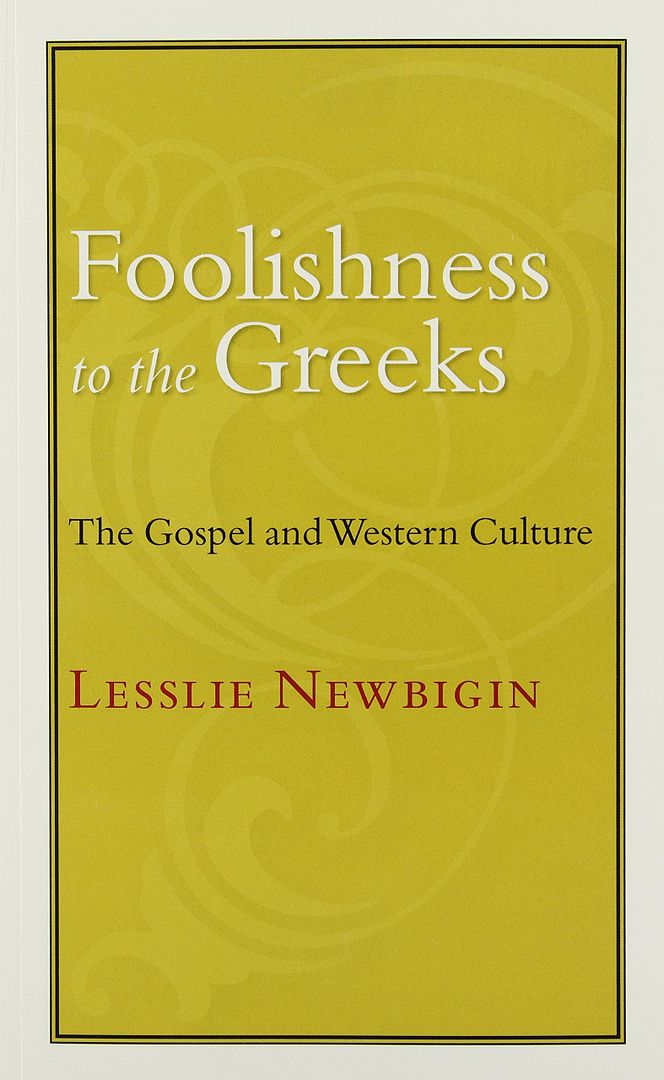 Bishop Newbigin observes, "...denominations have been and are powerful, purposeful, and effective agencies of self-propagation."
On Christian (read: "human?") freedom he points out coerced belief is no belief at all; that acceptance of Christianity or of whatever needs to be done within a person's own time and space. It feels to me as if he's simply thinking out loud about what could be read as a "Christianized" government. Marian C., our discussion moderator said, "I am looking for a secular society with human values consistent with my Christian faith." Me, too!
For me, expressions like "Christian Coalition" instantly evoke visions of Fundamentalists from the Christian far-right conniving and scheming to inflict their particular proposals for a godly social order on everyone else, like it or not. (In a closely related vein, Rick G. reminded us of the Civil Rights movement's transformative effect on not only a "reluctant South," but on the rest of this country, too.) Here in San Diegan Southern California we have a big ecumenical multi-service social service agency that's been doing some effective and at times life-changing work, but it's comprised only of Roman Catholic and mainline Protestant local churches. There's also the requisite large Roman Catholic agency, as well as dozens of smaller groups, some ecumenical, a handful interfaith, and several formally affiliated with a particular denomination. But apropos of "bringing values to the heart of public policy," now that I've given you a spin on what's happening here, I'll say I believe it's a great idea.
His idea of "declericalized theology" resonates with another of my 10 challenges currently facing the church; Bishop Newbigin seems to be emphasizing the ordinary parishioner - also included in my idea - though I was intentionally thinking more about the non-professional lay leaders. And I was so embarrassed to read our author considers the situation (in some local churches) analogous to where the Reformers found themselves. From my experience most mainline churches definitely don't have well-educated laity and most of those persons in the pews don't care, either. One of the hallmarks of Reformation Christianity is supposed to be biblically and theologically well-educated laypersons...
Finally, he cites two very different style Christian communities "centered in the action of praise...that is literally 'out of this world' and is by that very fact able to speak to this world."
Subscribe to:
Posts (Atom)