Saturday, January 30, 2010

biblical perspectives on evangelism

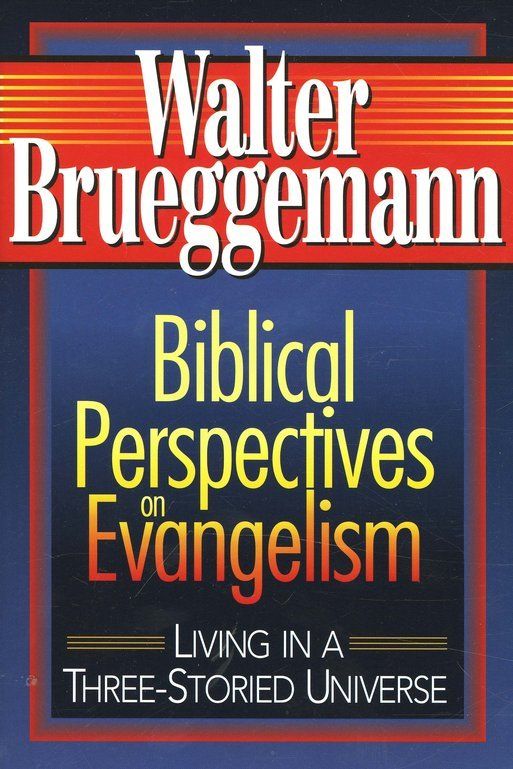
by Walter Brueggemann, Biblical Perspectives on Evangelism: Living in a Three-Storied Universe on Amazon.
biblical perspectives coverAfter my recent 4th reading of this tightly focused book, I knew it was time for a blog. Did you know the colonial Americans - some of the antecedents of today's United Church of Christ insisted God acts in history only by covenanting? In scripture we can trace a series of significant covenants from Adam through Jesus, but was not the Divine passion for relationship that engendered creation in itself a covenantal act? Throughout the author emphasizes obedience along with explaining why we need to remember... after all, when we forget the possibility of a free future is all over. (Therefore, I'm making a conscious attempt to remember more clearly, even to revisit the past I've often almost choked on in order to start claiming a freer future for myself and those around me, too.)

Rooted firmly in the Hebrew Bible, in God's loving grace and the possibility of human response, reminding us about ways to be and ways to live as the people of God (=as the Church), just as in many of his other books, Walter Brueggemann emphasizes the importance of the commandments. On page 31 he describes the ten commandments as "the working documents for covenanted community..." on page 68 "covenant is ... a relation which frees each in vulnerability to receive life from the other, to be postured in mutual dependence." The commandments are "...boundaries and limits which define the horizon of covenantal humanity." On page 115: just as earthly parents teach their offspring that which concerns them most, our heavenly parents do exactly the same. "I do suggest, however, that the ten commands turn out to be God's most 'cared for matters.'" And he includes references to his other two non-negotiables: the tithe and the sabbath.

The world is about a multi-faceted "3-stories" of architectural floors or tiers and narrative tales about the lives of people: long-time insiders to the gospel, typical outsiders, and the next generation coming up. In addition, there are three central narrative stories in the salvation story (Heilsgeschichte) that in turn opens us to 3 scenes to the evangelism drama:
  1. God's victory over chaos and death
  2. the announcement of that victory—"gospel"
  3. its appropriation by those who hear the announcement
3 stories are focal and normative and definitive:
  1. the promise made to the [Israel's] ancestors
  2. deliverance from slavery
  3. the gift of the land
WB offers a pair of concrete definitions of evangelism, an activity impacting every aspect of life—personal, public, economic, political... first on page 10 "Evangelism ... is the invitation to re-imagine our lives in these narrative modes." And last, in the conclusion on page 129 "Evangelism ... is an activity of transformed consciousness that results in an altered perception of world, neighbor and self, and an authorization to live differently in that world."

WB brings us a trilogy to illustrate the 3 stories:

1. Joshua 24 "a meeting at Shechem whereby outsiders become insiders"

2. in Nehemiah 8 forgetful at least one-time insider members are "re-tented into the passionate vision of risk and vulnerability that is decisive for the community."

3. ongoing conversation with the offspring of believers/insiders = "children becoming adults." In this [hopefully] dialogue, [page 55]"It is always 'them' and it is always 'us,' always then and now, always there and here, concerning all of this community of telling and listening through time."

That continuing, continuous conversation is because "...in Jesus Christ, God has overcome the power, threat, and attraction of the power of death" and [pages 37-38]"...the continued re-enaction of this dangerous [page 38] news ... is the definitional account of [the church's] life in the world." But what news, news for what? [page 43] "...news for alternative obedience in the world" as we [page 46] "...recover the focal drama of baptism, which is a subversive act of renunciation and embrace" and are summoned [page 47] "From our several enslavements ... to a common, liberated obedience."

Regarding our ongoing need to live faithfully in the twenty-first century, yet possibly concerned that the texts we rely on were transmitted and recorded thousands of years ago, WB reminds us "...all through the Bible the gospel has been exactly and precisely concerned with social relations related to power, goods, and access. Indeed, there is almost no aspect of the biblical presentation of the gospel that is otherwise." [pages 40-41] "The victory of God in our time over this deathly idolatry is hidden from us. ... It is hidden in the cross where it is always hidden, and in all subsequent manifestations of the power of the cross." In his marvelous book The Land, WB explains how the Church has concentrated on covenant to the near-exclusion of the centrality of land in the biblical witness and, without a doubt, in current twenty-first century politics and economics.

Some reasons for us to remember, remember, remember...include
page 78 "If Israel, birthed in liberation [Exodus] and situated in covenant [Sinai], forgets these memories, it will very soon start playing the old power games of Egypt, and start practicing brick quotas again in order to get ahead by the standards of the empire."

page 78 "Everything depends on a live memory. Everything is jeopardized by careless forgetting. Everything ride on remembering and forgetting."

page 79 Jeremiah 2:1-13 Israel did not say, did not proclaim, announce or confess their history with the God who liberated them because they had forgotten the story, the history...

page 82 parallels Deuteronomy 8 || Jeremiah 2

page 82 "And when they forget, they forget the past, they forget Yahweh, they forget themselves, their history, their identity, their faith, their vocation, their raison d'etre."

page 83 "... the Bible is constant in asserting that this terrible ending ... is rooted in the loss of [torah] memory."

page 84 "Remembering is the hard choosing of an alternative present, authorized by a subversive past. When that subversive past is given up, an alternative present is rendered completely unavailable."

page 72: by the time of Nehemiah 8, Israel is a "people of the book." But in the re-texting of Israel in the Festival of Booths "Israel must bodily re-experience and re-enact the memory, recovering its vulnerability in bodily exposure."

parallel to his words on page 75, "This old [torah] text of Israel's memory never exists as authoritative for the community without imaginative interpretation." "people of the interpreted book", on page 97 WB tells us conversation with youth "in a context of unconditional advocacy ... that mediates free grace." [page 98] "The conversation with our young must be persistently interpretive."
Closely related to the near-plethora of existential and situation insecurities in which almost everyone currently finds themselves, I love WB explaining [page 87] how in Nehemiah 8:13-18 "olive, wild olive, myrtle, palm and other leafy trees" make the temporary shelters for Succoth, the Festival of Booths or Tabernacles, granting participants both "exposed homelessness" and "true homefulness". Interesting too, was the experience of the newly-borning people of God with a God who traveled alongside them in a tabernacle, a portable shelter and gospel-writer John (1:14) tells us how incarnate in Jesus of Nazareth, God pitches a tent, a tabernacle.

Amidst all this talk about following and keeping the commandments in gracious response to the God Who in Jesus Christ calls us, saves us and sanctifies us by grace, [page 114] Martin Luther begins his Small Catechism, traditional preparation for First Communion with the Ten Commandments, "...for the one with whom the church communes is Lord of the commands. Finally it comes down to that, but it does not come down to that quickly or simply."

The church charges parents and sponsors of a child or children to be baptized to teach them the Lord's Prayer, the Creed and the Commandments; to bring them to the Services of God's House and Place the Scriptures in their hands. Why? These are some of the ways they can learn, hear and live the story and the stories, make them their stories and remember the stories of the covenanted people of God as they learn the place of their own individual story in the journey of the community. At the services of God's House they celebrate and participate in the Eucharist, God's feast of justice, reconciliation, forgiveness and inclusion for all creation. This is God's manner of making new beginnings that's also a living sign of God's promised end, the eschatological feast of justice and equality, the table of "go and do likewise." They learn to be prepared to forgive and to be forgiven... learning to live every moment "wet behind the ears" again with baptismal water, committed again to Good Friday and to Easter, constantly recovering "...the focal drama of baptism, which is a subversive act of renunciation and embrace" summoning us [page 47] "From our several enslavements ... to a common, liberated obedience."

In his conclusion, WB insists evangelism isn't an ecclesial, a church thing, nor a church agenda—"It is rather an offer that we might be on the receiving end of 'all things new.'"


my amazon review: grace, memory, faithfulness and life

Friday, January 15, 2010

welcoming the stranger

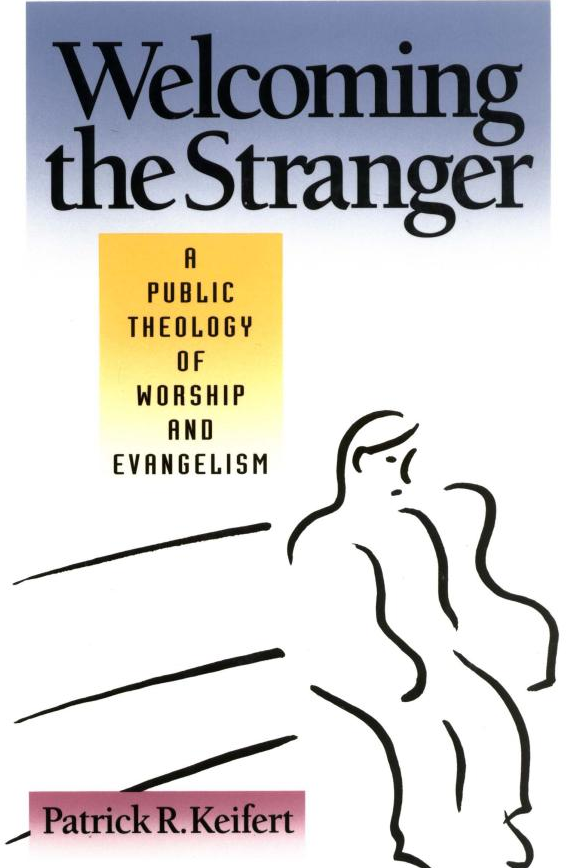
Welcoming the Stranger: a public theology of worship and evangelism, by Patrick R. Keifert.

Welcoming the Stranger is © 1992 Patrick Keifert is professor of systematics at Luther Seminary; this book demonstrates some of his knowledge, insight, experience, and organizational abilities.

welcoming the strangerThe title of the book references "public," and throughout author talks about hospitality. Hospitality is a central biblical theme! Reminders of Israel's and the Church's essential call to welcome the stranger, to make a place for the sojourner at table and at worship weave throughout the book's chapters. Especially for any contemporary congregation wondering how to grow in depth and in numbers, hospitality, welcoming people into our midst, particularly strangers, those apparently not like us or simply people we don't know who outwardly do look a lot like us is a very contemporary topic. Despite our baptismal identity as brothers and sisters in Christ and as siblings of Jesus Christ, church as "family" in terms of everyday interaction, comprehensive knowledge of the other person, and routine, casual, supportive interactions doesn't really apply.

But the book title also pairs up worship and evangelism, and though the copyright date is 1992, one of the typical church stereotypes remains that structured, liturgical worship is un-evangelical, not good news to strangers and newcomers who might wander into worship or think about attending a nearby church. Chapter 3 opens by asserting,"Good liturgical worship and effective evangelism belong together, despite the commonsense idea that they are incompatible." [page 37]

Title of Intro: Public Worship and the Stranger

Talk about intimacy, safety and freedom is prominent throughout Patrick Keifert's argument that includes a fair amount of "how to be" and "how to do" suggestions for any local church in almost any geographic setting. The so-called intimate society in which people may attempt to interact with strangers as they do with biological family and other long-time associates whilst expecting an institution like the church to function as the type of family started disappearing a century ago and has receded even further into the background. Back in sociology, in history, and anthropology classes we often discussed the chaos, anomie, confusion, and disorientation that resulted from the industrial revolution and the onset of modernization.

Patrick articulates clearly the danger and threat of strangers and strangeness in our midst, whether it's our locally familiar First Fifth Church on the nearby corner, or halfway across the world. On page 88 he reminds us strangers can be threatening, dangerous, and challenging on physical, emotional, and spiritual levels. He is sensitive to and knowledgeable about the strangeness of worship settings and liturgical practices to people not conversant with Church.

A theme of intimacy versus sociability weaves through the book. Page 70: "The biblical vision stands in sharp contrast to the ideology of intimacy at this social and psychological level. Rather than projecting the private onto the public, it opens the door for the stranger. The biblical vision affirms impersonal public interactions through the command of hospitality to the stranger."

Israel remembered itself as the stranger hosted by God just as the church knows itself—read page 59 with the heading "Israel's Worship and the Stranger." Page 60: "Though God was free to be present everywhere, God promised to be present in Israel's worship." —just as the Church knows God's promised presence in the means of grace... page 61: "If God's gift of self-presence is understood as substance, it is easy to imagine God presenting grace wrapped in a box—the liturgy—with our job to pry the box open in order to get the gift." Not only a new humanity, but also a new creation arose from Jesus the Christ's birth, life, death, resurrection, and ascension. Early on Patrick reminds us that creating, not redeeming, is God's primal work and, in fact, we are redeemed in order to continue as co-creators and co-stewards with God in the Spirit.

Page 113, "I call for recognition that the presence of God is embodied in the stranger and in Christian hospitality to the stranger." Page 129: "...God's presence ... on behalf of and through the stranger." The worship space is God's house, the house, the home where God is host and offers hospitality of Word and Sacrament.

Analogous to style, training and expectations of sports teams for games played at home versus games played away from home, Patrick describes possibilities for Home Worship and Away from Home Worship, both of which are opps for evangelism, for sharing and further incarnating, embodying the gospeled good news. Page 120: "Probably because the situation in general is characterized by a distrust of ritual and a broken ritual tradition within and without the church, both ritual competence and ritual resourcefulness are so urgent." Like any social scientist, Pat recognizes that rituals of every kind have logical structure and relations that actually make public life possible. Ritual actions and structures possess power to bind people together, to create community among unlikes and unequals.

Despite the copyright date of 1992, I recommend studying this book as a resources for living out our baptism "on behalf of the world, with the world as horizon." on behalf of the world, with the world as horizon... but how else do we, that corporate "we," live out our baptism?

One more thing: I don't recall when or how I acquired this book, but by the time I began reading the book's perfect (not!) binding had started to become unglued and as I turned each page it disconnected itself from the others. I am amazed at Fortress Press, historically one of THE publishers of high-end theology and, in fact, Augsburg-Fortress has retained the Fortress imprint for its more majorly theological publications.

my amazon review: hospitable, vulnerable and redemptive

friday 5: if

Rev Gal Blog Pals Friday 5 for today is about "IF" Friday 5

I'm lovin' this one from Jan...

dandelion1. If I were a color, most days I'd be medium golden yellow (Crayola dandelion, which is much more mellow than dandelions in nature), indigothough some days I'd be Crayola indigo.

2. As a flower (or plant), most days I'd be something bright and noticeable yet adaptable around others—maybe a zinnia. On the other hand, I frequently claim to be a weed; in the words of Charlie Brown (I think) courtesy of Charles Schultz, "Weeds have a wide tolerance for environmental conditions and the rare ability to exploit recently disturbed terrain..." What does that mean? I can "roll with the punches!" (and have done so with far too many...)

boopee3. For today's animal I'm a filly who's sometimes tamed with a slight nudge of the reins and at other times prefers to run wild and will run wild no matter what anyone says or does.

4. If I were a shoe I'd be flip-flops: most days naturally tan flats, other days, low platform black.

5.In my current identity as a typeface, my font would be Boopee... it's funky and full of expression and I've been using it lots lately.

Tuesday, January 05, 2010

give me a word!

"give me a word" and abbey of the arts giveaway

I've already won one of Christine's prizes, but it's never only about awards and rewards but about the opportunities for becoming more fully alive Abbey of the Arts offers. As Christine explains:
In ancient times, wise men and women fled out into the desert to find a place where they could be fully present to God and to their own inner struggles at work within them. ... Many people followed these ammas and abbas, seeking their wisdom and guidance for a meaningful life. One tradition was to ask for a word – this word or phrase would be something on which to ponder for many days, weeks, months, sometimes a whole lifetime. ... what is your word for the year ahead? A word which contains within it a seed of invitation to cross a new threshold? ...
My word for this new year 2010 and probably one of my words for the emerging new decade is open..."open the verb" and "open the adjective" and both in more than one direction. Openness to the people, events, circumstances, ideas and opportunities around me and openness to new things Spirit is enacting within me. Maybe even more challenging than those aspects of being open, by grace I hope to start claiming and making the huge risk of being open to others about my needs, experiences, expectations and pain so I'm writing this in green as a symbol of growth. I've observed how I love that green is the liturgical color for Ordinary Time and that during seemingly repetitive, apparently circular times and endeavors are exactly when our lives and our perceptions of our environment change and transform the most.

Christine cites The Desert; I named this blog "desert spirit's fire!" because of the gift the desert has been to me—the hot desert, the cold high desert and the coastal desert where I currently live. Regarding openness although God leads us with a pillar of cloud by day and a pillar of fire by night, along the way gifting us with water from the rock and manna from the sky, we still need carefully to look carefully in order to find them and we need openness to surprise. You cannot survive in a sparse, deserted habitat without ongoing cooperation with one another so you not only need to "talk to each other" you need to interact with each other...

Saturday, January 02, 2010

velvet elvis review

Velvet Elvis: Repainting the Christian Faith by Rob Bell on Amazon

repainting into a new reformation?

This book gives me a kick in the butt while affirming what I've been trying to tell other people and trying to convince myself for the past few years so I'm writing this review out of my head (literally, most likely) and heart.

Velvet ElvisIn most ways Velvet Elvis is a book for outsiders. Just as a Velvetized Version of Elvis is an interpretive repainting, repainting the Church into a new look and new vision forms the basic idea behind this book. On page 11 Rob Bell mentions the picture the church of Martin Luther's day had been painting and presenting. Regarding these 21st century days, I know a lot about the picture the church has painted of itself and maybe even more so, the way outsiders to the church have viewed and interpreted that picture. Page 14: "What I do know is that this pursuit of Jesus is leading us backward as much as forward," evokes the Protestant Reformation of the 16th century.

Maybe more than anything about this book, I love reading the same theological vision and scriptural interpretations as I hold (humility from humble moi) from Rob Bell, someone I'd consider a relative theological conservative.

Hospitality is God's first call to the people of God and fundamentally defines them. From the beginning, the uniqueness of the nascent church as it moved outward from Jerusalem was its radical inclusiveness and "see how they love one another." No one lacked anything; everyone had everything in common, a true common-wealth, as the New England Puritans initially believed they'd be able to live. But it was not only about embrace and provision for the already-insiders; the first Christians embraced and provided for everyone, making no distinctions whatsoever. The outsider became incarnate, enfleshed as one of them, becoming an insider.

As we've often observed, the old mainline now longer is the central or most prominent expression of Christianity in this country, and being a mainline protestant no longer is a given part of being American. Then there's that other use of mainline, to shoot a drug into your veins. Mainline a hit of Jesus straight into your veins, so the blood of Jesus courses through your entire being? Think about it!

repainting into a new reformation?—my amazon review

Friday, January 01, 2010

missionary congregation review

"...we are faithfully to indwell the gospel in a culture that has disembedded itself from that tradition."

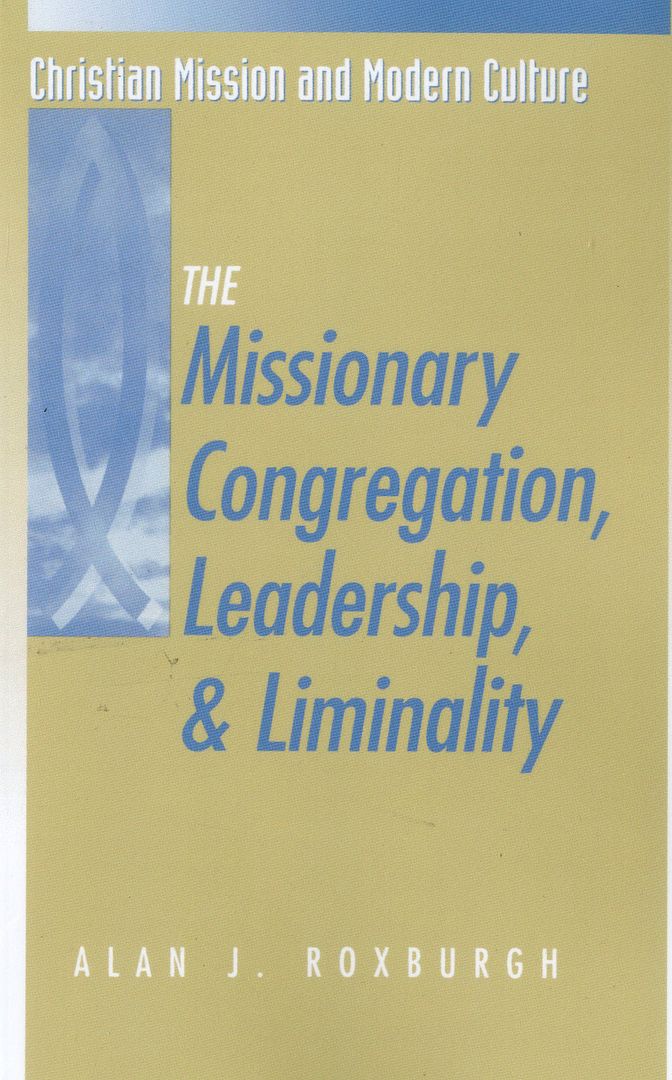
missionary congregation coverIn The Missionary Congregation: leadership and liminality, a handbook for doing mission that you can read through in very little time and that'll take several readings and considerable pondering to understand and appropriate, Pastor Alan Roxburgh explores Victor Turner's book-length essay on liminality, The Ritual Process: Structure and Anti-Structure, (Cornell University Press, 1969) as a framework to help us understand the historical, contemporary and maybe even future call of the church. The experience of liminality, of being on the threshold between old and new, neither back where we were nor yet where we think we're heading typically applies to ritualized liturgical rites of passage that dissolve and dis-embed aspects of an individual's or a group's old identity and are at least the beginning of incorporation into a new group or community along with a new status. For Christians, baptism is our primal liminal experience. As we enter the waters, should we be prepared to drown? Yes! And we should be equally prepared to be surprisingly raised from that death by drowning! And then there's also the desert...

Although Pastor Roxburgh insists "The church's lived experience is marginalization," then he says center-margin language is obsolete and also cites the contemporary Spirituality Smorgasbord. And then he says a possible center-periphery relationship may exist between urban and non-urban, though he claims the urban center itself has no margins. This is fascinating and highly thought-provoking and brings us back to the tendency to equate modernization with urbanization as it evokes Max Weber and rationalization, too. Pastor Roxburgh strikingly observes (page 38): "...it is not marginalization that shapes our context but a liminality without center points from which to gain perspective or meaning." Continuing both/and, neither/nor language, marginalization presupposes a center and a periphery. Amidst all the talk about community, Pastor Roxburgh cites Christianity's shift to a "private, individualistic center." We still keep hearing far too much about a proprietary Jesus...

Pastor Alan reminds us historically the church building – the physical church structure – was a place of refuge, a place of sanctuary. As people of the Good Book we affirm wherever God meets the people is holy, sacred ground, "sanctuary." In biblical – in covenantal – terms, God indwelling the people, God's encounters with the creation to which Godself so passionately has "attached" Godself sanctifies life.

Pastor Roxburgh definitely is not talking about business models and parallels as he considers the leadership of the church in a time of liminality, which requires leaders whose identity is formed by the tradition rather than the culture and leaders who listen to the voices from the edges where the apostle, the prophet, and the poet are found.

"...leaders whose identity is formed by the tradition rather than the culture." But he doesn't explain how the tradition has formed the identity of those leaders. I also need to quote, "...they are cries that long to be connected to a Word that calls them beyond themselves into a place of belonging that God gives within a people." "The alternative community...is formed as the prophetic word addresses the pained recognition of our liminality." For Christians, baptism into the alternative, counter-cultural community that daily walks the way of the cross and lives the reality of resurrection is our primal liminal experience. And then there's also the desert...

Finally, we can consider the re-symbolization and professionalization of church leadership, as it has become and continues becoming yet another clubby priesthood with all of the occultisms, rituals, secrets, insignia, gnoses – and bureaucracies – associated with all of those other royal priesthoods...remember the Jerusalem Temple? I hope this short selection of ideas from The Missionary Congregation Leadership and Liminality will encourage you to read the book, which would be an excellent choice for study by a parish mission or outreach committee, council, session or vestry. There's enough material in its less than 100 pages (71, actually) for at least 5 or 6 serious discussions.

edges, centers, culture and counter-culture...my amazon review

Thursday, December 31, 2009

Christianity for the Rest of Us review

I originally blogged this in growing green of Ordinary Time...

transformation and tradition

Christianity for the Rest of Us: How the Neighborhood Church Is Transforming the Faith, by Diana Butler Bass.

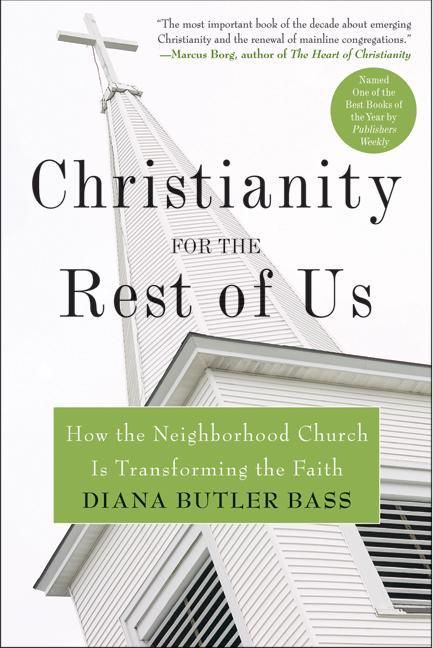
Christianity for the Rest of UsThis subject is close to my heart and central to the needs of most of us in the protestant mainline. The study included ten core study congregations plus forty correlated validation churches spread across the continental United States, all of them what used to be generically referred to as mainline protestant, though these days that old once predictably socially, theologically and politically mainline has become sideline or spurline. The project combined participant observation, personal reflections from the book's author, from pastoral and lay church leaders and from rank and file members along with relatively hard data collection and crunching. Study churches "...were solid, healthy churches that exhibited Christian authenticity, expressed a coherent faith, and offered members ways of living with passion and purpose. They exuded a renewed sense of mission and identity, often having emerged from dire circumstances...they were their own best selves—creative and traditional, risktaking and grounded, confidence and humble, open and orthodox..." explains the introduction to the book. The Rest of Us means protestant - but definitely could include many Roman Catholics, too - Christians who don't affiliate or consider themselves fundamentalist or evangelical in the recently popular sense of "evangelical." The book jacket features a black and white sketch of a high-steepled, white wood frame church that's probably not the big downtown First or Central Church, but the drawing is similar to enough small town, suburban and small city meetinghouses that a lot of readers probably can identify.

Apparently there truly are such places as hospitable, creative and faithful churches where a person truly can belong, can grow, change and be transformed in every aspect of being in Jesus Christ!

The Galatian Church was the first of what we'd call an distinctively ethnic congregation, one gathered on the basis of genetic and cultural inheritance. As the author points out, in the U.S.A. the kind of village where everyone knew everyone and local church or denomination constituted on a basis of ethnic or cultural identity (think Scandinavian or German Lutherans, Scots Presbyterians, Italian, Irish or Polish Catholics who routinely intermixed and frequently confused symbols of culture and Christianity) went away just as nation and church have become ethnically, linguistically, racially and culturally diverse beyond anyone's anticipation, with many of us claiming more than one of each category.

I love the idea of people and groups being politically neither Blue nor Red but Purple, along with implications of early Christians adopting the royal color purple for radical, subversive usage and intent in seeking to follow The Way. In Acts 16:13-15 we hear about on the sabbath, expecting to "find a place of prayer" at the river, they also found a place for baptism, where people formally could separate from former allegiances and lords, and officially be baptized into the reign of heaven on earth under the Lordship of the crucified and risen Jesus Christ—a Lord at once both royal and subversive! Lydia, the first European Christian was a woman, and one who "dealt in" clothing for kings but dared publicly sign onto the subversive lifestyle of the followers of Jesus Christ. In that era of the original emerging church, Christianity provided a radically alternative perspective: politically to the point of sedition and socially to the extent of welcoming and actually including all comers. Lydia, newly-baptized and a merchant who routinely interacted with high and mighty royalty, knew God called her to hospitality and community. Let us consider what God is calling us to, wherever our social and cultural locations—assumptions, preferences and traditions?!

my amazon review: transformation and tradition

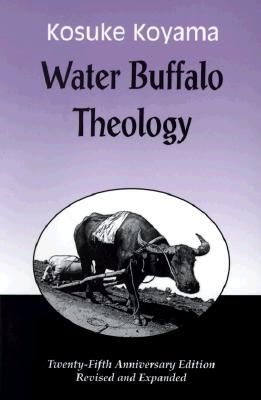
water buffalo theology review

water buffalo theology coverChristianity in this country won't always be (well, it isn't now!) First Church on the corner of Main and Elm, housed in an iconic white colonial or colonial reproduction building, pews lined up facing the chancel that features a communion table topped with brass candlesticks donated by Annie and Henry's grandparents, Tiffany-type stained glass, Strawberry Shortcake Socials and picnics on a grassy lawn…

Water Buffalo Theology is liberation theology, ecological theology, theology of the cross and an offering in the Christian-Buddhist dialogue. By definition Christianity is incarnational, so cautioning every one of us in our attempts to reach others author Kosuke Koyama asks, "How can anyone be a teacher of religion unless he is at home with the language of the people?" and in the course of the book contrasts and compares many aspects of Buddhism and Christianity. Koyama challenges us to tough anthropological cross-cultural work of living with and living as the other in order to become more aware of ourselves, during the journey (hopefully) discerning essential aspects of the way of Jesus we're offering to others alongside possibilities of adapting the host culture's own practices. As an aside, to me it's interesting how the practice of many contemporary Christians is marked by passionate attachment along with attempts to live with greater perspective and more detachment.

Kosuke Koyama, who died during 2009, was born in Tokyo of Christian parents; the years he taught at a seminary in Thailand heavily influenced this book, thus "water buffalo" and careful considerations of Buddhism and Buddhists. Koyama says God's "first and fundamental gift" to us is "the constant awareness that we are under the judgment of the Word of God."

Detailing limitations of a "theology of the neglect of history" he mentions "an unmysterious God" and quotes Martin Luther's "God without strange work is God without proper work!" In fact, Koyama reveals himself as a huge fan of Dr. Luther... not surprisingly, my internet research revealed on Wikipedia that Koyama wrote his PhD dissertation for Princeton seminary on interpretation of the Psalms of Martin Luther. Introducing the chapter on page 68, he asks, "What is the matter with this God?" In other words, this God who becomes perturbed to the point of wrath is not like our idea of a perfect human; this God is no human invention!

Koyama says Thai Christian awareness of God must be "...deepened and substantiated by [their] sensing the presence of God incarnate in Christ," to the God Whose wrath has "historical and covenantal reasons," reasons of "I-Thou!" Further, in describing Buddhism's influence on the non-historical mindset of many Thai Christians, he describes it as moving away from karmic chains and away from causality: away from attachment! Clearly the God of the Bible confronts us with choices - sometimes choices between life and death, meaning we act in the midst of both existential and emotional attachment to persons and situations. Finally, and strikingly, the not-historical God is a God continuous with humanity: there's no disruption between finite and infinite.

In the half-dozen years since I first read Water Buffalo theology it has been an extremely useful resource for teaching and interpretation that bears rereading and easily carries the weight and freight of a 5-star recommendation.

my amazon review: local yet global

Nim's Island

risk and redemption

Nim's Island—with a tagline for everyone, "Be the hero of your own story!"

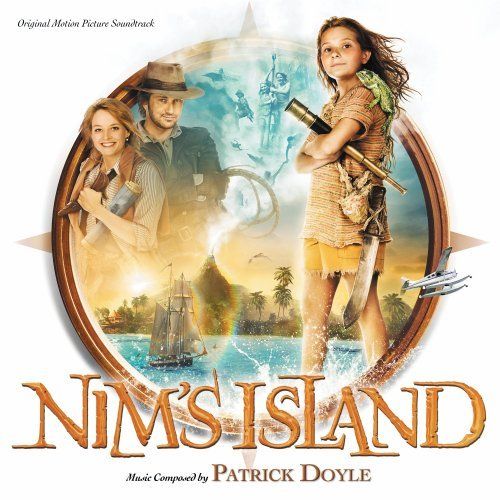
nim's island posterYou can read about principals and producers on the website and check out the narrative on Wikipedia and other locations, so I'll highlight Selkie the sea lion, whose name suggests mythic Celtic and Scandinavian shape-shifting seals, the pelican named Galileo for free-flying conveniently natural GPS wherever you are (even on a remote island in the South Pacific whose inhabitants aspire to not being found by anyone ever), and Freddie the bearded dragon.

Nim's Island bookWendy Orr wrote the book and she's on blogspot with at least six blogs! Here's her Nim's Island blog.

Especially as an artist and dweller in a coastal desert I love the tertiary color palette of the film – but what else would you find in an island setting? – along with relatively sparse though essential special effects. Patrick Doyle's wistfully fresh music fits perfectly. Nim's Island CDConcerning becoming the hero of our own stories, in Nim's Island literally Berkeley-bound by agoraphobia Alexandra Rover (think about the implications of possessing a name like "Rover"), Jack Rusoe the dad, and Nim his daughter all deal rather predictably with their own stuff as circumstances, the needs of others and more than a hint of irresistible grace push them into new dimensions. All three principal characters are tightly caught in their own self-defined world (since the dad in the story was wearing a wedding ring, I assume he'd been widowed) and for sure every one of us is most of the time, but how do those liminal, transitional moments marked by vestiges of what was and hints of not-yets and months full of fear, promise and future happen if by grace someone or something other than ourselves doesn't push us out of where we are?

Playing along with the closing credits is U2's
Beautiful Day

The heart is a bloom
Shoots up through the stony ground
There's no room
No space to rent in this town

You're out of luck
And the reason that you had to care
The traffic is stuck
And you're not moving anywhere

You thought you'd found a friend
To take you out of this place
Someone you could lend a hand
In return for grace

It's a beautiful day
Sky falls, you feel like
It's a beautiful day
Don't let it get away...

You love this town
Even if that doesn't ring true
You've been all over
And it's been all over you...

Touch me
Take me to that other place
Teach me
I know I'm not a hopeless case...

my amazon review: risk and redemption

Saturday, December 19, 2009

advent

advent


The Spirit and the Church cry out, "Come, Lord Jesus!"

All those who await his appearance pray, "Come, Lord Jesus!"

The whole creation pleads, "Come, Lord Jesus!"

Thursday, December 17, 2009

"thank you"...

here's the note I wrote to fans, friends and guest artists of suntreeriver design on Facebook...

Thank you, thank you, thank you to fans, friends and guest artists of suntreeriver design!

Again we celebrate a season of cultural, religious and family festivities; in the northern hemisphere shorter, darker days and longer, colder nights bring a particularly marked opportunity to recognize the gift of light without which life cannot prevail. At this time of year the world looks to the hope of a new star on the horizon bringing a vision of justice for all creation.

suntree logoBeginning with light as the first act of creation, a river of life and tree of life in a fresh, untamed garden and ending with the river of life and tree of life in a city where the sun never sets, sun and tree and river are persistent images throughout the Hebrew and Christian scriptures. The witness of scripture shows us how to live in community and to live in harmony with and as part of the natural creation. Today many of us live in places neither quite urban or exactly rural, where garden and city intermix and converge, but wherever we are, as artists, designers, photographers, illustrators and people who simply enjoy being surrounded by beauty, we can help make the world kinder, more lovely and less threatening.

As we move the calendar year 2010, let's do everything possible to live as stewards of the planet and of the light as our lives help restore, nourish, heal and sustain. May we fill our surroundings with beauty and grace and make this world safe for innocence, vulnerability and wildness so all creation will find a safe home on this planet that is the dwelling-place of the divine, the habitation of the Spirit of Life.

Sunday, December 06, 2009

lessons and carols 2009...

Sunday, 06 December in Founder's Chapel at nearby University of San Diego; again this year I'll describe Lessons & Carols at USD as "an exceptionally worthy piece of preparation for God's birth in our very midst, 'fulfillment beyond all human reckoning,' as one of the worship leaders described it," in my words from 2008.

Angelo Musicante by Melozzo da Forl

Here's
Advent 1 2008 followed by Advent 2, Lessons and Carols @ USD 2008. The lute-playing "Angelo Musicante" by Melozzo da Forl was on the program cover again this year.

Our ecumenical Faith, Order and Witness Committee used to meet at USD quite regularly until it became impossible to schedule a room; the near-elegance and broad, gracious layout of the USD campus always makes me wonder. It's an expensive, church-related school with an overarching emphasis on justice, but like almost all the students I've seen walking around campus and in the dining hall, most of the students in today's program were atypical for San Diego, and as a group not at all characteristic of the tremendous ethnic, racial, cultural and economic diversity that is the San Diego I interact with every day and the San Diego of the condo complex I currently call home.

For the processional we sang "O Come, O Come, Emmanuel." Be with us, God-with-us, ransom your people, pay the price to free them, to liberate all of us from captivity to everything that holds humans and societies cultures in chains.

Comfort ye, my people! Every valley shall be exalted; the mountains and hills made low-- from the exilic Isaiah 40:1-11 and G. F. Handel. Jesus of Nazareth lived The Way that raises deep caverns and valleys, levels mountains and hills, straightens treacherous roads (repairs those potholes, too); that way is life on the edges of conventional society, words and action that subvert conventional political and religious pretensions to power. Doing justly and loving rightly includes advocacy for equity for everyone everywhere, reversing superfluous wealth and unseating corrupt government. The way of the baptized includes speaking truth to power and living as servants to all.

Erin Lovette-Colyer, Director of The Women's Center at USD was homilist. She suggested we put Mary's story into our own story into Mary's story into our own... and told us she'd talked with three "wise women" in her life as part of her preparation to preach at the worship event. Her own mother, diagnosed with terminal cancer; her recently widowed aunt and her brother's wife, her sister-in-law soon to deliver her first child. Erin told us no doubt Gabriel was well prepared to engage Mary in conversation. What teenager wouldn't want to and need to discuss the momentous future she was being asked to enter? I'd never thought of that, but of course Mary had to talk about it, but the main thing is Mary said "Yes."

Erin described so many of us as afraid to die, afraid to live and afraid to give birth and during this Advent 2009 I still find myself in the same almost forever of being afraid to die (not only to past disappointments and human expectations, but lots more, too), afraid to continue living with lack of basic community, with isolation and loneliness and still afraid of giving birth to a new life for myself and the strangers around me. What if, what if, what if not? Seems as if I still think somehow I can do it on my own, which definitely has not worked at all and after all, in baptism I'm already dead, I've already been raised from death to new life. At the end of her talk Erin Lovette-Colyer asked if we would be doing Advent with an attitude of hope rather than anxiety and "being honest with myself" my anxiety level still is far too high for a modicum of comfort, yet I'm doing Advent with hope, too.

Isaiah 11:1-10 was one of the readings ...1A shoot shall come out from the stump of Jesse, and a branch shall grow out of his roots. 4abut with righteousness he shall judge the poor, and decide with equity for the meek of the earth...9bfor the earth will be full of the knowledge of the Lord as the waters cover the sea.

Before the recessional the choir sang last year's recessional song, "The Virgin Mary Had a Baby Boy," an arrangement of a spiritual from the West Indies, proclaiming Mary's Baby Body "came from the glorious kingdom."

Jesus came from the glorious kingdom to make this earth a glorious kingdom, as full of the presence of God "as the waters cover the sea." In the power of the cross and the power of the Spirit, we live as God-with-us, God among us. The feast and the season of Epiphany is not all that far away, so in the words of one of my very young students quite a while ago, to live as the Body of Christ means "that we can be city lights!"

Observing Advent, hoping and longing for the Divine Presence in our midst ultimately is about desiring and longing for the death of death itself, hankering after Easter. Afraid to die? But God can only resurrect the dead! And I'm dead, already--baptized! How do we practice easter in the midst of tombstones? How do we live as if among the artifacts of death? Remember, remember... the straight path, the smooth, level road is the way of the cross, the axis mundi connecting heaven and earth as we live incarnation, resurrection and pentecost together. Celebrate eucharist: taken, blessed, broken and given...

Friday, December 04, 2009

do nothing friday 5

do nothing friday 5 on the revgals

Sally had an interesting idea:
I am reading a wonderful little book for Advent it's title: "Do nothing Christmas is Coming!"

So this weeks Friday Five is simple.

List Five things you won't be doing to prepare for Christmas.

And while you are doing nothing play the bonus, put your feet up and listen to your favourite Advent Carol, and post it or a link to it...

Simple!
1. I won't be anticipating snow or expecting to shovel snow

but I will be full of gratitude for gifts of coastal desert and the hot desert

2. I won't be preparing to preach a Christmas sermon or play nativity liturgy

but I will be doing some designing

3. I won't be basking in the sun of a tropical beach paradise

but I will be giving thanks for sufficient food and shelter

4. I won't be enjoying that sense of "finally, at last, I'm home" I keep imagining is around the next corner I turn, the next community where I try to find ways to participate

but I will be doing and simply being whatever and however I can to fulfill God's call to me to be the welcoming embrace others seek and others need, daily and hourly to live as an attitude and a place of homecoming for others

5. I won't be celebrating the resurgence and revitalization of the ministry I prepared to do

but I will be remembering not a single door has been permanently closed and singing again the Magnificat, God's assurance of great reversals, the rich and irrevocable promise—along with proleptic evidence—of the inbreaking reign of heaven here on earth. I'll even rejoice in my too-many scars, evidence that in spite of it all, life has prevailed, after all! And during Advent and for Thanksgiving Eve I've been organist for evening prayer and love exposing the strident, sometimes-dissonant harmonies and angular vocal line of the Lutheran Book of Worship setting of vespers.

I've chosen a song that covers the entire liturgical year:
Mary, Did You Know?

by Mark Lowry and Buddy Greene

Mary, did you know
that your Baby Boy would one day walk on water?
Mary, did you know
that your Baby Boy would save our sons and daughters?
Did you know
that your Baby Boy has come to make you new?
This Child that you delivered will soon deliver you.

Mary, did you know
that your Baby Boy will give sight to a blind man?
Mary, did you know
that your Baby Boy will calm the storm with His hand?
Did you know
that your Baby Boy has walked where angels trod?
When you kiss your little Baby you kissed the face of God?

Mary did you know...

The blind will see.
The deaf will hear.
The dead will live again.
The lame will leap.
The dumb will speak
The praises of The Lamb.

Mary, did you know
that your Baby Boy is Lord of all creation?
Mary, did you know
that your Baby Boy would one day rule the nations?
Did you know
that your Baby Boy is heaven's perfect Lamb?
The sleeping Child you're holding is the Great I Am.

Monday, November 30, 2009

advent retreat 3

advent retreat 2009 session 3 on RevGalBlogPals

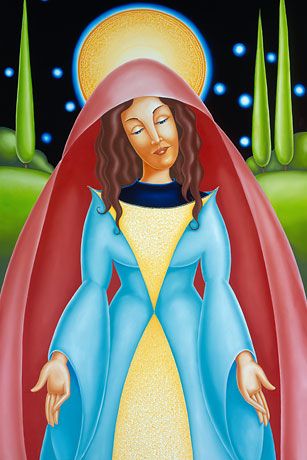
Juniper hosts this retreat segment, and begins with Mary/Miriam's Magnificat we sing every day at Evening Prayer/ Vespers. I love the Mary icon, and will give credit when I find out the artist's name [here's his website: Scott Ward]. And I love The Message version of the bible!

Luke 1:46-55, from The Message
And Mary said,
magnificat mary icon by Scott WardI'm bursting with God-news;
I'm dancing the song of my Savior God.
God took one good look at me, and look what happened—
I'm the most fortunate woman on earth!

What God has done for me will never be forgotten,
the God whose very name is holy, set apart from all others.
God's mercy flows in wave after wave
With a bare arm God showed strength,
scattered the bluffing braggarts.
God knocked tyrants off their high horses,
pulled victims out of the mud.

The starving poor sat down to a banquet;
on those who are in awe before this God.
the callous rich were left out in the cold.
God embraced chosen child, Israel;
God remembered and piled on the mercies, piled them high.
It's exactly what God promised,
beginning with Abraham and right up to now.

The Message (MSG), alt. Copyright © 1993, 2002, 2018 by Eugene H. Peterson

Juniper reflects:
I remember the first time I saw a musical. I was maybe 11 or 12, and I went to see the local high school's production of Sound of Music. Everything about it transported me, but the most astonishing part to me (a novice to musicals) was the way in which the characters would, in the middle of mundane speech, be so transported by love or wonder or joy that they just had to burst into song. It was like magic.… In a way, the interaction between Mary and Elizabeth reminds me of some first-century-Palestine Broadway musical. The news Mary has to share is so stupendous, so astonishing, so joyful, that she cant even talk about it, she just has to sing...
She suggests questions to ponder:

1. What does your religious tradition have to say about Mary, if anything? How is Mary's journey important to you on your personal spiritual path?

Coming out of the major theological traditions of the Reformation, I need to remember that Martin Luther had a great devotion to Mary, though I still haven't quite learned how to have an attitude of devotion and reverence toward a person or place without making it more central in my life than Jesus Christ. I've been serving on the local Ecumenical Council's Faith, Order & Witness committee, and moderated one of our discussions of the Anglican-Roman Catholic "agreed statement" Mary: Grace and Hope in Christ, though when I checked my blog archives I realized that was one I didn't blog. I think Mary is awesome… and as a model for us to follow Mary said, "Yes! I will, yes!" Yet I retain a lot of confusion. A few summers ago one of the times I taught in a bilingual Spanish-English Vacation Bible School, I mentioned to the congregation's senior pastor how horrendous the printed curriculum was. Not only marginally literate; the theology was anything but reformationish, starting with instructions to the teacher to "divide the class into saved and unsaved." As I said to senior pastor, "We don't do that in this kind of church," and he replied, "the problem is, there's so little protestant bilingual material," so I assumed he was trying to avoid high-level Mariology. For the next two years we used VBS material from Concordia's Spanish-language division. Given that it came from the Lutheran Church-Missouri Synod it was more conservative than ideally I'd have preferred, but still retained a strong emphasis on God's initiative, election and grace. Short answer? I think Mary is awesome but don't quite know where to place her in my own life, but she supremely and superbly shows us how to respond to God's initiative, election and grace…

2. When we hear it, we know how singing is different from talking - how much more deeply emotions are expressed, how the vocal range rises and falls, how freely and effortlessly the notes seem to fall from a good singer. Is it possible to capture that same feeling from reading words on a page? If not, how else might we experience the Magnificat?

Sometimes speech is not adequate. Simply not at all. Just think of how pale "And His Name shall be called, "Wonderful! Counselor! The Mighty God, Everlasting Father, Prince of Peace," invariably and inevitably comes across on the printed page or reading aloud once you've heard "For Unto us a Child is Born" from Handel's Messiah! I believe J.S. Bach's Magnificat definitely does near-justice to Mary's words and I've been enjoying singing – and during Advent, playing – Dale Wood's setting of the Magnificat from Evening Prayer in the Lutheran Book of Worship.

3. Mary does not name her Child, or even reveal her pregnancy in the Song. And yet, the hope of Christ's presence is strongly felt in the themes of justice and mercy expressed. What hopes do you have for the coming of the Christ child in this season?

Until now It hadn't occurred to me that Mary doesn't give her baby a name in this song—thanks, Juniper! What hope do I hold for myself and for the world around me? More than anything to find friends and a community that will burst into excited song or a near-equivalent when they see me. People who will be excited when I offer to do something rather than recoiling in horror or saying, "we're not going to do that any more" or "someone else is doing that." In all these years I've never srsly doubted my abilities, but I've frequently questioned my humanity.

I'll conclude this retreat session with Juniper's simply beautiful prayer:

God of all life, fill me so with your good news that I am fairly bursting with it. Help me to sing your song using the words and the tune that you have created just for me. Alleluia!